On an Impending Tragedy

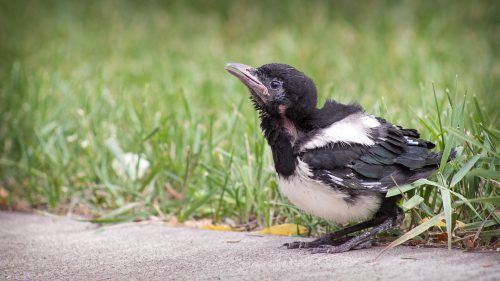
The baby magpie hopped up the gravel driveway of the house where I was staying in Sweden. As he neared the back deck of the house, the black cat, Lucky, who had been lounging in a chair there, began to take notice. This would not end well. Seeing the impending encounter, the mother magpie, who had been sitting on the ridge of the house, swooped down and began squawking and flapping above the baby, hovering in protection and by way of warning to Lucky.

Happily, Lucky heeded the hoverings of the mama ‘pie and returned to his wicker chair on the back deck. I was in one of the other wicker chairs, enjoying my morning coffee and watching the drama unfold. The incident had also aroused the interest of the English Golden Retriever, Rodney, who now raised his head from his prone position next to me and peered over the edge of the decking. Now, Rodney is too sweet for this world, and he has no violence or guile in his pure but simple brain. If anything, and with the opposite intent of Lucky, Rodney wanted to make sure the baby was ok. He seemed to view the chick (is that the correct nomenclature for a baby magpie?) as more of a niece in trouble than a potential meal or plaything. No so Lucky. Even at age 14, Lucky was a lethal weapon. And this event, coming as it did in my last week of a month-long housesitting stay for a couple on vacation in Spain, gave me a moment of crisis.

The baby bird was not terribly tiny—about the size of a coffee mug—and she (I decided on the gender) had started to show some signs of the distinctive blue plumage along her flanks. And she was also quite the hopper. She bounced through the picket fence separating my house from the neighbors, but danger lived there as well. A dog whose interest in the baby bird was more in line with Lucky’s than Rodney’s roamed that yard. The human mum who lived there heard the alarm raised by the mother as she dove at the head of the other dog and came outside to investigate the noise. She grabbed the collar of her mutt and pulled him inside despite his whines of protest.  The mama magpie, satisfied that the moment of crisis had passed, ceased her noisemaking and flew up to perch on the end of the garage between the two houses so that she could have the proverbial and literal birds-eye view of the two yards.

Throughout the day, as I moved about in the house, I knew the route of the baby bird’s hopping path because of the mother’s occasional screeching. The baby somehow managed to cross the street for part of the day and mama had repositioned so that she could watch her broodling. I looked out the front windows and saw the poor baby seeking the shade of the bushes in front of the house directly across. By evening, the baby’s hops had brought her back on our side of the street and into the drive of the neighbor on the other side of my house. They had no animals there, so in one sense this was better. But Lucky was on the prowl again on that side of the house by that time. I could see the baby as mom swooped down on (un)Lucky’s head, and the hungry thing opened her mouth thinking food was being brought rather than protection. It was heartbreaking to watch. The coming night would be terrible, because night time was Lucky’s prime hunting hours.

But what could I do? It wasn’t my house. I was leaving in a matter of hours rather than days. No way could I take in the baby bird to feed it and care for it. I couldn’t obligate the inbound homeowners to became guardians over the creature. It all became almost unbearable to watch or listen to. Meanwhile, Rodney trotted over to that side of the house to look through the fence and see what all the commotion was about, but the momma chased that poor soul off as well. A confused Rodney ran away quickly. I could relate to Rodney in one sense and shared his confusion. It’s a terrible thing to witness when death looms over something so innocent, so young, and so vulnerable—and you feel helpless to do anything about it. You become keenly aware that forces beyond your control are at work and that the ending will not be a good one. It’s a peculiar type of frustration that comes when circumstances step in and take away our abilities to intervene when intervention is called for.

The next morning, Lucky was lazily asleep in the wicker chair on the porch when Rodney and I went outside. No sign of the baby anywhere in the yard or the adjacent yards to the right or left. I checked across the street. Nothing there, either. Maybe, just maybe, the killer cat had slept all night and had not done the dreaded deed.

Then, from the yard immediately behind the house and about 100 feet away from us, I heard the mama magpie squawking again. Apparently, the baby had hopped into the back neighbor’s yard overnight. The problem had moved on. The kerfuffle the mama was making told me that baby still wasn’t safe; it just wasn’t in front of my eyes anymore. If something happened to the li’l hopper at this point, I wouldn’t know about.

And, I’m ashamed to say, that fact gave a great sense of relief.
On a Pilgrimage

Paul’s dream his whole life was to visit Jerusalem. He grew up a good Catholic boy in Italy, born in the countryside about 130 years ago to upper middle class parents who had some landholdings. One of his brothers became an attorney, another became a politician. Paul wasn’t sure what he wanted to be as he grew up, so he received a general education from the local school. He finally found a home in a publishing wing of the Catholic Church. He also taught in Catholic schools and eventually became a secretary to a Cardinal.

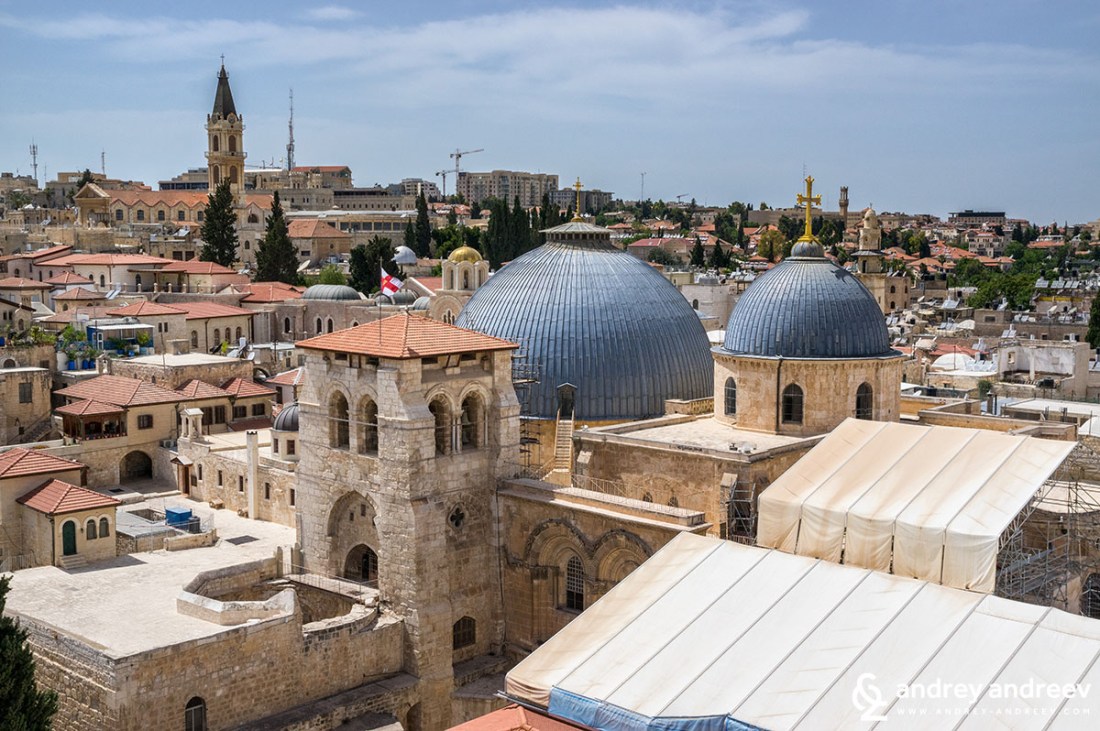
But he was devoted to the Church and to God. The Holy Land, especially the city of Jerusalem, always called to him. For most of his life, work and his responsibilities kept getting in his way of making the pilgrimage to the place. Finally, at age 67, Paul decided that it was now or never. He boarded a jet in Rome and flew to Amman, Jordan. Now, in 1964, when Paul made his pilgrimage, that was the normal tourist route into Israel because Jordan controlled those areas where Paul wished to visit. In other words, the borders of all those countries have changed dramatically since then. At any rate, Paul made his way with a large group of other pilgrims across the Jordan River and entered Jerusalem for the first time, fulfilling his life-long dream.

And it was magical for him. He knew enough history to realize that what he was seeing wasn’t the way it was almost 2000 years earlier, but that didn’t matter to him. It was his connection with the earth in that spot, the spiritual connection he felt with the place rather than the buildings or stones or streets. He knew in his heart that he was seeing the same space if not the same city that his beloved Jesus had once seen, seeing the sky from the same spot on the globe as Jesus had done, and breathing the air where Jesus had once breathed.

And that was more than enough for him.

To show his thanks to the land and the people for allowing him to realize his greatest desire, Paul brought gifts that he left at the different shrines. He lit candles in the churches. He prayed in the chapels. And, even though he was older, he barely slept while he was there because of his excitement. He didn’t want to waste time sleeping, he told friends later.

And, while he had accumulated wealth during his life and work, Paul chose to wear simple clothing during the pilgrimage. He wanted to honor the simple man he admired so much. And, because he believed that Jesus spoke about peace and love, he made sure to leave olive branches at every stop he and his other pilgrims made.

You may wonder why Paul’s pilgrimage merits your attention here and now. Surely, Christian, Muslim, Buddhist, Hindu, and billions of other religious people make pilgrimages all the time. And you’d be right. Except Paul’s pilgrimage was the first of its kind.

You see, Paul’s pilgrimage in 1964–Pope Paul VI–marked the first time a Catholic Pope had ever visited Jerusalem.

On an Official Phone Call

In 1947, the United Nations considered an important and historic vote. They were deciding how to partition Palestine, choosing what land would be used to create the new nation of Israel–or even if such a new nation should be created. The reasons for the UN taking up such long-lasting and significant decisions can be debated, but, for the sake of brevity, its important to realize that powerful people sat on both sides of the issues. The fate of nations, economies, wars, and decades of violence (both past, present, and future) was at stake.

And both sides knew that the vote was going to be close. Many people wished that the Palestinians should be allowed the land to form their own nation. Others felt that the Jewish people both in situ and trying to reestablish their lives after the Holocaust in Europe should be granted the land to form their own nation. Tensions were high, especially when you consider that this was also at the height of the Cold War between the United States and the USSR. So, every vote would count in the UN General Assembly.

The President of Haiti at that time was a man named Dumarsais Estimé. The Hatian leader was sitting in his office one day before the UN vote when his secretary called him on his intercom. She informed Mr. Estimé that the President of the United States, one Harry S. Truman, was on the line. The president picked up the line and heard the mid-western crisp voice of the American President say, “Good afternoon, Mr. President, this is Harry Truman calling from Washington. How are you, sir?”

Now, President Estimé had never spoken to Truman in the two years the Missourian had been in the White House. To get a call at this time was surprising. The US did send financial help to the poor but strategically placed nation. Perhaps this is why Truman was calling, the president thought. “I’m fine, Mr. President,” he answered. “What can I do for you?”

Truman came right to the point. He told the Haitian leader that he wanted Haiti’s vote in the upcoming UN session to be for the creation of Israel. “Now, this is important to me, Mr. President,” Truman told him, “and I know you want to remain a friend of the United States. Don’t you?”

Dumarsais Estimé was stunned. Was this a veiled threat from the American leader? Was Truman dangling American aid to Haiti as bargaining chip to force Haiti’s vote in the General Assembly? In his office in Port-Au-Prince, Estimé stayed silent a moment. Truman waited, then said, “Mr. President? Are you there?”

“Yes, sir,” Estimé said.

“What do you think, Mr. President? Can you see your way to vote for Israel?”

“Yes, sir,” Estimé repeated.

“I appreciate it, Mr. President. I look forward to speaking to you soon. Thank you,” Truman said. And then the line buzzed as the connection was broken.

And the Haitian delegate at the UN indeed voted for the creation of Israel. As, as I said, the vote was close. The resolution passed by a three vote margin. Truman’s strong-armed tactics worked, apparently.

Except there was a problem.

Years later, in the Truman Library Archives, the following notation was found in one of the former president’s daily journals:

“Someone pretending to be me called the President of Haiti and made threats about the Zionist vote,” Truman wrote. “I have asked that we get to the bottom of this.”

To this day, we still don’t know who that person was.

On a Stone’s Throw

It was a normal day in November 1946 for Mohammed edh-Dhib and his two cousins.

Hot.

The boys’ job was to watch the sheep in the sparsely grassed area not too far from a place known as Cliff Springs (Ein Feshkha) in the southern part of what is now the West Bank area of the Jordan River and near the sea. When you spend all day with the sheep, day after day, you begin to create things to do to pass the time. Sheep aren’t that much trouble, after all, and predators were few in that area. So, the boys created games for themselves to have something to do while the sheep grazed on the brown grasses.

The rocky soil meant that “ammo” for throwing was plentiful. The boys knew better than to throw at the sheep. Besides, they loved the sheep. No, the boys looked to the cliffs around them for places to throw rocks to see who had the best aim. Jum’a, Mohammed’s cousin and best friend, had the best throwing arm, but that didn’t keep the other two boys from trying to show him up and prove that they weren’t so bad themselves.

The cliff sides were littered with holes and caves, carved out by centuries of water running through the soft stone. The challenge for the boys was to hit the mouth of a specific cave with a rock. Sometimes, the sound of the rocks landing inside the caves echoed inside the opening and resounded down the cliffsides.

It was that hot November day that Jum’a’s thrown rock found the opening of one particular cave. Instead the the usual sound of bouncing stone on stone, the boys heard another, unfamiliar, sound.

*clink*

The three boys exchanged surprised glances. The rock had hit something unusual. It was Mohammed who was the first to clamber into the opening to see what Jum’a’s rock had struck. Mohammed shielded his eyes to help them adjust to the darkness inside. When he could see clearly, he yelled out to his cousins what he found: Clay jars. Several of them. Lined up agains the side of the cave not too far into the entrance. It was sheer luck that the rock had found the jar’s side. The rock had cracked it.

The boys took some of the jars back to their encampment to show the adults what they’d found. There was some discussion among the grown-ups about what should be done with the jars. Finally, it was decided that the jars should be sold. The boys were asked if they thought they could maybe find more of the jars. Mohammed admitted that he didn’t venture much more into the cave, that there might have been more jars deeper in.

The jars were sold to a market in the old town of Bethlehem. The Bedouin shepherds fetched about $350 in today’s money for the jars. They felt they’d made a good deal, sort of pulling one over on the purchaser.

They didn’t care that inside the jars found by Mohammed and his cousins were the Dead Sea Scrolls.