On a Missing Son

In New York City in 1968, two boys entered an abandoned tenement building and proceeded to explore it. While looking in the various rooms of the building, they stumbled upon a recently deceased body. It really freaked them out. They ran out of the building and found a policeman who was walking his beat nearby.

The dead man looked young-ish, and his body was surrounded by beer cans and religious pamphlets. The identification on him told the authorities that his name was Robert Driscoll, and the coroner decreed that he’d died from hardening of the arteries–a condition that was a side-effect of extensive heroin use. He was 31 years old, but his life of drug use and abuse of his body told a different story. Robert had lived a hard life. Not having a fixed address, the city of New York buried him in their pauper’s field, in a mass grave.

After a few weeks, of course, his parents, having no word from him, set about finding what had happened to their son. They first tried all the friends they knew he had been around, but those friends knew very little about Robert’s activities in recent weeks. It seems that he had disappeared. The parents began to worry. In their desperation, they reached out to a former employer of Robert’s, a company that had been run by a wealthy man who had some connections and could get things found out. Robert’s parents made the phone call, and the employer promised they would do what they could to find out what had happened to Robert.

Now, if you’d’ve asked Robert, he would have told you that his profession was as an artist. In fact, Robert had been a part of the artist colony associated with Andy Warhol, and his chosen medium was the collage. Robert had a good eye, and his collages were intriguing and showed promise. But the allure of heroin and other drugs pushed him to his early death.

Anyway, his former employer set about trying to locate Robert and maybe let his concerned parents know what had happened to their son. Soon, Robert’s former employer, a wealthy, connected company, had an answer. They made the phone call and informed the parents that, sadly, Robert had died from hardening of the arteries as a side-effect of his drug use and that his body was irrecoverably buried in a common grave in New York. The family erected a memorial in a cemetery in California, where they lived, to commemorate the death of their beloved, talented son, who had succumbed to the lure of drug addiction. And they thanked the former employer for their efforts in giving them closure over the death of their son. At least they knew that he was at peace at last.

But, you see, it could be argued that it was that former employer, the famous and influential man, who pushed Robert into his drug abuse. It was while he was employed by the wealthy man that Robert had been fired without any explanation. One day, he was a respected and valued member of the company and the next he was let go without a reason being given by his employer. In fact, Robert had attempted to contact the man at the time, but the head of the company refused to meet with him.

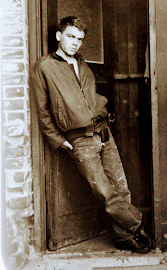
Robert Driscoll is better known as Bobby. He’d won an Academy Award in 1950 for his work as an actor, in fact. You know him and have seen him. He starred in Treasure Island, Song of the South, and provided both the image and voice of Peter Pan in that film of that name.

And the employer who’d fired him without any explanation, the man who had owned the company to which the family turned when they wanted to find their missing son?

Walt Disney.
On a Bad Imitation

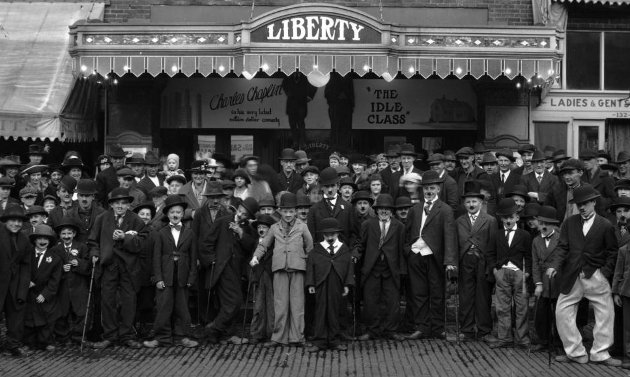
Some historians claim that a woman named Sarah Bernhardt, was the first “modern” celebrity. The French actress used popular magazines and her relationships to famous painters and writers and musicians to publicize her stage career in the 1800s. As a result, people world-wide knew who she was, thus becoming the first international star. But the world has never seen the popularity of the (mostly silent) film star, Charlie Chaplin. Everywhere he went, even when he wasn’t in his usual costume as the character “The Little Tramp,” the talented actor and director was mobbed. He was so famous in the 1910s and ’20s that cities and organizations would often hold Charlie Chaplin Look-Alike contests, contests that offered cash prizes to the person who could best imitate the character’s signature splay-footed walk. Even a young Bob Hope, later to become a famous comedian in his own right, entered one such contest during that time.

One such competition was held near San Francisco in the late 1910s as part of a county fair and a new movie theater promotion. Several dozen competitors donned their little under-the-nose bristle mustaches, put on ill-fitting hats and too-big shoes, found ragged pairs of trousers, grabbed reedy canes, and made their way to the fairgrounds. As the crowd gathered to watch the competitors, one of their number, a young man named Spencer, watched with amusement. “Those clowns,” he said to his small group of friends who had joined him at the fair that day as they watched the look-alikes start to parade across the fairground’s stage, “they don’t have the walk right.” You see, Spencer considered himself somewhat of a Chaplin expert, having seen everything that the comedian had put out on the screen.

Spencer’s chums began to goad him good naturedly. One of them dared him to get up on the stage and show them how to imitate the Chaplin walk if he knew it so well. Spencer grinned at his friend. “You’re on,” he said. “Here,” he added, taking off his jacket, “hold this and watch!” And, with that, the competition had another entrant. Spencer made his way to the side of the stage where one of the organizers was trying to corral the several would-be Chaplins in line before they demonstrated their imitations on stage.

“Say,” Spencer said to the harried worker, “d’ya think I could join the competition?” The staffer didn’t care. He just wanted to get through the warm afternoon as quickly as possible. “Sure, what do I care?” he said handing Spencer a number and a safety pin. “Just put this on your shirt and go to the back of the line.” And, flashing a large grin and a thumbs-up to his group of friends, Spencer went to the end of the queue to wait his turn. Eventually, as the last entrant, Spencer–without any Chaplinesque costume at all–made his duck-walking way across the stage. A few people clapped, mainly Spencer’s friends, and a few in the crowd booed.

The organizers used a set of three local minor dignitaries as their judges, and the judges also used crowd approval as a criteria in selecting the five finalists for the competition that day. And, when the votes were tabulated and every competitor was judged, it turned out that Spencer didn’t make the cut. He and the other unsuccessful entrants were thanked by the emcee and they were dismissed. Spencer made his way back to his little coterie of friends. They laughed at his failure, telling him that maybe he wasn’t as good of a Chaplin fan as he thought he was if he couldn’t even do the Chaplin walk correctly. Spencer was incredulous. In his frustration, he didn’t want to stick around to see who won the contest, and, with his friends still laughing at his expense, the group made their way on down the fair’s midway.

Now, of course, no one remembers who won that look-alike competition that day.

However, we do remember the contest.

For, you see, it was the day that Charles Spencer Chaplin couldn’t even win a competition imitating himself.

On a Risky Director

The guy had zero experience behind the camera. None. Zilch. Nada. It was as if the studio who hired him for this project seemed to want the film–and therefore the studio itself–to fail. In fact, if you wished for a film to fail, you would choose to allow someone like this guy, someone with no ties to Hollywood, to be in complete charge of a film production.

You see, this was 1941, and the Hollywood Studio System was in full swing. That system produced incredible films in the year 1939 alone such as Gone with the Wind, The Wizard of Oz, Stagecoach, Goodbye, Mr. Chips, and Mr. Smith Goes to Washington. Even 1941 itself saw The Maltese Falcon, Sergeant York, and How Green Was My Valley produced. The Studio System was a complex web of producers, directors, the screenwriters, and the various artistic craftspeople (lighting technicians, wardrobe and makeup artists, musicians, etc.) who combined to provide safeguards from one person breaking a project and causing it to fail.

The choice of this man to head this film went against that system, spectacularly. There was no head of production who would act as a safeguard or pump the brakes if the project started going off the rails. There were no voices who spoke up to warn that this neophyte was in over his head and should be yanked from the director’s chair before the expense of the film doomed the studio (and, by extension, all the jobs associated with it) to bankruptcy. This man had complete autonomy over the film. He even co-wrote the script.

Now, this particular studio was RKO. It was seen by many as having lost a step in recent years compared to the other big boys on the Hollywood block like MGM and Paramount and Warner Bros. and 20th Century Fox. Moves like giving this man carte blanche spoke of a hint of desperation from the studio that desperately wished to recapture its old glory and stature.

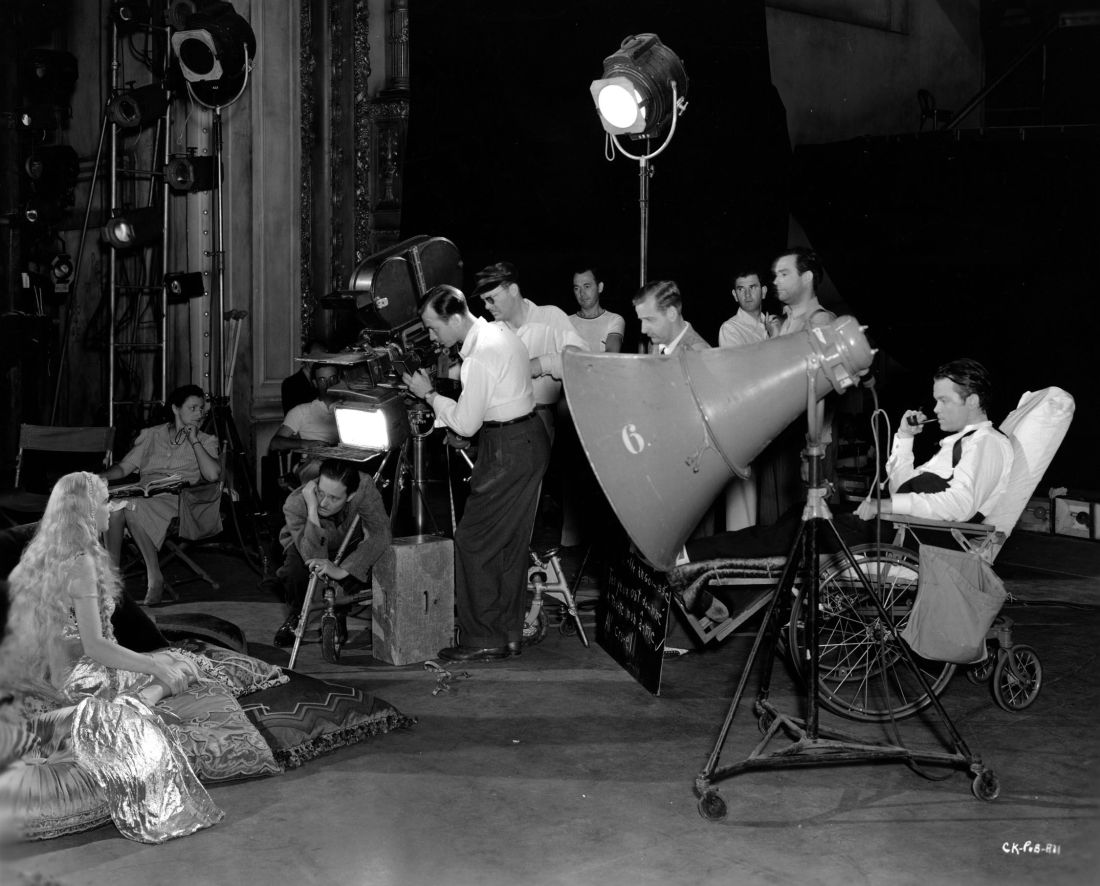
On his first day at the set for the film, the new guy climbed one of the ladders and began adjusting the lighting above the set below. “What the hell do you think you’re doing?” asked one of the long-term lighting techs on the set. The man shrugged and said he wanted to see what a change in the light would achieve on the sound stage below. “Lookit, mac; you tell me what you want, and I’ll adjust the lights.” The man sheepishly climbed back down the ladder.

And, to top it all off, this new man was only 25 years old.

And the film bombed at the box office. The story was confusing to some. There was no real romance to it. The film seemed preachy in its message. The odd angles and lighting that this rookie directed insisted on detracted from the story, some critics said. And, what’s more, the start of the film was criticized as having a wooden performance.

Oh, did I mention that this 25 year old man who co-wrote and directed the film was also its star?

Yeah.

And his projects with RKO ended up costing the studio over $2,000,000 when it was all said and done. The studio head who took a chance on this young guy saw his career almost ended by his poor choice, and he had to resign from RKO the next year. Oh, RKO would make a comeback eventually, but its reputation was damaged for some years.

And what happened to the young director?

Well, today, Orson Welles’s Citizen Kane is often hailed as the greatest film ever made.

On an Inappropriate Relationship

Ralph had done pioneering work as a psychiatrist in California in the years immediately after World War II. He was among the first psychiatrists to address post-traumatic stress disorder and label it as such. Before men like Ralph, PTSD was dismissed as battle fatigue, also known as being shellshocked. But Ralph realized the deeper implications and long-term effects that war could have on people. As his reputation in the psychiatric community grew, Ralph and his wife became well known figures in California because of this groundbreaking work.

Soon, Ralph began taking on other clients; some Hollywood types started visiting his office for sessions. Among the procession of actors and actresses that came through his practice, Ralph found the whole gamut of psychological disorders, and this new clientele fascinated him.

In many ways, Ralph became as enamored with Hollywood as Hollywood did with him. By the late 50s, Ralph was able to be much more selective on which clients he chose. In fact, he narrowed his clientele down to, effectively, one woman.

Now we’ve all seen TV shows and films that depict personal relationships between mental health professionals and their clients and patients. Sadly, this happened with Ralph and his patient. This particular woman somehow entranced Ralph to the point that he became obsessed with her. Whether consciously or not, Ralph began manipulating the woman’s emotions. He began controlling her life to his advantage, telling her whom she could see and whom she could not, basically controlling her entire social calendar. He even often allowed the woman to stay at his house overnight. To help him gain ever more control over the inappropriate relationship, Ralph prescribed a cocktail of medications that kept the woman docile and highly susceptible to his suggestions.

The woman was very needy and very damaged, and she was looking for a father type figure to give her life some direction. Ralph gladly assumed that role and justified it in his own mind that he was helping her. But things begin to change in the warped relationship. The woman, despite the emotional and medicinal manipulation, began to realize that Ralph was doing what he was doing for purely selfish reasons and not in her best interest. So, in 1962, she told Ralph that she wanted to end their professional and personal relationship. You can imagine the panic and devastation that Ralph must have felt when she broke the news to him. We can only guess about that because the woman died under suspicious circumstances soon after she told Ralph about her decision.

In fact, it was Dr. Ralph Greenson who first discovered the body of Marilyn Monroe.