On Dropping Football

The current state of American Football as played by colleges and universities is at a crossroads today. The game and the players are becoming increasingly more professional. Players can now openly be paid by sponsors and even private individuals if the person is paying for an “endorsement.” That means that the schools that are rich are getting richer by paying the best players, while the less fortunate teams are left to pick up the crumbs of the remaining players.

What if I told you that a major college football program, one that had won national championships, decided to end its football program because of changes made to the state of major college football? Well, that’s what happened. This particular team began playing football way back in 1892. And they didn’t end football because they were bad at the sport historically. In fact, the opposite was true. It won 2 national championships over the years. They had a winning record against almost all teams they played (never lost to historical powerhouse Notre Dame, for example). They produced a Heisman Trophy winner (given to the best player in the country). And, and this is significant, it won its conference championship 7 times. And what if I told you that the conference this team was in was the Big Ten Conference?

Yes, you heard me right. The Big Ten is one of premier conferences in the United States today. They send a team to the College Football Playoffs almost every year. Teams like Ohio State and Michigan and Penn State and the others are always in the top ten year in and year out. And the leadership of this member of the conference decided that the state of football had reached the point where money meant more than competing and certainly meant more than academics.

The president of this university was Robert Hutchins. Hutchins felt strongly that the commercialism and the money that was becoming more and more important to the college game was unhealthy for the sport and the young men who were associated with it. He proposed to eliminate the program. But, as you can imagine, players, students, and alumni were outraged by Hutchins and his idea to discontinue football. So, to avoid student unrest because of his decision, Hutchins announced that the football program would be dropped…during the Christmas Holiday break time.

Well, you can imagine the fallout. Enrollment immediately declined. Alumni pulled their financial support. Sports news writers and announcers tore him to shreds in print and over the air. But Hutchins stood by his convictions. College football had turned professional, he argued, and his university wouldn’t be a part of it.

Eventually, the university recovered financially. In fact, today, it is one of the best-endowed institutions of higher learning in the world. The institution? Robert Hutchins was the president of the University of Chicago. And the outbreak of World War 2 in 1939 made people forget that he disbanded one of the best football programs in the United States that year.
On a Savage Defeat

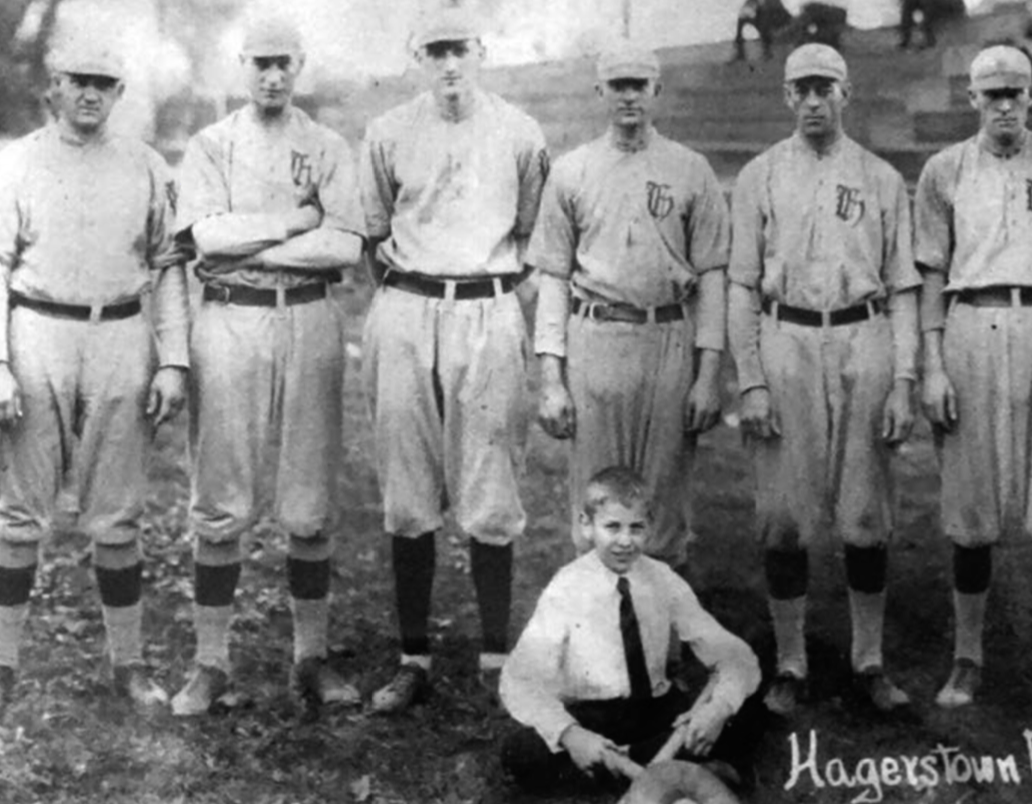
The college baseball team from Tennessee was really, really good. In fact, the team was suspiciously too good. As it rampaged its way through other college and university teams across the southern United States in 1916, the scores they racked up raised eyebrows among the teams they defeated along the way. Something was fishy, here.

It used to be that there was a sharp division between professional athletes and amateur sportsmen. Amateur sports were gentlemanly, they were more about competing and doing your best and learning life lessons rather than winning. That applied to collegiate athletics as well. So, when it became increasingly clear that this small private school from middle Tennessee was most likely using professional baseball players to build a reputation for itself, it rankled people closely associated with amateur athletics.

One of the people who was furious about this situation was legendary football coach John Heisman. Heisman was a passionate stickler for keeping college athletics pure and untainted by what he considered the vulgarity of professional sports. And, on top of that passion, Heisman was also the baseball coach for Georgia Tech University, a team this group of “ringers” from Tennessee had beaten.

The pros not only easily beat Heisman’s college boys, but they actually embarrassed both Heisman and his team by blanking the Yellow Jacket ball players by the score of 22-0. Now, if another institution of higher learning fielded a baseball team with amateur student-athletes and beat Heisman’s team, then the ol’ ball coach would have accepted that. But Heisman also knew that true gentlemen, true sportsmen, shouldn’t take pride in humiliating other amateurs who were playing sports to better themselves and not to win at all costs. And he hated cheaters.

Heisman vowed to get revenge, ten-fold. And he did.

That year before, in 1915, Tech had agreed to play the same Tennessee college in the other sport Heisman coached, football. However, the college had disbanded its football team in the interim months. When it became time to play the football game in the fall of 1916, the college sheepishly wrote Heisman to say that they no longer had a football team. Heisman insisted. He pointed to the contract that said the two schools would play each other in both baseball and football. He said that Tech would be entitled to receive $3000 dollars in 1916 money for the little college to break the contract.

And so, little Cumberland College of Lebanon, Tennessee, put together a team of college kids who’d never played organized football before and traveled to Atlanta, Georgia, to play mighty Georgia Tech in football. This time, there would be no pro players for Cumberland.

Heisman got his revenge for Cumberland using pro baseball players by eviscerating the visiting team.

The final score?

222-0.

On Johnny Football

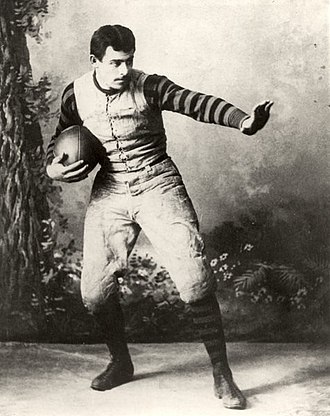
Look at this guy in the photo above. Call him Johnny. He grew up in Cleveland, Ohio, and he played college football for Brown as an undergrad and for Penn as a grad student in law. 159 pounds of pure, uhm, gumption, Johnny played center. That was small for a lineman, even in that pre-1900, no helmet period of college ball.

Johnny’s real love, however, was acting. He had a deep, booming voice for someone who was fairly short and imperially slim. While still a high schooler, Johnny carried himself with somewhat of a theatrical air. His speech at graduation (he was the class valedictorian) was on The Dramatist as Sermonizer. Later, when Johnny decided to marry, he even married an actress.

He chose a career as a professor and, since he had played in college, a football coach. But acting and the stage never left his soul. During the off-seasons from his sport, he raised money for his teams by starting dramatic societies and putting on plays in which he often starred. One college paper at a poly-technical school at which Johnny taught gave a rave review of one of his performances, saying that, “He acted not like an amateur, but like the skilled professional that he is.”

His elocution and diction were perfect. His dramatic and even comedic timing was impeccable. His stage presence was riveting. Johnny used his not inconsiderable talents to win parts in some Broadway productions, and he acted in several plays off-Broadway as well. He toured with a southern dramatic company one summer, and eventually opened his own acting company and then, later, theatrical production company which both bore his name. His influence became so great that after his death from pneumonia at the age of 66, a musical was written about him and the rather odd mix in his life of football, teaching, and acting.

Oh, perhaps you wonder why you don’t know about this football player turned teacher and actor. Today, people around major universities and their supporters certainly know about him, but not for his acting abilities. In fact, there’s a major college prize, awarded yearly, that’s named after him, but it doesn’t go to the best collegiate actor.

No, it goes to the best collegiate football player.

It’s the Heisman Trophy.