On a New Captain

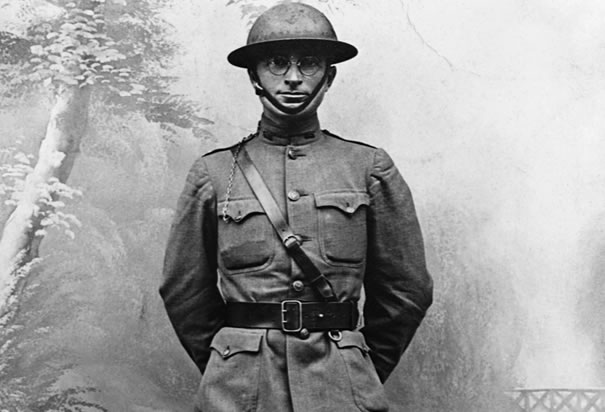
It was in June 1918, in France, during World War I, when the men of Battery D of the 129th Artillery Regiment received word that they had been called to muster for an important announcement. They were introduced to a new leader. This new commander of the artillery battery was a newly promoted captain and a volunteer. The group of men who made up the battery were unimpressed with the new guy from the start. “He looked more like a college professor than he did a captain of artillery,“ one noncommissioned officer remarked later. And that was an accurate description. The man, age 34, wore wire rimmed glasses. He stood awkwardly, obviously wasn’t terribly athletic, and when he addressed the troops that first time that they were mustered under his command, not a few of them noticed that his knees shook while he spoke. After he addressed the group and dismissed them, several of the artillery men responded with a Bronx cheer.

Later that day, several men decided to test the will of this neophyte captain. They staged a fake riot in one of the barracks to see what they could get away with, to see how he would respond. And his response was nothing that they predicted. The next morning, without a word, a notice was posted on that barracks bulletin board. It listed the demotion of the noncommissioned officers and a list of chores to be completed as discipline for the entire group.

Addressing the other noncommissioned officers from the other barracks, the captain reminded them that he wasn’t there to get along with anyone. And if they were unable to maintain discipline in the ranks, he would find another assignment for them. The older and wiser non-coms in the group looked at each other and nodded. This guy was going to be OK, they decided. Discipline was restored because of the new-found respect that they had for the new guy.

On the other hand, the new captain also quickly developed a reputation for rewarding those soldiers who excelled. His men grew to like him as well as respect him. He was cool in his decision making and treated everyone fairly. Still, the unit had yet to be tested under fire. And it was here that the captain himself worried about his ability to withstand what the enemy had to offer when the shells were coming in on him. He wrote a letter to his fiancé, saying that he hoped that his legs would help him stand firm, even when they were wanting to take him away from the danger. And that first test of battle came a month after he was made captain. After selling a German position, the Germans returned fire to the Americans. Several of the group abandoned their artillery pieces and began making for the rear. The captain began yelling at them– – something he had not done before. Apparently, he called them every day in the book, challenging their manhood, and even referring to their mothers in inappropriate ways. His anger worked. The men came creeping back to their stations at the guns, and they returned fire on the Germans. The captain was later commended for his coolness under fire in for rallying his men under duress.

When the war ended, the men of the battery took up a collection. They had a silver cup made, which they presented to the captain as they were discharged from service. On one side, the cup said, “Presented by the Members of Battery D in appreciation of his justice, ability and leadership.”

And on the other side, the cup said, “Presented to Captain Harry S. Truman.“

On an Official Phone Call

In 1947, the United Nations considered an important and historic vote. They were deciding how to partition Palestine, choosing what land would be used to create the new nation of Israel–or even if such a new nation should be created. The reasons for the UN taking up such long-lasting and significant decisions can be debated, but, for the sake of brevity, its important to realize that powerful people sat on both sides of the issues. The fate of nations, economies, wars, and decades of violence (both past, present, and future) was at stake.

And both sides knew that the vote was going to be close. Many people wished that the Palestinians should be allowed the land to form their own nation. Others felt that the Jewish people both in situ and trying to reestablish their lives after the Holocaust in Europe should be granted the land to form their own nation. Tensions were high, especially when you consider that this was also at the height of the Cold War between the United States and the USSR. So, every vote would count in the UN General Assembly.

The President of Haiti at that time was a man named Dumarsais Estimé. The Hatian leader was sitting in his office one day before the UN vote when his secretary called him on his intercom. She informed Mr. Estimé that the President of the United States, one Harry S. Truman, was on the line. The president picked up the line and heard the mid-western crisp voice of the American President say, “Good afternoon, Mr. President, this is Harry Truman calling from Washington. How are you, sir?”

Now, President Estimé had never spoken to Truman in the two years the Missourian had been in the White House. To get a call at this time was surprising. The US did send financial help to the poor but strategically placed nation. Perhaps this is why Truman was calling, the president thought. “I’m fine, Mr. President,” he answered. “What can I do for you?”

Truman came right to the point. He told the Haitian leader that he wanted Haiti’s vote in the upcoming UN session to be for the creation of Israel. “Now, this is important to me, Mr. President,” Truman told him, “and I know you want to remain a friend of the United States. Don’t you?”

Dumarsais Estimé was stunned. Was this a veiled threat from the American leader? Was Truman dangling American aid to Haiti as bargaining chip to force Haiti’s vote in the General Assembly? In his office in Port-Au-Prince, Estimé stayed silent a moment. Truman waited, then said, “Mr. President? Are you there?”

“Yes, sir,” Estimé said.

“What do you think, Mr. President? Can you see your way to vote for Israel?”

“Yes, sir,” Estimé repeated.

“I appreciate it, Mr. President. I look forward to speaking to you soon. Thank you,” Truman said. And then the line buzzed as the connection was broken.

And the Haitian delegate at the UN indeed voted for the creation of Israel. As, as I said, the vote was close. The resolution passed by a three vote margin. Truman’s strong-armed tactics worked, apparently.

Except there was a problem.

Years later, in the Truman Library Archives, the following notation was found in one of the former president’s daily journals:

“Someone pretending to be me called the President of Haiti and made threats about the Zionist vote,” Truman wrote. “I have asked that we get to the bottom of this.”

To this day, we still don’t know who that person was.

On Some After Work Drinks

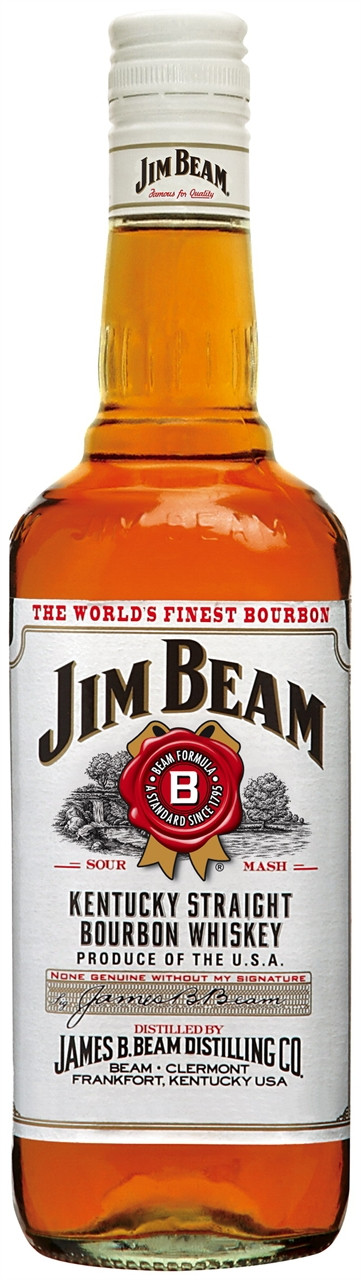
Sam and Harry had been through a rough but satisfying day at work. The organization they both worked for had been busy for the past few years in the Allied war effort. It was April, 1945, and the war had only a few short weeks left. Sam and Harry both knew this for sure, and the fact the United States was going to win the war gave them both great satisfaction. Besides both being southerners, the two men were the heads over their respective departments at work, and, as such, they had much in common both at work and in their home lives.

As the pair was getting ready to leave work that day, Sam invited Harry to his office so they could have a drink. The two were old friends, and they knew each other well after years of working together. And, as old friends do, Sam and Harry could get a lot of work done with talks over a few highballs, sometimes even more work than they could do when they were actually performing their jobs. Sam, as he usually did, loosened his tie and propped his feet on his desk. Harry never loosened his tie; it was a mark of the man that, while he was not wealthy, he dressed well and took pride in his immaculate work wear.

The two co-workers talked for awhile about Harry’s family. Sam had no children, and his homelife was lonely since he was divorced. That’s another reason he appreciated Harry’s willingness to stay and share a drink with him. There wasn’t much for Sam to go home to. Harry’s daughter had recently turned 21 and was wanting to pursue a musical career. Harry was in the middle of his second glass of Sam’s whiskey and his usual diatribe against his daughter’s career choice when Sam’s phone rang.

The two men looked at each other. Answering the work phone after hours couldn’t lead to anything good. It had to be someone who needed something, something the two men would not want to address. “Let it ring, Sam,” Harry advised. “They’ll stop in second.” Sam nodded and knocked back another swig of the bourbon. The phone stopped ringing. “See?” Harry said, and motioned towards Sam with his empty glass for Sam to fill it again.

But the phone rang again. And, again, the pair swapped looks. Sam sighed and leaned forward, taking his legs off the desk. He picked up the phone. “Yeah?” he answered. As he listened, Sam set down his glass. Harry could hear the voice on the other end of the line, but he couldn’t make out what the person was saying. “Yeah,” Sam repeated. “Right now. Got it.” He hung up the phone and turned to Harry.

“The boss wants us,” Sam said. “That was his secretary.”

“I thought he was out of town?” Harry said.

“Well, apparently he’s back, ’cause they just called from the house. We’ve got to go there right now. Side entrance,” Sam explained. Harry grimaced, and now it was his turn to set down his glass. Sam picked up the phone again and called for car. The pair made their way down to the street where a dark car waited by the curb. They entered it and rode the short distance to the boss’s house in silence. When they arrived at the large place, the security guard waved them in.

Harry got out of the car first and made his way to the side door of the large mansion. There was a woman waiting there for him. He greeted her warmly and, out of respect for the boss’s wife, removed his hat.

Eleanor Roosevelt took Harry Truman’s hand and, without emotion, said, “Harry, the President’s dead.”