On Meeting an Enemy

Staff Sergeant Erwin Meier of the German Luftwaffe was a highly decorated pilot during World War 2. Unlike most air forces of today, the Germans allowed non-commissioned officer to be pilots, and Meier was one of the best the Germans had. Flying his Messerschmitt Bf-109 machine, Meier had recorded double digit kills on the difficult Eastern Front of the war by 1942. For his service and skill, the pilot was awarded medals and other air awards. And that’s why, when he was shot down by a Russian pilot, he was somewhat surprised.

The time was September, 1942, and the decisive Battle of Stalingrad had finally begun to turn to the Soviets’ way. However, the end of the struggle was still undecided, and establishing air superiority was still important to both sides. While the Germans had their faster and more maneuverable Messerschmitts, the Russians were able to counter with their own fast and nimble Yaks. However, unlike the German crates, the speed of the Yaks was because they were made of wood and that made them much more vulnerable to enemy fire.

It was a clear day when a squad of four Yaks spotted some German bombers and their fighter escorts headed for the Russian lines around Stalingrad, and the Russians closed in for an attack. Meier saw the Russians at distance, and he peeled away from his group and looped back around to come in on the Russians from behind. Now, the pursuer became the pursued. Meier’s tactic was so bold and smart that he managed to gain an advantageous position on the rear of the Russian squad leader, a man named Major Danilov. As he was squeezing off some machine gun rounds into the now-splintering tail of the Russian’s plane, Meier felt a violent jolt. Somehow, a Russian pilot had managed to come in on his tail, and his Messerschmitt was being pelted with rounds. Several Russian rounds found his engine, and the German ace realized that his plane was doomed. He veered off from his attack on the Russian major and tried to keep his craft steady while he unlatched and then pushed back the glass covering over his head. He checked his horizon and then bailed out of the doomed aircraft, deploying his parachute after he was sure he had cleared the plane.

As he gently fell to earth under the canopy of white silk, Meier cursed himself for being so careless. How could he not have seen the pilot that snuck up on him from behind? That guy must be a good pilot, Meier thought. And, when he reached the safety of the ground, a squad of Russian soldiers were there to quickly take him captive. Meier thought he knew the names of the best Russian pilots he was facing daily in the skies above Stalingrad; he had studied their tactics and their tendencies, and, in his mind as he was being questioned and moved to a POW camp, Meier ran through the list of who he thought might have been the one who shot him down using such a good maneuver.

“Would it be possible to meet the pilot who shot me down?” he asked his questioners through the interpreter. Sure, came the answer back. The Russians were happy to oblige him because they realized that a meeting between their own pilot and the German hero would make for good publicity and would boost morale in the Soviet press, good news for a people hungry for any victory in the war, no matter what the size of it. So, Meier was taken to the makeshift airfield where Major Danilov’s squadron was based. And he was introduced to Lieutenant Litvyak, a 21 year old blond Russian who looked like someone you’d meet in a school yard rather than in a deadly air duel. But Meier thought the Russians were kidding him, trying to embarrass him. Surely, this kid couldn’t’ve been the expert pilot who got the drop on him and shot him down so expertly. Still incredulous, Meier asked Litvyak to describe how the short battle unfolded. The Russian described the encounter to a tee. Meier became convinced that this, this, this child had bested him in combat. The Russians, of course, were gleeful. For his part, Major Danilov acknowledged that Lt. Litvyak had saved his life, that he was probably doomed if Meier had been able to finish him off. What made it worse in Meier’s mind was that the young Russian pilot had only been on the front for less than a week and already been credited with three “kills” including Meier. The brave and skilled Lt. Litvyak would soon be promoted to command a squadron of Russian planes and be credited with dozens of sorties and several more kills before being shot down and killed in August of the next year.

But that was long after the Soviet propaganda machine made a big deal out of the fact that the German ace Erwin Meier had been bested in combat by a girl.

On a Returning War Prisoner

Andras Toma had been a 20 year old Hungarian soldier when he was captured by the Soviets near the end of World War 2 in 1945. Toma was taken to a POW camp near what is now St Petersburg, Russia. The German soldiers and their allies, including captured Hungarians, often had to trek across hundreds of miles of countryside by foot when the war ended and they were released from custody in order to return to their homelands. I have some friends in Western Germany, near Cologne, who had their ancestor show up unannounced at the front door of the family homestead in 1947, fully two years after the war ended. They thought he was dead. That wasn’t an unusual event. Toma, too, had to stay some years in Soviet custody before his release, and his family had long since though him deceased in the war.

But Toma had survived. After the POW camp, an illness saw the young Hungarian transferred to another facility, a Soviet hospital, still deeper in the Russian interior. He languished there for several months, and then he was transferred to yet another facility, and that’s when he lost track of time. He didn’t realize how long it had been since he was put in the facilities. Back home, since he didn’t return after the war, his family had him declared dead. Again, this wasn’t unusual for families whose sons, husbands, brothers and other relatives didn’t come back.

Meanwhile, Toma was having trouble communicating with the doctors and the staff of the medical facility. Hungarian is a rich language, but it’s also one of the most difficult languages to learn. Besides, it’s not spoken much outside of Hungary. And Toma knew no Russian. So, when the doctors made their rounds and the nurses brought him his food and checked on him, there was almost no interaction between Toma and them. Apparently, he had no conversations with them at all while he was there.

Then, a doctor in the hospital who was from Czechoslovakia noticed the man. the doctor soon realized that, because of his name, Toma was most likely Hungarian. The man, curious as to what seemed to be a patient with no obvious or visible issue by that time, arranged for a records check on the Toma, and the entire story came to light. It seems that, for some unknown reason, Toma had ultimately been placed in a Soviet mental institution. His inability to speak Russian (and the Russians’ lack of Hungarian language skills) had allowed him to stay in the mental facility for an inordinate amount of time both unchallenged and unchecked.

And that’s how Andras Toma finally made it home to his family in Hungary after the war. He was given a hero’s welcome, and he was awarded back pay for all his time in the service, even though the war had ended some time earlier. The joyful reunion between Toma and his family occurred on August 11, 2000.

Because he didn’t speak Russian, Toma had been a POW for over 55 years.

On a War Prisoner

My feeble mind isn’t expansive enough to feel the impact of the Holocaust. That 6,000,000 people at least died in the various camps operated by the Nazi Party during the Hitler Regime is beyond me. The addendum to this unspeakable tragedy is that hundreds of thousands of German POWs from several nations also died in camps from disease, malnutrition, abuse, and outright murder.

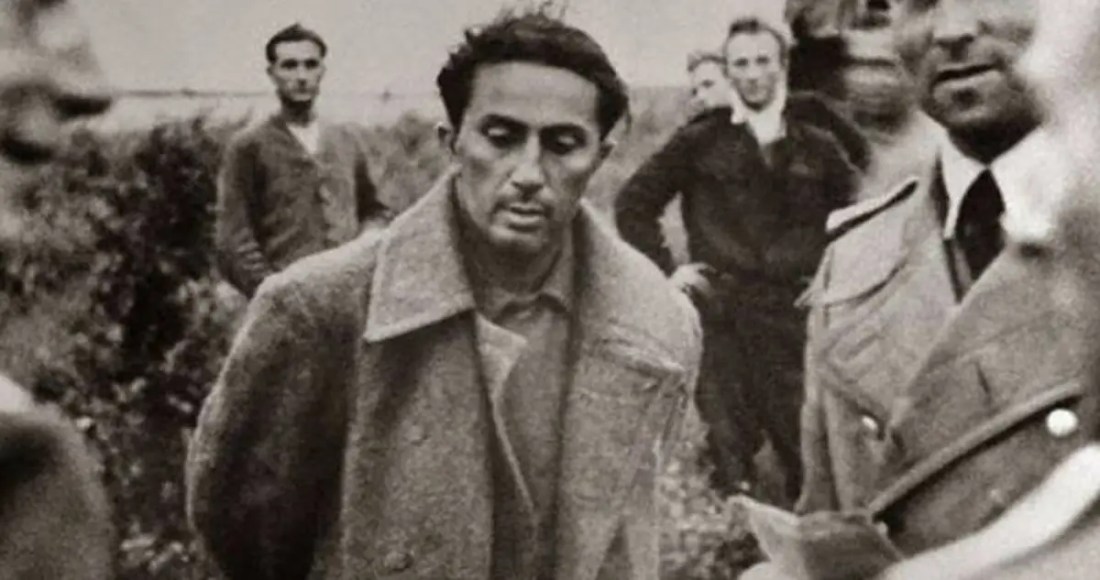
Take Yakov Dzhugashvili for example. He was one of the countless Soviet war prisoners taken by the German Army as they invaded the Soviet Union in June 1941. Yakov had been a bright but shy, sensitive boy with some mental health issues; he attempted suicide several times before reaching adulthood, and his overbearing father tried to direct the young man’s life. While Yakov wished to pursue a career in engineering, the father forced him into the military, making him attend artillery officers school. He graduated as a Lieutenant only weeks before the Nazi invasion of his country.

Sent immediately to the front lines, Yakov fought in the Battle of Smolensk. He was captured by the Germans in mid-July after refusing an order to retreat; he ordered his battery to keep firing long after the other units left in an attempt to cover his comrades’ retreat. Sadly, rumors reached his family that he had surrendered freely and as a coward to the Nazis rather than the heroic circumstances that would later be revealed by his fellow soldiers and captives.

Yakov was sent to Sachsenhausen POW Camp, which is a misnomer because it was one of the notorious concentration camps. As one of the earliest officers captured during the invasion of Russia, the Nazis wished to use Yakov as a propaganda tool and possibly force him to make Russian-language radio broadcasts to his fellow soldiers on the front lines. That never materialized, but Yakov probably wouldn’t’ve cooperated in the first place.

The young man’s old depression returned shortly after he was interned in Sachsenhausen. There were reports of self-harm. He would often engage in sometimes violent and almost always non-sensical arguments with fellow prisoners and sometimes even with himself out loud as he walked around the camp grounds. Finally, in early 1943, Yakov died by seemingly purposefully running into the electrified fencing at the camp and then being shot by the guards for attempting to escape.

The Soviet leader, Stalin, once said that one death is a tragedy while a million deaths is only a statistic. Yakov was an example of both of those, being a tragedy and a statistic. In fact, over 3,000,00 Soviet soldiers died in German custody. Stalin also noted that many sons of Russia died in the Great Patriotic War. Yakov was also one of those. And Stalin would know.

You see, Yakov was the son of Stalin himself.