On a Bloodletting

To say that the field of medicine has exponentially advanced in the past decade is an understatement of epic proportions. Our knowledge of how our bodies work (and how and when they don’t) doubles every 80 days or so according to one source. That’s why it’s almost impossible to comprehend that, within the past 200 years, doctors often treated some sicknesses by bloodletting.

Bloodletting, in case you didn’t know, is the practice of removing not a small amount of blood from a sick person based on the idea that sicknesses were carried in the blood or that the removal of “bad blood” would aid a person’s recovery from an illness. Pints of blood were often removed from patients, almost always resulting in the afflicted person become more sick instead of getting better. Doctors of the day would usually employ a scalpel on a vein and then allow the blood to flow into a pan, large dish, or bowl. Sometimes, the doctors would use leeches placed all over the body of a patient, but this method was eventually discarded as being too slow to remove the “sick” blood from the affected person.

Part of the reason for the belief in bloodletting was that the human body contained four “humors:” Black bile, yellow bile, phlegm, and blood. If one of these four got to be out of balance compared to the others, the belief was that this imbalance would result in sickness. Since there was more blood than these other “humors,” then it was thought that the offending humor was most often blood. Oh, and don’t look now, but the practice is still occurring in some cultures.

But we wish to look at the case of one elderly American man who came down with a sickness right before Christmas one year. He had been outdoors, on horseback, for several hours in snow, sleet, and freezing rain. When he returned home, he had a chill and took to his bed. When he awoke early the next day, he was feverish and shivering and complained of shortness of breath. His wife called a doctor to come to the elderly man’s bedside. Eventually, three different physicians were summoned, and they all agreed that the patient required a bloodletting.

Over the next several hours, the medical team took almost half a gallon of blood from the patient. They also gave him an enema and induced vomiting. All of this only weakened the sick old man even more. Believing that they had simply not taken enough blood from him, the doctors opened another vein and siphoned even more blood. By the morning of the second day of after coming back from the exposure, the old man succumbed to his illness…or, perhaps, he had succumbed to the extreme loss of blood because of his doctors’ treatment. It was 10 o’clock, December 14, 1799. He was buried four days later.

Of course, today, we know that the man probably would have survived the illness if his doctors had not practiced the bloodletting. This is a case of a patient probably being better off having never seen a doctor, let alone one that practiced this barbaric therapy.

But, while we may never know for sure, most modern doctors and scholars believe that it was the bloodletting that killed George Washington.

On an Imagined Email

If email had existed years ago, here’s a possible, mostly historically accurate, but completely imagined inter-office communique:

To: Senior Staff

From: JM

Date; 20 May, ’92

RE: The Boss

He’s talking about retirement again. We are at a juncture where such a move would prove disastrous for our little enterprise. In talking with him at length in his office this morning, the following items were brought up as the major reasons for leaving.

1.) He’s tired. The years of strain of being an exec have taken their toll, he says. He feels that he’s done all he can do to get us off the ground and on as stable a footing as he can given how little time we’ve been in operation, but he argues that he’s got nothing left to give. He talks about staying home, working in the garden, taking walks along the river, and playing with the dogs. Can you believe it? The dogs, for Chrissakes. And he says his wife is tired of him not being home after so many years of work. He says he’s old–but he’s only 60! For those of us who’ve been here since before the start, he’s always seemed older, but he’s never seemed old to us. We’ve got to remind him that he’s young, that he has many productive years left, and then say things about how his color is good or how he’s looking well.

2.) He’s fed up with the interoffice politics among senior staff. That’s why this email if for your eyes only. It would do no one any good to learn about infighting among the senior-level employees. Keep this to yourselves. But he’s looking specifically at Al and Tom. You guys have your issues, we know, but you’ve got to keep that stuff out of the office. No arguing in front of him, in the halls, or anywhere on the property. If you guys have something to say to each other, say it out of earshot of anyone having to do with this office. The Boss says he’s tired of having to play referee for your infighting. And he worries that staff as a whole will choose sides between you two, leading to division within our group, and possible dissolution of what we have all (especially he) have worked for so hard for so long. He is aware that there will be fighting over who will replace him among us, but he still is wishing to step down.

3.) Finally, he’s worried that if he stays any longer in the leadership position, people in and out of the organization will soon not be able to separate him from the role. In other words, his concern is that the man will become synonymous with the position, and anyone who follows him will forever be considered and seen as the “not him.” That’s a valid position to a degree, granted, but, again, we are at a critical point in our existence. We have to assure him that if he decides to step down now, there may be no role for anyone to assume after he leaves.

We have to have a united front on this. Remember: Stay positive in his presence. Tell him how good he looks and how young. No infighting (can’t be stressed enough). Remind him how vital he is to what we are trying to do here.

Everything depends on President Washington being re-elected in November and staying in office for at least four more years.

–Madison

On A Polish-American Hero

Only eight people have been granted honorary citizenship in the United States. Churchill, Mother Teresa, and The Marquis de Lafayette are among them. And then there’s another Revolutionary War hero, a man named Casimir Pulaski. You may have heard of him because of several towns and counties in the US bear his name. Like Lafayette, Pulaski joined the battle against what he felt was the oppression of the British government against the freedom-loving Americans. He did this in part because he had waged a similar but unsuccessful fight as a cavalry officer in his native Poland some time before and had been exiled by the powers that were in the country at the time. That’s when he came across Ben Franklin and Lafayette in Paris who convinced him to continue his fight for freedom and against tyranny by journeying to the newly-formed United States and joining the fight there.

And, so, he and several of his fellow Polish cavalry officers did. Pulaski had come from the nobility in Poland (he bore the title, “Count Pulaski”) and, thus, had some money of his own. He used some of his fortune to finance the first true cavalry unit in the United States Army, becoming known as the Father of the American Cavalry to this day. And he fought in the war effort from north to south along the eastern seaboard; he went as far north as New York and as far south as Georgia. When he stepped off the boat in Massachusetts, touching American soil for the first time, it is reported that he said, “I came here to defend freedom, to serve it, to live or die for it.” And, with this spirit and his skills as a cavalry officer and ability to train troops in the saddle, Pulaski became a national hero to those Americans who supported the war against Great Britain. He is even credited with saving the life of General George Washington in battle.

It was in the south, near Savannah, Georgia, that Pulaski was knocked unconscious and mortally wounded by cannon fire during a charge. He was taken aboard a ship in Savannah harbor and died from his wounds two days later having never regained consciousness. The nation mourned. This brave man’s story was their story in many ways. Many Americans at the time were still immigrants from Europe; they had left the oppression of European tyrants to come to the freedom of the American lands, and, even though he was of the nobility, they saw Pulaski as one of them. He died a hero.

Well, for various reasons, what happened to Pulaski’s body after his death got clouded and confused. Some said he was buried at sea after a funeral in Savannah. Others said that he was buried on some high ground on a plantation not too far outside of Savannah. For decades, no one knew for sure. Then, in 1853, a body was found on the grounds of the plantation and tentatively identified as Pulaski’s. That body was re-interred in a memorial to the cavalryman in Savannah. But, then, in 1996, the bones were dug up and underwent a forensic study to determine if they were, in fact, the bones of the Polish hero.

The analysis took eight years.

In the end, the bones were consistent with someone who was Pulaski’s age and military background. There was an injury to the skull consistent with an injury he’d sustained as a younger man fighting in Poland. One cheekbone had a defect, and that matches with Pulaski having had a bone tumor there. And, after comparison to the DNA of a known living great-grand niece, the study said that there was strong probability that the bones were, in fact, those of Count Casimir Pulaski. But, the years-long analysis also showed something no one suspected, either when Pulaski lived or since.

That the Polish hero might have been a woman.

On A Double Spy

This past week, I told you how much I love spy stories. This one involves a spy who worked for the American cause during the American Revolution in the 1780s. That period was a good time (relatively speaking–it was fraught with danger, of course) for spying because loyalties were fluid and people changed sides in the war depending often on who was standing nearby. But James was decidedly on the side of the American rebels.

It’s pretty generally accepted that the American public in the 13 British colonies were split into thirds during the conflict. About a third was against the rebellion and wished for the British Empire to stay as the ruler of the colonies. Another third didn’t care either way–the war didn’t affect them one way or another. Finally, approximately the last third of the population was whole-heartedly on the side of independence and actively worked towards that end. And James worked for independence more than most.

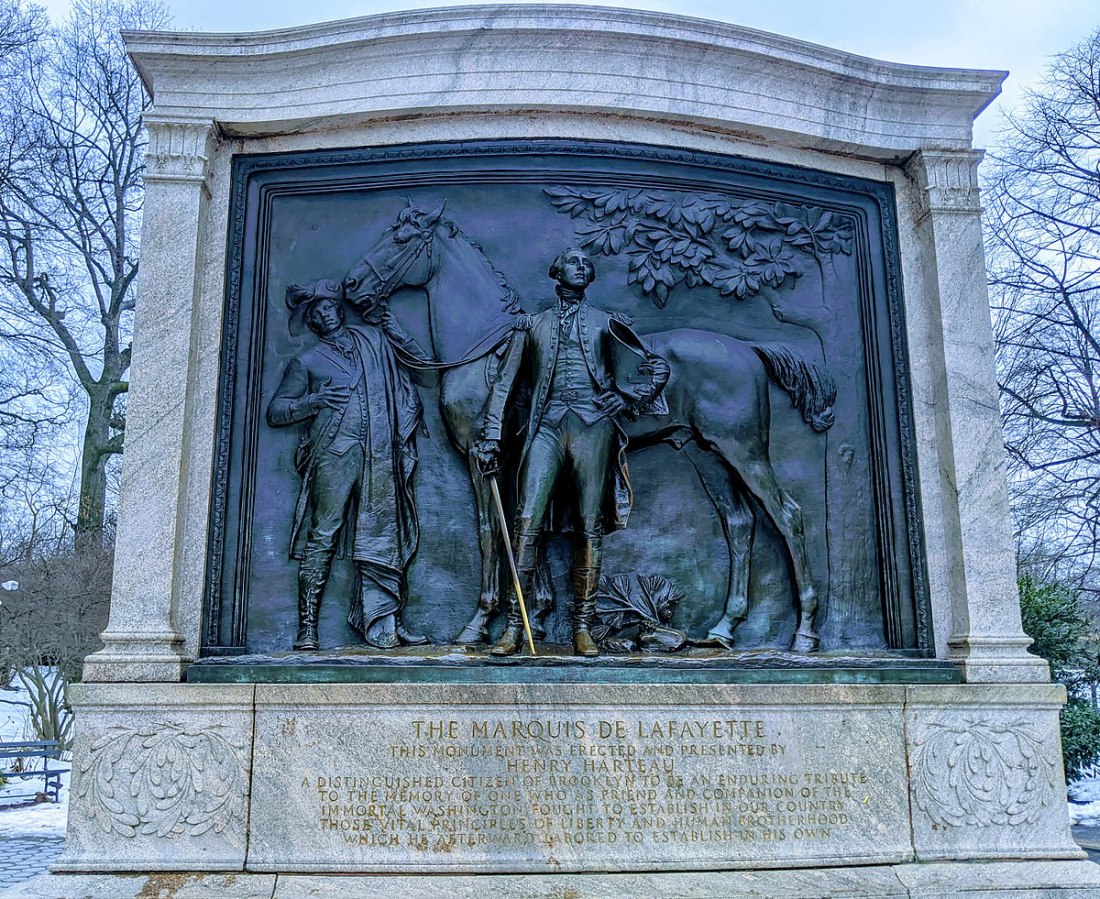
He offered his services as a spy to the rebels, and his offer was accepted. His commander was the French general, the famous Marquis de Lafayette, the man who admired the Americans’ desire for liberty so much that he came to the colonies to help George Washington in the war effort. Lafayette suggested that James secure a position as a “loyalist” in the camp of the American traitor, General Benedict Arnold. Arnold had changed sides in 1780 and then fought for the British. So, Lafayette, with Washington’s approval, sent James to spy on Arnold shortly after the transition from American patriot to British traitor. James gained the trust of the former American leader by pretending to be a spy for the British. The information that James gave Arnold was always solid but was largely useless. However, the intelligence he secretly sent back to the Americans was invaluable regarding British troop size and movements.

Then, as the war began its final stages, Lafayette ordered James to offer his services to General Cornwallis, the British commander in Virginia. There, James secured work as a courier for the British, taking orders and correspondence between British camps. In other words, the British were giving their battle plans directly into the hands of the Americans by entrusting it to James to carry between their lines. The information James gathered enabled the Americans to easily counter Cornwallis’s movements, and it led directly to the American victory over Cornwallis at Yorktown. It was the victory that effectively ended the American Revolution.

After the war, James purchased several acres of land in Virginia and became a fairly prosperous farmer. Despite some issues on whether or not he was in uniform during the war (he was not, obviously), James eventually received a small pension for his service in the war. But, for James, the real satisfaction was knowing that he had fought for the cause of liberty in his own way.

Then, in 1824, the Marquis de Lafayette made a return trip to the United States in honor of the nation’s upcoming 50th birthday. He traveled around all 24 states including Virginia. While in Richmond, Virginia, Lafayette was riding in his carriage through a large group of well-wishers when he saw James’s face in the crowd. The Marquis ordered his driver to stop, and he got out. He rushed into the crowd to excitedly hug James. The two old men were so happy to see each other after so many years and after they both had endured so much for the cause of liberty. However, many in the group surrounding the Marquis’s carriage were less than pleased, however.

You see, James had chosen the last name Lafayette after the man he so admired during the war. And the reason he chose that name was that he had no last name when he had met the Marquis. And the crowd was upset at the embrace because, at that time in Virginia, White men simply did not embrace former slaves like James Lafayette.

On a Financial Advisor

Patsy was set for life when her hubby died. Daniel passed suddenly in his early 30s, and the young widow found herself one of the wealthiest women in the country. To begin with, her real estate was in the tens of thousands of acres of productive farmland. She now possessed rental houses. She owned property totaling sums that most people only imagine. And it was all hers because Daniel had died without a will; everything passed to her as executrix.

But it was not all rosy for Pasty. She and Daniel had bore four children. You see, Patsy had come from a large family and wanted a large family, and Daniel agreed with his wife. So, she was worried about raising her children alone and managing what was now a large financial portfolio. That’s when she decided to call in someone who could help her make the best decisions for herself, the children, and the legacy that Daniel had left her.

Now, before we look at that, let’s remark that this was an incredibly attractive woman under the age of 30–even discounting the fact that she was enormously wealthy at this point. Surely a prospective life-partner would find that appealing. But Patsy didn’t want any man. She was smart enough to manage on her own, but she preferred that her attention be on the children and leave the financial matters to someone else. That’s why Patsy was really asking not really for advice on how to manage the vast wealth, but, rather, she really wanted someone to take it all on for her and do the managing so she could concentrate on raising the kids.

Now, please know that a certain man who lived not too far away from Daniel and Patsy made his, shall we say, services available to the young widow fairly quickly after Daniel was buried. He was a military man who had some decent land himself (but nothing like Patsy) that he had improved over the years. He was a few years younger than she, but his skills at managing his financial affairs impressed the young woman. So, she invited him for a meeting to see what his plans were for her holdings.

The pair instantly found a connection. There was a physical attraction between them on top of the fact that Patsy recognized the young man’s fiscal acumen. Here was someone who could manage things for her while she raised the kids, and he would be someone she felt sure that Daniel would approve of. About a year after she wore a widow’s veil, Patsy’s wedding was planned–more like a wedding with some overtones of a financial merger, perhaps.

Now, you might wonder if Patsy should have made a pre-nuptial agreement. That’s something that is common when one party is substantially wealthier than the other. But she did not. She trusted the man. His reputation for fairness and honesty preceded him. She allowed him to have the full control over all her finances–the land, the rental property, and all possessions. In return, all he had to do was insure that her and Daniel’s four kids would be looked after in perpetuity, and that she herself wouldn’t have to worry about the inheritance she’d received.

But, why should she worry? After all, it’s not every day that someone like Martha “Patsy” Custis would be so lucky as to put her life and her entire fortune in the hands of someone as honest as George Washington.

On a Freedom Fighter

The name Washington is synonymous with the American Revolution and the founding of a nation, as Abraham Lincoln said over 80 years after the fact, “dedicated to the proposition that all men are created equal.” Let’s take a moment and talk about this Washington man who fought for freedom.

His story is familiar to many, I’m sure. In 1776, he joined the fight for his freedom and donned a uniform, a man willing to die if needs be. His nation called to him, and he did not shirk from his duty. Certainly there was a price on his head for taking up arms to fight. However, he was not to be daunted.

Remember that America at that time was British territory. Even during the war itself, about 1/3 of the population still remained loyal to Britain. Historians estimate that another 1/3 was indifferent as to which government ruled them (the colony/state verses the Parliament in London), and that left 1/3 to actively prosecute the revolution like the master of Mt. Vernon did.

The range of fighting that Washington saw went from New York to South Carolina over the years of the war. He endured the same privations as the other soldiers, the same extremes of cold and hot, and the same hardships as any other man in the field. Going through all of that was better, he believed, than living under the yoke of oppression for the rest of his life.

As we all know, the British were finally defeated at Yorktown, and the resulting Treaty of Paris in 1783 cemented the freedom of the American colonies from British rule. But that’s not the end of Washington’s story. What happened next was rather unusual; when the war ended, he didn’t return to Mt. Vernon. No, instead, he boarded a ship in New York bound for Nova Scotia. I bet you didn’t know that, did you? It’s true. And over 3,000 people in his same situation escaped from American territory in the same manner.

You see, Harry Washington, an escaped slave from Mt. Vernon, ran away from Mt. Vernon in 1776, ran away from his owner, George Washington, and took his former master’s last name. He then fought in the Revolutionary War on the side of the British–and for his freedom.

On a Missed Opportunity

I’ve had the pleasure and honor of meeting President Gerald Ford after he left office. In addition, I shook hands with Al Gore on two different occasions. Those types of interactions are not as unusual today as they were when the United States wasn’t crisscrossed with interstates and domestic air routes, when politicians didn’t travel far and wide as they do today.

In the 1790s, George Washington made trips around the United States to drum up support for the newly enacted federal government under the Constitution. The journeys were difficult ones given that roads and bridges were scarce, and, for most people, the federal government in New York (Washington, D.C. had yet to be completed) seemed something remote and abstract to most people. Yet, President Washington met mostly adoring crowds on his trips.

Once, when he was headed to Salisbury, North Carolina, Washington was not so sure he would be met with acclamation. The area was known for being skeptical about what the residents there felt was an overreaching, way too powerful federal government. Yet, more because Washington was the military leader who successfully fought the Revolutionary War than he was the national Chief Executive, people still wanted to see him. One of his most fervent supporters was a young woman named Betsy Brandon.

Betsy and her family operated an inn on the road leading to Salisbury. Inns at that time resembled more of the English pub, a place where the public could come for a meal and a drink and, if they were travelers, get a bed for the night. They revered the man even if they didn’t like the power that the Constitution gave the federal government. And, like many in the area, Betsy’s family made plans to attend the reception for Washington in nearby Salisbury.

But there was a problem. The inn was doing good business because of the trip. People were traveling on one of the only good roads in the area–the road that the family inn was on–to get to the celebration. Betsy’s dad said that someone in the family had to stay behind to tend to the customers who would be coming and going that day. And, as luck would have it, Betsy drew the short straw. He opportunity to meet General Washington was lost to her. She was sad, of course, but she understood that the family couldn’t afford to shut the inn for the day, not with all the traffice.

So, Betsy said goodbye to her family as they left early the morning of the event, and she set about getting ready for the day’s incoming business. She made sure there was enough wood for the cook fire, then she made the bread, set the butter out of the keep, made the coffee, and gathered the eggs from the hens’ nests. A few travelers, excited about seeing Washington, came by and got breakfast, but their excitement only frustrated Betsy because she couldn’t go. She told herself to concentrate on the tasks at hand and the disappointment would go away.

A large group of well-dressed travelers came into the inn about 9am. Betsy set about putting the lard in the large, black skillet for the eggs and fatback bacon for the group. They patiently waited for her to serve them, knowing that she was working alone to accommodate them. She thought that her father would be especially pleased because this large group would be paying a goodly sum for the food.

After the meal–which the group seemed to greatly enjoy–one of the men asked her why she was by herself that day. Betsy was a bit surprised. She answered, “Surely you know that General Washington is going to be in Salisbury today, that all the territory is headed that way,” and she went on to say that she was saddened that she missed her opportunity to see the great man when he was oh so close.

The man who had asked her the question, rose to his feet. He leaned over and kissed Betsy on the top of her head. “When your family returns,” he said, straightening, “you can tell them that you saw him before they did, and that he kissed, you, too, because I am George Washington.”

On the Building of Washington, D.C.

You’re probably aware that George Washington is the only US President who never lived in Washington, D.C., during his time in office. While the Father of His Country did lay the cornerstone to what would become the White House (wearing his Masonic apron, no less), the first President to live there was John (and his wife, Abigail) Adams who stayed in the unfinished and freezing cold mansion a short time before the newly-elected Thomas Jefferson took office. And every Chief Executive since then has resided there.

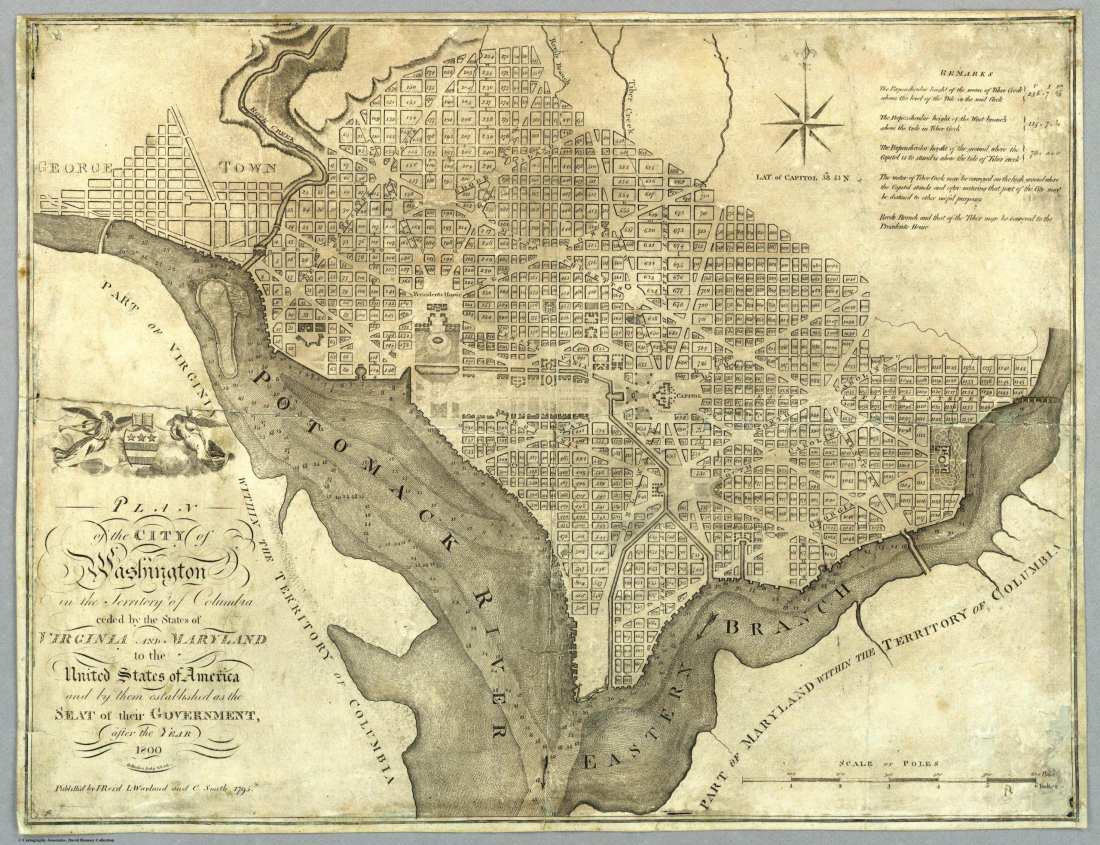
The story of the building of the city is as interesting as it is long. We won’t delve into that in this format, but you should know that the plan to build a permanent and new capital city for the new nation was approved while Washington was still in office. The next step after the approval of the (swampy) land was the design. Thomas Jefferson, ever the designer/architect and Washington’s Secretary of State, put in his two cents regarding building design, but it was a French military officer who had fought with the Americans against the British over a decade earlier who conceived not only of a general style for the architecture of the buildings but also of the overall plan for the city as a whole. His name is Pierre L’Enfant.

L’Enfant’s plan has undergone several changes over the past 220+ years, but the essential heart of the city’s layout and building design is his. As far as cities built as national capitals go, the capital city of the United States remains one of the most beautiful and beautifully designed. The nations of Brazil (Brasilia), Myanmar (Naypyidaw), and Pakistan (Islamabad) all have purpose-build capital cities with varying levels of beauty and livability. Washington remains one of the most beautiful (St. Petersburg, Russia, was also purpose-built as Peter the Great’s capital city, and it is absolutely beautiful, but the Soviets moved the capital to Moscow).

But there’s an irony to the building of the US capital city as you will soon see. L’Enfant’s plan called for the use of sandstone, a plentiful, nearby, and (relatively) easy to manipulate stone building material. While later builders in the city used marble and other stones, much of the original construction of the major buildings of Washington were made of sandstone. The stone was cut, shaped, loaded, hauled, unloaded, shaped again, and then laid to construct the buildings we know so well today. Many of the masons who did the laying stonework were Scots. Scottish stone masons are famed for their craft, and some were “imported” to the United States just for this purpose. However, the Scots, as important and as skilled as they were, did not do the heavy lifting.

No, the backbreaking work of building Washington, D.C., the capital of a nation built, as Abraham Lincoln would say several decades later, on the proposition that all men are created equal, was largely performed by African slaves. It is said to have grieved the abolitionist Adams to see enslaved persons working on liberty’s capital, specifically the executive mansion.

Interesting, isn’t it? For a nation where many people attempt to define what it means to be an American by having been born here or by displaying a certain cultural, ethnic, or linguistic identity, to have the capital city of that nation designed and built by people from Africa, France, and Scotland (among other places).

So, to argue that foreigners and immigrants built this nation, it is true–and literally in the case of the nation’s capital city.

On Presidential Trivia

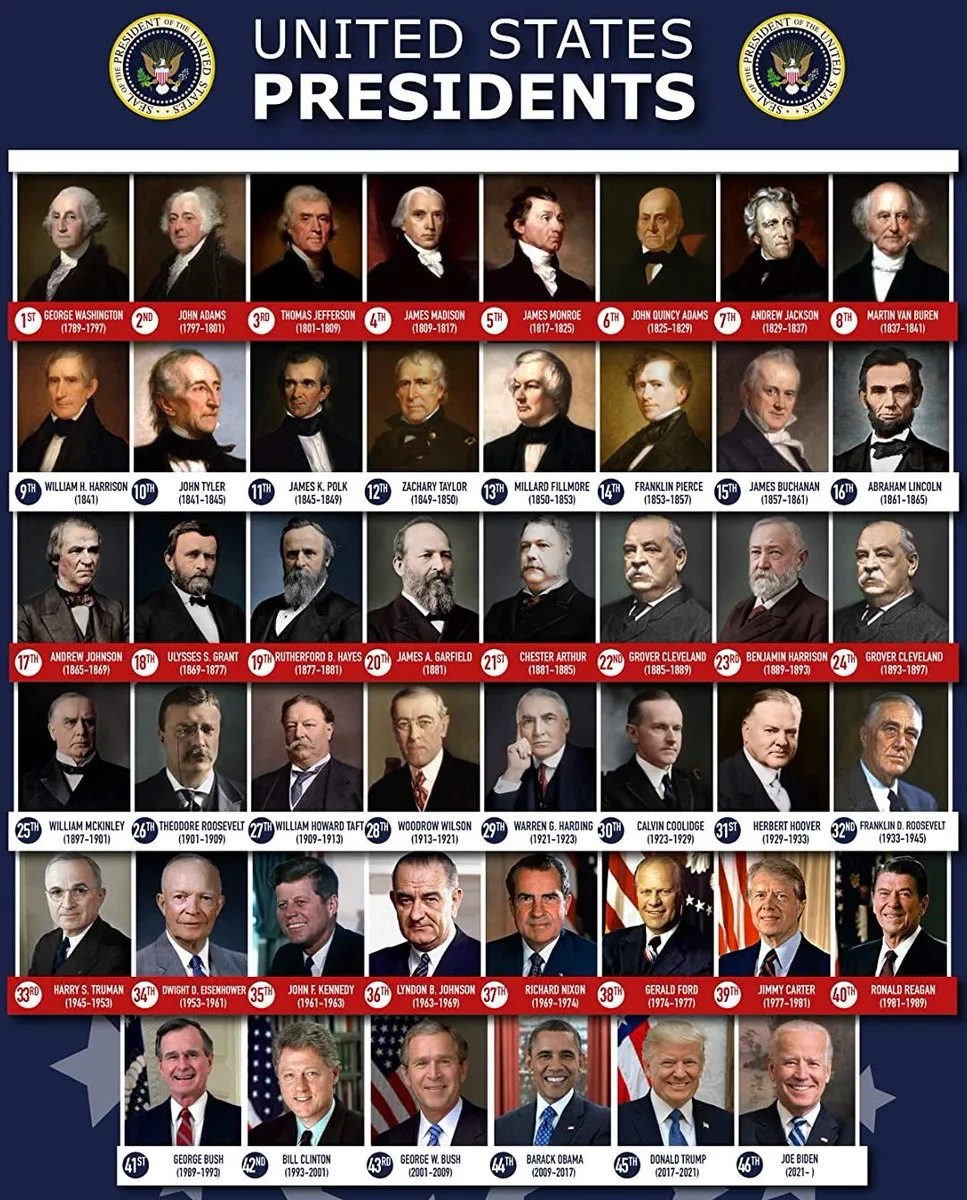
Which president was the first to visit all the states? 

Which president never actually lived in Washington DC? 

Which president is the only one to have been in charge of troops in the field in his capacity as commander-in-chief? 

Which slave-owning president (and more than 25% of all the presidents have been) was the only one to free the people he owned? 

Which president survived  diphtheria, tuberculosis, smallpox, malaria, dysentery, and pneumonia?

If you answered “George Washington” to these questions, you’re a winner!

Most people know that our first president set most of the precedents that successive holders of the Oval Office have followed (more or less). What is less known is that he made it a priority of his time as president to pay a visit to all the states in the new union. He felt that it was important for his new countrymen to see him in person. From Georgia to New Hampshire, Washington made visits to each state over the course of his first term.

And while he indeed laid the cornerstone of the new US Capitol building while wearing his Masonic apron, he actually never lived in the city that bears his name. The second president, John Adams and his wife, Abigail, moved into the not-quite-completed White House in the waning days of Adams’ only term in office. Washington spend most of his time in office living in Philadelphia where the government was headquartered until the new city could be completed.

He also commanded the United States Army in the field as they put down an early attempt at rebellion against the infant Constitutional government. Western Pennsylvanian farmers rose up in protest against what they felt was an over-reaching federal government, and Washington led some 12,000 militiamen to put down this erstwhile rebellion. Not even Lincoln led Union troops in the field during the American Civil War.

Some may say that Washington did not set free the humans he had enslaved, but his will clearly stated that they would be freed on his wife’s death (Martha didn’t wait until her death; she freed the slaves at Mt. Vernon soon after George’s death). This is a technicality, because some presidents like Martin van Buren (he allowed his one slave to escape and did not pursue him) and U.S. Grant both had owned slaves, but they had none when they assumed the office.

Finally, it appears that it was extremely difficult to kill George Washington. He not only defeated these illnesses, but he also had two horses killed under him and had several bullet holes in his uniform (all in the same battle, by the way). Yet, it appears Washington died due to a cold. His physicians ended up treating his last illness by bleeding him, further weakening him, and he succumbed to what doctors could easily treat today.

One final bit of Washington trivia. When he was a militia officer for the colony of Virginia (as a British citizen), Washington led a group of militiamen and some native allies in an attack against a French encampment on the western part of the Virginia frontier. The killing of a French nobleman in this skirmish led to an international incident and the declaration of war between Britain and France. This was the Seven Years War, known in the Americas as the French and Indian War. Some of the costs of that war was to be paid for with taxes on products in the American colonies such as paper, stamps, and tea. The American reaction to these imposed taxes would lead to the American Revolution.

And it was all started by George Washington’s frontier excursion.

On a Gay Soldier

Fred was openly gay. And, at a time when being openly gay wasn’t accepted by society, Fred was also in the US military. For most younger people in today’s world, it’s hard to imagine a time in American history when being yourself was not only frowned upon, but it was also illegal and could result in jail time, loss of the ability to make an income, or the right to own property or even vote. Yet, Fred made no bones about his sexual preferences.

He was an officer in the United States Army, and he simply went about his duties in an extraordinarily efficient manner. Fred had risen through the ranks through sheer will and great attention to military discipline. Born to a poor family, Fred had pulled himself up by his own bootstraps. In the military, he had earned a reputation for being tough but fair. However, he demanded the highest level of discipline from his subordinates, and he demanded the same of himself. That made the troops who served under him love and respect him.

When the army needed a particular unit to be torn down and rebuilt from the ground up, they called on Fred to come into the situation, reestablish discipline, and rebuild the pride of the unit. And, time after time, Fred delivered. Fred wrote the book on military discipline for his time. Literally. He wrote a military training manual that was used by the United States Army for some time.

Perhaps it was this value Fred gave to the country and to the army that allowed his military superiors to look the other way when it came to Fred’s personal life—a personal life that, again, he took no pains to conceal. Even his commanding officer said about Fred that he was honored to be considered Fred‘s friend and comrade. This high praise from his commander was one of the greatest things of Fred‘s life. Fred, like most Americans, almost worshiped this man.

You know Fred’s commander: George Washington.

And now you know that Fred was Baron Friedrich von Steuben, the gay man who trained the Continental Army that defeated the British in the Revolutionary War.