On A Loyal Companion

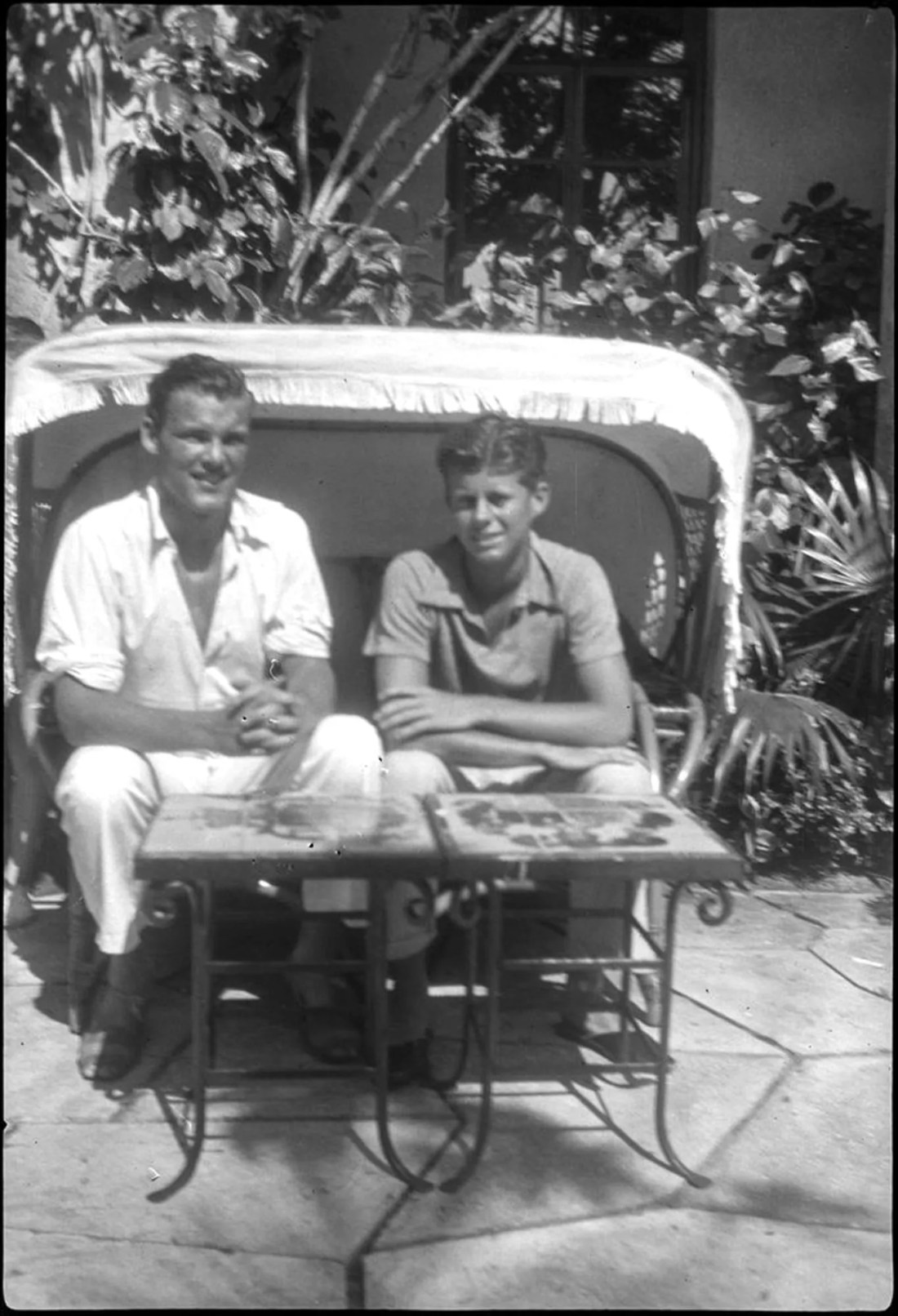
People say you’re fortunate if you have one or two people in your life outside of your family in whom you can completely confide and on whom you can completely count. Lem had such a friend in John. The pair met at a prestigious prep school, Choate, in the 1930s. Both boys were from wealthy families in the Northeast, and both came from families where the father was largely absent and distant. So, in many ways, it was quite natural that the two would become best chums.

They roomed together at the boarding school for several years. In fact, Lem, a year older than John, thought so much of the friendship that he agreed to re-do his senior year so he could graduate with his best friend. And John was forever grateful for Lem’s sacrifice. They formed a secret society, called the Muckers, whose aim was to play pranks on the staff and on the school at large. Each young man needed someone in his corner, someone who would have the other’s back unreservedly. And they were indeed that for each other. Then, in 1937, the pair spent that summer traveling around Europe. The bond between the two grew even tighter.

Now, at this point, we have to say what you might be thinking. Yes, there was a sexual attraction in play here, but it turned out that only Lem had romantic feelings. John didn’t, but that didn’t stop John from loving Lem as his best friend and closest confidant. John knew that Lem was gay. While Lem would have preferred something more that best friends, he was content that John was in his life in that role if nothing else.

And that’s the way the relationship remained. Lem was in John’s wedding. John’s wife would later joke that her marriage to John came with a built-in houseguest because Lem was always staying over. He often spent holidays at John’s family’s house, and, to keep people from gossiping, he even took John’s sisters to social events. But, society being what it was then, Lem had to remain in the closet.

Both young men served in World War 2 with distinction. They remained close after the war. In fact, they roomed together for a while as bachelors as John began his career and Lem put off attending Harvard Business School for a graduate degree. As John’s career took off, Lem became his closest advisor and confidant, a role he’d had since the two were at Choate together. He was at John’s side when John faced the toughest decisions of his life. John offered Lem positions that would let them work together, but Lem turned them down. He felt strongly that working together would somehow change the nature of the relationship, and he didn’t want to run that risk. John appreciated that sense of love and loyalty in his friend for the rest of his life.

So, yes; having a close companion and a loved and trusted best friend is a rare and precious thing. But the fact that he was gay is a major reason you don’t know the important role Lem Billings played in the life of John F. Kennedy.

On a Same Sex Relationship

Historically in the United States, same sex relationships have been against the law from a legal standpoint, sin from a religious standpoint, and an unspeakable offense and/or a mental derangement in the social realm. Yet, all of that never stopped same sex couples from existing and even flourishing throughout American History.

Now, of course, these were not relationships that were generally out in the open; there was no flaunting of sexual orientation because of the backlash such behavior would cause in the law, church, and society at large. And people created euphemisms for men who lived with men and women who lived with women. If two women were life-partners, many times that was referred to as a Boston Marriage. Wellesley College near Boston was where women of the upper middle and upper class would go to receive an education. Being women of some means, these Wellesley students weren’t as dependent on men for their livelihoods and preferred the company of other women. So, they would cohabitate, and that’s where the sobriquet sprang from. Now, to be fair, some of those Boston Marriages were not sexual in nature, but the living arrangement certainly went against the norm for that time period. For men, the euphemisms were a bit more subtle. Up until the past few decades, if a gay man died, his obituary would often list a “friend” or say that he was “a life-long bachelor” or “he never married,” and those in the know would be able to read between the lines.

Let’s take the case of a devoted couple who lived not too far outside of Baltimore, Maryland, about 175 years ago. Let’s call them Aunt Fancy and Miss Nancy, because that’s what people who knew them called them. The pair lived together for some years, and they would be seen at social functions together, even at gatherings where it was understood that the spouse or significant other was supposed to make an appearance. They also managed to work in an occupation that would normally not be acceptable for people with same sex attraction–the government. And that work often separated the two. The letters we have found (most were destroyed by their embarrassed family members after the couple died) that the pair exchanged were long and expressed, passionately, how the other one was terribly, terribly missed.

It’s rather interesting that Nancy and Fancy would’ve gotten together in the first place. Nancy was from Pennsylvania originally, while Fancy hailed from the Cotton Belt of Alabama. It was amazing that they ever got together at all. Nancy had even been engaged once, but the wedding was called off when the fiancĂ© died suddenly–much to Nancy’s relief, a later letter would admit. And, like the examples of other couples as in the Boston Marriages, they both came from money. But their personalities were different; Fancy was, well, fancy; a quiet and refined gentility oozed from every pore and hair. Nancy was loud and boisterous and enjoyed a bit of a drink every now and then where frivolity would ensue. Yet, the relationship worked for many years. Writing to a relative while waiting for Fancy’s return, Nancy confessed, “I am now solitary & alone, having no companion in the house with me. I have gone a wooing to several gentlemen, but have not succeeded with any one of them.”

Sadly, Fancy died in 1853 of tuberculosis. Nancy would follow 15 years later. Oh, and their names? Those were the names that they were called in derision, first given to them by none other than Andrew Jackson. While we don’t know for sure if the nature of the relationship between the two was sexual, we do know that some of their contemporaries and political foes and even friends certainly thought so. You see, you know Aunt Fancy as William Rufus King, who was the Vice-President under Franklin Pierce, and you know Miss Nancy as President James Buchanan himself.