On a Heroine

Louise Julien died at a much-too-early 38 years old of tuberculosis on the British island of Jersey. She went there in 1853 for her health after leaving France by way of Belgium, but by the time she reached Jersey, the illness was too far gone in her weakened body. Louise had been born in Paris, the illegitimate child of a seamstress and a minor Portuguese nobleman. Louise came into the world at a time of great upheaval in the history of France. Napoleon had only recently been removed and exiled, his attempts at European domination finally thwarted. France had to get used to a new government, and the changes brought about by the French Revolution and Bonaparte’s reign were still being processed by the culture and society.

From a young age, Louise was different than other girls. Strong-willed and almost foolishly brave, she eventually married a tailor but chose to go by the last name Julien rather than her husband’s name. She made money singing in workingmen’s clubs, becoming rather popular in those circles. And that experience helped her develop a sense that workers were, by and large, still at a disadvantage in French society despite the changes the revolution had brought. In addition, she made a reputation as a poet.

In 1848, France experienced another revolution, as workers rose up and demanded more rights and accommodation in the public weal. It began in Paris, and Louise was at the forefront of the movement. The Second French Republic was proclaimed as a result, and some major changes were made in society. But then, Napoleon III, the nephew of the former emperor, staged a coup and declared himself the new French Emperor. Again, Louise took to the streets in protest, urging her comrades to march against the illegal takeover by public demonstrations. The will of the people must be heard, Louise said, and the only way those in power would hear the people’s voice would be through mass demonstrations. In a skirmish with government troops, Louise was injured and then arrested by the new government for being a dangerous revolutionary. It was in prison that she contracted the tuberculosis that eventually took her life on Jersey.

At her funeral in Jersey, the famous author, Victor Hugo, and the poet of the Second Revolution, Joseph Déjacque, gave eulogies over her coffin. Hugo’s speech in particular was so moving that Parisian newspapers reprinted it, and the story of Louise’s heroic efforts on behalf of the revolution and French workers was retold for generations afterward. But that’s not why most people remember her today.

No, we remember her for Hugo’s memorialization of her, at least indirectly. You see, when it came time some years later for Victor Hugo to put pen to paper and write the great novel of the French Revolution of 1848, he used Louise as the inspiration for one of literature’s most enduring characters. He was looking for a character who, like Louise Julien, lifted herself from humble beginnings and attempted to make her world a better place. Thus, you know Louise Julien best as the character Cosette, the girl adopted by Jean Valjean, in Hugo’s landmark story, Les Misérables.

On a Court Visitor

We forget that the concept of European royalty having almost absolute political and economic power over their subjects was a thing as recently as about 200 years ago. The revolutions of the 1840s put an end to most of the period of powerful reigns of the kings and queens in Europe. One of the most powerful courts was that of the Hapsburgs, and they last ruled in what was then the Austro-Hungarian Empire. You probably know more about them than you realize, including the fact that one of the most famous products of that powerful royal family was Marie Antionette, the Queen of France, who, along with her husband Louis, was beheaded on the guillotine during the French Revolution.

Marie grew up in Vienna, at the royal palaces including the large one at Schonbrunn and the palace at Hofburg. She was the 15th child of her parents, the Emperor Ferdinand and his wife, Maria Theresa. Marie, of course, would grow up to be the poster person for upper class snobbery and disaffectedness. The quote attributed to her, “let them eat cake,” supposedly said about starving French citizens who had no bread, was less about her lack of care and more about how she was raised. It never occurred to her that people would run out of bread, of course, and, if they did, well, surely they could then eat cake–because she had never done without. That gives you the idea of how isolated from how the average, common person lived that Marie’s upbringing was. And that’s why it’s surprising to find that the royal family entertained two commoners at the palace when Marie was a young girl.

This young boy was about Marie’s age, actually. He and his father had an audience at the palace at the order of Marie’s mother, Empress Maria Theresa. The man and the boy, only aged 7, came to entertain the Empress and some of her children. It was noticed immediately that the boy and Princess Marie were of similar age and size. The story goes that, during his time in the palace, the boy slipped and fell on the highly polished floor. Marie, being polite, bent down and helped the boy up. In his gratitude, the common boy is said to have said to the princess, “Will you marry me? Yes or no?” Marie was stunned and also amused. She asked him why he would ask her that. He replied, “Because you were so nice to me.” Marie is said to have giggled, and the adults thought that the scene between the two seven year olds was sweet.

While we don’t know if that event actually happened (it was told about Marie in later years), we do have written evidence that the young man did take some liberties to some degree, especially for someone who was not a member of the royal family. It seems that he climbed up into the lap of Empress Maria Theresa. His father was mortified. This was embarrassing and unseemly and an affront to the majesty of the wife of the emperor of that part of the world. But, the empress was kind and loving to the boy. She not only hugged the brash youngster, she allowed this common boy to give her a kiss on her cheek.

Later, after the father and son left the palace, Maria Theresa sent a gift to this 7 year old boy as a token of her kindness towards the family. She had some of the slightly used but incredibly expensive silk clothes of one of her sons sent to the boy. Also, the gift was in appreciation for the musical entertainment that the boy and his father provided for the court, Maria Theresa, and her young children. Of course, the real star of the recital was the 7 year old; the father, his teacher, was there to assist his musically gifted son.

And that’s how, possibly, that Marie Antoinette came to receive a proposal of marriage from a young Wolfgang Amadeus Mozart.

On a Model Maker

Marie Grosholtz. was born in Strasbourg France during the Seven Years War. Her father, Joseph, died in the war two months before Marie’s birth. She and her widowed mother, also named Marie, moved to Switzerland, to the city of Bern, where the mother found work as the housekeeper of a surgeon.

This surgeon became the most influential person in the young Marie’s life. His name was Dr. Curtius. Marie became like a surrogate niece to the doctor, and she returned his love. Curtius took the young girl into his surgery and taught her anatomy. Here, from the time she could clamber on to a stool to reach the counter, Marie learned the skills that would make her life’s work.

The doctor used models to teach anatomy to students, and he found that the young girl had a natural feel for the creation of those models. Using pliable materials, Maria sculpted body parts that Dr. Curtius would then teach from. She saw the models she did not as work but rather as play, as time she could spend learning more from her beloved and adopted uncle. The pair became inseparable, and, by the time she was in her teens, Marie’s models were far superior to those off the good doctor.

In between the years of the Seven Years War and the beginning of the French Revolution, Curtius and Marie and her mother moved moved to Paris. There, the doctor set up his practice, but he started a sideline business—he began exhibiting the models that Marie had so lovingly and skilfully crafted. People were fascinated by the fact that she was so young, yes, but also that she was so talented.

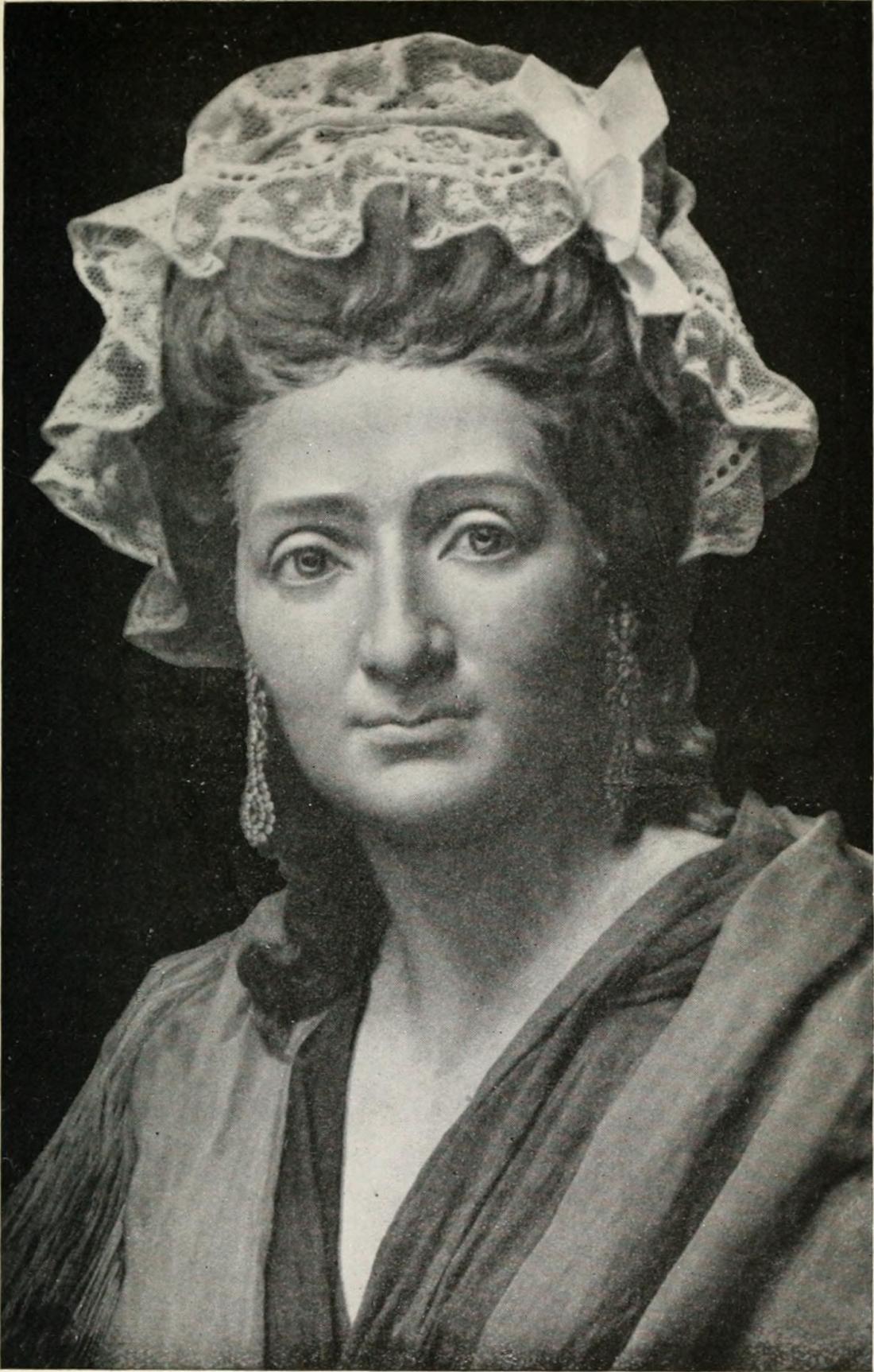
She began modelling the heads of the famous and the infamous in France at the time. She even spent time among the soon-to-be-doomed Royal Family of France, even receiving an invitation to go live at Versailles. Voltaire, Marie Antionette, Louis XVI, and Robespierre all received a sitting with the young woman.

Eventually, Marie’s connections to France’s aristocracy made her an enemy of the new French Revolution’s government, and, after a short imprisonment, she had to flee to Britain where she would spend the rest of her life. Before she left in exile, Marie had married a man named Francois and had two sons who lived to adulthood. But it was in Britain that she made the reputation that she continues to enjoy today.

You can see her models for yourselves at one of London’s most visited tourist attractions:

Madame Tussauds.

On Prisoner #280

Prisoner #280 was listed in the prison records as the Widow Capet. She, along with almost 400 other women, was executed by the new-born French Republic with the new form of capital punishment, the guillotine. We think of that device as being a cruel, almost barbaric method of punishment, but the French revolutionaries saw it as being a much more humane way to kill prisoners. That, however, was of little comfort to this widow or the over 17,000 total Frenchmen who died that way, including the former King, Louis XVI and many other members of his royal family.

The widow’s crimes included treason (which seems to have been almost a catch-all charge during the period for any enemy of those in power at the moment) and, more damning, incest with her young son. Perhaps it was because she had friends and family in other countries that led the court to charge her with the treason. She denied both charges, of course. These charges, and her impending death as well as the conditions of her imprisonment, turned her hair white while she was held. She developed a hacking cough and even lost sight in one eye while in custody of the State. She was only 38 at the time.

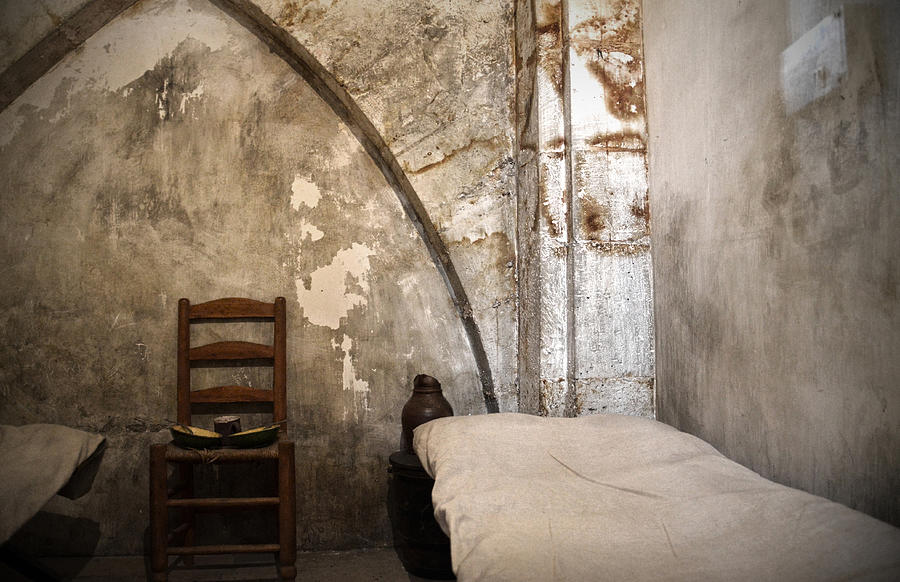
Her prison, the infamous Conciergerie, was where prisoners waiting for their execution were held. For over two month, the Widow Capet endured the degradation of the nights with rats running over her and the odor of their urine, of the walls dripping with slime and mold, and of the fetid food offered with a sneer by the guard. The 11’x6′ cell afforded little more room than to turn round properly. Down from her room, cells for groups of prisoners that had straw on the floor to absorb their wastes lined the hallway. She could hear the pitiful moans and screams of the wretched prisoners who were being dragged off to meet the so-called justice of the Revolutionary Tribunal.

Finally, it was her turn. They shaved her head and tied her hands behind her tightly. People of Paris turned out every day to watch the “sport” of the most recent executions, and, sure enough, a decent crowd had assembled to watch the festivities. As she climbed the scaffold to her death, the widow stepped on the foot of the executioner. “Pardon, sir,” she said, “I didn’t mean to do that.”

After her beheading, the prisoner known as #280’s headless corpse was thrown into an unmarked grave while shovels full of quicklime covered her. For his work, the gravedigger presented the following bill to the Revolutionary Tribunal: “The Widow Capet. 6 livres for the coffin. 15 livres, 35 sols for the grave and gravediggers.”

It wasn’t until over 20 years later that her body was exhumed and reburied under a marker that described her as most of us know her:

Marie Antoinette, Queen of France.