On a Boy’s Letter

In the National Archives of the United States, there are reams and reams of letters that people have sent to the occupant of the Oval Office over the years. The Archives are working tirelessly to digitize those letters. With permission, any American can access these records and see what people wrote to the various Chief Executives. Sometimes, people from other countries wrote to the American President.

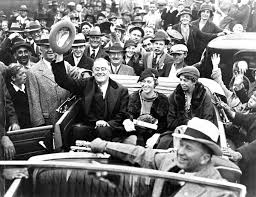
We don’t know why the boy from the Caribbean island wrote to President Franklin Roosevelt in 1940. Perhaps, as children do, he simply wanted to express his admiration for a man who seemed to be so inspirational at a time when the world was going mad with economic disaster and world war. For many, FDR represented one of the last bulwarks against the fascism that was sweeping the globe from Japan to Paris in the war’s first full year. Roosevelt had been recently re-elected for an unprecedented third term, and some breathed a sigh of relief that he was still in control of the last great democracy on earth save Great Britain.

The boy, aged 12, took a pencil and wrote the great man to express his admiration and to ask a favor. The letter begins, “Mr. Franklin Roosevelt, President of the United States, my good friend Roosevelt.” In broken English, he wrote to say that he had heard about FDR’s election win, and he expressed that he “was very happy to hear” the election results over the radio. It was that medium of radio that Roosevelt had utilized to speak directly to the people during the Great Depression and throughout the 1930s in a series of talks called the Fireside Chats. Those talks to the American public resonated beyond the US borders, carried by the airwaves into the Latin American sphere and the island nations like the one the boy came from.

In his letter, the boy’s grasp of English is obviously limited, but his admiration for the American President shines through. He admits that, “I don’t know very English,” and when he congratulates FDR on his reelection, the lad doesn’t know the English word “term.” So, he inserts his native Spanish word “periodo” instead. It’s an earnest and honest letter as well. Near the end, the boy makes an interesting request, however. He asks the American leader for a new $10 bill. He calls the note a “green American,” probably somehow confusing the term “greenback” as slang for an American bank note. He adds, “because never, I have not seen one,” the boy says by way of explanation.

It could be that the boy wrote the letter as part of a school exercise in his homeland. The letter is written on school stationery, and it has the school’s address in the upper left-hand corner. When he asks for the $10 bill, he repeats the address of the school as where the gift could be sent. Then, as the letter drew to a close, the boy reiterates that his English knowledge is limited, but he says that perhaps Roosevelt’s knowledge is Spanish was limited as well. “You are American,” he said, “but I am not American.” “Good by,” he says by way of signing off. And then, the boy signs the letter.

“Your friend,

Fidel Castro.”
On a Political Grudge

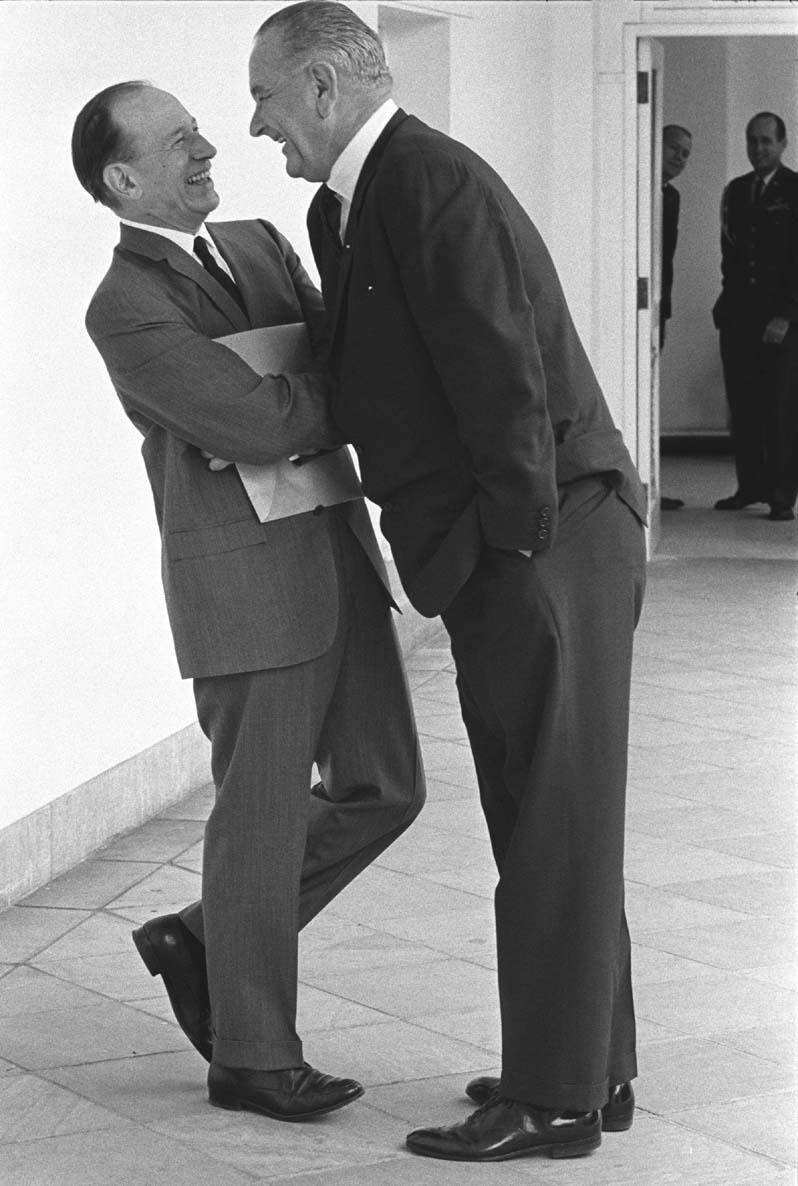
Lyndon B. Johnson was the consummate politician. As a congressman, senator, and, eventually, president, LBJ would lie, cheat, steal, bully, and threaten to get his way when it came to passing legislation. And it was not only that he could force people to do things for his agenda, but part of his power lay in his charm and charisma. Johnson towered over most people, being well over 6’4″ (1.9m) and was the consummate storyteller and mimic; he would often imitate colleagues, friends, and enemies, skewering them with dead-on impressions. And, as part of that larger-than-life persona, Johnson would often overstate his role in affairs to make himself seem more important to events that he actually was.

Take the instance of a story Johnson would often tell of how close of an advisor he had been to President Franklin D. Roosevelt in the years leading up to World War 2. Now, while Johnson was a young congressman from Texas and he did have opportunity to meet with FDR in the White House from time to time, in no way did Roosevelt consider the tall, thin Texan to be a trusted confidant. But that’s not the way LBJ would tell it in later years.

It was in January 1953, in the dining room of the US Senate in the Capitol Building when Johnson, at the time the second-most powerful man in the senate, came into the room. As was his custom, he would make his way around the room, shaking hands and trading bon mots with the other senators and their staffs. When he came to the table of the powerful senator from Wisconsin, Senator Joseph McCarthy, the senator and the staff at the table rose to shake Johnson’s hand out of respect. That is, except for one lower-level staffer from McCarthy’s office. This young man stayed seated and glowered at the powerful Johnson.

As Johnson made his way around the table, he reached the seat of the young man with the scowl on his face. Johnson knew that the staffer was purposefully being rude. You see, LBJ made it his job to know everything about, well, everybody. He knew why the young man refused to stand and shake his hand. So, in a show of power and to put the young staffer in his place, Johnson hovered over the seated man and stuck out his hand. Onlookers later said that the staffer swallowed hard, looked around the table at the other, standing staffers, and slowly stood up and offered a limp hand that Johnson took and shook vigorously. His point made, Johnson then made his way to the next table. The young staffer slank back into his chair and finished his lunch.

Later, an aide to Johnson asked him about the incident. Johnson let out a loud guffaw. He then reminded the aide of the following story, and it was a story that he LBJ had told often before. He said that McCarthy’s staffer was the son of a government appointee back during Roosevelt’s second term. During one of their meetings in the White House, Johnson said that FDR had complained about this staffer’s father. And Johnson bragged that he had advised Roosevelt to fire the man because he was a Nazi sympathizer and was antisemitic. To hear LBJ tell the story almost two decades later, it was Johnson’s advice that convinced President Roosevelt to ask for the appointee’s resignation. The young staffer’s rudeness and dislike of Johnson therefore stemmed from LBJ’s part in getting his father fired.

Of course, Johnson grossly overstated the importance of his advice to Roosevelt. The fact was that President Roosevelt had already made up his mind about removing the appointee from his post long before Johnson said anything–if in fact he had said anything at all to the president. So, while it probably wasn’t Johnson’s hand in getting his father removed from the post as much as it was that he had heard about the story Johnson told about the incident, the story about making himself out to be more important and influential than he was. You see, the young man, that scowling McCarthy staffer, he was the opposite of Lyndon Johnson. He was almost an anti-politician. He was more of a crusader, a fighter for justice and truth. To him, men like Lyndon Johnson were part of what was wrong with Washington. And the young staffer was working to bring honesty and accountability to congress. And to know that LBJ was telling untrue stories about his dad and laughing about his dad’s removal from his government appointment, well, it was all too much.

By the way, the post that the staffer’s father had held was the ambassadorship to the United Kingdom in the days before World War 2. He knew that his father wasn’t fired from the job and he also knew that Lyndon Johnson had nothing to do with his father’s resignation from the post.

And that’s why, in January 1953, young Bobby Kennedy refused to stand and shake Lyndon Johnson’s hand.

On a President’s Companion

Murray “The Outlaw” Falahill isn’t a name that you’ll recognize readily, but people who lived through World War 2 knew of this Scot. Murray was one of those secret presidential companions who always seems to be at the center of power but who also remains largely unknown by the public. Murray entered the orbit of President Franklin D Roosevelt in 1940. He was brought into Roosevelt’s orbit by one of Roosevelt’s cousins, and the two became fast friends. Today, history tells us things about FDR that the public generally did not know at the time; for example, his many extramarital affairs were kept secret for many years. The fact that Roosevelt was effectively paralyzed from the waist down was also not publicly known. And it makes sense that there will be private relationships that people in power have that transcend politics and public scrutiny out of necessity. We all need someone close to us who we can confide in and be ourselves around outside of the public eye. Very quickly, Murray became this relationship for Roosevelt.

Murray soon traveled everywhere with Roosevelt. When Roosevelt went to his retreat in Warm Springs, Georgia, Murray went along. Murray also accompanied the president to Canada when FDR met with Winston Churchill, the British Prime Minister, to discuss the progress of the war in Europe. He journeyed with the presidential entourage to the Aleutian Islands one time. That’s when some information about Murray’s close friendship with Roosevelt almost cost the President. Someone in the press heard a rumor that Murray had been accidentally left behind in Alaska when the president’s traveling party returned to Washington. The rumor was that FDR sent a United States warship to Alaska to pick up Murray and bring him back at the cost of several million dollars that the US taxpayers would have to pay for. Now, remember that Murray had no official title in the Roosevelt administration. He was not an elected official. He was just Roosevelt’s companion. So, if this rumor were true, it would be a fairly good-sized scandal that Roosevelt would have to explain. Quickly, Roosevelt addressed the issue before it could turn into a scandal. In one of his radio addresses, he squashed the rumor without going into great detail by saying that no member of the President’s staff or family had been left behind in Alaska and therefore that no expense had been wasted on going back and picking up any member of the traveling party. Besides, FDR said, any Scot worth his or her salt would be appalled at such an expense.

Murray pretty much moved into the White House. One of his proclivities was that he preferred breakfast in bed, so the White House kitchen staff was always ready to make Murray’s favorite morning repast. He was around Roosevelt so much that, invariably, photos were taken that show him near the President. You can see him in those pictures today, and, at the time, nobody questioned his being there. When Roosevelt died in April 1945, Murray was with the President. And he was crushed because the two had become so close over the years. Eleanor, who spent a great deal of time with and became attached to Murray herself in the years after Franklin’s passing, said that Murray never really recovered from the death. He himself lived only 7 years after his friend.

When a statue honoring Franklin Roosevelt was unveiled in Washington, D.C., it depicted the President seated. And, to his right, is seated Murray—known better as Fala—Roosevelt’s trusted and beloved Scottish Terrier.

On Some After Work Drinks

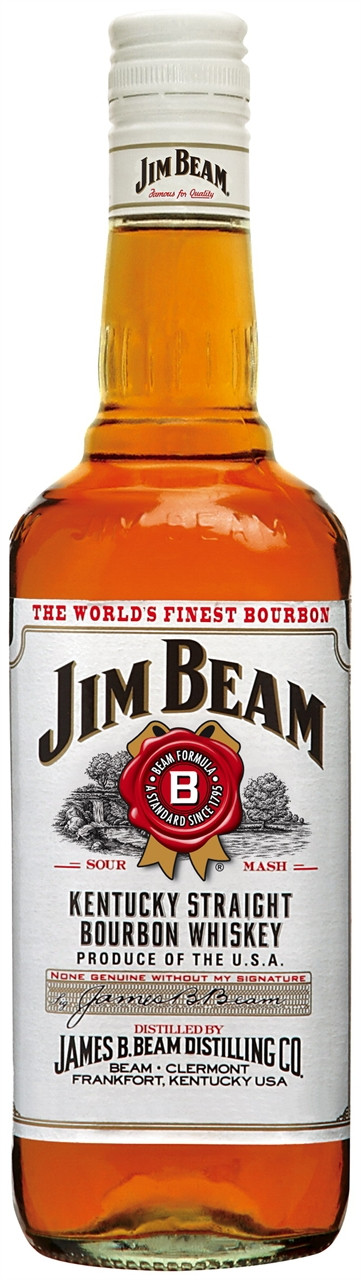
Sam and Harry had been through a rough but satisfying day at work. The organization they both worked for had been busy for the past few years in the Allied war effort. It was April, 1945, and the war had only a few short weeks left. Sam and Harry both knew this for sure, and the fact the United States was going to win the war gave them both great satisfaction. Besides both being southerners, the two men were the heads over their respective departments at work, and, as such, they had much in common both at work and in their home lives.

As the pair was getting ready to leave work that day, Sam invited Harry to his office so they could have a drink. The two were old friends, and they knew each other well after years of working together. And, as old friends do, Sam and Harry could get a lot of work done with talks over a few highballs, sometimes even more work than they could do when they were actually performing their jobs. Sam, as he usually did, loosened his tie and propped his feet on his desk. Harry never loosened his tie; it was a mark of the man that, while he was not wealthy, he dressed well and took pride in his immaculate work wear.

The two co-workers talked for awhile about Harry’s family. Sam had no children, and his homelife was lonely since he was divorced. That’s another reason he appreciated Harry’s willingness to stay and share a drink with him. There wasn’t much for Sam to go home to. Harry’s daughter had recently turned 21 and was wanting to pursue a musical career. Harry was in the middle of his second glass of Sam’s whiskey and his usual diatribe against his daughter’s career choice when Sam’s phone rang.

The two men looked at each other. Answering the work phone after hours couldn’t lead to anything good. It had to be someone who needed something, something the two men would not want to address. “Let it ring, Sam,” Harry advised. “They’ll stop in second.” Sam nodded and knocked back another swig of the bourbon. The phone stopped ringing. “See?” Harry said, and motioned towards Sam with his empty glass for Sam to fill it again.

But the phone rang again. And, again, the pair swapped looks. Sam sighed and leaned forward, taking his legs off the desk. He picked up the phone. “Yeah?” he answered. As he listened, Sam set down his glass. Harry could hear the voice on the other end of the line, but he couldn’t make out what the person was saying. “Yeah,” Sam repeated. “Right now. Got it.” He hung up the phone and turned to Harry.

“The boss wants us,” Sam said. “That was his secretary.”

“I thought he was out of town?” Harry said.

“Well, apparently he’s back, ’cause they just called from the house. We’ve got to go there right now. Side entrance,” Sam explained. Harry grimaced, and now it was his turn to set down his glass. Sam picked up the phone again and called for car. The pair made their way down to the street where a dark car waited by the curb. They entered it and rode the short distance to the boss’s house in silence. When they arrived at the large place, the security guard waved them in.

Harry got out of the car first and made his way to the side door of the large mansion. There was a woman waiting there for him. He greeted her warmly and, out of respect for the boss’s wife, removed his hat.

Eleanor Roosevelt took Harry Truman’s hand and, without emotion, said, “Harry, the President’s dead.”