

The 1950s and early ’60 were a time in white middle class America when gender roles and rules of social decorum were fairly strictly defined and generally observed. Women wore hats and gloves to church and, often, even to the store; men wore suits to dinner and even to the movie theater. The reason some people watch reruns of the old TV show Leave It to Beaver today is to see what was the reality for many families at the time–a nostalgia for a period when the men worked while the woman stayed home and raised the kids, and people lived in nice suburban comfort. All of that changed, of course, in the 1960s beginning with such things as John Kennedy not wearing hats and the emergence of the counter culture that followed in the wake of the Civil Rights and Vietnam War protests. Allow all of that to serve as the societal background to the meeting of two women when one was moving into a new home in 1961.
Now, the two had met before because their husbands were in the same business although there were a generation apart. The occasion was that the younger woman’s husband had recently received a promotion, and an upgrade in the family’s living situation was in order. The older woman, the one who had been living in the home, was not happy that this younger woman and her husband and children were moving in to the place she and her husband had called home for almost a decade. But, social custom demanded that she take the younger woman on a tour of the house, an inspection of sorts. And it was no secret that the older woman disliked this younger woman.
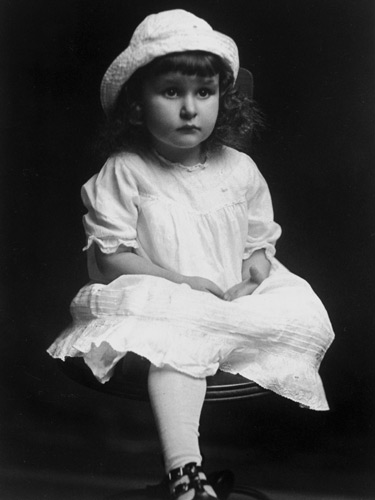
To be fair, the older woman was, to be somewhat impolitic, frumpy. Not that she didn’t follow the social norms, because she did. In fact, she was, in many ways, the quintessential representative of that stolid, solid, middle class that represented much of white America. But the contrast between her and the younger woman was so, well, drastic. This younger woman followed the latest fashion. She had model good looks. And she spoke French! You could hardly find a greater difference between two women despite the fact that they both conformed to the social norms in every other way. And that included the prerequisite inspection of the home.
The younger woman, only two weeks away from a cesarean section and the birth of a boy, was still in a great amount of pain and discomfort. She had asked that the home inspection be postponed because of this, but the older woman insisted. Whether this was out of spite or out of jealousy or even simple lack of empathy is unknown. And when the younger woman came to the house, the older woman waited for her in a hallway. Rather than come towards the woman who was in obvious discomfort, the older woman simply stuck out her hand in unsmiling welcome and forced the younger woman to walk to her to shake it. She then led the hurting younger woman through the entire house, walking quickly, almost intentionally it seemed, so that, by the end of the one hour tour, the younger woman was almost in tears of pain.
As I said, the older woman really didn’t wish to leave the house. It wasn’t her choice, of course. Her husband was retiring, you see, and it was time for them to downsize. And perhaps that was part of the jealousy the older woman felt. Her husband’s useful work life was largely over, while this younger woman’s husband’s period of fruitful work was only then coming into season. We do know, for a fact, that the older one referred to the lovely and elegant younger woman snidely as “That College Girl.”
But we don’t know, for sure, why Mamie Eisenhower disliked Jackie Kennedy so much.
 The Rest of the Story