On a British Spy

I love a good British spy story. Tinker, Tailor, Soldier, Spy is one of my favorite films for this reason. There’s something about the spycraft of it all, the casual business-like calm, the, well, Britishness of spying that makes those types of stories interesting to me. Take the story of one such spy recruited by Britain during World War I.

Many people don’t know that the British Government spy agency, commonly known as MI-5 (short for Military Intelligence, Section 5) got its start before World War 1, in 1909. Britain could read the tea leaves, so to speak, and knew that war with the aggressive regime of Kaiser Wilhelm II in Germany was going to happen sometime in the near future. Therefore, the British planned ahead. MI-5 was set up to identify and monitor possible German spy activity in Britain in the buildup to the war. The head of the agency, a General Vernon Kell (known only in the agency as “K,” of course), also knew that, when war came, it would be vital to have British agents in the nations that could help Britain win the war. So, he planned to plant British spies in nations like Romania (whose king was a relative of Britain’s George V, as were most European monarchs), Denmark, and Italy.

Italy was especially important to Britain because of their large navy in the Mediterranean Sea and the fact that they bordered Austria-Hungary on their eastern side, a nation that most assuredly would side with Germany during the war. And General Kell sought out Italians who weren’t in the miliary to be his spies; he felt that people with “normal” jobs would draw less attention in their intelligence gathering than would people who would be obvious candidates for spying. On the other hand, the occupation of these people should give them access to people, places, and events that would prove to be valuable sources of information if and when the need arose. Teachers made good spies. Transportation administrators did as well. Art dealers, book publishers, and reporters were also on the list.

Thus, one of the spies MI-5 supported during World War I in Italy was a journalist. In his capacity as a British agent, this guy could not only have access to important people but he would also be able to help sway public opinion in favor of the Allied cause. Of the several dozen spies in Italy during the war, this one was a particularly good investment. Records show the man was paid well by the British every week to provide information and also help mold the opinions of the Italian people into supporting the Allies. In fact, payments made to this journalist at the time equaled about $8,000 per week in today’s money.

As Italy’s government began fighting for the Allies, the work this spy performed made a difference in keeping Italian morale up and providing actionable information for his minders. As the war ended in November, 1918, the need for such spies also ended. Kell saw MI-5’s budget cut drastically after the war, going from hundreds of staff members to only a handful. However, the onrush of World War II brought the agency it back to life as the original Axis of Evil (Germany, Japan, and Italy) threatened the world.

Of course, Italy’s threat to Britain in the 1930s might not have been so great had it not been for the rise of the Black Shirts of the Fascist Party in the 1920s. And you know the man who led that political movement, right?

The same journalist the British paid so well to be a spy during the previous war: Benito Mussolini.
On a Thoughtful Gift

The relationship between the United States and the Soviet Union between the end of World War 2 and the beginning of the Cold War changed exponentially. Allies during the war against Germany, the two nations became bitter enemies once the war was over. However, that transition from friend to foe didn’t happen overnight. Both nations mistrusted each other for years but saw the relationship as being necessary to defeat the Nazis. However, that doesn’t mean that, at times, friendly gestures were exchanged while the two countries were allies.

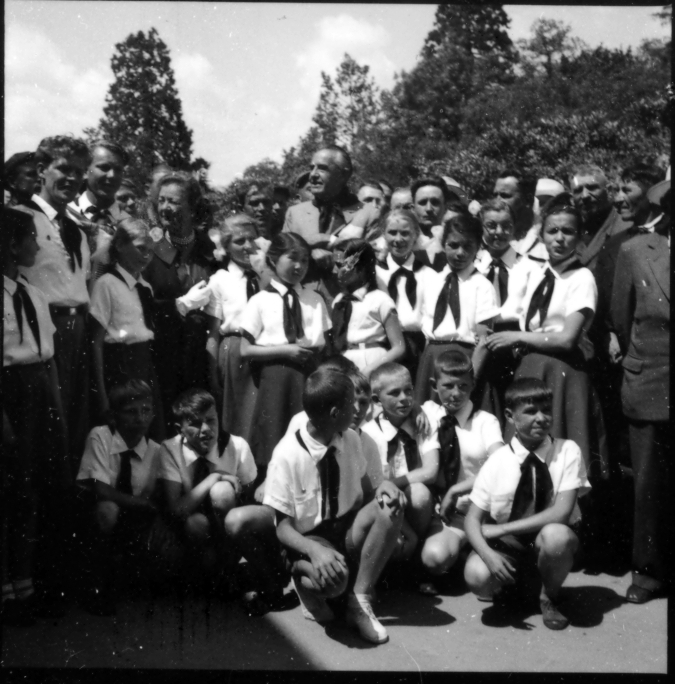
Take the gift that was given to the US Ambassador to the Soviet Union, Averell Harriman, in 1945. The gift was a hand-carved wooden replica of the Great Seal of the United States. And the gift was formally presented to the ambassador by a large contingent of the Soviet Union’s young person’s organization, the Young Pioneers. The Pioneers were much like a politicized version of the Boy or Girl Scouts in the west, but in the case of the USSR, membership wasn’t optional. However, the presentation of the gift was reported in the press as a wonderful gesture of gratitude on the part of the young people to their vital ally in the Great Patriotic War against Nazi Germany.

You see, when Hitler decided to invade the Soviet Union in 1941, the United States had not yet entered World War 2. The country was desperate to find the weapons and materiel to fight the war against the invaders. The United States arranged to begin supplying Russia with armaments and some products needed to fight. It’s safe to say that, without the aid of the United States, the USSR’s ability to defend itself against Germany would have been severely hampered. So, as the war was nearing the end in the summer of 1945, the giving of a gift to the US representative in Russia seemed more than appropriate.

At the presentation ceremony, Harriman, surrounded by the boys and girls in their red Pioneer scarves, graciously accepted the large wooden plaque on behalf of the United States. He ordered the plaque placed in the US Embassy in Moscow. It occupied a place of honor behind the large desk in the ambassador’s office and hung there for the next seven years.

Then, in 1951, something odd happened. A communications officer in the British Embassy in Moscow as sitting at a radio in his office one day when he suddenly heard something unusual on his set. What he heard was American voices coming over the air, bleeding through a Russian military broadcast he was monitoring. The communications guy couldn’t understand how that could be; the nearest American radio station that could be broadcasting was several hundred miles away in Western Europe. He continued to listen, then, it dawned on him what he was hearing. He jumped up and ran down the hall to the office of the British Ambassador.

It was then that the world found out, after seven years, that the beautiful carved wooden plaque that the Pioneers had presented to the Americans wasn’t what it seemed.

The gift, given by the Soviets to the Americans in the pretense of friendship, was actually a listening device.

On a Nervous Singer

The room began to fill with partygoers, and the sight of all those happy people coming into the union hall gave Ethel the shakes. “Why?” she said to herself; “why would I agree to sing at a New Year’s Eve party in front of total strangers?” The 18 year old girl retreated to a corner of the hall in an attempt to steel her nerves.

A young man with a pencil-thin mustache noticed her sitting in the corner, twisting her handbag in obvious distress. He approached her and asked, “What’s going on with you then?” Ethel looked up quickly. “Hmm?” she asked. He repeated his inquiry. “What’s going on?” Ethel glanced around the young man and pointed to the incoming crowd of revelers. “That. Them. Those people. That’s what’s going on. I agreed to sing tonight, but now, I’m not so sure.”

“Well, can you sing at all?” the young man asked. Ethel looked up at him a bit surprised. “Well, yes. A bit,” she said. “Then, what’s the trouble?” he wondered, and he pulled up a chair and sat next to Ethel.

She looked at him closely. He was somewhat handsome, she thought, with kind eyes behind his round eyeglasses, and he wore a nice smile. “I guess it’s nerves,” Ethel explained. “This’ll be the largest crowd I’ve ever performed for.

It was New Year’s Eve, 1935, and the Union Hall in New York City was buzzing with excitement. The Great Depression had put a damper on such celebrations in recent years, but the Roosevelt New Deal programs had begun to have a positive effect in some segments of American society by that point. The Union Hall was where what we today might refer to as socialists would meet to discuss how they could help affect even more change in the capitalist system. As they saw it, the moneyed interests represented the biggest culprit in the crushing of the American worker underfoot in recent years. The hall that night was filled with other, young and idealistic young people who put economic theory on the backburner for one moment and wanted simply to have a good time and welcome in what they hoped would be a better year to come for their cause.

And Ethel had agreed to sing. And now she was having second thoughts.

Well, the young man calmed her down. He politely excused himself and returned in moment with a drink that Ethel gladly accepted. She gulped it down, and he smiled at her. “Say, let’s go there (he pointed at this point to a nearby room), and you can sing to me to practice. It might also calm you down some.” Ethel smiled and agreed.

And it worked. Ethel sang that night, but she was singing to her new friend, the young man with the nice smile and the kind eyes and the round glasses and the dapper mustache. And he was waiting for her when she came off the stage to a nice round of applause.

“What’s your name?” he said over the clapping. “Ethel,” she answered, “Ethel Greenglass. And what’s yours?”

The man who would become her husband three years later, the man who would become the father of her two sons, and the man who would seal her fate, answered.

“Good to meet you. I’m Julius Rosenberg.”

On a Spy’s Code

Espionage and sending coded messages is as old as man, almost. The old joke that when God made the third human that a plot was hatched by two of them against the other one has some validity. And finding a way to confidentially pass information gleaned by secrecy became an important part of how to successfully carry out any plot. We know about cyphers, about dead drops, about messages in symbols, and even numbers stations. We’ve talked about some spies in this format (Mata Hari, for example), but this is about a particular spy code in World War 2 that came from an unlikely source.

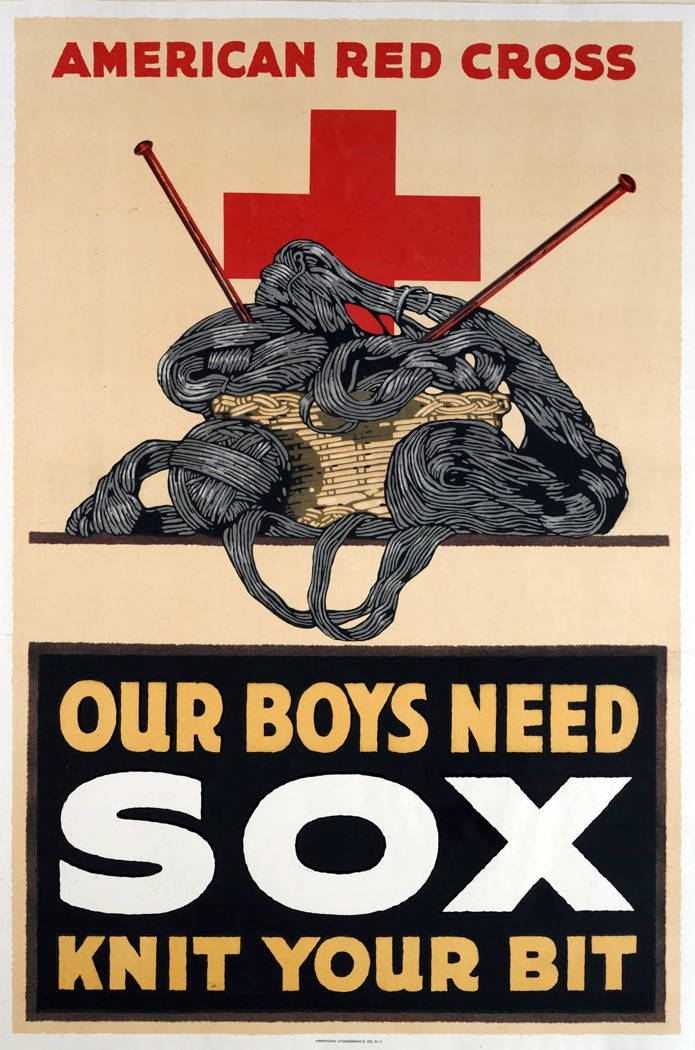
Sometimes, and especially in this day of high tech, the more low tech a message is, the more secure it can be. That is the case here. The spy in question was a British agent named Phyllis. She had been dropped into Nazi occupied northern France in the weeks and months before the Allied forces invaded Normandy on D-Day, June 6, 1944. Phyllis’s job was the blend into the countryside, to watch German troop movements, listen to local gossip regarding defenses as she sat knitting with the other women, and sometimes flirting with the occupying soldiers in an effort to glean more vital info that could make the difference between success and failure of the impending invasion.

One harrowing experience came when she and some other women were brought into the local police station for questioning. Their movements and activities had aroused the Nazi’s suspicions, and the women were thoroughly searched for any possible evidence that would implicate them in espionage activities. A female policewoman made the women strip to search their clothes for any potential messages or proof of spying. The policewoman noticed that Phyllis had her hair tied up on the top of her head with one of her crocheted pieces, and she insisted that Phyllis take her hair down in case something had been hidden there. Phyllis quickly complied, and she revealed that nothing was in her hair bun. Telling the story years later, Phyllis recalled how scared she was, how terrifying the situation had been, and how the Nazis actually came to finding the information that she indeed had hidden in her hair.

Except the coded messages wasn’t in her hair. It was in the crocheting. In fact, the kitting the Phyllis and the other women did in Normandy contained codes in the knots and the loops and knits and purls within the kitted piece. She used the knitted items to send coded messages about the German defenses to people who had hidden radios, and that’s how the Allies knew which areas of Normandy would be the best to invade in that late spring of 1944.

Yes, one of the best weapons the Allies had in the invasion of Europe was a pair of kitting needles.