
Schools, for good or ill, form the primary influence on the formative years of children. Teachers spend more time with children than their parents do in most cases. Studies show that young people are far more likely to listen to and believe the opinions of their peers in school than they do those of their parents. And the curriculum of the schooling that children are exposed to can shape not only the individual child but also generations to come. Even a single teacher can make a world of difference–literally.
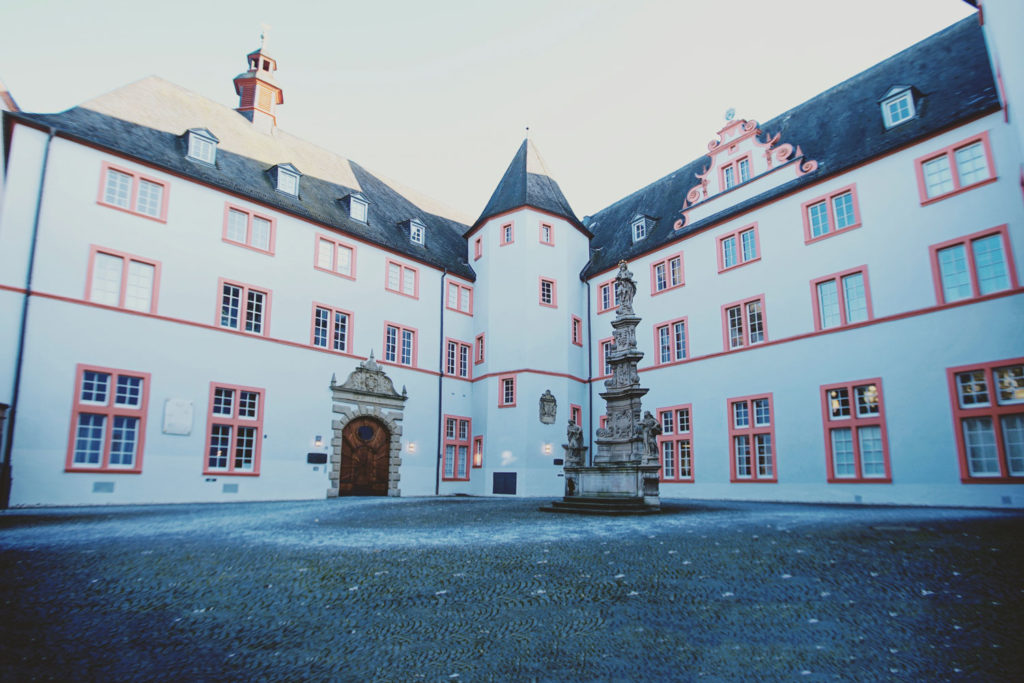
Take the case of a high school in Germany, the city of Trier to be precise. That school’s principal, a man named Hugo Wyttenbach, was a product of the philosophical movement known as the Enlightenment. In Germany at that time, society was incredibly conservative; the Catholic Church set the public agenda for morality and mores, logic and learning. Wyttenbach, being a Humanist, disagreed. He took his responsibility as a molder of children seriously, and he wanted to teach his young charges that logic and science trumped tradition and superstition. At the same time, he strongly believed that people had a right to choose what they believed, but he also and equally felt that those people had no right to impose their beliefs on others in the form of laws and public strictures.
The school principal therefore sought out teachers to hire who shared his humanist philosophies. Most of those he chose were young, recently graduated teachers who had youthful zeal for teaching lessons that ran counter to the oppressive and outdated lessons of the traditional German religious educational system. The liberal teachers and staff at Wyttenbach’s school soon found that their pupils were eager to learn what they were being presented. The young people could hardly wait to get to school to see what other social or traditional straw man would be skewered by that day’s lesson.
Well, you can imagine that rumors began to spread rather quickly about what was going on at the Trier Gymnasium. Parents began to protest when their children started to question the authority of the Church to impose behavioral expectations on people who had natural free will. Soon, the local conservative city government of Trier got involved. Such was the outrage over what was happening at the school that the Burgermeister of Trier decided to take action.
Upon the mayor’s order, the local police conducted a surprise raid on the school after hours. During this raid, the police found books, pamphlets, and other literature that taught about Humanism and what was dubbed “liberalism.” The police determined that this “seditious” literature was being given to students. Using this as evidence, charges were brought against Wyttenbach and several of the faculty of indoctrinating students in ways that countered the prevailing public mores and traditions of the Church and society. The faculty was dismissed. Wyttenbach was also fired. Because the local population was reassured and content that, with a new staff in place, the teaching would not longer go on in the high school, charges were dismissed and no prosecution proceeded.
But the genie had been let out of the bottle at that point. The students who had been exposed to weeks of liberal political thought and teaching never forgot the lessons they learned during those classes. One of them, so inspired by what he had learned and so shocked at the way the authorities had reacted to the lessons, decided at the tender age of 16 to devote his life to liberal political teachings. He went on to get a law degree and to embark on a life of writing, speaking, and agitating for those causes.
You know him as Karl Marx.
 The Rest of the Story