On a Gross Indecency

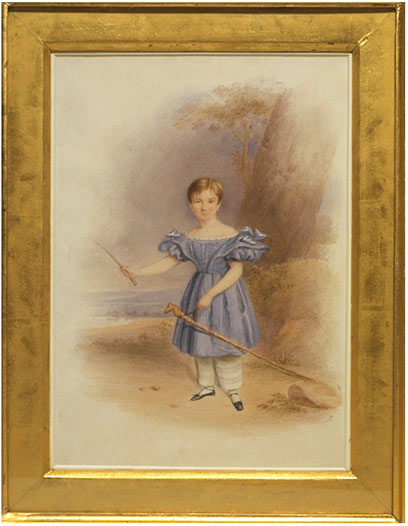
It is the corruption of our youth, they said. The end of modern civilization, they said. That a girl–young girls–would deign to do something that would show ankles! Egad! What was the world coming to, pastors and politicians wondered. Women who did that were one step above prostitutes, it was believed. You see, 200 years ago, it was considered grossly indecent for a “proper” girl to let her ankles show in the Western World. Now, of course, lower class girls did that, be we all know what type of women they turn in to, don’t we? That is a gross indecency, that is. No, to do something that allowed a girl’s ankles to be seen by others–especially boys and men–was taboo in polite circles.

It all began, apparently, when European explorers saw so-called primitive tribesmen doing this with vines. They brought the practice back with them to Europe, and young boys in London, Paris, and other cities in Europe began doing it as well. But, rather quickly it seemed, girls took over the practice from boys. Boys went on to do other things like rugby, cricket, and soccer/football. No, girls made the exercise pretty much their own bailiwick.

It was girls who added the chants. Girls decided the rules. Girls owned the equipment. So, the practice became their property. In the United States, as families began moving into towns, the paved streets and eventually, the sidewalks, became the place where girls practiced this exercise. The flat surfaces were perfect for it. The equipment was affordable and minimal, and almost anyone could do it.

And that’s perhaps why the ministers and politicians fretted. The exercise knew no social or class distinctions. Again, it was an amazingly democratic thing that anyone could do–well, anyone with legs, perhaps. And that led to the outcry by the watchdogs of the culture. Anything that crossed social barriers and those of class and even race was seen as being radical. Perhaps all the handwringing over the viewing of girls’ ankles was only a means to an end–the end of control over the mixing of social, racial, and cultural boundaries.

It is said, therefore, that a new garment for girls was invented because of this practice. The garment in question is the pantalette, also known by some as pantaloons or sometimes even bloomers. This undergarment went from the waist down to just below the ankle. That seemed to shut up the naysayers. They had no leg to stand on, so to speak, any more. If the girls could do this exercise and still not reveal any of their ankles, well, that was the end of the discussion.

Today, the practice is still ongoing, and it is pretty much the same as it was back in the day. You can still find kids in cities and elementary schools doing this, although with the advent of video games and other indoor activities, perhaps the popularity has taken a hit. There are local and national and even an international competition. You’ve probably done it, yourself.

The exercise in question, the one that caused such uproar and created a new undergarment for girls?

Jumping rope.

On a Perfectionist

One of the best bosses I have had across my various jobs was a woman named Kay Tyler. She taught me two valuable lessons. One was to thing things through. What will happen each step of process? What effect will those things have on all involved and on the pursuit of the goal? The other lesson was to have not only a Plan B but also at least have an idea of Plans C-F or so. Those lessons have stayed with me and helped me be a better administrator and even a better person. Ms. Kay was a perfectionist, and she was one of those who backed up what she taught with a lifestyle to match. Another such perfectionist who is about the same age as Kay Tyler is a programmer and code writer named Margaret Hamilton.

Margaret wrote computer code for M.I.T. back in the days when writing code was literal writing–by hand–each line of code on paper. Those codes told the computer what function to do next in a process. Like Kay Tyler’s advice, Margaret also had to think things through, and she definitely had multiple back up plans just in case. People would ask her, “In case of what?” Margaret would smile and answer, “Exactly!” In her capacity as a code writer, people’s lives were on the line; the decisions her code made could make the difference between life and death for some. There’s a story that, one night during a work party, it struck Margaret that one line of her code was incorrect. With her apologies, she rushed out of the soiree and returned to her office. Sure enough, one small part of a line of code was in error. Margaret realized that even something so small could make a world of difference in the right situation. So, Margaret became a perfectionist out of a sense of responsibility and ownership of her work–concepts that are becoming more and more foreign to some in the workplace today.

And remember that, during the 1950s and ’60s, it was rare for women to be in the workplace compared with today. And Margaret was also a mother. People at the time would ask her nosy questions like, “How can you work and have a child?” and “Don’t you love your family?” Yes, those were the types of things people thought about working mothers 60 years ago (not that some don’t still feel that way). Yet, despite knowing that her work was important, Margaret still felt some societal pressure to conform to the middle-class expectations of a woman being a wife and mother first.

So, often, Margaret would bring her daughter to work at M.I.T. with her. And that seemingly little thing led to something amazing. One night, while her daughter was with her in the office, Margaret allowed the child to play with one of the machines she had written the code for. The child, in her innocence, tasked the machine to perform a function for which Margaret had not written code. That piqued Margaret’s attention. What would happen, she wondered, thinking things through, what would happen if someone using her code would accidently make the same input that he daughter had done? Would that cause a catastrophic failure of the system? Should she write code that would keep the machine from even performing that operation at all, even it would be accidental? Better safe than sorry, she reasoned. So, Margaret wrote the code.

Turns out that when the code was finally used in the real world, someone indeed accidently made the same input that Margaret’s daughter had done. However, because of her sense of perfectionism, Margaret was ready for it. And, in the final analysis, it was that mentality that perhaps saved lives.

What you don’t know, most likely, is that Margaret Hamilton wrote code that produced the modern coding systems we use today. In the same way that the invention of the telegraph led to modern cell phones, Margaret’s code is the grandparent of the code used on the device you’re using to read this blog right now. At the time, of course, Margaret’s code was groundbreaking and revolutionary. And, it’s true, her code saved people’s lives.

You see, Margaret wrote all the code for NASA that sent humans to the moon.

On a Free Breakfast

We in the west generally believe that the “free school lunch” is something that children in need should have access to in order to achieve academic excellence. That concept is fairly new in education, and there’s even some pushback in some quarters today with an increasing number of people questioning whether it is the responsibility of publicly supported schools to provide that nutrition. However, the argument has been made and the prevailing attitude is that free school lunches should be provided.

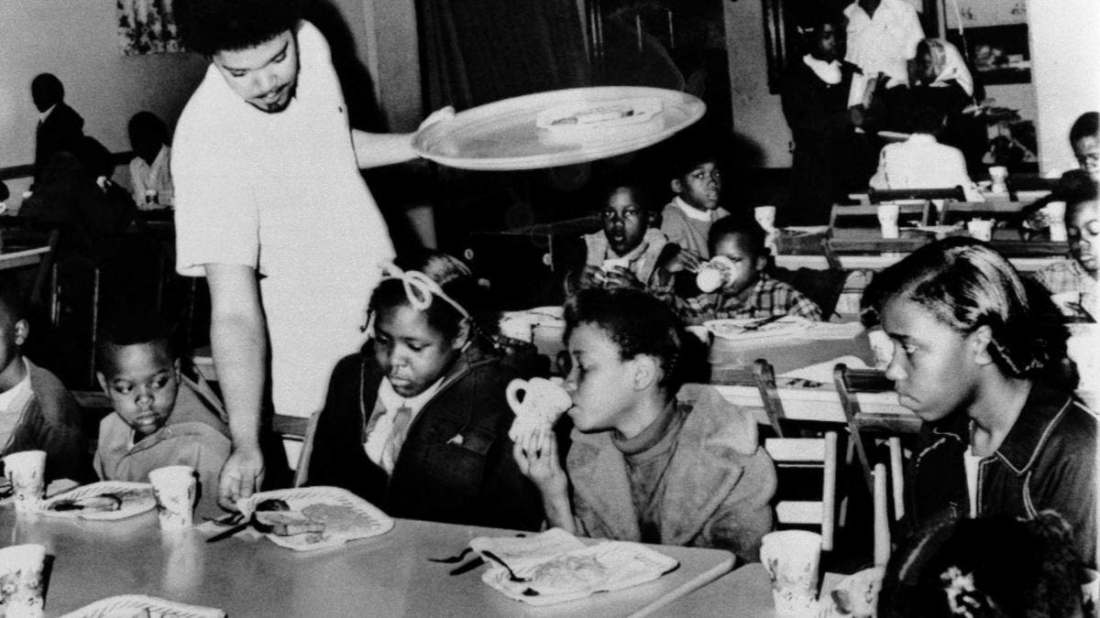
Interestingly, that type of free food program for lower income children started not because of a government program but began through a non-profit, private organization that worked in inner-city communities to better the lives of the citizens there. The first free meals for poor kids weren’t lunches, either, actually, but they were breakfasts. This group, a group that also had political goals, began serving low income kids in poorer sections of Oakland, California, in the late 1960s. They knew that people would be more receptive to their ideas if they were a positive contributor to the community to begin with. A local Episcopal Church building was used by this organization to give the free breakfasts to the kids. The volunteer group had gone to local grocery stores to solicit donations and had even consulted with nutritionists to see what types of food would pack the most punch for the kids throughout the day.

The results were astonishing.

Teachers and the school administrators reported almost miraculous improvement among their students who were receiving the free breakfasts before school. Test scores, good behavior, attendance, and over-all well-being showed significant increases. The kids were attentive as well; teachers said that the fed children stayed alert longer, they weren’t getting sick as much, and their prospects for school achievement increased. The volunteers were thrilled with their report card; they quickly expanded the program to other communities across the US. Schools in low-income neighborhoods of Detroit, Chicago, New York, and other large cities began reporting similar results to those in Oakland. The program was a success.

And that’s right about the time that the United States government began to take notice. Mainly, one agency of the federal government took umbrage with the efforts of the group. You see, the head of this governmental agency was such a racist that anything that helped minority people was seen as a threat to the nation in his eyes. He declared war on this program and its volunteers. He began ordering his offices around the nation to begin a whisper campaign against the free breakfast program. Parents were sent notices (ostensibly from the schools themselves) hinting that the group was secretly poisoning the children with the free food. And he ordered them to begin photographing the children as they left the places where they ate in an effort to intimidate the kids and pressure them to not return. The free breakfast program was shut down through this systematic harassment by the government.

What type of governmental bureaucrat–no, what type of human–would stoop so low? The program was good; it was free; no tax money was being spent, and the positives overwhelmingly outweighed the negatives here. Who would do this type of thing?

Well, luckily, cooler (and less racist) heads prevailed. Seeing the benefits of the program, the US Office of Education (what the Department of Education was before that agency was set up in the late 1970s) began offering free lunches and free breakfasts to low-income families. The program started by the volunteers in Oakland in the ’60s was reborn, and millions of low-income children have been helped.

But that success never would have happened if J. Edgar Hoover hadn’t’ve hated the Black Panther Party so much.

On a Child Rearing Method

How does one raise a child? That’s a question that has developed into a wide spectrum of philosophical and psychological study over the centuries. Today, most child psychologists divide parenting styles and methods into four groups: The Authoritarian, the Authoritative, the Permissive, and the Neglectful. These parenting styles are the product of researchers including some from Stanford University and are now universally accepted.

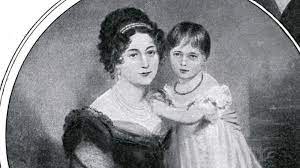
That wasn’t always the case. Take the situation in 1820, when the Duchess of Kent, one Maria Louise, found herself widowed and facing the rearing of an infant daughter alone. The child was improbably named Alexandrina, and the prospect of bringing this child up by herself absolutely terrified the Duchess. You see, the Duchess knew that her substantial inheritance from her recently deceased husband and her standing in the aristocracy in Great Britain meant that this child would have to be taught the responsibilities that came with such wealth and such position.

The widow turned to a trusted family advisor named Sir John Conroy. Conroy had been in the Napoleonic Wars and approached this problem of how to raise Alexandrina from a military perspective. He devised a system of child rearing for the infant that is now called the Kensington System. It centered around making the girl completely dependent on her mother and on Conroy for, well, everything. The thinking was that such responsibility would need the influence of the Duchess and of Sir John (who possibly had the additional motive of being able to wield influence over the substantial inheritance). Thus, the child would grow up to rely only on her mother and her mother’s trusted advisor.

The system revolved around isolating the child from not only other children but also from other relatives. She would not be allowed to be alone without either her mother or the governess. Detailed records of the child’s daily activities would be kept, monitoring her intake (and output), and detailing things like hours of sleep and what toys she played with, etc. Such behavior was designed to make her not wish to turn to anyone else for advice or help. She did have two playmates in her life but only two. One was a half-sister from one of her father’s dalliances and the other was Sir John’s daughter. But even these interactions were extremely limited. The child was rarely allowed even outside the gates of the family’s large residence. And, incredibly, the girl was required to sleep in the same room as her mother (despite their house having many large bedrooms) until she turned 18.

When Alexandrina was of age, her private tutoring began. The schedule was strictly adhered to, starting promptly at 9:30am daily and ending at 5:00pm. The girl was trained in languages, literature, poise, and even religion. And, daily, the Duchess would drill her child on what she learned. If Alexandrina failed to recall properly, there would be punishment. Remembering was expected and therefore not rewarded.

Well, it doesn’t take a child psychologist to realize that the Kensington System was a complete failure. The girl grew up to intensely hate her mother and greatly distrust Sir John. When she turned 18, Alexandrina fell heir to the fortune, and she made two requests. The first was to insist on having at least two hours during the day to herself (which had never happened in her life), and the second was that her bed be moved to her own bedroom.

And, when Alexandrina Victoria became Queen Victoria and married Prince Albert in 1840, she banned her mother from the palace for the remainder of her life.