On A Pub Stay

Most of my regular readers know that, almost two and a half years ago, I left the United States to travel in Europe and the UK. That wish to travel was made possible, in large part, to my good friend, Danielle, who helped me get a part time remote job that I can do anywhere there’s WiFi or a decent cell phone signal. Also, I found the TrustedHousesitters website, a place that connected me with people who needed someone to stay with their animals whilst the family were away on vacation or whatever. Thus, I’ve lived out of a couple of backpacks for this entire time. And, in the course of my travels and experiences in meeting people and their pets and seeing a good deal of the UK and France, some special memories have been made. This story is an example of that.

I was headed to the Scottish hinterlands, a village outside of Perth called Dunning. Supposedly, some saint killed a dragon there once upon a time. Anyhoo, I planned to come in an afternoon early and get a chance to meet the owners and the pets before the family left on their annual vacation. The owners were happy to invite me to supper that evening so that we could all get acquainted. Two lovely old pointers awaited me, by the way, but this story isn’t about them. I made plans to stay in a local pub on that Wednesday evening and booked a room there.

Arriving by train into Perth, I took a taxi the 12 or so miles out to Dunning. The brogue on the taxi driver was so strong that I barely understood him as he chatted away. I must have nodded at the right places in his monologue because he was grinning the entire way, He dropped me and my bags off in front of the pub and made his way back to Perth. I went up to the door of pub and saw a sign in the corner of the window that said CLOSED. But next to the sign was a little hand lettered note that read, “If we’re closed, go around the corner to the tee room (Note: tee as in golf, not the drink) and ask there.” So, I did so. The manager of the tee room made a call and said something unintelligible to me and put the phone down. “Go back and wait out front,” he advised, “and someone will be along shortly.”

Sure enough, about ten minutes later, an older lady wearing an apron in front of her jeans came jogging up the street. As she approached, she said, loudly, “You’re not supposed to be here until tomorrow!” She came up on me, and I said, almost in defense, “But it’s Wednesday.” She laughed. “Is it? I have my days mixed. No matter. Welcome!” She held out a large ring of keys and rapidly gave me the instructions. “Front door. Bathroom down the hall is this one. Your bedroom is upstairs, second on the right. If you go out, lock the door behind you. The bar will open sometime around 7pm. Enjoy your stay!” With that she jogged back to what ever task she’d left. I turned towards the pub and surveyed it with pride as if I were the publican and not only an overnight guest.

The room was small but fine, ditto the bed. The bath was one of those old ones with the claw-footed tub and rope-pull commode, green tiled and tired but classic. Dinner was to be at 8, but I left early, before the bar opened, to walk around the village a bit before meeting the family and pets. The dinner was wonderful, and we got all the details of the dogs’ routine settled. It was shortly before 11pm when I made my way back to the pub. The yellow glow from the windows greeted me as I went up the path. And then, I heard the music.

Coming into the low-beamed ceilinged room, the fire took the chill off the evening, even though it was May. Behind the bar was a woman I later learned was the daughter of the woman who’d entrusted me with the keys earlier. She nodded greeting to me as she dried a pint glass with a bar towel. A young-ish couple chatted with their heads together at one table. In a corner booth, a man sat with a small dog of indeterminate breed on his lap. He had a half-finished pint of some ale in front of him. He was petting the dog and had tears streaming down his face. At another, larger table, sat four musicians. One of them, a woman, played the squeezebox. A man had several flute-type recorders in front of him, and he would change instruments as the foursome played different tunes. The other two musicians, one older and obviously the dad of the younger, were strumming small guitars. And the singing–the singing was wonderful, as you’d expect in a rural Scottish pub.

Well, there was no way I was going to retire to my bed with this scene before me. I went to the bar and ordered a pint of Scottish cider (Forgive me, I’m merely an amateur drinker). I took my pint and sat at the table nearest the quartet. They ran through several wonderful old Scottish tunes seamlessly, a group who’d obviously played together often and knew who was to do what and when. And the harmonies, ah! Having grown up in a church tradition of acapella music, and having learned to listen for harmonies in Simon and Garfunkel, the Beatles, and Elton John, I though I knew a thing or two about singing. But this wasn’t Pepsi; this was the Real Thing.

After a few songs, the older guitar player turned to me and asked me what brought me to Dunning and to the pub. I told him the basic outlines of what was going on. “Oh, aye?” he said with a grin, and with no prompting, he added “D’ya sing at all?”

Well, I CAN sing, I said. We then began trying to find a song that we would all know. Squeezebox woman said that, having been a vicar, I must know Amazing Grace. Sure. I know it. And the group began to play. At the appropriate cue, I began to sing. All the verses. Several choruses. And repeated the first verse. Maybe it was the cider. Maybe it was the magic of the cold night in a Scottish pub surrounded by a scene that you can’t get anywhere else. For whatever reason, it worked. When I finished, the seven people in the room clapped, even Dave (they told me his name later) in the corner dried his tears a moment and showed his appreciation.

That’s when the barkeep brought over a shot of whiskey and a small pitcher of water. “We pay the talent with drinks of our finest,” she said. Now, I’ve spoken to large audiences, led singing in chapel at college as well, received some accolades from various groups across my various careers. But I don’t think I’ve been prouder of any acknowledgement as I was with that.

Along about midnight, the barkeep told us that she was going to start closing down. The couple headed for the door. The man with the dog finished his pint in one large gulp, stood up with the beloved dog in his arms like a baby, and headed out as well. “Dave lost his wife a few months ago,” the younger guitarist explained. “He comes here to cheer himself up.” The group stayed for a few more songs, played for each other of course, but it seemed that they were playing for me. Finally, they left, and I locked the door to my pub behind them and headed up to a good night’s rest.

And when people from both the US and Europe ask me why I’m doing what I’m doing, I tell them this story, and they begin to understand.

And now you know the rest of the story…
On an Astute Doctor

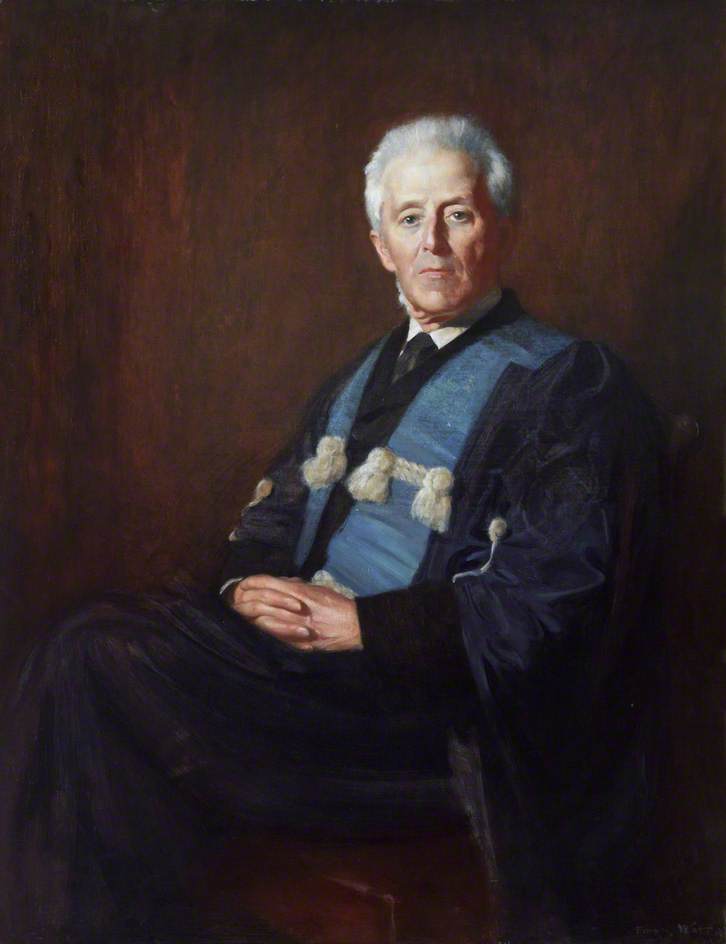
Joseph Bell comes to us as another of those people we know about but don’t readily know who he is specifically. Bell was a Scottish physician who was most active in the late 1800s in and around Edinburgh. His reputation and ability was such that, when Queen Victoria visited Scotland (which was often since she loved it so), Bell acted as her personal doctor there. For most of his career, however, Bell was a lecturer and mentor at the University of Edinburgh’s school of medicine.

Born in 1837, Bell grew up in a family of doctors at a time when the medical profession was undergoing radical changes. The old, traditional, and often-unscientific and unhygienic medical methods were being discarded in favor of scientific theories and cleaner, safer, practices. And the University of Edinburgh was on the forefront of this new, better, and more scientific approach to the practice of medicine. For example, the school pioneered such advances as the use of chloroform in surgery (Dr. James Simpson) as well as the adoption of antiseptics in medicine (Dr. Joseph Lister–the creator of Listerine).

Bell attended Edinburgh’s medical school and quickly earned a reputation as a thorough, keen observer of a patient’s symptoms. He was one of the first to consider a patient’s lifestyle and personal history as being a key to unlocking the secrets of a diagnosis, looking into the person’s background to help determine what the cause of a particular ailment might be. He receives credit for employing medicine in the solution of crimes, something we call forensic pathology today. A corpse, he said, could tell an keen investigator as much if not more than a living person can. In fact, the Edinburgh Police Force consulted with Bell on several important cases over the years.

One of Bell’s favorite things to do was to attempt to “read” a person simply by observing them. He would take students to the streets of the Scottish capital and point out passersby. For example, Bell might point out one person and tell his students that the man who had walked past them had recently come from China, or that the woman crossing the street towards them was the wife of a sailor. The students would then chase down the person and ask them if Bell’s instant diagnosis were correct. And the students found that Bell was almost perfect in those little exercises. The key, he said, was to be aware of the little things. The man who Bell had said had come fresh from China had a new tattoo on his hand that one could only get in Shanghai, for example. Bell even had the ability to tell a person’s occupation simply by looking at a person’s hands.

Such a teacher who was an astute observer of people and the little tells that could help a doctor in a diagnosis was certain to leave an impression on his students. One such student who was lucky to win a position as an assistant to Bell at the university went on to immortalize some of Bell’s characteristics in a series of stories in popular magazines of the time. In fact, a fictional character this student created, based in part on Bell, is one of literature’s most notable.

Of course, the student who admired and was inspired by Dr. Joseph Bell was Arthur Conan Doyle, and his character is the immortal detective, Sherlock Holmes.

On a Job Transfer

Charles James Stuart was born in Edinburgh, Scotland, the first son of Mary and Henry Stuart. He was raised in Stirling, Scotland, and entered the business of his family at a young age. However, due to circumstances beyond his control, he got swept up in a political plot against some powerful people in Scotland, and Jim was imprisoned for a time. Eventually, he managed to get out of jail, and, with the financial assistance of a wealthy relative down in England who had taken a liking to him, he was able to continue working in Scotland in the family trade for some years.

Then, upon the death of his benefactress, Jim learned that he had been chosen to become the sole heir to her large estates and her position. However, he knew that with great wealth and position came great responsibility. And–and this was a big “and”–it also meant that he would have to move to London to oversee things there. And that was a large ask. Jim loved Scotland, and he knew that he would miss it if he had to spend most of his time in the English capital city. Besides, Jim had managed to fall for a Danish girl named Anne, and the couple were married. Jim even traveled from Leith over to Norway to get Anne and bring her home. The couple’s marriage was not terrible by most accounts, and three children were produced by the pair.

Meanwhile, Jim still had to decide if he would accept the transfer to the work of his deceased relative in London. He said that he would try it; after all, he could always return to Scotland if things didn’t quite work out, right? When he and Anne arrived in London, Jim decided that it was the right move. He told a friend that, in a sense, he’d traded a stone chair for a feather bed, meaning that his life in London was easier because of the wealth he’d inherited and the power that came with the wealth.

But not everything was roses in his new job. Jim soon found that, along with the money, there were some issues. While the woman herself had been wealthy, her businesses had debts, and he had to work hard to address those. And then there were those workers and advisors who had been around and been close to Jim’s dead relative. Some of them questioned whether or not this Scottish “rube” could handle all the affairs he had taken on in the inheritance. Two of the old hands at the job pretty much handled the day-to-day, and that left Jim free to deal with the big-picture stuff. People wondered if Jim could do that, because, while he had experience in the family business, he’d never run an operation this large before.

But Jim was wise for his years. He knew better than to come into a situation and make radical changes from the first. He was careful to learn who did what and how, and, once he found out who was capable and who was not, Jim dismissed the baggage and promoted the ones who were capable. He oversaw some trade agreements, arranged for the sale of some assets that weren’t producing and the acquisition of some that became good producers for him. Soon, the debt was erased. The people who worked for him largely loved his oversight.

Sadly, Jim’s health wasn’t great. He complained sometimes, wistfully, that he would feel better “back home” in Scotland, although by this time, Jim had been in the south for over two decades. He kept his Scottish accent throughout his life, although his children spoke with a London one. Jim had a stroke and died at the young age of 58. And, when he died, people in both Scotland and England mourned him. And you know about Jim Stuart because your house probably has something in it that was commissioned by him.

The King James Bible.

On a Loyal Companion

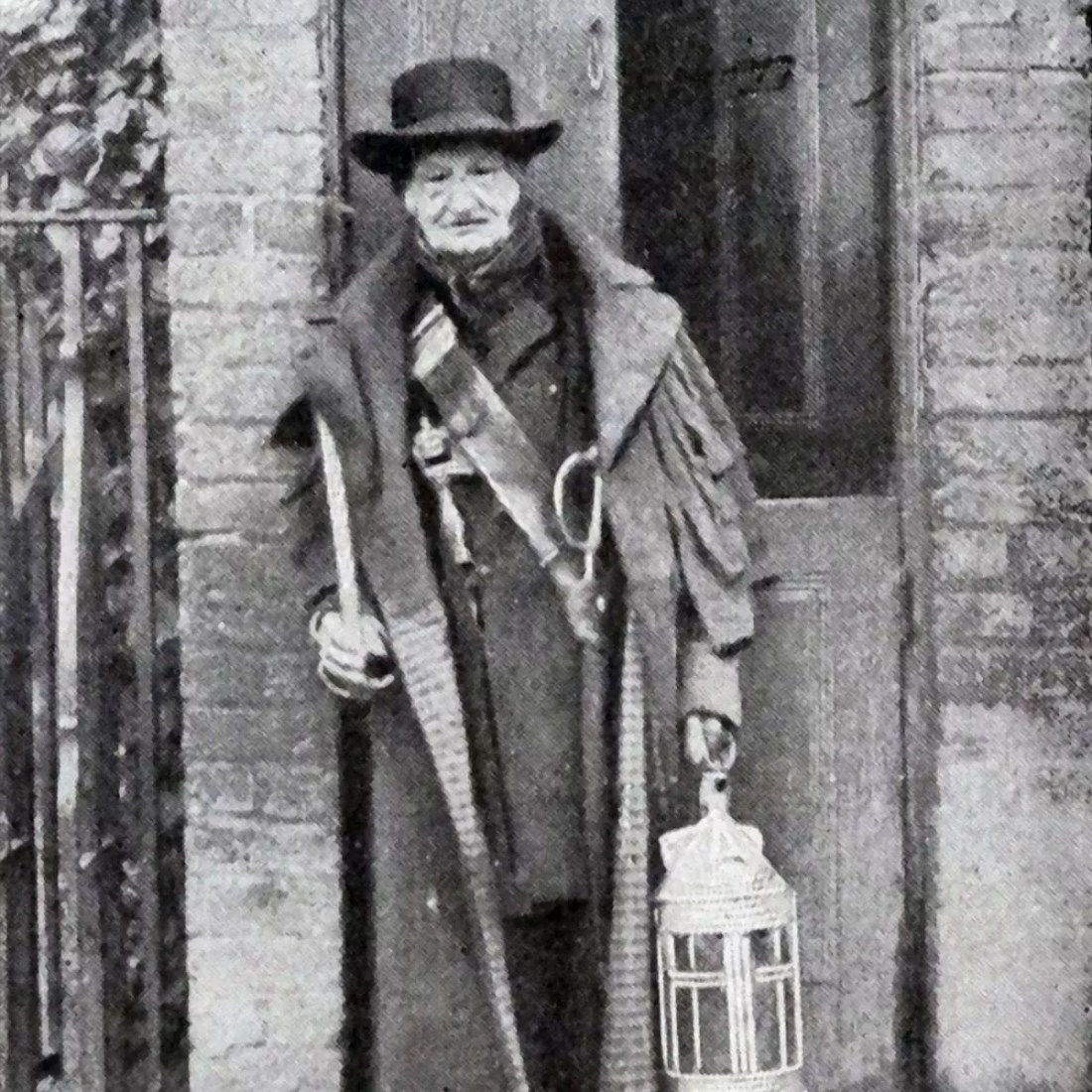
John Gray moved from the countryside of Scotland into the city of Edinburgh in 1850. With him came his wife, Jessica (Jess) and his son, John Junior. While the easy job to get would have been to get work in a factory or workhouse, John opted for less money but, to him, a better job by joining the Edinburgh City Police. He was made a nightwatchman. Now, a nightwatchman’s job, as you probably know, is to walk a route that would take the person around to various businesses and streets where the nightwatchman would check to see if doors were locked, properties secured, and the streets as safe as they could be. If there were any trouble, he would sound the alarm and summon policemen to come investigate or deal with any disturbances.

Sure, it was an entry-level job, but it was one that John enjoyed. Like most who come to Edinburgh, he loved the city. It was the place that birth a cultural revolution, with new ideas and architecture and art being produced in what is now known as the Scottish Enlightenment. New buildings and infrastructure were changing the city from a medieval one known as Auld Reekie because of the close, foul-smelling town into a modern, cleaner, more open and safer city. And John felt that his job was to help, even in a small way, to make the city better. He took pride in the work. Besides, he liked walking the empty streets at night; it gave him the chance to truly appreciate the beauty of both the old town and the newer parts that were undergoing change. A tall man, he strode around the neighborhood purposefully but with a slight and friendly smile on his face, keeping things in order and keeping it safe. He took pride in that.

John’s assignment put him in the neighborhood where he lived, mostly, the area that surrounds the Greyfriars Church and not far at all from the New College, the University of Edinburgh campus. Part of his watch area was Candlemakers Row and what once was the edge of the old town, but now, the area was being rebuild and built up into a bustling section of the town south of the Royal Mile. The George IV Bridge road had leveled the old, sloping and narrow closes that ran off the Royal Mile and replaced them with a new, wide, open, and efficient street. So, John worked this job for almost a decade.

Now, many nightwatchmen had canine companions with them on their rounds. The dogs acted as both protection of a sort and also somewhat of an alarm in case something was amiss as the watchmen made their rounds. John’s “co-worker” wasn’t the usual working dog, however. John chose the family pet as his assistant, a Scottish Skye Terrier named Bobby. Bobby would trot beside John as they went around during the night trying door knobs and peering down side streets. The pair made an almost comical sight as they walked–the tall, angular nightwatchman and the little terrier–and the locals who saw them would smile and nod as the passed the pair. Clearly, the two were connected.

Well, sometime in early 1858, John contracted tuberculosis. Scotland, as you know, is a wet place. Tuberculosis was a common issue among the population. In any case, John died in February of that year. He was buried in the Greyfriars Churchyard, not too far inside the gates of the old cemetery. Soon, people in the neighborhood began to notice that John’s dog, Bobby, began to show up at the cemetery. Bobby would lie on John’s grave as if to say that he was still keeping his job, still watching over his master in some fashion. Now, that’s not too unusual. Dogs often grieve over an owner’s departure. But Bobby was different. It’s not that he stayed at John’s grave. It’s how long he stayed there. Locals began to feed him and try to care for him. One local barkeeper would take him in at night, but he would let him out in the mornings to go back to his place at John’s grave.

In fact, Bobby stayed at John’s grave until he died.

For the next 14 years.

On a Witch Trial

We’ve spoken about the history of witches in the western world before, but this story caught my attention because of its ties to Scotland. Many of us are aware of the beginning of Macbeth, the Shakespeare play, where three witches begin the story with the infamous incantation, “Double, double, toil and trouble; fire burn and caldron bubble…” Scotland has had a long association with witches, and Shakespeare knew that the new King James was Scottish; he knew his audience. But one real-life Scottish witch is peculiar for her supposed ability to read people’s minds and discover secrets that no one knew.

As late as 1735, Britain passed something called the Witchcraft Act. It made it a crime for anyone to either practice witchcraft or to claim the powers of a witch. Now, while that seems odd or harsh, the law was actually fairly forward-thinking. You see, rather than punish witches with death or allow for vigilante groups to go on witch hunts, the Witchcraft Act imposed a penalty of imprisonment. And, rather than be based on the idea that witches are real, the “new” law worked off the supposition that witches were charlatans, people who preyed on the weak-minded or the desperate. Think of it as more of a consumer protection law rather than a desire to punish based on any kind of religious belief. And, it was under this new act that a woman named Helen Duncan was arrested.

Helen lived in Edinburgh, a town that has a long history for being somewhat spooky, especially the Old Town part with its narrow closes and wynds. It seems that Helen had been conducting sessions in her home where she would contact the spirits of the dead. During a period of war in Britain, many people who lost loved ones in the conflict came to Helen, and she would speak to the dead and communicate the messages she received back to the grieving relatives. Some people today would say that she was a medium or someone performing what we might call parlor tricks. On one hand, this seems to be somewhat comforting to the relatives of the deceased and possibly harmless.

But then, Helen reached out to some people who had relatives onboard a certain British warship. While Edinburgh isn’t on the water per se, it uses the nearby port of Leith and has a long history of providing sailors for Britain and for merchant ships. And it seems that Helen told several people that their relatives had died because of the sinking of a British warship named the HMS Barham. Now, no one in the government had said that the ship had been sunk. As you can imagine, these relatives were horrified. They bombarded the government with inquiries regarding the safety of their loved ones onboard. A minor scandal arose. British officials were caught with no good option. If they reassured the families of the sailors that all was well, but then it turned out that the ship had indeed been sunk, then they would look either incompetent or dishonest. If they admitted that the ship went down, then they might be revealing war news that might embarrass the government and then questions would arise about why the government was keeping the deaths a secret.

It was a lose-lose. What do to?

The government decided to blame the messenger. Citing the new Witchcraft Act, the government ordered the arrest of Helen Duncan. The newspapers of the day printed details of Helen’s trial, and the public proclaimed her a hero for telling the relatives the truth when the government wouldn’t. Eventually, however, Helen was convicted under the provisions of the law and sentenced to jail. It was determined that she had heard a war-time rumor of the sinking of the ship and had parlayed that into a way to make money from the relatives of the sailors. And, also eventually, the public outrage about the scandal and seeming coverup died down.

But Helen Duncan would be the last person convicted in Britain of being a witch…in 1944.

On the End of the World

The World’s End is a pub on the Royal Mile in Edinburgh. It derives its name from being near the place where old Edinburgh’s city wall was. Back in the day (over 300 years ago), if a person left the town, he or she would have to pay a tax to re-enter. Since poorer people could not afford to pay this tax, they therefore could not leave the city’s confines. Thus, for these people, their world ended at the city gate. That is one definition of the end of the world. The other definition is one in which the world itself comes to an end, and that’s what we will look at in this story.

Climate change. Natural disasters. Food and basic needs shortages. Disease. War. A large movement of refugees and displaced persons. Permanent supply chain interruption. These are the components of the end of the world’s existence, or, at least, the end of the world as a particular civilization might know it.

But take this description of signs the world is ending:

“Morality is no longer important to people. Children lack respect for what advantages they have or for what the adults in their lives have done for them. Younger people have no desire to do an honest day’s work any more. All people live for now days is to accumulate more things, more furniture, more land, more possessions. Things and the pursuit of them have replaced affection for other humans in the hearts of most people today.”

Sounds like much of what we hear about our society today, doesn’t it?

Would it surprise you to learn that in almost every major civilization since the dawn of history, the same sentiments have been expressed about the dissolution of the society of the day? It’s true. Much of what is described above that sounds so true to today’s western society was actually written over 3500 years ago by a scribe in Mesopotamia, what is now Iraq, on a tablet and discovered by archaeologists in the past century. The Mayans (remember that “end of the world” calendar scare a few years ago?), the ancient Chinese, African folklore, Celtic tradition–they all and more have shared similar complaints about the “modern” world.

In other words, not much has changed in the human condition in millennia.

And it’s also true that, like every other civilization and empire and nation, our modern world will give way to the next modern world–whatever that will look like. In many ways, we all experience something similar to those residents of auld Edinburgh, and we come face to face with our own individual World’s End–the end of our days, our careers, our relationships, our health, our living arrangements, and our lives.

And the world will go on as it always has–world without end.

On a Taxidermist

Taxidermy is one of those skills that thrives today in the American south and west and not much of anywhere that hunting is not a popular pastime. That has not always been the case; 200 years ago, taxidermy shops were fairly common businesses in most large towns. Everyone from schools to scientists to collectors wanted stuffed animals on display or to study. The good ones were and are combinations of skilled artists, sculptors, and naturalists according to the Guild of Taxidermists. The word comes from two Greek words for “arrangement” and “skin.”

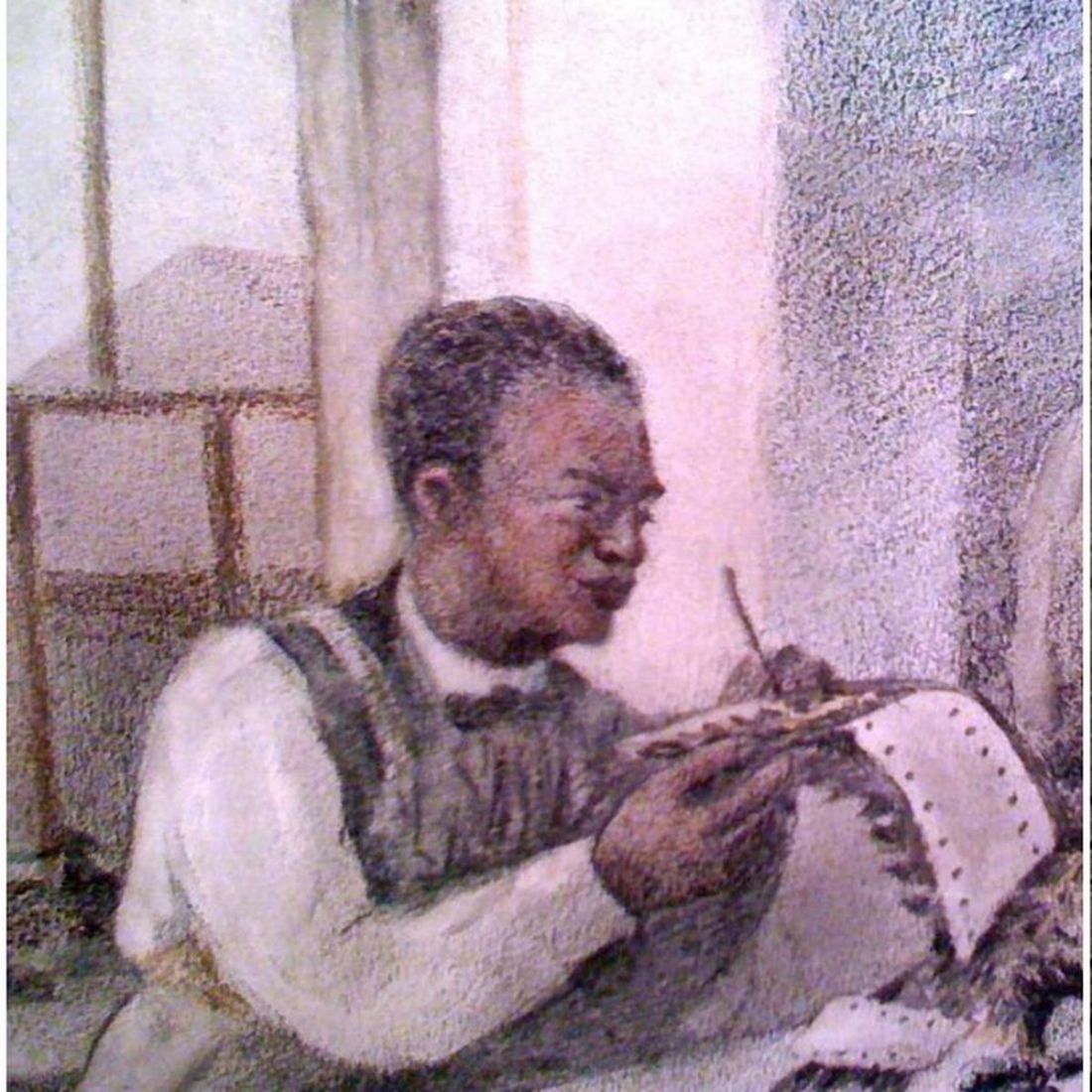
One of the most famous taxidermists of the 19th Century was a man named John Edmonstone. John practiced his art/skill in Edinburgh, Scotland, not too far from the University Medical College. Edinburgh must have been quite different than where John was from. You see, John was born a slave in British Guyana, in South America. His last name was the name of the man who owned John. One time, a naturalist named Charles Waterton came to the plantation where John lived. He asked the young John to assist him in collecting and then preserving specimens from the jungles surrounding the plantation. Waterton found that John had a knack for the trade, and he suggested to the plantation owner that John be allowed to pursue taxidermy as part of his work.

In 1817, John’s owner moved to Scotland, and John came along. There, he was granted his freedom and began to pursue taxidermy as a profession. Again it must have seemed a long way from Guyana to Scotland for the young man. Soon, he had a thriving business and quickly gained a reputation for his skill. His first shop was in Glasgow, and he made good money. Eventually, John was able to open a store on the main shopping street of the wealthier city of Edinburgh, Princes Street, in New Town.

In addition to selling posed specimens (natural poses) and trophies (heads on walls), John supplemented his income by taking on students who wanted to learn this potentially lucrative trade. He taught many students over the years. One of them, a 15 year old student at the university, wrote home telling his family how wonderful his taxidermy teacher was to him. Even though the price for the lessons was fairly steep (a guinea for an hour’s class), the young man said that John, “gained his (good) livelihood by stuffing birds, at which he is excellent.”

Over the course of his career, John Edmonstone worked for the museum of the university, and several examples of his work are still available to be seen today. His knowledge of tropical birds and animals made him unique in the trade in Scotland. In 2003, he was listed as one of the 100 Great Black Britons in a BBC poll.

And that 15 year old student of John’s who spoke so highly of his skill? He put his lessons in taxidermy to good use in expeditions to South America and beyond. Some say that his learning from John insured him a place on one of his first expeditions to the Galapagos Islands.

You know that young taxidermist as Charles Darwin.

On a Double Life

The entire town respected William—well, almost the entire town. Some people who knew him well knew that he lived a double life. By day, he was a member of the Town Council, a sort of judge for small claims made about his chosen profession, cabinetmaking. He was also one of the first members of the town’s Chamber of Commerce. However, by night, William spent the lavish sums his cabinetry made for him in drink, women, and gambling. That’s not an unusual story, perhaps. Other people have done the same: Respectable by day, reprehensible by night.

But William was different. Times were changing. Modern dress and even modern architecture were all the rage in William’s town and period, but William clung to the old styles and ideas.While his clothes were expensive, they kept the style of twenty years ago. He seemed, by his 40s, to be stuck in an earlier time. He remembered the period when a gentleman would have a mistress or two hidden here or there, when a man of means would lay a pound or two or three on a rooster fight, when a solid citizen would join a social club in order to drink among his fellows—even to excess. Even the music William liked and often hummed or whistled was from a generation earlier. But in more recent years, those distractions had become passé; the modern society man eschewed such activities as frivolous and unrespectable. A sort of “Puritan” ethic of solid citizenry had taken hold in his town and nation. So, William remained a throwback to a time when an earlier, more permissive and somewhat liberal mentality had reigned.

William had no wife, but he kept two women in town. Each woman had children by him, but the two women didn’t know each other despite the fact they lived fairly close to each other. He was at least (at most?) discreet about this. His gambling was a way to supplement his income because he was spending money hand over fist to keep up the two women and their families and also keep his own rooms, including servants, his cabinet shop supplied and manned, and also help support other family members. But, as it always does, the gambling began to go against William. That made him gamble even more to make up his losses. That strategy never ends well

Where else could William get money?

Sitting in his cabinetry shop one day, working on a lock set that a patron had ordered, it hit William right between the eyes: Working on doors and locks in his job meant that he had keys to some of the town’s most expensive shops.

And what better cover for his plan than to be a respected member of the Town Council? Because of his experiences in his town’s “dens of iniquity,” William had connections to his town’s more villainous element, and it was here that he found the men who would come to form his “crew” of burglars. Soon, he and his gang began using the keys William had to break into shops along the town’s main street at nighttime. The local newspaper began reporting a string of break-ins. The town soon became gripped in a panic over who might be broken into next. Of course, that meant that “daytime” William received more orders for more and better and newer locks for the doors to the town’s businesses. These poor saps! The business owners didn’t realize that they were merely giving the man who was robbing them even more access to their goods.

One evening, even the City Council offices were robbed.

And then, finally, the national tax office got hit. Luckily, only a few coins and bills were taken. The burglars missed a drawer that held all the cash. But the authorities managed to catch one of the robbers, and, in the town jail, the man began to talk. His tale sounded too ridiculous, so outlandish that it could not possibly be true. The ringleader of the group, he explained, was one of them, one of the town’s elites.

William had visited the man in jail the next day after the robbery. All the authorities knew him, of course, so he was granted access to the prisoner. “What a kind man,” they thought. “An important man like that showing Christian charity by visiting those in jail!”

William knew the jig was up. He left town and then the country. Eventually, the other accomplice was caught, and, when their stories matched, the authorities were left with no choice to believe the truth: William had been leading a double life. An arrest warrant was issued—a national warrant—because of the robbery of the tax office. Eventually, a bounty hunter tracked William down in another country and brought him back for trial.

William was tried by a jury of his peers—and that may have been his ultimate misfortune. The other prosperous, successful businessmen in town, many of them in the Chamber of Commerce with William and even on the Town Council, decided to make a public example of William. He was condemned to death by hanging for the robbery. His two accomplices were given prison sentences, but William was to become an object lesson.

As he was led away to the gallows, William, dressed in a fine silk suit in the old style, hummed his favorite old tune. In an extreme irony, the town gallows upon which he was hanged had been designed and built by his own shop.

You may have heard of William—at least about his character. You see, his name was William Brodie—Deacon Brodie. His town was Edinburgh, Scotland, in the late 1700s. And, some decades later, a writer from there, one Robert Louis Stevenson, would write a book, based on Deacon Brodie, about a man who lived a double life: Respectable by day, reprehensible by night.

You know it as The Strange Case of Dr. Jekyll and Mr. Hyde.