On a Local Eccentric

The town I used to live in, Westmoreland, Tennessee, had its share of characters. The running joke was that most small places in the US had a character or two who were unusual and eccentric, and that everyone else was somewhat “normal” for the time, but that in Westmoreland, that construct was reversed. Everyone was eccentric and only one or two would be considered normal. But in Hinsdale, New Hampshire, everyone knew who the local oddball was.

It was Geoffrey Holt.

Hinsdale is a place of fewer than 4,000 souls, nestled in the state’s extreme southwest corner, made up mostly of a state forest. In fact, the town is one of the state’s oldest villages, having been settled in the mid-1700s. And it has seen its share of eccentrics over the years, but few were as odd as Geoffrey. His background didn’t show any sort of odd behavior, however. Born in 1941, he grew up not too far away in Springfield, Massachusetts, and received a college education and an M.A. degree. In between those two degrees, Geoffrey served a stint in the US Navy. With education in hand, Geoffrey began professional life as a social studies teacher in a high school. But teaching and kids were not for him, so he quit. He got a job in a grain mill. Living in Hinsdale and working in the nearby town where the mill was, Geoffrey decided to sell his car and bike to work every day. In fact, he took that bike everywhere, riding for hours in the hills and forests of New Hampshire. He would often strap a six pack of beer on the back and ride off all day on weekends. He even rode his bike to Massachusetts to visit his parents.

But then, after a few years, the grain mill closed abruptly. Employees like Geoffrey were paid a lump sum of cash and told they didn’t have a job any more. After that, Geoffrey took odd jobs around Hinsdale, finally finding steady work as a groundskeeper for a run-down mobile home park. His trailer in the trailer park had no TV or internet. He collected model cars and trains. When he had to go somewhere in town, it was likely that he would drive the riding mower from the trailer park to where ever he needed to go, driving the slow-moving machine down the main street. He took to wearing the same old clothes every day. As he aged, Geoffrey grew a long, graying beard and kept to himself more and more. People who knew him found him to be private and almost shy, simply an unusual man going about his work and riding the mower around town.

Now, some people wouldn’t find any one of these things odd, perhaps, but if you put them all together, at least in Hinsdale, all of that behavior made people label Geoffrey as an odd duck. Yet, he managed to find a life partner for a time (she died in 2017), and he seemed to be enjoying his odd lifestyle. The trailer park paid him enough to live on, and his Social Security check helped in later years. Geoffrey had a stroke in 2021, and, this past summer, he died at age 82 in a care facility. Not too many people came to his funeral, but the town recognized that one of the local eccentrics was no more.

That’s when the town received a notification that Geoffrey Holt had made Hinsdale the sole heir of his estate. Turns out that, when the grain mill closed, Geoffrey had taken the lump sum money he received at the closing and invested it–and never touched the money again. As the years passed, the investment grew and grew. The town of Hinsdale looked into the investment account and discovered that the man they had labeled as the town eccentric had left them a sizeable amount of money.

Almost $4,000,000.00 to be exact.
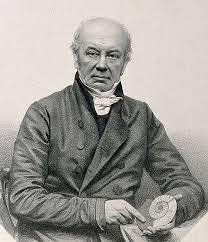
On an Eccentric Eater

William Buckland was a distinguished man. By profession, he was a pastor, a rector, and a religious lecturer. By way of hobbies, he was a paleontologist, a fossil collector, and a publisher of scientific papers on the age of the earth. However, what many today remember Buckland for is for being one of Britain’s great eccentrics in a nation that is not short of people of that ilk.

Buckland was born in the late 1700s in the English area of Devon. From an early age, he collected the fossils that lie everywhere in that area of his birth. While such an interest as a young man might make one think he would become a geologist or scientist, he decided to follow in his father‘s footsteps Thus, he went to Oxford, and there he trained to be a minister. Eventually, he received advanced degrees in theology, but his passion was really the fossil record, and that’s what he is mainly remembered for today in the professional realm.

One of the major areas where Buckland made his reputation was in determining for himself that the biblical record of time did not match the paleontological record. He realized pretty early on in his amateur study of the fossils he found that there was no reconciling the Biblical view of a Young Earth like most theologians espoused during that period. He made a few enemies but also a few friends when he published his findings and used his fossils to back up his assertions. And while that is laudable and commendable, for our purposes, let’s look instead at how eccentric the man actually was.

First of all, he decided he was going to eat his way through the animal kingdom. I mean that literally. Buckland decided he would sample every animal that he came across or get his hands on. One author compared Buckland’s appetite to a gastronomic Noah, a man who was so consumed with consuming animals like the Biblical Noah collected them for his ark.

Now, I’m an omnivore, but the most adventurous I’ve been in my journey through the world of meat has been snake, alligator, and possum (all things that folks in the American south used to eat back in the day). But William Buckland was determined to start with the letter A and go through to Z in eating the animal kingdom–and he included most insects as well. One of his favorites was braised mice over toast. Aardvark to zebra passed across Buckland’s lips over the course of his eating exploits. He made connections with shipping companies and vessels that traveled throughout the burgeoning British Empire and hired them to bring back samples of animal he had yet to consume. And, throughout his life, we don’t know for sure how many different types of animals the man ate, but it’s safe to say that he ate more different species than any other human has.

And, you might be wondering (or, if you’re normal, you might not be wondering) at this point if William Buckland drew a line when it came to eating human flesh. I think you already know the answer to that question. It seems that Buckland was visiting the Archbishop of York in a house not too far outside of Oxford, England. The Archbishop was another one of those English eccentrics, and he collected odd artefacts–and by odd, I mean things like the locks of hair from some of Henry VIII’s wives or the finger of famous singers of the past, macabre items like that. And the Archbishop showed Buckland the heart of a man who had been publicly executed a few years earlier. The Archbishop opened the silver box in which he kept the heart, and Buckland was immediately intrigued. Could he possibly have a small taste of it, he asked the Archbishop. And the man agreed. Thus, William Buckland was able to mark “human” off his list of animals he ate in his lifetime.

Oh, and the heart?

It was supposed to have belonged to King Louis XVI of France.