On a Lord’s Honorable Daughter

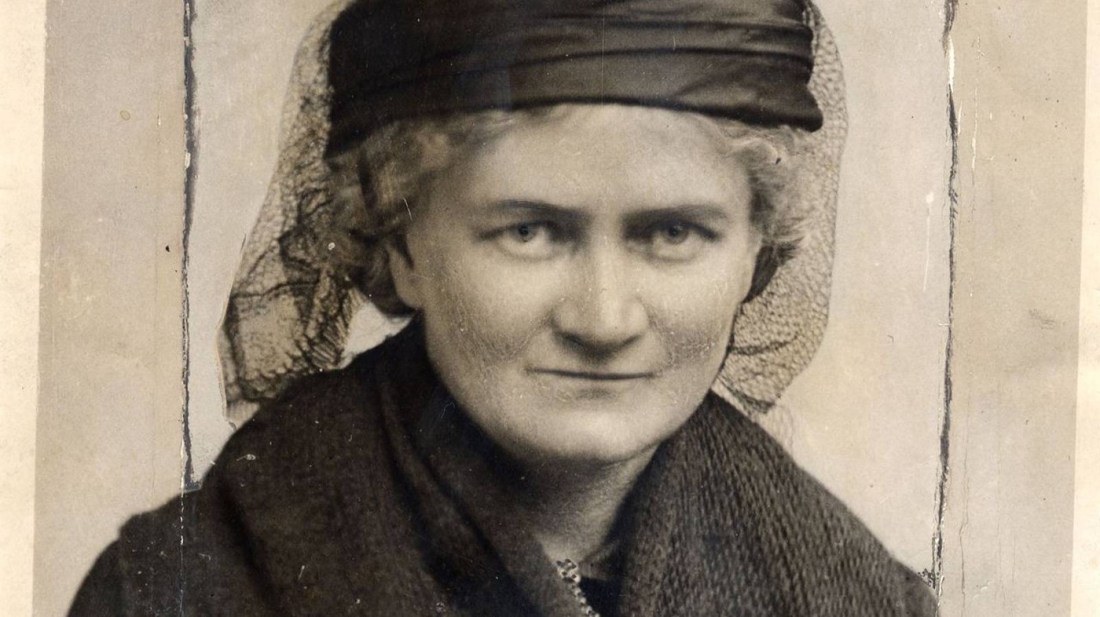
Violet Gibson. I tell you her name here at the start because you’ve mostly likely not heard of her at all. She was the daughter of an Irish Lord, Edward Gibson, Baron Ashbourne. Violet was born into this part of high society in 1876, and she was raised as all upper-class women were in the very heart of the Victorian Era. She received the same education as other girls of her station, and she went through the proper debutante rituals of the time. Her parentage entitled her to use the title The Honorable before her name. Today, a plaque honors her memory, placed on the outer wall of her childhood home in Dublin. Musicians and writers have created works in her honor.

Historians debate whether or not Violet was truly honorable. You be the judge.

Violet had health issues most of her life. Besides physical ailments, she also suffered severe mental health issues as well. A nervous breakdown in the early 1920s led her family to place her in a mental health facility for two years. When she was released, she traveled to Rome because of her strong Catholic faith led her there, in part, for possible healing from her issues. Sadly, Violet attempted suicide in Rome in 1925. She was 49 years old.

Violet recovered from her suicide attempt, but the mental anguish she lived with continued to dog her. She claimed to have angelic visions–which, in Rome, was not a claim too unusual for that religious climate–and some of these visions told her that she must fight against the then-rising tide of fascism.

The Italian dictator, Benito Mussolini, had taken control over that country in 1922. In Mussolini’s mind, the Italian nation needed to re-create the power of the Roman Empire. Towards that end, Mussolini chose the Roman symbol of a sheath of bound sticks with an axehead at the top. This symbol, known as a fasces, was a Roman sign of unity and the power of a magistrate. It’s where we get the words fascist and fascism.

Violet hated this political philosophy. She swore that she would fight it to her death. She said that her actions against fascism would “glorify God” and bring justice to those in the despotic Mussolini regime who had injured or imprisoned people she felt were innocent.

This daughter of an Irish lord, this honorable woman, was put in a mental hospital in England in 1926, and she died there in 1956.

So, what makes her honorable in the minds of many? What did she do that makes her have a plaque and have songs and films created about her?

It was in April of 1926 that The Honorable Violet Gibson took a revolver and shot Benito Mussolini.
On a Bar Bet

Bar bets are only slightly younger than bars—probably by a few seconds.

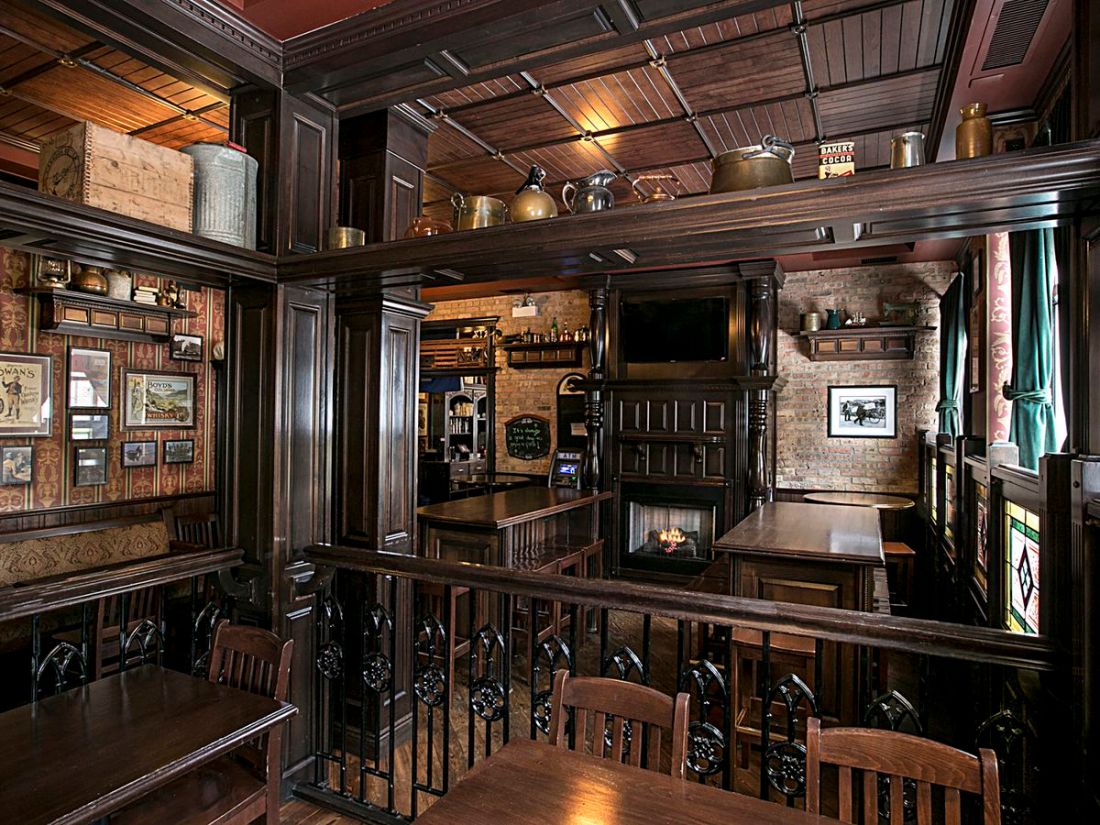
The conviviality of the public house, the camaraderie of the tavern of yesteryear is lost on today’s corporate cookie-cutter “bar and grill” or the like. We can’t relate in our modern world to a local establishment that served the community more as a social club with rooms for rent above it, a place where the denizens of the village or neighborhood could swap news, gossip, and tall tales. And, in the days before social media, it was all social and no media.

That’s where the bar wager comes in. As conversations turn interesting after the 3rd or 4th pint, the bragging becomes braggier and the stories become more outlandish. Finally, someone calls the malarkey and says something like, “Put your money where your mouth is.” And, more often than not, people would back down and admit they were only kidding or exaggerating.

But not in Ireland.

And not when you were Richard Daly, according to the story still told in Dublin bars today.

You see, Daly managed a theater in Dublin called Smock Alley Theatre in the late 1700s. Secretly, some said, Daly longed to leave the wings of the theater and take to the stage. If actors make some of the best braggarts, often, frustrated actors can take that braggadocio to the next level. One night, as Daly enjoyed the company of actors and patrons at a pub near his theater, the Eagle Tavern. There, over several tankards of ale, he began to hold forth.

The topic of conversation on this particular evening, according to the legend, was the history of language. Language and words were the stock in trade of most of those bending their elbows with Daly that evening. Additionally, Daly himself had a bad habit of making bets on things large and small; nothing was too insignificant for him to place a wager on.

Somehow the talk turned to the creation or insertion of new words in the English language. Daly spoke up and made a proposal that aroused great interest among the wordsmiths and betting men in the crowd:

“I wager that I could introduce a word into the language, and, within a fortnight, every person in the city will have the word on his lips.”

 Several takers immediately spoke up to take on that bet. It would be impossible, they argued, for a new word to be introduced to society so rapidly. New vocabulary, even if from a new invention or borrowed from other languages, often takes years or even decades to come into common knowledge and usage in English. Daly disagreed. He even gave the naysayers odds on the bet. It was agreed. They would meet again in a fortnight to settle the bet.

At this point, Daly made use of the small army of stagehands, promoters, ticket-takers, and custodians/cleaning women and implemented his plan. He ordered his cadre to go out into the town for several nights and write the word in chalk and charcoal on every available surface in Dublin. He also swore them to secrecy.

Within days, the entire town was indeed talking about the word. Daly knew that the word he invented would have to be both simple (He chose 4 letters) and unusual (It includes an unusual letter) so that people would remember it. They did. For weeks, Dubliners went about asking the question, “What is it?”

According to the legend, this is the way Daly won the bet.

Interestingly, schoolchildren today also ask the same question when they are confronted with the word: “What is it?”

It’s why we call it a quiz.