On A Consular Appointment

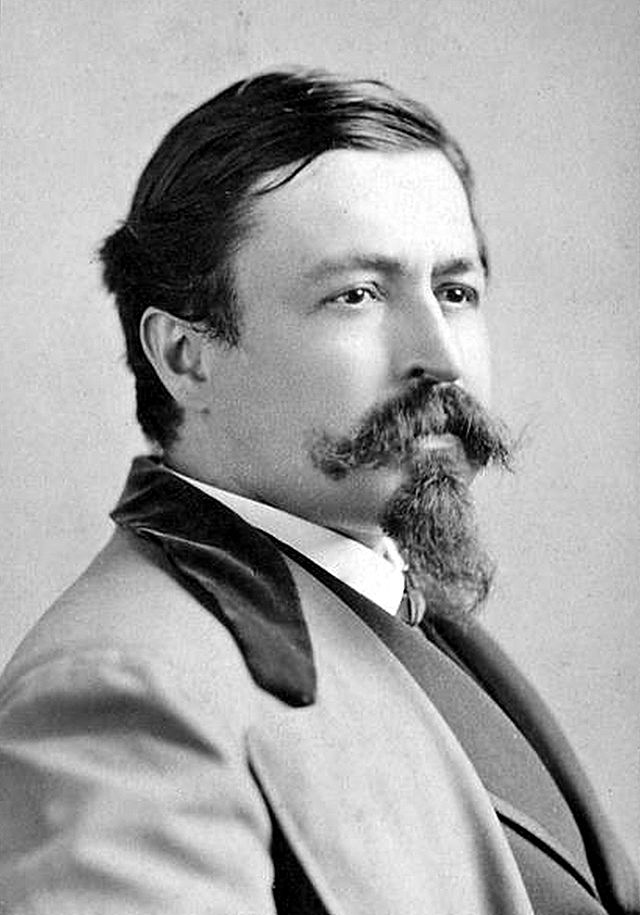
Tom was tired of art. He’d been an artist most of his professional life. In fact he’d made decent money at it. But he wanted a change. Call it a late-age crisis (if you consider 62 to be late-aged), but Tom knew he had more in him than simply art. So, having been interested in politics from an early age, Tom applied with the United States State Department for a position as a consul, preferably, he said, to Europe. Now, this was 1902, during a time when the US Civil Service was still being standardized and the best practices were still being established. Tom had no real qualifications to be a US consul except he had some friends in some powerful places, so he pulled some strings and made some inquiries and was able to get an appointment as a consul. Granted, it was not in Europe like he had preferred, but it was still a posting at a consulate. Besides, he had heard great things about the beauty of Guayaquil, Ecuador. So, Tom accepted the position and sailed for Ecuador in July.

Now, Guayaquil is a beautiful city on the coast of Ecuador and was, at the time, one of the major ports on South America’s western coast. Being so important to trade, the United States was extremely interested in maintaining a political presence there in the form of its consulate (the US Embassy was in the capital city of Quito, located high in the Andes in the interior). So, while the posting for Tom wasn’t particularly glamorous, it was an important appointment. And, despite not having any real public administration experience, Tom soon found that he really enjoyed the work. After all, the real paperwork and administration were done by those permanent officers in the consulate; most of what Tom did was assist Americans who made their way through the area on business or pleasure and who needed help with visas or passports or what have you. He was also wined and dined by the local dignitaries and the consular officers of other nations. Schmoozing? Tom could do that.

As the summer of 1902 turned into the fall (Ecuador really has no seasons other than rainy and not-rainy), people in the city began coming down with Yellow Fever. Remember that this was in the days before a viable vaccine for the disease, and the work of Dr. William Gorgas in eradicating the breeding of the disease-carrying mosquitos was still a couple of years away. People started dying in droves. It was discussed that the consulate in Guayaquil should be evacuated, and orders were approved in Washington to allow those able to travel to leave the city and go to a place where the Yellow Fever had yet to come or even, possibly, return home. But Tom did an incredibly selfless thing. He decided to stay. “People will need me now more than ever,” he said to an aide. Tom knew that his signature on travel documents would allow American families to leave the stricken area quicker. So, he stayed on and helped many Americans to escape the clutches of the disease. Of course, you can guess what happened. In December, Tom got Yellow Fever. He died on December 7th. His body was brought back to the US, and he was buried in the Bronx, New York.

But we don’t remember Tom for his courageous and selfless work as the US representative in Ecuador that deadly autumn. No, we remember him for his art, actually. You’re quite familiar with his work. When you think of the two American political parties, you might think of the animals associated with them–the elephant for the GOP and the donkey for the Democrats. Tom did that. And, every December, you imagine Santa Claus looking like, well, like Santa Claus. Tom did that, too. And, today, every year, a prize is given in his name to the best political cartoon of the year.

In fact, Thomas Nast was the foremost political cartoonist of his day.
On a Beating

The rhetoric that surrounds much of the modern political discourse walks a razor’s edge of violence. Politicians know precisely what to say that will encourage their like-minded supporters to move to physical action while allowing the politicians at the same time to argue that their words were misconstrued. They rely on the plausible deniability to protect them from not only prosecution but also responsibility for the resulting violence. All of this has resulted in a polarization in the public discourse in the US that hasn’t been seen in a while. We need to remember that words have power and choose them carefully.

But what happens when the politicians who speak in these “dog whistles” become the ones who act out the violence? That’s something that happened in a most unusual place–the United States Senate floor. There was a time that tempers were running high between a Republican senator from the north against a Democratic senator from the Old South. The two men were on opposite sides of most issues, but the emotional issue of Civil Rights divided the pair the most. And it got personal. The Republican even made fun of the Democrat’s slurred speech that he had developed as a result of a recent stroke. True, this type of personal attack is unwarranted and uncouth, but politics is a nasty business, after all.

But a relative of the Democratic senator took great offense at the Republican’s attacks of both political and personal natures. And while the saying about sticks and stones is true, words can lead to the use of them for a certain. This man, this relative of the senator, he actually made plans to kill the Republican. And, to make this bad situation even worse, the relative with the murderous intent was a member of the US House of Representatives and also a prominent Democratic politician. A friend talked him out of murdering the poison-tongued northern senator and instead convinced the man to merely beat him. The younger relative reluctantly agreed.

Well, the Republican was at his desk on the almost empty Senate floor after the day’s business. He was busy writing a speech for the next day and was so intent on his work that he failed to notice the representative approaching him. The Democrat pulled out a cane with a golden handle and, with a mighty backswing, struck the sitting senator in the head with all his force. The blow knocked the man from his chair. He later said that he blacked out at that point and barely remembers holding his arms up in a vain attempt to defend himself against the blows that began raining down on his head and shoulders.

The attacker got several blows in before anyone nearby could intervene. Some later privately said that the northern senator got what was coming to him, but then others managed to tear the attacker away. The northern man was so severely beaten that pools of his blood surrounded his desk; he had to be carried from the chamber on a stretcher and then treated for a concussion and also received several stitches. The attack was so violent that the man wielding the can broke it in several places; his swings were so violent that he hit himself with the cane and had to also receive some stitches.

Sadly, the senator from the north was so badly beaten that it would be over a year before he was physically able to return to his desk. And equally as sad, many in the nation agreed with the attack. Some media recommended that the senator receive such a beating regularly. And some other people sent the young representative a new cane, one even inscribed with the words, “Do It Again.” However, other supporters of the beating said that it was not as bad as the senator made out. The severity of the beating was, in effect, fake news.

But it wasn’t fake. Nor were the divisions between the two sections of the nation.

The beating of Massachusetts Senator Charles Sumner by US Representative Preston Brooks of South Carolina in 1856 symbolized the moment when the rhetoric about the issue of slavery turned violent and presaged the bloody Civil War that would follow four short years later.