On a Bike Trip

It was a warm late spring Saturday, June 10, 1944, in Limoges, France. Six young friends decided to take a bike trip into the country. France in the springtime is glorious, and the hilly vistas in the countryside surrounding Limoges were alive with blooms and greenery. The friends packed a lunch and the obligatory bottles of wine to accompany it. It promised to be a fine day.

The small group felt like celebrating for the first time in years. You see, news had reached the city that the Allies had invaded the beaches of Normandy, some 300 miles north of Limoges. After years of humiliating occupation by the Germans, it seemed that the iron grip of the Nazi invaders was coming to an end. So, a celebratory day in the countryside by bike seemed like a wonderful way to spend a Saturday.

The group decided to leave early that morning and strike out northwest of Limoges. They made their way through the outlying villages of La Vergne and La Lande and on a route that took them slightly south of what is now the runway of the Limoges Airport. By the time they reached Saint-Quinten, they had left the noise and traffic of the city behind and were truly in the countryside.

About one o’clock, the group of friends coasted into a sleepy village. They had decided that they would take a rest break and have their lunch in the grassy area of the square when they reached the small town, and so they slowed down as they entered the village. But something was wrong. The main street of the village was lined with military vehicles, German army vehicles, and armed men were standing next to them. The group of cyclists had no choice but to continue. There was no chance for them to turn around and leave the village the way they came.

Perhaps this was only an identity check. After all, the Germans were on high alert since the invasion. They were keenly aware of French resistance activity that had seen an uptick since the Allies landed only four days before. Maybe all the Germans in the village wanted was to make sure the cyclists were who they said they were–innocent friends out for a bike ride on a warm Saturday.

But no.

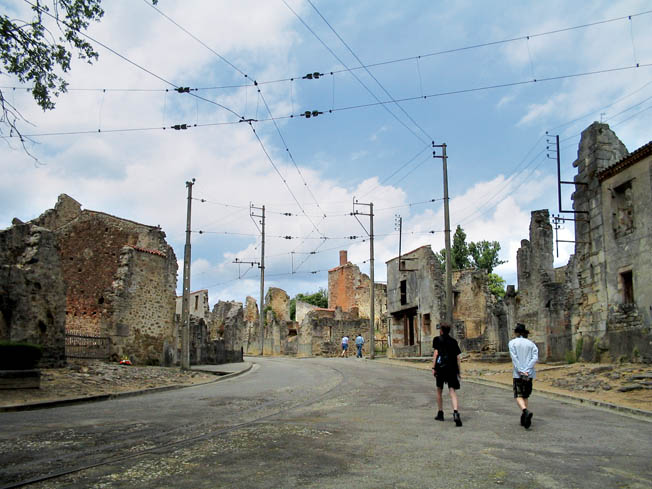
The Germans were on a mission of revenge. The resistance had struck damaging blows to the Nazi war effort around Limoges, and the occupiers were out for blood. They rounded up the villagers and separated them–men, women, and children. The women and children they put in the centuries old church building. The men…well, the men they first put into barns. Then they shot and burned them. A large bomb was detonated in the church building where the children and women had been herded. Those who survived the bomb, fire, and smoke were then shot. Fires were set all over. When the massacre ended later that evening, not one of the over 350 buildings in the village was left standing.

And the six cyclists from Limoges, the six friends who only wanted a nice day of biking in the French countryside, they became part of the 643 victims of the destruction of the village of Oradour-sur-Glane.
On a Crossword

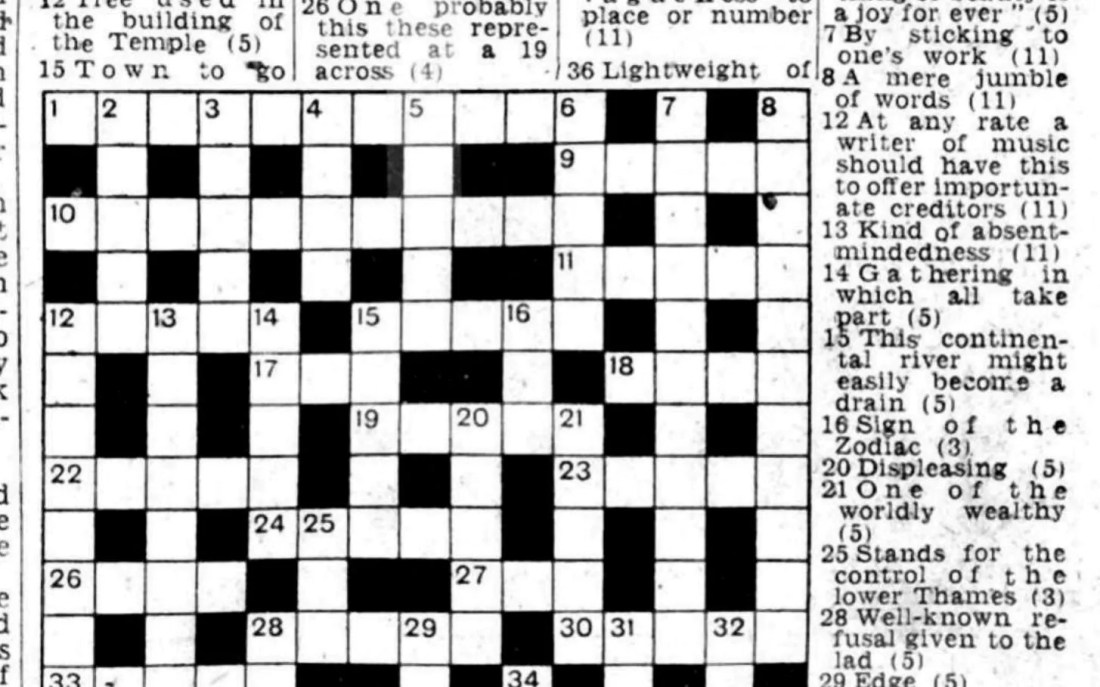
Some people dearly love crossword puzzles. Before newspapers became passe, most daily papers featured a crossword puzzle for their readers. The British seemed particularly keen on this past time. One of the most famous daily crosswords was featured in the London Daily Telegraph paper. Published since 1855, the Daily Telegraph is, in some circles, the newspaper or record in the British capital city.

During World War 2 in Britain, with the nation under siege from the Nazi’s blitz bombings and suffering from various rationing and shortages, things like the daily crossword provided many citizens with a welcome respite from the issues of wartime. Like many newspapers, the Daily Telegraph received their puzzles from people outside their direct employ. One of the paper’s daily crossword compilers was a school headmaster named Leonard Dawe. Dawe had led an interesting life before his teaching career. He’d played football (soccer) for England in international matches, even being selected to be a part of the national team at the Stockholm Olympics in 1912. During World War 1, Dawe saw deployment to the Middle East, and he came out of the war with the rank of Major in the army.

But World War 2 saw Dawe serving his nation by forming young minds in the Strand School. The school for boys had been removed to the countryside in order to protect the youngsters from the German bombing of the city. There, the boys and their teachers enjoyed the countryside and the relative quiet found there. Not too far away was a military camp for British and Canadian servicemen, and that place proved to be a source of adventure for the schoolboys as you could imagine.

Dawe submitted his crosswords to the Daily Telegraph and invited his students to help him put those puzzles together for the paper. The boys were delighted to help. Dawe’s habit was to leave a blank puzzle template in his office, and he asked the boys to come in freely and fill in the blanks with words. Dawe would then complete the puzzle by creating the clues that matched the words the boys provided. The collaboration proved fruitful, and Dawe never failed to send good puzzles to the paper.

But, then, in the spring of 1944, military intelligence showed up at Professor Dawe’s door. He was arrested for suspicion of espionage. Everyone was shocked. Why, they wondered, would a distinguished schoolmaster (and a veteran, at that) risk his reputation and career by being a spy? It turned out that some of the words that appeared in Dawe’s puzzles that spring were important to the war effort at the time: Utah. Sword. Overlord. Mulberry. Gold. Omaha. Neptune.

Dawes sputtered his innocence when put under intense interrogation. He couldn’t think of how those words could have come into his puzzles. Then it hit him. The boys were going to the nearby basecamp. They must’ve been overhearing these words from the soldiers there and coming into his office and putting the words on the template. You see, those words were codewords for what was about to be the Normandy Invasion–D-Day–scheduled for June 6, 1944.

And Dawe’s schoolboys almost gave away the Allies greatest secret.

On a Spy’s Code

Espionage and sending coded messages is as old as man, almost. The old joke that when God made the third human that a plot was hatched by two of them against the other one has some validity. And finding a way to confidentially pass information gleaned by secrecy became an important part of how to successfully carry out any plot. We know about cyphers, about dead drops, about messages in symbols, and even numbers stations. We’ve talked about some spies in this format (Mata Hari, for example), but this is about a particular spy code in World War 2 that came from an unlikely source.

Sometimes, and especially in this day of high tech, the more low tech a message is, the more secure it can be. That is the case here. The spy in question was a British agent named Phyllis. She had been dropped into Nazi occupied northern France in the weeks and months before the Allied forces invaded Normandy on D-Day, June 6, 1944. Phyllis’s job was the blend into the countryside, to watch German troop movements, listen to local gossip regarding defenses as she sat knitting with the other women, and sometimes flirting with the occupying soldiers in an effort to glean more vital info that could make the difference between success and failure of the impending invasion.

One harrowing experience came when she and some other women were brought into the local police station for questioning. Their movements and activities had aroused the Nazi’s suspicions, and the women were thoroughly searched for any possible evidence that would implicate them in espionage activities. A female policewoman made the women strip to search their clothes for any potential messages or proof of spying. The policewoman noticed that Phyllis had her hair tied up on the top of her head with one of her crocheted pieces, and she insisted that Phyllis take her hair down in case something had been hidden there. Phyllis quickly complied, and she revealed that nothing was in her hair bun. Telling the story years later, Phyllis recalled how scared she was, how terrifying the situation had been, and how the Nazis actually came to finding the information that she indeed had hidden in her hair.

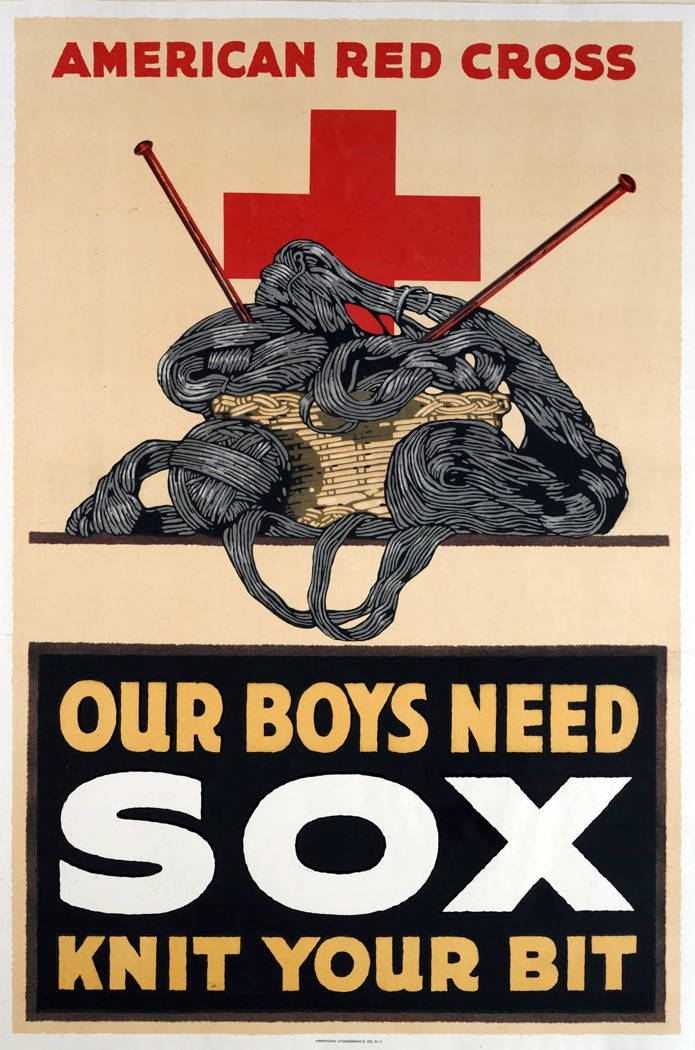
Except the coded messages wasn’t in her hair. It was in the crocheting. In fact, the kitting the Phyllis and the other women did in Normandy contained codes in the knots and the loops and knits and purls within the kitted piece. She used the knitted items to send coded messages about the German defenses to people who had hidden radios, and that’s how the Allies knew which areas of Normandy would be the best to invade in that late spring of 1944.

Yes, one of the best weapons the Allies had in the invasion of Europe was a pair of kitting needles.