On a Young Hobo

Hobo is one of those words of which we have no clear etymology. However, the word is in our vernacular and has been since the 19th Century. During the Great Depression in the United States, the roads and railways were clogged with young men (and a few women) who were traveling around looking for work, food, direction. With almost 25% unemployment, it’s no wonder why. My uncle Bubba (his name was Melville Carr Baker; that’s why everyone called him Bubba) told his tales of riding the rails in the 1930s from town to town.

Another young man who did this was one Arnold Samuelson. From Scandinavian stock in the American Middle West, Arnold had finished his college work and was, like most men aged 22, uncertain about his future. That’s when he decided to stick his thumb out on the highway and travel the United States, to see what there was of the amazingly large nation. Eventually, Arnold found himself sitting on top of a boxcar as it made its way down the bridges from Miami into Key West, Florida, the southernmost point in the nation on the East Coast. When he arrived in Key West, it was almost summer, the time when people at that time left Florida to escape the heat and mosquitos.

That first night in Key West, Arnold slept on the dock; the sea breeze kept the bugs at bay. But the next night, a couple of local policemen said he couldn’t sleep in public and offered to put him in their holding cell for the night. One rule of being a hobo, at least according to Uncle Bubba, was that you never said “no” to the police. So, Arnold went with them. That started several days of walking around the town during the light and sleeping in the mosquito-filled jail cell at night.

On one of his walks about the town, Arnold found himself in front of a large, older, typical Key West house. He knocked on the door, and a burly, shirtless, mustachioed man came out and confronted him. Arnold stammered hello, and the man asked him, brusquely, “Waddaya want?” Arnold sketched out his tale to the man, and he could see that, the more he explained his situation, the more relaxed the man became. “So, you just want to chew the fat?” the man said with a smile. Arnold nodded. The man said that he was busy, to come back the next morning and they would sit on the porch of the man’s house and have a proper talk. Arnold agreed. That began several days of Arnold waking up in the jail, scratching his new bug bites, then coming to the man’s house and having deep, meaningful conversations about life, love, art, and Arnold’s favorite topic, writing. The man was quite knowledgeable about many topics and filled with good advice and helpful life-tips for the young hobo.

“If I wished to learn about writing and about life,” Arnold asked him one day, “what books should I read?” The man got up and got a piece of paper and a pencil. He made a list of books for Arnold to get and peruse. “Those’ll teach you about what you need to know,” he told Arnold. One day, the man gave Arnold the news that he had to take his boat up the coast. He asked Arnold to do him a favor. “Say,” he said, “would you want to come along? You can live on the boat and watch out for it when I’m not on it.” Arnold eagerly agreed. He couldn’t believe his good fortune. He ran back to the police station and grabbed his tattered bag, thanked the cops, and ran back to the man’s house. That was the beginning of a whole year of sailing on the Caribbean with the man and his fishing buddies and other assorted guests. The man paid him a dollar a day, and Arnold was deliriously happy.

Arnold never did become a famous writer, but he did publish an interesting book about his experience there.

It’s called, With Hemingway: A Year in Key West and Cuba.

On a Boy’s Letter

In the National Archives of the United States, there are reams and reams of letters that people have sent to the occupant of the Oval Office over the years. The Archives are working tirelessly to digitize those letters. With permission, any American can access these records and see what people wrote to the various Chief Executives. Sometimes, people from other countries wrote to the American President.

We don’t know why the boy from the Caribbean island wrote to President Franklin Roosevelt in 1940. Perhaps, as children do, he simply wanted to express his admiration for a man who seemed to be so inspirational at a time when the world was going mad with economic disaster and world war. For many, FDR represented one of the last bulwarks against the fascism that was sweeping the globe from Japan to Paris in the war’s first full year. Roosevelt had been recently re-elected for an unprecedented third term, and some breathed a sigh of relief that he was still in control of the last great democracy on earth save Great Britain.

The boy, aged 12, took a pencil and wrote the great man to express his admiration and to ask a favor. The letter begins, “Mr. Franklin Roosevelt, President of the United States, my good friend Roosevelt.” In broken English, he wrote to say that he had heard about FDR’s election win, and he expressed that he “was very happy to hear” the election results over the radio. It was that medium of radio that Roosevelt had utilized to speak directly to the people during the Great Depression and throughout the 1930s in a series of talks called the Fireside Chats. Those talks to the American public resonated beyond the US borders, carried by the airwaves into the Latin American sphere and the island nations like the one the boy came from.

In his letter, the boy’s grasp of English is obviously limited, but his admiration for the American President shines through. He admits that, “I don’t know very English,” and when he congratulates FDR on his reelection, the lad doesn’t know the English word “term.” So, he inserts his native Spanish word “periodo” instead. It’s an earnest and honest letter as well. Near the end, the boy makes an interesting request, however. He asks the American leader for a new $10 bill. He calls the note a “green American,” probably somehow confusing the term “greenback” as slang for an American bank note. He adds, “because never, I have not seen one,” the boy says by way of explanation.

It could be that the boy wrote the letter as part of a school exercise in his homeland. The letter is written on school stationery, and it has the school’s address in the upper left-hand corner. When he asks for the $10 bill, he repeats the address of the school as where the gift could be sent. Then, as the letter drew to a close, the boy reiterates that his English knowledge is limited, but he says that perhaps Roosevelt’s knowledge is Spanish was limited as well. “You are American,” he said, “but I am not American.” “Good by,” he says by way of signing off. And then, the boy signs the letter.

“Your friend,

Fidel Castro.”

On a False Accusation

Mingo Sanders, First Sergeant, Company B, 25th Infantry Regiment, found himself in Cuba as part of the contingent of American soldiers in the Spanish-American War. He and his fellow soldiers had been assigned to the western US before the war started, and they were some of the first regular army troops to go to Cuba. The 25th Regiment was a Black outfit that had all-white officers, and Sergeant Sanders was one of the Black non-coms who formed the backbone of the troops. They were a proud group of men who were not new at their jobs, unlike many of the young and eager and inexperienced soldiers who had volunteered when the war fever broke out in April of 1898. Interestingly, Black soldiers made up around 25% of all US troops in Cuba during the conflict.

Sergeant Sanders was with his outfit one day in Cuba when another regiment arrived nearby. This was one of those all-volunteer units, and the way they set up their camp, well, a veteran could tell immediately that they didn’t have the expertise that Sanders and his fellow regular army comrades did. That evening, the commander of those troops, a colonel of the volunteer group, came to Sanders with a request. It seemed that his supply wagons had been delayed; could Sanders and his men please share some of their supply of hardtack with his white volunteers? Now, for those who don’t know, hardtack is like a large cracker that is, well, hard. You would usually soak it in coffee or water to soften it before eating, but the hardness allowed for it to be stored for a long time without decaying or breaking down. It wasn’t great food, but it was filling. And, of course, Sergeant Sanders was happy to give the young colonel and his volunteers some of their provisions. The young officer was grateful and said so. I tell you this to show you the type of man Mingo Sanders was.

Sanders and his regiment distinguished themselves in the war. Later, they were posted on the other side of the world, in the Philippines, to fight in that insurrection against the Americans. It was there that Sanders saved the lives of several men in an action and earned himself a medal for bravery under fire. At the end of that conflict, he and his men were stationed in Brownsville, Texas, right on the Mexican border. And it was there that everything went wrong for Sanders and the soldiers of the 25th Regiment.

It seems that the town wasn’t that thrilled to have Black soldiers stationed there. This was in the depths of the Jim Crow era in Texas, and racism practically hung in the air. The troops were given strict orders about avoiding any kind of confrontation with locals, and passes into town from the base were limited. That said, on August 13, 1906, two white citizens of Brownsville were shot; one of them was killed. The locals immediately blamed soldiers from the 25th. An inquiry was immediately launched, but the white officers of the 25th insisted that all their men were on the base the evening the violence occurred. Sanders and the other non-commissioned officers also vouched for the presence of all men in the barracks at the time of the shootings.

These assurances that the 25th wasn’t involved didn’t seem to matter to most folks. When local authorities could find no member of the regiment who could be definitively connected with the shooting, President Theodore Roosevelt sent a special investigation to Brownsville to sus out the truth of the matter. Each soldier of the 25th was interviewed, including the officers. Still, all insisted that the regiment, to a man, had not left base that night. They knew better, they all said. When the investigation reported to Roosevelt that no one in the regiment confessed or even pointed to any of the soldiers’ involvement, he did something odd.

Bowing to pressure from the white community of Brownsville, Roosevelt ordered that all members of the 25th Infantry Regiment be given dishonorable discharges. There would be no chance for appeal or any trial before a military court.

For Mingo Sanders, he was stunned. His 26 year army career was over without any due process or any official court martial. He lost his pension and his position and his pride took a major blow. And, in what may have been the most unkind cut of all was the fact that he lost it all due to this particular Commander in Chief’s order.

You see, Theodore Roosevelt was the same young colonel Sergeant Mingo Sanders helped by giving those green volunteers some of his regiment’s hardtack a few years earlier.

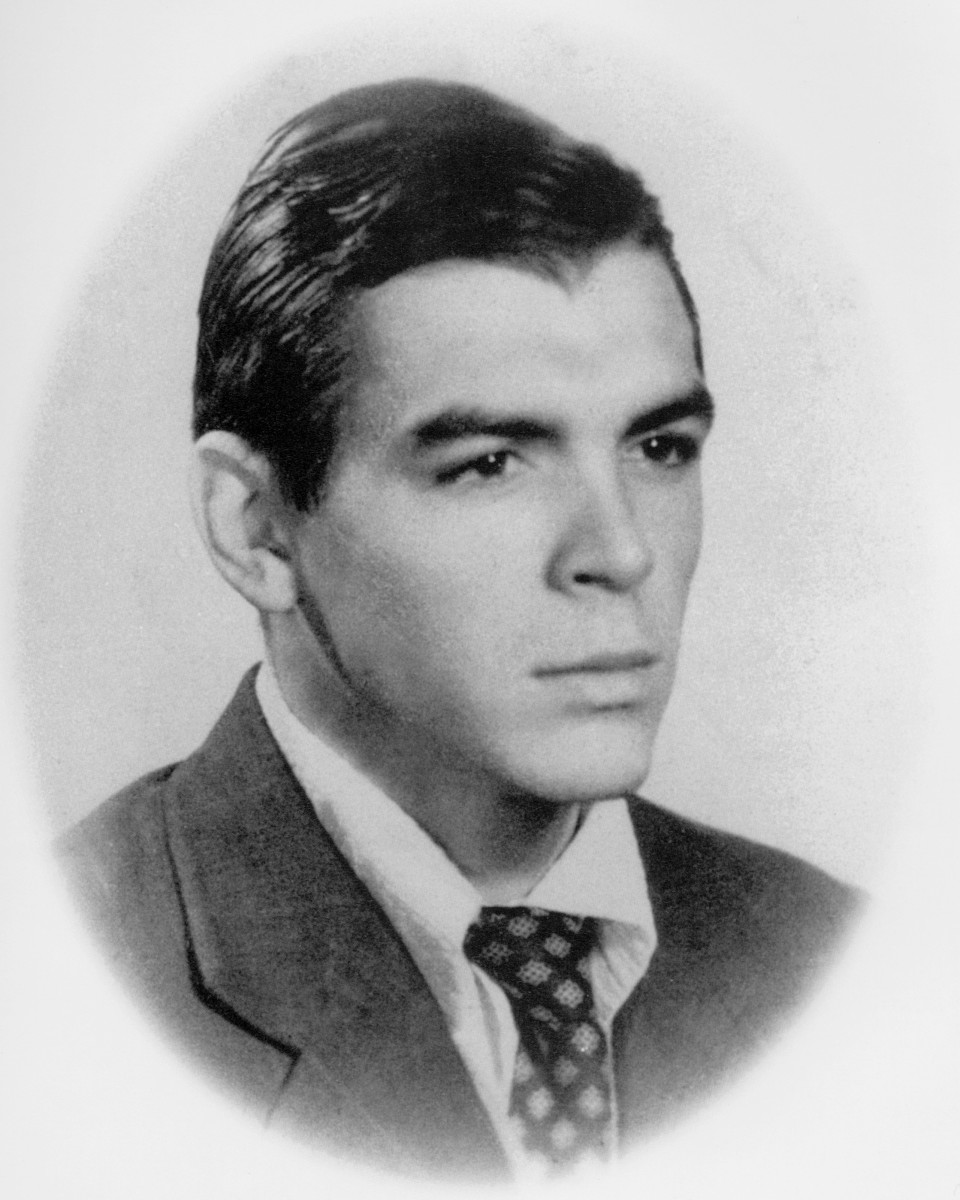
On a Medical Student

Ernesto came from an upper-class family in Argentina, so it was a foregone conclusion that he would become an attorney or physician or businessman. He chose medicine. It fit his personality to a degree, because he enjoyed puzzles and strategies. A junior chess champion, Ernesto found that he excelled at pretty much anything he put his mind to.

He was half-way through his medial training in Buenos Aries when he made the choice to take a short sabbatical. Over the course of several weeks in 1950, Ernesto embarked on an almost 3,000 mile journey around South America. The trip opened his eyes. Having been somewhat shielded from the world by his family’s fortune, Ernesto for the first time was confronted with not only the abject poverty that continues to plague much of Latin America today, but he also saw how the economic patron system of that hemisphere kept the rich in power and the poor subjugated.

The next year, 1951, Ernesto decided to take a whole year off from his medical studies. He and a med school buddy decided to ride around the continent and explore more of the land and people and culture. During his travels, Ernesto spent time with people of all races and classes. Over the course of 5,000 miles worth of exploring and interacting, Ernesto decided that the destiny of Latin America should be that the entire populace should be united in one confederation with one purpose–to create a fair economic system that leveled the economic playing field and ended the exploitation of the workers and the poorer classes. He and his friend even spent time with a colony of lepers in Peru on the banks of the Amazon, treating the people there with medicine and kindness. Ernesto kept a detailed diary about the journey that was later made into a film.

He returned to his studies in Buenos Aries a changed person. In June, 1953, he received his medical diploma at the age of 25. He knew that his life’s calling was to help people. However, he knew that as a doctor, he could help a good number, but usually only one at a time. No, in order to help the large numbers of truly poor and needy, Ernesto decided that he must forego his medical career and follow a calling that would make the most impact on the world while he lived on it.

He chose politics.

Oh, and being from Argentina, Ernesto had a habit of using a certain word that is more of a grunt, an addendum, that he put at the end of almost every sentence. It is much like how a Canadian uses the “eh?” in conversation. Except in Argentinian Spanish, it’s more of an exclamation than a question. And the expression became synonymous with this young doctor who used it so often.

Ernesto “Che” Guevara.

On a Rough Rider

We have largely forgotten the Spanish-American War. Perhaps the only thing most remember from the war was the propulsion of Theodore Roosevelt to national prominence—and, eventually the White House—as a result of the exploits of the troops under his command, the Rough Riders.  Roosevelt had helped to put the unit together, billing it as being made up of mostly western cowboy-type cavalry men. In reality, it was a fairly diverse volunteer unit of troops and included several Ivy League and upper class friends of Roosevelt’s as officers. Ironically, even though they were cavalry, they fought the war in Cuba on foot because their horses never arrived.

The Rough Riders and Roosevelt won their notoriety in a famous charge up San Juan Hill in Cuba. Roosevelt made sure that plenty of reporters were on the ground in Cuba with his troops so that his heroics there could be documented. Today, we would say that the reporters were embedded with the troops, and, indeed, several reporters even took up arms in the conflict. These reporters described the battle in glowing terms, giving credit to Roosevelt for his leadership and coolness under fire. Such was the popularity of this type of reporting that President William McKinley, running for reelection in 1900, chose the young Roosevelt as his running mate.
In many ways, the Spanish-American conflict was a war created by and for tabloid journalism. When tensions were rising between Spain and the United States, newspaper magnate William Randolph Hearst sent artist Frederic Remington to Cuba to report on the situation. Supposedly, Remington sent a telegram back to Hearst stating that there was no real conflict to report on. Hearst, possibly apocryphally, said something to the effect that the artist should provide pictures and Hearst would provide the war. The idea was that Hearst would whip up sympathy for the American cause and hatred towards Spain that would result in a war fever. He was not far from wrong. Newspapers were the major source of news for the United States in the era before electronic media. However, sensationalism ruled, and the public ate up the lurid details of Spanish atrocities against the United States—even if the “atrocities “ had been fabricated by newspaper men like Hearst and Joseph Pulitzer.
Thus, Teddy Roosevelt’s rise to fame was a part of this pro-war propaganda. However, not all Roosevelt did in Cuba received good press. You see, the Rough Riders had been in another engagement in the days before the famous charge up San Juan Hill. And, unlike San Juan Hill, a previous battle, called
Las Guasimas, was the opposite of glorious. Accounts are muddled, but it appears that the Rough Riders and Roosevelt blundered into a Spanish ambush. Oh, the Spanish were retreating anyway, but the fact that Roosevelt and his troops gained control of the battlefield caused TR to claim a victory despite the fact that the Spanish outfoxed and outfought the Americans. Several American troops were killed including one of Roosevelts officers.
One reporter’s story back home headlined the battle of Las Guasimas this way: Roosevelt’s Rough Riders’ Loss Due to a Gallant Blunder. The reporter criticized the American troops and leadership for ignoring the warning signs of the ambush and for not listening to their Cuban scouts who had warned them of trouble ahead. The reporter credited this to an American overconfidence when prudence and caution would have saved American lives. It made Roosevelt and the other leaders look foolish.
Roosevelt was furious when he heard about this report. He knew how important reporting such as this would be seen, especially to someone like him who had political ambition. He later spoke of what he called cheap novelists posing as reporters who wanted to strike out against anyone they considered to be their superiors. In his book about the war, written a year later, Roosevelt tried to set the record straight regarding the ambush at Las Guasimas. In fact, Roosevelt portrayed himself as being such a hero, one critic of his memoir said that the book should have been titled Alone in Cuba.  Luckily for Roosevelt, the positive press that surrounded the charge up San Juan Hill quickly obliterated any negative reporting that may have happened after Las Guasimas. Some historians have argued that Roosevelt led the impetuous charge up San Juan Hill in an effort, in part, to change any possible negative public perception that the ambush had caused.
And who was this reporter who struck such a nerve with the future president? He was, in fact, a novelist. Roosevelt got that part right.
The novelist was Stephen Crane, the author of The Red Badge of Courage.