On a Liberal Education

Schools, for good or ill, form the primary influence on the formative years of children. Teachers spend more time with children than their parents do in most cases. Studies show that young people are far more likely to listen to and believe the opinions of their peers in school than they do those of their parents. And the curriculum of the schooling that children are exposed to can shape not only the individual child but also generations to come. Even a single teacher can make a world of difference–literally.

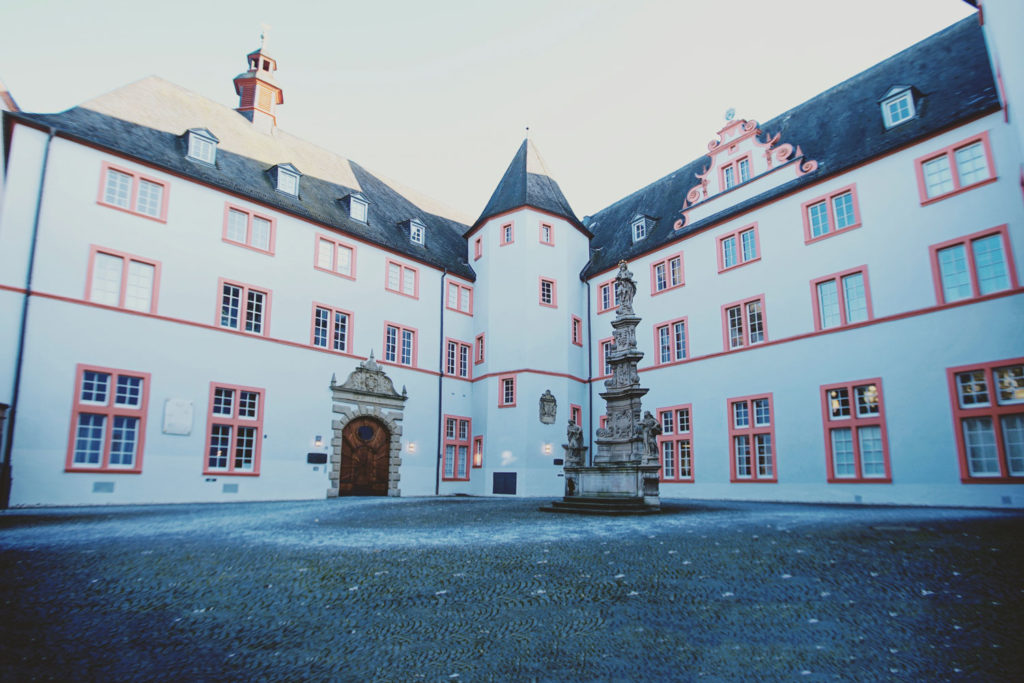
Take the case of a high school in Germany, the city of Trier to be precise. That school’s principal, a man named Hugo Wyttenbach, was a product of the philosophical movement known as the Enlightenment. In Germany at that time, society was incredibly conservative; the Catholic Church set the public agenda for morality and mores, logic and learning. Wyttenbach, being a Humanist, disagreed. He took his responsibility as a molder of children seriously, and he wanted to teach his young charges that logic and science trumped tradition and superstition. At the same time, he strongly believed that people had a right to choose what they believed, but he also and equally felt that those people had no right to impose their beliefs on others in the form of laws and public strictures.

The school principal therefore sought out teachers to hire who shared his humanist philosophies. Most of those he chose were young, recently graduated teachers who had youthful zeal for teaching lessons that ran counter to the oppressive and outdated lessons of the traditional German religious educational system. The liberal teachers and staff at Wyttenbach’s school soon found that their pupils were eager to learn what they were being presented. The young people could hardly wait to get to school to see what other social or traditional straw man would be skewered by that day’s lesson.

Well, you can imagine that rumors began to spread rather quickly about what was going on at the Trier Gymnasium. Parents began to protest when their children started to question the authority of the Church to impose behavioral expectations on people who had natural free will. Soon, the local conservative city government of Trier got involved. Such was the outrage over what was happening at the school that the Burgermeister of Trier decided to take action.

Upon the mayor’s order, the local police conducted a surprise raid on the school after hours. During this raid, the police found books, pamphlets, and other literature that taught about Humanism and what was dubbed “liberalism.” The police determined that this “seditious” literature was being given to students. Using this as evidence, charges were brought against Wyttenbach and several of the faculty of indoctrinating students in ways that countered the prevailing public mores and traditions of the Church and society. The faculty was dismissed. Wyttenbach was also fired. Because the local population was reassured and content that, with a new staff in place, the teaching would not longer go on in the high school, charges were dismissed and no prosecution proceeded.

But the genie had been let out of the bottle at that point. The students who had been exposed to weeks of liberal political thought and teaching never forgot the lessons they learned during those classes. One of them, so inspired by what he had learned and so shocked at the way the authorities had reacted to the lessons, decided at the tender age of 16 to devote his life to liberal political teachings. He went on to get a law degree and to embark on a life of writing, speaking, and agitating for those causes.

You know him as Karl Marx.

On the Kaiser’s Generosity

Ulya and his friends wanted to travel from Switzerland to Russia, desperately. World War 1 was raging, and they deeply desired to go home and work to make their nation better, to solve the issues of the war, and fight–and die, if necessary–for their fellow Russians. And, so, the group of friends boarded a train in Zurich in April of 1917 and headed east.

Now, Ulya is short for Ulyanov, the man’s last name, and it’s what his pals called him. Some friends called him Nicky, but that was a nickname that had nothing to do with his real name and more to do with his larger-than-life personality that came across as a leader like Machiavelli wrote about or like an emperor, a czar–like Russia’s Nicholas II was. Born to an upper middle class family in a large city a few hundred miles east of Moscow, Ulya gave the impression that he felt he was somewhat better than others. His classmates in school agreed with this assessment, as had received the normal private education for a boy from a well-to-do family.

Before the war started, however, Ulya had been studying and writing in London and Munich and other places around Europe. He was, in fact, in Eastern Europe when the war broke out, and circumstances prohibited him from making his way back to Russia to offer his help in the war. He ended up finding a safe haven in neutral Switzerland; it was a place from which he could study and work in relative comfort and also plan to make his way back to Russia.

That was the trick, right? How could he cross the territories of Russia’s enemies, Germany and Austria Hungary, and reach Mother Russia? Even trying to reach water to attempt to reach his homeland by sea would require Ulya to attempt to traverse enemy-controlled land. So, for the first almost three years of the war, Ulya was unable to find a way to Russia.

Then, a miracle happened.

In what seemed like an incredible act of generosity and largesse, the Kaiser of Germany, Wilhelm II, a man who was a cousin of Czar Nicholas, offered to provide a train that would take all Russians who wished to go home back to Russia. That meant that Ulya and several of his fellow Russian citizens and friends could safely cross the enemy territory and return to Russia. A naturally suspicious man, Ulya and some of his buddies talked about the offer. Was this a trap? Could they trust the Kaiser to keep his word?

The desire to reach home finally proved stronger than any possible fear of being captured or imprisoned. And the Kaiser proved to be true to his word. The train was sent to Zurich, and Ulya and his fellow Russians boarded; they couldn’t believe their good fortune and the Kaiser’s miraculous provision. The route proved to be long and arduous, having to travel north into Scandinavia and come into Russia by the north, but it was worth it, Ulya believed. And, before you think that the Kaiser did this out the kindness of his heart, well, think again.

You see, the Kaiser had an ulterior motive. Within a few weeks, Ulya–Vladimir Ulyanov, known to the world as Lenin–and his fellow communists helped to overthrow the Czar and take Russia out of World War 1.

On a Young Man from Georgia

Soso was born in Georgia in the last quarter of the 19th Century. His dad worked in a shoe store, and his mom cleaned houses. At school, the lad was bright and eager but got into trouble a lot, as boys often do. His mother was very religious while his father drank religiously. Soso decided he wanted to enter the ministry, so he found a local benefactor who agreed to finance his education, and he went to a theology school when he was old enough. Again, his sharp intellect was reflected in the fact that he wrote poems and plays while he studied the ministry; he had a good voice and sang in the choir at church. Some of his poems were even good enough to be published, and some found inclusion in a state anthology of poetry. We’re talking about a young man who, despite his working-class background, was going to make something of himself.

But then something changed, and, to this day, no one is sure what happened or why. He suddenly lost interest in his religious studies. He stopped writing his poems and plays. Without any communication with his benefactor, he stopped his religious studies. He started reading political books, and we are talking about radical political ideology here. In April, 1899, Soso left the seminary and never returned.

Because he was so smart, by October of that same year he had obtained work as a meteorologist at a local weather observatory. He began holding secret classes, indoctrinating anyone who would listen to his radical ideas about politics. You have to remember that this was Georgia during a time when that area was traditional and conservative. Soso had to carry out his political education classes surreptitiously for fear of attracting attention and possibly getting arrested. In a time and place that labor unions were considered to be the opposite of everything Georgia stood for, here he was organizing labor strikes in factories in his area.

Sure enough, his activities roused the attention of the local constabulary. Sure enough, he was arrested and thrown into jail for his political activities. That did not stop him, however. Even in jail, he was preaching his gospel of political equality for the working class of Georgia. Miraculously, he managed to escape prison.

He made it to a place where he could start a newspaper and managed to assume a new identity. There, Soso married a nice girl, and the couple soon had a son, which they named Jacob. Maybe you’re wondering what happened to this smart, driven former seminary student turned political activist from Georgia and why you’ve never heard about him. Well, you have. The Georgia in question is not the U.S. state, but, rather, the nation on the Black Sea. You see, Soso joined up with some other people who believed the same things he did, and, together, they led a major revolution that changed history.

Yes, his family called him Soso, short for Joseph.

Joseph Stalin.