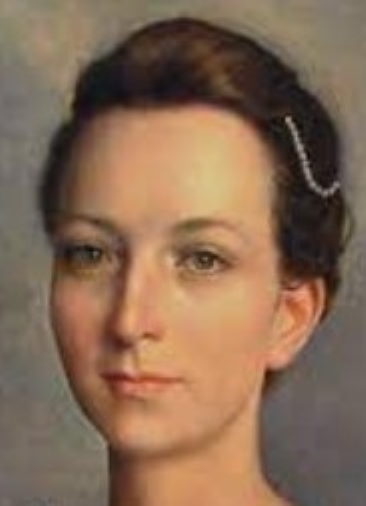
On a Financial Advisor

Patsy was set for life when her hubby died. Daniel passed suddenly in his early 30s, and the young widow found herself one of the wealthiest women in the country. To begin with, her real estate was in the tens of thousands of acres of productive farmland. She now possessed rental houses. She owned property totaling sums that most people only imagine. And it was all hers because Daniel had died without a will; everything passed to her as executrix.

But it was not all rosy for Pasty. She and Daniel had bore four children. You see, Patsy had come from a large family and wanted a large family, and Daniel agreed with his wife. So, she was worried about raising her children alone and managing what was now a large financial portfolio. That’s when she decided to call in someone who could help her make the best decisions for herself, the children, and the legacy that Daniel had left her.

Now, before we look at that, let’s remark that this was an incredibly attractive woman under the age of 30–even discounting the fact that she was enormously wealthy at this point. Surely a prospective life-partner would find that appealing. But Patsy didn’t want any man. She was smart enough to manage on her own, but she preferred that her attention be on the children and leave the financial matters to someone else. That’s why Patsy was really asking not really for advice on how to manage the vast wealth, but, rather, she really wanted someone to take it all on for her and do the managing so she could concentrate on raising the kids.

Now, please know that a certain man who lived not too far away from Daniel and Patsy made his, shall we say, services available to the young widow fairly quickly after Daniel was buried. He was a military man who had some decent land himself (but nothing like Patsy) that he had improved over the years. He was a few years younger than she, but his skills at managing his financial affairs impressed the young woman. So, she invited him for a meeting to see what his plans were for her holdings.

The pair instantly found a connection. There was a physical attraction between them on top of the fact that Patsy recognized the young man’s fiscal acumen. Here was someone who could manage things for her while she raised the kids, and he would be someone she felt sure that Daniel would approve of. About a year after she wore a widow’s veil, Patsy’s wedding was planned–more like a wedding with some overtones of a financial merger, perhaps.

Now, you might wonder if Patsy should have made a pre-nuptial agreement. That’s something that is common when one party is substantially wealthier than the other. But she did not. She trusted the man. His reputation for fairness and honesty preceded him. She allowed him to have the full control over all her finances–the land, the rental property, and all possessions. In return, all he had to do was insure that her and Daniel’s four kids would be looked after in perpetuity, and that she herself wouldn’t have to worry about the inheritance she’d received.

But, why should she worry? After all, it’s not every day that someone like Martha “Patsy” Custis would be so lucky as to put her life and her entire fortune in the hands of someone as honest as George Washington.

On an Early Colony

Growing up, my interest in history made me want to become an archaeologist. However, when I realized that 99% of that profession is in the pursuit of the artefact and not the actual finding of it, my innate laziness put the kibosh on that possible career. The opposite was true for a woman named Anne Stine Ingstad. Anne relished the pursuit, the chase, the digging, and the tedious research required by a classic archaeologist.

And Anne was led to excavate a site of one of America’s first colonies of European settlement. We probably all know about Roanoke Island, the first English attempt at settlement and how those colonists mysteriously vanished. Most of us have heard about colonial Jamestown or Williamsburg and those more successful attempt at a permanent English settlement in North America. But the site of the place of early attempt at a colony where Anne dug was a bit more north than what became Virginia.

Anne and her collaborator/husband, Helge, began surveying and carefully uncovering their site on the northeastern coast of North America in 1961 at a site called Grassland Bay. Locals pointed out the small settlement area to Anne by saying they thought the lumps of earth marked an old Native American campsite. However, Anne’s trained eye soon realized that it was a previously unknown and uncatalogued European site. For the next seven years, she and her husband and a growing team of researchers dug the site. What they discovered and uncovered was astounding and re-wrote the colonial history of America.

Over the years, the team was able to uncover and positively identify the remains of sod houses built on timber frames. Inside them, metal needles were found along with fragile bits of fabric, indicating that women were indeed part of the early settlement. They uncovered large, centralized cooking pits, proving that much of the food was prepared for the group rather than for individual houses and families. They found remnants of an iron forge, thus showing that the site didn’t belong to native tribespeople but rather to metal-working Europeans. And they found boathouses and boat-repair shops, indicating that the place was used as a way-station for other ships which passed by. All in all, the excavations carried out by Anne and the team proved beyond doubt that besides the fact that the colony was European, that it was occupied for some decades, and that it was from the early colonial settlement period.

But Anne’s work met some opposition in some corners of the history and archaeology disciplines. Since there was no corroborating narrative about an attempt at a colony at that site, there were skeptics who said that it was a much later site than what Anne and her team had proposed. Rather than a European colony, they argued, that it was merely an outpost of later settlements further down the North American coast.

But Anne then used carbon-dating methods to show that the wood used in the building of the sod huts was older than any of the other European colonial attempts. In fact, the proof Anne had showed that it may have been the oldest European settlement in North America–ever. She thus silenced her critics.

And, today, we recognize that Anne Stine Ingstad uncovered the fact that Vikings settled in Newfoundland, in North America a full 600 years before the English tried to colonize the New World.