On the Gift of a Car

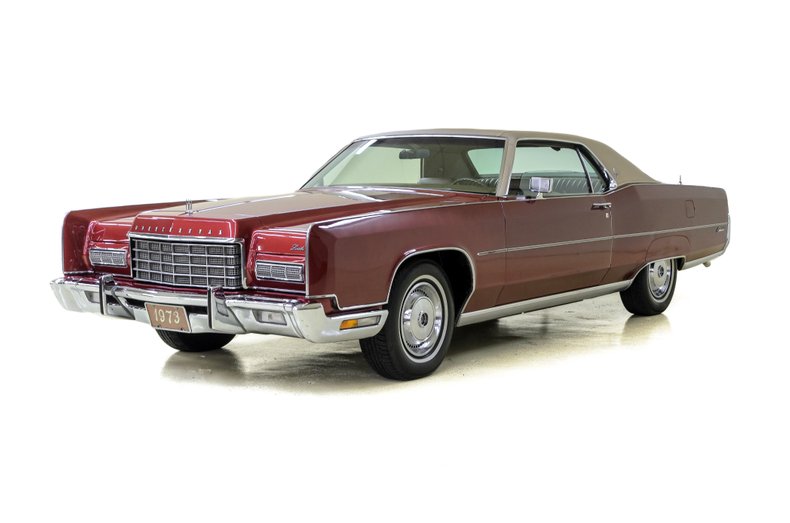
The brand new Lincoln Continental sat in the circular driveway of the large house. The year was 1973 and the man who lived in the house was entertaining an important and well to do visitor. The visitor remarked to his host how beautiful the car parked in the drive was. He had always admired the Lincoln’s styling.

What the visitor didn’t know was that the new Lincoln was a gift to him from the man who lived there. When the visitor found out that the Lincoln was for him, he clapped his hands in glee like a school kid at Christmas.

Now, as I said, the visitor was a man of means also. In fact, he had a large collection of automobiles of his own, a collection made up of models both foreign and domestic. But he didn’t have a Lincoln. “This will complete my collection,” he said, still giddy over the gift. A

And, being a man of means, he had someone drive him everywhere as a lot of wealthy people do. That did not mean that he did not like to drive himself. In fact, he was quite fond of driving, and he would often drive one of the cars in his collection from his large house to his office every day. The problem was that he usually ignored the laws regarding traffic, safety, and speed limits. In other words, This was a wealthy man who was an incredibly unsafe driver.

When he said that, he wished to take the Lincoln for a spin around the neighborhood, the host was aghast. Such a thing would be impossible, his host said. To allow him to take the large and powerful automobile out for a drive would be, to say the least, unwise. Yet, he persisted. He would be safe, he promised. He would obey the traffic laws, he promised. He wouldn’t go far, he promised.

Yet, the man who lived in the large house was not to be daunted. As politely, but as firmly as possible, he told the visitor that the only condition he had on giving the Lincoln to the visitor was that the man would not be allowed to drive it. Ever. The visitor bit his lip in thought and disappointment. You could tell he was seriously considering the proposal. Finally, he nodded his head in agreement. “Fine,“ he assented, “I will never drive the car. I give you my word. Thank you for the kind gift, my friend.“ With this assurance, the host smilingly handed the keys to the new Lincoln Continental to the visitor. The two men shook hands.

And, as far as we know, Soviet premier, Leonid Brezhnev, kept his word, and never personally drove the Lincoln Continental given to him by Richard Nixon.

On a Nuclear Threat

We have lived with the distinct possibility of wide-spread nuclear war as a species for 70-some-odd years. The Cold War split the world into two camps, Us and Them, and then the dissolution of the Soviet Union and then the end of that Cold War found nuclear weapons had made their way into the hands of many nations. Today, at least 9 nations boast nuclear capability. But, at the height of the period of tension between the US and the USSR, each side had hundreds if not thousands of nuclear bombs that pretty much guaranteed the planet’s destruction.

The United States developed a strategy of splitting their nuclear arsenal into three areas, known at the Nuclear Triad: Land-based missiles (in silos scattered across the US), bombs on large air bombers, and missiles placed on submarines. This made the US arsenal a bit more “secure” than the Soviet’s almost complete reliance on land-based missiles because, if the Soviets destroyed one of the US’s triad branch, the other two would still be able to carry out attacks. So, the US and the USSR faced each other with nuclear guns pointed at the other’s head for decades. And the men and women who were trained in these nuclear weapons were under tremendous pressure to protect their respective homelands and ways of living.

Take Stan. He was a nuclear technician in the military who monitored the missiles of the other side. The time was September, 1983, and tensions were especially high because the Soviet Union had recently shot down a Korean air liner that had flown over Soviet airspace. Both sides ordered their monitors to be on high alert. Stan was an officer, and his duty was to make sure that his superiors received adequate notification if and when any possible attack was taking place.

And that’s what happened. Stan was watching his team’s monitoring screens when he noticed that a missile had been fired from the central area of the enemy’s territory. Soon, four other missiles were seen to have been fired. Now, you might think that five nuclear bombs would be not so many, but please remember that these were missiles–not the bombs themselves. Each missile had something called MIRVs–Multiple Independently (targetable) Re-entry Vehicles–meaning that, when the missile reached the edge of space and began its descent over the opponent’s land, 10-15 different, individual, and large-scale hydrogen bombs would be released from the missile and hit a different target. Thus, five missiles meant at least 50 nuclear bombs, each of which used a Hiroshima-sized bomb as a detonator.

Protocol–in fact, direct orders–said that Stan was required to report the launching of the missiles to his superior. But something made Stan take a closer look. His training had taught him that the enemy, if he were to launch a nuclear attack, wouldn’t merely launch 5 missiles at first. No, conventional wisdom said that the first-strike by either side would be designed to take out the entirety of the other side. Five missiles? It must be an error at best or an accident at worst, Stan reasoned. And, so, he failed to trigger the early warning system that was in place.

Sure enough, not only was the missile launch a mistake, but it was also not a missile launch at all. Come to find out, sunlight, reflecting on high-altitude clouds over the missile silos, gave a “false positive” reading to Stan’s launch monitors. By disobeying his orders, Stan may have saved the world from a nuclear war. But he was in a bit of a pickle. While his superiors praised him for his restraint in not kicking the false missile launch up the chain of command, they were also worried that admitting that their system couldn’t tell the difference between sunlight reflection and missile launches would make them look as if their much ballyhooed missile defense system was garbage.

So, privately, Stan was applauded by the military, but it would be years later, after the Soviet Union fell, that Lt. Col. Stanislav Petrov of the Soviet Red Army would receive credit for stopping a nuclear war.

On a Hot Dog Stand

Would you believe me if I told you that, during the Cold War, the Soviet Union had nuclear weapons targeting a simple hotdog stand? Apparently, that’s true. Now, the location of the stand is key, here, as you can imagine. It was sited in a courtyard, as you probably suspect, a courtyard located in the heart of the United States government near Washington DC. Now, to be sure, it was a rather large hotdog stand, but a hotdog stand nonetheless.

But the Soviets were convinced that the hotdog stand was either a cover for a much more important building beneath it, sort of a bunker or some kind of operations center, or it was a top-secret planning headquarters for the US military. Some Russian analysts believed that the structure was at the heart of the US military establishment. As a result, Russia spent, millions of rubles and countless man hours trying to get close enough to this hotdog stand so they could figure out what was going on inside the small building, possibly underneath it. They never succeeded in finding out the truth.

So, just to be sure, that’s why they had not one, but two of the nuclear warheads targeting this  Hot dog sand. Now, what the Soviets didn’t know and couldn’t confirm was that this particular hotdog stand was well, really only a hotdog stand. It wasn’t masquerading as something else. It wasn’t a front for anything. And you might be wondering why the Soviets would target this particular and seemingly innocent hotdog stand , instead of one of the countless other hotdog stands in the US. And the reason is because of the clientele.

You see, the Soviets were able to easily ascertain that most of the people who went to get hotdogs there were people associated with the upper echelon of the US military. That was curious to the Russians. It’s not that the Soviets were paranoid, although they were. Of course, perhaps these military members were simply stopping there to get a hotdog because it was lunch time, and they were hungry. But the Soviets didn’t see it that way. It’s just that if, in the spy game, you see behavior being repeated, that indicates a trend or a “tell”, and a trend can be a tip off for something deeper, something that requires more analysis. And the stakes of the Cold War were simply too high for the Soviets to ignore this trend.

Interestingly, this hotdog stand outlived the Soviet Union. It was torn down in 2006, and a new structure was put in its place. I wish this story had a surprise ending for you. But it really doesn’t. The Soviets were wrong. It was, ultimately, simply a hotdog stand.

Of course, the courtyard in which the hotdog stand stood was located in the exact center of the Pentagon.

On a Thoughtful Gift

The relationship between the United States and the Soviet Union between the end of World War 2 and the beginning of the Cold War changed exponentially. Allies during the war against Germany, the two nations became bitter enemies once the war was over. However, that transition from friend to foe didn’t happen overnight. Both nations mistrusted each other for years but saw the relationship as being necessary to defeat the Nazis. However, that doesn’t mean that, at times, friendly gestures were exchanged while the two countries were allies.

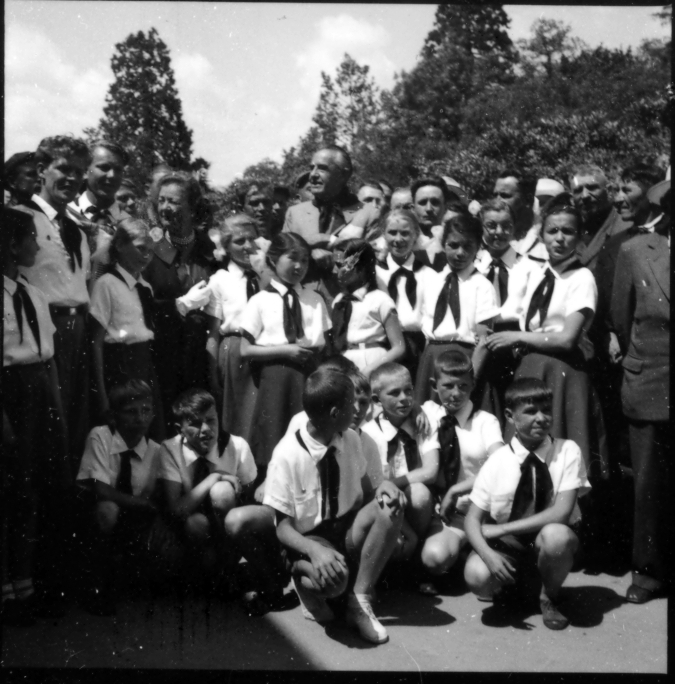
Take the gift that was given to the US Ambassador to the Soviet Union, Averell Harriman, in 1945. The gift was a hand-carved wooden replica of the Great Seal of the United States. And the gift was formally presented to the ambassador by a large contingent of the Soviet Union’s young person’s organization, the Young Pioneers. The Pioneers were much like a politicized version of the Boy or Girl Scouts in the west, but in the case of the USSR, membership wasn’t optional. However, the presentation of the gift was reported in the press as a wonderful gesture of gratitude on the part of the young people to their vital ally in the Great Patriotic War against Nazi Germany.

You see, when Hitler decided to invade the Soviet Union in 1941, the United States had not yet entered World War 2. The country was desperate to find the weapons and materiel to fight the war against the invaders. The United States arranged to begin supplying Russia with armaments and some products needed to fight. It’s safe to say that, without the aid of the United States, the USSR’s ability to defend itself against Germany would have been severely hampered. So, as the war was nearing the end in the summer of 1945, the giving of a gift to the US representative in Russia seemed more than appropriate.

At the presentation ceremony, Harriman, surrounded by the boys and girls in their red Pioneer scarves, graciously accepted the large wooden plaque on behalf of the United States. He ordered the plaque placed in the US Embassy in Moscow. It occupied a place of honor behind the large desk in the ambassador’s office and hung there for the next seven years.

Then, in 1951, something odd happened. A communications officer in the British Embassy in Moscow as sitting at a radio in his office one day when he suddenly heard something unusual on his set. What he heard was American voices coming over the air, bleeding through a Russian military broadcast he was monitoring. The communications guy couldn’t understand how that could be; the nearest American radio station that could be broadcasting was several hundred miles away in Western Europe. He continued to listen, then, it dawned on him what he was hearing. He jumped up and ran down the hall to the office of the British Ambassador.

It was then that the world found out, after seven years, that the beautiful carved wooden plaque that the Pioneers had presented to the Americans wasn’t what it seemed.

The gift, given by the Soviets to the Americans in the pretense of friendship, was actually a listening device.

On an Official Phone Call

In 1947, the United Nations considered an important and historic vote. They were deciding how to partition Palestine, choosing what land would be used to create the new nation of Israel–or even if such a new nation should be created. The reasons for the UN taking up such long-lasting and significant decisions can be debated, but, for the sake of brevity, its important to realize that powerful people sat on both sides of the issues. The fate of nations, economies, wars, and decades of violence (both past, present, and future) was at stake.

And both sides knew that the vote was going to be close. Many people wished that the Palestinians should be allowed the land to form their own nation. Others felt that the Jewish people both in situ and trying to reestablish their lives after the Holocaust in Europe should be granted the land to form their own nation. Tensions were high, especially when you consider that this was also at the height of the Cold War between the United States and the USSR. So, every vote would count in the UN General Assembly.

The President of Haiti at that time was a man named Dumarsais Estimé. The Hatian leader was sitting in his office one day before the UN vote when his secretary called him on his intercom. She informed Mr. Estimé that the President of the United States, one Harry S. Truman, was on the line. The president picked up the line and heard the mid-western crisp voice of the American President say, “Good afternoon, Mr. President, this is Harry Truman calling from Washington. How are you, sir?”

Now, President Estimé had never spoken to Truman in the two years the Missourian had been in the White House. To get a call at this time was surprising. The US did send financial help to the poor but strategically placed nation. Perhaps this is why Truman was calling, the president thought. “I’m fine, Mr. President,” he answered. “What can I do for you?”

Truman came right to the point. He told the Haitian leader that he wanted Haiti’s vote in the upcoming UN session to be for the creation of Israel. “Now, this is important to me, Mr. President,” Truman told him, “and I know you want to remain a friend of the United States. Don’t you?”

Dumarsais Estimé was stunned. Was this a veiled threat from the American leader? Was Truman dangling American aid to Haiti as bargaining chip to force Haiti’s vote in the General Assembly? In his office in Port-Au-Prince, Estimé stayed silent a moment. Truman waited, then said, “Mr. President? Are you there?”

“Yes, sir,” Estimé said.

“What do you think, Mr. President? Can you see your way to vote for Israel?”

“Yes, sir,” Estimé repeated.

“I appreciate it, Mr. President. I look forward to speaking to you soon. Thank you,” Truman said. And then the line buzzed as the connection was broken.

And the Haitian delegate at the UN indeed voted for the creation of Israel. As, as I said, the vote was close. The resolution passed by a three vote margin. Truman’s strong-armed tactics worked, apparently.

Except there was a problem.

Years later, in the Truman Library Archives, the following notation was found in one of the former president’s daily journals:

“Someone pretending to be me called the President of Haiti and made threats about the Zionist vote,” Truman wrote. “I have asked that we get to the bottom of this.”

To this day, we still don’t know who that person was.

On a Nervous Singer

The room began to fill with partygoers, and the sight of all those happy people coming into the union hall gave Ethel the shakes. “Why?” she said to herself; “why would I agree to sing at a New Year’s Eve party in front of total strangers?” The 18 year old girl retreated to a corner of the hall in an attempt to steel her nerves.

A young man with a pencil-thin mustache noticed her sitting in the corner, twisting her handbag in obvious distress. He approached her and asked, “What’s going on with you then?” Ethel looked up quickly. “Hmm?” she asked. He repeated his inquiry. “What’s going on?” Ethel glanced around the young man and pointed to the incoming crowd of revelers. “That. Them. Those people. That’s what’s going on. I agreed to sing tonight, but now, I’m not so sure.”

“Well, can you sing at all?” the young man asked. Ethel looked up at him a bit surprised. “Well, yes. A bit,” she said. “Then, what’s the trouble?” he wondered, and he pulled up a chair and sat next to Ethel.

She looked at him closely. He was somewhat handsome, she thought, with kind eyes behind his round eyeglasses, and he wore a nice smile. “I guess it’s nerves,” Ethel explained. “This’ll be the largest crowd I’ve ever performed for.

It was New Year’s Eve, 1935, and the Union Hall in New York City was buzzing with excitement. The Great Depression had put a damper on such celebrations in recent years, but the Roosevelt New Deal programs had begun to have a positive effect in some segments of American society by that point. The Union Hall was where what we today might refer to as socialists would meet to discuss how they could help affect even more change in the capitalist system. As they saw it, the moneyed interests represented the biggest culprit in the crushing of the American worker underfoot in recent years. The hall that night was filled with other, young and idealistic young people who put economic theory on the backburner for one moment and wanted simply to have a good time and welcome in what they hoped would be a better year to come for their cause.

And Ethel had agreed to sing. And now she was having second thoughts.

Well, the young man calmed her down. He politely excused himself and returned in moment with a drink that Ethel gladly accepted. She gulped it down, and he smiled at her. “Say, let’s go there (he pointed at this point to a nearby room), and you can sing to me to practice. It might also calm you down some.” Ethel smiled and agreed.

And it worked. Ethel sang that night, but she was singing to her new friend, the young man with the nice smile and the kind eyes and the round glasses and the dapper mustache. And he was waiting for her when she came off the stage to a nice round of applause.

“What’s your name?” he said over the clapping. “Ethel,” she answered, “Ethel Greenglass. And what’s yours?”

The man who would become her husband three years later, the man who would become the father of her two sons, and the man who would seal her fate, answered.

“Good to meet you. I’m Julius Rosenberg.”