On an International Criminal

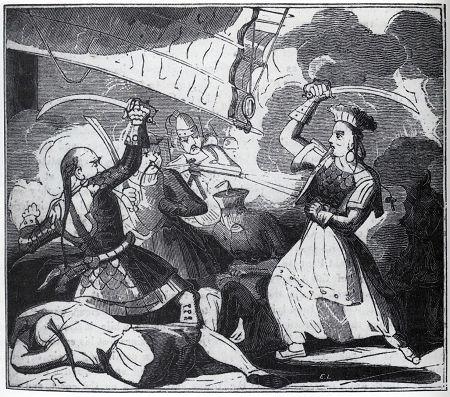
Action films often depict criminal masterminds who control vast armies of minions who carry out their dastardly deeds before succumbing to the pursuit and prosecution of heroes or the police. Believe it or not, that type of thing has historically been more common than you might realize. One such international criminal was known as Zheng Yi Sao, and this criminal operated in the early 1800s in the seas off the coast of China. Yes, Zheng was a pirate but not just any pirate. Zheng was in charge of the largest fleet of pirate ships and a pirate army that totaled over 50,000 men at its most powerful.

Zheng acquired a small group of ships through marriage. From that start, the pirate parlayed the fleet into what it became–the scourge of the China seas. Sailing as far south as the coast of Vietnam and as far north as Korea, no ship or port was safe from the power and prowess of Zheng the pirate. When finding a rival pirate ship or fleet, Zheng would give the pirates the choice of death or joining the growing number of the pirate navy and army. Well, you can imagine that almost all of those other pirates made the decision to join rather than die. So, through cunning and bravery, Zheng spend years pillaging and stealing great amounts of wealth from any ship or city that got in the way.

The pirate conglomerate became known as the Red Flag Fleet because that’s the color of the banner they sailed under. Zheng also created a Pirate Code, a set of laws that the members of the fleet had to abide by. These rules called for specific conduct in war and peace, and the code was closely followed by all who sailed under the fleet’s red banner. One interesting rule was that no women would be purposely harmed by anyone in the fleet. Harming a woman was punishable by death.

The Chinese government sent an armada to stop Zheng and the Red Flag Fleet, but, easily outsmarting the Chinese admiral in charge of the government’s navy, Zheng lured the government ships into a trap and destroyed them. Then, to confuse the government officials, Zheng split the fleet into three parts. Each part was sent on pirate raids in different directions, with Zheng taking direct command of one of the three prongs. The government was overwhelmed. They didn’t know which of the three groups was actually Zheng, and they were tricked into doing nothing. Was this another trick? Which prong–if any–was the one led by Zheng? The government was helpless. And, at this point, they asked for help from the international community.

Portugal, by this time in history, controlled the Chinese port of Macao. And China, desperate to stop Zheng’s piracy, asked Portugal’s fleet for help. A combined Sino-Portuguese fleet managed to trap several of Zheng’s ships in a harbor for a time, but the pirates managed to fight their way out. The Portuguese were impressed by the pirates’ bravery and ability. And they felt challenged by the pirates’ victory over their ships. So, they, in turn, asked the British Navy for help in corralling the Red Flag Fleet. Britain was delighted to help, and that proved to be the beginning of the end of Zheng’s power. You see, the British had the best-equipped ships in the world at that time. The powerful but small Carronade, a Scottish cannon, was the standard armament on the British ships, and it could wreak havoc on the thinly wooden-clad Chinese ships. Zheng knew that the gig was up.

Using an envoy, Zheng sent a message to the Chinese government. The pirate fleet would be disbanded, all ships and crews would be put under the command of the authorities if–if–Zheng could keep all the pirate loot gained up to that point and would be given a complete amnesty. And that’s basically what happened. The Red Flag Fleet, largely undefeated in battle, was disbanded with a simple agreement. Zheng took the money from the years of piracy and moved to Guangdong, China. There, the former pirate made even more money running a large gambling house and brothel. Zheng died wealthy and happy at the age of 69.

And, in the years before that death, people from all over the world would come to Zheng’s casino and whore house for a chance to meet the world’s most famous female criminal mastermind.


On Making Amends

The older man had to go to the store for some simple supplies. So, as he usually did, he decided to take his bicycle. As he made his way to the local store, an older woman stepped from the curb into the street and in front of his bike. He couldn’t stop in time. The man crashed into the woman, and they and the bike collapsed in a heap. The woman was injured, and an ambulance was called. The man was distraught to the point of tears. He would never intentionally hurt a fly–almost literally.

Now, you should know that this man’s name was Puyi. He lived in China, and this accident with the older woman and his bicycle occurred in the early 1960s. That was a time when Chairman Mao was working to restructure Chinese society into the “ideal” communist utopian nation. And Puyi was one of those people in the older generation with whom Mao’s ideology didn’t quite take hold. He, like many of his age bracket, had undergone re-education to first “unlearn” the old ways of thinking and be taught Mao’s new, communist way. But Puyi was a special case. He was a kind man, and, in many ways, a simple man. Sadly, he didn’t understand much of the changes that Mao and the communist party had brought to China.

Puyi was almost as forgetful as he was kind. He would sometimes leave the water running after he washed his hands, for example. He would enter the house and forget to shut the door behind him. His wife, Li, whom he had married when he was 56, despaired of him sometimes. She threatened to leave him because she grew tired of going behind him and fixing what he forgot to do. “It was like living with a child often,” she would later say. Yet, what kept her in the marriage was Puyi’s incredible kindness and humility. But, that humility also was a double-edged sword. Puyi would allow everyone else to board public transportation before him in a true show of his humility. Yet, that act often resulted in Puyi missing the bus or train entirely as he waited for others to board.

But back to the woman and the bicycle accident. Puyi made it his mission to visit the woman in the hospital every day. He would bring her flowers and sit, often for hours at a time, talking to her and seeing to her every need. He was, it was reported, more attentive than her own family, even. But that was who Puyi was. He wanted to make amends. Even when the woman recovered and released from the hospital, Puyi would still go to her home to check on her. That was the level of concern he felt, the depths of the responsibility for his actions he had.

From the early ’60s until he died in 1967, Puyi worked as an editor for a communist party publishing house. He and Li lived modestly and as happily as they could. His body was cremated as was typical in China at the time. And he was mourned as a man who spent his later life trying to make amends for his mistakes–as demonstrated by his care for the woman he injured with his bike. Anyone who knew him when he was younger would have been amazed that Puyi was like that at all.

You see, Puyi had been born into wealth before China became communist. In fact, at the age of 2, he had been declared Xuantong, the last Emperor of China.

On an Unusual Protest

“There is no value whatsoever in this poisonous chicken soup.”

That is the official Chinese government response to a current but quiet and subtle protest in their nation. The protest is quite popular among the young adult population of China today. To try to understand it is to take a quick look at Chinese culture today and what brought it to this point of protest by the young people.

Hard work has always been valued by Chinese culture. The work ethic there makes the western Protestant work ethic look like bone idleness. Let’s also say here that competition for the best jobs in China is so fierce, so cut-throat, that any possible edge a worker can get will be used and exploited to first get and then keep a job. Towards that end, then, combined with the cultural demands to work hard, young people in China are expected to work incredibly long hours.

How long? Well, the government slogan for the Chinese labor force is a simple one: 996. That means that the minimum, the baseline for workers, is 9am to 9pm six days a week.

Yep. You heard me. And that then means that if a young worker wanted to show the boss that they were serious about the job, then they would work more than 996. How much more? No one knows the answer to that question definitively. It’s also known as the Wolf Culture, the idea of an employment version of kill or be killed. It’s an attitude shared by many other Asian countries. It’s why Squid Game resonates with them so much–they’re sort of living that on a day-to-day basis in their jobs.

And it’s killing young Chinese workers, both physically and emotionally. There’s been a shocking rise in reported suicides, depression, addictions, sleep deprivation, and other issues. It is now recognized as a national health crisis. The question is quickly becoming, as the young people see it, how do they respond to these increasingly unrealistic expectations on their work lives?

And the answer of many young people, their collective response, is what the Chinese government has officially called “poisonous chicken soup.”

These young people have decided to, in Chinese, tang ping.

What does that mean?

Well, you can’t imagine the shockwaves this simple act is sending throughout all phases of Chinese society. Employers are paralyzed with fear that they may have to either cut back production or work because they don’t have the manpower or, worse, they will have to allow workers to work fewer hours. The older generation can’t wrap their heads around the concept that younger workers simply don’t care about having a better life than they do. That mentality goes against all Chinese cultural norms, and such rebellion against the culture is seen as treason by the Chinese government.

Yet, the movement grows, ironically, more and more as a larger number of Chinese young people actually do less and less.

And what is tang ping?

Tang ping means to simply lie flat–as in staying home in bed and not working at all.

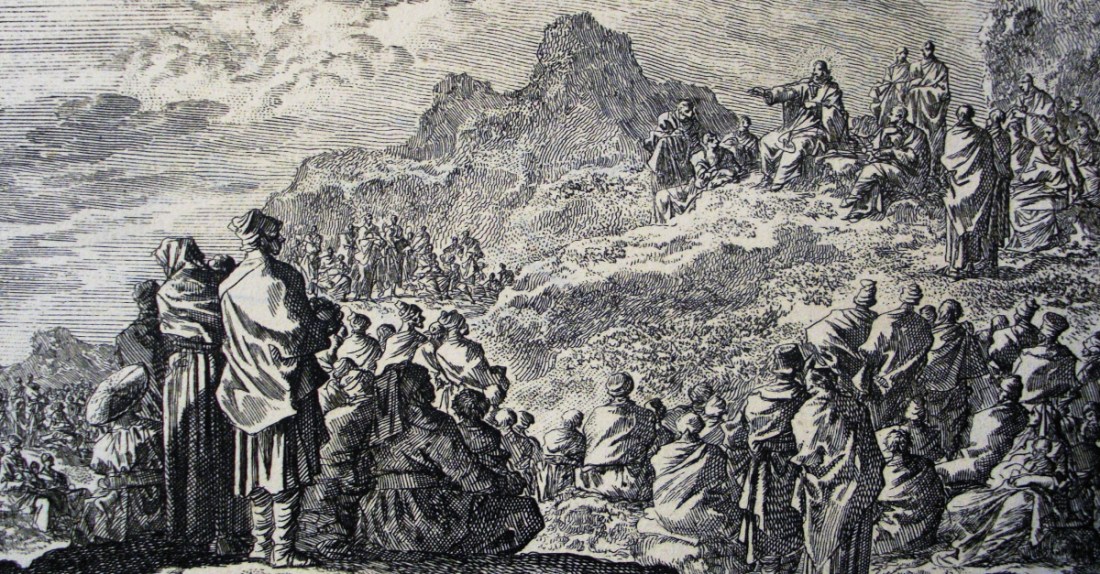
On a Religious Teacher

Usually, this blog does not delve into religious topics. However, today is an exception.

You know the teaching: Don’t do to others what you don’t want others to do to you. And you know the ethics from this same Teacher as well. You know his emphasis on family values, honoring the father and the mother, respecting the elders. Some of his greatest teaching was on reciprocity, the idea that you repay kindness for kindness, that you never let some good thing done for you go unthanked or unacknowledged or unreciprocated. Virtue, the Teacher always said, came from within. The things that came from the heart were more important than the things a person might put into the body.

One of the interesting teaching techniques used by this man was how he used the culture and ethical construct of his day to teach what was good and right in kind. Contrary to what he was accused of later on, he wasn’t trying to subvert anything. In fact, the opposite was true. He was trying to reinforce established and longstanding virtuous mores that his society had simply forgotten or ignored over the decades. In that sense there wasn’t a lot that was radical about his teaching. The Teacher spoke often of the ancient Mandate of Heaven, calling on his listeners and disciples to choose to act and to hold themselves to a higher standard than the world normally did.

You know that he was not highborn and that the father died when the Teacher was young man. That death left the Teacher’s family economically compromised and him to be raised in poverty by the young widowed mother. If you studied your religious history at all, you’ll know that the teacher was closely tied to the political philosophies of his day whether he himself wanted that or not. He called out the political and religious leaders of that time for their hypocrisy, their greed, and their lack of care for the people. He recognized that they were not good shepherds over their flocks.

Later, of course, his teachings would be codified and a strict set of rules would be mandated by his followers in the years after his death. We don’t know for sure, but it’s a good guess that any mandate of his teachings would have rubbed him the wrong way since he felt that goodness is within us, innate, born in our hearts, and that, for the truly righteous person, there are no rules because none are needed.

Yes, this great Teacher is one you know. He was born over 500 years before Jesus. His family name was Kong, and he was known as Kong Fuzi, or Master (Teacher) Kong.

That name became Latinized as Confucius.