On a Penal Colony

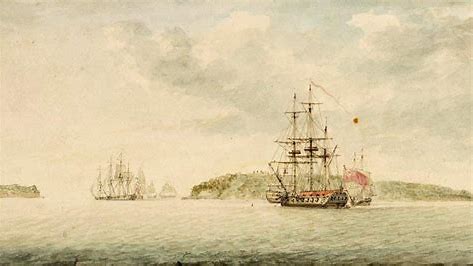
It’s no secret that Australia was started in part as a penal colony. While Captain James Cook first stumbled upon the land in the 1770s, it wasn’t until January, 1788, a group of almost 800 prisoners from Britain arrived in an inlet on the Australia coast called Botany Bay. The majority of these convicts were considered to be “irredeemable” by the society in their home, and sending them away to the largely unsettled Australian colony served several purposes. Obviously and most importantly, it got rid of these people who were considered to be a danger to society. The other and almost equally important consideration was that the prisoners would be able to carve out a niche in the British-controlled continent.

And it was backbreaking work that these prisoners did. They found that the tools given them by their wardens were inadequate to the task. The wood, for example, was much more dense than that of the trees back in England. The native peoples resented their presence. There was sickness. The water was bad. Oh, and they were thousands of miles away from anything they recognized as normal or usual.

The man in charge of this immense task was Admiral Arthur Philip. He was actually a fair man for his time, unusually enlightened, and worked tirelessly despite all the issues concerning discipline, health, and short supplies. And, to exacerbate the situation, two other large shipments of convicts soon arrived and were put under Philip’s care.

Now, Britain wasn’t the only European nation to use another land as a repository for criminals. You’ve probably heard about Devil’s Island off the northeast coast of South America and French Guiana that was started a few decades after Australia had been set up. And there were other penal colonies set up by other nations as well. The idea, again, was that those who committed crimes were somehow “infected” with mental disorders and not fit to be around “normal” people.

But, unlike most of the other penal colonies, the British experiment in Australia worked to move the convicts out of their incarceration and into being productive members of society–even if that society was among other former prisoners. Philip worked to set up a series of benchmarks that would allow the convicts to transition to becoming landowners and farmers as the colony grew. By the time he left to return to Britain several years later, he had set up this system and had proven that it was working. Today, several streets and landmarks and even towns are named in his honor. The work established and overseen by Admiral Philip paved the way for formal settlement of Australia. Today, we can say that about 20% of Australians can trace their ancestry back to one of these early convicts who made the journey from Britain to Botany Bay.

What we often overlook in the settlement of Australia and the first forays into establishing a colony there is that it owes its success in many ways to what happened in America on July 4, 1776. Now, you might be wondering what American independence has to do with the settlement of Australia.

You see, Britain had no choice but to use Australia at that point. Before then, when Britain wanted to send convicts away from the general population, they shipped them to Georgia–the original British penal colony.
On a Decent Man

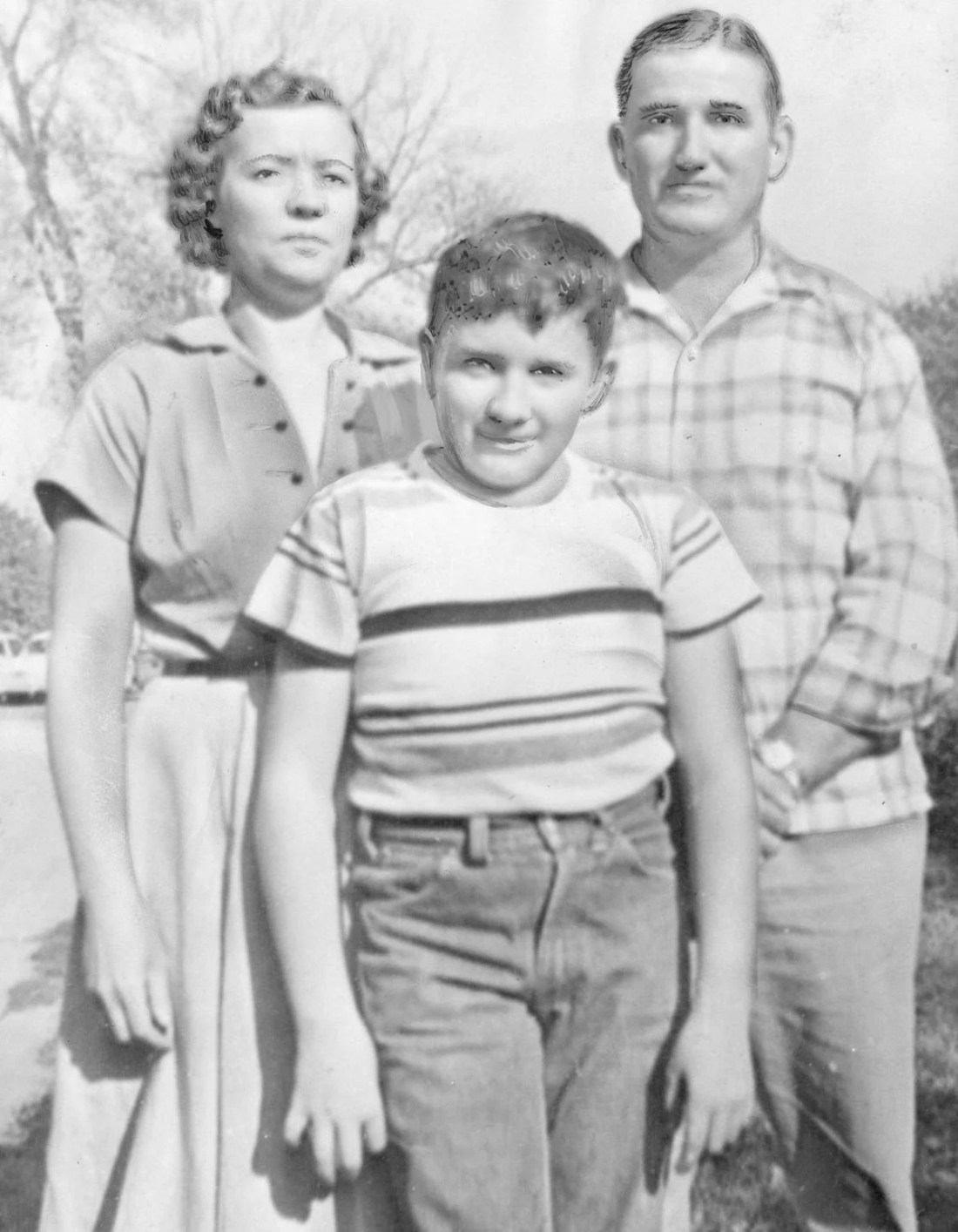
John Damon passed away in 2010 in Australia. His family hailed him as a good, decent man, a father who loved music and shared that love with all those in his life whom he loved. According to a son of Damon’s, John was, as far as could be determined, such a good father in part because he himself had been an orphan. Working hard at being a good father seemed to be John’s way of dealing with not having a father as a young person. John’s family knew nothing about John’s origins because John had not discussed much about his past other than he was from Chicago, Illinois, originally.

And so, a few years after John’s death, one of John’s children did what so many these days are doing–he took a DNA test to see if he could connect to anyone from his dad’s family. And he got some hits. One person who reached out to John’s son was a man named Matthew Westover. Westover’s DNA profile on the website said that he was a sibling to John Damon. It seemed that at last all the secrets of John’s past, and the reasons for his being an orphan, were about to come to light. John’s family started making plans to go the US to meet what they thought would be their new family members.

But things aren’t always what they seem, are they? This Matthew Westover fellow ended up not being who he said he was. In fact, he wasn’t related to John Damon at all. Turns out he had simply uploaded someone else’s DNA, someone who was really related to John. He was using the fake profile on the DNA site to find relatives of John, and his ruse worked. The family, understandably confused, put their trip on hold for the moment. What was Westover wanting with a man who had been dead for several years?

Westover tried to explain himself over the phone to the family. He was looking for John Damon because, well, he knew things about John that the family had a right to know. He told them that he knew, for example, that John had been an excellent student in high school. He told them that John had a girlfriend in high school, and that he was in love with her. He told them that John had also spent time in prison.

And then, Westover told them why.

You see, Matthew Westover was actually a United States Marshal. He was investigating John Damon because Damon was an escaped convict who had evaded the law for over 50 years. And his name wasn’t John Damon, actually. It was William L. Arnold from Nebraska. The family was stunned. Nothing Westover told them matched the decent man they knew and loved. Nothing made sense. Was anything they believed about their beloved John Damon the truth?

But then, the story took an even darker turn. Westover told them that, yes, it was true that Arnold/Damon was indeed an orphan. His parents were shot and killed on a night that Arnold/Damon had taken the high school girlfriend, the one he was in love with, to the drive in movie theater in Omaha in the family’s car. Arnold/Damon had been in a heated argument about that, in fact. His mother didn’t want him to go, and Arnold/Damon insisted that he be allowed to go. And so, as defiant teens often do, he chose to go anyway.

But, before he took the car against his parents’ wishes, the decent father, the man who loved music, the kind man the Damon family knew and loved, killed both of his parents.

On an Imaginary Line

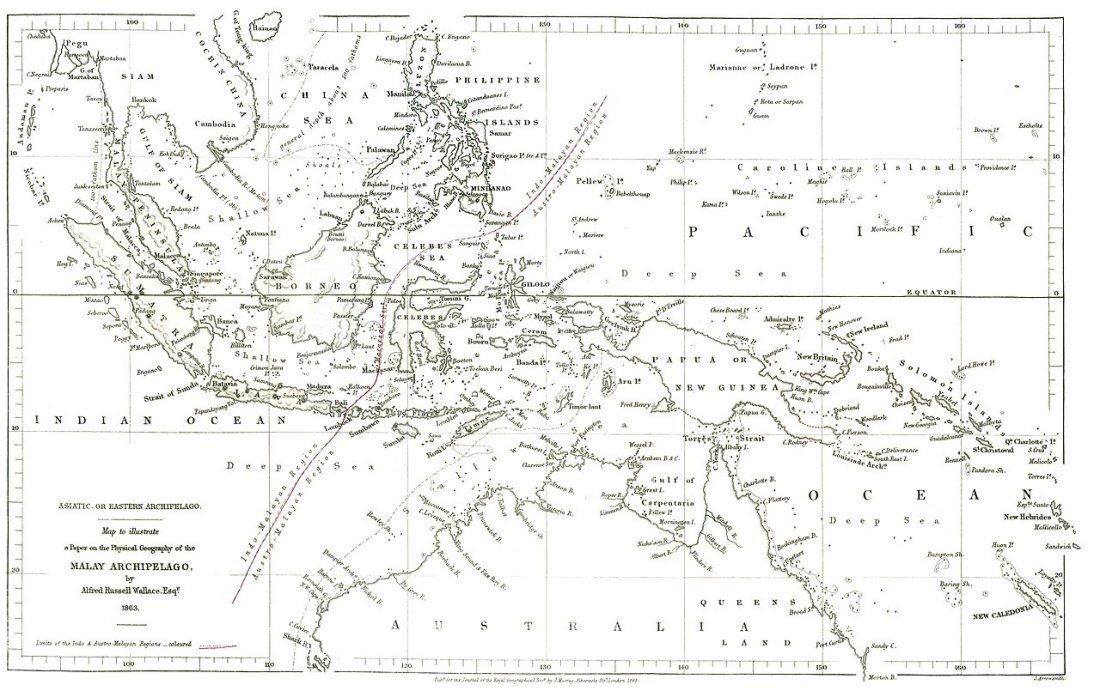
This story isn’t about something with a surprise ending or a big reveal. No, this story is odd enough on its own that it needs no build-up or hype. It takes place even today in the Malay Archipelago, the area of our world where you can find modern nations like Indonesia and New Guinea. It’s both a real but still imaginary line that has baffled scientists and biologists for centuries.

And what makes it significant is that it’s a line that certain animals absolutely do not cross.

Technically, the line, known as the Wallace Line (after the Victorian-era scientist who studied it), separates animals from the Asian continent from those found in the Australian ecosystem. The phenomenon was recognized as early as the 1500s by Spanish members of Magellan’s voyage.

Now, you might think that this isn’t unusual that different animals can be found in different parts of an area, but it really is unique. Some of the islands in that area have tigers and elephants and hippos, but, then, east of the Wallace Line, those animals are replaced by lizards and marsupials in the Australian biosphere.

And the closest those diverse island areas are to each other is less than 20 miles at some points. Even most birds won’t cross the Wallace Line, with the Asian species staying on their side and the Australian species on theirs. Bats are really the only mammal that will cross it, but even those species that do are few and far between. The study of biogeography owes much to the study of exactly why this happens the way it does. Biogeography has divided the earth into 8 different zones rather than continents, but it’s the continents that hold the key to the Wallace Line.

Scientists could easily observe this phenomenon and did so for years, but they had difficulty figuring out exactly why. It wasn’t until geologists proposed the idea of plate tectonics, the movement of large surface plates on the earth, as the source of the Wallace Line. As you probably know, the large land masses (continents) on the earth are moving. That movement as they rub up against each other often causes earthquakes and awakens/creates volcanic activity as the molten innards of the earth bubble upwards as the fissures are created. The different continents created deep crevices in the oceans and seas that led to a separation of species that they still to this day do not cross.

Interestingly, most plants do not recognize the Wallace Line.

But the animals–the animals still won’t.

On a Strong Swimmer

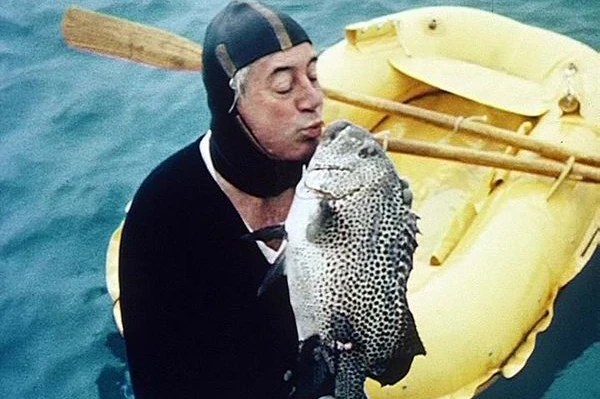
Harold had been a swimmer his entire life. Growing up in Australia, he was near the water all the time. As a successful 59 year old man, he’d developed a keen interest in spearfishing and was known to be able to hold his breath an exceptionally long time, even for a snorkeler. Harold was in decent shape and kept fit precisely to pursue his swimming interests. It was near Christmas, 1967, and in Harold’s native Australia, that meant warm weather in the southern hemisphere. In other words, perfect weather along the country’s southwest coast near Melbourne. Harold had a resort home not too far from Portsea and decided to spend the weekend before the holiday there with some friends.

It was a bright Sunday morning, and Harold was keen to swim on one particular beach. He bragged to his friends that he knew the place “like the back of my hand.” Now, the sea was rough that day, but waves never before seemed to deter Harold in his pursuit of a good day in the ocean. One of the friends who accompanied the swimmers that day, Marjorie Gillespie, said that, suddenly, it seemed that Harold was caught up in rip tide. “He was like a leaf,” Marjorie said later, a leaf that was helplessly being swept out to sea and unable to offer any resistance. She noticed that Harold’s head was seen one moment and then–gone. Alan Stewart, another swimmer with Harold that day, said he felt the strong undertow, and it scared him so much that he came out of the water.

Harold didn’t.

A massive manhunt ensued. The beach was notorious for its difficult conditions, but, again, Harold was a strong swimmer and knew the beach and its dangers. Unusually, the beach ran out just past the breakers and then suddenly dropped an astounding 60 feet straight down. Someone who would be pushed out that far could be pushed below the water’s surface and trapped below that ridge. If that happened, the body would probably never be recovered.

And that’s exactly what most people think happened to Harold. His body has indeed never been found. By the next morning, everyone knew that Harold was lost forever despite a search that would last the next several days and see the use of helicopters, divers, and patrol boats. People who knew Harold couldn’t believe it. How could someone simply vanish in the water off the coast of a known and popular beach? Marjorie told reporters that it seemed Harold didn’t realize that the current was taking him closer and closer to the breakers and the drop off point. Maybe by the time he realized that he was in trouble, it was too late. He didn’t raise an alarm or call out for help. Why should he?

After all, Harold Holt, the Prime Minister of Australia, was a strong swimmer.

On Vietnam War Protests

The veterans of the Vietnam Conflict (that name itself is the subject of controversy) are now old men, but the terrible toll that war took on their generation still affects them today. Vietnam was the first war in modern times in which the average age of the soldiers fighting in the war was teenage–only 19 years old. Most of us are aware of the protests against the war that rocked the nation during the 60s and 70s.

As troop deployment to Vietnam increased over the 1960s, people began to question the motives of the government as to what the purpose of the conflict actually was. As we know, the government first sent military advisors to assist the South Vietnam government in the defense of their nation against what was seen as communist aggression by North Vietnam. That advisory role soon turned to outright deployment of active duty troops to the southeast Asian nation.

Wall-to-wall television coverage of the war brought the fighting into the living rooms of middle class society all across the nation; they could see for themselves the violence and the horrible depiction of the war, they could see for themselves how the fighting affected not only their own sons (and daughters, too) but also the lives of the people of both North and South Vietnam. Soon, soldiers began returning home in body bags and coffins, and families started to wonder if the fighting was worth it in the end.

Protests began to appear, first in some major cities (especially as the national military draft began taking young men out of their lives and into the armed forces), and they spread to even smaller towns and rural areas. Oh, certainly, there were voices that called for a continuation of the fight against communism, but, soon, these voices were drowned out by the protestors. And those who marched against the war came from all backgrounds, too. Older people, children, even mothers with sons in the war took to the streets to voice their opposition to the government policy of war. There were even veterans of the war itself who joined those protesting against the war.

It was a time of protests. Women, minorities, and other oppressed groups were also advocating for change in public policies. The war, however, the war provoked the most outrage and the most venom against the government. Those marches proved to be the biggest protest in the nation’s history. And they led directly to the end of the nation’s involvement in the conflict.

Yet, despite these protests, from 1962 to 1972 Australia sent over 60,000 troops to Vietnam. Almost 600 Aussies never returned alive.