
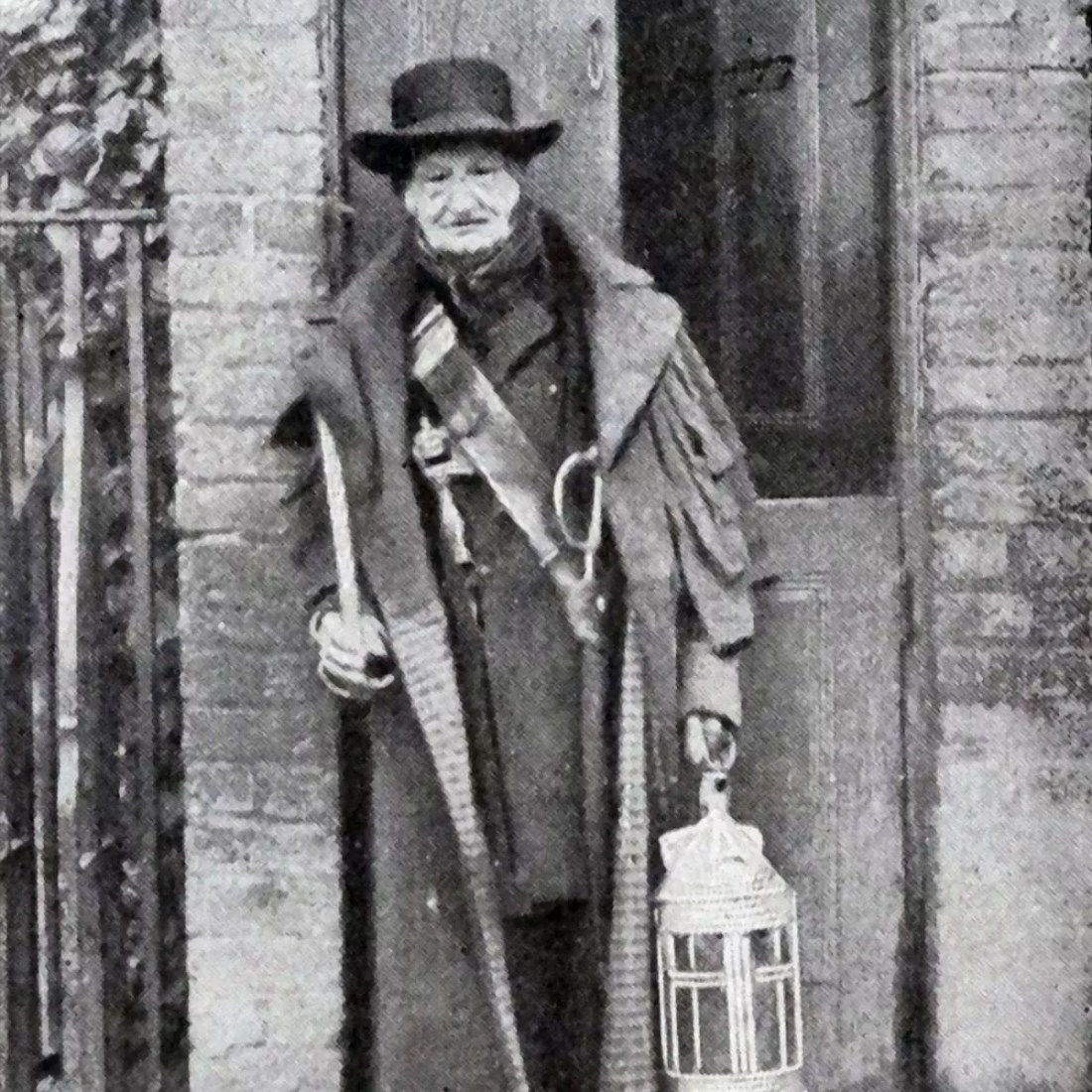
John Gray moved from the countryside of Scotland into the city of Edinburgh in 1850. With him came his wife, Jessica (Jess) and his son, John Junior. While the easy job to get would have been to get work in a factory or workhouse, John opted for less money but, to him, a better job by joining the Edinburgh City Police. He was made a nightwatchman. Now, a nightwatchman’s job, as you probably know, is to walk a route that would take the person around to various businesses and streets where the nightwatchman would check to see if doors were locked, properties secured, and the streets as safe as they could be. If there were any trouble, he would sound the alarm and summon policemen to come investigate or deal with any disturbances.
Sure, it was an entry-level job, but it was one that John enjoyed. Like most who come to Edinburgh, he loved the city. It was the place that birth a cultural revolution, with new ideas and architecture and art being produced in what is now known as the Scottish Enlightenment. New buildings and infrastructure were changing the city from a medieval one known as Auld Reekie because of the close, foul-smelling town into a modern, cleaner, more open and safer city. And John felt that his job was to help, even in a small way, to make the city better. He took pride in the work. Besides, he liked walking the empty streets at night; it gave him the chance to truly appreciate the beauty of both the old town and the newer parts that were undergoing change. A tall man, he strode around the neighborhood purposefully but with a slight and friendly smile on his face, keeping things in order and keeping it safe. He took pride in that.
John’s assignment put him in the neighborhood where he lived, mostly, the area that surrounds the Greyfriars Church and not far at all from the New College, the University of Edinburgh campus. Part of his watch area was Candlemakers Row and what once was the edge of the old town, but now, the area was being rebuild and built up into a bustling section of the town south of the Royal Mile. The George IV Bridge road had leveled the old, sloping and narrow closes that ran off the Royal Mile and replaced them with a new, wide, open, and efficient street. So, John worked this job for almost a decade.
Now, many nightwatchmen had canine companions with them on their rounds. The dogs acted as both protection of a sort and also somewhat of an alarm in case something was amiss as the watchmen made their rounds. John’s “co-worker” wasn’t the usual working dog, however. John chose the family pet as his assistant, a Scottish Skye Terrier named Bobby. Bobby would trot beside John as they went around during the night trying door knobs and peering down side streets. The pair made an almost comical sight as they walked–the tall, angular nightwatchman and the little terrier–and the locals who saw them would smile and nod as the passed the pair. Clearly, the two were connected.
Well, sometime in early 1858, John contracted tuberculosis. Scotland, as you know, is a wet place. Tuberculosis was a common issue among the population. In any case, John died in February of that year. He was buried in the Greyfriars Churchyard, not too far inside the gates of the old cemetery. Soon, people in the neighborhood began to notice that John’s dog, Bobby, began to show up at the cemetery. Bobby would lie on John’s grave as if to say that he was still keeping his job, still watching over his master in some fashion. Now, that’s not too unusual. Dogs often grieve over an owner’s departure. But Bobby was different. It’s not that he stayed at John’s grave. It’s how long he stayed there. Locals began to feed him and try to care for him. One local barkeeper would take him in at night, but he would let him out in the mornings to go back to his place at John’s grave.
In fact, Bobby stayed at John’s grave until he died.
For the next 14 years.
 The Rest of the Story