On the Wrong Pilot

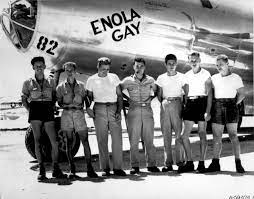
Colonel Paul Tibbets was one of the men in charge of choosing the pilots and crew who would be a part of the Manhattan Project, the development and eventual use of the atomic bomb during World War 2. A highly secretive operation, understandably, but Tibbets would help decide which pilots and crew members would form the task force that would change warfare forever as well as the world as we know it with the dropping of that weapon. The eventual crews and support staff would eventually number in the hundreds. But it all was to remain a secret.

Tibbets thus had reams of personnel files to trudge through, people who either applied for a secret project or who were recommended by superiors. This was 1943, and the war still had a couple of years to go, but yet there was no shortage of American pilots who had combat experience. But as Tibbets went through folder after folder, he was looking for something besides experience over enemy territory. Tibbets wanted pilots specifically who had experience leading people, keeping them focused and under control. So, he thought outside the box a bit.

One such pilot who seemed to have those intangibles was one named G.E. Clements. Clements had flown zero hostile missions but seemed to fit the profile for the type Tibbets was looking for. With a background as a high school teacher–who better to know how to keep people focused and calm–Clements seemed an obvious choice. After all, many of the crew members such as the gunners and radio operators on planes like the Superfortress that Tibbets’s squadron would use for the atomic bomb missions were pretty much high school age or a little older. Besides, the academic record for the pilot was exemplary–top of the class in both high school and university. The military intelligence background check on the applicant came back clean. So, G.E. Clements and the others who made this exclusive club all received invitations to join the secret operation

Once the selection of pilots and crew members went out, they all assembled in Utah, at Wendover Air Base which, at the time, was also a top-secret airfield far away from any major population center. But as Tibbets was greeting all the new pilots and crew, he was shocked to see that one of the pilots obviously didn’t qualify for the project. Immediately, he made a bee-line for the soldier who was talking and laughing in a group of some of the other pilots who had assembled. When the group saw Tibbets approach, they straightened up and saluted. Tibbets called out the pilot who was obviously the wrong choice.

“Identify yourself!” Tibbets ordered.

“Clements, sir,” came the reply.

“G.E….Clements?” Tibbets said, shocked by what he was witnessing.

“Yes, sir.”

“At ease, Clements,” Tibbets said, and the pilot stood easy. Tibbets bit his lip in thought.

“Is there something wrong, sir?” Clements asked.

“Well,” Colonel Tibbets began, “I’m awfully sorry. There’s been a mix-up. You see, this project doesn’t allow women pilots.”

On a Nervous Singer

The room began to fill with partygoers, and the sight of all those happy people coming into the union hall gave Ethel the shakes. “Why?” she said to herself; “why would I agree to sing at a New Year’s Eve party in front of total strangers?” The 18 year old girl retreated to a corner of the hall in an attempt to steel her nerves.

A young man with a pencil-thin mustache noticed her sitting in the corner, twisting her handbag in obvious distress. He approached her and asked, “What’s going on with you then?” Ethel looked up quickly. “Hmm?” she asked. He repeated his inquiry. “What’s going on?” Ethel glanced around the young man and pointed to the incoming crowd of revelers. “That. Them. Those people. That’s what’s going on. I agreed to sing tonight, but now, I’m not so sure.”

“Well, can you sing at all?” the young man asked. Ethel looked up at him a bit surprised. “Well, yes. A bit,” she said. “Then, what’s the trouble?” he wondered, and he pulled up a chair and sat next to Ethel.

She looked at him closely. He was somewhat handsome, she thought, with kind eyes behind his round eyeglasses, and he wore a nice smile. “I guess it’s nerves,” Ethel explained. “This’ll be the largest crowd I’ve ever performed for.

It was New Year’s Eve, 1935, and the Union Hall in New York City was buzzing with excitement. The Great Depression had put a damper on such celebrations in recent years, but the Roosevelt New Deal programs had begun to have a positive effect in some segments of American society by that point. The Union Hall was where what we today might refer to as socialists would meet to discuss how they could help affect even more change in the capitalist system. As they saw it, the moneyed interests represented the biggest culprit in the crushing of the American worker underfoot in recent years. The hall that night was filled with other, young and idealistic young people who put economic theory on the backburner for one moment and wanted simply to have a good time and welcome in what they hoped would be a better year to come for their cause.

And Ethel had agreed to sing. And now she was having second thoughts.

Well, the young man calmed her down. He politely excused himself and returned in moment with a drink that Ethel gladly accepted. She gulped it down, and he smiled at her. “Say, let’s go there (he pointed at this point to a nearby room), and you can sing to me to practice. It might also calm you down some.” Ethel smiled and agreed.

And it worked. Ethel sang that night, but she was singing to her new friend, the young man with the nice smile and the kind eyes and the round glasses and the dapper mustache. And he was waiting for her when she came off the stage to a nice round of applause.

“What’s your name?” he said over the clapping. “Ethel,” she answered, “Ethel Greenglass. And what’s yours?”

The man who would become her husband three years later, the man who would become the father of her two sons, and the man who would seal her fate, answered.

“Good to meet you. I’m Julius Rosenberg.”

On an Unfortunate Trip

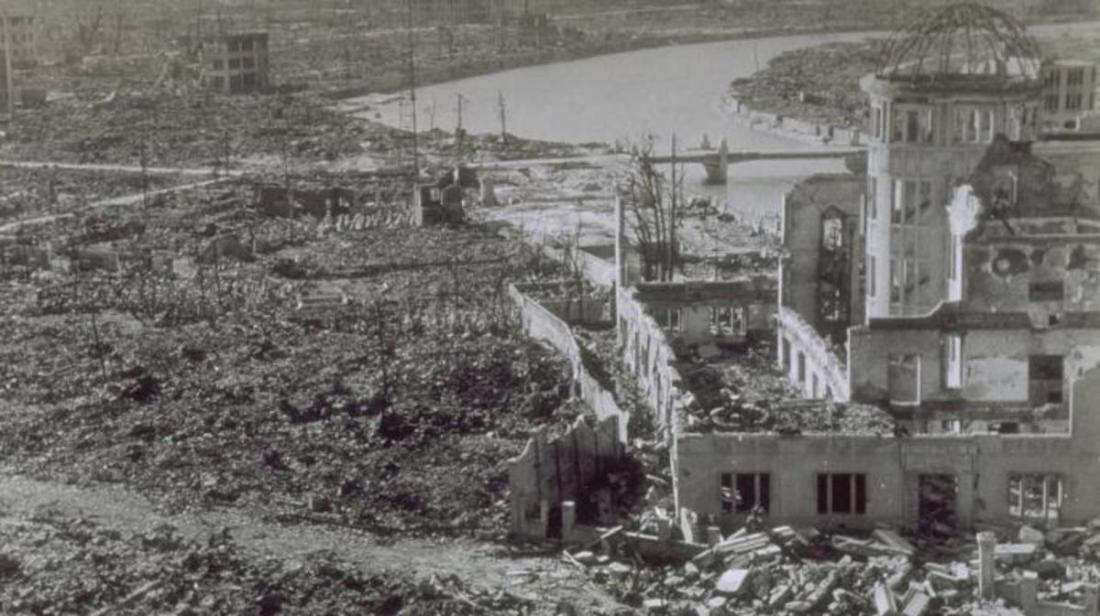
Tsutomu Yamaguchi isn’t a name you’ll know, but his life was certainly an interesting one to say the least. When he died of stomach cancer in January of 2010, he was something of a celebrity in his home nation of Japan and in the United States. You see, Tsutomu had been in Japan during World War II and worked for the Mitsubishi Corporation. In the summer of 1945, the 39 year old businessman had been sent on a trip to visit a subsidiary factory in a manufacturing town. The Japanese military had suffered defeat after defeat by that point, and many in Japan thought that the war could not go on much longer. Sadly, the Japanese military had convinced the Emperor to continue the fight, and the result was suffering and destruction brought by the American dropping of the atomic bomb on Hiroshima.

And, as fate would have it, Hiroshima was the city that Tsutomu was sent to by his employer. The bomb exploded above the city shortly after 8:00am Hiroshima time on August 8, and it caused either the immediate or eventual death of nearly 150,000 people. Tsutomu indeed suffered injuries in the blast; luckily, he was not closer to the bomb’s epicenter. He and two associates were to leave the city that morning and return home. The trio left their accommodations early and were on the way to the train station. However, Tsutomu realized that he had left some identification papers needed for travel behind him, and, telling his co-workers to go on ahead, he returned to get the papers. He had only stepped back outside when a blinding light exploded above him. He was thrown backwards immediately, and he was temporarily blinded. Radiation burns covered the top part of his body. He managed to crawl to a shelter and received treatment for his injuries there. Eventually, he managed to regain his eyesight and began searching through the destroyed city for his colleagues. He found them, and they stayed in a bomb shelter a night before leaving the catastrophic landscape of Hiroshima and heading out for their hometown the next day.

Despite the fact that he was still suffering from his radiation burns, Tsutomu reached his hometown and reported for work early on August 9, 1945. His co-workers were stunned when they saw him. They had heard about this new American superweapon and were eager to hear Tsutomu’s account of what happened on his trip. He was in the middle of the story that morning when he and his co-workers heard an air-raid siren. Suddenly, another blinding light came from outside, and another cacophonous noise followed.

Oh, by the way, Tsutomu’s hometown?

Nagasaki.

On a Wondrous Creation

Bob’s greatest creation, to hear him tell it, was his two children. He and Kitty had a son, Peter, and daughter, a sweet girl everyone called Toni. As everyone reading this is well aware, families are tricky things. A song lyric from the 1990s says, “A family is like a loaded gun; you point it in the wrong direction, someone’s gonna get killed.”

Despite the usual turmoil surrounding families, Bob’s family had added pressures. First of all, Bob’s job was incredibly stressful and caused the family to move often. Secondly, there was tension between Kitty and her children. Kitty had issues with addiction, and those issues often manifested themselves by verbal altercations with her children. Toni developed polio. Bob, despite his deep love for his family, was largely an absent father due to his work.

All of that made Peter grow up with extreme shyness and anxiety of his own. Bob’s family was wealthy, so money was never an issue for them, but money can’t buy happiness or stave off all pressures from a family. Peter’s school career was not stellar, and this seems odd considering that both Bob and Kitty had excelled at school. His shyness caused him to be socially awkward. He preferred to be alone to having friends or even to spend time with anyone else, really. Peter had to leave his prestigious prep school and attend a public school where he barely scraped by.

However, Peter excelled at working with his hands. Today, he is a carpenter who lives in the Sangre de Cristo mountains of northern New Mexico and is renown for his work. Sadly, Bob never really understood Peter despite his complete dedication to his son. The social awkwardness manifested by Peter was foreign to Bob because he never had such issues himself. He was at a loss to try to help Peter overcome his issues.

Bob felt conflicted, you see, because he was so worried about Kitty’s issues with alcoholism and the ongoing and increasing pressures he felt at work. Still, his children’s situations needed attention. The family moved to the Virgin Islands for a while because doctors said that the warm, moist air would help Toni’s polio, but that didn’t seem to help much. He contemplated getting Peter professional help, but his own bad experiences with therapy made him balk at that option.

Yes, Bob loved all his family, deeply. Bob died of cancer in the 1960s. Kitty suffered an embolism and died a few years later. Toni took her own life at the age of 33. As we said, today, Peter works as a carpenter in the mountains of northern New Mexico. He chose New Mexico because it was where the family lived for a short but important time in their lives, and he had good memories of that period of their lives.

Until the time he died, and, despite the issues that the family faced, Bob insisted that the kids were his greatest achievement.

You know Bob for another creation. You see, Robert Oppenheimer is best remembered for creating the nuclear bomb for the United States.