
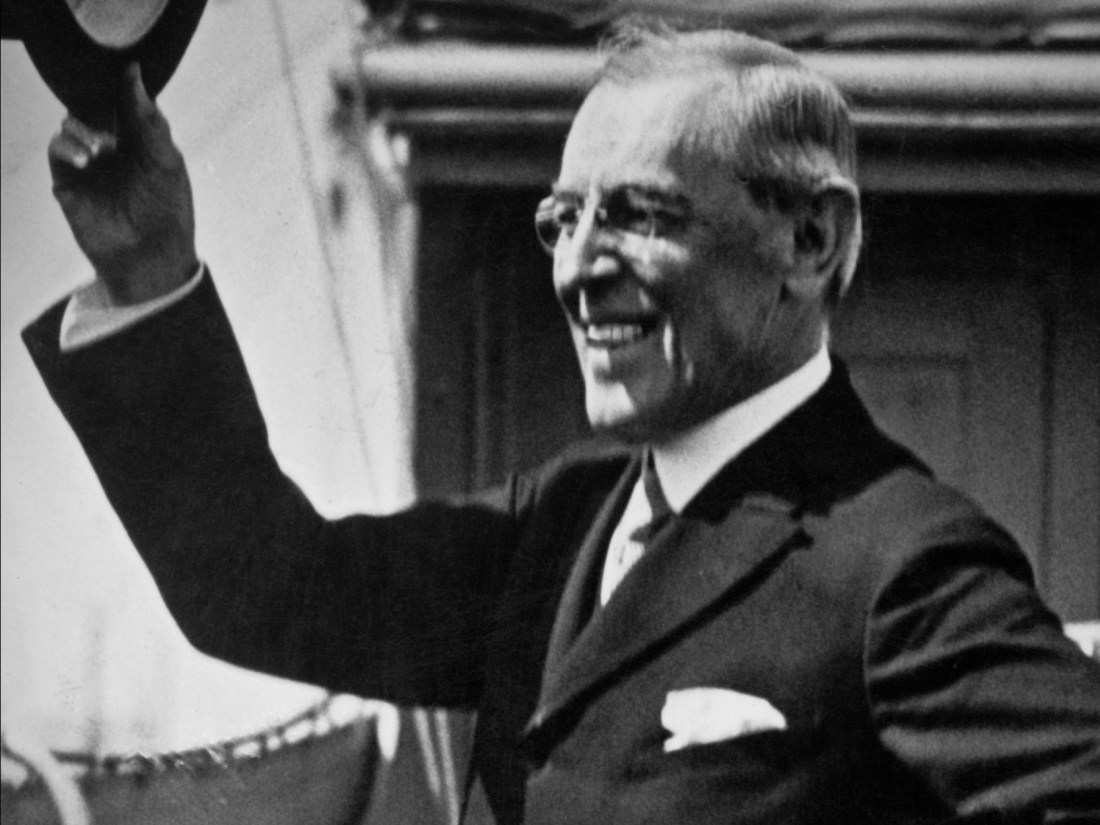
In 1916, the United States held a presidential election. In Europe at that time, World War 1 had been raging for two years. Millions of people had been killed and millions more had their lives and homes completely destroyed. The US had not entered the conflict because, in part, up until that time, the American tradition was to not get involved in European conflicts and affairs.
The Americans thought of themselves as being above being tainted by the “old world” and their issues. However, the war was having a major negative impact on the US economy. Trade was restricted. Investment money was not being used. And, in the minds of many Americans, the threat of what they believed was an aggressive Imperial Germany to the democracies of Britain and France seemed to possibly threaten the US as well.
And so the election that year revolved around the idea of whether or not the US should get involved in a war that had clearly become a meatgrinder, a veritable slaughterhouse, for the troops involved on both sides. The incumbent, President Woodrow Wilson, the Democrat, campaigned on the issue that, “He kept us out of the war.” His opponent, US Supreme Court Justice Charles Evans Hughes, the Republican, was for the entry into the war on the side of the Allied Powers (Britain, France, Italy, and Russia), but he, too, urged caution.
Wilson’s victory in 1912 had been something of a fluke. He was only the second Democrat elected since the Civil War (Grover Cleveland was the other), and it took the splitting of the Republican Party to make him president (Teddy Roosevelt ran against his former VP, William Howard Taft, as a third party candidate in 1912). So, it seemed a foregone conclusion that Wilson would probably lose to whomever the GOP candidate would be. And, so, realizing that the Republicans would probably win the election, Wilson hatched a plan that seems like something out of a movie rather than real life.
Now, I am not now nor have I ever been a Woodrow Wilson fan. He had a messiah complex as big as Texas, and he was an incurable racist. His stubbornness may have even led to the rise of Hitler 13 years after he left office and then, of course, World War 2. But in regards to the election of 1916, Wilson’s plan to make sure America and American interests would be safe in case of a Republican victory , Woodrow Wilson did an incredibly valiant and self-less thing: He planned to resign the presidency.
You see, at that time and until 1937, the incoming president wasn’t sworn in until the March following the election the previous November unlike today when the new president is sworn in only two months later. That original plan called for four months of lame duck-ness that, in times of great national crisis like the war in Europe or later, the Great Depression, can be an extremely long and costly time. So, here was Wilson’s plan. It was actually suggested to him by one of his close advisors. When Hughes won, Wilson would immediately ask for the resignation of both the vice-president and the Secretary of State. He would appoint Hughes to head the State Department, and then he himself would resign. Hughes would be then raised to the presidency as the next in line of succession immediately, thus bypassing the crucial four month waiting period.
But that didn’t have to happen. Wilson surged in the polls in the last few weeks of the campaign. Hughes, thinking that California was his for the taking, really didn’t campaign there much. But it was California that gave the extremely narrow victory to Wilson.
In fact, so confident was Hughes in his electoral victory that he went to bed on election night thinking that he was the next President of the United States. The next morning, when the phone rang in his house, one of his children answered. A reporter asked to speak to Hughes. The child is supposed to have said, “The president is sleeping.” The reporter’s reply was, “Well, wake him and tell him he lost.”

 The Rest of the Story