
Did you realize that there’s an experiment that was left on the moon that is still ongoing? It’s true.
The United States made six successful trips to the moon with humans onboard. Those journeys, from July of 1969 to December 1972 (Apollo 11 to Apollo 17), were summed up (somewhat grammatically awkwardly) by Neil Armstrong when he said that stepping onto the surface of the satellite was a small step in one way but a giant leap for mankind in another sense. And he was right. Those six landings captivated the world and still do to this day.
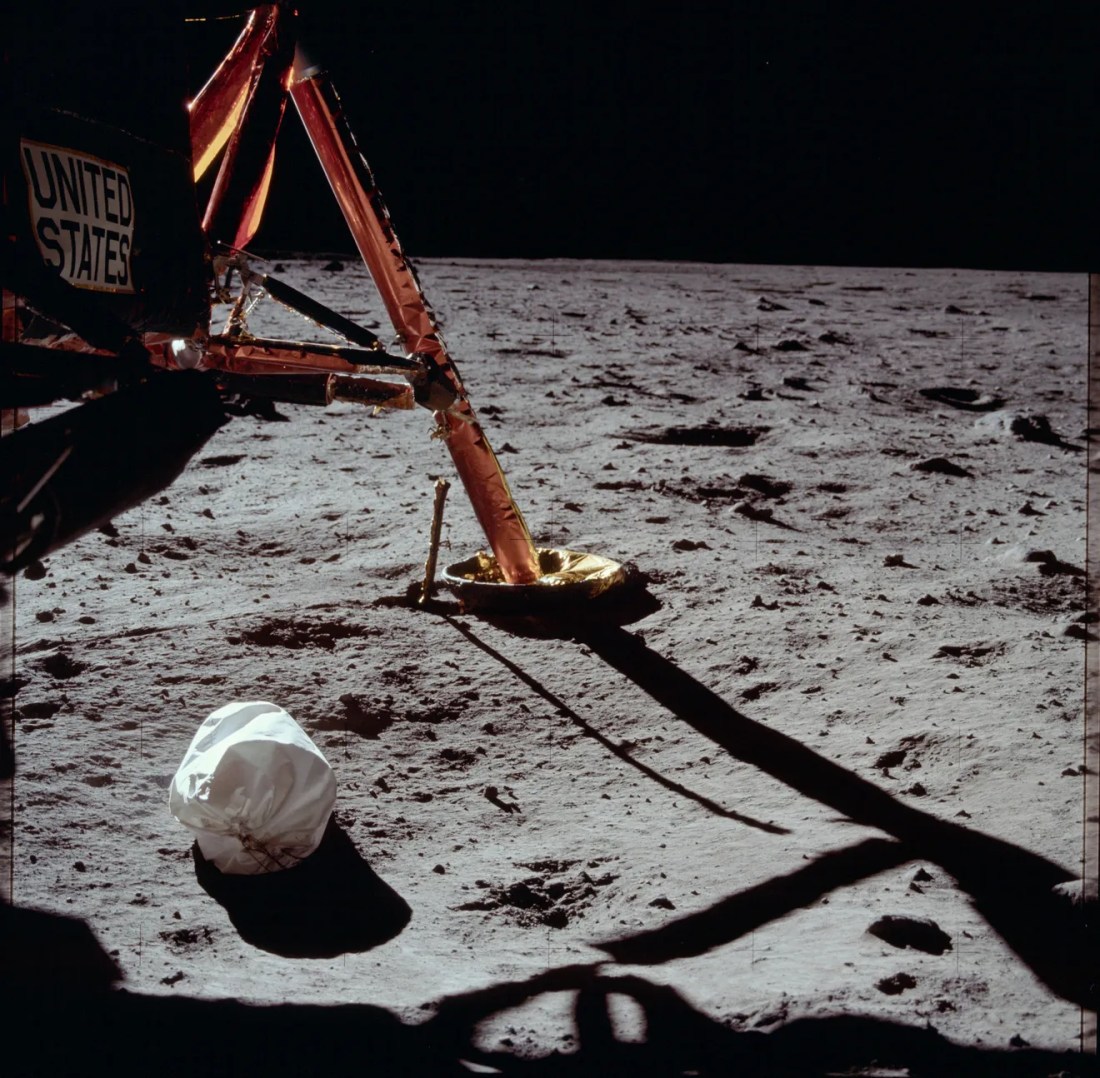
However, wherever mankind goes, trash goes with mankind. That’s certainly true of the moon as well. And besides the mechanical stuff that the astronauts left, things like the lunar rover, the landing “gear” that the modules took off from, various tools, and the now-bleached out flags and poles, there is another classification of garbage that the humans left that particularly interests scientists today, more than 50 years after humans last visited the moon.
The astronauts left this type of garbage on purpose. And this garbage is in 96 bags. They knew when they left it on the moon’s surface that the composition of the bags was teeming with life. Over 1,000 different types of microbes and species of bacteria are in those bags according to scientists. And it’s possible that fungi could have formed in the microbial bags. Thus, these 96 bags represent an interesting experiment in how living things can–or even if they can–live in an environment as sterile as the moon’s surface.
The extreme temperatures of the moon are a great test tube for this experiment. And, to be fair, the likelihood of anything surviving is slim. However, if the microbes can survive on the moon, well, they could be a signal that we can send things like seedlings or the basic building blocks of life long distances in space. Microbes can survive in the most unlikely places and in ultra-extreme conditions. This experiment might help us understand if we can maybe send life to planets that could be somehow “greened” or made habitable over time. This entire enterprise makes astro-microbiologists (yes, that’s a thing) really excited about the possibilities here on earth and the beginnings of life on our own planet. And the lunar experiment is still waiting for mankind to return to the moon to see how–and if–the microbes and bacteria survived in these bags.
And to think, all of this excitement over 96 bags of human poop.
 The Rest of the Story