
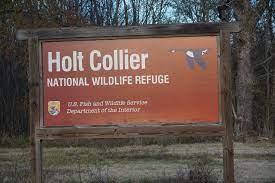
Holt Collier lived an amazing life. He was born in slavery in the United States in 1848 in Mississippi, and the man who owned the land where Collier was enslaved had been a veteran of the War of 1812 and personally knew Andrew Jackson. Collier showed exemplary skill at shooting even before he reached the age of 10. In the mid-1800s, bears and other dangerous predators still roamed the Mississippi backwoods where he lived. He “killed him a bar” as the song says shortly after he turned 10 years old. From that point on, Collier’s job on the farm was to provide wild game for the landowner’s table.
By the beginning of the American Civil War in 1861, the son of the original landowner now owned the farm. His name was Thomas Hinds, and he became an officer in the mounted troops of the Confederate Army. When he left the farm for the war, he took Holt Collier with him as a camp servant. Here’s where Collier’s story gets a bit murky. The legend says that Collier actually fought in the cavalry unit commanded by Hinds, thus becoming a Confederate soldier himself. If that is true–and some records say that Collier received a pension for his service at one point–then it is unusual to say the least.
After the war and upon his return to the farm in Mississippi, Holt Collier continued to work for the Hinds family as many former slaves did across the southern United States. He also began to lead hunts for bears in the Mississippi hinterlands. According to one source, Collier was personally responsible for hunting over 2,000 bears across the years. His prowess as tracking and hunting drew big game hunters to Mississippi so that Holt Collier could lead them on a bear hunt. When he died in Mississippi in 1936, he was a national legend.
In 1902, Mississippi state Governor Andrew Longino brought some dignitaries with him and hired Collier to lead the group on a bear hunt. Collier agreed. It was only another day of hunting to him. The hunt was largely successful, and all of the hunters had killed a bear except one. Collier had tracked and found a bear for the man to kill, and he led the man up to the bear. Some witnesses who were there said that Collier had tied up the bear so the man could get his kill and then go home, but others said that Collier had simply treed the bear with dogs and brought the man there. Either way, it should have been an easy kill.
Now, I’m not a hunter. I’ve shot guns, but they’re really loud and they make bullets go really fast. Some of my friends are serious hunters; one of them tells me that white-tailed deer are so prevalent in Tennessee that they have become a pest. He sees hunting as ridding the area of a nuisance with his yearly kill quota. I will say that he either uses the deer he kills for meat or gives it to someone who does. And, since I eat meat, perhaps there’s really little difference.
But to kill a bear that was tied up or was merely sitting up in a tree within easy range seems a bit, well, unsporting. To his credit the hunter said as much, and Holt Collier told him that he understood and, in fact, agreed with that sentiment as well. The man returned home having not killed a bear on the hunt despite being a fairly well know big game hunter himself.
The newspapers around the country got wind of the story of this famous bear hunter, Holt Collier, and the other famous hunter who showed mercy to the helpless bear. The public’s imagination was taken up with the story, and one Michigan toy maker decided to cash in on the popularity of the story. That toymaker created a toy that is in almost every house in the western world today.
Of course, you know the merciful hunter as President Teddy Roosevelt and the toy as the Teddy Bear.

 The Rest of the Story