On An American

This blog has written several stories about the American Civil War, and several of those stories have pertained to the surrender of the Confederate Army of Northern Virginia to the Union’s Army of the Potomac in April of 1865. General Lee meet General Grant in the parlor of Elmer McLean’s house at the crossroads of Appomattox in Virginia, and the two men signed the papers that effectively ended that bloody conflict.

Here is another story about that momentous event.

While we’ve talked some about the two commanders in the room that day, we haven’t really looked at the others who were there in Elmer McLean’s parlor early that afternoon in April. Colonel Charles Marshall, a relative of both the former Supreme Court Chief Justice John Marshall and of General George Marshall of World War 2 fame, accompanied Lee as his military secretary and aide de camp. The only other person from the Confederate side to join Lee and Marshall that day was a private, one Joshua O. Johns, who stayed outside and held the reins of Lee’s and Marshall’s horses while the two officers conducted the end of the war inside the house. While Marshall goes on to be one of the founders of the “Lost Cause” narrative of the southern rebellion against the United States, history seems to have lost what happend to that third member of the Confederate Army at Appomattox that day.

It is when you attempt to detail who accompanied Grant to the surrender meeting that things get a little tricky. You see, accounts vary as to the exact number of Union officers who were in McLean’s parlor that afternoon. Most of Grant’s staff were there–Grant showed up late, characteristically, by the way–and were eager to see this historic event. Paintings made of the event much, much later, depict as many as 12 members of Grant’s staff and other officers present (including Robert Lincoln, the President’s son, who was on Grant’s staff). As some of those present recalled the scene in later years, their stories changed, as eyewitness accounts often do, and they sometimes added or subtracted a person here and there as they told their stories.

We know for sure that Grant’s aide, Colonel (breveted Brigadier General) Ely S. Parker was there, because it was Parker who wrote out the terms of the surrender for Grant and Lee to sign. Parker had been with Grant through much of the war; the two men were friends before it, and it was Grant who had taken Parker on as an engineer on his staff in 1863 during the Vicksburg campaign, giving Parker the rank of Captain.

Interestingly, Parker had tried to volunteer for the war, but he was refused to join because, ironically, he was not officially a citizen of the United States despite having been born in New York State. That didn’t matter to Grant, who recognized the talent the 35 year old man had, and, besides, Grant’s army was in desperate need of good engineers. Parker eventually made his way onto Grant’s personal staff, becoming the General’s adjutant and military secretary, the same role that Marshall performed for Lee. In fact, almost all correspondence from Grant during the Civil War from 1863 onward came from Parker’s pen.

Colonel Parker wrote out the terms in his clear hand, presented the copies to both men, and the two leaders signed them. The entire interaction between the two generals took less than 45 minutes. Lee recognized who and what Colonel Parker was, and, before he left McLean’s room, he stretched out his ungloved hand to the man.

“I’m glad to see one real American here,” Lee said to Parker.

Parker took the famous man’s hand and shook it. Realizing that the war was now over, Colonel Ely S. Parker, eyewitness to one of the most important events in Amerian History, and born with the name Hasanoanda on the Seneca Native American reservation and therefore not an official citizen of the United States at the time despite having fought for that country for the past few years, gave General Robert E. Lee the perfect reply.

“We are all Americans now, General.”
On a Young Officer

Like many young men of that time, John Clem wanted to join up in the Union Army at the start of the Civil War. He believed deeply in the cause of preserving the fragile union that had been forged almost “four score and seven years” earlier during the time of the American Revolution. However, he felt torn because his parents doted on him as an only and beloved child. Then, in a tragic accident, his mother died in a train crash. Well, that was all John needed to make his mind up. After his mother’s funeral, he left home and joined up with the 22nd Michigan Regiment.

The 22nd Michigan saw their fair share of fighting in the Tennessee theater of war, showing great bravery at the battle of Chickamauga on the Georgia-Tennessee border. In the battle, one of the bloodiest of the entire war, a Confederate officer yelled to a group of the Michigan men to surrender. In response, John fired at the officer and hit him, causing his fellow Union soldiers in the vicinity to rally around him and mount a counter-attack. For his courage and his heroism, John was promoted to the rank of sergeant.

Later in the war, John was captured with some other soldiers as they guarded a train. The Confederate soldiers who captured him took his kepi cap from him and discovered it had three distinct bullet holes in it–a cap that John took great pride in. After a short stay in a rebel POW camp, John was part of a prisoner exchange and soon found himself back with his old comrades. He went on to suffer two wounds in battle and further distinguish himself before being discharged in late 1864.

In that sense, John was much like many of the other soldiers in that war. They did their duties and fought like men to defend the principles they held dear. John’s army service actually continued after the war; he managed to rise through the ranks to become a commissioned officer. He managed to also serve during the Spanish-American war less than 30 years later and even be in the active military when World War 1 broke out. He died in San Antonio, Texas, in 1937, at the age of 85, a true hero of the United States Army.

If you’re doing the math, you’ll see why John is an interesting example of a Civil War soldier. 1851 is the year he was born. You see, John ran away from home to join the army…at age 9. He was still quite young when he shot that rebel officer. And John Clem became the youngest non-commissioned officer in the history of the United States Army…at age 12.

On a Partnership

Partners in any business can be a tricky situation—law partners especially. Take the case of Will Herndon and his partner.

Will was a more than competent attorney. He understood that law is sometimes a business that requires a quick turnaround on the case so you can get to the next one. Better to be paid five times handling five quick cases than one time handling one long one. At least that was the way Will saw things.

That’s what frustrated him so about his older law partner. The older man seemed to have a deliberate nature when it came to both researching a case and arguing it. Even on the simplest case, Will‘s partner would pursue it like a bulldog, researching arcane rulings that may or may not apply to the situation, and then taking his own sweet time in the court room to talk to witnesses, dragging out the process, it seemed. It was all sometimes maddening to Will.

In addition, this partner would often allow opposing counsel‘s points to go unchallenged. Why don’t you ever object, Will asked the partner. The man told Will that it was better sometimes to concede six or seven small points as long as you won the last big one.

Perhaps the greatest strain on the relationship between the two partners was Will’s frustration with his partner’s and his partner‘s wife’s inability to discipline their children. You see, the older man’s young children were often in the offices and underfoot. The partner didn’t seem to mind that his sons had free run there, and they often disrupted meetings with clients. It was like having a bunch of wild animals in a place that Will thought should observe at least a modicum of decorum and seriousness.

Yet, despite their differences, the law partnership survived for over 15 years. It dissolved only when the elder partner decided to pursue political office.

And in all that time together as partners, Will Herndon was never invited to his partner’s house for dinner or to meet for any social event. Apparently, the animosity between Will and his partner‘s wife proved too great an obstacle to overcome.

Will’s partner went on to great success in public life, and that success was fueled largely by the same dogged practices that made him such an able litigator. The man served well, and he even died in office.

Years later, Will decided he would write a book describing the man he had come to know over those years as his law partner–a biography from the man who knew him better than anyone else except his wife.

The book’s title?

Herndon’s Lincoln.

On a Meeting in Wartime

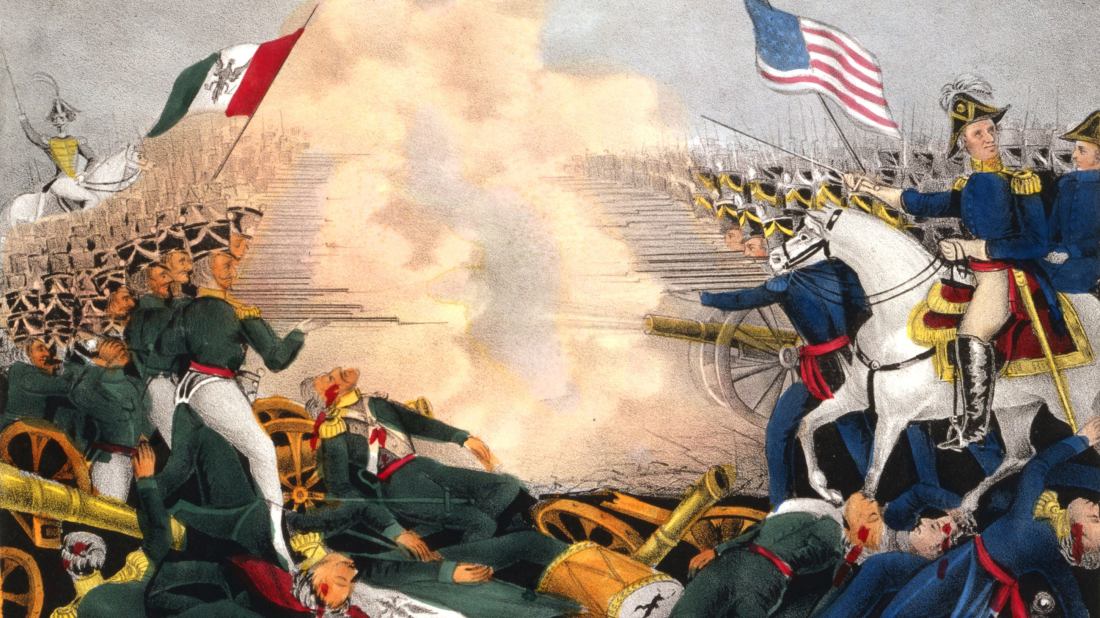
The United States has fought in several wars over the nation’s 250 year history. The war that probably gets the least amount of print in history texts or even mentions in the public mind is the Mexican War, which was fought from 1846-1848, not quite two full years. The war was a resounding victory for the still-fledging United States, with the US Army easily conquering the entire country and entering Mexico City as conquerors. About 18,000 American military personnel were either killed, wounded, or missing from the fight, while Mexico’s military casualties were about twice that. At the war’s end, the United States kept everything from Texas to the Pacific and gave the rest back to a more amenable Mexican government.

For the next decade, men like the heroes General Zachary Taylor (who was later elected president) and General Winfield Scott (and others) dominated not only the American military but also much of American politics. Another of the main results of the war was that it provided what would become most of the officer class on both sides of the American Civil War which began a short 12 years later. Some historians have called that war “the training ground” for the experience it provided the soldiers who would lead both sides in the next war. Men who were junior officers in Mexico would become colonels and generals when the Southern States would rebel beginning in 1860. That meant that men who fought together to a victory over Mexico would fight against each other when the Confederacy took up arms against the United States.

A chance interaction between two officers during the Mexican War bears repeating. The story is told that a young American lieutenant named Sam, his regiment’s quartermaster officer, had been out foraging on horseback in the Mexican countryside for food and supplies. He was returning one hot afternoon to the army’s encampment not too far outside Mexico City as the American were preparing to take the city in the next several weeks. Sam was tired, sweaty, and dirty. His uniform front was unbuttoned because of the heat. Now, Sam was a good horseman, but keeping his uniform in regular “army condition” was never a priority for him despite the fact that he had graduated from West Point a few years before. At any rate, here he came, riding back into camp looking like a tramp in an army tunic.

As Sam was dismounting, a colonel came up to him quickly. Sam noticed that the man had a bushy mustache, an immaculate uniform, and spoke to him with a distinct southern accent. The colonel upbraided Sam for his slovenly appearance. Sam was somewhat taken aback, but he knew better than to dispute with the older and higher-ranked officer. Sam buttoned his tunic, wiped the grime from his cheeks, and saluted the colonel. The officer returned Sam’s salute, turned, and walked away.

Now, such a short encounter would probably not be remembered by most men, but Sam kept the meeting in his mind. In 1865, as the Civil War was ending, Sam ran across that very same colonel as the Southern troops were surrendering. The two men met once again in the front room of a house on one of the battlefields. In an effort to be jovial to the defeated rebel, Sam reminded him that they had met years earlier in the Mexican War. Sam recounted that first meeting, but the former colonel looked puzzled. The man who had been the colonel back then told Sam that, yes, he vaguely remembered the incident but that he didn’t exactly remember that it had been Sam whom he had reprimanded that day. The two men, veterans of two wars–one in which they had been comrades and one in which they had been enemies–reminisced about better days for a moment. But the moment of reflection passed.

It was then that General Robert E. Lee of the Confederate Army reminded the commander of the Union troops, Ulysses S. Grant, known as Sam to his friends, that they had better get on with the surrender of Lee’s troops and end the Civil War.

On a Sucker

Marvin Stone is one of those clever American inventors of the 1800s who came up with something so simple and so commonplace that we can’t imagine that anyone had to come up with it at all. Marvin was born in 1842 in Ohio, and his father was also an inventor. The boy grew up working with his father in the workshop, learning how to approach a problem from a mechanical engineering perspective. He began Oberlin College but his studies were interrupted by the outbreak of the American Civil War in 1861.

Marvin served in the United States Army with distinction during the war, fighting in such battles as Lookout Mountain in Tennessee (where he was injured) and also served in an administrative position in Washington, D.C. After the war, Marvin was restless, first thinking about pursuing a theology career and also working for a time as a newspaper reporter. But the years growing up at his father’s side in the workshop called to him, and he returned to his roots as an inventor.

He soon made a contract with the Duke Tobacco Company in D.C. He is credited with inventing one of the first machines that rolled cigarettes. The Civil War had seen the decline of pipe smoking and the beginning of soldiers and the public turning to rolling cigarettes. Marvin’s invention made that process consistent and mechanized. Duke paid Marvin’s firm to make the rollers which they took and sold to the public. Soon, he built a factory to handle the demand for the cigarette roller. It made Marvin a comfortable living. He married a woman named Jennie Platt and settled down in the Washington area.

Marvin was generous with his new wealth. He built lodgings for the single female employees of his factory, for example, gave his workers with healthcare, and provided them with access to libraries and education in their off hours at a time when such a thing was unheard of. In addition, after seeing the deplorable living conditions of some minority residents of Washington, Marvin spearheaded efforts to build better housing for those residents at his own expense. For his efforts, his fellow manufacturing tycoons made fun of Marvin. He was one of those soft touches, they said, a real sucker. But Marvin knew that it was the right thing to do.

One hot summer afternoon, Jennie and Marvin were enjoying some drinks on their front porch. The drinks were mint juleps, if you must know. And while the drinks were refreshing on the stifling Washington day, while sipping them, Marvin had an epiphany. He began to do some research on his idea. What Marvin found was that his idea wasn’t new, and that disappointed him. Turns out, both the ancient Sumerians and Egyptians as well as the first civilizations of South America had come up with the idea. However, not all of his research was negative. It seemed that no new technology had been developed since the olden days, and that told Marvin that he could make a new version of what those old civilizations had first developed.

Soon, Marvin developed a prototype. It was 8 1/2 inches (22cm) long, made of paper and coated with wax. And it worked. Marvin patented the product in 1888. Cheap to mass produce, Marvin soon re-tooled a part of his factory to begin to produce the new product. Within a few months, Marvin began making more money from the sale of his new invention than he did from the cigarette rollers. Sadly, Marvin didn’t live to see how popular his creation became, how universal his invention was to be to the modern world of the 20th Century. He died after a long illness in 1899, leaving Jennie with a sizeable inheritance. And he left you and me a legacy that we enjoy today, when you go to a fast food place and get a drink or stop at a Buc-ee’s for a soda. Yes, we should think of that sucker, Marvin Stone, every time we take a sip of our drinks through his most important invention.

The straw.

On a Submarine Attack

The water that February night was understandably cold as the vessel made its way towards the coastal city. The night was moonless, and that helped the submarine avoid detection. The harbor was filled with enemy ships, and the captain of the submarine had his orders to destroy as much as he could to help relieve the blockaded port. The captain, a man named George Dixon, singled out an enemy vessel that was heavily armed. It was an large, 1300-ton vessel that bristled with armaments on all sides. Dixon carefully maneuvered the sub into place.

Dixon was from Mobile, AL although he was a Kentucky native. Quite young at age 23 to be captaining a submarine, he was from a wealthy background. He was known in the service for wearing expensive, tailor-made uniforms. He also flashed expensive jewelry. Unlike many of his fellow soldiers, Dixon volunteered to fight instead of waiting to be drafted. He had received wounds in a previous battle, and even after his rehabilitation, still had a slight limp in one leg. And he carried with him an unusual good luck charm: A gold coin. You see, his girl back home in Mobile had given him the coin when he left for the war, telling him that it would bring him success and luck and protect him. It would also serve as a constant reminder that there was a girl waiting for him back home when he returned.

Dixon ordered his crew to position the submarine to where a silent attack could be made. The enemy never saw it coming. On Dixon’s order, the torpedo was sent into the hull of the large enemy ship. The enemy vessel sank to the bottom of the harbor less than 3 minutes after the torpedo reached its mark. After the attack, Dixon turned the sub for home.

However, something was wrong. The submarine had been damaged in the attack. Dixon is reported to have sent out a distress signal, hoping that some friendly vessel would see that the sub needed assistance. But none did. We’re not sure what happened next. We know that when recovery crews reached the sub, they found the crew still at their stations, long dead. The sub was raised and investigators made a thorough and careful analysis of both the vessel and the remains of the crew members. Whatever happened, it happened quickly. The men who served on that vessel and even the captain, captain Dixon, had all been volunteers, you see. And the fact that they all died at their posts told the investigators that not one of them shirked in their duty. They were identified and messages were sent to any remaining relatives telling of the death of the men. the body of George Dixon was identified easily. He still had his beau’s gold coin on him. It was an 1860 US $20 gold piece, minted in Philadelphia.

That coin was struck only four years before Dixon and his vessel, the Confederate submarine The Hunley, became the first sub to sink another ship in battle, on the night of February 27, 1864, during the American Civil War.

On Grant’s Tomb

In the 1950s, Groucho Marx hosted a game show called You Bet Your Life. The show was a vehicle for the famous comedian to interact with simple American citizens and riff on their interactions, and all of it was built around a question and answer format. Sometimes, Marx and the producers found that, when faced with the lights and TV cameras and the studio audience (not to mention the larger than life persona of Groucho himself), some contestants on the show would freeze up and not be able to answer the show’s questions. That’s when Groucho would resort to a simple question in an effort to get the people to open up and begin to relax: Who’s buried in Grant’s Tomb? Well, the obvious answer that Groucho wanted was, of course, “Grant.” However, that answer both is and isn’t correct. Allow me to explain.

We today forget that Ulysses S. Grant (the “S” stood for nothing–it was only an initial) was seen in his day as one of the saviors of the Union. After almost four years of trying one commanding general after another as head of the Union Army, President Abraham Lincoln found in Grant a man who wasn’t afraid to engage with Robert E. Lee’s rebel army in the field. “I can’t spare Grant,” Lincoln said, “he fights!” Grant fought the insurrectionists to the point that they surrendered in April, 1865. And, in the 1868 election, the next election after the war’s end, Grant was elected President of the United States in a landslide as a sign of how popular he was despite the fact that he had no political experience and was the youngest president elected to that date. Think Dwight D. Eisenhower but almost one hundred years earlier. Grant was re-elected four years later, again, with a good majority of the vote. Sadly, almost a decade after his last term, Grant died of cancer.

However, at that point, much of the nation was divided over Grant’s legacy. Obviously, the people of the rebelling states thought of him as a butcher, the man who forced the Confederacy to be defeated by attrition. They had no use for him. And then, even in the north and west, there were Grant detractors because of what had happened during his eight years as president. You see, those two terms were some of the most corrupt in American History. Several of Grant’s appointees and administration officials were convicted of fraud and of bribery. While Grant himself wasn’t involved, the taint of the corruption had colored how many people viewed him. And, upon his death, the nation was torn as to how to remember this important–even if he was divisive–person.

And those who revered Grant wanted him to have a tomb fitting of the national hero they saw him to be. A fundraising campaign was begun to raise money to build a fitting tomb for the former general, but, after a good and fast start, it quickly fell flat. And land was found along the western side of upper Manhattan Island in New York City for the site of the memorial and grave. Now, Grant was from Ohio originally and had lived in Illinois for a time, but it was New York City that he called home after his presidency and where he was when he died. Also, it was where his wife, Julia, wanted the tomb to be located. She, of course, wished to be buried with her husband when she passed away. That request is why Grant wasn’t buried at West Point (no women allowed at that time) or other military cemeteries. Finally, after a direct appeal by Julia Grant to the soldiers who had fought with her husband in the war, enough money was collected to begin construction.

Now, even the building itself was controversial. The amount initially set aside for the task wouldn’t build a monument grand enough for those who loved Grant, but they felt that, as time wore on, they had to erect something on the selected spot. Finally, a cornerstone was laid in 1892, a full seven years after Grant’s death. And the final structure didn’t get finished until 1897–twelve years after the great man died. Julia died in Washington, D.C., in 1902.

And, to be clear, when the bodies of President Grant and his wife, Julia, were added to the memorial, they were not interred. Instead, the bodies lie above ground, sealed in a red marble sarcophagus. And that fact leads us back to Groucho’s question, the answer to which isn’t as easy as it seemed at the time.

Thus, the real answer to the question as to who is buried in Grant’s Tomb is, actually, nobody.

On a Funny Face

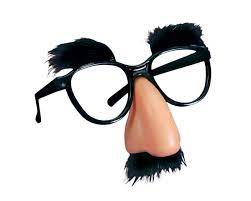
The old “sticks and stones” saying is true but only to a point. Words can hurt, especially when someone is commenting on your physical appearance. That was the case for one man who was born over 200 years ago in the United States. One of the first descriptions of him was “homely and haggard,” and that description was one of the kind ones.

Harsher criticisms included “horrid…ugly and repellent.” Well. That’s blunt. And it seems to have been the general consensus. He looked, one said, like someone drew an overly-exaggerated caricature of a human. Other said that he was “too ugly” to even appear in public. Still others said that the sight of the man’s face was the “object of mirth” and “foolishly comical.”

Add to these descriptions of the man’s face was the fact that he was incredibly awkward in public. His arms and hands seemed to belong to someone else because they were overly large and seemed too long for his body. That made him appear “ape-like” and inhuman. One of the most kind reactions was that of a British man who said he “lacked all that we consider to be debonaire or desirable.”

Now, you’d think such descriptions would cause the poor man to suffer from insecurity and self-doubt, and it did, to a point. However, to his credit, he developed a good sense of humor that fought against those who derided his physical appearance. Someone once accused him of being two-faced, and he is supposed to have responded, “If I had two faces, do you think I’d wear this one?” And another time, he joked that a man once pulled a gun on him and said, “If I ever met a man uglier than me, I’d shoot him.” His reply? “If I’m uglier that you, fire away.”

Yet, the abuse about his appearance never seemed to wane. One friend–yes, friend–said that his head was shaped like a coconut with hair on the top just as uncontrollable as coconut hair. His ears were said to be from someone twice his size. The lips were described as being non-existent. Scraggly sprigs of twine appeared where a normal person’s beard should be. Add to this already funny picture the fact that the man seemed to be covered with moles and warts. His nose was also too big. To complete the picture, a kick from a horse when he was a young man caused one of his eyes to rove independently of the other.

Yet, we don’t remember these descriptions of this man today. In fact, many people today consider this funny face to be the depiction of the prototypical American.

No, we only remember the beautiful heart, the generous nature, and the wonderful leadership of Abraham Lincoln.

On Some Expats

Since I’ve not found a permanent home outside of the United States as of yet, I’m classified as an expatriate or expat. Once I find some place and settle, I’ll then become an immigrant. This is the story of about 20,000 other American expats, most of whom became immigrants in the South American nation of Brazil.

The last Emperor of Brazil was Don Pedro II. In the 1860s, he wished to diversify his nation’s agricultural exports to Europe’s eager markets. Thus, he made it incredibly easy for American farmers to come to Brazil and get cheap land and help Brazil become much more of an agricultural exporter.

As said above, over 20,000 Americans brought their families south and set up farming in Brazil. Interestingly, until that time, Brazil had been a diverse national ethnically but had been almost 100% Catholic religiously. The expats who came there from the US built the first protestant churches and cemeteries that Brazil ever saw.

Now, Brazil was certainly a difficult change for many of the Americans. The language and culture challenged many of the expats as they sought to raise their children as “American” as possible within the confines of the Brazilian nation. Guide books were written and published in the US detailing how to make the giant leap and move to Brazil and raise your kids while maintaining your “American-ness.” The most famous of these books was Hunting a Home in Brazil and published in 1867.

Some of the Americans brought their metal plows with them, and these technological marvels caused the native Brazilian famers to gasp with awe. An agricultural school was set up to teach the Brazilians the latest farming techniques. The settlements in Brazil grew quickly, and, today, the Brazilian city of Americana boasts over 200,000 residents, many of them descendants of those early American expats turned immigrants.

What do you think made so many Americans accept Emperor Don Pedro II’s offer to come help Brazil’s agricultural sector? Well, if you know anything about American History, you know that the early 1860s saw the American Civil War.

And those more than 20,000 American expats–known today as Confederados–who left the United States for a fresh start?

They were American slave owners who couldn’t stand the idea of living in a nation that had outlawed slavery.

On a Small Soldier

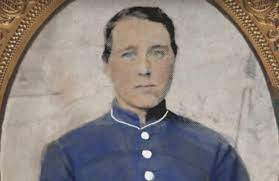
When President Abraham Lincoln put out the call for soldiers from the northern states to volunteer for the Union Army, an 18 year old enlisted in the 95th Illinois Regiment under the name of Albert Cashier. As a private in that regiment, Albert joined the Army of the Tennessee (Union armies were named after rivers) under the leadership of General Ulysses S. Grant. Albert saw service throughout the south during the war. Though small in stature, Albert’s fellow soldiers testified to the bravery and spirit they saw in the private. It wasn’t uncommon for teenagers to enlist; courageous boys as young as ten saw duty as drummers for some regiments.

Albert kept to himself, mostly, as many soldiers did. When people asked, Albert told them about immigrating from Ireland at an early age and becoming a farmhand in Illinois. With the others in the regiment, Albert performed the usual duties of standing guard and even going on scouting missions. During a reconnaissance patrol, Albert was captured by the Confederates and held as a prisoner of war. Somehow, though, Albert escaped and managed to rejoin the regiment. But then, a crippling case of dysentery put Albert in the hospital during the siege of Vicksburg, Mississippi in 1863. There, Albert received the first real rest in more than 16 months in the army.

More battles followed. Albert participated in more than 40 of them and never wavered, never ran, never panicked. Albert’s coolness under fire was how most of the others in the regiment recalled the youngster. It is estimated that Albert and the 95th Regiment marched over 9,000 miles during the course of the war, following the retreating Confederates from Nashville through Chattanooga and down into Georgia.

When the war ended, Albert, along with the rest of the regiment, was discharged and sent home with the gratitude of a nation for having defended the Union and the ideals upon which it was founded. Returning home, Albert lived a quiet life as a town handyman, caretaker of the local church grounds, and sometime store employee. In 1907, Albert applied for an received a well-deserved pension for the time in the service.

Then, in 1911, a car hit Albert and the resulting injuries required hospitalization. Some of Albert’s fellow old soldiers from the regiment visited their fellow small soldier in the hospital. Sadly, Albert would never fully recover from the accident. Death followed not too shortly afterward. However, it was in the hospital that the attendants and physicians who cared for Albert made a remarkable discovery. This person who had fought bravely for the Union, worked for years in the town, was known by many people for honesty and prudence, was not who he said he was.

In fact, it was discovered that the person who had lived for over 50 years as Albert Cashier was actually a she.