On a First Kiss

Eleanor Smith came of age during the Great Depression and World War 2 in the southern state of Georgia in the United States. Her family, she later said, was poor, “but we didn’t know it because everybody was poor like we were.” As the war was ending in 1945, the 18 year old dark haired girl had graduated high school and wanted to attend Georgia State College and study interior design. She had matriculated as the class salutatorian and was a bright student. That’s when she saw the photograph of Earl. And the rest, as they say, was history.

Some people fall in love with a photograph, and that’s what Eleanor did. Of course, it helped that boy in the photo looked so dashing in his US Navy uniform. She couldn’t stop thinking about him. His name was Earl, and he was from the same town in Georgia that Eleanor was from. While he was somewhat older and the two young people didn’t know each other, their families were acquainted. In later years, the couple wondered how it was that their paths never directly crossed in a town so small.

As you might be aware, at that time and in that culture, girls didn’t pursue boys. However, Eleanor wasn’t the typical girl. She knew that she wanted to get to know Earl better. He didn’t seem like the silly boys who were in her grade at high school, the boys who went to the town soda fountain and combed their slick hair back and wore rolled up jeans and sped around the small town in their hot rod jalopies. She could tell, she later said, that the dashing sailor in the photo had a dignity, a class, a certain carriage of character about him that boys her own age lacked. So, through friends, Eleanor arranged to meet Earl when he was home on a leave.

Earl grinned a toothsome smile when he first met Eleanor. He, too, was looking for someone who was more serious about life than most girls of that time. And Eleanor, who seemed cheerful and even playful to a degree, had a seriousness about her that said that she, too, was someone of character and backbone. The couple’s first date was a double date with Earl’s sister and her boyfriend. Eleanor and Earl were in the back seat of the boyfriend’s car when it happened.

Earl leaned over and kissed her.

Well, that had never happened before. Oh, boys had tried to kiss Eleanor before, surely, but she had politely refused. Yet, here was this sailor kissing her on their first date. And in the back seat of a car! But Eleanor had never felt the rush of emotions she felt at that moment when Earl’s lips touched hers. She knew, she said later. She knew he was the one at that moment and in that one audacious kiss.

Well, the couple quickly agreed to get married in early 1946, although they kept the engagement a secret. Eleanor didn’t want to upset her mother with the news that her college education would be put on hold while she and Earl began their lives together. They married in their hometown, in the town’s Methodist Church that was her family’s home congregation. And when Eleanor’s mother heard the news that the couple were to wed, she wept with pride and joy rather than disappointment.

To say that the marriage was a good one would be a gross understatement. Four children were born, three boys and a girl. It lasted over 75 years. It ended only when Eleanor died this week at age 96 in her hometown, the place where she and Earl retired to after lives filled with service to others. And you know her and her husband better by the names their families called them. For most of her life, Eleanor went by her middle name. Earl’s family always called him by his first name. And no one can say that first sudden kiss didn’t turn out to be anything but the beginning of a wonderful partnership between the pair.

I wish all marriages were as happy and successful as that of Jimmy and Rosalynn Carter.
On the Gift of a Car

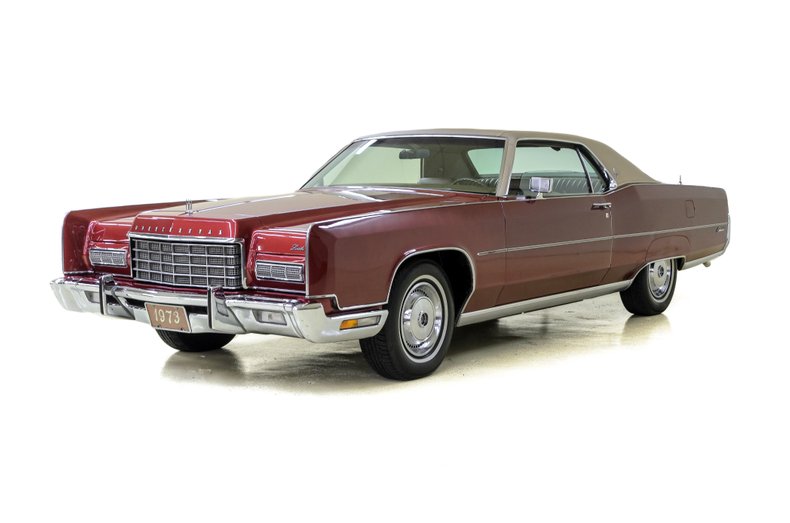
The brand new Lincoln Continental sat in the circular driveway of the large house. The year was 1973 and the man who lived in the house was entertaining an important and well to do visitor. The visitor remarked to his host how beautiful the car parked in the drive was. He had always admired the Lincoln’s styling.

What the visitor didn’t know was that the new Lincoln was a gift to him from the man who lived there. When the visitor found out that the Lincoln was for him, he clapped his hands in glee like a school kid at Christmas.

Now, as I said, the visitor was a man of means also. In fact, he had a large collection of automobiles of his own, a collection made up of models both foreign and domestic. But he didn’t have a Lincoln. “This will complete my collection,” he said, still giddy over the gift. A

And, being a man of means, he had someone drive him everywhere as a lot of wealthy people do. That did not mean that he did not like to drive himself. In fact, he was quite fond of driving, and he would often drive one of the cars in his collection from his large house to his office every day. The problem was that he usually ignored the laws regarding traffic, safety, and speed limits. In other words, This was a wealthy man who was an incredibly unsafe driver.

When he said that, he wished to take the Lincoln for a spin around the neighborhood, the host was aghast. Such a thing would be impossible, his host said. To allow him to take the large and powerful automobile out for a drive would be, to say the least, unwise. Yet, he persisted. He would be safe, he promised. He would obey the traffic laws, he promised. He wouldn’t go far, he promised.

Yet, the man who lived in the large house was not to be daunted. As politely, but as firmly as possible, he told the visitor that the only condition he had on giving the Lincoln to the visitor was that the man would not be allowed to drive it. Ever. The visitor bit his lip in thought and disappointment. You could tell he was seriously considering the proposal. Finally, he nodded his head in agreement. “Fine,“ he assented, “I will never drive the car. I give you my word. Thank you for the kind gift, my friend.“ With this assurance, the host smilingly handed the keys to the new Lincoln Continental to the visitor. The two men shook hands.

And, as far as we know, Soviet premier, Leonid Brezhnev, kept his word, and never personally drove the Lincoln Continental given to him by Richard Nixon.

On an Old Hippie

The fact that the word “hippie” is in the title of this story instantly marks me as being old. No one uses that word anymore, and anyone who knows it was from the period 50+ years ago when it was part of the cultural and social landscape. The word came from the idea of someone who was “hip” or “hep,” as in someone who was “in the know” and “wise” as opposed to someone who had no idea about what was cool or popular or “in.” In the 1960s and ’70s, a hippie was someone who was on the side of the anti-war, pro-drug legalization, anti-establishment youth movement. The opposite of a hippie would be a “square,” someone who supported the traditional values and power structure in the western world. You could tell which side someone was on based on how they dressed, what hairstyle they wore, and the language they used as well as how they voted and what issues they supported. And, while the overwhelming majority of hippies were young, this story is about one such hippie who was older.

In many ways, this old hippie was against type for many reasons besides his age. He was from the American south, from a traditional background, and had, as a younger man, indeed supported the establishment. But, as he aged, his politics changed. There’s an old saying that someone is more liberal in politics as a youth and more conservative as they age. So, this older man went against this trope. He had seen the effects of the American policy of the Vietnam War, for example, and he became horrified by how morally wrong it was. He became an anti-war supporter. Also, he began to wear his hair longer, much longer than what traditional society would say was acceptable for a man in his 60s. Remember, during that time, men who supported the establishment would not consider having long hair. Yet, this man wore his almost shoulder length. He would decry traditionalist men as “short hairs” because they cut their hair so short like the establishment was used to.

And the music he liked went against type as well. His favorite group was Simon and Garfunkel, and the song by this duo that was his favorite was Bridge over Troubled Water. He would listen to that record over and over for hours at a time. At that time Simon and Garfunkel’s reputation was more anti-establishment and anti-war, and this man embraced those sentiments as well. Finally, his dress also mirrored that of the younger, hippie group. He wore pants that slightly flared at the bottoms, a style known at the time as “bell bottoms.” Instead of wearing a tie and dress shirt as he did when he was in his working years, he wore a loose-fitting shirt and kept it unbuttoned low on his chest. At times, he would run around his property dressed only in shorts with no shoes or shirt, his long hair flowing behind him.

That property was a farm he’d purchased a few years before. In his retirement, he worked to make it more self-sufficient, less dependent on things like chemicals and pesticides. That emphasis on environmentalism was also a mark of the hippie, and this old man saw the wisdom of embracing those concepts in an effort to get closer to the land. Ideas like this meant more to him as he grew older, because his health wasn’t good. He had a bad heart, you see, and he knew that he didn’t have much time to live. The men in his family died young, he said, and he had wasted so much time going for money and position and power instead of working to seek happiness in himself rather in the things he owned or the position he held. That, too, was a mark of a hippie–the rejection of what the establishment considered to be the important things in life. Friends from his old life would stop by to say hello, and they often left complaining about that old hippie who wasn’t the man they knew years before. “I wanted to talk business,” one old acquaintance said after leaving the farm, “and all he was interested in was how many eggs his hens were laying.”

He died of a massive heart attack at age 64, at his farm. He said that he wanted to live to see the Vietnam War end. And that’s what happened. He received a call a few days before his death telling him that the war was over. On the other end of the call, the voice of Richard Nixon said, “We’ve negotiated a peace with North Vietnam. The war’s over. I wanted you to know.”

Lyndon Johnson, the old hippie, could rest, now.

On a Free Breakfast

We in the west generally believe that the “free school lunch” is something that children in need should have access to in order to achieve academic excellence. That concept is fairly new in education, and there’s even some pushback in some quarters today with an increasing number of people questioning whether it is the responsibility of publicly supported schools to provide that nutrition. However, the argument has been made and the prevailing attitude is that free school lunches should be provided.

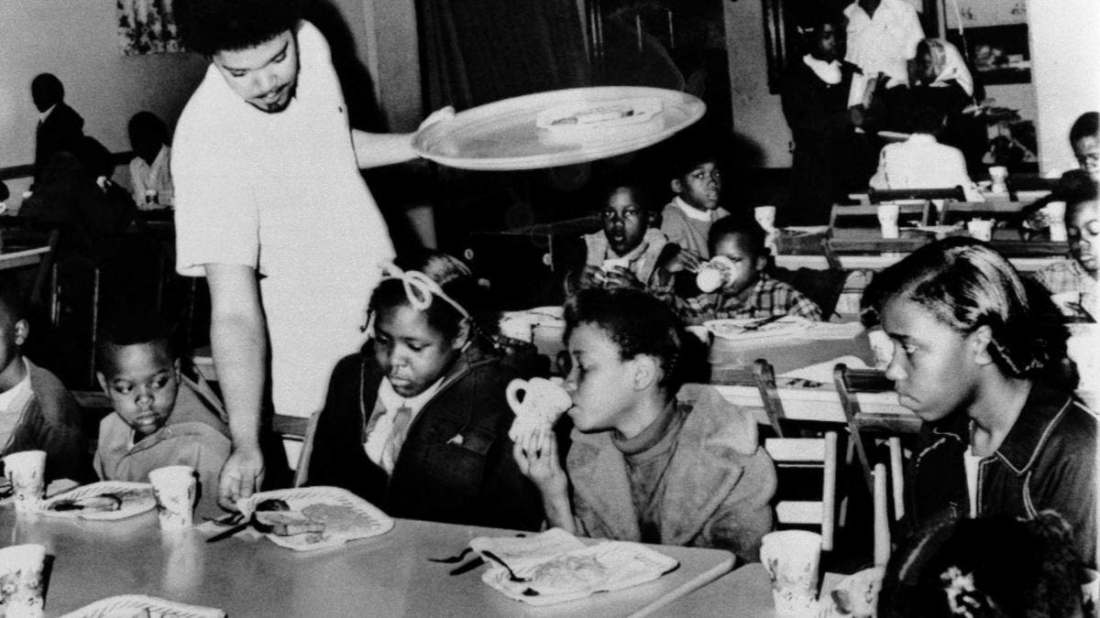
Interestingly, that type of free food program for lower income children started not because of a government program but began through a non-profit, private organization that worked in inner-city communities to better the lives of the citizens there. The first free meals for poor kids weren’t lunches, either, actually, but they were breakfasts. This group, a group that also had political goals, began serving low income kids in poorer sections of Oakland, California, in the late 1960s. They knew that people would be more receptive to their ideas if they were a positive contributor to the community to begin with. A local Episcopal Church building was used by this organization to give the free breakfasts to the kids. The volunteer group had gone to local grocery stores to solicit donations and had even consulted with nutritionists to see what types of food would pack the most punch for the kids throughout the day.

The results were astonishing.

Teachers and the school administrators reported almost miraculous improvement among their students who were receiving the free breakfasts before school. Test scores, good behavior, attendance, and over-all well-being showed significant increases. The kids were attentive as well; teachers said that the fed children stayed alert longer, they weren’t getting sick as much, and their prospects for school achievement increased. The volunteers were thrilled with their report card; they quickly expanded the program to other communities across the US. Schools in low-income neighborhoods of Detroit, Chicago, New York, and other large cities began reporting similar results to those in Oakland. The program was a success.

And that’s right about the time that the United States government began to take notice. Mainly, one agency of the federal government took umbrage with the efforts of the group. You see, the head of this governmental agency was such a racist that anything that helped minority people was seen as a threat to the nation in his eyes. He declared war on this program and its volunteers. He began ordering his offices around the nation to begin a whisper campaign against the free breakfast program. Parents were sent notices (ostensibly from the schools themselves) hinting that the group was secretly poisoning the children with the free food. And he ordered them to begin photographing the children as they left the places where they ate in an effort to intimidate the kids and pressure them to not return. The free breakfast program was shut down through this systematic harassment by the government.

What type of governmental bureaucrat–no, what type of human–would stoop so low? The program was good; it was free; no tax money was being spent, and the positives overwhelmingly outweighed the negatives here. Who would do this type of thing?

Well, luckily, cooler (and less racist) heads prevailed. Seeing the benefits of the program, the US Office of Education (what the Department of Education was before that agency was set up in the late 1970s) began offering free lunches and free breakfasts to low-income families. The program started by the volunteers in Oakland in the ’60s was reborn, and millions of low-income children have been helped.

But that success never would have happened if J. Edgar Hoover hadn’t’ve hated the Black Panther Party so much.