On A Trip to Mexico

The bullet bedecked gentleman in the photo above is Pancho Villa. During the decade from 1910 to 1920, Mr. Villa participated in the Mexican Revolution. Needing supplies, money, and weapons to fight in this effort, the resourceful Mr. Villa and his band of merry men turned to a handy and plentiful source of these items: The United States.

However, their methods for procuring these items caused no little consternation among the Americans. You see, Mr. Villa and his comrades simply crossed the US/Mexico border and helped themselves to the supplies. By 1916, their repeated  little forays into US territory from the Mexican state of Chihuahua not only resulted in stolen, lost, and destroyed property, but these raids also caused the deaths of dozens of Americans.

If such incidents occurred today, one can imagine the uproar among the Americans in the press, the public, and among the politicians. One hundred years ago, the reaction was much the same. Calls for punitive military action against the Mexican revolutionaries rose from every corner of the land. President Woodrow Wilson, who had a hand in the early days of the revolution by lending support to the anti-government forces, now decried the activities of Villa and his cronies. He ordered General John Pershing to the border with a large contingent of US troops, including air support (one of the first times airplanes were used in American military history), and he gave Pershing a specific directive: Bring Villa to justice.

Pershing failed to do so. However, he and the American troops fought a few skirmishes with Villa’s crew, and their efforts caused Villa to eventually seek elsewhere for supplies for his part of the revolution. Personally, Pershing declared the expedition a success even if his Commander in Chief didn’t.

One of Pershing’s aides, a young second lieutenant, obtained particular notoriety for an incident involving one of the Villa’s right hand men. It seems that this brash second lieutenant deployed three open Dodge motorcars full of 15 American soldiers and scouts and rode these mechanized “horses“ into a ranch compound in Mexico, guns a-blazing. When the smoke literally cleared, three of Pancho Villa’s men were dead, and no American was as much as scratched.

The lieutenant ordered that the three bodies would be strapped to the bumper and hood of his car and taken back to Pershing‘s headquarters for identification. He then reportedly carved three notches in his expensive pistol handles to mark the three men his part of the operation killed. Pershing, suitably impressed, nicknamed the young man, “Bandito.”

A year later, United States would declare war on Germany and officially enter World War I on the side of the Allies. The Pershing Expedition had served as a small dress rehearsal for the war that America now found itself in. Wilson tapped Pershing to be the leader of the American expeditionary force in France despite the fact the General didn’t capture Villa. “Black Jack” Pershing won international fame and admiration for his part in the Great War.

Wilson, who had  campaigned for reelection  in 1916 on a slogan that reminded voters that he had kept America out of the European entanglement, labeled himself as the savior of western civilization against the evil of war in general and German aggression specifically. His  plan for the peace after the war, called the 14 Points, became the basis for the League of Nations, a weak and ineffective forerunner to the United Nations.  A stroke in 1919 limited Wilson’s effectiveness in rallying America to ratify the Versailles Treaty ending the war; America eventually signed a separate peace treaty with Germany much later and never entered the League.

And that impetuous Second Looey?

He liked the idea of having mechanized infantry strike rapidly at an enemy as he had shown in Mexico. He liked it so much that he entered the tank corps. While he made a decent impression during his service in World War I, we probably remember him best for his accomplishments in the war after the War to End All Wars.

Pershing knew him as Bandito.

You know him as George S. Patton.


On A Partnership

Partners in any business can be a tricky situation—law partners especially. Take the case of Will Herndon and his partner.

Will was a more than competent attorney. He understood that law is sometimes a business that requires a quick turnaround on the case so you can get to the next one. Better to be paid five times handling five quick cases than one time handling one long one. At least that was the way Will saw things.

That’s what frustrated him so about his older law partner. The older man seemed to have a deliberate nature when it came to both researching a case and arguing it. Even the simplest case, Will‘s partner would pursue it like a bulldog, researching arcane rulings that may or may not apply to the situation, and then taking his own sweet time in the court room to talk to witnesses. It was all sometimes maddening to Will.

In addition, this partner would often allow opposing counsel‘s points to go unchallenged. He told Will that it was better sometimes to concede six or seven small points as long as you won the last big one.

Perhaps the greatest strain on the relationship between the two partners was Will’s frustration with his partner’s and his partner‘s wife’s inability to discipline their children. The partner didn’t seem to mind that his sons had free run of the offices, often disrupting meetings with clients. It was like having a bunch of wild animals in a place that Will thought should observe at least a modicum of decorum and seriousness.

Yet, despite their differences, the law partnership survived for over 15 years. It dissolved only when the elder partner decided to pursue political office.

In all that time together as partners, Will Herndon was never invited to his partner’s house for dinner or for any social event. Apparently, the animosity between Will and his partner‘s wife proved too great an obstacle to overcome.

Will’s partner went on to great success in public life, and that success was fueled largely by the same dogged practices that made him such an able litigator. The man served well, and he even died in office.

Years later, Will decided he would write a book describing the man he had come to know over those years as his law partner.

The book’s title?

Herndon’s Lincoln.

On An Aviation Incident

Interior designer. Advertiser. Sporting goods salesman. Insurance salesman. Produce salesman. College chemistry teacher/coach.

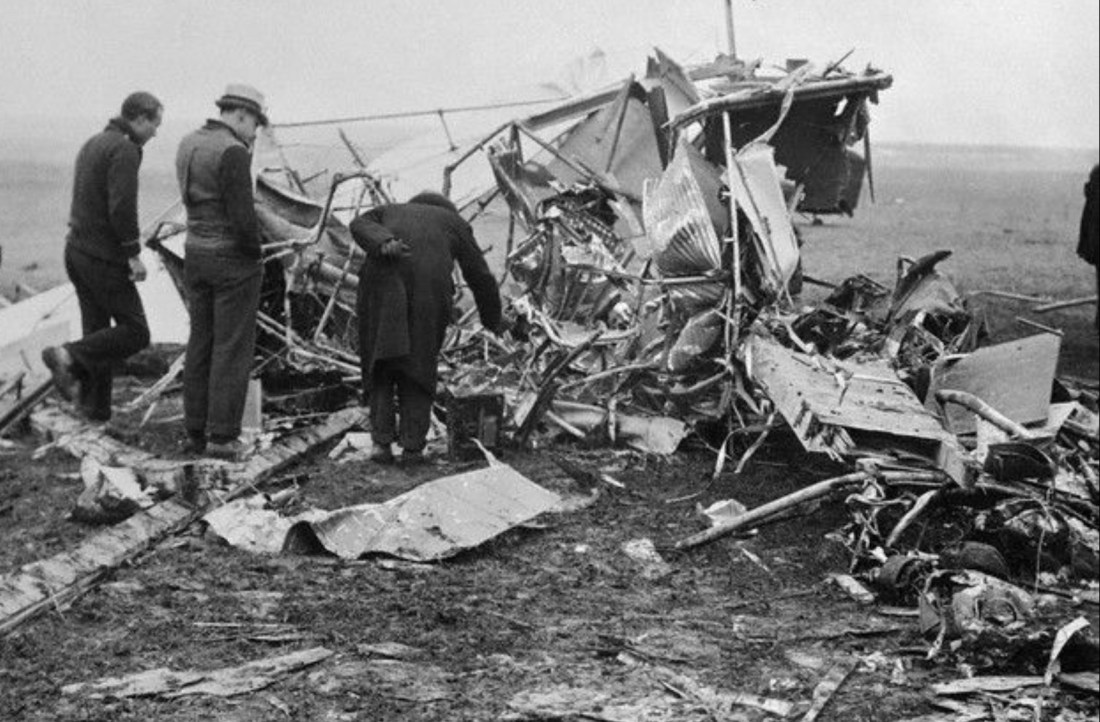
Those six passengers, plus a pilot and a co-pilot, died in a plane crash near the small town of Bazaar, Kansas, in March, 1931.

Eight other seats on the TWA flight that day sat empty. The passengers and cargo weren’t overweight or unusual. The weather may have played a factor, to be sure, but that’s not what ultimately caused the crash of TWA flight 3.

The final report on the crash determined that one of the wooden wings of the Fokker Tri-motor plane had seen moisture build up in it over time. This caused the glue holding the wing together to separate, causing catastrophic failure.

The investigations that followed the crash caused widespread changes in the aviation industry. Wooden aircraft became quickly obsolete, with metal aircraft replacing them. The first of the DC series of aircraft made its debut within 3 years due to this demand. This call for metal commercial aircraft forced companies like Fokker and Ford, stalwarts of the early successes of passenger air travel after World War 1, to leave the commercial aviation business within a few years.

The crash even changed aircraft crash investigations themselves, here-to-fore having often been closed because of a corporate culture of secrecy. Aviation crash incidents now began a new era of openness and thorough, impartial, rigorous professionalism. The federal government received the power to hold hearings and call witnesses and conduct all necessary inquiry.

Of course, other crashes involving wooden aircraft occurred during that period. In fact, 12 other crashes occurred in the US in that year alone. What caused such interest in this half empty flight that crashed in the middle of the US on that March day? What was it about this one that brought about such sweeping changes to the airline industry?

Look at that passenger list again. Carefully consider each occupation: Interior designer. Advertiser. Sporting goods salesman. Insurance salesman. Produce salesman. College chemistry teacher/ coach.

You probably get now. It’s that last passenger. We don’t think of him as a chemistry teacher, however. Even though he died at the young age of 43, this football coach, in the prime of his career, remains one of the best known people in the United States.

You see, TWA flight 3 that crashed that March day carried none other than Knute Rockne

On The Horrible Houseguest

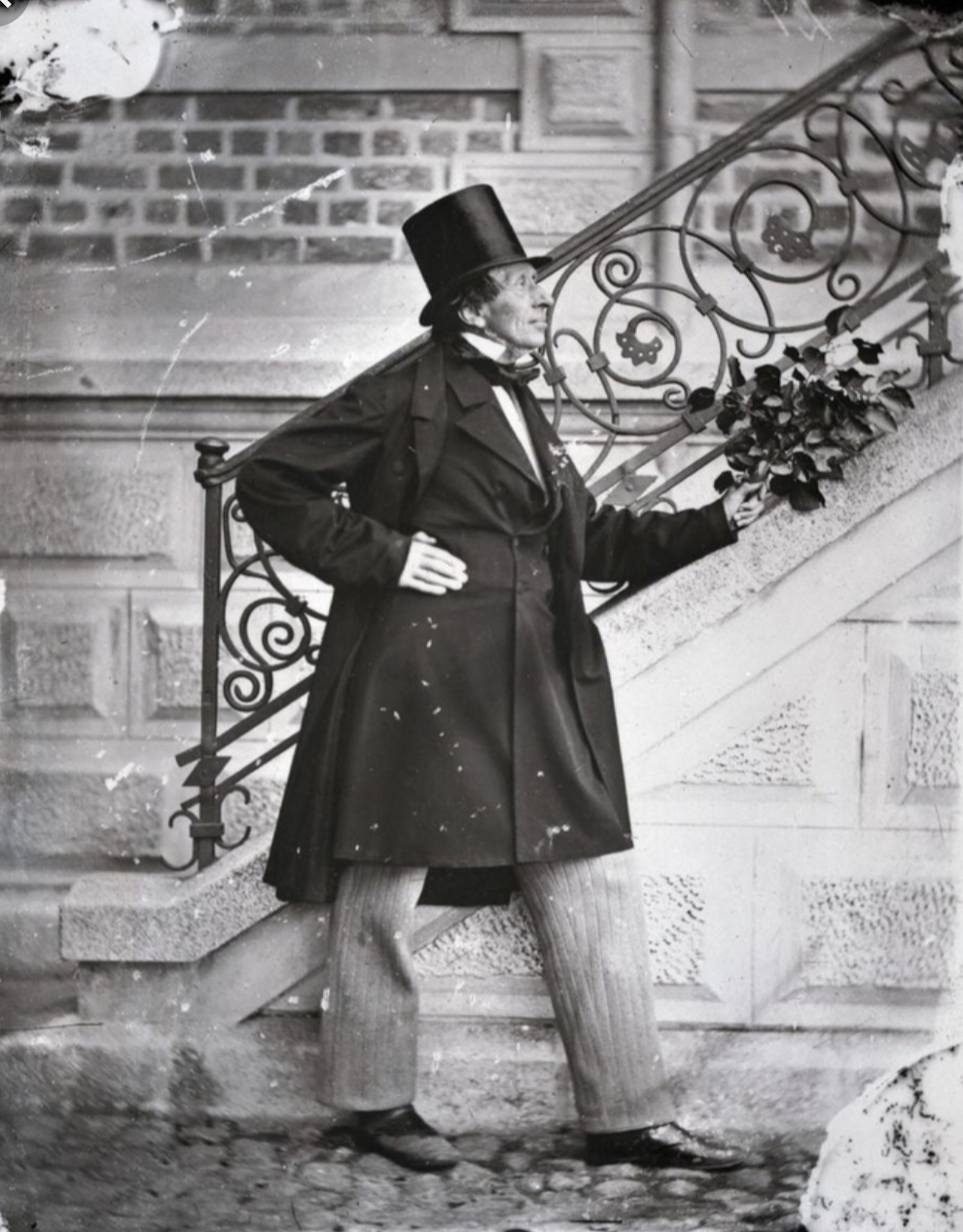
Surely, most of us know who Hans Christian Andersen is.

E9ECAA03-D0DC-4030-83C3-D64AC48ACCD7

The Danish author of beloved children tales such as The Little Mermaid and The Ugly Duckling, Anderson was a young writer breaking into success when he visited London in 1847.


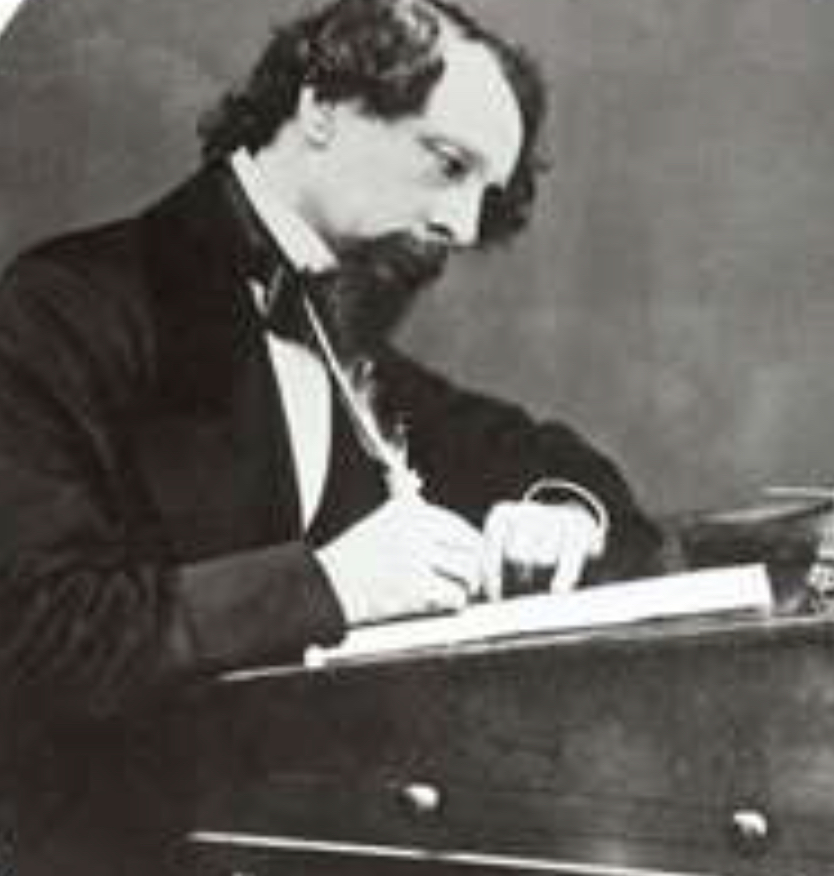
There, he met the famous British author, Charles Dickens. At the time the two men met, Dickens was already a celebrated author, known for his stories such as Oliver Twist, Nicholas Nickelby, and A Christmas Carol.

83DBB13A-EDED-4741-91DE-B0AEBD4D710D
Dickens thought the angular young Dane to be eccentric but interesting.
After their brief meeting, Anderson wrote in his diary, “I was so happy to see and speak to England’s now greatest living writer, whom I love the most.”
When Anderson returned to his native Denmark at the end of his trip, he wrote a letter to his new acquaintance.
“Dear Mr. Dickens,” the letter began, “the next time I am in London, I would wish to come spend some time with you if you would agree.“
Dickens wrote a short note back, acknowledging receipt of the letter and said that yes, sometime in the future, a visit from the young author would be welcome. It seems that Dickens answered more out of a formality and courtesy rather than truly extending an invitation.
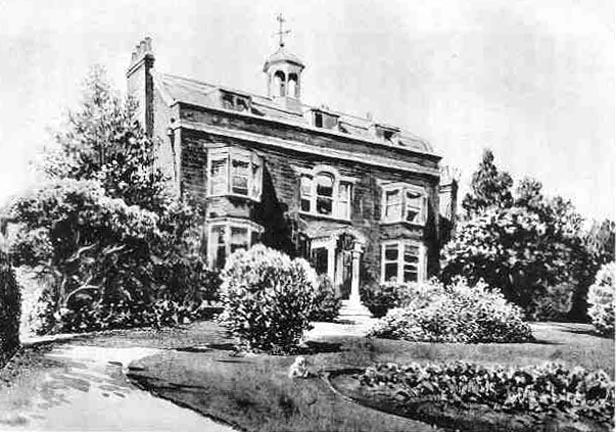
Much to Dickens’ surprise, Anderson showed up at his house… in 1857.
He brought with him enough luggage to stay for an extended visit.
Unfortunately, Anderson’s arrival could not have come at a worse time for Dickens. He was in the middle of working on a play in London, and his marriage was going through a difficult phase.
Nevertheless, Dickens and his family did the best they could to make the odd, thin Dane feel welcome in their home.
Immediately that were problems. It turned out that Anderson did not have a good grasp of English.
Dickens noted that his French was even worse. But the language difficulty was the least of the issues.
Anderson had a habit of sleeping until almost noon every day. When he finally woke up and came downstairs, he seemed flummoxed that breakfast, which had been cleared away hours before, was not made available to him.
He would take long walks in the woods and fields surrounding the Dickens house.
When he was with the family, he would get a pair of scissors and made elaborate and oddly strange cut outs from any paper he could find. These amused Dickens’s children at first, but soon they grew tired of the game.
The most bizarre part of Anderson’s stay was when he requested that Dickens’s oldest son, for whom Anderson had grown inordinately fond, be made to shave him every morning.
This was something that Dickens would absolutely not allow.
Anderson was visibly upset that he was now forced to go into town to be shaved by a barber.
Soon, Anderson would spend most of his time in town, shopping or walking the streets.
The entire household was soon in an uproar. Every one in the family and even the servants devised elaborate plans to avoid having to interact with Anderson.
How do you tell an unwelcome houseguest that he has overstayed his welcome?
Dickens found a way, and, after five long weeks, Anderson left the Dickens household.
When he had finally cleared out, Dickens pinned a note to the door of the bedroom that Henderson had used. The note said, “ Hans Christian Andersen slept in this room for five weeks, but, to the household, it seemed like an eternity.“
After he returned home, Anderson wrote Dickens again, this time apologizing for his behavior and asking the forgiveness of the older author.

BB4FB0C7-B772-48D0-B97D-143C11B23A2C
Even though he never completely understood why he’d been asked to leave, Anderson must’ve realized the tumult he brought to the household, and he tried to repair the damage done to the relationship.
Dickens didn’t reply.
The two legendary authors never saw or spoke to each other again.