On Two Nerds

The popularity of nerd-chic can be easily seen in the numbers of views drawn to TV’s Big Bang Theory. Nerds are, ironically, now cool. That wasn’t always the case. High school can be incredibly rough, but it can be especially tortuous for those kids that get labeled “un-cool.” Bullies—usually the cool kids—picked on those they saw as weak and nerdy. Still do, sadly, and some kids in that powerless position today, when they find themselves bullied, they strike back in anger and violence.

Take Jerry. Typical high school nerd back in the day. Not athletic. Wore glasses. Bookish. Nebbish. And Jewish. Kept to himself. It’s almost never cool (unless it’s the cause de jour) to be conversant in politics in high school, but Jerry had an understanding of American politics that most adults envied. That made him even more of an odd-ball among his peers. He felt all alone and helpless as he made his way to class through the halls of his high school in Cleveland, Ohio.

Then, one day, Jerry ran into a kid who’d moved to Cleveland from Canada: Joe. Joe was much like Jerry, even down to his Jewish ancestry. But something about these two shy kids coming together and becoming friends made each of them feel empowered. Joe later said it was like the right chemicals coming together to make something new, something better than they were individually. The two chums talked often about the people in their lives who inspired them, the men and women they admired, those people in society they looked up to and wished they could be like. They felt saddened that they lived in a world that seemed to be losing its freedom as men such as Mussolini and Hitler and Stalin bullied smaller, weaker nations much as the bullies in school tortured them.

For Jerry and Joe, they both really admired President Franklin D. Roosevelt. They liked how he managed to deal with his crippling polio and still become successful and powerful. They felt a kinship with FDR’s desire to speak for the underdog, to fight for what was right and good and true. Another hero of theirs was the swashbuckling film star, Douglas Fairbanks, Sr. They wanted to be the guy who swooped in and saved the day (and got the girl in the end) as did all the characters Fairbanks played in the films.

Over many days and nights, Jerry and Joe talked about what they could do to answer the bullies. So, the nerdy pair decided to answer their bullies with creativity. You see, Jerry Siegel was the writer of the pair, and Joe Shuster was the artist. They decided to create a hybrid of their two heroes, FDR and Douglas Fairbanks.

The character they created and wrote about really is a combination of those two men, and he is known today around the world as a seeker of truth and justice:

Superman.

On a Retiree

Florida beckons the retiree. Just ask anyone of them who flock to the sun-drenched place. Older people like warmth, they like not having to face yearly snows and freezes. And the state has done a great job of marketing itself to these superannuated folks.

One such Florida retiree came a few years ago after he quit his career. Like many others, retirement wasn’t so much a choice or option as it was forced on him. As a child, this man had yawned so much that his family called him Yawny. So, late in life, Yawny found himself, somewhat against his wishes, on the sunny coast of east Florida in St. Augustine.

That’s a great town to those who’ve never been. It’s an interesting blend of history and weather and culture that produces great food and draws many people there for a trip, seasonally, or, as in Yawny’s case, in retirement.

And the tourists! My God, the tourists! Yawny found that he couldn’t turn around without some tourist getting in his way. No body seemed to be a native, he thought. All of these people seemed to be from somewhere else.

The worst thing was the separation from his family. Change is hard to take, especially the older we get, and Yawny really never quite got used to being away from his kith and kin and the scenery that he’d lived in all his life.

At least the weather was warm. And he found a place on the water, so he breezes were nice. The government helped him with his groceries. He had meat every day, and that was something that he didn’t always have back where he was from. Yawny also found that others in his situation were there, people who were from his neck of the woods, people who, like him, sort of had Florida forced on them. That helped with his homesickness some. But he grew miserable, as did the others from back home.

You see, the place Yawny was from was also warm, but it was not coastal. It was Arizona. It was in Arizona that Yawny had made his way in life until the government—the United States government—stepped in and put a halt to his activities there. They stopped Yawny—and the other Apache natives–from fighting them, arrested him and others like him, and imprisoned them in the old Spanish fort in St. Augustine—the oldest European town in the United States.

They also forced him to endure viewing by all those tourists to Florida.

Yawny—his native name means that—is better known to you by a Spanish/Mexican appellation.

Geronimo.

On Two Criminals

Criminals can’t break the law and not expect to be punished for it. Ralph and his friend were indeed arrested for breaking the law. As with many prisoners, Ralph and his fellow arrestee felt they’d been arrested unjustly, but, no, the law was clear. The men clearly were guilty even without a trial. Shame, too. Both men had grown up in church and knew better than to break the law.

In fact, the authorities felt Ralph’s crime to be so heinous that both he and his buddy were put in separate jail cells, and the first twenty-four hours were spent in solitary confinement. Neither man was allowed any communication. They had no visitors, not even their lawyers. Those days were the longest, most frustrating and bewildering hours either man ever lived.

Ralph’s pal later said, “You will never know the meaning of utter darkness until you have lain in such a dungeon, knowing that sunlight is streaming overhead and seeing only darkness below.”

What terrible crime could these two men have committed that would warrant such conditions even before the trial? To the authorities, these two men’s actions attacked the very core of what it meant to be an American. It was believed that Ralph and his buddy stood for everything that America was against. So evil was the public perception of the two men and their crime that letters to the editor of the local paper often compared them (especially Ralph’s friend) to Lucifer. Many accused them of being in bed with the enemies of the United States. Even mainstream, respected clergymen, not only in the town where they were were arrested but also across the United States, publicity said that their unlawful act was shameful. They ought to have known better.

Finally, after a few days, bowing to pressure from bleeding heart liberal lawyers, the authorities allowed attorneys for the two men in the jail to see them. That’s when Ralph’s buddy wrote a letter in their defense and gave it to one of the attorneys. The attorney turned it over to the media, and the letter was soon published across the United States and beyond.

You see, the reason many people used the name Lucifer to describe the men who committed this crime was because Ralph’s buddy’s middle name was actually Luther. Ralph you know as Reverend Ralph Abernathy. And now you know that Ralph’s buddy was Dr. Martin Luther King, Jr, and his famous letter is Letter from Birmingham Jail.

On a Double Life

The entire town respected William—well, almost the entire town. Some people who knew him well knew that he lived a double life. By day, he was a member of the Town Council, a sort of judge for small claims made about his chosen profession, cabinetmaking. He was also one of the first members of the town’s Chamber of Commerce. However, by night, William spent the lavish sums his cabinetry made for him in drink, women, and gambling. That’s not an unusual story, perhaps. Other people have done the same: Respectable by day, reprehensible by night.

But William was different. Times were changing. Modern dress and even modern architecture were all the rage in William’s town and period, but William clung to the old styles and ideas.While his clothes were expensive, they kept the style of twenty years ago. He seemed, by his 40s, to be stuck in an earlier time. He remembered the period when a gentleman would have a mistress or two hidden here or there, when a man of means would lay a pound or two or three on a rooster fight, when a solid citizen would join a social club in order to drink among his fellows—even to excess. Even the music William liked and often hummed or whistled was from a generation earlier. But in more recent years, those distractions had become passé; the modern society man eschewed such activities as frivolous and unrespectable. A sort of “Puritan” ethic of solid citizenry had taken hold in his town and nation. So, William remained a throwback to a time when an earlier, more permissive and somewhat liberal mentality had reigned.

William had no wife, but he kept two women in town. Each woman had children by him, but the two women didn’t know each other despite the fact they lived fairly close to each other. He was at least (at most?) discreet about this. His gambling was a way to supplement his income because he was spending money hand over fist to keep up the two women and their families and also keep his own rooms, including servants, his cabinet shop supplied and manned, and also help support other family members. But, as it always does, the gambling began to go against William. That made him gamble even more to make up his losses. That strategy never ends well

Where else could William get money?

Sitting in his cabinetry shop one day, working on a lock set that a patron had ordered, it hit William right between the eyes: Working on doors and locks in his job meant that he had keys to some of the town’s most expensive shops.

And what better cover for his plan than to be a respected member of the Town Council? Because of his experiences in his town’s “dens of iniquity,” William had connections to his town’s more villainous element, and it was here that he found the men who would come to form his “crew” of burglars. Soon, he and his gang began using the keys William had to break into shops along the town’s main street at nighttime. The local newspaper began reporting a string of break-ins. The town soon became gripped in a panic over who might be broken into next. Of course, that meant that “daytime” William received more orders for more and better and newer locks for the doors to the town’s businesses. These poor saps! The business owners didn’t realize that they were merely giving the man who was robbing them even more access to their goods.

One evening, even the City Council offices were robbed.

And then, finally, the national tax office got hit. Luckily, only a few coins and bills were taken. The burglars missed a drawer that held all the cash. But the authorities managed to catch one of the robbers, and, in the town jail, the man began to talk. His tale sounded too ridiculous, so outlandish that it could not possibly be true. The ringleader of the group, he explained, was one of them, one of the town’s elites.

William had visited the man in jail the next day after the robbery. All the authorities knew him, of course, so he was granted access to the prisoner. “What a kind man,” they thought. “An important man like that showing Christian charity by visiting those in jail!”

William knew the jig was up. He left town and then the country. Eventually, the other accomplice was caught, and, when their stories matched, the authorities were left with no choice to believe the truth: William had been leading a double life. An arrest warrant was issued—a national warrant—because of the robbery of the tax office. Eventually, a bounty hunter tracked William down in another country and brought him back for trial.

William was tried by a jury of his peers—and that may have been his ultimate misfortune. The other prosperous, successful businessmen in town, many of them in the Chamber of Commerce with William and even on the Town Council, decided to make a public example of William. He was condemned to death by hanging for the robbery. His two accomplices were given prison sentences, but William was to become an object lesson.

As he was led away to the gallows, William, dressed in a fine silk suit in the old style, hummed his favorite old tune. In an extreme irony, the town gallows upon which he was hanged had been designed and built by his own shop.

You may have heard of William—at least about his character. You see, his name was William Brodie—Deacon Brodie. His town was Edinburgh, Scotland, in the late 1700s. And, some decades later, a writer from there, one Robert Louis Stevenson, would write a book, based on Deacon Brodie, about a man who lived a double life: Respectable by day, reprehensible by night.

You know it as The Strange Case of Dr. Jekyll and Mr. Hyde.


On a Civil War Nurse

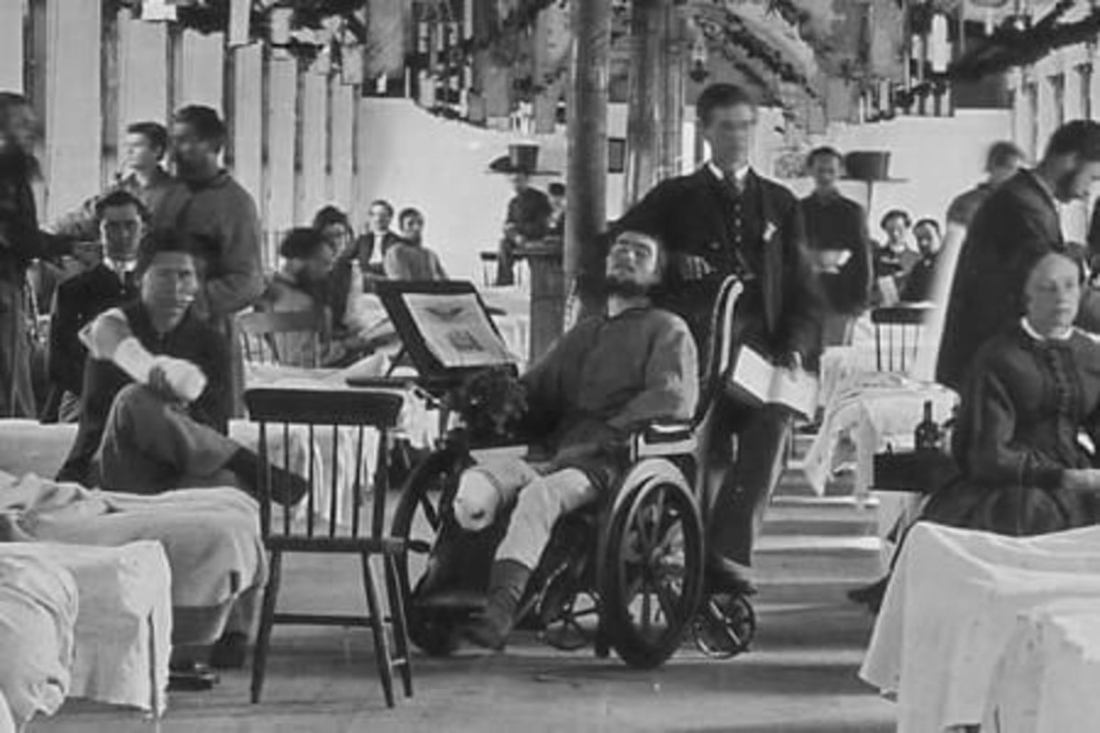
Hospitals in the American Civil War were most often the place wounded men went to die. The conditions were horrible. People such as Clara Barton and others worked to improve the sanitation in the hundreds of facilities in both north and south, but their efforts were largely superficial and ahead of their time.

In the days of no antibiotics and often even distrust of antiseptics, even by so-called health care professionals, the Civil War hospitals became cesspools of disease and death. Men would lie in their own filth and, in the warm months, their own filthy sweat for days at a time, their bandages sometimes rarely changed. Modern nurses would be appalled at the situations if they would have seen them. One medical historian said, “The septic sins of the time [were] responsible for a harvest of death and suffering.”
Volunteer nurses–both male and female–would do what they could to attend to the wounded. If a family member could find where their wounded brother or father or husband was being “cared for”, the family member would go and assume the nursing duties him or herself. One such situation occurred in a family where a young lieutenant named George had received a wound in the Battle of Fredricksburg in late 1862, and his brother came from New York to Washington, D.C., to care for him.
The older brother cleaned his wound, changed the dressing regularly, fed him regularly, too, and George beat the odds and recovered. This man, in his mid-40s, his family obligation finished, looked around him and decided that too many young men needed nursing. Almost 14,000 young men lay in the hospitals surrounding the nation’s capital. Besides, George said, he seemed to have a knack for the profession, so the man decided to rent a room in Washington and work in the many city hospitals.
Much of the work this man did consisted of cheering up the injured young soldiers. The Civil War had invented newer and better ways of destroying the human body, and amputations, disfigurements, and cripplings became almost routine. The men needed a dose of cheer, and this New Yorker brought that to them every day.
His rented room was slightly north of the White House, and his daily walk to the hospitals took him by the place. He came to learn the routine of the resident there, one Abraham Lincoln, and to know when Mr. Lincoln would be coming and going and where. You see, Lincoln, too, visited the hospitals often, also trying to bring cheer to the men who were fighting for liberty and union. Once or twice, even, the New York man and Mr. Lincoln exchanged polite nods as their paths intersected near the executive mansion.
The New York man knew that the injured boys’ thoughts were often of home, so he would bring paper and pencil and, since many of them could not write or their injuries kept them from doing so, he would take their dictation and send the letter home to their anxious families. Because of George’s injury, he knew the fear and dread that news of having a loved one injured in battle brought to a family, and he wanted to help alleviate that fear if he could.
Finally, the war–and the suffering injured soldiers–ended in April,1865. The men in the hospital wards who managed to live through their wounds and surgeries and diseases were sent home to Ohio, Wisconsin, Indiana, New York, and all the other states in the re-United States. The brother-cum-nurse from New York decided to stay in Washington after the war and work in the federal government.
When President Lincoln was assassinated, this man saw Lincoln as the last sacrifice of that terrible war. He felt that since they had worked, each in his own way, for freedom and union, in the nation’s capital for those years, that he and the President were somehow cosmically linked, spiritual American brothers–as much as he was brother to George–George, who survived the war and went on to do heroic things in battle.
Lincoln’s death moved the man so much that he used his pencil one more time to write a poem about it:
O Captain! My Captain! by Walt Whitman.

On a Military Ruse

The Beach Jumpers were a talented group of allied soldiers during World War 2 that excelled at diversionary tactics.  Their job was to harass the enemy and cause them to become confused, often tricking the enemy into moving and committing troops that opened up zones of vulnerability in other places.  Take, for instance, the attack the Beach Jumpers made on the Mediterranean island of Ventotene.

The idea was that the group wanted the German and Italian military garrison on Ventotene to think that they were a much larger attacking force that they were and thus help the allies as they were taking the Italian island of Salerno as part of Operation Avalanche.  As they often did, the Beach Jumpers came ashore  with spotlights, fireworks, and as much noise as they could possibly make in an effort to convince the defenders of the island that they were a much larger force than they actually were. The ruse worked. The Italians, of course, gave up almost instantly, but the German detachment needed some coaxing from one of the large guns on one of the ships that was part of the group. Finally, the Germans also capitulated.

As the victorious deception experts were wrapping up their operations on the beach, a shell landed near a group of some of them, lobbed in their midst by a die-hard German mortar crew that had held out after their comrades had surrendered.   No one was directly injured—except for a war correspondent who had been assigned to cover the exploits of the Beach Jumpers.  The reporter had become concussed by the explosion; he appeared dazed, and he staggered about.

“Are. You. OK?“ the commander of the Beach Jumpers asked the reporter excitedly. “I think so,“ the reporter answered. The commander made sure that the man had proper medical care, and the commander and his outfit then left Ventotene and prepared for their next grand adventure.

Why, you might be asking yourself, would a group that practiced the art of deception want to have their exploits documented by a war correspondent? Wouldn’t that give the enemy secret information?  The answer to that question lies with the identity of the commander of the group. The commander’s father had been a very famous man. He had been a pirate, a thief, a king, a hero, and a villain all within the previous 20 years. And the commander himself had followed in his father’s famous footsteps. The commander, you see, was Douglas Fairbanks, Junior, the son of the famous movie star and, by the 1940s, a famous movie star in his own right.

The public thrilled to hear of the exploits of the Hollywood elite during the war, so war correspondents almost always followed famous servicemen into battle. It was great for morale, and it helped sell War Bonds. That’s why Fairbanks and his diversion experts had the tagalong correspondent who had the near miss from the German shell.

Oh, and the correspondent?  He was actually a friend of Fairbanks’s from back in Hollywood, a successful writer for the movies.  He wasn’t too bad at writing novels, either.

His name was John Steinbeck.

On an American Tour

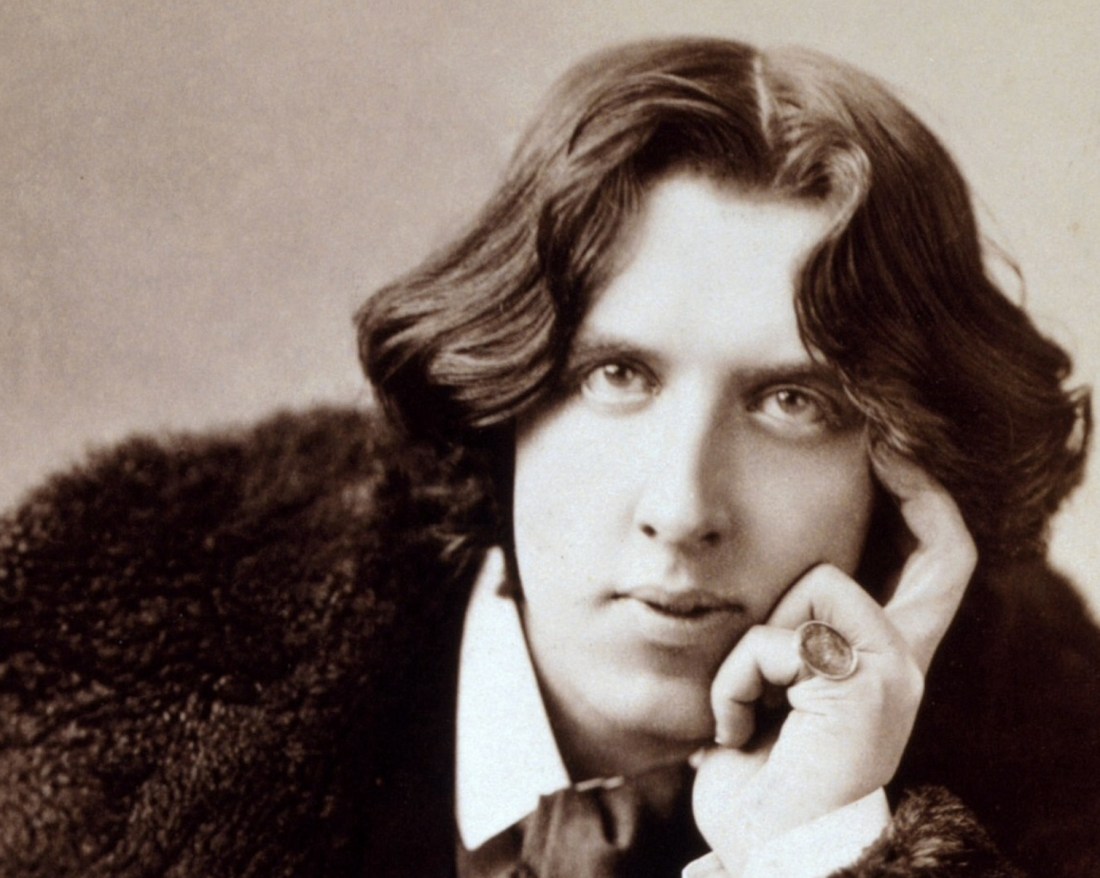
Today, people are often famous simply for being famous. One man pretty much became the model for such a popular figure: Oscar Wilde. Wilde, noted and celebrated Irish author and wit, visited the United States in 1882. He wanted to see the States, speak to Irishmen here, and visit dignitaries—all in an effort to promote Oscar Wilde. There is a story, and it is uncertain whether or not it is true, that when Wilde got off the boat in New York City, the customs officer asked him if he had anything to declare. Wilde supposedly answered, “No, only my genius” or something to that effect.

The flamboyant Wilde was also interested in making money by going on a speaking tour of several cities. and this effort got mixed reviews. In all, the 27-year-old Irishman traveled over 15,000 miles and lectured in over 140 US cities. No matter how he was received, Oscar Wilde drew crowds of both admirers and skeptics.

The United States in 1882 was less than 20 years removed from the American Civil War, and the wounds from that conflict remained deep and fresh across a wide spectrum of the American public.  Wilde became particularly interested in the political arguments made by the southern states regarding secession and self-rule—arguments that he felt his homeland of Ireland could make in its perpetual feud with Britain regarding Irish independence. Thus, Wilde also made it a point to speak to veterans of that war, on both sides, to get the opinions of each side of this important topic.

Interestingly, Wilde had a cousin who fought for the south in the war. His uncle, the brother of his mother,  was one of the signatories to the document that led to the creation of the Confederate States of America.  So, while Wilde’s relatives may have been pro-southern, he himself was far more interested in the legal arguments for secession.

In the course of his lengthy trip, Oscar Wilde met with many celebrities who voiced their opinions about “the late unpleasantness.“ Julia Ward Howe (author of the Battle Hymn of the Republic), Longfellowand Walt Whitman (who kissed Wilde on the lips, apparently) found him charming and sincere. Henry James and Oliver Wendell Holmes weren’t impressed by him as much.  Yet, Wilde asked them all what they felt about self rule and secession, and each, to a person, told him.

As he made his way across the southern coast of the United States, enroute to a lecture appointment in Alabama, Wilde found that his train took an overnight stop near Biloxi, Mississippi. Someone in his entourage mentioned that an elderly retired official from the confederacy resided nearby. Wilde thought this would be a good chance to get another southern perspective on secession even if he personally fervently abhorred slavery.

The old man’s house was a short wagon ride away. Wilde was met at the door of the house by the old man’s wife; she ushered him in to where the old man sat, resting.  Wilde was invited to spend the night, and he graciously accepd the invitation. During the simple supper, the old man said he felt unwell and retired to his bed. This disappointed Wilde somewhat.  However, three young women who had dined with them stayed up with Wilde, and the four had a lively evening together. They laughed and talked well past midnight. Wilde completely charmed them, and he made quite the positive impression on them all.

The next morning, before returning to the train station to continue his journey, Oscar Wilde took a photo of himself from his bag and wrote a personal “Thank you” to the old southerner. He left it on the old man’s chair.

After their guests had departed, the old man told his wife, “I did not like that man.“ He then picked up the autographed picture Wilde had left behind and read:

“To Jefferson Davis in all loyal admiration from Oscar Wilde.”

On an Australian Veteran


Cedric Popkin enlisted in the Australian Imperial Force (AIF) in March, 1916. Like many young men and women in the British Empire, he felt a call to defend her against what most considered to be German aggression. By April, 1918, Cedric had achieved the rank of sergeant in a gunnery regiment and found himself stationed in the Somme area of France. That area saw intense fighting over the course of several years. Even today, French farmers still unearth live shells, including poison gas shells, from the French soil where they were left over a century ago. 
 
Sadly, in June, 1918, Cedric received a shell fragment in his right leg and had to have it amputated. When he finally reached his Australian homeland in early 1919, Cedric decided to pick up the career he had before the war–that of a carpenter. He also came home to his wife, Ellie, and his two boys, Roland and Michael. When asked about his time in the Great War, Cedric would usually talk about it, but he rarely brought up the subject himself. 
 
Most real heroes are like that, aren’t they? Most of them don’t brag about their exploits no matter how big or small. Men and women who were actually in combat usually keep their thoughts to themselves. Cedric was like that. And he surely had plenty he could say about his time in France. 
 
In particular, Cedric could have bragged about one day in April, 1918, when he was manning the company’s Vickers machine gun in the front lines. The whole area buzzed with activity–snipers, shelling, and, as always, the annoying buzz of aircraft, both allied and German, as they danced around each other in the sky above.
 
Occasionally, the pilots of those planes would swoop low over the trench lines and strafe into the soldiers who never expected an attack from above. The German flyers were especially good at this, and knowing that, even in the protection of the trench, that death could come at you sideways made even strong, brave men be on edge.
 
Cedric and his fellows saw a low flying one-on-one dogfight that came back and forth in the land immediately in front of them. The German pilot seemed to have the advantage, and the poor allied pilot swooped back and forth in a desperate attempt to lose the enemy on his tail. Cedric and his company started shooting at the German plane, trying to help their allied comrade. The Vickers gun poured its lead into the enemy. I’ll let Cedric tell you what happened:
 
“(I) waited for our own plane to pass me, as the planes were close together, and there was a risk of hitting both. As soon as this risk was over, I opened fire a second time and observed at once that my fire took effect. The machine swerved attempted to bank and make for the ground and immediately crashed. The distance from the spot where the Plane crashed and my gun was about 600 yards. I handed my gun over to the No. 1 gunner and proceeded to where the plane fell.”
 
What Cedric found when he reached the German plane was a man who was mortally wounded. He and his buddies watched the man die. His last words, according to others present, was “Kaput.” The German pilot was found to have a wound that entered his right side just under his armpit, and the bullet had exited his chest. 
 
The Australians treated the dead pilot, as they did all their enemies, with great respect and buried him the next day. Even though others claimed credit for the kill, the bullet was definitely the type used by Cedric’s Vickers gun. Yet, even as an old man, Cedric never bragged about the incident.
 
You’d think he might. After all, it’s not every day you might have been the man who shot down Manfred von Richthofen, the Red Baron.

On a Chopper Pilot

KNBC TV Channel 4 in Los Angeles dispatched George, one of their cameramen, and Gary, a chopper pilot, to gather some footage of a brushfire near Santa Barbara to use on the evening news that day. The year was 1977, and the use of helicopters in TV news was all the rage.

The pair got the needed footage of the fire and headed back to the station. On the way, Gary checked his instruments and noticed that the fuel gauge didn’t seem accurate. Doing the quick math in his mind, he knew they should’ve used more fuel than what the gauge indicated. It was later determined that a mechanic had worked on the gauge and rendered it faulty. The chopper started heading to earth. It had run out of gas.

Even airplanes aren’t built to glide when they run out of power, but helicopters drop like a rock. Those who know about these things say that steering is almost impossible, but an experienced helicopter pilot can maneuver to some degree.

Gary spotted some grass that he aimed the doomed chopper for, thinking that it might cushion the blow of the crash, but then he saw some kids were playing there. He steered the aircraft away from the children and the softer ground and crash landed.

Gary and George both died in the wreck.

Now, this wasn’t the first time Gary had been in an aircraft that crash landed. Of course, he survived the first incident. It occurred in 1960. That’s the one you probably know about. You see, Gary had been in the military and then the CIA. He had been in a aircraft that was actually shot down. Gary was captured and kept as a prisoner for over a year. Ironically, the United States was not at war with the nation whose military shot down his aircraft.

The nation who shot Gary’s aircraft down was the USSR.

You know Gary as Francis Gary Powers.

You know his aircraft as the U2.

On a Mental Patient

Dr. Paul had never found such a difficult case in all his years as a mental health professional. The patient was a single man in his late 30s. He was temperamental. He suffered from manic episodes. He had been violent with friends. He had even cut himself. Add to this terrible list of issues the fact that the patient abused alcohol to an extreme degree.

Yet, Dr. Paul felt that the man was not beyond his ability to help. He felt that he could aid the man in making a better life for himself. So, Dr. Paul agreed with the man’s family to take on the case, but he warned them that the patient would have to cooperate in order for any treatment to be successful.

Well, that was part of the conundrum, wasn’t it? If the family could get the patient to cooperate, they wouldn’t necessarily need the expertise of such a mental health professional as Dr. Paul, would they? But, based on Dr. Paul’s success with similar patients, the family also agreed with the course of treatment outlined by the good doctor and entrusted the man to Dr. Paul’s care.

The outlook wasn’t great. The patient had been in and out of various institutions for some months. Numerous other doctors had tried in vain to help him, so almost no one gave Dr. Paul any chance at improving the man’s lot. The patient himself certainly was not impressed by this latest physician. In a letter to his brother he wrote, “I think that we must not count on Dr. Paul at all. First of all, he is sicker than I am, I think, or shall we say just as much, so that’s that. Now when one blind man leads another blind man, don’t they both fall into the ditch?” Such an opinion of his own doctor by the patient did not inspire confidence that the relationship would produce the desired results.

Indeed. The man reported that he continue to suffer from, “sadness and extreme loneliness.” However, somehow, through his depression, the patient began to bond with his new doctor.  Soon, he wrote to his sister, “I have found a true friend in Dr. Paul, something like another brother, so much do we resemble each other physically and also mentally.” The two months the two men spent in each other’s company spurred the patient to be more creative than he’d been in years.

Sadly, despite what appeared to have been a breakthrough in his treatment, the man shot himself in the chest and died from his wounds a little more than a day later. His last words were, “the sadness will last forever.“ Dr. Paul was crushed. He was among only about 20 mourners who attended the funeral. All the good doctor had to remember this sad, tormented patient by was a painting the man made of the doctor.

You may have seen it: Portrait of Dr. Gachet by Vincent Van Gogh.