On a Dog’s Love

It’s not terrible being loved by my master. While that doesn’t sound positive, I purposely put it that way because he’s been under a tremendous amount of stress recently. It is as if the weight of the world is on his shoulders.

A lot of people are coming and going all the time. He alternates between bouts of severe depression and yelling at them.

But, he never yells at me.

Ever.

In fact, when he has time, he loves on me and give me treats and even lets me sleep in his bed when his girlfriend is not around. She doesn’t like me very much, even though she has two dogs of her own. I can’t tell if she’s jealous or not, but, the fact remains, that she has no kind words to say about me or to me.

But that doesn’t stop the love that my master and I share. Even though I have only been with him for four years, our bond is a special one. I can even tell that it is his footsteps in the hallway when he’s coming to see me.

In private, he will rub my head and tell me about another dog he had almost 30 years ago, a dog that he loved almost as much as he loves me. That was another stressful time for him, because he was fighting in a war at that point. He tells me he rescued the dog and took care of it in the trenches. It broke his heart when he lost the dog a year later. He talks about that dog and smiles at me with moist eyes.

I think, of all the creatures around him, both the men and the women, I love him the most, and I know he loves me. But I’m worried about him. I sense that something terrible is about to happen.

Until then, I’m happiest when the Führer scratches my ears and whispers, “Ich liebe dich, süßes Mädchen Blondi.”

On a Trafficked Child

United Nations has decreed human trafficking to be one of the world’s greatest injustices. Specifically, the transportation and abuse of stolen children is one of the world’s most heinous crimes that can even be prosecuted by the international tribunal at The Hague. Sadly, the world has a history of such abuses as long as humans have existed.

This story is about one such victimized young girl. Where she lived, territorial wars caused her and her sister to be taken into slavery by another group when she was only 12 years old.

At 13, she was sold to a man named Charbonneau from France. We do not know the unspeakable horrors she experienced at his hands. We do know that he had another young girl about her age whom he had also purchased. He was never prosecuted for these crimes as far as we know. By age 16, the girl had a baby by the Frenchman.

Concurrently, the man was hired as a moderator for a large organization, and he and the two girls and the newborn moved to accommodate the man’s new employers. The bosses of the man were well aware of the nature of the relationship between Charbonneau and the girls, but they didn’t care and did nothing to intervene. As far as they knew or cared, the girl was known as Janey Charbonneau, but this, of course, was not her real name.

As the perverted family unit moved with Charbonneau’s employment, they happened to come across the area where “Janey” had been forcibly removed over four years before—her hometown. There, she discovered that her brother had become a town councilor. She was able to reunite with him…but the power of Charbonneau’s employers was so great in the area that they were unable to liberate her from her enslaver. Such is often the case in these situations, especially in nations where power is tied to money and the military.

As his employers needed him, Charonneau took the girls and the infant and moved frequently over the course of his time with the employers. Her infant son was eventually taken by one of the bosses of the endeavor and raised as his own. She later had a daughter by Charbonneau, but it is assumed the child died in infancy. “Janey” herself caught a fever and died about age 25 as far as we can tell—a short life filled with abuse, loss, fear, and insecurity. Yet, you remember her for her courage, ingenuity, and strength of character. Most people in her situation would have given up on life.

Yes, it is amazing that Sacajawea was even willing to help make the Lewis & Clark Expedition across the American west such a success over 200 years ago.

On a Violent Confrontation

The United States has seen its share of confrontations between police and crowds of protestors. We sit, shocked, in front of our phones or TVs or however we consume news, and sometimes marvel that more people weren’t killed in these acts of violence such as the Capitol Riots on January 6, 2021. And we make choices about which side is right and which is wrong based on a completely subjective metric that is usually influenced by the very media that tells us the story in the first place.

One particular confrontation still rankles many today. And you know the two sides—the protestors marching against unpopular government action verses the miliary called out to keep the peace and protect the general populace from the possibility of violence from the marchers. In this particular case, five Americans died and eight were severely injured when the government opened fire on the protestors.

The military’s side of that story was told at the trial of the men who fired on the crowd. To hear the soldiers tell it, the mob had hit them with clubs and threw rocks and other projectiles at them. The young troops felt endangered by the attacks.

As you can imagine, the actions of the troops in the taking of lives and severely wounding others in this confrontation led to calls that the military be disbanded and defunded. After all, doesn’t every American have the right to protest?

There is definitely such a thing as mob mentality. Ordinarily sane people will often act completely counter to their personalities when surrounded by other angry people. There is something both empowering and emboldening about being in a crowd. Perhaps you have been in a sports crowd and booed mightily at some play or some referee’s poor call—an action that you would never normally do on your own. Magnify that by several exponents, and you have the idea of what mob mentality can do to a normally placid person. So, while the accusations that the crowd pelted the soldiers with objects was generally agreed to have happened, the people in the crowd said they were only responding to a threat they felt from the soldiers and that they, not the soldiers, were acting in self-defense.

The crowd was made up of people from all walks of life, albeit mostly male, but also from all social and economic groups as well. So, it was not that only certain members of the crowd felt threatened while others did not. If anything, almost all members of the crowd argued, seeing the troops called out only made things worse, not better. No one felt safer having a group of soldiers with guns being pointed at them.

In response, the attorney for the soldiers caused a public outcry when he claimed that the mob was made up of foreigners and added that the word “mob” was too respectable for this rabble who attacked the brave soldiers who, after all, were only doing their duty against these foreign undesirables.

Perhaps it was this not-so-subtle appeal to the jingoists in the jury that caused them to acquit most of the solders and find only two of them guilty of manslaughter. When the jury verdict was announced, that’s when the media increased the churning out of its anti-government propaganda that, in turn, stirred even more people to get out into the streets and protest. The newspapers, especially, exaggerated the violence of the soldiers and minimized the actions of the crowd. They falsely labelled what the soldiers did a massacre.

The Boston Massacre, in fact.

On a Depressed Writer

Joanne’s life was falling apart. Her beloved mother had recently passed away. To compound that emotional injury, her father moved in with his work secretary soon after the funeral—much too soon in Joanne’s opinion. Her marriage was on the rocks. Too bad, since she thought she had everything going for her. Decent background with tons of advantages. Good if not spectacular education (degree in French). A daughter from the marriage—about the only good thing to come from it, in fact.

A story began forming in her mind, but she knew that it would not be a seller. During a train trip, she thought about the characters and the plot and decided to write. No, this writing for her would be cathartic, dealing with death and loss and the prospect of a life filled with promise but on stormy seas. The future? Dark with glimmers of hope.

Who would want to read a story like that? Well, again, she had decided to write for herself, to get all her pent up frustrations and emotions on paper.

Meanwhile, bills had to be paid. She got a job teaching some, but that didn’t allow much time for writing and a social life once she graded papers, prepared her lessons, took care of the daughter… Yet, the words came, and so, she wrote.

She reluctantly took on government assistance—not much—to help her with a few bills. Also, about this time, a deep depression set in. Dark thoughts crept in. Suicide was an option Joanne contemplated. Luckily, she sought help, but still, she felt she was a failure less than a decade after her university degree. What did her life have to show for success except the daughter? That kept her going sometimes. A friend loaned her some money for a better apartment.

She still continued to write as therapy.

Joanne described this time for her economically as the lowest a person could be in the UK without actually being homeless. Something had to happen.

On the other hand, she had managed to finish her manuscript. She submitted it to publishers because, well, why not? Twelve publishing houses rejected it. One, a children’s literary house, took a chance when a reader saw his 8-year-old daughter eagerly devour the first chapter and impatiently ask for chapter two.

And, like magic, the rest is history.

And if you don’t believe in magic, well, you could ask J.K. Rowling what she thinks.

On a Pool Prodigy

Pop McGinnis ran the best barbershop in town. All the citizens of Honesdale, PA, said so. One of the main reasons his place on South Main Street in town was so popular with the locals was that McGinnis moved in two billiards tables for his waiting clients to pass the time until their turns in his chair. In a time and place where pool halls were déclassé, McGinnis’s Barbershop allowed local patrons to use the excuse that, “We were only in there to get a haircut.” No wonder most of the men in town wore short haircuts.

Since it was a family place, McGinnis’s kids ran around both patrons and pool tables. One of his kids, the 7-year-old, took a liking to the pool tables. So, McGinnis got a fruit crate so his kid could reach the table and play a game every so often. Pretty soon, it became obvious that McGinnis’s progeny could play the game pretty well. The proud poppa even began offering prize money for anyone who could beat the prodigy. Soon, there were no takers. The kid was beating everyone who came into the barbershop.

McGinnis entered the child into pool tournaments, but some people balked at that idea. Besides the social stigma associated with the game, many tournaments said that someone under the age of 13 had no business playing in a pool competition no matter the participant’s skill level.

Several types of pool and billiards games and tournaments remain popular in the UK even today, but the popularity of the sport in the US has waned dramatically in the past 80 years. In the United States today, pool—straight pool, not 8-Ball or 9-Ball—is not played much, but the sport was one of the most popular in the country in the middle part of the 20th Century. Daily newspaper columns and even sports radio shows were dedicated to the sport at that time.

In straight pool, the player calls the ball to be sunk no matter if it is stripes or solids. The object is create runs of sunk balls. As long as you could sink the balls, you could shoot. McGinnis’s kid often had runs of 40 or more before the age of 10. By 13, McGinnis took the child on exhibitions when tournaments would not allow someone so young to enter their competition.

And the kid kept winning despite all obstacles. Yet, because of the age thing, people often refused to play or even watch someone who clearly had an amazing talent for the sport. That didn’t deter the youngster from loving the sport and continually becoming better and better at it. Sportswriters of the day penned stories that said the place for someone like that was in the classroom or even in the home and not in pool halls, playing (and beating) men several times older.

And that was too bad, really.

Because Ruth McGinnis wasn’t simply a good pool player for her age; she was one of the best straight pool players who ever lived.

On Caesar’s Favorite

It is wonderful when a rich and powerful benefactor makes you his favorite. Such was the case in ancient Rome when an emperor bestowed his kindness and largesse on one such favorite named Incitatus. This Incitatus was the recipient of Emperor Gaius Germanicus’s favor and blessing. Caesar gave Incitatus a marble-lined bedroom equipped with expensive purple bed linens. He held great banquets in Incitatus’s honor, invited famous poets, musicians, actors, and senators to dine with them to honor Incitatus.

Caesar also gifted him expensive jewelry, had servants feed him by hand (and the food he gave for Incitatus had gold flakes in it), and also sent people who would bathe Incitatus. We don’t know what Incitatus thought or felt about this unusual attention from Caesar. History is not sure of his origins nor of how he came to catch the eye of Caesar. We know nothing of his parentage, and we can only guess that he came from decent stock or otherwise he would never have come under the gaze of the most powerful man in the world at that time. But, again, all of this is conjecture.

We do know that a female named Penelope shared his house. Penelope, also, received great attention from Caesar. In fact, Caesar liked her so much that he took Penelope on a military campaign with him after Incitatus died. This raised some eyebrows in Roman society to be sure. Some wondered why Caesar seemed to care so much about Incitatus and Penelope to practically adopt the couple.

Another time, Caesar wanted Incitatus to join the Roman Senate, that most august institution of Roman politics and society. The trouble was (and here we have some clue about his background), being a senator cost money in ancient Rome, and it seems Incitatus had none. So, Caesar decreed that the financial contribution requirement for all senators would be eliminated. With that hurdle taken away, it seems that Caesar got his wish and had Incitatus made a senator. That decision, also, aroused much speculation about the favoritism Caesar showed. Some said that Caesar was doing this as a joke to make fun of the senators who thought themselves high and mighty, and that to appoint a senator who had no money would take some of the wind out of their sails. Others said that to do this showed that the emperor was slowly losing his grip on reality and becoming mad.

History also records that it is likely Caesar had Incitatus made a priest as well. That role was also a political move since appointed priests would be in direct service to the emperor. Again, we still have no idea how Incitatus reacted to all this attention. One major reason we don’t know is because Incitatus could not speak Latin or Greek.

In fact, horses don’t speak at all, usually.

On a Religious Teacher

Usually, this blog does not delve into religious topics. However, today is an exception.

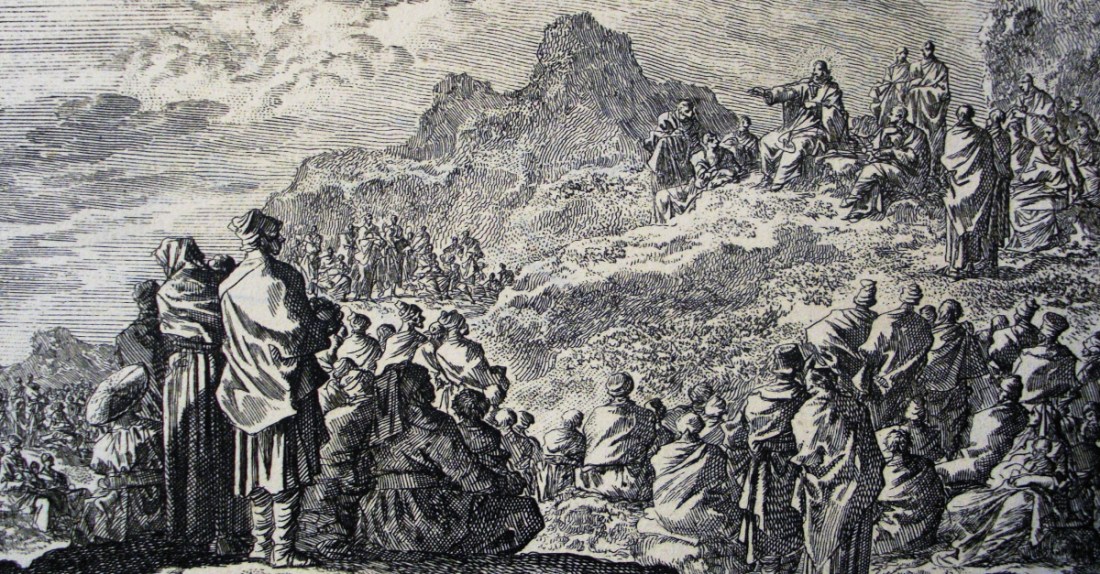
You know the teaching: Don’t do to others what you don’t want others to do to you. And you know the ethics from this same Teacher as well. You know his emphasis on family values, honoring the father and the mother, respecting the elders. Some of his greatest teaching was on reciprocity, the idea that you repay kindness for kindness, that you never let some good thing done for you go unthanked or unacknowledged or unreciprocated. Virtue, the Teacher always said, came from within. The things that came from the heart were more important than the things a person might put into the body.

One of the interesting teaching techniques used by this man was how he used the culture and ethical construct of his day to teach what was good and right in kind. Contrary to what he was accused of later on, he wasn’t trying to subvert anything. In fact, the opposite was true. He was trying to reinforce established and longstanding virtuous mores that his society had simply forgotten or ignored over the decades. In that sense there wasn’t a lot that was radical about his teaching. The Teacher spoke often of the ancient Mandate of Heaven, calling on his listeners and disciples to choose to act and to hold themselves to a higher standard than the world normally did.

You know that he was not highborn and that the father died when the Teacher was young man. That death left the Teacher’s family economically compromised and him to be raised in poverty by the young widowed mother. If you studied your religious history at all, you’ll know that the teacher was closely tied to the political philosophies of his day whether he himself wanted that or not. He called out the political and religious leaders of that time for their hypocrisy, their greed, and their lack of care for the people. He recognized that they were not good shepherds over their flocks.

Later, of course, his teachings would be codified and a strict set of rules would be mandated by his followers in the years after his death. We don’t know for sure, but it’s a good guess that any mandate of his teachings would have rubbed him the wrong way since he felt that goodness is within us, innate, born in our hearts, and that, for the truly righteous person, there are no rules because none are needed.

Yes, this great Teacher is one you know. He was born over 500 years before Jesus. His family name was Kong, and he was known as Kong Fuzi, or Master (Teacher) Kong.

That name became Latinized as Confucius.

On the End of an Empire

Empires come and go. They have done so since the beginning of history. It is the way of the world, isn’t it? The mighty Assyrian, Egyptian, Babylonian, Persian, Greek, Roman, Mongol, Turk, Spanish, French, and English empires all saw the sun set on them. Those who feel that this fate could not possibly happen to their empire are in for a rude historical awakening.

Such a fate befell the empire of the Soviet Union, the world’s largest at the time. As I write this, we have passed the 30 year anniversary of the dissolution of that empire. The story began in August of 1991…well, it actually began much earlier when Mikhail Gorbachev came into power in the USSR and introduced openness and restructuring to Soviet society. The communist party structure that held power was shaken to its core as Gorby’s reforms began to rumble through the 16 republics that made up the empire. The leader wanted to bring true democracy (or, at least, a semblance of it) to the people and those lands. Opposing the communist bureaucratic power structure were grass-roots calls for reform and a desire on the part of many of the republics (specifically the Baltic states of Estonia, Latvia, and Lithuania) for independence from the Soviet state.

In August, 1991, as most Europeans did, Gorbachev went on vacation. That’s when the coup plotters decided to act. The problem was that both sides seemed to choose that moment when the leader was out of town to make their moves. The hard-core communists sought to overthrow Gorbachev and roll back his progressive agenda. The change agents and anti-Soviet groups also decided that it was the perfect time to declare their independence from the USSR. A third party, Moscow Mayor Boris Yeltsin, also stepped in when both of these opposite parties struck.

Meanwhile, Vassily* continued his job at the Kremlin, the Soviet government building complex, because no one told him not to do so. Every day, he made sure that the task he was assigned was carried out. His salary was still paid, so, he really didn’t care what the government was. He had one job, he took it seriously, and he did it well, day in and day out. Oh, when he arrived home during that hot, tumultuous August, he watched the official government news channel as everyone did, but, again, none of that affected his job. Common people like Vassily and his family are often only pawns in the rises and falls of empires, and this case was no exception.

And no one told him to stop what he was doing. Throughout that autumn, when the republics began to leave the Soviet Union, no one advised Vassily to not come to work or to change his job in any way. No one seemed to know what to tell him to do differently. When Yeltsin climbed on the tanks and spoke to the people of Moscow, he kept on with his work. Day in, day out. When Gorbachev returned to the capital and to a crumbling empire, Vassily still did his job.

Finally, in December, 1991, Gorbachev realized that he was the leader of an empire that no longer existed, and he resigned as the last leader of the once-mighty Soviet Union–a gesture that seemed completely empty in one sense. That is when Vassily’s job changed in one major aspect.

That night, December 25, 1991, as the Moscow church bells tolled the end of the Soviet Union, Vassily Pavlichenko climbed the stairs, as he did every day, to the rooftop of the Kremlin, and, for the last time, he lowered the red flag of the Soviet Union that had flown there since 1917.

In its place, he raised the white, blue, and red flag of the nation of Russia.

*Not his real name

On a Gentleman’s Vices

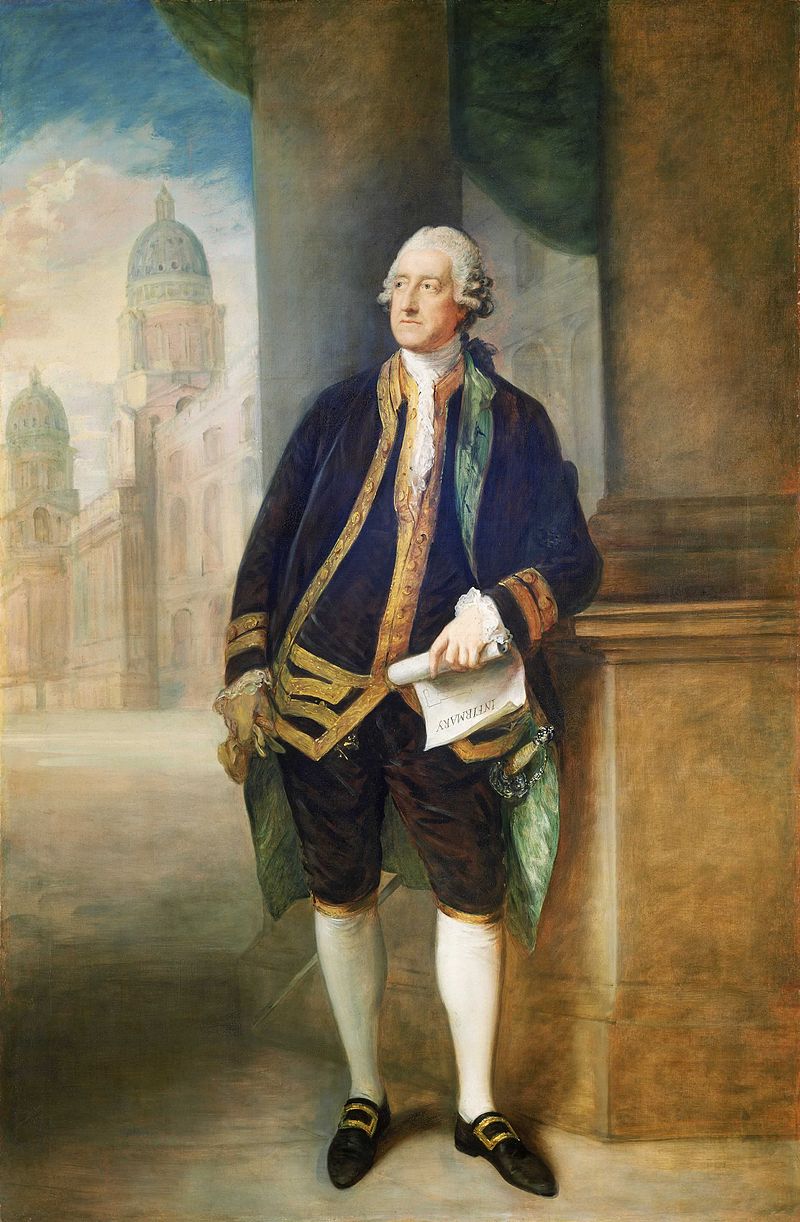
John Montagu rose to prominence in the British government of the 18th century mainly through familial connections. During his time in the government, he served in many functions, including Lord of the Admiralty, Postmaster General, and a member of Parliament.

Public figures then, as now, were expected to hold themselves to certain standards of behavior. But because people are people, and since men of prominence were publicly forbidden certain carnal pleasures, they sought these pleasures in private. This gave rise to the popularity of Gentlemen’s Clubs.

The Gentleman’s Club would be a private place where men of wealth and high rank could do things they could not do publicly such as gamble, drink to excess, and enjoy licentious behavior. Such clubs were in most major cities of Britain. Local laws often forbade drinking during certain hours, for example, and the club was a way to get around those laws. So, indeed, as is often the case, there were two sets of rules for society: One for the average person and another for those of high rank.

Montagu was a member of an organization called the Hellfire Club, and it was as debauched as its name implies. The members paid large dues or fees every month to supply the club with the building, the liquor, the cigars, and the other things that they enjoyed there. It was also a way for the highborn to keep their private lives separate from their work and their families. Certainly, Montagu enjoyed drink and the women at the Hellfire Club, but his true vice was gambling.

Throughout his public career, Montagu was accused at the time of being a poor administrator. One detractor said about him that never in the history of Britain had one man held so many important positions and still accomplished so little. Some even laid the blame for the loss of the American colonies in the American Revolution at his feet because of his mismanagement of the Navy.

While his administrative history is debatable, what is beyond debate is how much time he spent at the gambling tables. And, too often, Montagu spent so much time at the tables that hours and hours would pass. He took to having his meals while he gambled away tens of thousands of pounds.

Interestingly, he would always order the same thing to eat no matter the time of day or night, and have the servers bring it to him while he gambled. In fact, this meal—a slab of meat between two slices of bread—became so common for him and so associated with him, that other people begin to order the same meal just by using his name. As you probably know by now, Montagu was John’s family name.

You know him better by his title: The Earl of Sandwich.

On an AM Radio Station

People always said good ol’ Sam Anderson knew how to make a nickel go a mile. That was a great attribute to have in a small town, Helena, in the middle of farm country in the Mississippi Delta region of extreme eastern Arkansas in the 1930s. Sam was also one of the first people to invest those nickels in communication, specifically, one of the first AM stations in that part of Arkansas. KFFA was set up by Sam and the US government in 1941, and it operated a full day’s programming of music and news.

The station made good money for Sam. In later years, his son complained that Sam never gave him an allowance despite the good living the station provided; however, Sam did allow the son to sweep up the station and empty the trash for a nickel a week. Sam had a lock on the local businesses advertising on his station, but he was always looking for another way to make a buck.

Now you have to remember that Arkansas in the 1940s still was an extremely segregated society. Blacks and whites did not intermingle in the schools or the churches or the stores. The only time a black person would be in a white person’s house would be if he or she was employed or doing some kind of work for the white person. But Sam was a smart enough businessman to realize that there were black-owned businesses whose money was just as green as the white businesses owners’ money was. So, Sam developed an idea.

He knew that lunchtime was a period when the local black population would have about an hours’ break in the middle of the day. He also knew that while they ate their lunch, many of these black citizens would listen to the radio. Sam decided to dedicate that lunchtime hour to selling advertisements to black businesses aimed specifically and targeting the black lunchtime listening audience. Almost no white businesses reached out to black-owned businesses in the south at that time. Even more, the programming that Sam decided to put on the air for that hour was what most people referred to as black music—Mississippi Delta Blues.

So, for all of the day except the hour around noon, Sam’s radio station was listened to by the white population of Helena and the surrounding area. At noon, most white folks turned off their radios or switched to one of the nearby Memphis, Tennessee stations because they didn’t want to hear that Blues music. After lunch, the locals turned their radios back to KFFA.

There’s something you might already know about AM radio. The AM signal, if it is strong enough, can carry a long way. For sure, several things can interfere with AM signals—metal buildings, solar flares, and even electric lights—but some strong AM stations can be heard hundreds of miles away across open land. Sam’s station had an effective radius of 150 miles in any direction. That took the signal as far as the Mississippi Alabama State line. In fact, it was in a town in Mississippi near the Alabama State line that KFFA was heard by a young man in the early 1950s, and what he heard changed his life.

This young guy was poor, so poor that his family was looked down on by most of the other white families in the neighborhood. They were so poor that some of this young man’s friends included members of the black community, and that was a rare thing in that time and place. But what the young man heard on KFAA changed him. He made sure he listened every noon time to the Blues music that was pouring out of Sam’s radio station. He decided he wanted to learn to play that kind of black Blues music because of what he heard of KFFA.

And that happened because good ol’ Sam Anderson wanted to make more money.

You know this young blues fan as Elvis Aaron Presley.