On Two Close Brothers

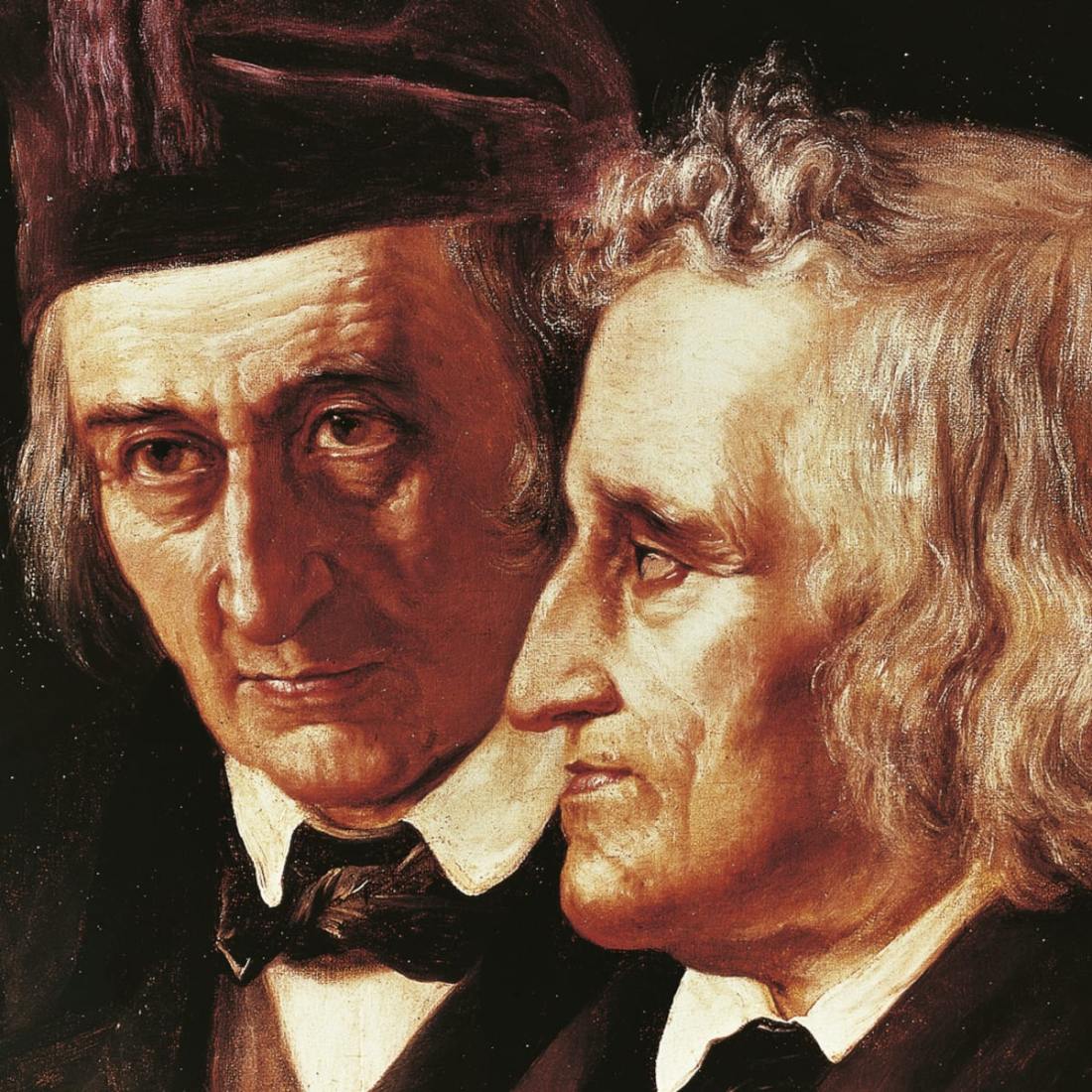
I’m the youngest of three brothers, so I understand what it’s like to be close to your siblings. However, Jake and Will were inseparable. Only a year apart in age, the brothers did everything together. Part of their closeness came from the fact that their father died when they were young; the brothers, even though not quite teenagers, became the co-heads of their family, tasked with caring for their mother and other siblings.

The poverty that their dad’s death plunged them into also shaped their personalities. As they grew and began their advanced schooling, they realized that students at their university who came from wealthy families received more perks and privileges. Thus, because their low economic status kept them from social functions and other gatherings, the brothers decided to spend their time in study rather than pursuing popularity or social interaction. As a result, first Will and then Jake both finished at the top of their respective classes in college.

The brothers then began academic careers as researchers. This would continue to allow them to work together in various projects and papers. Of course, the pair lived together, shared an office, and even taught classes at the university in classrooms near to the other one. Will managed somehow to convince a woman to marry him; she had known the brothers since they were young boys, and she understood their close relationship. The fact that Will was now married didn’t separate the brothers. In fact, Jake moved in with the newlyweds practically without being invited; his presence was simply assumed. Their research continued unabated.

The brothers lived in a country that was only then starting to search for a national identity, and the brothers’ research sought to ferret out the literature of the nation, both written and oral. The government even provided stipends for the brothers to dedicate their efforts to such things as writing a national dictionary (this would be published after their deaths). But their true love was seeking and finding those old folk tales that they felt truly showed their country’s culture and ethics as well as the religious elements of their country’s burgeoning national consciousness.

Jake would form the stories in broad strokes, and Will would come behind him, edit the stories, and make them similar stylistically. Eventually, despite several other concurrent projects, the brothers managed to assemble over 200 stories. Jake and Will had no trouble finding someone to publish their findings. Their stories became not only hugely popular in their native land but also across the globe. Some historians claim that their work has been outsold only by Shakespeare and the Bible. Today, their work is listed by UNESCO as one of the world’s greatest works of literature.

You have read these stories many times.

Grimms’ Fairy Tales.

On an Embedded Reporter

Mark Kellogg is best remembered as a being a good newspaper reporter. Born in Canada, his family moved to Wisconsin when he was a young man, and he became an American. He grew up there and worked for a time with a telecommunications company.

Later, Mark met and married a woman named Martha. The couple had two kids, daughters. But then, Mark’s wife became sick and passed away. Feeling understandably out of sorts, Mark left his children with an aunt, and he made his way across the American Midwest, working for different newspapers.

Most of us are familiar with the concept of an embedded reporter. Mark was one of the first. Working for the Associated Press, Mark wrangled a plum assignment with the US Army that was on patrol during the war. He soon shipped out with a mobilized regiment and left his desk at the newspaper.

The commander of the military detachment to which Mark was assigned was a noted general, a hero from the previous war. Mark was, understandably, somewhat starstruck by having access to the famous man. He was allowed several exclusive interviews with the general. Mark was captivated by the commander’s charisma. To Mark, this man was everything that was right with America. He began to lose his reporter’s objectivity. Later on, some people would say that this idol worship blinded him from seeing the risks involved in being on the front lines of a dangerous assignment during war time.

For Mark, just being in the great man‘s presence meant the world to him. In his dispatches back to his newspaper, Mark remarked on how he was willing to put his life on the line to follow his hero so that he could report on the great victories that were sure to come. He would spend several weeks with the detachment; he ate what the soldiers ate, he slept where they slept. He was truly embedded.

Sadly, Mark was killed during the war because of his proximity to both his hero and to the front lines. And he was not the only one who was killed. He was also not the only one to blindly follow this military leader into battle.

In fact, more than 200 other men lost their lives following George Custer into battle at the Little Bighorn.

On a Secretary

Elizabeth Ham lived quite an interesting life. As a younger woman, she had rubbed elbows with some of the most illustrious diplomats of the mid-20th Century as she worked in the halls of the ill-fated League of Nations. The League was an interesting creation. Its father was American President Woodrow Wilson, who first proposed an international peace-keeping organization that would work to ensure that nothing like World War 1 would ever happen again.

The League was one of President Wilson’s 14 Points, part of his proposal to the warring powers of Europe at the Versailles Peace Conference in 1919. Unfortunately, the nation Wilson represented chose not to join the very peace-keeping organization its president put forth.

However, that did not mean that American diplomats were not involved in the League during its short lifetime (1920-1946, officially). The United States, even though the formal policy was non-involvement in European affairs in the period between World War 1 and World War 2, sent representatives and workers to the Geneva headquarters so that diplomatic channels would still be open. Thus, there was an American delegation at the League of Nations even if the nation wasn’t an official member of it.

It was in this capacity that Elizabeth Ham worked with American Diplomat Norman Davis, a man who would occupy the position of sort of a de facto secretary for the League for a short time during an economic conference in Geneva in the inter-war years. Davis, a successful businessman from Tennessee, had even accompanied Wilson to the Versailles Conference as an economic advisor and had been an undersecretary of the US Treasury Department. He would go on to be a US Ambassador as well. And Elizabeth Ham worked for a time as one of Davis’s secretaries.

Later in life, Ms. Ham dedicated herself for many years to being the chief secretary to a horse stud farm, an entity known as Meadow Stud in Caroline County, Virginia. It was there that she worked for the Chenery family, the farm’s owners. In 1970, a mare named Somethingroyal gave birth to a healthy colt that sported white “socks” on three legs and the fourth one red, like the rest of him.

The owners ended up calling this spunky colt Big Red, but that was merely a nickname. They had to submit paperwork with a formal name if they were going to first race and then stud him. And, by the looks of things as he grew, the colt would grow up to do great things.

But the name stumped them. They thought of Sceptre, Royal Line, and even Something Special (all plays on the names of his mother and father to a degree), but nothing seemed to fit. That’s when Elizabeth Ham came up with an idea. Calling upon her work with Ambassador Davis in the League of Nations, Ms Ham offered a name that would go down in racing history.

Secretariat.

On a Treasure Hunter

Max Steineke died in 1952. You’ve never heard of Max, probably, but you know his discovery. You see, Max was a treasure hunter of sorts, and the most important treasure he found still enriches the world today. Nations mourned him when he passed. One official statement from a prominent government official stated, “It is indeed a sorrowful calamity and a great loss.” Max died in his mid-50s four years after suffering an accident while in the field on a treasure hunt; the accident led to the infection that took his life.

Max would be the first to admit that his ultimately successful hunting was as part of a team, even if he made it clear that he was the head of that team. But he did credit his successful finding of the treasure to a group effort. Even though the group suffered initial failures in looking for this particular prize, he admitted that the discovery was, “as a result of all the false starts, the many discussions, and the theories that were advanced at such discussions, by the process of elimination (that) we finally began to sense the true solution to the…puzzle.”

The discovery by Max and his team remains the world’s greatest treasure ever discovered.

He was born into a family of German immigrants, one of nine siblings, in rural Oregon. He left home and went to California at age 12—on his own—and found work at a lumber mill. The man he rented a room from encouraged him to get an education, so Max completed his basic schooling and entered Stanford University. From such an inauspicious beginning, Max found that he excelled at school. He discovered that he liked rocks and hidden things, so he competed an undergraduate degree in geology at Palo Alto. After he finished his diploma, Max decided he wanted to look for buried treasure.

So, he did. In Alaska, in Canada, in New Zealand and even Columbia. While he had a modicum of success in those areas, it was not until he went to the Middle East that Max had his greatest success in hunting for treasure. It was here that he assembled his team of fellow explorers and treasure seekers. Max’s group began searching for this particular treasure using the most modern methods and theories. They were willing to do things no other group of treasure hunters had done before.

And these sometimes-unorthodox methods paid off; his discovery completely changed the nation forever. You see, the treasure Max and his team discovered turned a poverty-stricken, relatively newly formed nation that had relied on tourism previously for its primary source of income into one of the wealthiest places on earth.

That’s because it was Max Steineke who first discovered oil under the sands of Saudi Arabia.

On Presidential Trivia

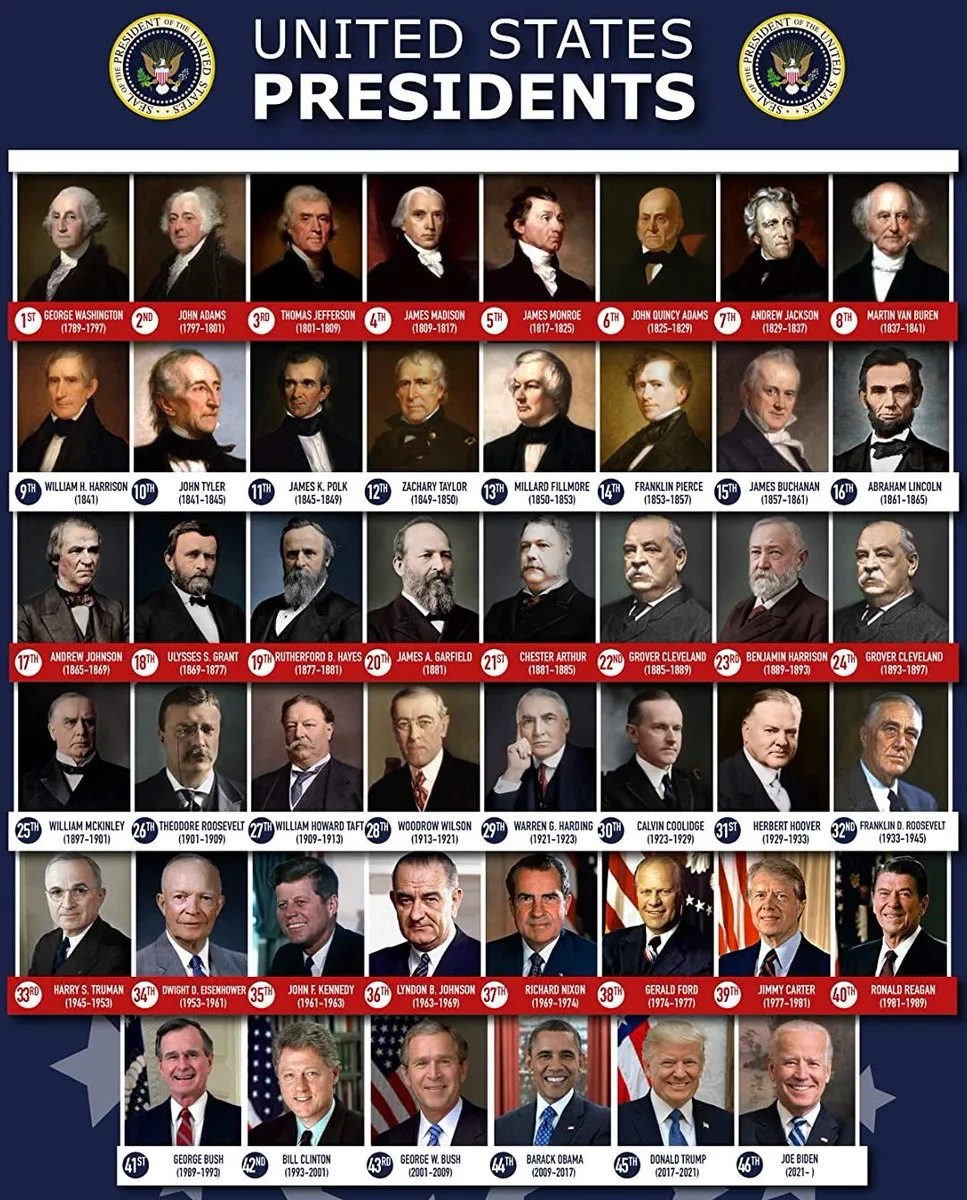
Which president was the first to visit all the states? 

Which president never actually lived in Washington DC? 

Which president is the only one to have been in charge of troops in the field in his capacity as commander-in-chief? 

Which slave-owning president (and more than 25% of all the presidents have been) was the only one to free the people he owned? 

Which president survived  diphtheria, tuberculosis, smallpox, malaria, dysentery, and pneumonia?

If you answered “George Washington” to these questions, you’re a winner!

Most people know that our first president set most of the precedents that successive holders of the Oval Office have followed (more or less). What is less known is that he made it a priority of his time as president to pay a visit to all the states in the new union. He felt that it was important for his new countrymen to see him in person. From Georgia to New Hampshire, Washington made visits to each state over the course of his first term.

And while he indeed laid the cornerstone of the new US Capitol building while wearing his Masonic apron, he actually never lived in the city that bears his name. The second president, John Adams and his wife, Abigail, moved into the not-quite-completed White House in the waning days of Adams’ only term in office. Washington spend most of his time in office living in Philadelphia where the government was headquartered until the new city could be completed.

He also commanded the United States Army in the field as they put down an early attempt at rebellion against the infant Constitutional government. Western Pennsylvanian farmers rose up in protest against what they felt was an over-reaching federal government, and Washington led some 12,000 militiamen to put down this erstwhile rebellion. Not even Lincoln led Union troops in the field during the American Civil War.

Some may say that Washington did not set free the humans he had enslaved, but his will clearly stated that they would be freed on his wife’s death (Martha didn’t wait until her death; she freed the slaves at Mt. Vernon soon after George’s death). This is a technicality, because some presidents like Martin van Buren (he allowed his one slave to escape and did not pursue him) and U.S. Grant both had owned slaves, but they had none when they assumed the office.

Finally, it appears that it was extremely difficult to kill George Washington. He not only defeated these illnesses, but he also had two horses killed under him and had several bullet holes in his uniform (all in the same battle, by the way). Yet, it appears Washington died due to a cold. His physicians ended up treating his last illness by bleeding him, further weakening him, and he succumbed to what doctors could easily treat today.

One final bit of Washington trivia. When he was a militia officer for the colony of Virginia (as a British citizen), Washington led a group of militiamen and some native allies in an attack against a French encampment on the western part of the Virginia frontier. The killing of a French nobleman in this skirmish led to an international incident and the declaration of war between Britain and France. This was the Seven Years War, known in the Americas as the French and Indian War. Some of the costs of that war was to be paid for with taxes on products in the American colonies such as paper, stamps, and tea. The American reaction to these imposed taxes would lead to the American Revolution.

And it was all started by George Washington’s frontier excursion.

On a Principled Writer

Eugene flew B-17 Flying Fortresses for the US Army Air Corps during the war. One time, the plane he was piloting overshot the runway and crashed into a row of trees. Two of the crewmen aboard died the incident. Eugene was absolved of any responsibility. The accident investigators cited mitigating circumstances, but that didn’t make Eugene feel any better. His principles made him want to be assigned duty as an air accident investigator. He became almost obsessed with figuring out what caused crashed like the one he experienced. Perhaps he saw this new job as a way to make up for what happened on his watch before. That’s the sense of justice Eugene had. Once, while on an investigation, the plane in which Eugene was a passenger also crashed, but he emerged unharmed.

After the war, Eugene found employment as an international airline pilot for Pan Am. Again, Eugene found ill fortune. In 1947, he was involved in his third air crash, this time in the Syrian desert. This time, 13 people were killed. Eugene managed to pull several survivors from the wreckage, and he led the survivors out of the desert to safety. Again, he felt personally responsible for the incident even though it was the fault of the equipment.

That was it for Eugene. He was finished with piloting. Following the career path of his father, he applied to the Los Angeles Police Department and was accepted. Starting out in traffic, as many rookie cops do, Eugene soon was promoted to the Public Information Department. After that, he wrote speeches for the LA Chief of Police. He found that he liked writing, and he was good at it. So, it being Los Angeles, he decided he wanted to pitch show ideas to the Hollywood TV studios. He resigned from the police department and dedicated his life to writing for TV.

But the competition for TV series was stiff. Eugene found little success. Oh, a script that he wrote for this show or that one was bought and produced, but he was not finding it so easy to sell a series. He tried writing westerns, cop shows, and even a lawyer show, but none of them were sold to any TV studio or were not picked up as a series by a network. His characters reflected modern society, but that wasn’t necessarily what sold in TV in the 1950s. That’s the thing about writing for TV; it’s one thing to have a pilot produced—a rare thing—and it’s even more difficult to have that pilot picked up and produced as a series.

Eugene was growing frustrated. Part of the reason he was finding the going difficult was that Eugene was a stickler for his principles. In a still largely segregated nation, he would insist on creating and writing in characters from minority groups. He said that he wanted his projects to reflect real life in the United States—all lives—and not only show white characters. Producers and sponsors felt otherwise, and when they would ask Eugene to recreate a certain character as white, Eugene would refuse. That obstinance, as correct and just as it was, proved damaging to his career as a TV writer.

Eventually, Eugene would have success as the creator of a TV series, but it would only run for three seasons. During the series’ short run, it gained a reputation for having women, minorities, and multi-ethnic casting. Several of the characters weren’t even human.

You see, Eugene—you know him as Gene—was the first TV writer to have a star placed on the Hollywood Walk of Fame because of those principles. That series he created and produced that lasted only three seasons resonates with audiences today, almost 60 years after it first premiered.

You know his series as Star Trek.

On a Good Marine

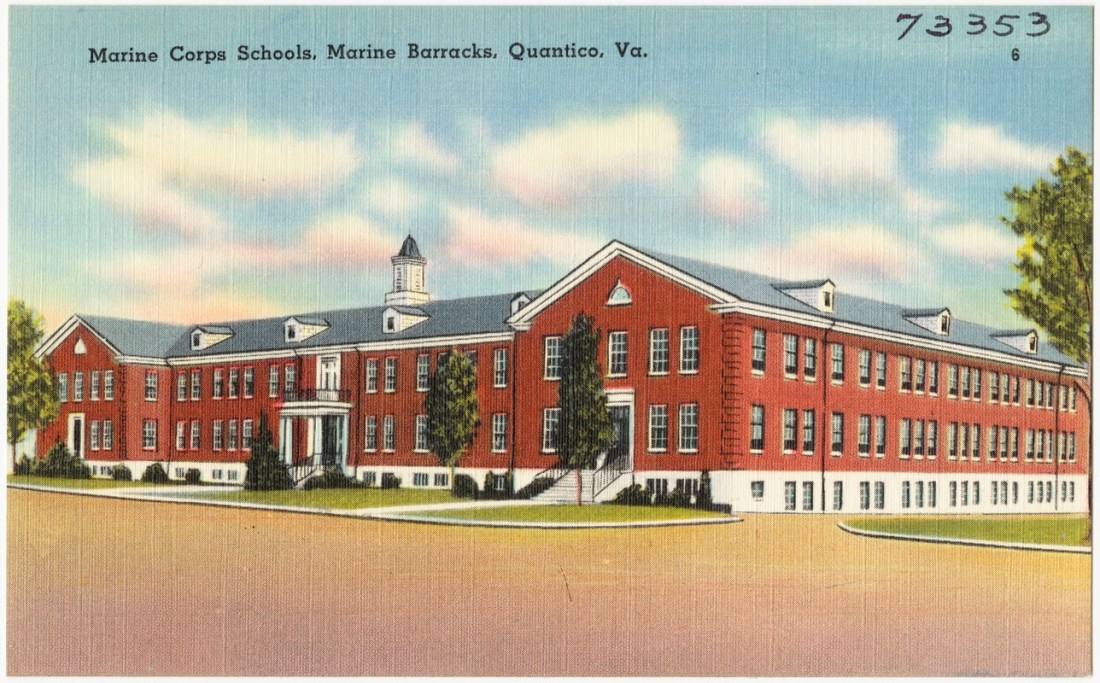
Richard entered the United States Marine Corps in 1927. The period between World War I and World War 2 were obviously relatively quiet, but Richard served with distinction for a decade in the Marines, first at the Marine Barracks at Quantico before finishing his service at Parris Island in the recruit depot there. As with most Marines, Richard entered as a private, but his excellent service record and his deportment saw him promoted to he rank of Sergeant Major by 1937 and the end of his career.

Interestingly, Richard had a visage that looked tough and mean—which was perfect for the Marines. Some people said that he looked like something off a recruiting poster. Yet, those who knew him well later said that his manner was actually quite mild and that he had a sweet disposition.

A look at his service record shows that he had two incidents in his decade of service that might make someone question Richard’s judgement. The first incident was that he was accused of assaulting an ice man, and the second was that a stenographer said he made her feel uncomfortable by “chasing her” down a hallway. Neither person brought charges against him, so both situations were put down as one’s word against the other ones. Still, not a bad record for 10 years of service.

Once, the British Royal Marines sent a private from their ranks to be trained by the US Marines as a goodwill gesture, and it was suggested by his superiors that Richard be made this Limey’s caretaker, to show him the ropes of how the American Marines did things. Richard assumed this role eagerly, and he took this English Private Pagett under his wing. The two became fast friends, even though Private Padgett’s demeanor was the exact opposite of Richard’s. The pair—one American marine and one British—became inseparable; they shared quarters, ate together, and where you saw one, you usually saw the other. Sadly, Padgett one day become overexerted and suffered heat exhaustion; he died while on duty in the United States. Richard seemed to take this loss hard; he was not the same after that for some time, many people said.

Richard, too, died while in the service. His heart gave out one day, and he was found to have died in his sleep. Many in the corps were crushed by this news. That’s how many people were touched by his life and his years of quiet service. Richard was buried at Quantico with full military honors.

You will be surprised to learn that he was only 11 years old when he died.

His full name was Silent White Richard, but the Marines knew him and loved him as the English Bulldog, Jiggs, the Marine Corps mascot.

On a Petty Scientist

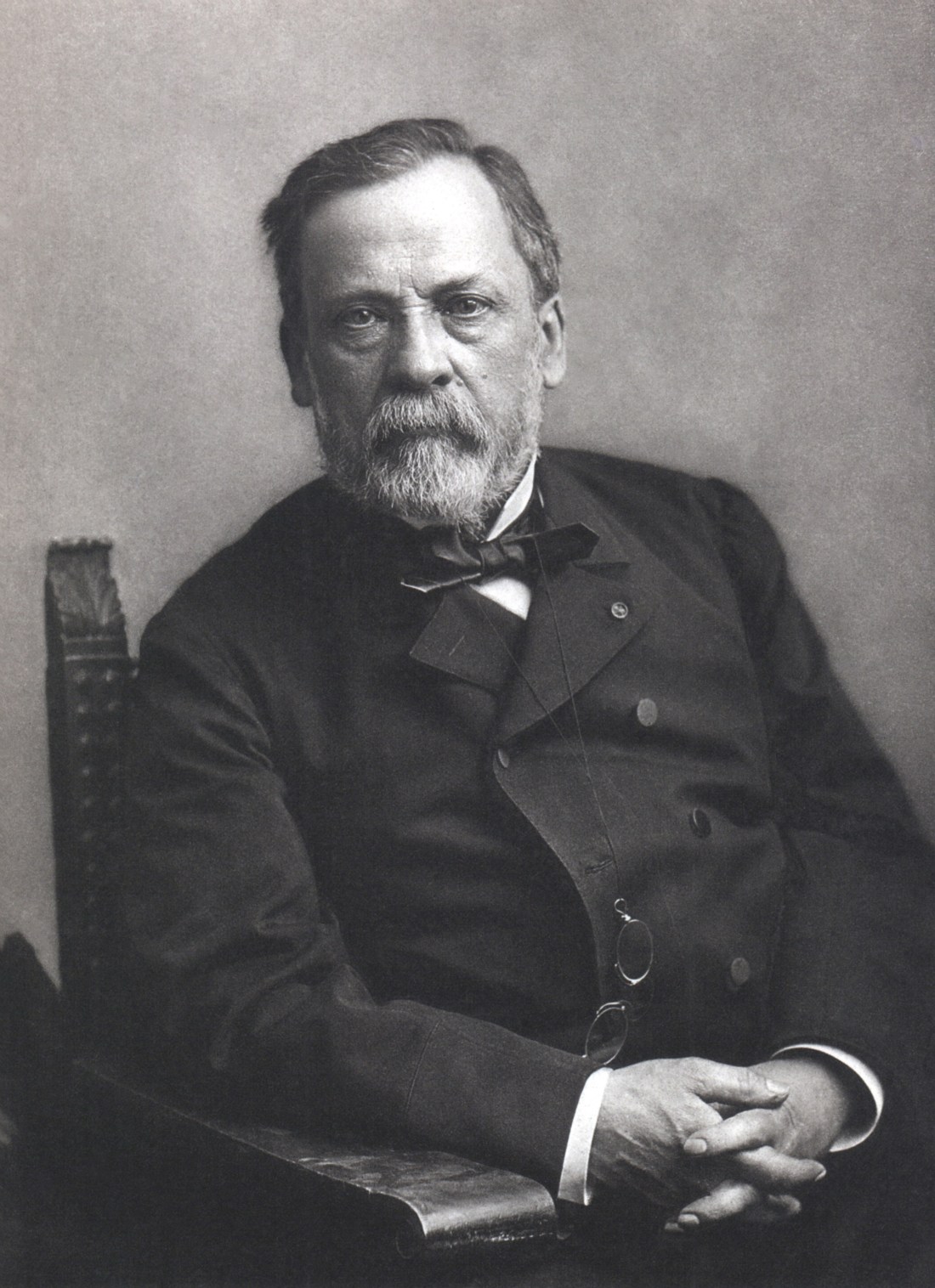
Unfair. Combative. Competitive to the point of belittling enemies and isolating friends. Arrogant. Inflexible. Vain. Petty.

Hardly a glowing recommendation for anyone. Yet, we all know the man these words were used to describe, even if those words would make you think he was a terrible person, hated by society and his peers. This man, however, wanted the public to love him and appreciate him. He spent a good deal of his life trying desperately to gain public acclaim and notoriety. He achieved it, ultimately, and loved the spotlight when he got it.

At the same time, paradoxically, he insisted on keeping his work a secret; one biographer described him as, “a secretive and deceptive brute.” As an old man, he instructed his family to not make his notebooks public after his death. Part of the reason for this secrecy was that the work he was doing was in the medical research realm. While there is nothing wrong with that, this man understood that ideas and concepts had value, and he was loathe to share credit—or money—with almost anyone.

Besides, it wouldn’t do for people to hear that he was conducting medical experiments on animals and humans without a medical license or without any real medical training to speak of.

You might think that this man was a charlatan, but you’d be wrong. He was completely legitimate in his work and research. But to practice medicine without a license is never a good idea, even if one were successful in research and treatment. So, on one level, his insistence on secrecy is understandable.

The other reason for his secrecy was that he sometimes faced charges of plagiarism in his work. True, some of those accusations came about through professional jealousy—we all know instances of professional people who cannot stand to have someone they consider to be an amateur become successful—but some of the accusations we know today to be legitimate. He did indeed “borrow” liberally from some of the work of others and even close colleagues. Perhaps you read that sentence, and you might think he was not a legitimate researcher.

On the other hand, this man was indeed a degreed physicist and chemist despite not being a good student as a child. So, it was not correct to say that he was not a scientist. His most important research—and this research was legitimately his—is rightly internationally recognized and appreciated today.

In fact, if you had cereal for breakfast this morning, you have been touched by him.

We have even named the method of making milk safe after this arrogant, vain, jealous, obstinate, petty, and incredibly talented genius who perfected the process: Pasteurization.

On a Tech Nerd

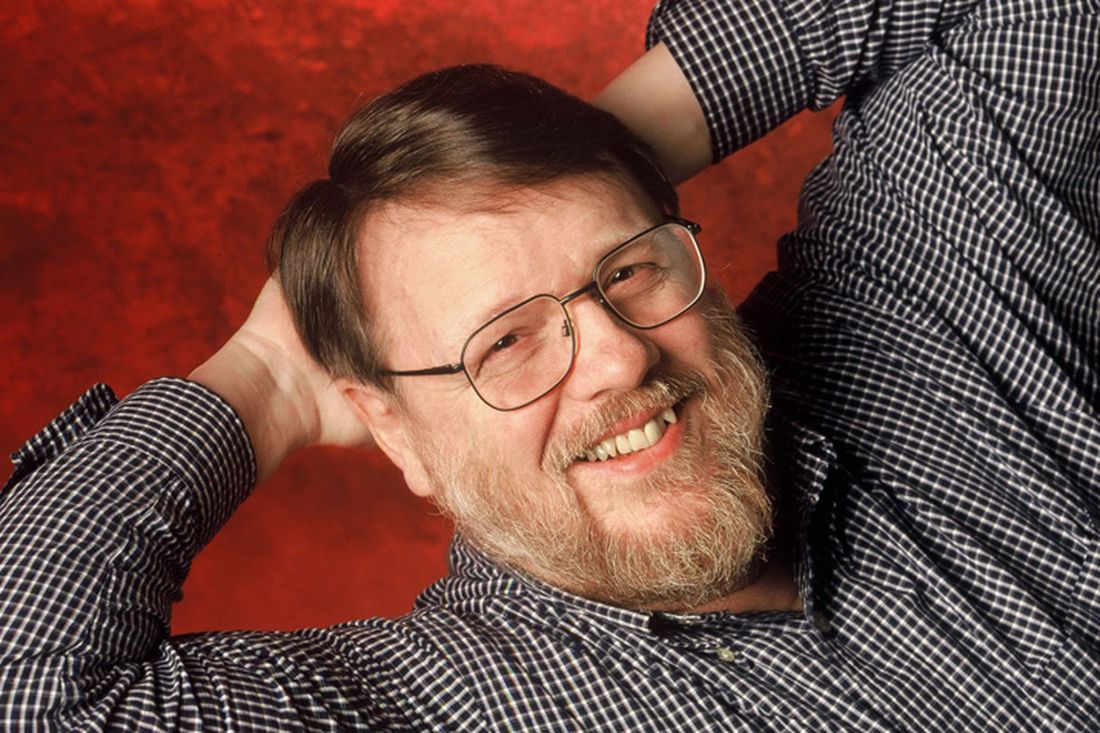
I received an email this past week asking me if I knew who Ray Tomlinson was. My email reply confessed that no, the name did not ring a bell. My friend then replied by email to enlighten me about this man. Ray died in 2016. For much of his working life, he was employed by a company called BBE Technologies, which was a subsidiary of tech giant Raytheon. He was a pioneer of computer technology.

Ray was one of the original nerds.

He had a reputation with being an “Aw, shucks” kind of guy, someone who was capable of great thoughts and ideas but shrugged off his discoveries and ideas as being something people would probably one day find anyway. Once, an interviewer asked him if he ever felt guilt about letting his email inbox fill and allowing it to go for days unchecked, Ray shook his head. “That’s not email’s fault,” he explained. Ray didn’t understand how modern people were putting human feelings behind something that has none. Email, he added, “does not produce guilt.” He was good like that, good at being able to separate his feelings towards technology from the technology itself. An humble man and, by all accounts, a kind person. Rare these days.

Despite being an early techie, Ray didn’t have a cell phone. He wasn’t on social media (I’ve found that many people in computer technology eschew social media—more on that another time, perhaps), and he was a self-professed Luddite. He laughed that, despite his dislike for how technology had become omnipresent in the modern world, technology was here to stay whether he liked it or not. He noted that technology was evolving rapidly; for example, emails were often being replaced with texts for notifications, information, and even advertising.

And Ray should know what he’s talking about. He literally wrote the book on the subject.

You see, in 1971, Ray designed a computer program to solve a fairly simple problem for the scientists in his department. It wasn’t until 1994 or so that he realized what he had done almost 25 years before. Again, it fit’s Ray’s personality that he sort of shrugged off that simple program. In his mind, there was a problem, and it was his job to solve it with computer code. So, he did.

The problem in Ray’s department was one of communication. It was impractical for the various people in his department to pick up the phone and call each other when they had issues, situations, or needed information/clarification. So, Ray designed the simple program for them to communicate with each other at will and to respond when one had the time.

We call it email.

(And Ray even created the use of @!)

On a Health Inspection

Maurice Rossel was a well-respected general physician in Switzerland when he passed away a few years ago. As a young man, Dr. Rossel was a health inspector. He spoke several languages as many people from his home area around Bern did. That skill and his medical ability made him well-qualified to be an international health inspector. In that capacity, he worked with various organizations inspecting hospitals, schools, and even small towns to see if they met basic health standards. Once, as a young man, not too many years removed from his medical school, Dr. Rossel received a job order to inspect a town in north-western Czechoslovakia (today in the Czech Republic). He joined a team of two other inspectors that would inspect the town and make their report.

The town wasn’t too terribly large, but to thoroughly check out the various public facilities and institutions, to look at the general health of the population, it took Dr. Rossel and his team the better part of a day—eight hours, in fact. Meeting the mayor of the place, the dignitary described his town as a “normal country town,” and so it proved to be in Dr. Rossel’s opinion. He noted that the citizens received adequate nourishment, they enjoyed a standard of living that allowed them to be fashionably dressed, and they received a level of heath care in the town that he said proved that they were “carefully looked after.”

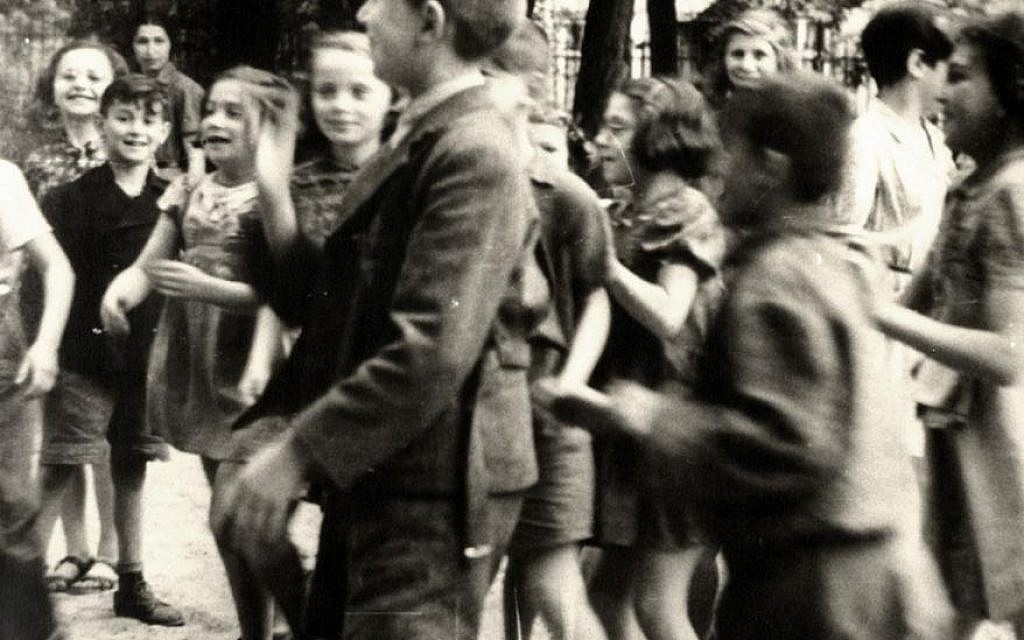
Dr. Rossel was a careful documentarian, and towards this end, he took photographs to back up his findings in the report he later wrote (one of his photos showing a group of happy, healthy kids is shown above). This is standard, best-practices stuff in public administration circles today, but, at the time, the photographs were an example of how Rossel went above and beyond to document what he found on the inspection of the town. He later said that photographs always allowed him to remain objective, detached, and unemotional when it came time to write his report. Organizations and towns always tried to put on their best “faces” during inspections, he had learned, and the photos could help him look at a situation long after he had left the sites. They helped jog his memory as he wrote.

Dr. Rossel and his two colleagues returned to their base, and he wrote a report detailing all he saw. The report, which is still available today, is objective, rational, and draws no conclusions other than from what he personally inspected and witnessed. In short, it is the type of report that a professional would write given the information presented to him. He reported no issues, photographed happy people and clean conditions, and gave the town a passing mark. The happy town administrators took great pride in pointing to the report and Dr Rossel’s photos to show that they indeed had created a good, safe, healthy place for its citizenry to live.

Detractors who question Dr. Rossel’s report of the town still today point to the fact that he was, at the time, to be sure, young and inexperienced and therefore possibly ignorant of what to ask and where to inspect in the town. His choice as an inspector, these detractors say, point to the indifference the organization he was representing, the International Red Cross, had towards the town and the inhabitants.

It was years later that Jewish documentarian, Claude Lanzmann, confronted Dr. Rossel and asked him why his report told the world that the Nazi concentration camp at Theresienstadt was a wonderful, safe haven for Jews destined for death in the Holocaust.