On Two Dedicated Brothers

The Bunker brothers did everything together. For now, let’s skip the part of their lives where they made a good deal of money in the entertainment business in the early 1800s. Their lives become much more interesting once they retired from show business and settled down to have families. Born in the east, the Bunkers agreed that their retirement years should be spent somewhere they could purchase a large amount of land and become gentlemen farmers

The northern part of North Carolina had always appealed to the brothers. So, they settled in Mt. Airy, North Carolina. You probably know that town as the birthplace of Andy Griffith and the inspiration for what would become Mayberry on TV. But this was over 100 years before the famous TV show. The brothers built houses on the land near each other and often spent time moving back and forth between their two houses.

When it came time to marry, the brothers looked for and eventually found two sisters who were almost as close to each other as the Bunkers were. These sisters, the Yates girls, loved that the brothers were so close. Of course, both couples got married during the same ceremony. Such was the closeness of these brothers that, when their respective wives had children, their first kids were born a mere six days apart. Between them, the Bunkers fathered 21 children; one brother sired 10 and the other, 11.

It seems that the only thing that the brothers didn’t agree on or do together was how each of them felt about the American Civil War. One brother, it has been said, favored the Southern Secessionists, while the other brother really admired Abraham Lincoln and felt that Union was more important than states rights. This split between the brothers is interesting given the fact that they both owned slaves that they had purchased when they bought their property in North Carolina. The division of the war was so acute that it led to the brothers drawing up papers that divided their land and their slaves, each making provisions in separate wills in case of death.

After the war, while returning from a trip, one of the Bunkers suffered a stroke that left him paralyzed on his right side. That health issue seemed to heal the wound that had come between them, and the healthy Bunker dedicated his life to assisting his ailing sibling. He agreed that they would put aside their differences. Sadly, the paralyzed brother began drinking to excess. He developed bronchitis in early 1874, and, despite his brother’s excellent care, passed away at the age of 62 with his brother at his side. Again, as in life, the brothers mirrored each other in death. The other Bunker, even though in excellent health, died within two hours of his brother. At their funerals (of course, they would be buried together), everyone remarked how wonderful it was that one brother took such good care of the other.

Oh, did I mention that the Bunkers were twins?

You see, the reason that the Bunkers did everything together was, simply, because they had to.

You know them as Chang and Eng, the original Siamese Twins.

On an Abandoned Son

Regina had taken her daughter, Joan, and escaped Europe shortly before the start of World War 2. Even though she had been born in Switzerland, Regina was from a Polish background and of Jewish descent; she knew that the Nazis would come looking for her and her daughter, so they fled to the United States. There, in 1943, she had a son, Robert. Now, we don’t know for sure who Robert’s dad was, but Regina had been married to Joan’s father. Some speculate that Robert’s dad was a noted Hungarian mathematician and physicist.

Regina was incredibly gifted. She spoke several languages and could do pretty much any profession she tried–and she tried several. Changing jobs as often as she did, she and her little family moved quite often. She sometimes found herself between houses and had to crash with the kids on the floors of friends and acquaintances. By 1949, Regina had moved the family to Brooklyn, New York, and she started work on a masters degree in nursing. It was a career she would pursue for most of the rest of her life. She eventually became a phyician.

She also spent a great amount of time going to the meetings of communist sympathizers. That wasn’t a great time to be pro-Soviet in the United States. The (possibly justified) paranoia that swept the nation during the early years of the Cold War led government agencies like the FBI to investigate people like Regina for her communist tendencies. She worried about the effect such investigations would have on Joan and Robert and shared her concerns for their welfare with them. Don’t talk to strangers, she said. Be aware that people might be watching you at school or at play, she told them.

To take their minds off their mother’s drama(s), Joan brought board games home for Robert to play with her. Joan seemed to lose interest in the games after a time, but Robert, being shy and somewhat nerdy even as a young child, kept playing the games even by himself. Soon, and we aren’t sure how much of this had to do with the worry caused by his mother, Robert rarely left the Brooklyn apartment at all.

The two kids had been in and out of so many schools over the years that their education proved to be terribly uneven despite the fact that they were both bright young people–smart like their mother. Meanwhile, Robert began teaching himself foreign languages so he could read more about board games from the periodicals printed overseas. He began to participate in board game tournaments, winning almost every time he entered them. He dropped out of school and withdrew into the games he loved so much.

Regina, satisfied that her children were old enough to take care of themselves, simply…left. She had become obsessed with nursing in the same way her son had become obsessed with games, and she decided to leave home to pursue her passion. Joan had already left home, so that meant Robert lived in the Brooklyn apartment by himself beginning at age 16. About her children, Regina was reported to have said that they were probably happier that she was not in their lives.

Joan became a famous teacher, an early proponent of computer literacy and worked with Stanford University in California. She also pioneered a peer tutoring and mentoring program that allowed current upper level students to train the incoming classes. This technique proved to be one of the most successful in California history in helping younger students reach proficiency in their research fields faster and better than ever.

And what happened to her little brother, this 16 year old game player, abandoned by an obsessive, driven mother?

Well, you know exactly what happened to Bobby Fischer.

On a Designing Professor

Hungarian culture is rich and varied, and their history is filled with heroic legends and warriors. Linguistically, the nearest neighbor to the Hungarian tongue is Finnish, then Estonian. Hungary has produced music, art, literature, dance, and architecture that the world envies. So, a creative, proud, productive people. Not too shabby for a nation with a population slightly larger than that of New Jersey. During the years of Communist rule, the proudly independent Hungarians bristled at the bridle of Soviet influence to the point that they rebelled against the Soviet Union in the 1950s. Although this uprising was quelled with Russian tanks, the Hungarians were one of the first Warsaw Pact countries that celebrated their independence from Russian rule in 1989.

Erno was one of those celebrants. He was a designer and professor by profession, and he was born at a time when Hungary was under the influence of Nazi Germany–1944–in Budapest. His father had a good reputation as an airplane designer, and his dad’s skills were put to use by the communists after the war. Erno’s dad was his hero, so it made sense that he would follow in his father’s footsteps and become a designer, too.

Between his father’s influence and his own personal skills, Erno was granted admission to the national design school in Budapest. From there, he entered the school of architecture. Geometry, shapes, the sculpturing of objects–these things enthralled Erno. He graduated with honors and was granted a teaching position in the design academy he had attended.

One thing that set Erno apart from other teachers in the design academy right from the start was his teaching method. He used his designing creativity to produce geometric shapes that he incorporated into this lessons. These tangible objects that his students could use and study helped them understand geometry and algebra and how those sciences and principles could be applied to designing art and architecture. As a result of these ground-breaking teaching methods, Erno proved to be one of the most popular professors on campus.

So, when the communists were thrown out of power, Erno indeed celebrated. He was now free to enjoy the fruits of his designs an creations. He was eager to do this because one of his teaching tools had been produced by the Hungarian communist government and sold. Sold world-wide, in fact. Sold almost 400,000,000 units, in fact. Oh, the communists had allowed Erno to keep some of the profits from his little teaching tool, but, now that the communists were gone, Erno was excited to see what he could do with his little geometric shapes in the free market.

You know the most famous of these as Rubik’s Cube.

On a Taxidermist

Taxidermy is one of those skills that thrives today in the American south and west and not much of anywhere that hunting is not a popular pastime. That has not always been the case; 200 years ago, taxidermy shops were fairly common businesses in most large towns. Everyone from schools to scientists to collectors wanted stuffed animals on display or to study. The good ones were and are combinations of skilled artists, sculptors, and naturalists according to the Guild of Taxidermists. The word comes from two Greek words for “arrangement” and “skin.”

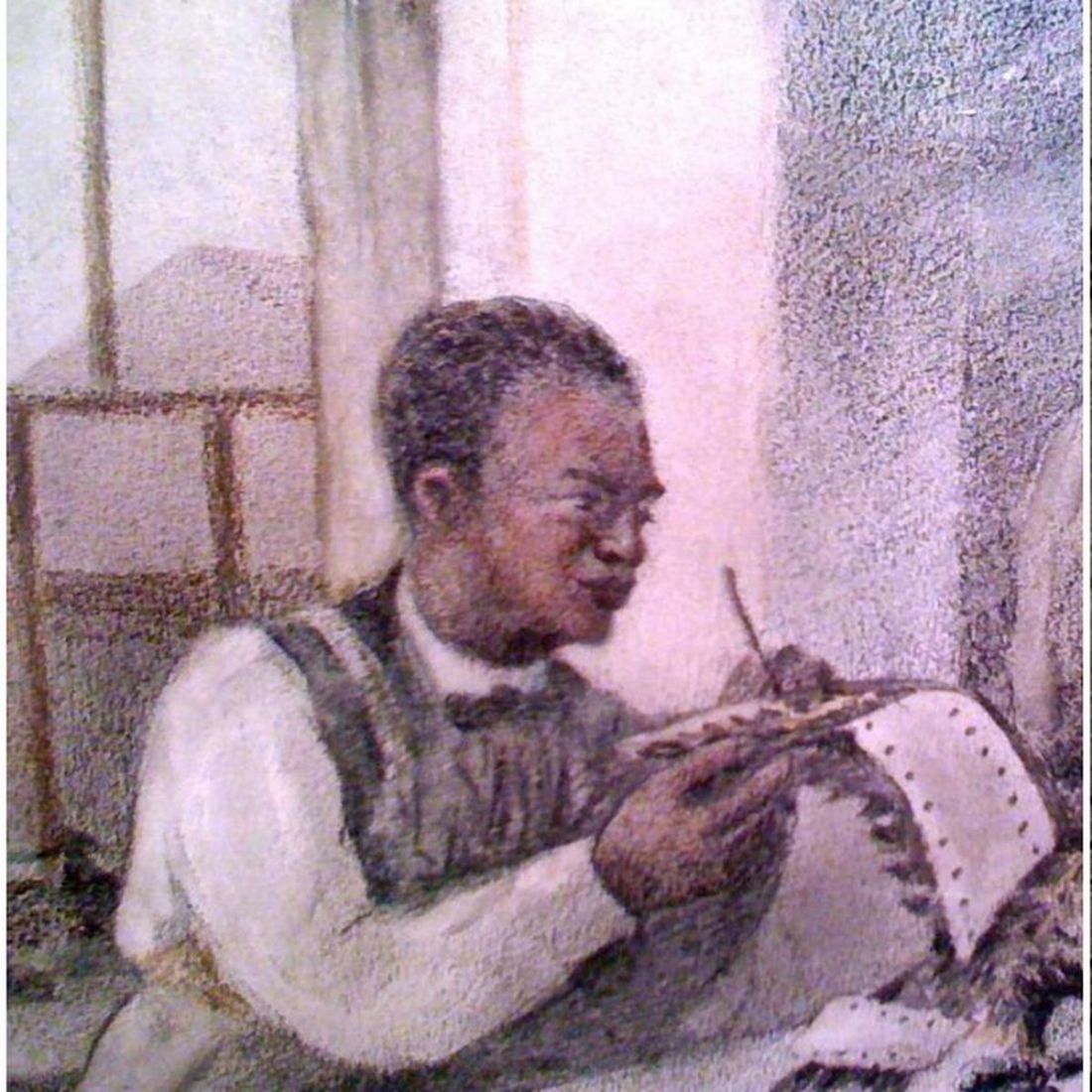
One of the most famous taxidermists of the 19th Century was a man named John Edmonstone. John practiced his art/skill in Edinburgh, Scotland, not too far from the University Medical College. Edinburgh must have been quite different than where John was from. You see, John was born a slave in British Guyana, in South America. His last name was the name of the man who owned John. One time, a naturalist named Charles Waterton came to the plantation where John lived. He asked the young John to assist him in collecting and then preserving specimens from the jungles surrounding the plantation. Waterton found that John had a knack for the trade, and he suggested to the plantation owner that John be allowed to pursue taxidermy as part of his work.

In 1817, John’s owner moved to Scotland, and John came along. There, he was granted his freedom and began to pursue taxidermy as a profession. Again it must have seemed a long way from Guyana to Scotland for the young man. Soon, he had a thriving business and quickly gained a reputation for his skill. His first shop was in Glasgow, and he made good money. Eventually, John was able to open a store on the main shopping street of the wealthier city of Edinburgh, Princes Street, in New Town.

In addition to selling posed specimens (natural poses) and trophies (heads on walls), John supplemented his income by taking on students who wanted to learn this potentially lucrative trade. He taught many students over the years. One of them, a 15 year old student at the university, wrote home telling his family how wonderful his taxidermy teacher was to him. Even though the price for the lessons was fairly steep (a guinea for an hour’s class), the young man said that John, “gained his (good) livelihood by stuffing birds, at which he is excellent.”

Over the course of his career, John Edmonstone worked for the museum of the university, and several examples of his work are still available to be seen today. His knowledge of tropical birds and animals made him unique in the trade in Scotland. In 2003, he was listed as one of the 100 Great Black Britons in a BBC poll.

And that 15 year old student of John’s who spoke so highly of his skill? He put his lessons in taxidermy to good use in expeditions to South America and beyond. Some say that his learning from John insured him a place on one of his first expeditions to the Galapagos Islands.

You know that young taxidermist as Charles Darwin.

On a Lord’s Honorable Daughter

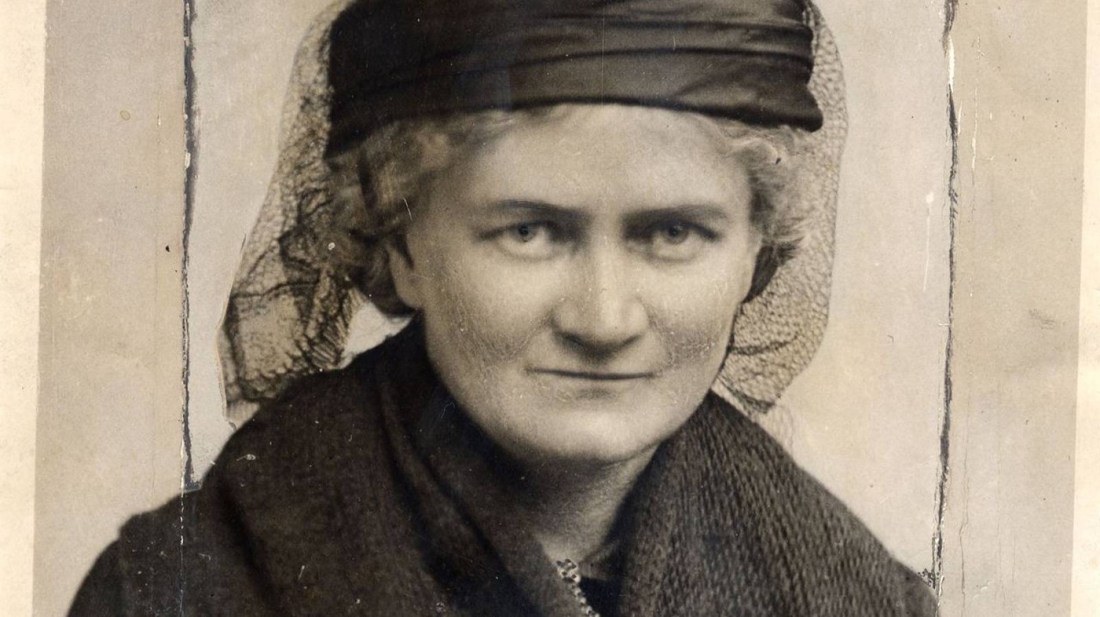
Violet Gibson. I tell you her name here at the start because you’ve mostly likely not heard of her at all. She was the daughter of an Irish Lord, Edward Gibson, Baron Ashbourne. Violet was born into this part of high society in 1876, and she was raised as all upper-class women were in the very heart of the Victorian Era. She received the same education as other girls of her station, and she went through the proper debutante rituals of the time. Her parentage entitled her to use the title The Honorable before her name. Today, a plaque honors her memory, placed on the outer wall of her childhood home in Dublin. Musicians and writers have created works in her honor.

Historians debate whether or not Violet was truly honorable. You be the judge.

Violet had health issues most of her life. Besides physical ailments, she also suffered severe mental health issues as well. A nervous breakdown in the early 1920s led her family to place her in a mental health facility for two years. When she was released, she traveled to Rome because of her strong Catholic faith led her there, in part, for possible healing from her issues. Sadly, Violet attempted suicide in Rome in 1925. She was 49 years old.

Violet recovered from her suicide attempt, but the mental anguish she lived with continued to dog her. She claimed to have angelic visions–which, in Rome, was not a claim too unusual for that religious climate–and some of these visions told her that she must fight against the then-rising tide of fascism.

The Italian dictator, Benito Mussolini, had taken control over that country in 1922. In Mussolini’s mind, the Italian nation needed to re-create the power of the Roman Empire. Towards that end, Mussolini chose the Roman symbol of a sheath of bound sticks with an axehead at the top. This symbol, known as a fasces, was a Roman sign of unity and the power of a magistrate. It’s where we get the words fascist and fascism.

Violet hated this political philosophy. She swore that she would fight it to her death. She said that her actions against fascism would “glorify God” and bring justice to those in the despotic Mussolini regime who had injured or imprisoned people she felt were innocent.

This daughter of an Irish lord, this honorable woman, was put in a mental hospital in England in 1926, and she died there in 1956.

So, what makes her honorable in the minds of many? What did she do that makes her have a plaque and have songs and films created about her?

It was in April of 1926 that The Honorable Violet Gibson took a revolver and shot Benito Mussolini.

On a Commencement Address

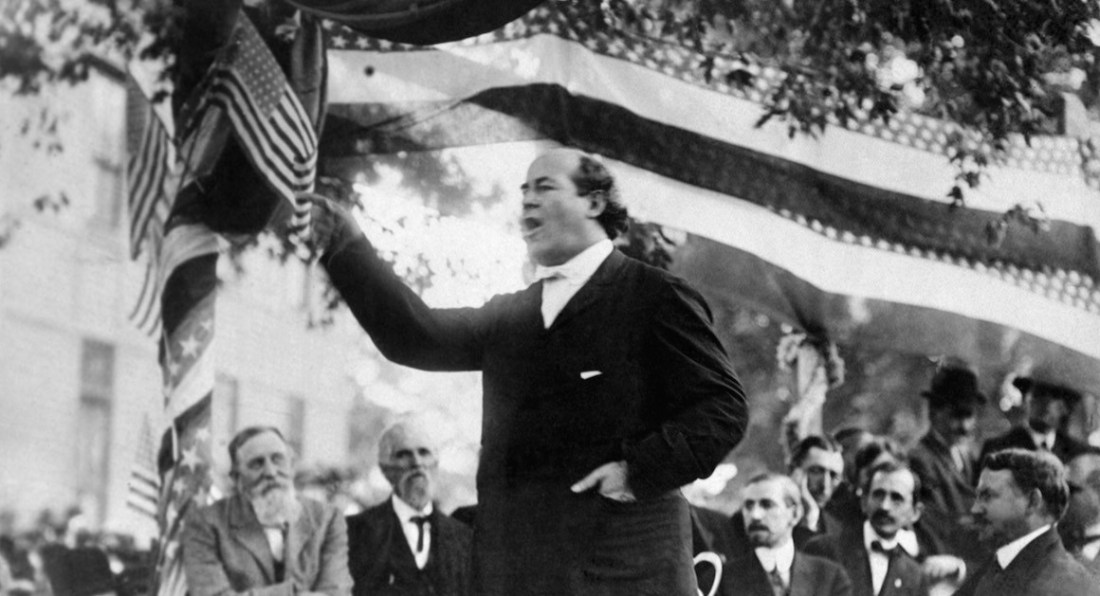
Modern Americans have no idea how immense the reputation of William Jennings Bryan was in the US 120 years ago. Thrice the candidate of the Democratic Party for President, Jennings was a giant of his day, known far and wide as a great orator and swayer of the minds of men. He served in the House of Representatives and as Woodrow Wilson’s Secretary of State for a time. His Cross of Gold speech is one of the greatest in American History, and the character of the Wizard of Oz is loosely based on his personality.

By 1919, much had happened in the United States. The Roosevelt Era, the Progressives, a world war, and the Spanish Flu epidemic had all taken the spotlight away from the great man. He still traveled the nation giving speeches to whomever would listen. Salem, Illinois, was the fortunate recipient of a Bryan visit at the end of the school term, as he agreed to be the commencement speaker for the local high school.

You may well wonder why such a famous person as William Jennings Bryan would agree to speak to the graduating class of a city that protected a mere 3,800 people. The easy answer is that Salem was Bryan’s hometown, and he loved it so. He still had family in the area. When his hometown high school asked, of course Bryan would agree to speak.

Most commencement addresses are immediately forgotten, but this one stands out–but not because of what Bryan said. No, the reason the proceedings are memorable is the actions of one of the graduating seniors, a boy named John. John, for reasons that are still not clear to this day, found the entire speech of Bryan to be laughable. He loudly sniggered for almost the entire time the great man gave his address. Bryan, no stranger to being heckled, thought that a sharp glare at the giggling bespeckled student would silence him, but nothing seemed to stop the lad’s laughter.

When the speech ended and the applause died down, John apparently stopped laughing. After the proceedings, embarrassed local officials all made their apologies to Bryan who magnanimously shook off the offense. Boys will be boys, he shrugged. John’s friends were also somewhat upset, especially since they knew John to be a shy young man. This behavior was completely against his personality–which made it even more strange.

6 years passed.

John went to college and got a couple of degrees and entered education. He taught physics, biology, and coached football. As fate would have it, William Jennings Bryan came to his town for a court case. The pair were reintroduced. “I don’t think you would remember me, Mr. Bryan,” John said as the two men shook hands.

“Of course, I remember you,” Bryan said with a smile. “Salem, Illinois.”

“That’s right!” John said.

Bryan added, “How can I forget you, John Scopes?”

On a Baseball Hero

It’s World Series time in the United States. Yes, there are several people in America who get the irony of a world championship being proclaimed from a league that represents only two countries in that world. That’s a story for another time, perhaps.

This story is about Ty Cobb. For those of you who don’t know, Cobb was arguably the best player ever to play the sport. Babe Ruth, Lou Gehrig, maybe some of the modern players have a case here, but the fact that Cobb was the first player elected to the Major League Baseball Hall of Fame makes a strong statement. Cobb was a native Georgian who played most of his over two decades in baseball in Detroit as the Tigers’ centerfielder. In a sport where a player getting a hit 25% of the time is considered to be a good statistic, Cobb averaged .366 for his entire career. He retired as the stolen base leader and was also known for his fearlessness in the field and on the basepaths. He had few friends in the game because of how aggressively he approached playing, but people in and out of the game respected his skills.

After shifting to manager of the Tigers and finishing his career in Philadelphia, Cobb lived a luxurious life off the proceeds from shrewd investments he’d made with his salary over the years. For example, Cobb was a major shareholder in the Coca-Cola corporation. He used his wealth to travel, fish, golf, and enjoy life. He granted interviews to almost all who came to him. Now, if you are a baseball fan, you might realize that Ty Cobb, for all his amazing accomplishments in baseball, never won a World Series.

Years after his career was over, he and a famous sportswriter named Grantland Rice were returning from the Masters Golf Tournament in Augusta, Georgia by car. He and Rice stopped in Greenville, South Carolina at a liquor store. The pair entered, and Cobb stopped soon after his eyes adjusted to the dimness of the room. The fat man behind the counter looked familiar to him. “I know you,” Cobb said, walking up to the counter. “Remember me?”

The heavy fellow narrowed his eyes to look closely at Cobb, and he took the stub of a well-chewed cigar from his mouth. “Yeah, I know you, but I wasn’t sure you wanted to remember me. Most people don’t,” the man said. The last time they met, Cobb reminded him, was on the baseball field over 30 years before. “You were a great player,” Cobb said, and the portly man dropped his chin on his chest in humility. “Can I get your autograph?” Cobb asked the man. “I always wanted it.”

The man apologized. “Ain’t got one here. Come back tomorrow.” Cobb smiled, according to Rice, and said, “Sorry. We are just passing through. Maybe some other time.” Cobb paid the man for their liquor, and he and the sportwriter continued their journey

“Shoeless” Joe Jackson came out on the porch and watched the pair drive away.

On a Gardener

Oscar loved rhododendrons. Over the course of his eight decades of life, he became a recognized international expert on them. But, then, he loved cultivating and gardening pretty much anything. That makes sense, to a degree, because he came from Sweden, a place where the growing season is excruciatingly short but, when it does finally come, the days are long and sunny.

Luckily, his family had money, so he could concentrate on what was, for him, more than simply a hobby. He designed and built extensive gardens for not only his family in Sweden but also for other families in other parts of Europe. For someone who was born in the late 1800s, Oscar developed a rather advanced and modern take on gardening, coming to advocate for sustainable agriculture and forward-thinking methods of composting and pollination. Again, because of his family’s money, Oscar was able to travel and learn about gardening from some of the leading experts of his day. One of those experts was an unexpected and rather unusual mentor for Oscar. He was an American, born in Missouri, who researched and taught at a small college in the American south and had made somewhat of a name for himself in the realm of horticulture. Oscar managed to spend almost a month shadowing this researcher and learning his methods. He absorbed the information like a sponge and brought back new techniques to his gardens in Sweden.

As with us all to some degree or another, not everything in Oscar’s life was roses, so to speak. His first wife, also from a wealthy family, died from an infection after a simple surgery. Her unborn child died with her. The couple had other children before that, however, and these motherless kids comforted him in his grief. At a party a few years later, Oscar met another woman, this time from England, and the pair got married. He considered himself extremely fortunate to have met and married two wonderful women. Yet, his grief was not over. His oldest son and namesake died in an airplane crash shortly after World War 2. And his second wife miscarried a daughter. So, Oscar found solace from his grief in his gardening.

For most of his life, Oscar was able to pursue his passion. However, in 1950, at the age of 68, familial obligations changed how he could spend his time. You see, his father, a man named Gustaf, passed away. And that meant that Oscar…Fredrik Wilhelm Olaf Gustav Adolf became King Gustav Adolf VI of Sweden.

Oh, and that mentor who taught at the small college in the United States? Well, much has been made of the vast differences between Oscar and that researcher, but there is no denying that he and George Washington Carver were united by their love of gardening.

On a Syrian Bride

Hamida was only 14 when she married the businessman. Her family ran successful fruit and citrus farms on the coast of Syria in the middle of the last century. She was the fourth child of her parents, having two brothers and a sister. The family was considered to be religious but not overly observant Muslims. In many respects, Hamida had a mindset that did not fit her cultural background despite becoming the 10th wife of her Saudi husband.

The marriage lasted only a year; she produced a son for the Saudi man, which seems to be the only reason he wished for her to be his wife in the first place. Unlike Hamida’s family, the Saudi man was extremely religious. Like her family, he was also wealthy. So, her connubial responsibilities concluded, she accepted her divorce agreement and moved away from her ex-husband and in with one of her older brothers.

When her boy was about 5, she re-married. This time, the man was also a Saudi national, but he was much more open in his mindset. He also had money because he was an administrator in a sizeable Saudi building contracting company. While the first marriage seems to have been for traditional reasons, the second seems to have been more for love and compatibility.

Hamida was happy for some time; she and the second husband had three sons and a daughter together. This second husband raised the boy from the first marriage as his own. But Hamida says that she had a special bond with that oldest child. These days, she speaks of him as being shy and good at his schoolwork.

Today, she is in her 80s, and she dresses well, wears considerable makeup, and is largely seen as the matriarch of the family. Her second husband is also alive, but Hamida seems to be the one who makes most of the decisions that affect the family. They are happy for the most part, and they live in comfort in their mansion in the Saudi city of Jeddah. She has all she wants, she wears designer clothes, and she dotes on her family.

On the other hand, Hamida says that she does miss the better weather of her native Syria. The coast, she says, always had a nice breeze blowing. Also, she says with a smile, the food was better back home than it is in Saudi Arabia. So, somewhat content with her lot in life, the matriarch enjoys the company of her remaining children and her grandchildren.

I say “remaining children” because one of her sons is dead. You know him. He was the oldest, the child of that first, loveless marriage, the one that she was closest to.

Osama bin Laden.

On an Trip to Switzerland

The Villa Diodati near Lake Geneva, Switzerland, is a beautiful, large house that has witnessed some of literature’s greatest minds within its walls. 1816 was an odd year because of a super volcanic eruption of Mt. Tambora in the south Pacific caused world-wide weather disaster. Many writers and historians call it the Year without a Summer because weather patterns–and therefore, food harvests–were heavily altered that year. Starvation affected many because of the amount of volcanic ash in the upper atmosphere. Two famous English authors, Lord Byron and Percy Bysshe Shelley, rented the Villa Diodati that summer to get away from the depressingly cold weather that year in England. Unfortunately, they found that when they arrived at the villa that the weather and thus their own moods weren’t much improved.

Byron’s doctor, a man named John Polidori, was with them also. He was also a close friend to his patient. Both Byron and Shelley brought women with them after both having left their wives for these women. While these two are often lionized as being representatives of free-thought and libertine lifestyles, they were also pretty much jerks to many of the women in their lives. After a short time at the villa, tempers began to flare. The weather was overcast and rainy and cold because of the volcano, and it kept the small group inside for days at a time.

It was suggested that the group use the time to write, to produce some literature and pour their frustrations into work instead of taking them out on each other. The proposition was more of a challenge: Produce a story that mirrored the darkness of the souls of mankind. Perhaps this challenge reflected the group’s sour moods and matching weather. For example, Dr. Polidori produced one of the first stories in modern times about the undead entitled The Vampyre. He based it on an earlier Byron work. It became the forerunner of the genre of Gothic vampire stories that continue in such works as Interview with a Vampire and even the Twilight saga.

For several days, the group worked on their individual projects and, when they came downstairs for breakfast every day, they reported on the progress (or lack thereof) on their works. Byron worked on Childe Harold and some other works that were published later. Shelley seemed to have suffered from writer’s block. Polidori was happy with his story of the undead.

We don’t really consider these works to be as important as one other story produced that bizarre summer. It seems that one of the women decided to join in the challenge that the men had proposed. It was Shelley’s young mistress, 19 year old Mary Godwin, who ended up writing the best story to come out of the Villa Diodati that summer.

Frankenstein; or, the Modern Prometheus.