On Body Shaming

The other kids in the neighborhood and at school called him Fat Freddy

Growing up in Latrobe, PA, in the 1930s and early 40s, Freddy faced the emotional trauma of being bullied for much of his young life. Because of his weight, Freddy felt shame when the children would point and laugh. We also have to remember that being a bit chunky as a kid at that time was an anomaly compared to today. Nevertheless, his weight made him not be picked for teams when the kids got together to play, and that type of rejection along with the cruel joking from the other children combined to make Freddy’s life pretty much miserable.

Thus, Freddy spent much of his childhood in his family’s large, three-story home, playing by himself. The family was upper middle class for the town, his mother’s family having owned large store in Latrobe and his father managing the town’s brick factory. Freddy was named after his mother’s dad, in fact. When he was 11, his parents adopted a sister in part to give Freddy some company, but he didn’t interact with her much. No, for most of his young life, Freddy kept to himself in the house. He created a whole imaginary world, a safe world, a place where no one would shame him for his body size and where everyone was happy. That pretend world had princesses, kings, brave knights, talking animals, and was filled with magic and love. It was a safe place. Because of that imaginary world, Freddy became, one person later noted, best friends with himself. His toys, his puppets and miniature houses and cars, they all became his world. It’s a perfectly natural response to the trauma of bullying Freddy had suffered from his peers.

As many children do, Freddy grew out of his chubbiness as he reached puberty. By the time he went to high school, his body shape had changed. However, the shyness he had developed as a defense against the bullies remained. While the outside of Freddy appeared to be like everyone else, inwardly, he was still the kid who feared rejection and derision. Somehow, he made two friends as a freshman at Latrobe High School. One of them happened to be an outgoing and brash young man who liked Freddy for who he was and not for how he looked. That friendship helped Freddy become more self-confident. He described it as finding someone who realized that it wasn’t what is on the outside of us that counts but, rather, the important stuff is what lives in our hearts. For Freddy, that realization made all the difference.

Freddy proved to be a good student, also. He went to college and earned a degree in music, then he attended theology school and became an ordained minister in the Presbyterian Church. Instead of wanting to pastor a church, it was Freddy’s idea to become a minister to young people who had endured the same types of traumatic experiences of bullying he had gone through as a youngster. Freddy could relate to them. He could speak their language. He knew what they were going through. Throughout the rest of his life, Freddy would maintain these credentials because he strongly believed that this work was his calling, his ministry. And that ministry of helping children navigate life’s traumas is exactly what Freddy did, too, almost until his death from cancer in 2003.

You’ve witnessed his ministry, most likely.

That’s because you know Fat Freddy as Fred Rogers, and his ministry was called Mister Rogers’ Neighborhood.

On an Astute Doctor

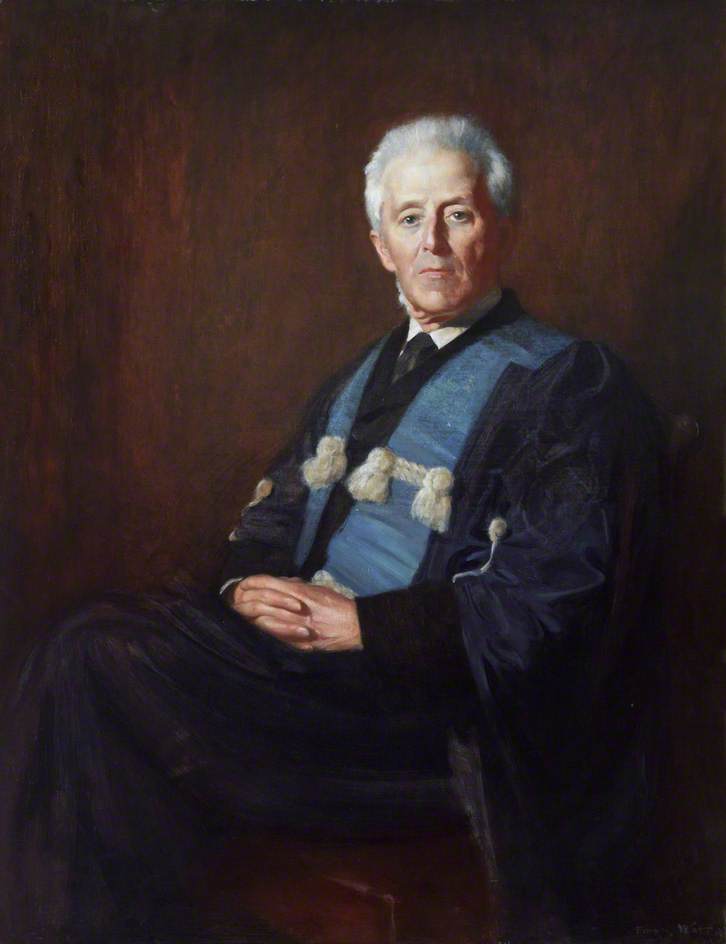
Joseph Bell comes to us as another of those people we know about but don’t readily know who he is specifically. Bell was a Scottish physician who was most active in the late 1800s in and around Edinburgh. His reputation and ability was such that, when Queen Victoria visited Scotland (which was often since she loved it so), Bell acted as her personal doctor there. For most of his career, however, Bell was a lecturer and mentor at the University of Edinburgh’s school of medicine.

Born in 1837, Bell grew up in a family of doctors at a time when the medical profession was undergoing radical changes. The old, traditional, and often-unscientific and unhygienic medical methods were being discarded in favor of scientific theories and cleaner, safer, practices. And the University of Edinburgh was on the forefront of this new, better, and more scientific approach to the practice of medicine. For example, the school pioneered such advances as the use of chloroform in surgery (Dr. James Simpson) as well as the adoption of antiseptics in medicine (Dr. Joseph Lister–the creator of Listerine).

Bell attended Edinburgh’s medical school and quickly earned a reputation as a thorough, keen observer of a patient’s symptoms. He was one of the first to consider a patient’s lifestyle and personal history as being a key to unlocking the secrets of a diagnosis, looking into the person’s background to help determine what the cause of a particular ailment might be. He receives credit for employing medicine in the solution of crimes, something we call forensic pathology today. A corpse, he said, could tell an keen investigator as much if not more than a living person can. In fact, the Edinburgh Police Force consulted with Bell on several important cases over the years.

One of Bell’s favorite things to do was to attempt to “read” a person simply by observing them. He would take students to the streets of the Scottish capital and point out passersby. For example, Bell might point out one person and tell his students that the man who had walked past them had recently come from China, or that the woman crossing the street towards them was the wife of a sailor. The students would then chase down the person and ask them if Bell’s instant diagnosis were correct. And the students found that Bell was almost perfect in those little exercises. The key, he said, was to be aware of the little things. The man who Bell had said had come fresh from China had a new tattoo on his hand that one could only get in Shanghai, for example. Bell even had the ability to tell a person’s occupation simply by looking at a person’s hands.

Such a teacher who was an astute observer of people and the little tells that could help a doctor in a diagnosis was certain to leave an impression on his students. One such student who was lucky to win a position as an assistant to Bell at the university went on to immortalize some of Bell’s characteristics in a series of stories in popular magazines of the time. In fact, a fictional character this student created, based in part on Bell, is one of literature’s most notable.

Of course, the student who admired and was inspired by Dr. Joseph Bell was Arthur Conan Doyle, and his character is the immortal detective, Sherlock Holmes.

On a Perfectionist

One of the best bosses I have had across my various jobs was a woman named Kay Tyler. She taught me two valuable lessons. One was to thing things through. What will happen each step of process? What effect will those things have on all involved and on the pursuit of the goal? The other lesson was to have not only a Plan B but also at least have an idea of Plans C-F or so. Those lessons have stayed with me and helped me be a better administrator and even a better person. Ms. Kay was a perfectionist, and she was one of those who backed up what she taught with a lifestyle to match. Another such perfectionist who is about the same age as Kay Tyler is a programmer and code writer named Margaret Hamilton.

Margaret wrote computer code for M.I.T. back in the days when writing code was literal writing–by hand–each line of code on paper. Those codes told the computer what function to do next in a process. Like Kay Tyler’s advice, Margaret also had to think things through, and she definitely had multiple back up plans just in case. People would ask her, “In case of what?” Margaret would smile and answer, “Exactly!” In her capacity as a code writer, people’s lives were on the line; the decisions her code made could make the difference between life and death for some. There’s a story that, one night during a work party, it struck Margaret that one line of her code was incorrect. With her apologies, she rushed out of the soiree and returned to her office. Sure enough, one small part of a line of code was in error. Margaret realized that even something so small could make a world of difference in the right situation. So, Margaret became a perfectionist out of a sense of responsibility and ownership of her work–concepts that are becoming more and more foreign to some in the workplace today.

And remember that, during the 1950s and ’60s, it was rare for women to be in the workplace compared with today. And Margaret was also a mother. People at the time would ask her nosy questions like, “How can you work and have a child?” and “Don’t you love your family?” Yes, those were the types of things people thought about working mothers 60 years ago (not that some don’t still feel that way). Yet, despite knowing that her work was important, Margaret still felt some societal pressure to conform to the middle-class expectations of a woman being a wife and mother first.

So, often, Margaret would bring her daughter to work at M.I.T. with her. And that seemingly little thing led to something amazing. One night, while her daughter was with her in the office, Margaret allowed the child to play with one of the machines she had written the code for. The child, in her innocence, tasked the machine to perform a function for which Margaret had not written code. That piqued Margaret’s attention. What would happen, she wondered, thinking things through, what would happen if someone using her code would accidently make the same input that he daughter had done? Would that cause a catastrophic failure of the system? Should she write code that would keep the machine from even performing that operation at all, even it would be accidental? Better safe than sorry, she reasoned. So, Margaret wrote the code.

Turns out that when the code was finally used in the real world, someone indeed accidently made the same input that Margaret’s daughter had done. However, because of her sense of perfectionism, Margaret was ready for it. And, in the final analysis, it was that mentality that perhaps saved lives.

What you don’t know, most likely, is that Margaret Hamilton wrote code that produced the modern coding systems we use today. In the same way that the invention of the telegraph led to modern cell phones, Margaret’s code is the grandparent of the code used on the device you’re using to read this blog right now. At the time, of course, Margaret’s code was groundbreaking and revolutionary. And, it’s true, her code saved people’s lives.

You see, Margaret wrote all the code for NASA that sent humans to the moon.

On Relieving Stress

People feel stress these days more than ever, it seems. Of course, life is stressful at any time in history, and we always feel that what is happening to us is unique even though, as the wise man supposedly said, there’s nothing new under the sun. Stress can be a killer, leading to health issues as we go through life. The issue, then isn’t that stress exists, but rather, it becomes how we will deal with it and its impact on our lives. Some people take up hobbies that take their minds off their issues. Others practice yoga or other meditation habits that those who practice these things say does indeed relieve stress. Some turn to religion. Perhaps the point is that, no matter what you decide to do, you should probably find an outlet for the stress in your life.

Ryan decided to turn to dance.

Saying that his life was filled with work-related stress, Ryan is taking his dance therapy (if you wish to call it that) to the world. You see, Ryan looks at dancing as the optimum way for humans to express their individuality in a world that seems to try to make us all alike. What makes Ryan’s passion interesting is that he started his dance journey when he was only 27 years old. He was in the business world, and today is almost an evangelist for spreading the gospel of dancing. It all started when he began to feel severely depressed because of the load of pressure he was feeling at his job.

Ryan noted that some people turn to negative things to relieve stress, destructive things like drink or drugs or unsafe sexual practices. Despite his youth, Ryan was astute enough to realize that those paths were as unhealthy as the stress itself. In his words, he was lucky to have found a dance class not too far from his home in San Francisco. And what he found at the dance class was eye-opening. Those people at the class–the instructors and the other dancers–were a community of positivity in a world filled with the negative. In his words, the people who were expressing their emotions in dance were folks who “had their souls intact,” and he knew that was a rare and beautiful thing in this world. As he attended more and more dance sessions, Ryan found his own mind released from the stress he encountered at work. His frustrations found expression in dance. He left the sessions refreshed and restored.

And, over time, Ryan found that he wanted to share his new-found stress relief with the world. In his job, he said, he often felt like a “taker,” someone who was after those things that benefitted him and the company he worked with. By telling others about dance, he felt, he could become a giver, sharing the joy of dance with others and somehow reversing the sense of taking he felt at work. And the way he chose to begin to share his love and joy of dance was to start a non-profit organization that would be devoted to sharing his newly-discovered passion. The name of the NPO, which he set up in 2021, is MOVEMENT.

MOVEMENT works like this: Local dance instructors offer free dance lessons in all dance genres to anyone of any level of skill and knowledge. That’s it. And Ryan took MOVEMENT first to Miami and then to New York City. The group stresses the health aspect of dance, the health of mind, body, and spirit. Ryan knows that getting up in front of people and freely moving through space can be stressful by itself, certainly. On the other hand, he has a way of convincing someone that if you would only try it, the freedom you’d experience in that action would be several times better than any stress you may feel. In other words, it’s ok to feel silly. Silly, he argues, is stress-relieving by definition.

Ryan’s NPO came out of the Covid pandemic and provided stress relief from that world-wide experience as well. It has allowed people the venue to reconnect to their communities and to the necessary social aspect of connectiveness that was so lacking during lockdown. Word spread quickly. MOVEMENT’s classes were soon filled. More venues and teachers and classes have been added. More are to come. People are happy to contribute to the NPO, but Ryan is completely fine if they don’t.

And that’s because Ryan is almost completely funding MOVEMENT with his own money. That fact, that he is using his own money, gives Ryan great joy as well. He’s happy to spend millions if needed to spread MOVEMENT to Los Angeles, New Orleans, and other cities in the US going forward. His goal is to take dance to the whole world, no matter what the cost.

He can do that, after all. You see, Ryan Breslow is the creator and owner of the tech company Bolt and is one of the youngest billionaires on the planet.

On a New American

Some of us are born to citizenship, while others of us choose the nation we come to call home. My grandfather (my father’s father) came to the United States as a teenager in 1907 from Greece. His eventual wife’s family left Denmark only a few years before that to move to New York City. My own son also chose America over a quarter of a century ago to make America his home as well. We are a nation of immigrants. I’m still gobsmacked that people can do that even though my family is rife with immigrants. Imagine emigrating in the late 1800s or early 1900s from Europe to the US, coming to a new place where you know almost no one, didn’t speak the language, and had no job or place to live; how does one do that? The fear of the unknown–as scary as that can be–has to be less than the fear of what one is leaving behind. Yet, that’s what over 12 million people did, first entering the United States through the immigration processing center known as Ellis Island in New York harbor.

One such family was the Beilins. They came from what is now the Siberian steppes of Czarist Russia in 1893. Moses, the dad, an itinerant cantor, and Lena, his wife, and the mother of eight children, came to the US like many other Jewish families did because their lives had simply become untenable in their native land. Isn’t that why many people emigrate? They were processed at Ellis Island, the children put in a pen, separated from their parents, until it could be determined that they had no infectious diseases and were deemed fit to enter. Moses managed to find a couple of rooms in a dank, moldy basement in New York for the family to live in. While Lena worked to make the dark, musty place a home, Moses found basic, honest work in a kosher butcher shop. The children were expected to contribute to the household income, even some of those who were under the age of ten. For example, young Israel, when he reached the age of 8, began selling newspapers to earn a few pennies that would buy food for the family. His sisters wrapped cigars in a factory. One of the brothers made shirts. Every evening, the family would come home deposit their meager earnings into the lap of Lena’s apron as she sat at the small kitchen table.

But in those days before antibiotics, illnesses we can fight off fairly easily today could devastate a family. When Israel (the family called him Izzy) was 13, Moses died. By that time, Izzy had decided that he wanted to be a singer. He had inherited his deceased father’s musical ear, and he managed to get a job as a singing waiter. From that humble start, he began to work with musicians to write songs that other waiters would sing as they served. In an effort to both continue to support the family and take away his mouth to feed, Izzy moved to a boarding room, a “flop house” shared with several other young, immigrant youths. He would later describe the living conditions as something out of a Dickens novel. Izzy also made some coins being an early 20th Century version of a street busker, singing to passersby for a few pennies when he wasn’t at this regular job. And, at other times, Izzy taught himself to play piano after the restaurant and bar he worked at had closed. He never took a lesson, but he learned how to put together a song that people liked. Simple songs, he would say, songs that people could relate to.

And you know those songs well. In fact, Izzy’s songbook makes up much of the modern American canon of national melodies. Songs like Alexander’s Ragtime Band (his first hit), White Christmas, Puttin’ on the Ritz, Cheek to Cheek, Easter Parade, Blue Skies, There’s No Business Like Show Business, God Bless America, and dozens more made him a household name.

Like my grandfather, grandmother, and son, Izzy changed his name when he came to America. It’s a place for a fresh start, a new beginning, and the chance that, if you work hard, you can be anything you want to be. That has been America’s genius from the beginning, to a large extent. It’s not that the Statue of Liberty, which immigrants to Ellis Island would pass as they entered New York Harbor, represents freedom–even though it does.

No, to immigrants like my grandparents, my son, and songwriter Irving “Izzy” Berlin, Lady Liberty represented something more: Opportunity.

On a Poor Boy

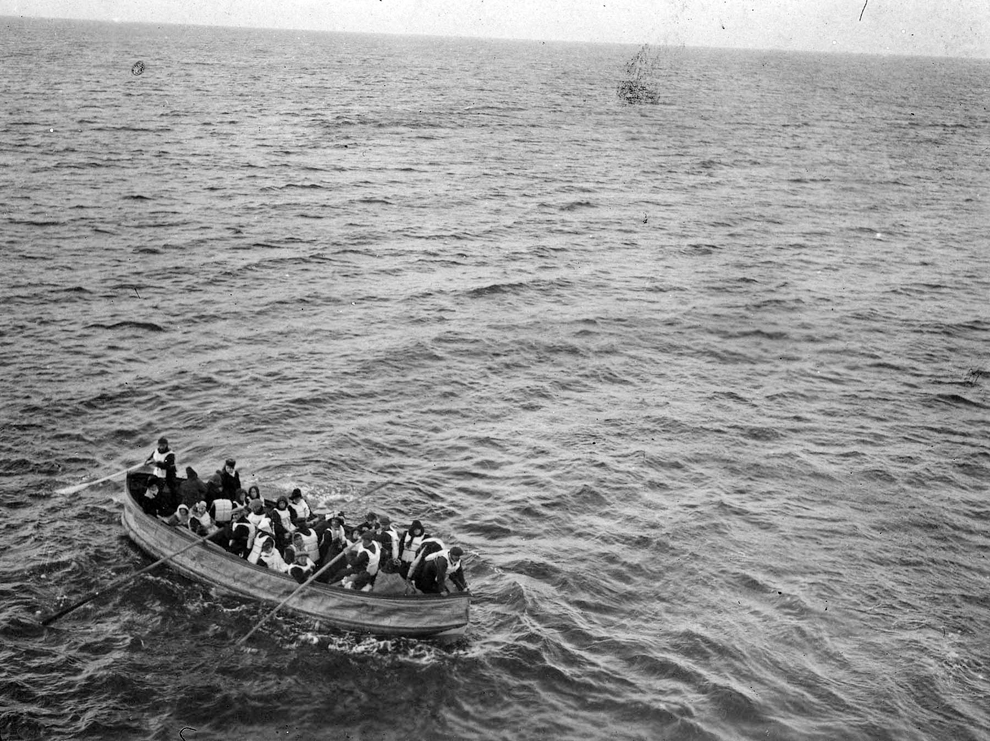
706 people survived the sinking of the luxury liner, the Titanic, in April 1912. One of those survivors was a young woman named Maddie. She was a the second, young wife of an older man, a man who put Maddie into one of the sinking ship’s lifeboats and reassured her that he would be on one of the other lifeboats. Don’t worry, he said. I’ll be right behind you, he said. Well, it’s not hard to guess that Maddie’s husband didn’t make it off the ship.

That left the young woman a young widow. And five months pregnant with her first child, technically making the actual number of survivors 707. That baby, a boy born in August of that year in New York City, came into the world with the specter of the doomed Titanic hanging around him. His mom called him Jakey, after his father’s name of John. As he grew up, people looked on Jakey with pity; poor boy, they said, born without a dad. The Titanic baby they said. His mother Maddie, not wanting to be alone, met and married a man less than four years after her first husband had died. That marriage didn’t last, but the man did help to raise Jakey. And, the union did produce a brother for Jakey, another boy, and the two step-brothers remained close all their lives. However, the same year she divorced husband number two, Maddie met and married another man, a young Italian boxer.

Jakey liked the first man her mom married after his dad died, but he loathed the boxer. That guy was not much older than Jakey by the time Maddie married him, and Jakey didn’t understand what his mom saw in him. For his part, the boxer picked on Maddie’s oldest boy, saying that bullying him would toughen him up for what life had in store for him. Poor Jakey! But things got worse.

After managing to leave the home at age 21, Jakey met a woman in 1934 and fell in love with her. But the woman said that the young man was too immature for marriage, and, even though they were engaged, she broke off the relationship. Turns out that her parents had convinced her that he was strange, Jakey was. He was, after all, that guy who had been the Titanic baby. Jakey was heartbroken. So, he decided to get on a ship and go away for a while. When he came back, he quickly found another woman and fell in love with her. This woman was the best friend of his first fiancé, oddly enough. The couple married. They divorced 8 years later. Then, Jakey married another woman in 1944. He divorced her a decade later. That even was then followed by two more marriages. Poor Jakey was cursed in life and love, he felt.

Yet, the four marriages produced two children for him, a boy and a girl. Like his love life, Jakey never really settled on a career, either. And, when he died in 1992 at age 79, of course his obituary mentioned that he was born as that poor Titanic baby. And you may sort of know him already, in fact. You see, in 1953, Warren Kremer and Alfred Harvey, the creators of Harvey Comics, created a character loosely based on Jakey.

I mentioned earlier that Jakey’s father’s name was John, and that was also Jakey’s name; his full name was, of course, John Jacob Astor VI, and he was one of the heirs to the Astor Family fortune. But because of his life of seemingly bad luck, beginning before he was born, he was known all his life as the Poor Little Rich Boy, like the comic book character, Richie Rich.

On a Deadly Flood

England has been flooded lately. This late fall and the last week of the year 2023 saw record rainfalls in a nation known for being, well, wet. Only this week, the beginning of the tunnel connecting Britain to Europe by train was flooded out, and I have had floods from these rains cause the cancellation of some train travel due to inundated railroad tracks. Sometimes, the flooding causes deaths, but Britain has been exceptionally lucky in this area.

Boston, in 1919, saw a localized flood that killed over 20 people and severely injured dozens.

In this case, however, the cause of the 1919 Boston flood wasn’t rain. Instead, the flood was caused by a reservoir bursting. The Purity Company made products that required large storage tanks for manufacturing. In this particular case, Purity’s holding tanks were over 50 feet tall (15m) and had a circumference of 90 feet. I’ll save you the trouble of doing the math to tell you that the capacity of the tank was 2,3 million gallons or 8,700 cubic meters. The facility was located in the north end of Boston, quite near and convenient to the docks. However, when the tank ruptured and the flood happened, the crowded buildings in the neighborhood funneled the flood through the narrow local streets at a speed of over 35mph (55km/hr). That’s why so much destruction was caused and so many people were either killed or wounded.

Today, science can explain what happened that January day over 100 years ago. As temperatures rose to above freezing and more liquid was added to the tank, the warmer liquid that was added to the tank that day caused the existing liquid in the tank to expand, and that caused the almost explosive rupture of the tank. People who later gave their eyewitness testimony to both the police inquiry and to the local papers described a low, almost growling rumble that first produced what sounded like machine gunfire as the rivets of the metal tank started shooting off the sides. Then, those who were there spoke of a thunderous, explosive burst as the tank tore itself apart from the pressure of the rising temperatures.

As a result, a wave over 20 feet tall swooped through the canyons between the buildings. Everything in the path of this mini-tsunami was wiped out–people, wagons, storefronts, horses–everything. Even some smaller buildings were swept off their moorings. A streetcar was toppled in the wave. And, after the initial wave hit, the rescue efforts were thwarted by the 3+ feet of standing liquid that kept first responders from the scene. Several people who survived the initial flooding died because they became trapped by the liquid and drowned in it. Some of the first help to arrive came from a local naval training ground. The cadets there rushed in as quickly as they could and assisted those trapped by the flood. These cadets were the heroes of the day for many.

The oldest victim that day was 78, a messenger who came out of retirement to work part-time. The youngest was a 10 year old schoolgirl. The Purity Company was found responsible for the flood, and they had to pay out millions in compensation. The flood destroyed much of the factory, of course, and today, nice ballfields occupy the site where the storage tank once stood. In between two of the play areas, a nice plaque remembers the day of the flood and memorializes those killed and wounded by it.

Oh, by the way, local legend says that the smell from the flood stayed in Boston well into the summer. Even the harbor’s color was changed by the flood. You see, apparently, it’s simply quite difficult to remove both the color and the smell of that much molasses.

On a Meeting in Wartime

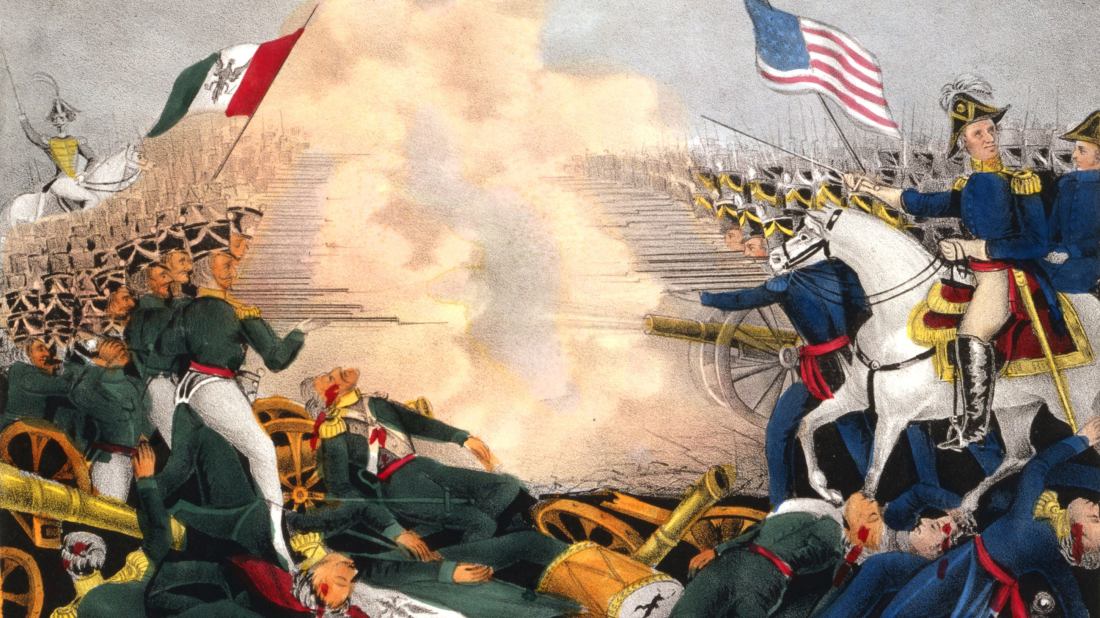
The United States has fought in several wars over the nation’s 250 year history. The war that probably gets the least amount of print in history texts or even mentions in the public mind is the Mexican War, which was fought from 1846-1848, not quite two full years. The war was a resounding victory for the still-fledging United States, with the US Army easily conquering the entire country and entering Mexico City as conquerors. About 18,000 American military personnel were either killed, wounded, or missing from the fight, while Mexico’s military casualties were about twice that. At the war’s end, the United States kept everything from Texas to the Pacific and gave the rest back to a more amenable Mexican government.

For the next decade, men like the heroes General Zachary Taylor (who was later elected president) and General Winfield Scott (and others) dominated not only the American military but also much of American politics. Another of the main results of the war was that it provided what would become most of the officer class on both sides of the American Civil War which began a short 12 years later. Some historians have called that war “the training ground” for the experience it provided the soldiers who would lead both sides in the next war. Men who were junior officers in Mexico would become colonels and generals when the Southern States would rebel beginning in 1860. That meant that men who fought together to a victory over Mexico would fight against each other when the Confederacy took up arms against the United States.

A chance interaction between two officers during the Mexican War bears repeating. The story is told that a young American lieutenant named Sam, his regiment’s quartermaster officer, had been out foraging on horseback in the Mexican countryside for food and supplies. He was returning one hot afternoon to the army’s encampment not too far outside Mexico City as the American were preparing to take the city in the next several weeks. Sam was tired, sweaty, and dirty. His uniform front was unbuttoned because of the heat. Now, Sam was a good horseman, but keeping his uniform in regular “army condition” was never a priority for him despite the fact that he had graduated from West Point a few years before. At any rate, here he came, riding back into camp looking like a tramp in an army tunic.

As Sam was dismounting, a colonel came up to him quickly. Sam noticed that the man had a bushy mustache, an immaculate uniform, and spoke to him with a distinct southern accent. The colonel upbraided Sam for his slovenly appearance. Sam was somewhat taken aback, but he knew better than to dispute with the older and higher-ranked officer. Sam buttoned his tunic, wiped the grime from his cheeks, and saluted the colonel. The officer returned Sam’s salute, turned, and walked away.

Now, such a short encounter would probably not be remembered by most men, but Sam kept the meeting in his mind. In 1865, as the Civil War was ending, Sam ran across that very same colonel as the Southern troops were surrendering. The two men met once again in the front room of a house on one of the battlefields. In an effort to be jovial to the defeated rebel, Sam reminded him that they had met years earlier in the Mexican War. Sam recounted that first meeting, but the former colonel looked puzzled. The man who had been the colonel back then told Sam that, yes, he vaguely remembered the incident but that he didn’t exactly remember that it had been Sam whom he had reprimanded that day. The two men, veterans of two wars–one in which they had been comrades and one in which they had been enemies–reminisced about better days for a moment. But the moment of reflection passed.

It was then that General Robert E. Lee of the Confederate Army reminded the commander of the Union troops, Ulysses S. Grant, known as Sam to his friends, that they had better get on with the surrender of Lee’s troops and end the Civil War.

On a Bellboy’s Tip

Tipping is always a minefield for me. Staying in Europe for a bit, the system of when, where, and how much to tip is vastly different from that in the United States. But when it comes to dealing with hotel staff members, I’m more than happy to show my appreciation for assistance and knowledge. On the other hand, these days, I don’t usually carry cash with me, and, instead, I rely on the touchless pay systems of my mobile phone. Other travelers throughout history have encountered similar potentially awkward situations of not having ready cash to tip staff when a service is rendered.

Take the case of Al.

Al was born in Germany in 1879 and had become a academician and professor. His research and work had gained a reputation, and, because of this, he was traveling in Japan an speaking at some universities on his specialty subject in early November, 1922. He and his wife were staying at the Imperial Hotel in Tokyo while his lectures were going on at the nearby national university. The couple were in the lobby, enjoying a drink, when a bellboy at the establishment came up to him and handed him a telegram. We aren’t sure that Al didn’t have change–some versions of this story say that the bellboy refused a tip in the first place–but for whatever reason, the young man didn’t receive money for his service to Al and his wife.

Looking around, Al saw some Imperial Hotel stationery sitting on a nearby table. Taking a fountain pen from his coat pocket, he grabbed two sheets of the stationery and scribbled two notes and gave them to the bellboy. The first note read, in German, “A calm and modest life brings more happiness than the pursuit of success combined with constant restlessness.” The second note said, “Where there’s a will, there’s a way.” And then Al signed and dated both notes.

The bellboy looked somewhat confused. It’s unclear if the young man knew who Al was at the time, in fact, and that means that we can understand his confusion. It seems that Al sensed the bellboy’s hesitation at receiving the notes, so he tried to explain to him. “You keep those,” Al told him. One day, he said, you can sell those notes and they’ll be worth more money than any tip I could give you as a tip today.

Fast-forward to 2017, a full 95 years after Al gave the bellboy the pair of notes as a tip. At an auction in Jerusalem, the first note was sold to a private European collector for $1,560,000. The second, shorter one, sold for almost $250,000. Turns out that Al was right. The notes were worth more than any tip he could have given the bellboy. Interestingly, the notes had been passed down from the bellboy to his grand nephew, who was by then living in Germany. Who was this man whose autograph and handwriting could bring so much money at auction?

Seems that besides knowing about physics, Albert Einstein knew a little something about the value of autographs as well.

On a Local Commercial

Maury was born in Mississippi right before World War 2, but he grew up near Washington D.C. in the post-war period. That was when television was becoming a staple in many American homes, and Maury took to the new medium with great enthusiasm. Every afternoon, the youngster would plop himself in front of the screen, like many of his generation and the ones since, and soak up whatever the “vast wasteland” had to offer.

He was fascinated by the performers he saw on the variety shows that crossed his eyes during the 1950s. While many of the performers on early TV were crossovers from radio, Maury was particularly taken with Edgar Bergen, the famous radio ventriloquist. He eventually attended the University of Maryland where he studied commercial arts and home economics, but his true passion was creating a comedy/variety show that featured marionettes for a local TV station, WRC. Along with a fellow student (who eventually became his wife) named Jane, Maury created a show called Sam and Friends. The comedy show ran for five years on the channel, and the characters on the show became popular locally. That led Maury to be hired by different companies and businesses in the D.C. area to create commercials that featured the marionettes he’d written for on the Sam and Friends show.

The most popular commercials Maury created were for a local business, the Wilkins Coffee Company. The marionette characters that were featured in the ad series were called Wilkins and Wontkins (Get it?). Maury not only created the ads, but he also wrote the ad copy and voiced both characters. The commercials were a hoot (You can even find them on YouTube today.). Now, this was early 1960s, and most ads were of the type you would see produced on the show Mad Men, that is, they were what ad men called the “hard sell.” The Wilkins ads were the opposite. The ads were silly and fun, and they ran for only about 7 seconds each.

The usual script called for the Wilkins character to tell the audience how wonderful the company’s coffee was, and then Wontkins would come in and disagree. That would make Wilkins retaliate against Wontkins by doing things like shooting him out of a cannon, hitting him with a pie, or dousing him with water. And the spots were refreshingly hilarious. People loved them. The Wilkins company was thrilled with the public outpouring of approval of both the commercials and for their product. Maury made good money on the spots. He produced over 300 of them. Those successful coffee commercials led to more and more work and even some appearances on national TV with his marionettes. Maury later said that he wasn’t selling coffee; he was selling laughs. 

That idea of selling silliness stuck with Maury. He took the Wilkins character and decided to create a slightly new character out of him. That character would make Maury internationally famous. The Wilkins puppet’s head reminded Maury of a toad. So, he went with that. Of course, you know the character today really well.

That’s because his creator, James Maury “Jim” Henson, turned him into Kermit the Frog.