On the End of the World

The World’s End is a pub on the Royal Mile in Edinburgh. It derives its name from being near the place where old Edinburgh’s city wall was. Back in the day (over 300 years ago), if a person left the town, he or she would have to pay a tax to re-enter. Since poorer people could not afford to pay this tax, they therefore could not leave the city’s confines. Thus, for these people, their world ended at the city gate. That is one definition of the end of the world. The other definition is one in which the world itself comes to an end, and that’s what we will look at in this story.

Climate change. Natural disasters. Food and basic needs shortages. Disease. War. A large movement of refugees and displaced persons. Permanent supply chain interruption. These are the components of the end of the world’s existence, or, at least, the end of the world as a particular civilization might know it.

But take this description of signs the world is ending:

“Morality is no longer important to people. Children lack respect for what advantages they have or for what the adults in their lives have done for them. Younger people have no desire to do an honest day’s work any more. All people live for now days is to accumulate more things, more furniture, more land, more possessions. Things and the pursuit of them have replaced affection for other humans in the hearts of most people today.”

Sounds like much of what we hear about our society today, doesn’t it?

Would it surprise you to learn that in almost every major civilization since the dawn of history, the same sentiments have been expressed about the dissolution of the society of the day? It’s true. Much of what is described above that sounds so true to today’s western society was actually written over 3500 years ago by a scribe in Mesopotamia, what is now Iraq, on a tablet and discovered by archaeologists in the past century. The Mayans (remember that “end of the world” calendar scare a few years ago?), the ancient Chinese, African folklore, Celtic tradition–they all and more have shared similar complaints about the “modern” world.

In other words, not much has changed in the human condition in millennia.

And it’s also true that, like every other civilization and empire and nation, our modern world will give way to the next modern world–whatever that will look like. In many ways, we all experience something similar to those residents of auld Edinburgh, and we come face to face with our own individual World’s End–the end of our days, our careers, our relationships, our health, our living arrangements, and our lives.

And the world will go on as it always has–world without end.
On a Guest Star

You probably know by now that I’m a huge Beatles fan. My top ten list of all-time greatest rock band is: 1-10. The Beatles. See? You might could make the argument that producer George Martin was, in many ways, the 5th Beatle, the man who helped them dub and overdub and edit and compose and arrange their talent into hit after hit. And it probably won’t surprise you to learn that the Beatles occasionally had guest stars appear on several albums and songs. Billy Preston, for example, plays the electric piano on the recording of “Get Back.” Eric Clapton handles the guitar solo on George Harrison’s famous composition, “While My Guitar Gently Weeps.”

What you may not know and will probably be surprised to learn is that the guest star appearing the most on Beatles songs and albums was not a well-known name at all; no, this guest was an Abbey Road Studios mainstay known to all simply as Mrs. Mills.

Yes, Mrs. Mills had been employed by various recording artists around the Beatles’ favorite studio for several years when Martin first suggested that the Fab Four choose her to make guest appearances on several of their most iconic songs. As a result, you’ll hear Mrs. Mills on “Penny Lane,” the song Paul McCartney penned about growing up on his childhood street in Liverpool. Mrs. Mills also pops up in “Lady Madonna,” another McCartney song. And, from the iconic Sergeant Pepper’s Lonely Hearts Club Band album, Mrs. Mills makes an appearance on “With a Little Help From My Friends,” sung by drummer Ringo Starr. “She’s a Woman,” “Rocky Racoon,” and “I Want to Tell You” also feature Mrs. Mills.

All of this information begs the question: Why haven’t we heard more about Mrs. Mills?

Well, Eddie Vedder, the former lead singer for Pearl Jam, had heard the largely unknown story about Mrs. Mills’ contributions to the Beatles song canon, and he wanted to let others know about this important but overlooked piece of rock history. So, Vedder wrote a song entitled, appropriately, “Mrs. Mills” and invited former Beatles drummer Starr to provide the drums for the song. Ringo was happy to oblige. In the publicity surrounding the song’s release, Vedder also reminded the press that other artists had, over the years, also employed Mrs. Mills in their work without giving proper credit, including such virtuosos as Elton John and Stevie Wonder.

Would it surprise you to know that, even though Mrs. Mills was on all those Beatles songs, that in none of them was Mrs. Mills on key? And that Mrs. Mills was purposely tuned that way?

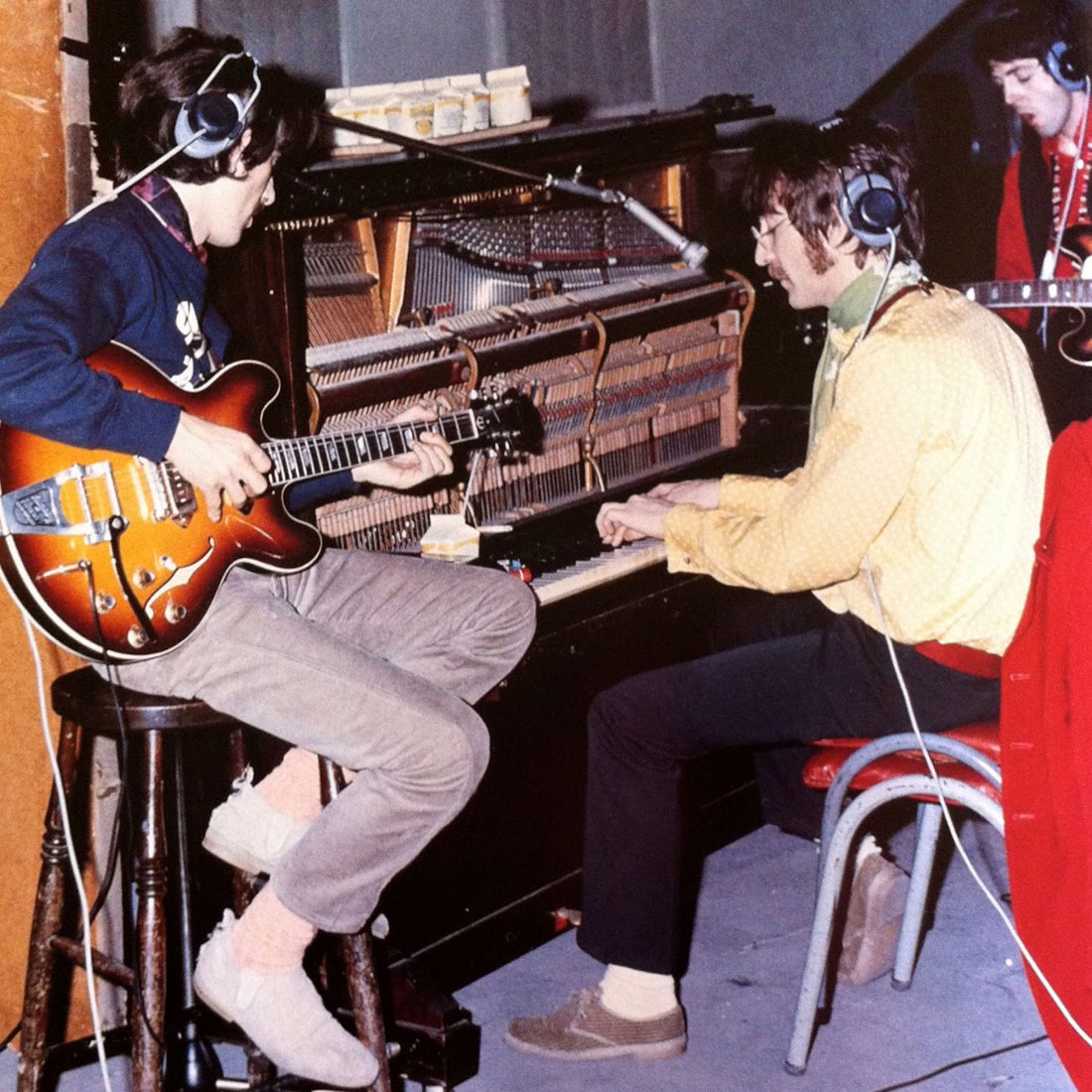
You see, Mrs. Mills was the name of the Abbey Road Studios upright Steinway piano.

On a Racist

Racism is dumb.

Let’s get that out there from the start. Why would anyone hate or dislike someone simply because the skin on that person has or doesn’t have a certain amount of melanin? And why would we say that everyone who shares that skin type behaves or acts or thinks or feels a certain way because of the melanin in the skin?

Racism is stupid.

This story is about one such stupid person. He was born in Alabama in the early 1960s. His family, while not rich, employed a Black woman as a maid and helper around the house since the mother had mobility issues. The man’s dad, a building contractor, had a Black man to run errands for the mother and drive her to places during the day that she or the children might need to go. So, he was born into a culture where people of darker skin were the servants, the ones who did the work for the people of lighter skin. Now, you might argue that this isn’t enough to make someone think themselves better or superior to someone else, but it certainly creates a feeling that there is an order to things, a certain hierarchy in the way things work.

Racism is part of America’s culture.

The culture around this man echoed this pecking order. He says he remembers vividly a time in the mid-1960s, when he must have been 4 or 5 years old, and he accidently entered the “wrong” restroom in a train station. At the time, there were usually three public facilities in train and bus stations–labeled Women, Men, and Colored. He tells the story that an older Black man gently led him out of the Colored restroom, saying, “You’re in the wrong place, little man.” Things like that tend to stick with one and form the attitudes we have towards other people. If society decides to segregate, then who am I to question, the man later reasoned.

Racism tells lies.

Now, this man would defend his racist mentality by arguing that he wasn’t racist; he was merely prejudiced. Racist people sometimes do this to salve their consciences. “No,” they will say, “I don’t hate anyone, but I can’t help but feel that they all…” and then a list of racist stereotypes usually follow that broadly apply to whoever “they” are. This is racism, no matter how we try to convince ourselves that it is not.

Racism can be insidious.

This man and his friends will insist, when asked, that minority groups in the United States are racist. This “what aboutism” is also another attempt to soothe the racist psyche. This argument deflects from them having to confront their own hatred and, at the same time, makes them feel more justified in keeping that hatred in their hearts. Most of their so-called evidence for this racism is anecdotal at best: “My buddy got fired because they had to hire a minority.” Ok, if that’s true, why do you think they had to do that? Do you think the company/boss simply pointed to your buddy and told him to take a hike because he was white? The same laws that protect minorities from discrimination also protect people in the majority from it as well. But that doesn’t feed into the racist narrative, does it?

Racism is a bully.

Another thing this racist man wonders is, “Why is there a Black History Month? Why isn’t there a White History Month?” Really? Do we have to explain that the contributions to our society and nation by minorities, especially Black Americans, have been marginalized, appropriated, and minimized for the past 400 years? And how is your life affected by simply recognizing the fact that minorities have been instrumental in creating the life that you enjoy? How is that recognition detrimental to your well-being and life situation?

Racism is alive and well, sadly.

The comedian Louis C.K. (who has his issues on other topics, for sure) reminds us quite correctly that racism is part of our past and therefore part of our present as well. It cannot be, should not be, must not be ignored. We must insure that are not voting for someone who is an obvious or even possible racist because to do so is to invest our power in the hands of someone who hates another person. We must speak about racism and work against racism and, if needed, march and petition and vote and fight like hell to recognize, call out, and, one blessed day, end racism.

And, what about our racist man in this story?

Well, the racism that is within me is dying–but not as quickly as I’d like it to.

On a Nice Woman

Louise was nice. Everyone said so. In 1957, facing increasing difficulty finding work in Alabama, Louise accepted an invitation from her brother’s family to move to Detroit, Michigan, and find work there. Jobs were plentiful, her brother said, and someone of her disposition and abilities (she had decent schooling) would have no trouble finding work. So, that’s what Louise did.

Now, you should know that Louise was African-American. Detroit, she thought, would also offer a less divided, less segregated society than the Alabama of the 1950s was. Sadly, Louise found out that Detroit was almost equally as racist and segregated as Alabama had been. For example, Louise experienced discrimination when it came to searching for adequate housing in metropolitan Detroit. On the other hand, her brother had been correct; Louise found work as a secretary and receptionist in the Detroit office of United States Congressman John Conyers, one of the first black officeholders from Michigan. It would be a position Louise held until she retired in 1988.

Even during her initial interaction with her boss, Conyers noticed one thing right off the bat about Louise, and it’s something we have already pointed out. She was simply so nice. “You treated her with respect,” the congressman said once, “because she was so calm, so serene, so special.” Louise was often the first point of contact for people reaching out to their congressional delegate, and she took every issue, every question, every appeal personally and seriously. You know that if Louise had her attention on your issue, that she would see to it that it would reach a conclusion that satisfied you.

It was her quiet way, her nicety, that made people open up to her and, well, want to help her any way they could. You knew your issue would be resolved when you brought it to Louise. In her role as Conyers’s spokesperson in the community, Louise visited schools, hospitals, nursing homes, low-income housing communities, jails, and churches, working in her own quiet way to affect change in the way people in that congressional district (and beyond) were treated.

All the while she worked long hours on other people’s behalf, Louise managed to nurse a husband with cancer and a mother with cancer and dementia until both passed away. She herself suffered health issues that she kept quiet and private, working through pain because, as she insisted, people were counting on her voice in carrying issues and situations before Congressman Conyers. She was also attacked by a robber in her own home in retirement, but in court she advocated for leniency for the robber. Who does that?

Someone who was nice.

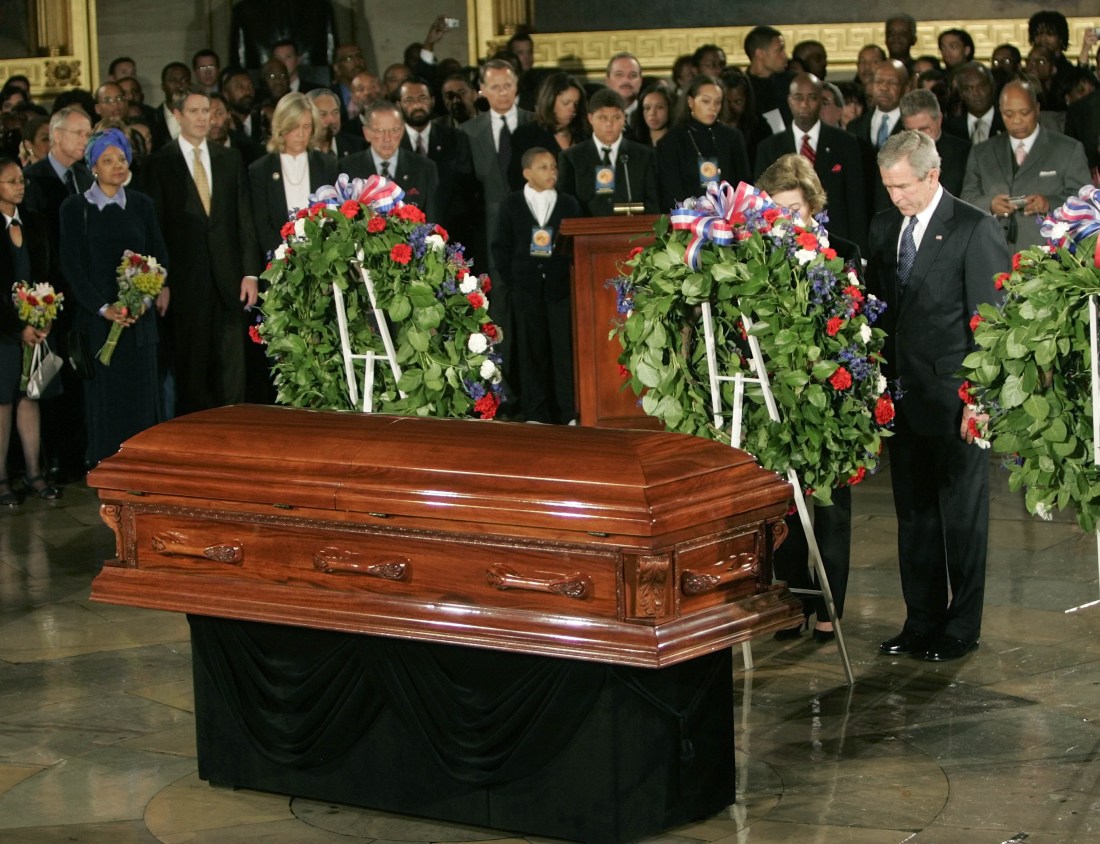
When Louise passed away in 2005, her funeral was well attended despite the fact that it wasn’t held in Detroit nor even in her old home of Alabama. Louise’s funeral was held in Washington, D.C., and she remains only non-officeholder to have her body lie in state in the United States Capitol Rotunda. But this unique honor wasn’t because Louise was nice.

It’s because you know her better by her first name, Rosa.

Rosa Parks.

On A Balloon Flight

Balloons are in the news lately in the United States, so a story about their origins might be timely and appropriate. Steve and Joe Montgolfier were a couple of French brothers who had inherited their dad’s paper company. Their firm made bags and wrapping paper as well as paper for stationers and books. With their considerable profits, the brothers began experimenting with, among other things, filling bags with hot air and letting them float up, up, and away. (The brothers also invented transparent paper, by the way.) This was the late 1700s, and such things as floating bags of hot air were unusual to say the least. But it was the period of experimentation and scientific enquiry, and these brothers get credit for creating the first successful hot air balloons made first out of paper and eventually out of fabric.

After starting small, the pair eventually crafted a bag that was over 30 feet wide and over 50 feet tall. This experimental, unmanned bag floated over 1,000 feet up over the French countryside. The success of the experiment pushed the brothers to make a larger, grander bag that could, conceivable, carry living things from one place to another. Now, based on their diaries and on conversations with them at the time, the Montgolfiers had no idea what science was behind the way their hot air bags worked. They surmised that it was the composition of the smoke from their fire that created the lift rather than the heat from the fires making the bags rise. In any case, they get and deserve the credit for being the first in the modern world to create a method for flight over 100 years before the Wright brothers invented their heavier than air craft.

Finally, it was time for a test flight with passengers in the balloon. The news of the Montgolfiers’ experiments had spread, and the brothers were summoned to show the contraption to King Louis of France himself at the royal palace of Versailles. And, this time, the balloon was over 7 stories tall and over 45 feet wide. On September 12, 1783, the royal court was seated outside to watch the event. King Louis “volunteered” three members of his royal estate to be the proverbial guinea pigs and be the first to ride in the Montgolfiers’ balloon. Of course, the trio had no say in the matter–the King, after all, had decreed it. A female–Madame Brebis–and two males–Monsieurs Coq and Canard–took their places inside the basket of the balloon, and soon, they became the first beings to rise above the earth in a lighter than aircraft. This trio soared over 1500 feet above the palace grounds, and they landed safely over 6 miles away. The experiment was a success, and the brothers received the court’s thanks and a handsome reward. As you might expect, experiments such as this soon became lost in the ensuing French Revolution, but the triumph of the Montgolfiers set the stage for the continuing experiments of the 1800s in balloon and dirigible flight.

We do not know how those first three passengers reacted to what they witnessed from the balloon basket that fine September day. No one asked them, and, it wouldn’t have mattered if anyone had.

For, you see, brebis, coq, and canard, are the French words for ewe, rooster, and duck after all.

On a Spy’s Code

Espionage and sending coded messages is as old as man, almost. The old joke that when God made the third human that a plot was hatched by two of them against the other one has some validity. And finding a way to confidentially pass information gleaned by secrecy became an important part of how to successfully carry out any plot. We know about cyphers, about dead drops, about messages in symbols, and even numbers stations. We’ve talked about some spies in this format (Mata Hari, for example), but this is about a particular spy code in World War 2 that came from an unlikely source.

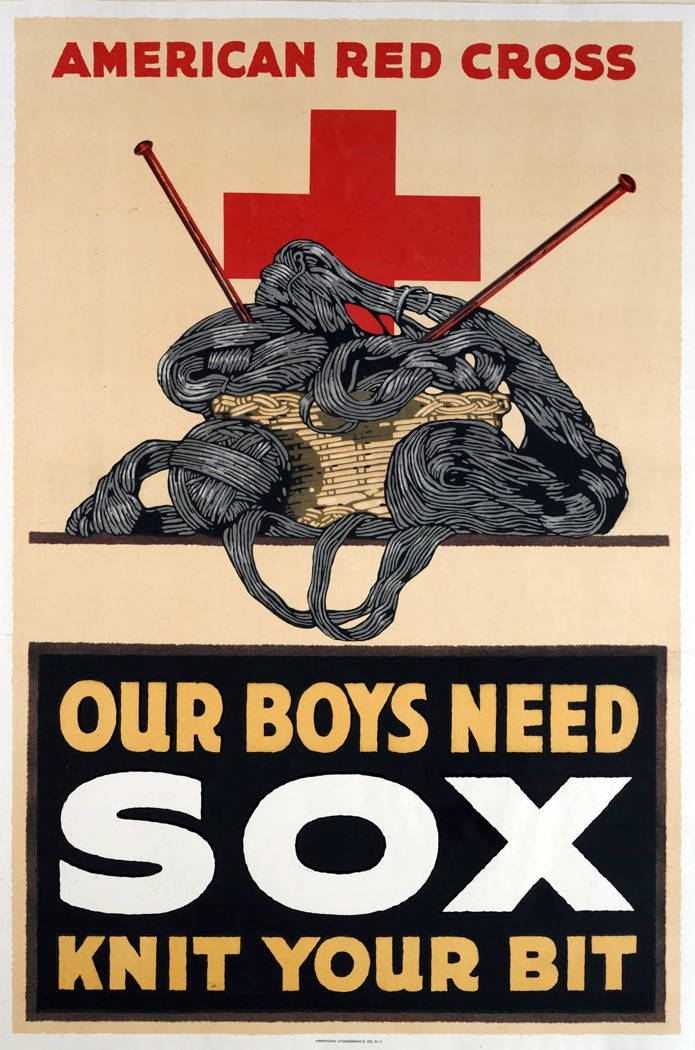
Sometimes, and especially in this day of high tech, the more low tech a message is, the more secure it can be. That is the case here. The spy in question was a British agent named Phyllis. She had been dropped into Nazi occupied northern France in the weeks and months before the Allied forces invaded Normandy on D-Day, June 6, 1944. Phyllis’s job was the blend into the countryside, to watch German troop movements, listen to local gossip regarding defenses as she sat knitting with the other women, and sometimes flirting with the occupying soldiers in an effort to glean more vital info that could make the difference between success and failure of the impending invasion.

One harrowing experience came when she and some other women were brought into the local police station for questioning. Their movements and activities had aroused the Nazi’s suspicions, and the women were thoroughly searched for any possible evidence that would implicate them in espionage activities. A female policewoman made the women strip to search their clothes for any potential messages or proof of spying. The policewoman noticed that Phyllis had her hair tied up on the top of her head with one of her crocheted pieces, and she insisted that Phyllis take her hair down in case something had been hidden there. Phyllis quickly complied, and she revealed that nothing was in her hair bun. Telling the story years later, Phyllis recalled how scared she was, how terrifying the situation had been, and how the Nazis actually came to finding the information that she indeed had hidden in her hair.

Except the coded messages wasn’t in her hair. It was in the crocheting. In fact, the kitting the Phyllis and the other women did in Normandy contained codes in the knots and the loops and knits and purls within the kitted piece. She used the knitted items to send coded messages about the German defenses to people who had hidden radios, and that’s how the Allies knew which areas of Normandy would be the best to invade in that late spring of 1944.

Yes, one of the best weapons the Allies had in the invasion of Europe was a pair of kitting needles.

On Love at First Sight

The Greeks referred to it as “madness from the gods” when a couple fell instantly and madly in love from the moment they first saw each other. The effect of this overwhelming sensation was like being pierced through the heart, and that’s where we begin to get the idea of this little cherub (or demon, depending on the outcome of the relationship, perhaps) with the bow and the quiver of love-tipped arrows. The afflicted would thus be stricken with “love sickness” that nothing but the object of the affection could begin to treat.

We are not talking about mere infatuation here. Rather, we are talking about the deep, abiding passion that arises when we first see the person we were meant to spend the rest of our lives with. And, since Valentine’s Day approaches, perhaps it’s a good time to examine this phenomenon.

The medievalists took the Greek and Roman notions of the love god and expanded upon it. By the time the concept got to Shakespeare, he, too, spoke of it, writing in in As You Like It, “Who ever loved that hath not loved at first sight?” His contemporary, Christopher Marlowe, used the same phrase in his writing as well. And modern psychologists continue to study the phenomenon, finding through extensive research that we humans make these type of love-in-an-instant decisions in less than 0.15 of a second. They have concluded that it is within these microseconds that we determine whether or not the relationship will last or not, even if we are not aware that is what we are doing. The strength, the intensity of that love at first sight thing is a greater predictor of relationship success than compatibility or any other single factor, the scientists say.

Romeo and Juliet, Sense and Sensibility, many stories in the Bible (father and son, Isaac and Jacob, feel this for their wives), and even the Hunger Games all feature this strong feeling of love between couples. Many (Most?) rock and popular music write about it. “Would you believe in a love at first sight?” Ringo’s friends seem to ask him in “A Little Help from My Friends,” to which the Beatles drummer answers, “Yes, I’m certain that it happens all the time.” Mozart, Wagner, several other classical composers created operas around the theme. And let’s not get into the love at first sight film canon.

So, here’s to instant and lasting love. It’s what makes the world go ’round. Or so they say.

Happy Valentine’s Day.

On a Crazy Idea

Mr. Tolman’s chemistry class was one of the school’s more popular ones. Besides the fact that he was one of the older teachers at the high school in Rigby, Idaho, his teaching methods and personality attracted students’ attention and respect. It’s why they came to him with their problems, questions, and even their brainstorms. It’s why one of his younger but also more creative students came to him with a crazy idea.

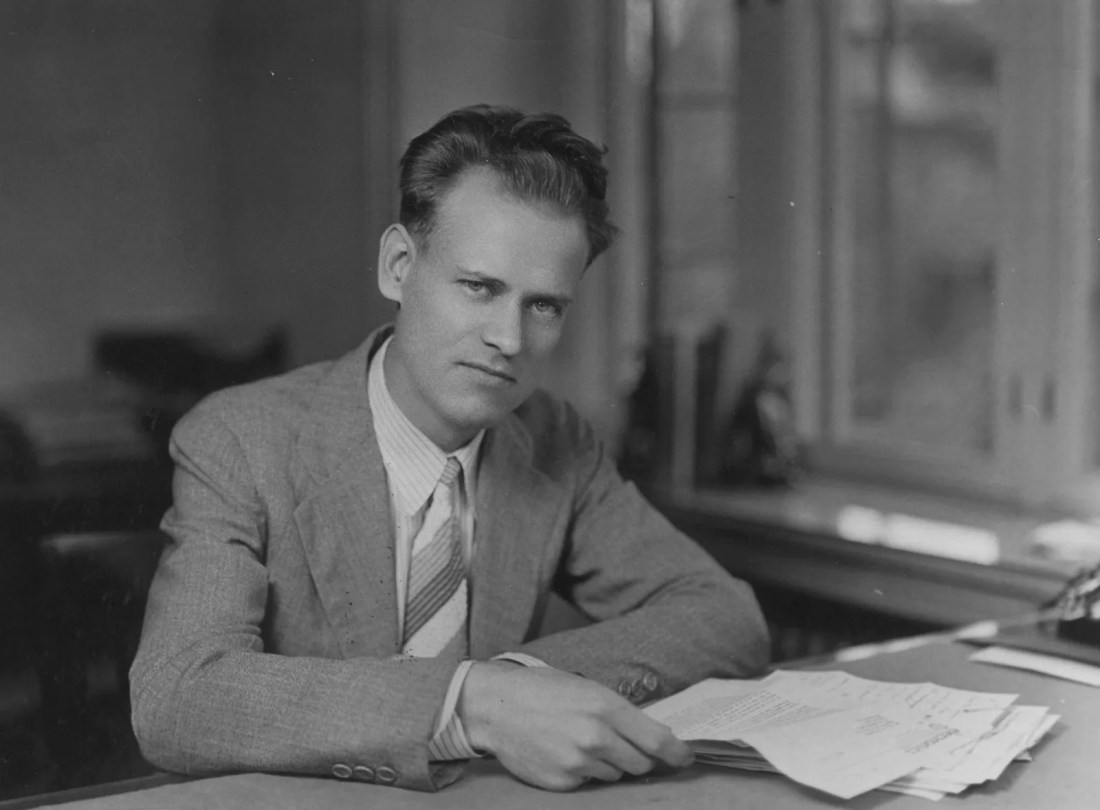
The young man was named Phil. He was barely 14, tall for his age, and skinny. Phil was quite the wizard at the electro-magnetic sciences despite his youth and the fact that he and his family had not had electricity on their farmstead for very long. Mr. Tolman recognized the boy’s savant-like abilities, and he agreed to tutor the young man outside of school hours when the farm schedule permitted it.

One day, while he was plowing a field for his father, Phil had a wild thought. What if he could send pictures through electrical wires–or even the air? This was the early 1920s, and radio was only then becoming the primary means of electronic media for the United States. Phil wondered if voices could be transmitted by both wire (telephone) and the air (radio), then why couldn’t pictures also be sent those ways? He finished the plowing, unhitched the horses and fed them and put them away, then made his way to the attic of the family house where his bedroom was and where he had set up a crude lab to work on his electricity ideas. There, he quickly sketched an idea of how such a contraption might work.

The next morning at the breakfast table before school, Phil told his father about his idea. The dad, while realizing that his son knew so much more about electricity than he did, still worried how other people–famers, like him, who were largely ignorant on how such things worked–would react to such talk of sending pictures through the air. The boy was using words like “electrons” and “tubes” and other jargon that the man simply didn’t comprehend. He told Phil to stop talking gibberish and get to school. This frustrated the boy, and he angrily grabbed his book-strapped texts and headed out the door.

When Mr. Tolman entered his classroom that morning, he found Phil standing before his wall of chalkboards. Drawings and diagrams covered the surfaces. “What’s all this?” Mr. Tolman asked. Phil spun around. “I have an idea.”

“What does this have to do with chemistry?” Tolman asked, looking at the maze of lines and squiggles. “Mr. Tolman,” Phil began, swallowing his frustration at his father’s response, “you might be the only one who’ll understand what I’m thinking about. Let me explain it to you.” And, over the next several minutes, Phil explained his concept to his teacher.

And, Tolman told the entire story as he testified in court many years later, when powerful companies tried to sue Phil over his claim that he, not they, was the inventor of the greatest mass-media innovation ever created

“Television?” Mr. Tolman had asked 14 year old Philo T. Farnsworth many years before in his Idaho classroom. “What’s that?”

On a Bank Robbery

The bank located at the busy corner in the Lebanese capital city of Beirut had only reopened after the traditional closing for an hour at lunchtime. A young woman, no more than 25, entered the building. She seemed like a typical bank customer, and she approached an available teller with a grim smile. She was dressed in a sleeved thin hoodie and wore dark trousers and tennis shoes. All in all, she looked like a typical Lebanese girl. Suddenly, the young woman–whose name is Sally–reached into the waistband of her dark pants and pulled out a pistol. She waved it in the air and announced, “This is a robbery!”

Now, let me say something about banking in non-western nations. While robberies (and usually armed robberies at that) happen in the United States, Americans probably know that, even if the bank is robbed, their money is protected. First of all, there is banking insurance in the US where deposits are guaranteed by the Federal Deposit Insurance Corporation (a corporation set up by Congress). Then there’s the fact that your money isn’t actually in the bank per se; the amount of actual cash kept at any US bank is not nearly the amount is has on its books. In other words, if every depositor went to the bank right now and demanded cash, the bank wouldn’t have the $100, $50, $20, $10, $5, and $1 bills it would need to give every depositor his or her cash. But that’s not necessarily true in non-western nations. Many of them have only the cash the depositors have put in the bank–the actual cash. In Lebanon, however, the issues runs deeper. There is a major banking crisis brought on by the financial fallout from Covid-19 and the shuttering of an already shaky financial system. Last year (2022), the Lebanese government mandated that customers could not withdraw more than the equivalent of $400 US from banks in any calendar month. That way, the government reasoned, the financial crisis would stabilize because banks would have more money on the books to invest. Actually, the opposite happened. People began not depositing money in the Lebanese banks. Banks began faltering and closing, leading to the people who had money in those banks losing everything they had. The nation has appealed to the International Monetary Fund for help, but funding is short there as well these days.

And that leads us back to our bank robber, this long haired young woman, this Sally, a person with wide eyes and an engaging smile, who brandished the pistol (a pistol that turned out to be a toy one) and demanded money from the bank teller with such fury in her voice that the bank patrons in the lobby were frightened for their lives. And Sally wasn’t alone last year. Lebanon saw more bank robberies and attempted robberies in the year than it had in the previous ten years. In fact, the day that Sally robbed the bank, three other bank robberies happened.

And the demand that Sally made was made by the other three robbers as well. You see, Sally and the other robbers in Lebanon didn’t simply walk in and demand that the cashiers hand over all the money in their tills. No, all Sally and the others wanted was, simply, what was theirs. Yes, Sally and all the other bank robbers last year in Lebanon only wanted the funds that they had deposited there previously.

Sally thus stole from her own bank only what was her own account.

On a Family Wedding

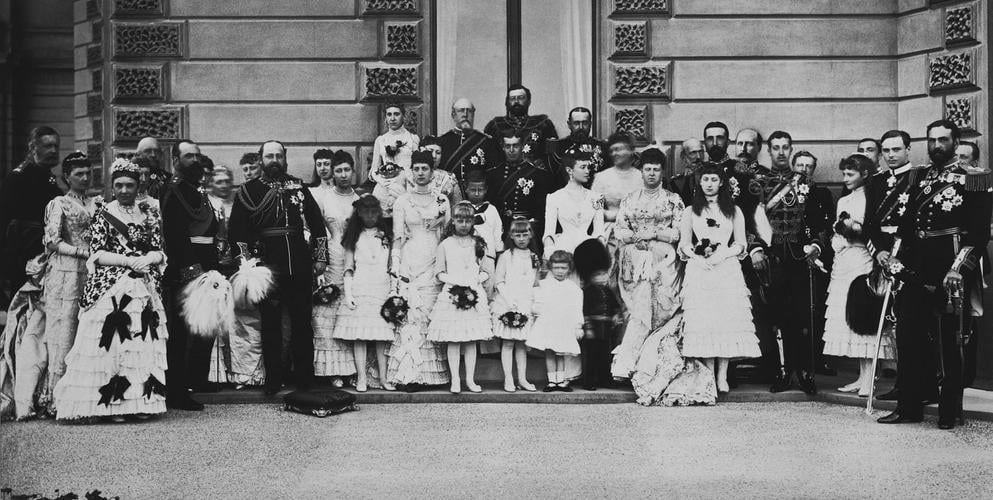
Weddings are usually joyful occasions for families. Large families especially mark weddings and funerals as major events in family lore. Those major life events are times of reconnecting with cousins and distant relations that you don’t normally get to see. That was definitely the case of a large family wedding that took place in 1913 in Berlin.

The bride, Vicky, was marrying a guy she’s gotten acquainted with the year before at, of all places, a family funeral. He was even a distant cousin, and his name was Ernie. Vicky’s dad, from the wealthy class, wanted everyone to come to the nuptials of his only daughter (and favorite child), so he sent word to all the family to make their way to Berlin in May 1913 for the wedding of the decade. He also wanted to use the event to bring the family closer. It’s difficult to keep so many people in touch, especially when there are as spread out as Vicky’s family was. So, the extended family began making their way to the city to witness what surely would be a grand time.

Since this family was from the land-owning class, many of the men in this large group were attached to the military, so the wedding party was resplendent with fancy dress uniforms and gleaming medals and swords. The women wore their best expensive gowns to not only the ceremony but also to the various balls and dinners held to celebrate the happy couple’s wedding. Tens of thousands of German marks were spent on the catering, the bands, the alcohol, the gifts, the decorations, and the cake (the height of which reached almost one story, according to one report).

And, so, it proved to be exactly what Vicky and Vicky’s dad wanted. It was indeed an affair that brought this large, wealthy family together in celebration. Yes, it proved to be an amazing time that was reported in all the papers, an event that people were destined to talk about for the rest of the decade.

Except they didn’t talk about it.

The wedding was forgotten in a little over a year, lost in the disaster that was to follow over the next five years.

You see, Vicky, the bride, was named after her great-grandmother, a woman named Queen Victoria of Britain. Her dad was Kaiser Wilhelm of Germany, and the cousins that came to the wedding–the crown heads of Europe, including King George of Britain and Czar Nicholas II of Russia, and all those other men who wore their uniforms to the event–they went back to their homes and their armies and navies.

And, within 16 months, they would start World War I against each other, in August of 1914 to be exact.

And Vicky’s wedding would be the last time all those royal cousins saw each other alive.