On an Air Force Enlistee

In August, 1922, Mr. John H. Ross went to London and applied to become an enlistee in the British Royal Air Force. That was an odd time to join the military in one sense. The Great War (World War 1) had been over for 4 years. Most military services were cutting back both in terms of costs and personnel. Since the war ended, most world governments believed that another such conflict was not only unlikely but also could not be conceived of. You see, neither Hitler nor Mussolini had quite made their way into the international consciousness, and, besides, the League of Nations would stop any such conflict, surely.

Yet, here was this somewhat middle-aged gentleman approaching the RAF and offering his services. He had papers proving who he was, and the recruiting officer looked over them carefully. He knew that several pilots from the war had returned home after the war, grew bored, and had been itching to return to service. Sometimes these men would use false identities to re-enlist, pretending to be completely new recruits. The officer was named W.E. Johns, and he later became a fairly famous author of crime novels. At this time, however, his job was to ferret out who was a legitimate recruit and who wasn’t. In this case, the man insisted he had no flying experience whatsoever. He admitted to having served in the war, but he said his job was as a lower-level supply staff person.

Officer Johns got the feeling from this John Ross that here was a man who, while sincere, was hiding something. Maybe it was the fact that Johns had experience in knowing the little “tells” recruits had when they lied about their past. Maybe it was something in the way this man carried himself, his presence, that made Johns feel that all wasn’t on the up-and-up. Johns thanked the man for his willingness to be a part of the service, but he told Ross that he believed his paperwork was fake and declined to take him into the service that day. “Ross isn’t your real name, is it?” Johns asked. Ross shook his head “no” and thanked the officer. As he left, Johns figured that was the last he would see of the man.

Surprisingly, a little while later, Mr. John Ross reappeared, this time with an RAF messenger in tow. Ross said nothing, but the messenger handed Officer Johns a written note. It was from his superior officer. The note ordered Officer Johns to admit John H. Ross into the Royal Air Force based on the documents provided. Johns couldn’t understand it. His superiors had never overruled his decisions regarding recruits. What made this man–a man who admitted to using a fake name and fake documents–so special that he had to be allowed to join the RAF?

Johns followed the order and processed the enlistee’s paperwork. He informed Ross that he was now admitted to the air service. Ross smiled and thanked Officer Johns. As Ross turned to go, John’s curiosity got the best of him. “Who the hell are you, really?” he asked.

The man turned back towards Johns’ desk. “I’m nobody. Just want to serve my country,” he answered with a smile.

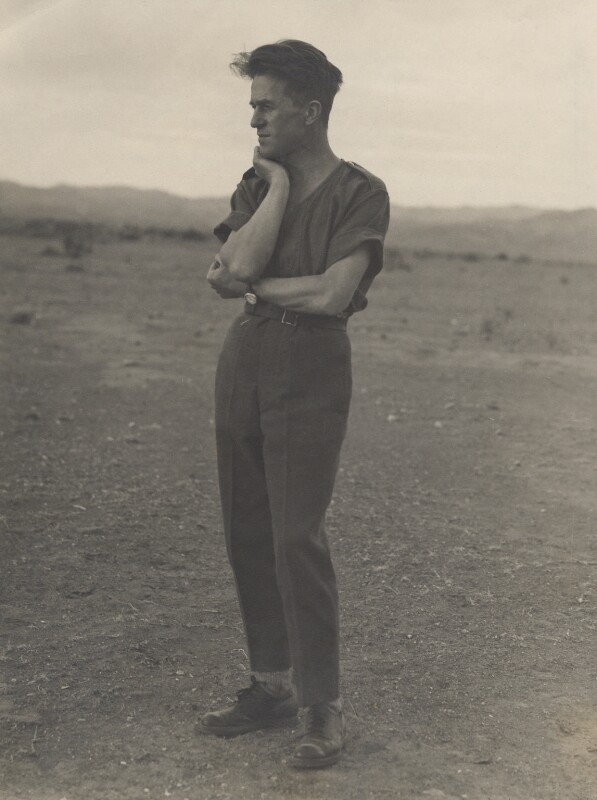
It wasn’t until February of the next year that Officer Johns realized that he had processed the enlistment of T.E. Lawrence, known to the world as Lawrence of Arabia.

On a Genome Project

The study of genetics and the promise of genome science hold out the hope for a future of increased health and quality of life for many. In the meantime, the science has been used for more mundane yet still fascinating purposes. Genealogists have been accessing genetic information for years now, connecting people to ancestors they never knew they had. One such attempt at tracing ancestry in Iceland recently has been interesting and revealing.

The project involves a man named Hans Jonatan, a man of Danish descent who immigrated to Iceland in 1802. I use the term “immigrated” loosely, because Hans apparently hid himself on a ship that left Copenhagen and entered Iceland secretly. He left Denmark after having fought in the Danish Navy, a service in which he distinguished himself. It seems that the prospect of him being sent to the West Indies prompted Hans to make his escape to Iceland. He got a job at a trading post in a village there, and ended up having a wife and a large family. All in all, a good if difficult life.

Fast forward to 2018. Genetic specialists wanted to recreate Hans Jonatan’s genome by only using his descendants’ genetic samples and not using any of the man’s own physical, genetic material. That had never been attempted before. Luckily, Hans Jonatan’s family in Iceland has grown significantly in the past 200 years. Taking samples from several of those family members, scientists were able to reconstruct almost 40% of Jonatan’s mother’s DNA and almost 20% of his.

You might be wondering how this was possible. How could the genetic makeup of someone be recreated simply by, in a way, reverse engineering the man’s DNA? Well, first of all, the fact that Iceland is a remote island nation certainly helps. The place is perfectly set up to isolate a person’s genetic history. And then there’s the other, even more important marker, especially concerning Hans Jonatan’s mother.

You see, while Jonatan’s father was Danish, his mother certainly was not. She was a slave from Africa, brought to the Danish colony of St. Croix, where she met Jonatan’s father. The genome project found that she was from West African tribes. That fact is also why it was so much easier to identify the DNA markers in the attempt to re-create Hans Jonatan’s genes. And the fact that his mother was a slave is why why Hans was being sent back to the West Indies after his naval service.

And, it’s why he escaped to Iceland. Yes, by stowing away and making it to Iceland, he became the first black man to ever live there. And now, over 900 of his direct descendants live there, too.

On a Transportation Innovation

Our modern infrastructure is taken for granted, especially when it comes to our highways and bridges. We don’t even think twice about driving on a road and having it suddenly…simply…end in dirt and dust. We drive across our bridges and never even give thought as to their safety and strength. Those are things we take for granted. Such hasn’t always been the case.

Stone bridges in Europe and the United States served their purposes well. However, there were limitations to building with stone. While the material sufficed to cross smaller streams and valleys, roads that required longer spans and greater heights needed a different material. Iron bridges were used for much of the longer spans especially in Britain in the late 1700s and early 1800s as the Industrial Revolution gave rise to ironworks across the nation. Yet, iron, too, whether cast iron or wrought iron, had its limitations as the country soon discovered to its detriment.

Part of the issue with iron bridgework was that the loads required on the bridges proved too heavy for the material, especially cast iron structures. As steam locomotives began replacing barges and railroads replacing canals across Britain, the weight of the trains soon stretched beyond the limits of iron to support them. 1847 saw the collapse of the Dee Bridge, an iron bridge, near Chester, with the result of the loss of five lives. That disaster was followed by the collapses of the Bull Bridge in 1860 with no loss of life, the Wootten Bridge in 1861 (two deaths), and culminating in the Tay Bridge Disaster in 1879 where over 70 people died.

The public was outraged. The national outcry grew louder with each of these collapses. Politicians and government officials realized that something had to be done to restore public confidence in not only the bridges but also in public transportation as a whole. Luckily, an English inventor, the son of a French immigrant, had turned his attention from working with iron to help solve the problem of mass producing weapons for the British Army to the issue of the bridge failures. This man, understanding the issues involved in the structural weaknesses of iron, changed his focus and began working on making a process for strengthening iron. He succeeded. Within a few years, all iron railroad bridges in Britain were replaced because of this new innovation.

The innovator named this process after himself. The process basically forced oxygen into molten iron to remove the impurities, thus creating steel. His name was Henry Bessemer.

And you drive across bridges without a thought today in part because of him.

On a Crossword

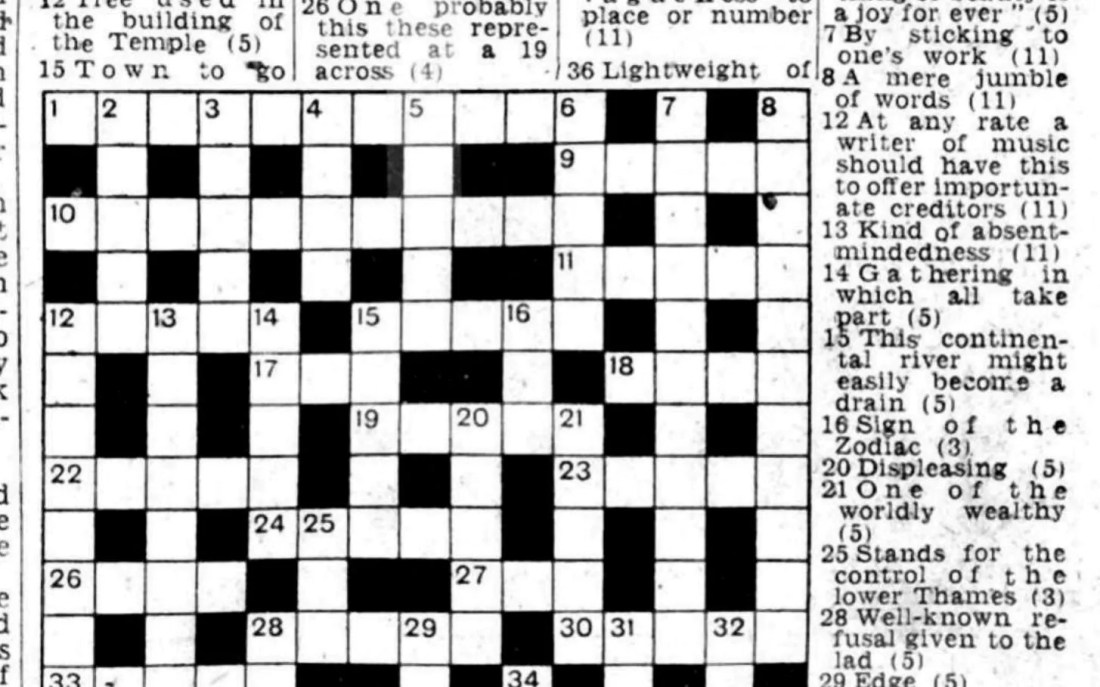
Some people dearly love crossword puzzles. Before newspapers became passe, most daily papers featured a crossword puzzle for their readers. The British seemed particularly keen on this past time. One of the most famous daily crosswords was featured in the London Daily Telegraph paper. Published since 1855, the Daily Telegraph is, in some circles, the newspaper or record in the British capital city.

During World War 2 in Britain, with the nation under siege from the Nazi’s blitz bombings and suffering from various rationing and shortages, things like the daily crossword provided many citizens with a welcome respite from the issues of wartime. Like many newspapers, the Daily Telegraph received their puzzles from people outside their direct employ. One of the paper’s daily crossword compilers was a school headmaster named Leonard Dawe. Dawe had led an interesting life before his teaching career. He’d played football (soccer) for England in international matches, even being selected to be a part of the national team at the Stockholm Olympics in 1912. During World War 1, Dawe saw deployment to the Middle East, and he came out of the war with the rank of Major in the army.

But World War 2 saw Dawe serving his nation by forming young minds in the Strand School. The school for boys had been removed to the countryside in order to protect the youngsters from the German bombing of the city. There, the boys and their teachers enjoyed the countryside and the relative quiet found there. Not too far away was a military camp for British and Canadian servicemen, and that place proved to be a source of adventure for the schoolboys as you could imagine.

Dawe submitted his crosswords to the Daily Telegraph and invited his students to help him put those puzzles together for the paper. The boys were delighted to help. Dawe’s habit was to leave a blank puzzle template in his office, and he asked the boys to come in freely and fill in the blanks with words. Dawe would then complete the puzzle by creating the clues that matched the words the boys provided. The collaboration proved fruitful, and Dawe never failed to send good puzzles to the paper.

But, then, in the spring of 1944, military intelligence showed up at Professor Dawe’s door. He was arrested for suspicion of espionage. Everyone was shocked. Why, they wondered, would a distinguished schoolmaster (and a veteran, at that) risk his reputation and career by being a spy? It turned out that some of the words that appeared in Dawe’s puzzles that spring were important to the war effort at the time: Utah. Sword. Overlord. Mulberry. Gold. Omaha. Neptune.

Dawes sputtered his innocence when put under intense interrogation. He couldn’t think of how those words could have come into his puzzles. Then it hit him. The boys were going to the nearby basecamp. They must’ve been overhearing these words from the soldiers there and coming into his office and putting the words on the template. You see, those words were codewords for what was about to be the Normandy Invasion–D-Day–scheduled for June 6, 1944.

And Dawe’s schoolboys almost gave away the Allies greatest secret.

On Vietnam War Protests

The veterans of the Vietnam Conflict (that name itself is the subject of controversy) are now old men, but the terrible toll that war took on their generation still affects them today. Vietnam was the first war in modern times in which the average age of the soldiers fighting in the war was teenage–only 19 years old. Most of us are aware of the protests against the war that rocked the nation during the 60s and 70s.

As troop deployment to Vietnam increased over the 1960s, people began to question the motives of the government as to what the purpose of the conflict actually was. As we know, the government first sent military advisors to assist the South Vietnam government in the defense of their nation against what was seen as communist aggression by North Vietnam. That advisory role soon turned to outright deployment of active duty troops to the southeast Asian nation.

Wall-to-wall television coverage of the war brought the fighting into the living rooms of middle class society all across the nation; they could see for themselves the violence and the horrible depiction of the war, they could see for themselves how the fighting affected not only their own sons (and daughters, too) but also the lives of the people of both North and South Vietnam. Soon, soldiers began returning home in body bags and coffins, and families started to wonder if the fighting was worth it in the end.

Protests began to appear, first in some major cities (especially as the national military draft began taking young men out of their lives and into the armed forces), and they spread to even smaller towns and rural areas. Oh, certainly, there were voices that called for a continuation of the fight against communism, but, soon, these voices were drowned out by the protestors. And those who marched against the war came from all backgrounds, too. Older people, children, even mothers with sons in the war took to the streets to voice their opposition to the government policy of war. There were even veterans of the war itself who joined those protesting against the war.

It was a time of protests. Women, minorities, and other oppressed groups were also advocating for change in public policies. The war, however, the war provoked the most outrage and the most venom against the government. Those marches proved to be the biggest protest in the nation’s history. And they led directly to the end of the nation’s involvement in the conflict.

Yet, despite these protests, from 1962 to 1972 Australia sent over 60,000 troops to Vietnam. Almost 600 Aussies never returned alive.

On a Year Without Summer

This isn’t a story of some sort of calendar glitch or adjustment that caused the world to not have a summer, no. Rather, this is a story of when summer simply didn’t happen, at least not in the usual sense. You see, sometimes, the earth creates circumstances that has such a dramatic effect on the world’s climate that warmer summer weather–weather absolutely necessary to the growing season for both crops and livestock–never comes. The result is fairly obvious. Food shortages, starvation, and even social unrest results.

And the major way the earth creates this type of climate and food crisis is usually a major volcanic eruption. This type of eruption blows ash into the stratosphere. The high speed winds in that level of the atmosphere blows the ash around the world. That causes less sunlight to filter through to the earth, making temperatures lower over the course of several weeks or months. When frosts or snows occur in the summer, crops die. If such events occur over a fairly short time frame, food production can plummet.

Food prices rise. Supply chains are disrupted. Jobs and businesses are lost. Sickness spring up around the world. Wildlife is destroyed, including the pollination of crops being eliminated. And, if the ash is sufficiently heavy, even water sources can be spoiled. In our modern world, even with all our abilities to combat many disaster situations, there would be no ability to deal with such a situation.

Now, you may wonder if and when such events have occurred in our history. They have. More often than we may realize. The most recent of these happened in 1991, when Mount Pinatubo in the Philippines erupted. Weather patterns and agriculture in the United States were affected, but these effects weren’t as drastic as those that struck the northern hemisphere in 1816. That Year without a Summer happened after a series of eruptions occurred in various parts of the globe. Paintings done in the following years after those events show yellowed skies and brilliant sunsets from the ash that lingered in the atmosphere. Similar situations have been recorded in 1883, 1783 (resulting in 25,000 fatalities in Britain alone), 1628, 1601 (known as the coldest summer ever witnessed in the northern hemisphere), 1452, and so on.

And, what’s important to remember is that it will happen again.

On a Reason for War

We don’t really think of it, but the UK and The Netherlands are essentially neighbors less than 200 miles apart. And these two nations have, in the past, fought wars against each other despite the fact that they are fast friends and allies today. Such was not the case in the 1600s when at least three major wars were fought between the two nations.

Few centuries were as bloody and filled with wars as the 17th Century was. England saw its civil war and wars against much of Europe. The period was a time of colonialism and trade, and the world proved to be smaller and smaller as the European countries carved up the globe into spheres of influence. We don’t think of The Netherlands of being a great power, but remember that they once had Caribbean colonies (Aruba, Bonaire, Curacao) and other American possessions like Suriname, southern African lands, and eventually much of the East Indies (Indonesia and others). All of this overseas land required a large fleet of ships both for trade and for war. And, in that era, the nation that boasted the best and most up-to-date navy had the edge in that race for trade goods. The expression became, “He who rules the waves waves the rules.”

Thus, the navies of England and Holland clashed during that century over their desires for trade goods. The Second Anglo-Dutch War was unique in that it centered around the Dutch wish for a specific good in what is known as the Dutch East Indies. Most of this second conflict that took place in the 1660s occurred in the North Sea that lies between the two lands despite the global ramifications of the conflict.

To summarize this three-plus year long war, the Dutch won. England had its issues and had other situations ongoing such as the restitution of the monarchy and wars with Hapsburg Spain and France on the horizon. But, for the Dutch, this war was a massive victory. The treaty that ended the war in 1667, the Treaty of Breda, gave Holland the exclusive rights to harvest the trade goods of the islands off the coast of southeast Asia. England could not interfere. In a concession to England, the Dutch relinquished rights to some land in North America, but that was nothing to the Dutch.

Holland won, and with the treaty, scored a major victory in securing access to a valuable resource that, up to that point, was found only in the East Indies: Nutmeg. In fact, the conflict is known colloquially as the Nutmeg War.

Sadly for Holland, England and the rest of the world soon found other places where nutmeg could be easily grown.

And that land that England received in recompense for losing the rights to the nutmeg, the land that the Dutch didn’t mind giving up?

Manhattan.

On a Special Passover

Passover is coming up, and the holiday has always been one of my favorites. I spring from a background of fundamentalist Christianity. Yet, in my career as a teacher, I had the privilege of teaching in the secular section of a Yeshiva. That experience was eye-opening and incredibly instructive. Out of their generosity, one of the orthodox families at the school allowed me to attend their Passover Seder. It was an amazing thing to witness through both my lens with my background and through their lenses as well.

This story is about a special Seder celebrated near the town of Bergen and not too far from Hanover in what is now Lower Saxony in north central Germany. There had always been a Jewish population there, and one year in particular, the Seder for the community held special significance. You can guess why. In 1945, Passover fell on March 29 that year, and the Jews who had been denied observing the traditions, holidays, and sacred rituals of their faith were excited to have the ability to actually have a Seder.

The Nazi Concentration Camp of Bergen-Belsen is infamous for being a place where death was common, where the sanctity of life was ignored, and where mankind demonstrated–there and dozens of other camps across the Third Reich–how low it could slink in the treatment of other human beings. That’s why, in part, that the Passover meal remembering the liberation from slavery of the Hebrews in Egypt held such special significance in this particular year. By the way, Bergen-Belsen is notorious also for being the camp where Anne Frank was put to death for the crime of simply being alive.

One eyewitness to that year’s Passover was Rafael Grosz. He was but a young man, but he remembers. He also remembers the camp at Bergen-Belsen, because he was held there, also. Unlike Anne, Rafael managed to live through the terrible conditions, both physical and psychological; he remembers the piles of bodies and the terrible hunger and the nameless, ever-present terror of the camp.

And he remembers gathering wood to build the fire to bake the Passover bread that special year. He remembers helping the older men digging a pit and putting a grate over it, and he remembers lighting the fire beneath in order to cook the bread. For Rafael, that fire symbolized the freedom that Passover represented as its warmth rose up and cooked the Seder’s matzoh.

You see, for that special Passover, the Jewish community held their Seder together. For many, the irony was not lost on them. They had been in slavery together, they reasoned; fitting, then, that they celebrate freedom together.

Interestingly, the Bergen-Belsen camp was one of the first that the western Allies liberated given its location in the center of Germany. When the British and Canadian troops entered the camp for the first time, they were understandably shocked and stunned by the piles of over 10,000 unburied corpses and the hundreds of walking dead who were doomed because of malnutrition and typhus.

You see, the Allies entered Bergen-Belsen on April 14, 1945. And that was over two and a half weeks after 300 Jews in the camp, a young Rafael Grosz included, celebrated their Passover liberation while still under the watchful eyes of their Nazi oppressors.

On a Stolen Song

The Beach Boys are arguably one of the best American rock bands the United States ever produced. Their influence has waned in the years since their heyday back in the 60s, but their impact at the time was substantial both musically and culturally. And, like most popular musicians, they attracted their fair share of fans and hangers-on.

The three Wilson brothers and their cousin, Mike Love, formed the core of the group that used “surfer rock” to create such hits as Surfin’ USA, Help Me, Rhonda, Good Vibrations, and California Girls. These and others cemented their legacy as pop legends. Rolling Stone magazine lists them at number 12 in the greatest bands of all time, and they’re members of the Rock and Roll Hall of Fame.

By 1968, the band had undergone several changes of style and even some personnel. The leadership of the group had changed as well. Brian Wilson had been the perennial leader, but he relinquished that role in the mid-60s to a more democratic approach to making artistic decisions. Other members contributed songs, and even some outside compositions were brought in and recorded by the band.

One of these songs was brought to the group by drummer Dennis Wilson. Dennis had met a fan who was an aspiring singer-songwriter, a charismatic fellow named Charlie, and the pair began hanging out. They jammed often and even riffed off each other’s chords and musical phrases. Dennis liked the young man’s songs, one in particular called Ceased to Exist. But Charlie proved to be too much of a fan rather than a writing partner, and the pair eventually parted ways.

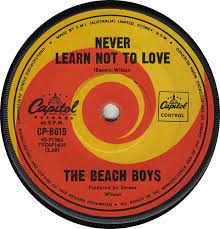
In the summer of 1968, the Beach Boys entered the studio, and Dennis introduced the group to a new song he said he had been working on. It was entitled Never Learn Not to Love. What it actually was was a slight re-working of Ceased to Exist. The song was put on the next Beach Boy’s album and the band even played it on one of their TV appearances (on the Mike Douglas Show).

Had Dennis Wilson stolen this fan’s song and simply changed some things and put his name to it? Well, apparently it depends on whom you’re asking. Dennis swore that he and Charlie worked on the tune together, and that the fan had sold his rights to a songwriting credit for some cash and a motorcycle. Fair enough. But that’s not what others say. Some say that Wilson stole it and cheated the young man out of what was rightfully his. Ultimately, it came down to one person’s word against another person’s word, and, well, whom would the public believe?

A famous rock star or Charles Manson?

On a Great Humanitarian

We all know how the President responded to the Great Depression, right? It’s been thoroughly documented in the history books and in governmental archives. But, before we look at that in a little more detail, let’s remember the man himself.

The President was known for his business knowledge. He’d been in government for some time, and his reputation was unimpeachable. He’d served two previous administrations in the cabinet as a secretary. Before that, during World War 1, the President had led efforts to bring support to the people of Belgium as they suffered extreme food shortages from the effects of much of the war being fought on their territory–and this was even before the United States entered the conflict. His name became synonymous with humanitarian efforts when then-President Woodrow Wilson asked him to lead American efforts at bringing supplies to Europe to help rebuild after the devastation of the Great War. Thus, the man who worked to deal with the Great Depression seemed the perfect man for the job because he knew how to deal with crises.

So, what did the President do to try to overcome the effects of having almost 25% unemployment, the banking system in tatters, Wall Street and the entire business community rattled, and people’s lives on the edge? Well, we have to remember that, at that time, no administration had intervened in the economy before. It’s difficult to believe, but it is so. The American tradition was that business and government were separate, and, while elected officials could affect the economy with laws and guidelines, actually and actively working to stimulate the economy had not been tried before. And when the President did it to combat the economic downturn, many people thought it was tantamount to treason or communism.

No, he knew that to do nothing would be the worst thing for the country. He promised and delivered, in his words, “the most gigantic program of economic defense and [economic] counterattack ever evolved in the history of the Republic.” And so it was. He put the government to work on the economy like no other Chief Executive before him. Public works programs, support for the failing banks, low-interest loans to corporations, and he ordered companies to not lay off people (which was among the first things companies did when hard times hit) knowing that incomes were still needed. In short, he did all he could to make the situation better. What else would you expect from a great humanitarian? He knew what people were going through.

And he tried to calm people’s fears about the economy as well. He called in reporters to show how he continued his daily routines as if to say, “look, all is well. It’s going to be ok.” He even tried to allay fears by coining the term “Depression” to indicate that, like people at times, even the economy could become depressed, and that bright days were ahead.

Sadly, as we know, it didn’t work. His name became synonymous not with humanitarianism but, rather, with the Great Depression itself.

But you can’t say Herbert Hoover didn’t try.