On a Unknown Known Author

There are people who are largely unknown but whose work we know.

And then there is Charles Perrault.

You see, Charles is probably the most famous author you’ve never heard of. But you absolutely know his work and the dozens of modern films based on his stories. This Frenchman who was famous for other reasons during his lifetime, died in 1703. He had been a member of the French Academy, the foremost authority on French language usage. Born into money and into a large family, Charles enjoyed the privileges of his upbringing. He studied law, but he used his family’s influence to obtain a high-paying and prestigious governmental position. He then used that position to practice patronage and appointed family members to high places in government as well.

Charles also curried favor with the French Royal Family. Tradition says it was Charles who convinced The Sun King, Louis XIV, to include the ornate fountains at Versailles, each one representing characters/creatures from Aesop’s Fables, who “speak” to each other by spewing water in long jets from one mouth to another. Some say that Charles’s support of Louis was so cloying that he became one of the leading public proponents that the King’s rule was truly a Golden Age of France, greater than any previous kingdom or empire. He argued that modern French literature surpassed any other age of literature in history.

Forced into retirement by political opponents in his mid-50s, Charles decided to turn to writing, to join the generation of French writers of that so-called Golden Age. He wrote some religious biographies, but eventually, Charles turned to French folk tales. His goal was to bring the traditional French stories into the modern vernacular of that day. He also sought to leave a legacy for his children and grandchildren by passing down stories that he had heard when he was a lad in France.

Charles entitled the work Tales and Stories of the Past, but we don’t know it by that name. The subtitle of this book about French folk stories is how we best remember the work: Les Contes de ma Mère l’Oye. Among the many tales were stories from the countryside, stories like one about a poor girl who found her prince after losing her slipper, or the one where a sleepy, beautiful girl lived with some little men, or a swashbuckling cat who wore cavalier boots, or the girl who wore a red cape with a hood to visit her grandmother.

We usually translate that subtitle today as Tales of Mother Goose.
On a Model Maker

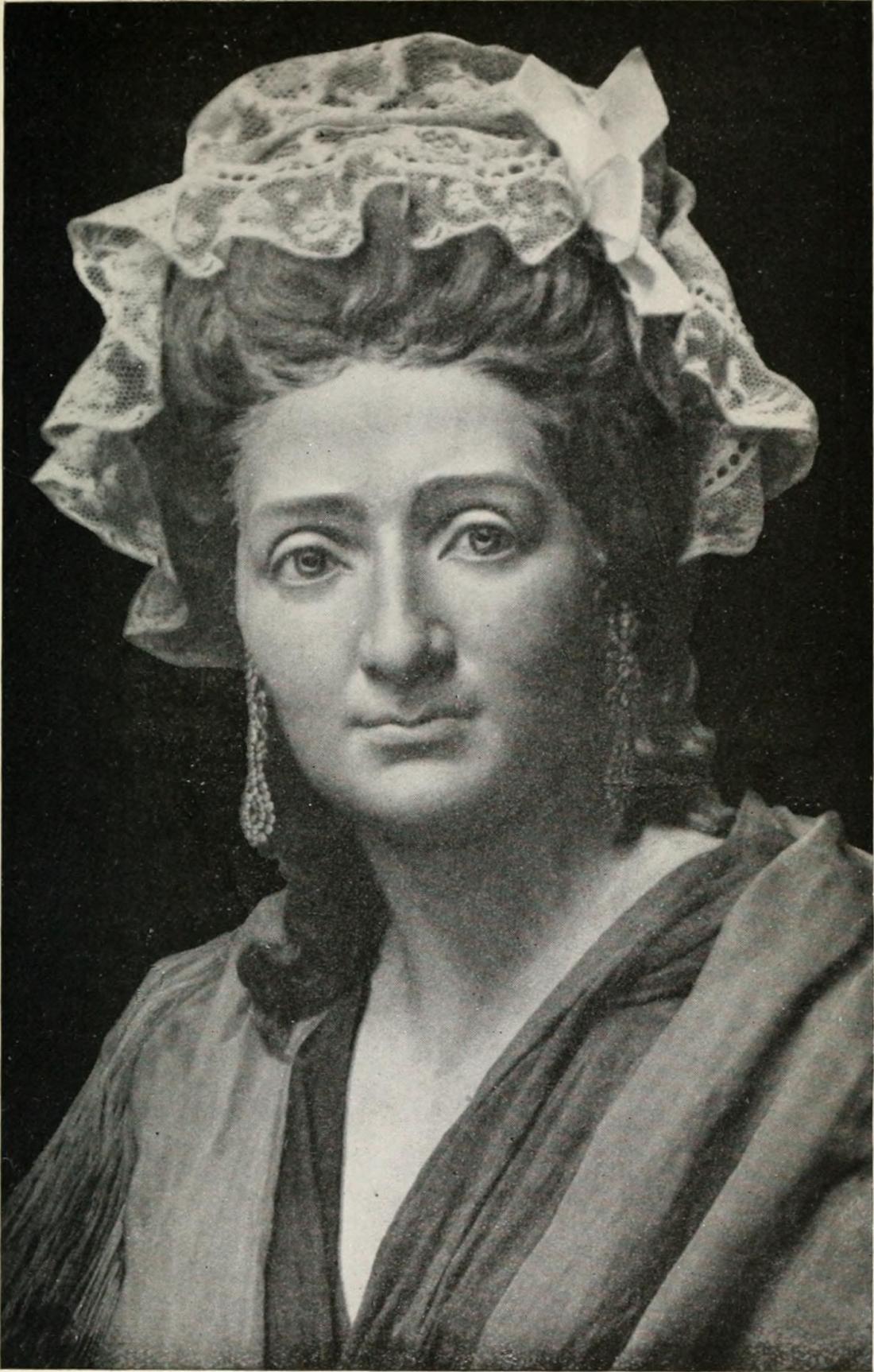
Marie Grosholtz. was born in Strasbourg France during the Seven Years War. Her father, Joseph, died in the war two months before Marie’s birth. She and her widowed mother, also named Marie, moved to Switzerland, to the city of Bern, where the mother found work as the housekeeper of a surgeon.

This surgeon became the most influential person in the young Marie’s life. His name was Dr. Curtius. Marie became like a surrogate niece to the doctor, and she returned his love. Curtius took the young girl into his surgery and taught her anatomy. Here, from the time she could clamber on to a stool to reach the counter, Marie learned the skills that would make her life’s work.

The doctor used models to teach anatomy to students, and he found that the young girl had a natural feel for the creation of those models. Using pliable materials, Maria sculpted body parts that Dr. Curtius would then teach from. She saw the models she did not as work but rather as play, as time she could spend learning more from her beloved and adopted uncle. The pair became inseparable, and, by the time she was in her teens, Marie’s models were far superior to those off the good doctor.

In between the years of the Seven Years War and the beginning of the French Revolution, Curtius and Marie and her mother moved moved to Paris. There, the doctor set up his practice, but he started a sideline business—he began exhibiting the models that Marie had so lovingly and skilfully crafted. People were fascinated by the fact that she was so young, yes, but also that she was so talented.

She began modelling the heads of the famous and the infamous in France at the time. She even spent time among the soon-to-be-doomed Royal Family of France, even receiving an invitation to go live at Versailles. Voltaire, Marie Antionette, Louis XVI, and Robespierre all received a sitting with the young woman.

Eventually, Marie’s connections to France’s aristocracy made her an enemy of the new French Revolution’s government, and, after a short imprisonment, she had to flee to Britain where she would spend the rest of her life. Before she left in exile, Marie had married a man named Francois and had two sons who lived to adulthood. But it was in Britain that she made the reputation that she continues to enjoy today.

You can see her models for yourselves at one of London’s most visited tourist attractions:

Madame Tussauds.

On a Powerful Racist

Jim’s legacy remains that of one of America’s most infamous racists. From what historians can piece together from various stories, Jim came from St. Louis, Missouri, and was first received public notice on stages across the country performing blackface “minstrel shows” to the delight of white audiences in the years before the American Civil War.

After the war is when Jim turned to politics and really began his pernicious campaign of hate against Black Americans. Jim, feeding on the hatred most southerners felt towards the newly-freed slaves of the region and playing on whites’ fears and prejudices, worked to pass laws that gradually wore away the precious rights that had been bought with blood on battlefields across the country during the war. Even the passage of Constitutional amendments that were supposed to guarantee rights of equality and justice before the law, voting rights, and other freedoms were worn away by the enormous amount of racist-based work Jim did across almost all states in the old Confederacy.

For example, the voting rights that Black men had won after the war were taken away by Jim’s efforts. He worked to pass laws that created such things as poll taxes (which most Black voters couldn’t pay) and literacy tests (again, which most Black voters couldn’t pass but weren’t given to White voters), thus effectively depriving Blacks of their rights as citizens. These types of laws stayed on the books in some states until the 1960s and have seen a revival in legislation requiring specific types of voter identification that Black citizens often find difficult to procure. That’s how pervasive Jim’s lasting legacy has been.

Courts, stocked with Jim’s allies, consistently applied justice unfairly to Black lawbreakers compared to White defendants. Laws were passed in many states at Jim’s direction that eroded or severely limited the ability of Black citizens to own land, to own businesses, or to travel freely. It was as if Jim’s purpose was to return Black citizens to, if not a state of legal and physical enslavement, at least a social and economic one.

And Jim’s plan worked. Jim’s efforts are why people like Dr. Martin Luther King, Jr. had to, in his words, “fight for something that should have been mine since birth” through the 1960s and even today. So, it’s easy to see why Jim remains today the premier racist and bigot produced by this nation. However, Jim isn’t one person, or even a person, actually.

You know him as Jim Crow.

On a Fanboy

Growing up in the 1950s in the US, George loved going to the movie theaters to see films, but, more importantly, George loved the Flash Gordon series that theaters showed. For those who don’t know, the Flash Gordon character had started life as a comic strip and was adapted to a film series that was shown usually after the cartoon and before the feature. And George lived for Flash’s latest adventures. The theater became where George would go to spend his allowance every week just so he could see what Flash was up to.

As an adult and after college, George worked as a writer among other jobs. He wanted update the Flash Gordon stories into a more modern film version. So, he set about finding information on what it would take to purchase the rights to the character. Then, he could produce a screenplay based on Flash.

But this is where George became stymied. He found at first that the rights to Flash were way beyond his income level. Secondly he found that the rights were by then (the early 1970s) owned by a film studio already, that plans were already being made to turn the story into a film. Man, that really bummed out George. He loved Flash Gordon, and he felt that only a true fanboy like him could do the story justice. According to his friends, George became truly depressed over his inability to obtain the rights to the character.

He began researching the origins of the Flash story. He traced the creation of the original comic story to a man named Alex Raymond and found that Raymond had gotten his inspiration from Edgar Rice Burroughs of Tarzan fame and some of the other early science-fiction writers who wrote at the end of the 19th and beginning of the 20th centuries. The more he researched, the more he became fascinated by the project exactly as a true fanboy would.

George reached out one more time to the film studio to see if they might reconsider and let him have the rights to the Flash story. No deal.

So, as George himself said, “I’ll just have to create my own story.” And so, he did. And we owe it to the owners of the Flash Gordon rights that George created an even bigger, much more popular story than Flash himself.

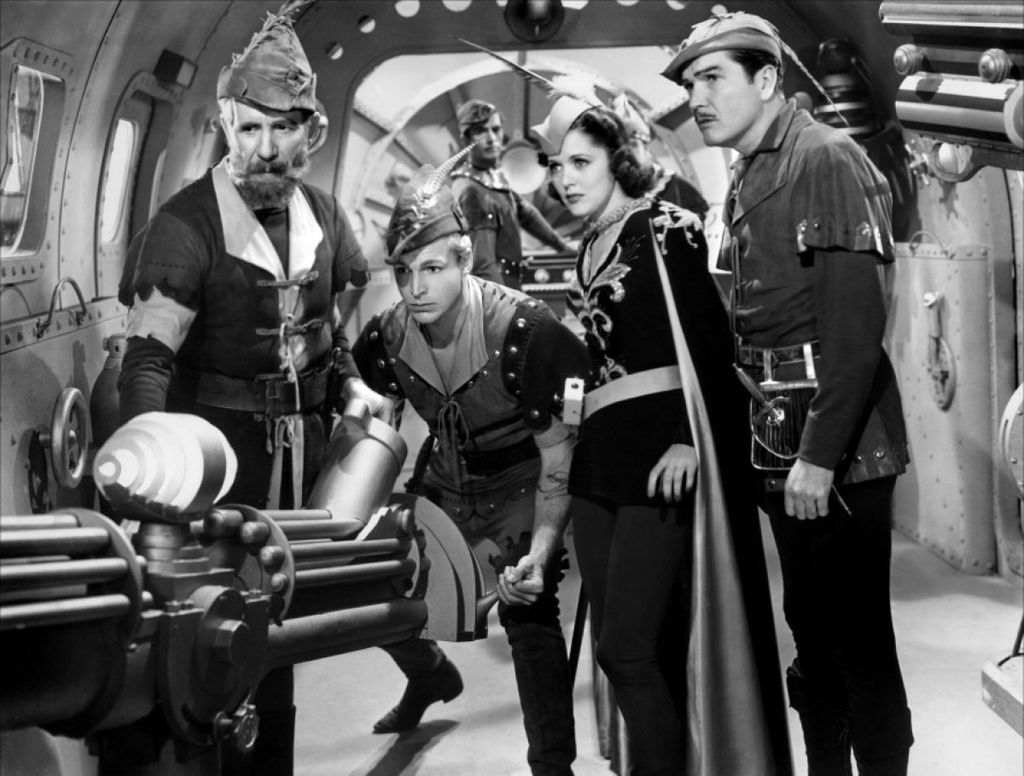
Yes, only a true fanboy like George Lucas could create Star Wars.

On a Bequeathing

James Louis Macie was born out of wedlock in 1765 to Hugh Percy, a man who was a duke in Britain, and a widow named Elizabeth Macie. When James was about 35, his mother died, and he took his father’s last name, but we’ll talk more about that in a bit. Despite his ignoble birth, James was able to parlay his father’s connections into schooling at Oxford. His university degree in hand, James decided to spend his life traveling about Europe, to experience the culture, to see the sights, to learn the history and art.

He chose an interesting time to be a nomad in Europe. Due to this propensity for travel, James found himself in Paris when the French Revolution began. He witnessed the Napoleonic Wars, even being held as a prisoner (and possible spy?) during that conflict. Again, James played the “dad card” and used that influence to gain his freedom from the French.

Meanwhile, his mother managed to gain an inheritance from an estate. When James’s mother died, he split the estate proceeds with a half-brother. Now, he had money on his own. And James proceeded to use the money to perform things like scientific experiments in metallurgy and chemistry. He discovered a new way to produce brass, for example.

For a seeming half-wastrel, James had a good head on his shoulders. He appears to be the first person to use the word “silicates” in a scientific paper. Some of his work in minerals debunked religious beliefs regarding the idea of a Noahic world-wide flood. He made a steady income doing research for others including glassmakers across England.

James never married, and he had no recorded children. His will left his fortune to a nephew, one James Dickenson. So, when James died in 1829 in Genoa, Italy (on one of his excursions), Dickenson received the inheritance. However, there was a codicil to the will. It specified that if the nephew died childless, then the money would go elsewhere. And that elsewhere is why we remember James.

In all his travels, James never made it to the United States. However, he always admired the young nation, and his will said that, if no other heir was to be found, that the US would receive his money. You see, when he took his father’s last name, Hugh Percy had changed his last name to Smithson. And James Smithson’s fortune was used in Washington, D.C. to establish, as he put it, a place “for the increase and diffusion of knowledge among men.”

We call it the Smithsonian.

On a War Prisoner

My feeble mind isn’t expansive enough to feel the impact of the Holocaust. That 6,000,000 people at least died in the various camps operated by the Nazi Party during the Hitler Regime is beyond me. The addendum to this unspeakable tragedy is that hundreds of thousands of German POWs from several nations also died in camps from disease, malnutrition, abuse, and outright murder.

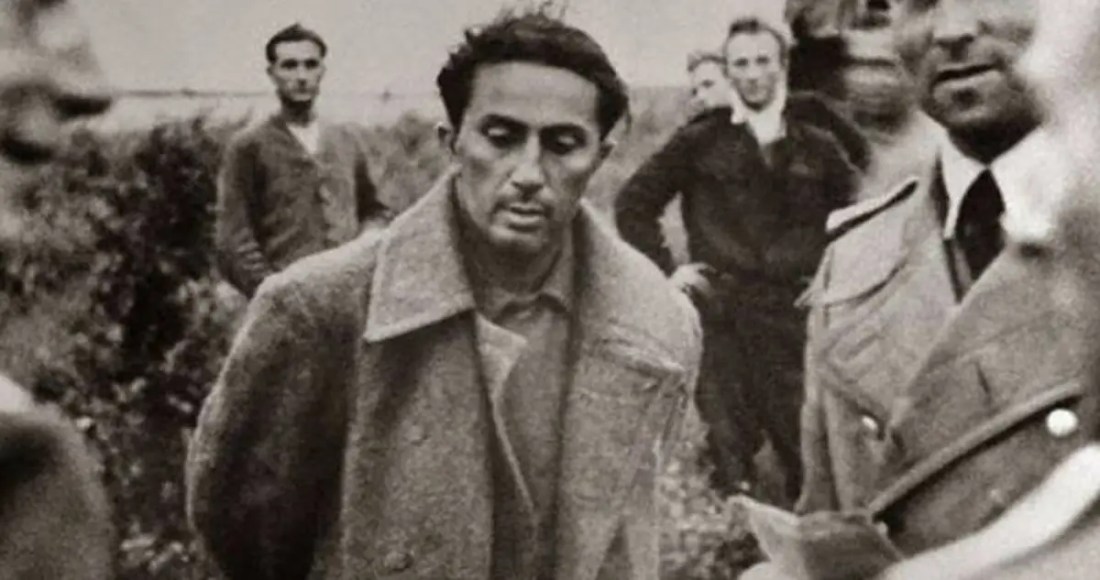
Take Yakov Dzhugashvili for example. He was one of the countless Soviet war prisoners taken by the German Army as they invaded the Soviet Union in June 1941. Yakov had been a bright but shy, sensitive boy with some mental health issues; he attempted suicide several times before reaching adulthood, and his overbearing father tried to direct the young man’s life. While Yakov wished to pursue a career in engineering, the father forced him into the military, making him attend artillery officers school. He graduated as a Lieutenant only weeks before the Nazi invasion of his country.

Sent immediately to the front lines, Yakov fought in the Battle of Smolensk. He was captured by the Germans in mid-July after refusing an order to retreat; he ordered his battery to keep firing long after the other units left in an attempt to cover his comrades’ retreat. Sadly, rumors reached his family that he had surrendered freely and as a coward to the Nazis rather than the heroic circumstances that would later be revealed by his fellow soldiers and captives.

Yakov was sent to Sachsenhausen POW Camp, which is a misnomer because it was one of the notorious concentration camps. As one of the earliest officers captured during the invasion of Russia, the Nazis wished to use Yakov as a propaganda tool and possibly force him to make Russian-language radio broadcasts to his fellow soldiers on the front lines. That never materialized, but Yakov probably wouldn’t’ve cooperated in the first place.

The young man’s old depression returned shortly after he was interned in Sachsenhausen. There were reports of self-harm. He would often engage in sometimes violent and almost always non-sensical arguments with fellow prisoners and sometimes even with himself out loud as he walked around the camp grounds. Finally, in early 1943, Yakov died by seemingly purposefully running into the electrified fencing at the camp and then being shot by the guards for attempting to escape.

The Soviet leader, Stalin, once said that one death is a tragedy while a million deaths is only a statistic. Yakov was an example of both of those, being a tragedy and a statistic. In fact, over 3,000,00 Soviet soldiers died in German custody. Stalin also noted that many sons of Russia died in the Great Patriotic War. Yakov was also one of those. And Stalin would know.

You see, Yakov was the son of Stalin himself.

On a Strong Swimmer

Harold had been a swimmer his entire life. Growing up in Australia, he was near the water all the time. As a successful 59 year old man, he’d developed a keen interest in spearfishing and was known to be able to hold his breath an exceptionally long time, even for a snorkeler. Harold was in decent shape and kept fit precisely to pursue his swimming interests. It was near Christmas, 1967, and in Harold’s native Australia, that meant warm weather in the southern hemisphere. In other words, perfect weather along the country’s southwest coast near Melbourne. Harold had a resort home not too far from Portsea and decided to spend the weekend before the holiday there with some friends.

It was a bright Sunday morning, and Harold was keen to swim on one particular beach. He bragged to his friends that he knew the place “like the back of my hand.” Now, the sea was rough that day, but waves never before seemed to deter Harold in his pursuit of a good day in the ocean. One of the friends who accompanied the swimmers that day, Marjorie Gillespie, said that, suddenly, it seemed that Harold was caught up in rip tide. “He was like a leaf,” Marjorie said later, a leaf that was helplessly being swept out to sea and unable to offer any resistance. She noticed that Harold’s head was seen one moment and then–gone. Alan Stewart, another swimmer with Harold that day, said he felt the strong undertow, and it scared him so much that he came out of the water.

Harold didn’t.

A massive manhunt ensued. The beach was notorious for its difficult conditions, but, again, Harold was a strong swimmer and knew the beach and its dangers. Unusually, the beach ran out just past the breakers and then suddenly dropped an astounding 60 feet straight down. Someone who would be pushed out that far could be pushed below the water’s surface and trapped below that ridge. If that happened, the body would probably never be recovered.

And that’s exactly what most people think happened to Harold. His body has indeed never been found. By the next morning, everyone knew that Harold was lost forever despite a search that would last the next several days and see the use of helicopters, divers, and patrol boats. People who knew Harold couldn’t believe it. How could someone simply vanish in the water off the coast of a known and popular beach? Marjorie told reporters that it seemed Harold didn’t realize that the current was taking him closer and closer to the breakers and the drop off point. Maybe by the time he realized that he was in trouble, it was too late. He didn’t raise an alarm or call out for help. Why should he?

After all, Harold Holt, the Prime Minister of Australia, was a strong swimmer.

On a Failed Design

The 1950s saw an explosion of inspired, clever, sometimes offbeat and often plain wacky design concepts. The Bauhaus, form-follows-function design aesthetic of pre-war Germany gave rise to an increased use of steel, chrome, glass, and futuristic-type space age ideas in the first full decade after the war. Modernists were experimenting with shapes, textures, colors and new, synthetic materials in everything from building materials to appliances and even in fabrics.

In 1957, Marc Chavannes, an inventor, and Al Fielding, an engineer, decided to collaborate in a proposal for a new type of wall covering. The 1950s saw a huge uptick in the building of houses for returning vets and their families who were creating the Baby Boom Generation. The market was looking for new materials that fit the modern, new Space Age the world was entering. And that’s where Marc and Al thought they had a wonderful idea.

Their concept was–wait for it–textured, thick wallpaper. Their prototype was to take two shower curtains and combine them to create a thin layer of trapped air between the two plastic sheets. They thought their idea would be on the forefront of the new ’50s design revolution. They hired a manufacturer, and they set to work on what they knew would be a sure-fire success.

The partners were wrong.

No one was interested in what amounted to 3-D wallpaper. But the pair didn’t despair. They realized that those fused shower curtains with the air between them could have some possible insulative properties. So, the switched their marketing. Now, instead of textured wallpaper, the fellows were selling insulation for greenhouses. Again, that idea went nowhere, fast. People simply weren’t building greenhouses like they were building homes for middle-class America. The partners thought about giving up their idea of cashing in on the ’50s design craze.

Luckily for the pair, the company they’d contracted with to make their wallpaper cum insulation had a different approach. The company was called Sealed Air. One of their marketing men, Fred Bowers, was turning the product over in his hands on day, and a thought struck him. Lightweight. Insulative. Malleable. Sheeting. He made a call to IBM, the computer company. IBM, too, was experiencing a boom in the late ’50s, and they were shipping their new computers around the world. Bowers pitched the product to IBM as a protection for the computers during shipping.

The result?

Today, Sealed Air clears almost half a billion dollars a year from a product now known as Bubble Wrap.

On A Congressional Expulsion

When the state legislature voted to expel the black congressmen, many in the nation were justifiably outraged. Unfortunately, many Americans, especially in the state where it happened, cheered the action.

Politics in the country had grown poisonous to the point of revolt and armed insurrection. The justification of racism by religion across much of the conservative political spectrum had brought the United States to the point of making any political interaction a potentially violent enterprise. Add the pervasive, omnipresence of guns to the equation, well, it all added up to a recipe for disaster, a powder keg that was only needing a spark to explode.

State and Federal Courts were appealed to after the expulsion, and rightly so. Justice is always depicted as being blindfolded because all people are considered equal before the law. The reality, of course, is that we all bring our biases and prejudices to any decision. Conservative judges, appointed by radical politicians, chose to defer rather than decide, thereby giving themselves an “out” in the situation.

And then the campaign of intimidation and threats of violence began. The racists, for a time shamed into keeping their hatred and anger private, had been embolden by their political leaders to give loud voice to their opinions. The expelled Black congressmen and their allies were harassed and berated and became the objects of scorn and malice.

Of course, media, as it usually does, tried to “both sides” the issue. Instead of calling out the obvious injustice and blatant racism behind the expulsion, the media only poured more gasoline on an already blazing fire. They pointed out the numerous negative interactions between White policemen and Black suspects over the years, but then they often portrayed Blacks as being uneducated or vaguely threatening or somehow almost deserving of the treatment they received at the hands of law enforcement. All of this served to only muddy the public consciousness about the way the Black congressmen were treated.

Yet, all of this happened in the state of Georgia in 1868. Thirty-three Black legislators were expelled by a coalition of White Republicans and Democrats. But the courts eventually allowed all the expelled members to retake their seats in the Georgia congress. However, within 30-odd years, all Black members of the Georgia legislature were either harassed or gerrymandered, or else Jim Crow laws took away enough Black votes that the congressmen were replaced by White legislators.

Yes, the group, known as the Original 33, were the beginning of several decades of racist behavior that took away any rights Blacks may have gained as a result of the American Civil War and the passage of several constitutional amendments. Eventually, the Civil Rights movement of the 20th Century restored many of these.

But surely such a racially-motivated expulsion of Black congressmen by the legislature of a former Confederate state couldn’t happen again.

Right?

On Some Logistics Help

Sometimes, you simply need a helping hand and have to call in a friend. That’s what Marie and Doreen did in 1938 when they had some difficulty with the transportation logistics involved in moving a shipment from Czechoslovakia to the UK. The women were in over their heads with the project despite the fact that Doreen was an development economist. Germany was gearing up for World War 2, and the nations of Europe were tightening their restrictions on the movement of goods and people. Marie and Doreen, needing to make a move with the project, found themselves stymied by the reams of paperwork and red tape associated with what they were trying to do. So, they called in a chum for his help.

The friend they called was a man named Nicholas Winton, a UK banker and financier. Nicholas was successful for someone only 29 years old, and he had experience in the type of paperwork involved in moving across several borders. True, the system of travel was now a bit more complicated, but Nicholas knew people who knew people who could grease the wheels of transportation. So, he was a logical choice.

But it was nearing Christmastime, and Nicholas had his eyes set on a skiing holiday in the Alps. It was quite the conundrum. Nicholas had really looked forward to the vacation, but, on the other hand, here was a chance to help his friends and to see Prague. So, Nicholas altered his plans and headed to the Czech capital city.

One of his main strengths was organization. Today, if you wish to send mail to another nation or even personally travel across borders, you need paperwork including customs forms, declarations, official stamps, and other documents that will allow the movement to occur. Among the first things Nicholas did was set up a command center to handle the paperwork. He did most of his work from a large dining table in his hotel’s restaurant. There, he filled out forms, made calls, sent messages, and contacted shippers, railroad offices, and customs officials to insure that what Marie and Doreen wanted to happen would, in fact, go off without a hitch.

Of course, even the best laid plans can often hit bureaucratic snags. The Netherlands balked at the first shipment sent. They wanted some guarantee that the UK would be willing to accept the load. For its part, the British customs people sent word that a financial guarantee was needed before they would sign off on the acceptance. But Nicholas proved up to the task. He secured all the needed fiscal and customs requirements, and the project began rolling. After that first hiccup, all ran smoothly thanks to Nicholas and his excellent organizational and logistical skills.

But the shipping was only part of the issue. Nicholas also had to organize distribution and acceptance of the shipment to various places across the UK. Yet, he managed to accomplish this as well. Oh, he had help, certainly, but much of the heavy lifting here was done by him.

In 1988, when he was 79 years old, a television program in the UK brought him to its studio and recognized the work Nicholas did fifty years before.

And it reunited him with some of the 669 Jewish children he helped move out of the way of the Holocaust and find safe haven in the UK.