On Fighting Counterfeiting

Have you ever looked closely at a dollar bill? I mean, really closely? You’ll see bits of cotton fibers in the bill. Hold it up to the light. See the watermarks? And some bills today also have an electronic strip inside them. All of these elements were designed to help fight the scourge of a stable currency: The Counterfeiter.

As an example, in one of the more recent years that we have records for, counterfeiting in the United States alone cost businesses over $200,000,000,000. You can see that these measures, while difficult to replicate and fake, don’t really stop the bad guys from stealing from the US economy. But imagine what it would be like if these measures weren’t in place at all.

And that takes us back to the founding of the US and even before. When paper money was used in the British Colonies, it was incredibly easy for someone with simple means–like a printing press–to print out their own money, almost like having a copy machine today and simply making copies of hundred dollar bills. Each colony could print their own currencies based on the British pound, but, because of the difference in the relative economies of the colonies, a Massachusetts pound would be worth a different amount than that of, say, a Virginia pound. And there were really none of the more modern countermeasures for counterfeiting. A signature on a bill would probably be the only thing most colonial paper pounds would have as a way to verify it as a genuine bill. Thus, such colonial pounds were easily faked.

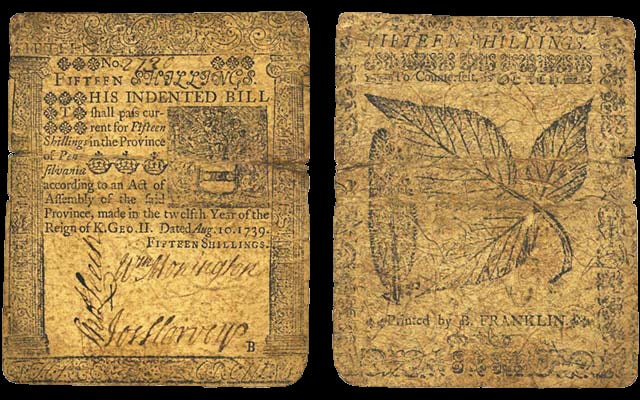
Enter an enterprising man from Pennsylvania who had the great idea to add some of the earliest anti-counterfeiting measures to pounds produced in that colony. He began with paper weight. Counterfeiters work cheaply, and if the quality of the paper used for the banknotes were heavier, so much the better. But he took it several steps farther. Watermarks were introduced that would be difficult to replicate. He introduced the idea of threads into the notes much like we have today. And he found a way to emboss the notes with the veins of leaves and flower stems–almost impossible to copy if that’s what you wish to do. And his expertise extended to the use of a special type of ink that was made by a special process by which animal bones were burned to create a unique graphite.

All of these processes made the Pennsylvania pound notes the envy of the colonies. It helped stabilize the economy of the colony at the outset of the American Revolution. The British tried to ruin the American economy by producing fake bank notes during the war, and they succeeded in doing major harm to many of the other colonies, but not so much in Pennsylvania. Because the other colonies’ currencies were easily faked, the fledgling United States distrusted paper money until the era of the Civil War, more than 80 years later, relying instead on coinage.

But if the nation had only followed the anti-counterfeiting measures created by this Pennsylvanian, they might have switched to paper money much sooner. In fact, these innovations are one reason why Ben Franklin is on the $100 bill today.
On a Pogrom

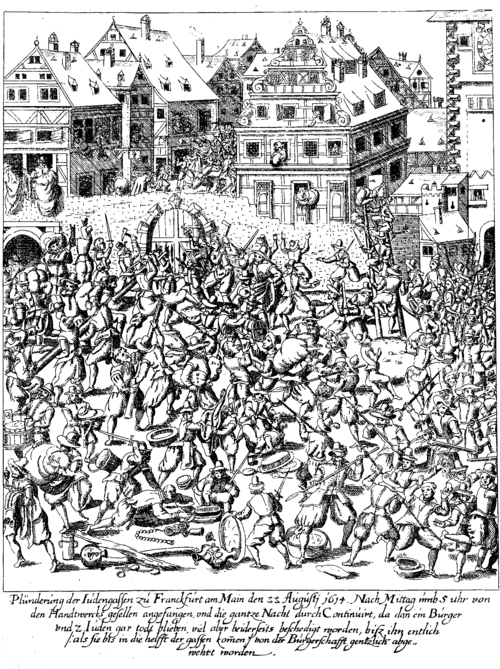
I want to speak about a country where Jews had been persecuted for centuries for being, well, different. Their religion and traditions, their clothing, and their lifestyle; these already marked them in Europe as being the “other” for as long as people could remember. And we know how things go for groups marked as being different. So, when the government of this particular nation ordered that Jews would have to wear a badge signifying their ethnicity and religion, well, in many ways such an order was superfluous. People knew who the Jews were in their community. And, over the years, propaganda spread about Jews being carriers of diseases (but they themselves being immune because they were in league with the Devil, you understand) and being hunters of children for their blood. Jews had been persecuted for being dishonest moneylenders when the Catholic Church condemned them for the charging of interest in lending the money. And so on.

We know that the nation’s history was already littered with accounts of pogroms against Jewish people. In fact, we have records that the houses that had Jewish populations in them were burned in times of plague or famine, because, after all, you have to blame somebody for the bad things that were happening, and who better than the “other” to pin the blame on? Churches preached sermons on blaming Jews for things like floods and earthquakes, saying that these things were happening because God was angry that the Jews had killed Jesus.

But back to this particular period of persecution, specifically how the authorities first marked Jews for persecution. The government, in ordering that the badge be worn, mandated that it be yellow and that it be of specific size and shape. To be a Jew and be caught without wearing the badge in public meant prison or worse. The government decreed that (in fact, promoted the fact that) average citizens could make such accusations. Rewards were offered for turning in Jews who ignored the law. Other laws quickly followed. Of course, one of the first things that the government mandated was that all synagogues were to be immediately shuttered. Then, in an effort to push the Jews out of the economy, extremely heavy taxes were imposed. That shut down several of the smaller businesses immediately. Then, where Jews could travel was limited. What amounted to the establishment of ghettos resulted from laws forcing Jews to live in certain areas of towns. And then, as we know, Jews were systematically rounded up and removed by the authorities.

We should read descriptions like these and redouble our resolve that such events should never happen again. Yet, we see history repeating itself over and over as hatred is allowed to go unchallenged and unchecked. Some people actually deny that these things and others like them ever took place at all. Media even go to great lengths to give credence and platforms for people who actively practice such denial. Many simply say that to deny that these events happened is merely another opinion or even “alternate facts.”

And to think that these events described above occurred in England in the late 1200s makes all of it even more astonishing.

On a Penal Colony

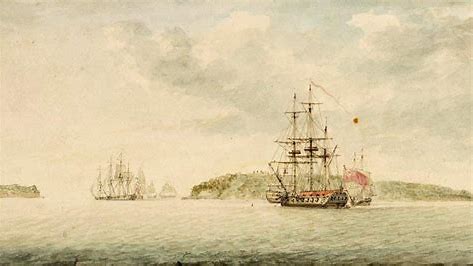
It’s no secret that Australia was started in part as a penal colony. While Captain James Cook first stumbled upon the land in the 1770s, it wasn’t until January, 1788, a group of almost 800 prisoners from Britain arrived in an inlet on the Australia coast called Botany Bay. The majority of these convicts were considered to be “irredeemable” by the society in their home, and sending them away to the largely unsettled Australian colony served several purposes. Obviously and most importantly, it got rid of these people who were considered to be a danger to society. The other and almost equally important consideration was that the prisoners would be able to carve out a niche in the British-controlled continent.

And it was backbreaking work that these prisoners did. They found that the tools given them by their wardens were inadequate to the task. The wood, for example, was much more dense than that of the trees back in England. The native peoples resented their presence. There was sickness. The water was bad. Oh, and they were thousands of miles away from anything they recognized as normal or usual.

The man in charge of this immense task was Admiral Arthur Philip. He was actually a fair man for his time, unusually enlightened, and worked tirelessly despite all the issues concerning discipline, health, and short supplies. And, to exacerbate the situation, two other large shipments of convicts soon arrived and were put under Philip’s care.

Now, Britain wasn’t the only European nation to use another land as a repository for criminals. You’ve probably heard about Devil’s Island off the northeast coast of South America and French Guiana that was started a few decades after Australia had been set up. And there were other penal colonies set up by other nations as well. The idea, again, was that those who committed crimes were somehow “infected” with mental disorders and not fit to be around “normal” people.

But, unlike most of the other penal colonies, the British experiment in Australia worked to move the convicts out of their incarceration and into being productive members of society–even if that society was among other former prisoners. Philip worked to set up a series of benchmarks that would allow the convicts to transition to becoming landowners and farmers as the colony grew. By the time he left to return to Britain several years later, he had set up this system and had proven that it was working. Today, several streets and landmarks and even towns are named in his honor. The work established and overseen by Admiral Philip paved the way for formal settlement of Australia. Today, we can say that about 20% of Australians can trace their ancestry back to one of these early convicts who made the journey from Britain to Botany Bay.

What we often overlook in the settlement of Australia and the first forays into establishing a colony there is that it owes its success in many ways to what happened in America on July 4, 1776. Now, you might be wondering what American independence has to do with the settlement of Australia.

You see, Britain had no choice but to use Australia at that point. Before then, when Britain wanted to send convicts away from the general population, they shipped them to Georgia–the original British penal colony.

On a Humanitarian Effort

When the Vietnam War ended, what had been the nation of South Vietnam was in a panic. That nation, propped up by the United States, was overrun by troops from communist North Vietnam, and those who had collaborated with the US over the years were targeted for retribution by the victorious north and the Viet Cong resistors actively fighting in the south. Those of us old enough can remember the chaotic scenes of helicopters on the roof of the US embassy as a long line snaked up staircases to where the fortunate few were airlifted out of harm’s way at the last minute. Many didn’t make it.

Among those South Vietnamese who were evacuated during those tense days in 1975 were about 2,500 children. The orphanages in Saigon, the South Vietnamese capital city (now Ho Chi Minh City) were bursting at the seams with children who were the products of the liaisons between American servicemen and Vietnamese women. In addition, some families in the south had given their children to these orphanages, often run by American non-profits, knowing that the children would receive better care and have potentially a better future than they themselves could provide. The US government and President Gerald R. Ford decided to evacuate as many of these Vietnamese “orphans” as possible as the South Vietnam government collapsed.

Now, the program had obvious flaws and issues that had and continue to have echoes of colonialism along with some racist overtones. And some at the time bashed the program as nothing more than a publicity stunt for the folks back home at a time when almost no good news was coming out of a war that had cost over 50,000 US lives and billions of dollars–not to mention the first war that the US had not emerged from victorious (let’s call Korea a “tie” at best). So, the weary public’s response was lukewarm at best.

Interestingly, several celebrities at the time got involved in this story. A couple who took the lead in helping to evacuate these children were actor Yul Brynner and his wife, Jacqueline. As California was the first place where these children were brought to in the US, the Hollywood elite began to get involved because, well, they knew a good PR stunt when they saw one. But the Brynners and others were generally well-intentioned (the couple eventually adopted one of the children) even if their publicists made as much hay out of their involvement as possible. And, besides, these Hollywood types were well-connected to people who could move the children around the country to find families to adopt them. And that’s when, to me, the story gets more interesting. Because rich people own jets, you see.

So, a few phone calls were made. And a fleet of private jets was assembled. One of them came from a rather odd place and a rather unusual wealthy person. It was a long, black aircraft with a corporate logo in the shape of an animal on it. Onboard and to care for the children as they were transported back east to meet their new adoptive families were several absolutely beautiful young women. And the jet, filled with 41 soon-to-be-adopted children and their lovely caregivers, winged its way across the continent to drop off the kids in places like New York, Connecticut, Pennsylvania, and Ohio.

Now, modern criticism of what the government called Operation Babylift is still ongoing as these children, today of course grown people with children and grandchildren of their own, try to connect with relatives back in Vietnam and grapple with the trauma of what happened to them almost 50 years ago. They find themselves asking the motives of those who completely changed their lives by taking them and placing them in a strange, new environment. That’s one of the risks taken when cultures collide, especially when one of the cultures is wealthier and more powerful than the other.

But regardless of the psychological and ethical considerations of Operation Babylift, it’s still odd and interesting to realize that publisher Hugh Hefner used his jet, dubbed the Big Bunny, to ferry children across the US with the help of several Playboy bunnies onboard.

On a Real Estate Auction

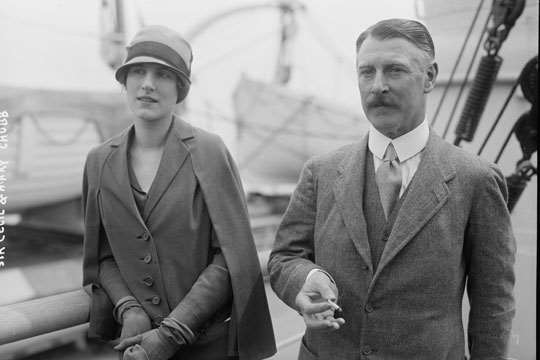
Cecil Chubb was looking and the newspaper in rural England in 1915 and saw a notice about a real estate auction for some nearby land. The land was actually several pieces of farm and pasture land that Sir Gordon Antrobus was selling because, well, he had no use for it and had inherited it from his brother. You see, the brother had died in the first year of World War 1, and Sir Gordon didn’t want to deal with it. Chubb was intrigued because of one of the parcels had some building stone on it. Besides, he liked the area and wanted the land to stay in local hands rather than be bought by some outsider or worse, some foreigner.

Chubb grew up only about four miles from the property Antrobus was selling. While his dad and granddad were harness makers in the village, Chubb had managed to get a university degree from Cambridge and had become a rather successful and wealthy lawyer (a barrister in the UK). He then married well, finding a wife in one Mary Alice Finch. In addition, Chubb owned several successful racehorses, and he actually made some money off them as well.

But the land, Chubb wanted it more to preserve it rather than use it for farm or pasture land and make a profit. Attending the auction was almost a whim for him; his wife had wanted him to buy some chairs that were part of one of the auction lots. Luckily for Chubb, there weren’t many bidders present, and some parcels went for the proverbial song. The land that had the stone structures on it, comprising mostly open land, was coming up next, and Chubb waited to see who would bid. Surprisingly, only one other bidder seemed interested in the land. The other man had adjoining land, and the hammer was about to come down on the sale. At the last moment, Chubb raised a finger and the auctioneer nodded in acknowledgement. No other bidders raised a hand. The hammer fell, and the land was Chubb’s for the bargain basement price of £6,600.

Oh, and he didn’t buy the chairs for Mary.

What he did buy was about 30 acres of land that he held onto for only about three years. He then decided to bequeath the land to the people of the United Kingdom with one proviso. The locals would be able to visit the land for free in perpetuity.

And that’s how the government of the United Kingdom came to own Stonehenge.

On an Alternative Method of Healing

The Catholic Church of the medieval period pretty much controlled every aspect of the lives of their parishioners. Everyone from king to peasant had to go through the Church literally for life’s events from cradle to grave and everything in between. From baptism to confirmation to confession to marriage to last rights and burial on Church grounds–if you didn’t go through the Church for these things they weren’t considered legitimate.

But it happened quite often that when the church couldn’t provide a certain service, the people would be left to seek alternative ways of doing what they wished to do. Let’s say you wanted a certain boy or girl to fall in love with you. The Church wouldn’t have any remedy for that situation. Or take the case of healing the sick. Now, it was absolutely the practice in some areas of Christendom that the Church would set up hospitals and provide medical care for sick people, especially during times of plagues and other pandemics. But if you wanted the healing of, say, a headache, the best the Church could do for you is pray. And prayer can only do so much, mostly as a placebo.

And that’s where a certain class of people arose in the middle ages to meet the needs of people who found that the Catholic Church didn’t actually have the ability to solve or handle all the problems of their parishioners. And we’ve discussed this before, and recently, that when someone or some group tries to take the place of an already established entity or power (or even if there is the perception of such), then those in power will strike out against the usurper. And that’s what happened here.

You see, there was no such thing as a doctor as we today would recognize, at least in Western and Central Europe. Oh, a handful of medical schools opened across the continent, but they were often run by the Church, and they were most often in large cities that were springing up especially after the Crusades. But these medical schools did nothing for the people who lived in smaller towns and villages and certainly they were not helpful to those in the countryside across Europe.

And so people began turning to the people who would at least try to help them with their headaches and skin rashes and venereal diseases and whooping coughs and other physical maladies. Oh, and, sometimes, people sought help for other things, things like their love lives and their melancholy or their nightmares. And, sure enough, when these people who offered help grew too popular or too successful or too prominent, the local priest or the local Church organization would rise up to put them down and restore the normal progression of things such as relying on the Church for the solutions to all of life’s problems. In doing so, they literally demonized those people who were only trying to help others. And people kept going back to the healers.

Now, you and I would call a person like that a doctor and reward them.

The Catholic Church called them witches and burned them.

On the Wrong Pilot

Colonel Paul Tibbets was one of the men in charge of choosing the pilots and crew who would be a part of the Manhattan Project, the development and eventual use of the atomic bomb during World War 2. A highly secretive operation, understandably, but Tibbets would help decide which pilots and crew members would form the task force that would change warfare forever as well as the world as we know it with the dropping of that weapon. The eventual crews and support staff would eventually number in the hundreds. But it all was to remain a secret.

Tibbets thus had reams of personnel files to trudge through, people who either applied for a secret project or who were recommended by superiors. This was 1943, and the war still had a couple of years to go, but yet there was no shortage of American pilots who had combat experience. But as Tibbets went through folder after folder, he was looking for something besides experience over enemy territory. Tibbets wanted pilots specifically who had experience leading people, keeping them focused and under control. So, he thought outside the box a bit.

One such pilot who seemed to have those intangibles was one named G.E. Clements. Clements had flown zero hostile missions but seemed to fit the profile for the type Tibbets was looking for. With a background as a high school teacher–who better to know how to keep people focused and calm–Clements seemed an obvious choice. After all, many of the crew members such as the gunners and radio operators on planes like the Superfortress that Tibbets’s squadron would use for the atomic bomb missions were pretty much high school age or a little older. Besides, the academic record for the pilot was exemplary–top of the class in both high school and university. The military intelligence background check on the applicant came back clean. So, G.E. Clements and the others who made this exclusive club all received invitations to join the secret operation

Once the selection of pilots and crew members went out, they all assembled in Utah, at Wendover Air Base which, at the time, was also a top-secret airfield far away from any major population center. But as Tibbets was greeting all the new pilots and crew, he was shocked to see that one of the pilots obviously didn’t qualify for the project. Immediately, he made a bee-line for the soldier who was talking and laughing in a group of some of the other pilots who had assembled. When the group saw Tibbets approach, they straightened up and saluted. Tibbets called out the pilot who was obviously the wrong choice.

“Identify yourself!” Tibbets ordered.

“Clements, sir,” came the reply.

“G.E….Clements?” Tibbets said, shocked by what he was witnessing.

“Yes, sir.”

“At ease, Clements,” Tibbets said, and the pilot stood easy. Tibbets bit his lip in thought.

“Is there something wrong, sir?” Clements asked.

“Well,” Colonel Tibbets began, “I’m awfully sorry. There’s been a mix-up. You see, this project doesn’t allow women pilots.”

On an Unusual Prescription

Dr. James Hamblin is a young, successful physician, and he has some questions for you–and, at the end, a rather unorthodox prescription for you if you have any of these issues in your life. But first, a word about Dr. Hamblin. He’s 40, married, and received his education at Indiana University (med school) and UCLA (his residency). He also has a doctorate in Public Health from Yale. Hamblin specializes in preventative care and public health according to his Wikipedia article. And it’s because of his usual suggestion for health that he has become a writer for The Atlantic magazine and has lectured across the globe on how to avoid health issues. He has penned the best-sellers, If Our Bodies Could Talk and Clean.

So, the questions. First, do you have any allergies? Do you suffer from eczema? Do you have asthma? Have these developed over your lifetime or have gotten worse as you grew older?

We will revisit these questions later. But know that Dr. Hamblin will tell you that “you” are not alone. “You” are a gigantic laboratory upon which teem millions of microbes and bacteria. Your skin, the body’s largest organ, is their home. We spend literally billions of dollars purchasing things that clean our bodies from these small creepy-crawlies. Soap for the body as we know it today is a relatively recent invention. The use of soaps (and the showers/baths in which we use them) to cleanse ourselves is now a common occurrence. You bathed today most likely. Sometimes you bathe two (or more) times per day. You spend hours in skin, hair, and body care per year. Hamblin says that if you live to be 100, you will spend about 2% of that time (or two years) in the shower or bath.

I’m reminded of another doctor who was a friend of mine over 20 years ago. This was during the time that things like anti-bacterial soap was first making its debut on the market. This man’s name was Dr. Gaylon Smith, and he laughed at the new product. “ALL soap is anti-biotic,” Gaylon said. He pointed out that the act of washing your hands is killing those germy things that live on our skin; that act of germicide is by definition anti-biotic. And Gaylon was right. Dr. Hamblin agrees.

The idea that our natural smells that come from body odor are somehow repulsive is a created concept, created by the advertising agencies on Madison Avenue in New York. We were told (and sold) the idea that our natural smells were off-putting, unattractive, and needed to be first cleaned (soap) and then disguised (de-odorized with either the soap or deodorant). And this is where we return to the questions we posed earlier.

You see, Dr. Hamblin says that the issues above, the allergies, the eczema, the asthma–these and others–have been exacerbated by our use of soaps. The rate (not merely the raw number) of these issues has risen dramatically over the past 100 years. His argument is that the overuse of soaps has led to an unnatural approach to what defines “clean” and healthy. He says that those little bugs on our skin, those tiny vacuum cleaners on our faces, they have historically kept us from having skins that can naturally fight off issues that our ancestors never really had to contend with in past centuries. His recommendation, his prescription for this increase?

Stop showering.

In fact, Hamblin has enjoyed a certain celebrity by telling the public that he, as a doctor, has not had a bath in over 5 years.

On A Farming Commune

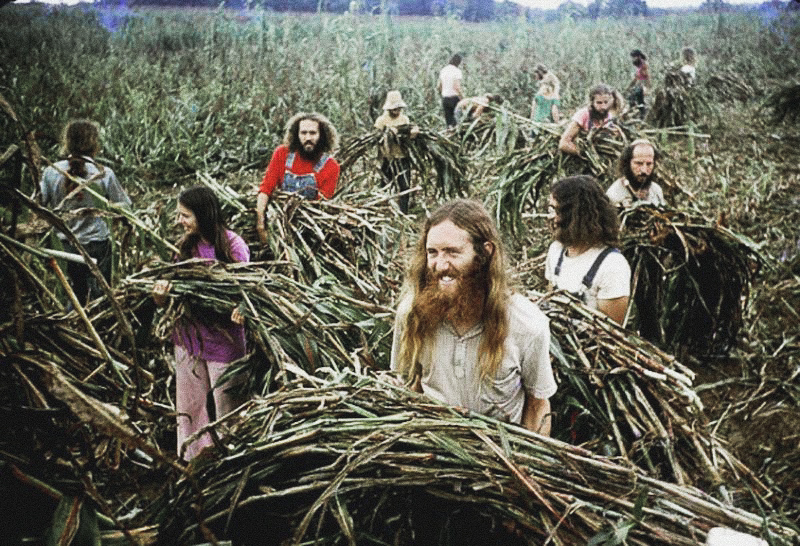
The hippies of the 1960s and early ’70s were wildly idealistic youth by and large. However, the emphasis on “getting back to the land” by some of them–a rejection of an urban or suburban, consumerist society–is laudable to me. Almost 60 years later, there are still some vestiges of that movement in the form of communes in various parts of the United States and Britain (The Farm in Summertown, Tennessee, comes to mind). The idea of people sharing common ground and working for the betterment of the group isn’t new, of course. In fact, another group tried remarkably similar experiments in communal living back in the ’40s.

That group was in England. It was during the war, and prices for food were high; harvests and weather had also been poor. So, a group in Surrey decided to band together to, in their words, provide food and sustenance to any and all who wanted to help them. They found some empty land on a hillside, and they cleared it and began planting on what they said was common cropland. They collectively built storage sheds and even some houses in which they could stay while they worked. The spirit among those who worked was one of great comraderie and cooperation. Their numbers grew quickly. People were excited to have land on which to grow fresh, well, whatever they could get their hands on. The members of the group reported no infighting, no jealousies, and no rancor. Everyone was happy and willing to share.

Well, as you can imagine, some people outside of the commune, specifically people who owned some of the land this growing group was “borrowing,” began to complain. And it’s not that the landowners wanted to use the land. It was going mostly unused. But it seems that the major objection to the group was that they had decided to collaborate. And any time the people in power feel even an iota of a fraction of a micron of loss of power–real or imagined–they usually react negatively. That seems to be what happened here. And part of it was that people in power often want to be the source of things like food and sustenance for people who are needy; they don’t want the people to help themselves. So, the people who owned the land and had money and power began a systematic reprisal against the members of the group–at least the ones they could identify. Some of the group were attacked and beaten. One case of arson was reported in one of the communal storage sheds.

Finally, one of the landowners took the group to court claiming that their free gardening commune was a encroachment on private land and amounted to theft. At the trial, the group was not allowed to mount a defense. They were found guilty in what amounted to a kangaroo court and ordered to destroy their buildings and remove all trace of their communal garden. If they failed to comply, the court said that the landowners could use the army–the army–to forcibly remove the group. Luckily but also sadly, the the commune peacefully abandoned the land. They indeed removed the building they’d erected, and they pulled up all their crops.

But today, the members of the commune–which came to be known as The Diggers–are considered to be the forebears of the modern agrarian socialism movement that influenced generations to come. Indeed, the hippies of the 1960s certainly found inspiration in that group of intrepid communal farmers.

After all, who could have guessed that a group from the 1640s would cast such a large shadow?

On a Really Bad Nurse

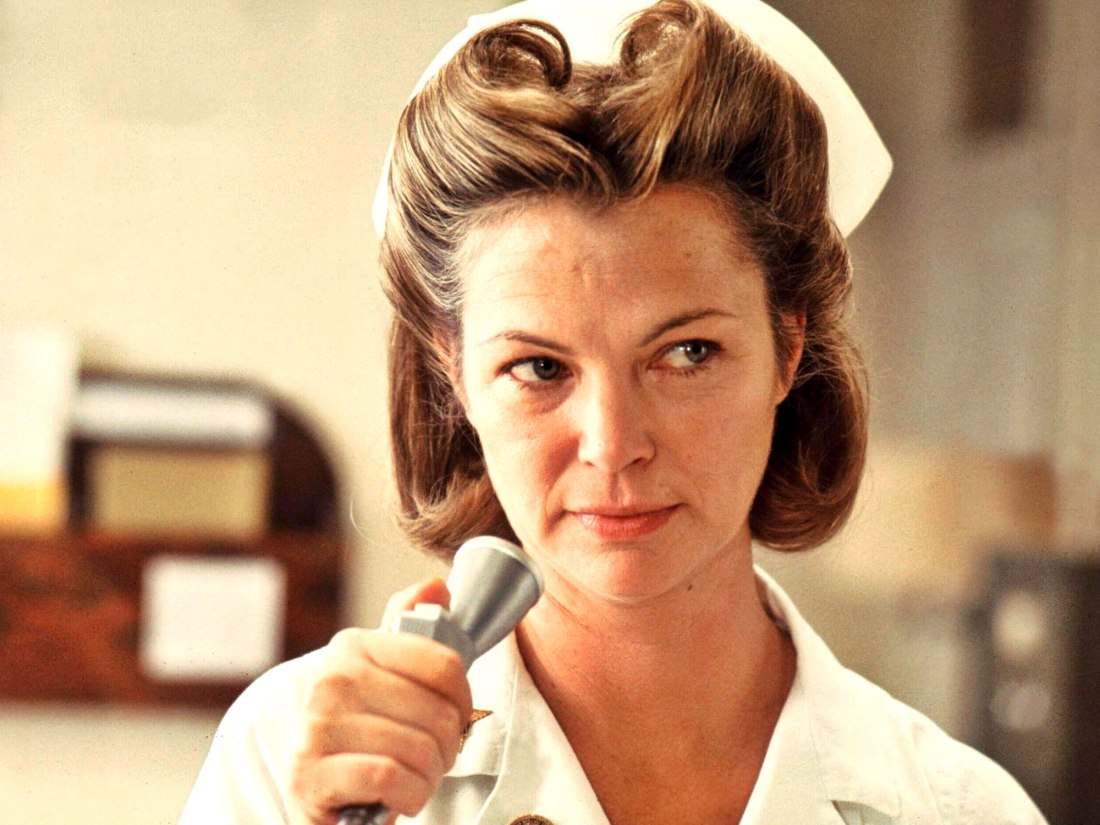
Several nurses are in my family and among my close friends, both male and female. I know them to be loving and caring people, people who would help anyone regardless of any background the person may have. The nurse in the book/film, One Flew Over the Cuckoo’s Nest, Nurse Ratched, has come to stand for the epitome of the opposite type, an evil nurse, someone who is not really in the healing, caregiving business. No, Ratched was a manipulative person who reveled in using her position to control those in her care. She felt her patients were beneath her. This story is of one such nurse, but she is not a fictional character.

This particular nurse suffered from the delusion that she saw visions and received special instructions from another, non-physical plane of existence. And that voice or those voices told her that she was right and everyone–everyone–was wrong. That alone should have disqualified her in most hospitals. But add to this that she felt that the voices told her that white folks were superior to any other race. As such, she gave preference to that segment of society over other groups.

But it gets worse. Rather than simply be willing to nurse anyone who was sick, this woman decided that the old dictum that, “Cleanliness is next to Godliness” should be actively pursued. However, this nurse took it to a metaphorical extreme; she felt that if someone was unclean by reason of skin color or religion–not necessarily unsanitary, you see–that the person didn’t deserve her help. This is a racism that is absolutely deplorable in any profession, but is rings especially harsh in nursing.

Take her work at face value. When working with the government of New Zealand, this nurse purposely and with malice advised the health organization to provide a lower level of heath care to Māori patients than those of European descent. Read that again–a nurse in the not too distant past advised a government to show preferential health care to one ethnicity over another. Understandably, the New Zealand Nurses Organization (NZNO) soundly condemned her stance. Racism and exclusion, they correctly pointed out, have no place not only in nursing but also not in society at large.

And, surprisingly, she did not care for women doctors. No, this nurse was Old School. She said that women should be nurses and men should be doctors. The women she knew who were doctors were, in her words, “no better than third-rate men.” Not sure whom she was insulting there, but you get the point. Women’s place, she felt, was not being in charge of care but merely assisting in the care of the patient. Women, she insisted, were much too flighty to be trusted with doctor-y things. And, while some might say that she was merely a product of her time, that shouldn’t be used as an excuse to perpetuate the racism and misogyny she practiced throughout her long life. Simply because she believed these horrid things as did many of her time still does not make them right.

Yet, much of the western world at least seems bent on making Florence Nightingale the epitome of what a nurse should be.