On Building a Mosque

The prejudice against the Islamic religion and the often hate-filled, violent history of most of the public against the Muslims in the United Kingdom are long documented. It’s hard to pin down the reason so many from the UK seem to dislike Islam and its adherents so much. There are similar sentiments in the United Stares towards the religious group and towards Islam in general. And much of that hatred comes bubbling to the public surface when it’s announced that an Islamic church building will be built in one town or another. A town nearby where I lived in Tennessee found that out when it was announced that a mosque would be built there. Protests–some of them violent–finally derailed the planned building of the structure there.

Take the case of a mosque that was proposed in the British city of Liverpool. A small group in the downtown area of the city wanted an Islamic presence there. After using two adjoining apartments in the city center for a Koranic study center, the group of teachers and students realized that a place of worship could be made there as well. You can imagine the outrage that ensued. Even through the group was made up of predominately British-born adherents, the group was harassed and threatened. Local residents pelted the worshippers and students with eggs and rocks as they came and went from the apartments. A police presence became required every time the school was in session. Since the apartments were rented, the landlord made the popular but not necessarily moral choice to kick out the Muslim tenants.

With no where else to go, the group turned to one of their members, a man of some means named Abdullah Quilliam. He arranged to purchase a house in the same general area as the apartments for use as both a school and a mosque (once he built an addition on the back of the house). And, so, despite the continued protests and vitriol of neighbors and other locals, the Islamic community of Liverpool had a mosque and school of their own for use in the city center area. Quilliam also paid for the establishment of an orphanage and the printing of a Muslim newspaper in Liverpool.

And this Abdullah Quilliam was an interesting person in his own right. Born in Liverpool, he was raised by a wealthy family who taught him not Islam but, rather, Methodism. He studied law and became a well-respected solicitor in the UK. He visited Morocco as an adult and there studied and became entranced by Islam. He converted and changed his name. You see, Abdullah was the name he chose once he converted. His birth name was William Henry Quilliam, and his family never understood why he chose to become a Muslim.

And that house that he bought and turned into the school and mosque in Liverpool, the one that brought about such vehement anger from the local community?

Well, it was the first ever mosque not only in Liverpool but also in all of the United Kingdom opened in 1889.
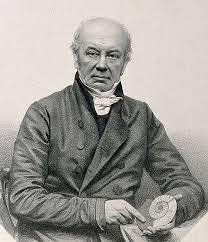

On an Eccentric Eater

William Buckland was a distinguished man. By profession, he was a pastor, a rector, and a religious lecturer. By way of hobbies, he was a paleontologist, a fossil collector, and a publisher of scientific papers on the age of the earth. However, what many today remember Buckland for is for being one of Britain’s great eccentrics in a nation that is not short of people of that ilk.

Buckland was born in the late 1700s in the English area of Devon. From an early age, he collected the fossils that lie everywhere in that area of his birth. While such an interest as a young man might make one think he would become a geologist or scientist, he decided to follow in his father‘s footsteps Thus, he went to Oxford, and there he trained to be a minister. Eventually, he received advanced degrees in theology, but his passion was really the fossil record, and that’s what he is mainly remembered for today in the professional realm.

One of the major areas where Buckland made his reputation was in determining for himself that the biblical record of time did not match the paleontological record. He realized pretty early on in his amateur study of the fossils he found that there was no reconciling the Biblical view of a Young Earth like most theologians espoused during that period. He made a few enemies but also a few friends when he published his findings and used his fossils to back up his assertions. And while that is laudable and commendable, for our purposes, let’s look instead at how eccentric the man actually was.

First of all, he decided he was going to eat his way through the animal kingdom. I mean that literally. Buckland decided he would sample every animal that he came across or get his hands on. One author compared Buckland’s appetite to a gastronomic Noah, a man who was so consumed with consuming animals like the Biblical Noah collected them for his ark.

Now, I’m an omnivore, but the most adventurous I’ve been in my journey through the world of meat has been snake, alligator, and possum (all things that folks in the American south used to eat back in the day). But William Buckland was determined to start with the letter A and go through to Z in eating the animal kingdom–and he included most insects as well. One of his favorites was braised mice over toast. Aardvark to zebra passed across Buckland’s lips over the course of his eating exploits. He made connections with shipping companies and vessels that traveled throughout the burgeoning British Empire and hired them to bring back samples of animal he had yet to consume. And, throughout his life, we don’t know for sure how many different types of animals the man ate, but it’s safe to say that he ate more different species than any other human has.

And, you might be wondering (or, if you’re normal, you might not be wondering) at this point if William Buckland drew a line when it came to eating human flesh. I think you already know the answer to that question. It seems that Buckland was visiting the Archbishop of York in a house not too far outside of Oxford, England. The Archbishop was another one of those English eccentrics, and he collected odd artefacts–and by odd, I mean things like the locks of hair from some of Henry VIII’s wives or the finger of famous singers of the past, macabre items like that. And the Archbishop showed Buckland the heart of a man who had been publicly executed a few years earlier. The Archbishop opened the silver box in which he kept the heart, and Buckland was immediately intrigued. Could he possibly have a small taste of it, he asked the Archbishop. And the man agreed. Thus, William Buckland was able to mark “human” off his list of animals he ate in his lifetime.

Oh, and the heart?

It was supposed to have belonged to King Louis XVI of France.

On a Thoughtful Gift

The relationship between the United States and the Soviet Union between the end of World War 2 and the beginning of the Cold War changed exponentially. Allies during the war against Germany, the two nations became bitter enemies once the war was over. However, that transition from friend to foe didn’t happen overnight. Both nations mistrusted each other for years but saw the relationship as being necessary to defeat the Nazis. However, that doesn’t mean that, at times, friendly gestures were exchanged while the two countries were allies.

Take the gift that was given to the US Ambassador to the Soviet Union, Averell Harriman, in 1945. The gift was a hand-carved wooden replica of the Great Seal of the United States. And the gift was formally presented to the ambassador by a large contingent of the Soviet Union’s young person’s organization, the Young Pioneers. The Pioneers were much like a politicized version of the Boy or Girl Scouts in the west, but in the case of the USSR, membership wasn’t optional. However, the presentation of the gift was reported in the press as a wonderful gesture of gratitude on the part of the young people to their vital ally in the Great Patriotic War against Nazi Germany.

You see, when Hitler decided to invade the Soviet Union in 1941, the United States had not yet entered World War 2. The country was desperate to find the weapons and materiel to fight the war against the invaders. The United States arranged to begin supplying Russia with armaments and some products needed to fight. It’s safe to say that, without the aid of the United States, the USSR’s ability to defend itself against Germany would have been severely hampered. So, as the war was nearing the end in the summer of 1945, the giving of a gift to the US representative in Russia seemed more than appropriate.

At the presentation ceremony, Harriman, surrounded by the boys and girls in their red Pioneer scarves, graciously accepted the large wooden plaque on behalf of the United States. He ordered the plaque placed in the US Embassy in Moscow. It occupied a place of honor behind the large desk in the ambassador’s office and hung there for the next seven years.

Then, in 1951, something odd happened. A communications officer in the British Embassy in Moscow as sitting at a radio in his office one day when he suddenly heard something unusual on his set. What he heard was American voices coming over the air, bleeding through a Russian military broadcast he was monitoring. The communications guy couldn’t understand how that could be; the nearest American radio station that could be broadcasting was several hundred miles away in Western Europe. He continued to listen, then, it dawned on him what he was hearing. He jumped up and ran down the hall to the office of the British Ambassador.

It was then that the world found out, after seven years, that the beautiful carved wooden plaque that the Pioneers had presented to the Americans wasn’t what it seemed.

The gift, given by the Soviets to the Americans in the pretense of friendship, was actually a listening device.

On an Aggressive Neighbor

What would you say about a neighbor who made violent incursions into your property several times over the past few years? Well, you’d probably take that neighbor to court or, if you felt really threatened, you might consider moving. But what if that neighbor was not a person or a family but, rather, another country? Well, that’s the current situation going on right now in a certain part of the world.

Let’s go back a bit. The offended country is small and basically helpless, it has no real army, and hasn’t been a threat to anyone or any place in centuries. Its people are known for being thrifty, hardworking, and industrious. The offending country, on the other hand, is over 25,000 times larger than its tiny neighbor. It has sent its well-trained troops to other countries over the centuries because they’re known for their loyalty and bravery. One of their major exports is personal weapons produced for their army, in fact.

And, so, at least four times over the past fifty-some odd years, the bigger country has invaded the smaller one–and not one resolution condemning these aggressions has been lodged or passed by the United Nations. Here is a quick rundown of all the times the small nation has been attacked over the years:

1968-The first time was a mortar strike taking out some buildings and infrastructure. No injuries but loss of property and income.

1976-A scouting party of 75 entered the neighboring country on what they later said was an “accident” but no compensation was offered.

1985-Surface to air missiles were launched into the small country (why shoot missiles? They had no air force in the first place) started forest fires that destroyed a good deal of valuable woodlands and hurt the economy. Again, and luckily, no injuries.

1992-In this instance, actual regular army troops crossed the border and occupied a small village. No apology made or compensation offered

2007-Another incursion of troops, this time on a larger scale. This time, the government of the smaller nation demanded that the larger country be held accountable. No one did anything, but the troops were withdrawn and a formal apology was issued. But the apology came with the statement that “no helicopters were used in the incident,” as if that made it better, somehow.

Again, you’ve not heard about this aggression and no action has been taken to punish the aggressor. Maybe part of that is the fact that the larger nation has a reputation as being the anti-aggressor. In fact, it is known internationally as a bastion of peace, tranquility, and neutrality.

That’s why it’s hard to understand why tiny Liechtenstein keeps getting picked on by its knife-wielding next-door neighbor, Switzerland.

On a Simpleton

Doug Hegdahl was a sailor aboard the USS Canberra off the coast of Vietnam in 1967 when the concussion from the ships large guns knocked the young sailor overboard. His fellow sailors didn’t notice that the 22 year old was missing until later. Meanwhile, Hegdahl managed to swim and float for a bit until some Vietnamese fishermen picked him up out of the sea.

Unfortunately for him, these fishermen were not sympathetic to the South Vietnamese, and they turned him over to some North Vietnamese soldiers. Thus, the sailor from a small town in South Dakota found himself in the notorious Hanoi Hilton, the POW camp. At his initial interrogation, his captors soon found that the young man, who looked much younger than he was, came across as something of a simpleton. He had a blank stare about him, and he was always humming a simple tune under his breath. Even when the North Vietnamese soldiers beat him up, he didn’t change his look or habits. Finally, they simply left the simpleton alone, figuring that he was useless to them for information or as a propaganda tool. Apparently, he couldn’t even read or write. They called him “The Incredibly Stupid One.”

As a result, and, rather unusually, Seaman Doug Hegdahl became somewhat of the camp “mascot” for both the captors and the fellow prisoners alike. For the Vietnamese, he was a cypher. For the other American prisoners, he was like a little brother they wanted to both protect and care for. One prison guard asked another American was the tune was that Hegdahl was that he was always humming. “Oh, that?” the POW answered, “it’s a children’s song called ‘Old MacDonald.'” He was seen as such a simpleton, such an idiot by the guards that he was allowed to wander the compound freely. They knew he wouldn’t try to escape or do anything, and, besides, he wasn’t hurting anybody. He would visit everyone around the camp and make everyone laugh, Americans and Vietnamese alike.

Now, during the war, the US and the communists often traded prisoners. Usually for the US, they wanted the officers to be swapped for North Vietnamese captives. After Hegdahl had been held for two years, he and two American officers were exchanged for prisoners held by the US. It was decided that such an innocent, such a simpleton, should not have to stay in the POW camp. It was even commented on that it was a surprise that someone so simple would have been accepted by the US Navy in the first place.

When he finally reached the US after his release, Doug Hegdahl promptly reported to his superiors. And, after they had debriefed him, he was reassigned. They immediately fly him to Europe to become one of the US representatives at the Paris Peace Talks so that he could talk to the negotiators there and confront the North Vietnamese delegation. You see, this sailor, all the time he was humming the tune to Old MacDonald, he was using the song as a way of memorizing names, places, and information. He walked out of the Hanoi Hilton having an encyclopedic recall of every one of the almost 300 US POWs who were in that facility–names, condition, messages to loved ones, etc.–and details of how each prisoner was treated.

No, Doug Hegdahl was no simpleton–far from it.

Instead, he was the consummate actor.

On a Same Sex Relationship

Historically in the United States, same sex relationships have been against the law from a legal standpoint, sin from a religious standpoint, and an unspeakable offense and/or a mental derangement in the social realm. Yet, all of that never stopped same sex couples from existing and even flourishing throughout American History.

Now, of course, these were not relationships that were generally out in the open; there was no flaunting of sexual orientation because of the backlash such behavior would cause in the law, church, and society at large. And people created euphemisms for men who lived with men and women who lived with women. If two women were life-partners, many times that was referred to as a Boston Marriage. Wellesley College near Boston was where women of the upper middle and upper class would go to receive an education. Being women of some means, these Wellesley students weren’t as dependent on men for their livelihoods and preferred the company of other women. So, they would cohabitate, and that’s where the sobriquet sprang from. Now, to be fair, some of those Boston Marriages were not sexual in nature, but the living arrangement certainly went against the norm for that time period. For men, the euphemisms were a bit more subtle. Up until the past few decades, if a gay man died, his obituary would often list a “friend” or say that he was “a life-long bachelor” or “he never married,” and those in the know would be able to read between the lines.

Let’s take the case of a devoted couple who lived not too far outside of Baltimore, Maryland, about 175 years ago. Let’s call them Aunt Fancy and Miss Nancy, because that’s what people who knew them called them. The pair lived together for some years, and they would be seen at social functions together, even at gatherings where it was understood that the spouse or significant other was supposed to make an appearance. They also managed to work in an occupation that would normally not be acceptable for people with same sex attraction–the government. And that work often separated the two. The letters we have found (most were destroyed by their embarrassed family members after the couple died) that the pair exchanged were long and expressed, passionately, how the other one was terribly, terribly missed.

It’s rather interesting that Nancy and Fancy would’ve gotten together in the first place. Nancy was from Pennsylvania originally, while Fancy hailed from the Cotton Belt of Alabama. It was amazing that they ever got together at all. Nancy had even been engaged once, but the wedding was called off when the fiancé died suddenly–much to Nancy’s relief, a later letter would admit. And, like the examples of other couples as in the Boston Marriages, they both came from money. But their personalities were different; Fancy was, well, fancy; a quiet and refined gentility oozed from every pore and hair. Nancy was loud and boisterous and enjoyed a bit of a drink every now and then where frivolity would ensue. Yet, the relationship worked for many years. Writing to a relative while waiting for Fancy’s return, Nancy confessed, “I am now solitary & alone, having no companion in the house with me. I have gone a wooing to several gentlemen, but have not succeeded with any one of them.”

Sadly, Fancy died in 1853 of tuberculosis. Nancy would follow 15 years later. Oh, and their names? Those were the names that they were called in derision, first given to them by none other than Andrew Jackson. While we don’t know for sure if the nature of the relationship between the two was sexual, we do know that some of their contemporaries and political foes and even friends certainly thought so. You see, you know Aunt Fancy as William Rufus King, who was the Vice-President under Franklin Pierce, and you know Miss Nancy as President James Buchanan himself.

On Getting Out of Dutch

The Nazi occupation of the Netherlands during World War 2 brought untold hardship to the Dutch people. Besides the impact of being under the control of the German military, the nation witnessed the deportation of most of the Jewish population to death camps and the suppression of human rights and freedoms. Also, much of the wealth, historical artefacts, and artwork was systematically looted by the occupiers.

One of the biggest–pun intended–offenders in the pillaging of not only Dutch but also all of occupied Europe was the German head of the air force, Reichsmarshall Hermann Goring. Goring was a wealthy man before the war, and he used his power and position and money to consume the finest wine, best food, and most coveted art available to the Nazis. He had a particular taste for the paintings of the Dutch Renaissance masters, painters such as Rembrandt and Vermeer and others. It became a symbol of the Dutch resistance movement and patriotism to hide valuable pieces of art from people like Goring, saving them in secret places until the day when the occupation would be over and the Netherlands would be free again.

Han van Meegeren was a wealthy Dutch painter and art collector/dealer. When the Nazis came to his country, he took a different approach to their interest in Dutch art: He decided to sell pieces of his collection to them. Goring, who could have simply taken what van Meegeren had, was thrilled by the prospect of owning one item in van Meegeren’s collection, a Vermeer known as Christ with the Adulteress. Working through a dealer, the German leader traded over 100 stolen pieces of artwork by lesser artists for this particular Vermeer. Part of this was a public relations stunt by Goring, who wanted to show that, after all, the Nazis weren’t so bad because they had swapped artwork for artwork–even if some of it were stolen.

And, for his collaboration with the Nazis, Han van Meegeren was made an outcast by his fellow countrymen. He spent most of the war years in seclusion in one of his many houses, houses he had purchased with the sale of artwork in the pre-war years. After the war, van Meegeren was arrested (along with several others) for the crime of colluding with enemies of the state. He was put on trial, and his life was in the balance.

But, in court, van Meegeren made an astonishing claim. He said that he did what he did by trading with Goring not to give away a priceless national treasure in the Vermeer painting, but, rather, to save the dozens of other stolen paintings he’d received in the swap. The court considered his defense, but it was skeptical. Collaboration was, in the end, still collaboration. But van Meegeren defended himself further by claiming that the Vermeer he’d traded for was not worth much at all because it was a forgery. The Nazi leader had been duped into swapping legitimate works for a fake. Well, the court was astonished. The painting was well known and had all the hallmarks of being a work by the great master of Dutch art. How could he prove that it was a fake, the court asked van Meegeren. Again, his answer surprised the court.

Van Meegeren said he knew it was a fake because he had painted it. And to prove it, he painted it again for the court.

And that’s how Han van Meegeren went from Dutch collaborator to Dutch national hero.

On Leaving It All Behind

In 1975, the USSR sent some geologists on a scouting mission to an isolated section of the Russian Taiga. The group traveled by helicopter because of the complete absence of roads or even any human knowledge of the area. Now, you should know that the Taiga is a vast section of conifers, lakes, swamps, and mountains that is home to, well, practically nobody. And that’s why, when the helicopter was flying a couple of hours away from any semblance of a settlement, that the geologists onboard were amazed to see a collection of buildings and farmland in an area where no one was supposed to be living.

The chopper found a suitable flat and clear space to land, and they touched down not too far from the group of wooden buildings. After setting up their camp, the group of scientists decided to check out the small settlement they’d seen from the air. It took them a short hike because of the terrain, but they managed to reach the place. As they approached, an elderly man came out of one of the log houses and nodded acknowledgement to the geologists but he said nothing. In an effort to make the old man feel more at ease, one of the geologists said, “Greetings, grandfather; we’ve come for a visit!”

Well, that broke the ice. The old man waved the small group into his cabin and and said, “Since you’ve come this far, you could come inside!” Once their eyes had adjusted to the dim light of the low-ceilinged cabin, they men saw that the place was very simply decorated and sparsely furnished. The man was getting glasses for the men so that they could share a drink together, and that’s when the geologists decided to ask about why the old guy was there. And the story he told was amazing.

Turns out that the man and his family had lived there off the grid for some time. He introduced the men to his family, his wife and children, and especially to his daughter, Agafia. She helped her father get some food for the men as her dad got the drinks. As they settled down around the crude table to drink, the group was told that the man’s name was Karp Lykov. It seems that, years before, the family had left civilization because they were unwilling to give up their religious beliefs when confronted by Soviet pressure to do so. Rather than change or even pretend to change, Karp and his family decided to quietly and simply drop out of Soviet society by moving deep within the Taiga. The place they’d found was over 160 miles from the nearest settlement.

The scientists were confused. How could they survive off the grid–and out of the reach of the Soviet authorities–for so long? Remember, this was 1975, and the Soviet Union’s ability to control their citizens was beyond question. How an entire (and not small) family group could simply drop out was, well, incomprehensible. The Lykov children began asking questions of the men; what was it like in the outside world? How were things in civilization? The men tried to explain the latest news, but the family looked puzzled. They had no frame of reference for what the men were telling them.

Karp told them that he had seen stars moving rapidly and asked about them. Now, it was the geologists’ turn to look puzzled. “Do you mean satellites?” one man asked Karp. The old man’s eyes widened with curiosity. “Hold on a minute,” one of the scientists said. “When was the last time you all have been to a town? When did you all leave civilization to live out here?”

Karp looked up at the low log ceiling above him in thought. The men could see he was figuring the time in his head. “This is 1975, right?” he asked, finally. The men nodded assent

“We left your world in 1936.”

On a Cartoonist

Charles grew up down the street from a cemetery in Westfield, New Jersey. He passed it on the way to school and back every day as a young boy. Sometimes, rather macabrely, Charles would journey into the graveyard and lie down on one of the graves and wonder what it would be like to be dead. With that background in your head, perhaps you’d be surprised to learn that Charles grew up to become a famous cartoonist who brought laughter and joy to millions.

His dad was a company executive and a descendant of several of America’s founding families. The father was always the largest presence in the room, and he encouraged his son to look at life in a different way. His much more calm but still loving mother took him to the Presbyterian church on Sundays and took care of him and his dad during the rest of the week. Charles got into a spot of trouble growing up, too, it seems. An old, large, and abandoned mansion in the neighborhood attracted the boy, and he was caught by police breaking into the old house out of a typical kid’s curiosity. When he was old enough, the bright young man went to first to Colgate and then to the University of Pennsylvania, but, at the prompting of his father, Charles dropped out of Penn after a couple of years and attended art school in New York City.

Charles’s classmates described his art style as quirky with a wry sense of humor–“a little different from everyone else’s” one said specifically. It was quirky enough to attract the attention of the New Yorker, which published Charles’s first paid artwork for them in 1932. They ran his artwork off and on for the rest of the decade where he came to the attention of a national audience who, like his old classmates, appreciated his unusual take on the world.

But then, Charles hit on the idea of creating not cartoons that bore no relation to each other, but, rather, a series based on a group of characters. And that’s when Charles’s cartoon career began to take off. And what made it so popular, so successful so, well, relatable in one sense is that Charles used his old hometown of Westfield as sort of an inspiration, a locale where he placed his group of misfits and castoffs who somehow formed a family.

And the cartoon is still being appreciated today. Books, films, TV series, and even cartoons are still being produced based on the series even though Charles died in 1988. At the time, his contemporaries eulogized him as “a hell of a nice guy,” and a man who was “easygoing and calm,” but those descriptions ran counter to the cartoon world he created. You see, those descriptors don’t really help us to understand the cartoons Charles Addams created about his creepy and kooky family.

On a Witch Trial

We’ve spoken about the history of witches in the western world before, but this story caught my attention because of its ties to Scotland. Many of us are aware of the beginning of Macbeth, the Shakespeare play, where three witches begin the story with the infamous incantation, “Double, double, toil and trouble; fire burn and caldron bubble…” Scotland has had a long association with witches, and Shakespeare knew that the new King James was Scottish; he knew his audience. But one real-life Scottish witch is peculiar for her supposed ability to read people’s minds and discover secrets that no one knew.

As late as 1735, Britain passed something called the Witchcraft Act. It made it a crime for anyone to either practice witchcraft or to claim the powers of a witch. Now, while that seems odd or harsh, the law was actually fairly forward-thinking. You see, rather than punish witches with death or allow for vigilante groups to go on witch hunts, the Witchcraft Act imposed a penalty of imprisonment. And, rather than be based on the idea that witches are real, the “new” law worked off the supposition that witches were charlatans, people who preyed on the weak-minded or the desperate. Think of it as more of a consumer protection law rather than a desire to punish based on any kind of religious belief. And, it was under this new act that a woman named Helen Duncan was arrested.

Helen lived in Edinburgh, a town that has a long history for being somewhat spooky, especially the Old Town part with its narrow closes and wynds. It seems that Helen had been conducting sessions in her home where she would contact the spirits of the dead. During a period of war in Britain, many people who lost loved ones in the conflict came to Helen, and she would speak to the dead and communicate the messages she received back to the grieving relatives. Some people today would say that she was a medium or someone performing what we might call parlor tricks. On one hand, this seems to be somewhat comforting to the relatives of the deceased and possibly harmless.

But then, Helen reached out to some people who had relatives onboard a certain British warship. While Edinburgh isn’t on the water per se, it uses the nearby port of Leith and has a long history of providing sailors for Britain and for merchant ships. And it seems that Helen told several people that their relatives had died because of the sinking of a British warship named the HMS Barham. Now, no one in the government had said that the ship had been sunk. As you can imagine, these relatives were horrified. They bombarded the government with inquiries regarding the safety of their loved ones onboard. A minor scandal arose. British officials were caught with no good option. If they reassured the families of the sailors that all was well, but then it turned out that the ship had indeed been sunk, then they would look either incompetent or dishonest. If they admitted that the ship went down, then they might be revealing war news that might embarrass the government and then questions would arise about why the government was keeping the deaths a secret.

It was a lose-lose. What do to?

The government decided to blame the messenger. Citing the new Witchcraft Act, the government ordered the arrest of Helen Duncan. The newspapers of the day printed details of Helen’s trial, and the public proclaimed her a hero for telling the relatives the truth when the government wouldn’t. Eventually, however, Helen was convicted under the provisions of the law and sentenced to jail. It was determined that she had heard a war-time rumor of the sinking of the ship and had parlayed that into a way to make money from the relatives of the sailors. And, also eventually, the public outrage about the scandal and seeming coverup died down.

But Helen Duncan would be the last person convicted in Britain of being a witch…in 1944.