On an Unwelcomed House Guest

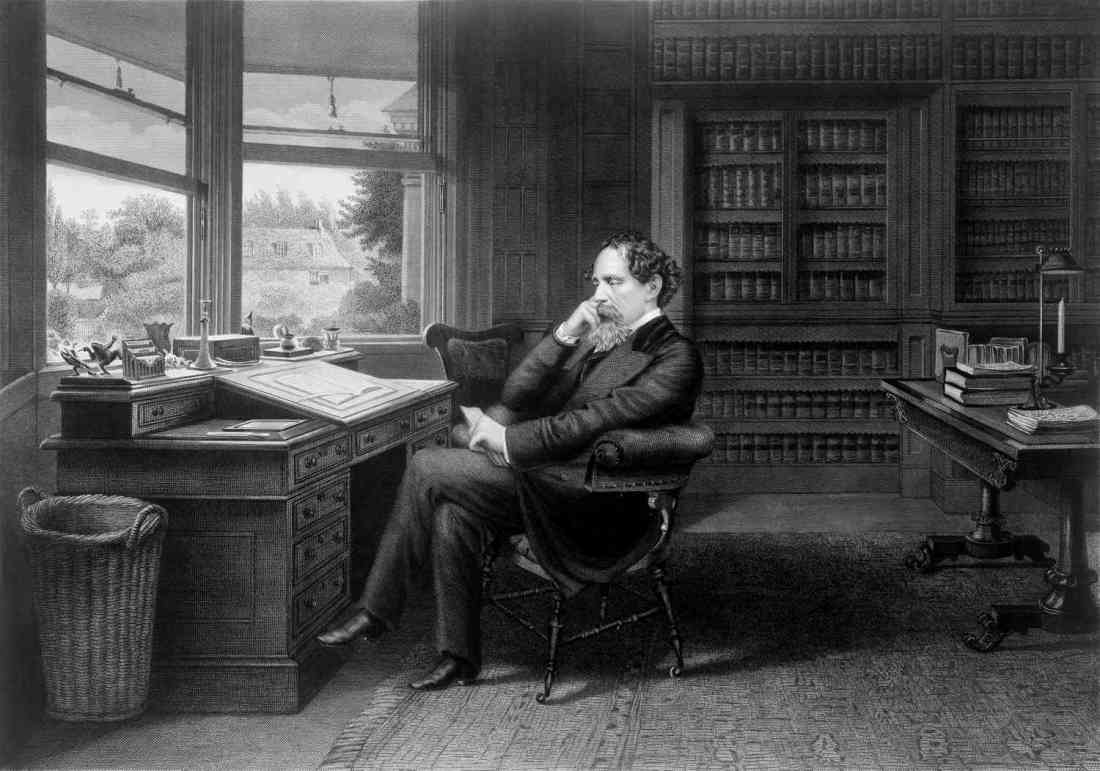
In 1847, a young would-be writer from Denmark visited London. On this trip, he had the fortune to meet the famous British author, Charles Dickens. At the time the two men met, Dickens was already a celebrated author, known for his stories such as Oliver Twist, Nicholas Nickelby, and A Christmas Carol.

Dickens thought the angular young Dane to be eccentric but interesting. After their brief meeting, the young man wrote in his diary, “I was so happy to see and speak to England’s now greatest living writer, whom I love the most.” And, when he returned to his native Denmark at the end of his trip, he wrote a letter to his new acquaintance. “Dear Mr. Dickens,” the letter began, “the next time I am in London, I would wish to come spend some time with you if you would agree.“ Dickens wrote a short note back, acknowledging receipt of the letter and said that yes, sometime in the future, a visit from the young man would be welcome. It seems that Dickens answered more out of a formality and courtesy rather than truly extending an invitation.

Much to Dickens’ surprise, the young man showed up, unannounced, at his house…in 1857. And he brought with him enough luggage to stay for an extended visit. Unfortunately, the guest’s arrival could not have come at a worse time for Dickens. The celebrated author was in the middle of working on a play in London, and his marriage was going through a difficult phase. Nevertheless, Dickens and his family did the best they could to make the odd, thin Dane feel welcome in their home.

Immediately that were problems. It turned out that he did not have a good grasp of English. Dickens noted that his French was even worse. But the language difficulty was the least of the issues. He had a habit of sleeping until almost noon every day. When he finally woke up and came downstairs, he seemed flummoxed that breakfast, which had been cleared away hours before, was not made available to him. He would take long walks in the woods and fields surrounding the Dickens house. When he was with the family, he would get a pair of scissors and made elaborate and oddly strange cut outs from any paper he could find. These amused Dickens’s children at first, but soon they grew tired of the game.

The most bizarre part of the stay was when he requested that Dickens’s oldest son, for whom the young man seems to have grown inordinately fond, be made to shave him every morning. This was something that Dickens would absolutely not allow. Thus, the young man was visibly upset that he was now forced to go into town to be shaved by a barber. Soon, he would spend most of his time in town, shopping or walking the streets. The entire household was soon in an uproar. Everyone in the family and even the servants devised elaborate plans to avoid having to interact with him.

How do you tell an unwelcome houseguest that he has overstayed his welcome? Dickens found a way, and, after five long weeks, the visitor from Denmark left the Dickens household. After he arrived back in Denmark, the man wrote to Dickens and offered an apology and asked Dickens’s forgiveness for any breach of etiquette. Even though he never completely understood why he’d been asked to leave, he must have realized the tumult he brought to the household, and he tried to repair the damage done to the relationship. Dickens didn’t reply. The two never saw or spoke to each other again. And, shortly after the Dane had vacated the household, Charles Dickens pinned a note to the door of bedroom the unwelcomed houseguest had used.

The note said, “Hans Christian Andersen slept in this room for five weeks, but, to the household, it seemed like an eternity.

On a Partnership

Partners in any business can be a tricky situation—law partners especially. Take the case of Will Herndon and his partner.

Will was a more than competent attorney. He understood that law is sometimes a business that requires a quick turnaround on the case so you can get to the next one. Better to be paid five times handling five quick cases than one time handling one long one. At least that was the way Will saw things.

That’s what frustrated him so about his older law partner. The older man seemed to have a deliberate nature when it came to both researching a case and arguing it. Even on the simplest case, Will‘s partner would pursue it like a bulldog, researching arcane rulings that may or may not apply to the situation, and then taking his own sweet time in the court room to talk to witnesses, dragging out the process, it seemed. It was all sometimes maddening to Will.

In addition, this partner would often allow opposing counsel‘s points to go unchallenged. Why don’t you ever object, Will asked the partner. The man told Will that it was better sometimes to concede six or seven small points as long as you won the last big one.

Perhaps the greatest strain on the relationship between the two partners was Will’s frustration with his partner’s and his partner‘s wife’s inability to discipline their children. You see, the older man’s young children were often in the offices and underfoot. The partner didn’t seem to mind that his sons had free run there, and they often disrupted meetings with clients. It was like having a bunch of wild animals in a place that Will thought should observe at least a modicum of decorum and seriousness.

Yet, despite their differences, the law partnership survived for over 15 years. It dissolved only when the elder partner decided to pursue political office.

And in all that time together as partners, Will Herndon was never invited to his partner’s house for dinner or to meet for any social event. Apparently, the animosity between Will and his partner‘s wife proved too great an obstacle to overcome.

Will’s partner went on to great success in public life, and that success was fueled largely by the same dogged practices that made him such an able litigator. The man served well, and he even died in office.

Years later, Will decided he would write a book describing the man he had come to know over those years as his law partner–a biography from the man who knew him better than anyone else except his wife.

The book’s title?

Herndon’s Lincoln.

On An Indigent Cancer Patient

This story was first put up on the blog almost four years ago. It is among the favorites listed by several of the regular readers of the blog. Others like it will be posted periodically over the next several weeks. Enjoy.

The doctor looked at the patient’s chart. “Sir,” he said to the weathered old man in the bed in front of him, “You’ve got lip cancer.” The old man nodded. He didn’t seem surprised or shocked. “D’you use tobacco?” the doctor asked. The old man nodded. “Smoke? Chew?” “Both,” the man answered. Now it was the doctor’s turn to nod. “And,” the doctor added, turning the pages over on the clipboard, “you seem to also be something of a drinker.” Again, the man nodded. “Can’t seem to quit that,” the old man acknowledged.

The doctor turned back to the front page of the sheath of papers. “James?” he said in the form of a question. “May I call you James?” he asked. My friends usually call me Jim,” the old man grinned. “Ok, Jim it is. We’re gonna fight this together, ok? Are you with me on this, Jim?” the doctor wanted to know. Again, Jim nodded.

“Can I ask what you did for a living, Jim?” the doctor asked.

“A little bit of everything,” Jim answered. He then ran through a litany of jobs he’d held just in the past few years—construction, bouncer at a bar, security guard, digging ditches. This list made the doctor look again at Jim over the rim of his glasses. The doctor could tell that, once upon a time, Jim had probably been a physical specimen, given the frame that now lay broken under the sheet of the hospital bed, a frame ravaged by time, hard work, drink, and now, cancer. He looked at the chart again and then smiled.

“Doc,” Jim said, looking sideways at the physician, “there’s something else you gotta know.” “Yes, Jim?” the doctor said, taking off his glasses and stashing them in his front pocket. “I…I don’t think I can pay for this, for what I gotta do to fight this thing,” Jim admitted. “You see, we’re broke, and I ain’t got nothing but my name and my memories.”

The doctor’s slight smile left him. He could sense the pride that this man had, and he didn’t want to show him any disrespect. “No, Jim, I don’t think you could. Don’t think many people could these days. It’s not cheap. But don’t worry about that now. Let’s just worry about getting you better, ok?”

Jim nodded and then sighed deeply, and, the doctor thought, sighed as if a man had a large burden taken off of him.

A young nurse came in the room, and the doctor handed the chart to her. “You rest now, Jim. We’ll talk later.” As he started to leave the room, the doctor called the young nurse over. Turning his back on the old man, the doctor said, quietly, “Take care of him, will you?”

“Of course,” the nurse said, surprised that the doctor would even say that to her. After all, she always took care of her patients. “Do you know who that is?” he asked her.

She read the name. “No?” she whispered.

“Oh, ok. Well, just make him comfortable,” the doctor said, and he left the room.

Later, at the nurses’ station, the young nurse asked an older colleague.

“What’s so special about Jim Thorpe?”

On The End

Yesterday marked 600 blog posts for this little habit/hobby of mine.

It usually takes about an hour to read and “research” the stories then put them together and format them on the WordPress template. That’s ~600 hours of my life–roughly 25 days–that I did this thing. It’s been fun for me. Having grown up at the knee (some in the readership will get that joke/reference) of my mother who loved nothing better than telling a good story (even if the facts were a bit skewed here and there), I think spinning yarns is in my genetics. As my readers, you have helped me get somewhat better at doing that; you’ve helped me hone my prose and make sure I’m saying what I want to say.

The blog, if you’re keeping score at home, usually runs five or six paragraphs. There are cant/stock phrases I try to use in each story as signposts and markers for the reader to look for such things as the payoffs and punchlines. The old Ministerial Three of “tell ’em what you’re about to say, say it, then tell ’em what you’ve said” only sometimes applies here. Like the Harvey original, we’re going for surprise endings of stories you most likely already know. As one of my readers reminds me, “I sometimes know the story, but even in those moments, I like how you get to reveal it.” That’s high praise in my book. If you’ve read even one of these posts, I thank you. For those who read every one of them, I doubly thank you.

The original Rest of the Story was, of course, created by the old radio entertainer, Paul Harvey. I’m old enough to remember sitting around the radio and listening to his clipped, non-southern accent, tell the tales that usually left us guessing as to the outcome. That gift is rare, and Mr. Harvey had it in spades. Think of this blog as both tribute and imitation of that original work he did over the years. For me, it also served as a way to discipline myself to put something up for people to read every day. For 600 days. And, at five to six paragraphs, that usually averaged over 500 words per story. If you’d ask me if I’d ever write a 300,000 word book, I’d tell you you’d be Nutsy Fagin.

But, on the other hand, it only took 25 days to do.

What you’ll see in this space over the next few weeks will be some of my favorite stories from the 600. You won’t get any new posts–at least for a while.

And thank you all for being a part of my story, both now and going forward.

On An Humble Janitor

We ignore janitors and service workers for the most part. When we need something fixed or cleaned up for us, sure, we will take immediate notice of them. Otherwise, many people feel that the best janitors and cleaners are the ones that do the job and are not ever noticed. That was the case of Bill Crawford. Bill was employed at the United States Air Force Academy in Boulder, Colorado, in the 1970s as a janitor. And he went about his tasks of cleaning up after the cadets and the instructors without fanfare and without notice.

But the job was a pleasure for Bill. He was a native of Colorado, born and raised in Pueblo itself, in fact. Bill took on the job of janitor in his retirement for a specific reason: He believed in the work that the US military was doing to make the world a safer, better place, and he felt that if he could, even in his small way, help educate a new generation of officers for the nation, then that would be the least he could do to show his appreciation for their service. You see, Bill was a patriot.

And the cadets at the academy and the staff seemed to sense Bill’s pride that he took in his humble role. Oh, Bill never boasted about helping out; it was the opposite, in fact. He went about his job quietly, almost unseen. Yet, there was a certain way he carried himself as he mopped or swept or cleaned the facilities that caused others to notice him. He was always dressed neatly–shirt tucked in, trousers pressed and creased, and hair neatly cut and combed. The students and staff, rather than calling him simply “Janitor” or by his first name, often called him “Mr. Crawford,” adding the title “mister” because, well, the honorific seemed to fit Bill.

There was something else about Bill that stood out to at least a few of the cadets there. Those pressed clothes. The neatness about him. The quiet confidence he showed. A few of the young men (women first entered the academy about that time, in 1976) talked among themselves and decided that Bill had to be former military. He had to be. Now, back then, there wasn’t the internet where you could easily look up someone or do some quick digging on a person’s background. No, one of the students took it upon himself to go to the academy library to see what he could find about Bill. And what he found astounded him.

Taking the book out of the library, the inquisitive young man named James Moschgat (academy class of 1977) found Bill cleaning out a restroom and showed him the information. “Is this you?” James asked the janitor. Bill raised his chin and looked at the ceiling a moment as if contemplating whether or not to admit what up until that moment he alone knew. “That was a long time ago,” Bill said, “and only one day out of my life.” Bill lowered his head to look at the young man.

“But it’s you, right?” James persisted. Bill nodded in acknowledgement that it was. “Holy crap,” James said under his breath. “Holy crap.”

“Yes,” Bill said. “Holy crap, indeed.”

Bill Crawford died in 2000 and was buried at the Air Force Academy, the place where he loved the last job he had and did it well. Interestingly, Bill Crawford was not in the Air Force He was a private in the US Army in World War 2. And he is the only person who served as an enlisted man in the US Army to be buried there.

And that’s because William Crawford, the humble janitor, won the Medal of Honor–the highest award for bravery in the United States–in Italy during World War 2.

On an Unfit Mother

Are good and bad people “made” by their environments or are they born that way? Ask anyone from a psychologist to Lady Gaga, and you’ll get a wide swath of opinions. Maybe the film character said it best, that perhaps it’s a little bit of both at the same time. At any rate, Kate was born Arizona Donnie Clark in Missouri in 1873 to what we would refer to as a normal family. Her parents and friends called her Arrie after her given first name, but she later said she never liked that moniker. So, she preferred to go by Kate.

At the age of 21, she married a man named George, and the couple moved to Tulsa, Oklahoma. To say that the newlyweds fought would be an understatement according to their neighbors. Now, growing up in Alabama like I did, we’d’ve referred to somebody like George as no-account. A later report described him as shiftless. Same difference. George drifted from one low-paying job to the next, never seeming able to hold on to a job for too long before getting fired for doing something dumb or showing up to work intoxicated or interminably late.

One thing the couple did well was have sons. Four of them, in fact, over the course of seven years. And, with each birth, the family grew more and more impoverished. If the family was know for anything in the local community, it was that those boys were wilder than a bunch of feral cats, making even their daddy seem respectable by comparison. Herman, the oldest, got arrested at age 13 for running over a local child with a vehicle he’d “borrowed.” All four of the lads were illiterate; the parents had no interest in sending the boys to school because they couldn’t see the sense of learning anything. Hell, what little learning their parents had didn’t help Kate or George at all, it seems.

The boys’ crimes increased in severity with their ages. By the time Fred, the youngest, was 17, the boys had committed armed robbery and had been accused of killing a police officer. Herman died at age 33 after a gun battle with police. Eventually, Lloyd, Arthur, and even young Fred all found permanent lodging in various state penitentiaries across the middle west. By 1928, father George was done; his sons’ escapades were too much even for him. He left Kate, some said, because she didn’t care what her boys were doing. Besides, George had heard the rumors around town that Kate would have men over to the house when he wasn’t there. George blamed his now-estranged wife for the plight of his sons, saying that she never taught them any discipline at all.

For her part, Kate didn’t care what George did. After her living three boys were put in prison and George left, Kate took up with an unemployed man in Tulsa. Then, Arthur and Fred were released. They didn’t need much persuasion to convince Kate and her new beau to join them in a move to St. Paul, Minnesota. It was there that the group, joining forces with other known criminals, became a true menace to society. By 1933, they had so much power in the Twin Cities that they even had bought off the chief of police there. They expanded their reach even more by branching out into the lucrative kidnapping business. Kate was the key in this new enterprise; she was the one who would launder the money to make sure it couldn’t be traced back to anyone associated with their new criminal capers. If anyone said that crime didn’t pay, they never spoke to Kate. She was thrilled in a way only a mother can be by how much money her sons brought in through their illegal activities.

Finally, in 1935, the Federal Bureau of Investigation got a tip that Kate and the boys were hiding out in Florida in a rented house. The FBI raided the house, and, in the ensuing gun battle, Kate and Fred, her favorite, were killed side by side. FBI Director J. Edgar Hoover called Kate “the most vicious, dangerous, and resourceful criminal mastermind of the past decade.” That’s saying a lot considering that she was a contemporary of Al Capone and other Chicago mafia types. Some today argue that Kate never really partook in the robberies and the murders and the other illegal activities, that she was a willing stooge in the organization at best. But many hold to the theory of Hoover and others in law enforcement that she was the brains behind it. After all, her boys were simply too dumb to do it all themselves. Isn’t it a good mother who encourages and helps her boys as they try to achieve their goals?

Either way, Kate “Ma” Barker won’t win any Mother of the Year awards.

On A Pub Stay

Most of my regular readers know that, almost two and a half years ago, I left the United States to travel in Europe and the UK. That wish to travel was made possible, in large part, to my good friend, Danielle, who helped me get a part time remote job that I can do anywhere there’s WiFi or a decent cell phone signal. Also, I found the TrustedHousesitters website, a place that connected me with people who needed someone to stay with their animals whilst the family were away on vacation or whatever. Thus, I’ve lived out of a couple of backpacks for this entire time. And, in the course of my travels and experiences in meeting people and their pets and seeing a good deal of the UK and France, some special memories have been made. This story is an example of that.

I was headed to the Scottish hinterlands, a village outside of Perth called Dunning. Supposedly, some saint killed a dragon there once upon a time. Anyhoo, I planned to come in an afternoon early and get a chance to meet the owners and the pets before the family left on their annual vacation. The owners were happy to invite me to supper that evening so that we could all get acquainted. Two lovely old pointers awaited me, by the way, but this story isn’t about them. I made plans to stay in a local pub on that Wednesday evening and booked a room there.

Arriving by train into Perth, I took a taxi the 12 or so miles out to Dunning. The brogue on the taxi driver was so strong that I barely understood him as he chatted away. I must have nodded at the right places in his monologue because he was grinning the entire way, He dropped me and my bags off in front of the pub and made his way back to Perth. I went up to the door of pub and saw a sign in the corner of the window that said CLOSED. But next to the sign was a little hand lettered note that read, “If we’re closed, go around the corner to the tee room (Note: tee as in golf, not the drink) and ask there.” So, I did so. The manager of the tee room made a call and said something unintelligible to me and put the phone down. “Go back and wait out front,” he advised, “and someone will be along shortly.”

Sure enough, about ten minutes later, an older lady wearing an apron in front of her jeans came jogging up the street. As she approached, she said, loudly, “You’re not supposed to be here until tomorrow!” She came up on me, and I said, almost in defense, “But it’s Wednesday.” She laughed. “Is it? I have my days mixed. No matter. Welcome!” She held out a large ring of keys and rapidly gave me the instructions. “Front door. Bathroom down the hall is this one. Your bedroom is upstairs, second on the right. If you go out, lock the door behind you. The bar will open sometime around 7pm. Enjoy your stay!” With that she jogged back to what ever task she’d left. I turned towards the pub and surveyed it with pride as if I were the publican and not only an overnight guest.

The room was small but fine, ditto the bed. The bath was one of those old ones with the claw-footed tub and rope-pull commode, green tiled and tired but classic. Dinner was to be at 8, but I left early, before the bar opened, to walk around the village a bit before meeting the family and pets. The dinner was wonderful, and we got all the details of the dogs’ routine settled. It was shortly before 11pm when I made my way back to the pub. The yellow glow from the windows greeted me as I went up the path. And then, I heard the music.

Coming into the low-beamed ceilinged room, the fire took the chill off the evening, even though it was May. Behind the bar was a woman I later learned was the daughter of the woman who’d entrusted me with the keys earlier. She nodded greeting to me as she dried a pint glass with a bar towel. A young-ish couple chatted with their heads together at one table. In a corner booth, a man sat with a small dog of indeterminate breed on his lap. He had a half-finished pint of some ale in front of him. He was petting the dog and had tears streaming down his face. At another, larger table, sat four musicians. One of them, a woman, played the squeezebox. A man had several flute-type recorders in front of him, and he would change instruments as the foursome played different tunes. The other two musicians, one older and obviously the dad of the younger, were strumming small guitars. And the singing–the singing was wonderful, as you’d expect in a rural Scottish pub.

Well, there was no way I was going to retire to my bed with this scene before me. I went to the bar and ordered a pint of Scottish cider (Forgive me, I’m merely an amateur drinker). I took my pint and sat at the table nearest the quartet. They ran through several wonderful old Scottish tunes seamlessly, a group who’d obviously played together often and knew who was to do what and when. And the harmonies, ah! Having grown up in a church tradition of acapella music, and having learned to listen for harmonies in Simon and Garfunkel, the Beatles, and Elton John, I though I knew a thing or two about singing. But this wasn’t Pepsi; this was the Real Thing.

After a few songs, the older guitar player turned to me and asked me what brought me to Dunning and to the pub. I told him the basic outlines of what was going on. “Oh, aye?” he said with a grin, and with no prompting, he added “D’ya sing at all?”

Well, I CAN sing, I said. We then began trying to find a song that we would all know. Squeezebox woman said that, having been a vicar, I must know Amazing Grace. Sure. I know it. And the group began to play. At the appropriate cue, I began to sing. All the verses. Several choruses. And repeated the first verse. Maybe it was the cider. Maybe it was the magic of the cold night in a Scottish pub surrounded by a scene that you can’t get anywhere else. For whatever reason, it worked. When I finished, the seven people in the room clapped, even Dave (they told me his name later) in the corner dried his tears a moment and showed his appreciation.

That’s when the barkeep brought over a shot of whiskey and a small pitcher of water. “We pay the talent with drinks of our finest,” she said. Now, I’ve spoken to large audiences, led singing in chapel at college as well, received some accolades from various groups across my various careers. But I don’t think I’ve been prouder of any acknowledgement as I was with that.

Along about midnight, the barkeep told us that she was going to start closing down. The couple headed for the door. The man with the dog finished his pint in one large gulp, stood up with the beloved dog in his arms like a baby, and headed out as well. “Dave lost his wife a few months ago,” the younger guitarist explained. “He comes here to cheer himself up.” The group stayed for a few more songs, played for each other of course, but it seemed that they were playing for me. Finally, they left, and I locked the door to my pub behind them and headed up to a good night’s rest.

And when people from both the US and Europe ask me why I’m doing what I’m doing, I tell them this story, and they begin to understand.

And now you know the rest of the story…

On a Gross Indecency

It is the corruption of our youth, they said. The end of modern civilization, they said. That a girl–young girls–would deign to do something that would show ankles! Egad! What was the world coming to, pastors and politicians wondered. Women who did that were one step above prostitutes, it was believed. You see, 200 years ago, it was considered grossly indecent for a “proper” girl to let her ankles show in the Western World. Now, of course, lower class girls did that, be we all know what type of women they turn in to, don’t we? That is a gross indecency, that is. No, to do something that allowed a girl’s ankles to be seen by others–especially boys and men–was taboo in polite circles.

It all began, apparently, when European explorers saw so-called primitive tribesmen doing this with vines. They brought the practice back with them to Europe, and young boys in London, Paris, and other cities in Europe began doing it as well. But, rather quickly it seemed, girls took over the practice from boys. Boys went on to do other things like rugby, cricket, and soccer/football. No, girls made the exercise pretty much their own bailiwick.

It was girls who added the chants. Girls decided the rules. Girls owned the equipment. So, the practice became their property. In the United States, as families began moving into towns, the paved streets and eventually, the sidewalks, became the place where girls practiced this exercise. The flat surfaces were perfect for it. The equipment was affordable and minimal, and almost anyone could do it.

And that’s perhaps why the ministers and politicians fretted. The exercise knew no social or class distinctions. Again, it was an amazingly democratic thing that anyone could do–well, anyone with legs, perhaps. And that led to the outcry by the watchdogs of the culture. Anything that crossed social barriers and those of class and even race was seen as being radical. Perhaps all the handwringing over the viewing of girls’ ankles was only a means to an end–the end of control over the mixing of social, racial, and cultural boundaries.

It is said, therefore, that a new garment for girls was invented because of this practice. The garment in question is the pantalette, also known by some as pantaloons or sometimes even bloomers. This undergarment went from the waist down to just below the ankle. That seemed to shut up the naysayers. They had no leg to stand on, so to speak, any more. If the girls could do this exercise and still not reveal any of their ankles, well, that was the end of the discussion.

Today, the practice is still ongoing, and it is pretty much the same as it was back in the day. You can still find kids in cities and elementary schools doing this, although with the advent of video games and other indoor activities, perhaps the popularity has taken a hit. There are local and national and even an international competition. You’ve probably done it, yourself.

The exercise in question, the one that caused such uproar and created a new undergarment for girls?

Jumping rope.

On a Young Hobo

Hobo is one of those words of which we have no clear etymology. However, the word is in our vernacular and has been since the 19th Century. During the Great Depression in the United States, the roads and railways were clogged with young men (and a few women) who were traveling around looking for work, food, direction. With almost 25% unemployment, it’s no wonder why. My uncle Bubba (his name was Melville Carr Baker; that’s why everyone called him Bubba) told his tales of riding the rails in the 1930s from town to town.

Another young man who did this was one Arnold Samuelson. From Scandinavian stock in the American Middle West, Arnold had finished his college work and was, like most men aged 22, uncertain about his future. That’s when he decided to stick his thumb out on the highway and travel the United States, to see what there was of the amazingly large nation. Eventually, Arnold found himself sitting on top of a boxcar as it made its way down the bridges from Miami into Key West, Florida, the southernmost point in the nation on the East Coast. When he arrived in Key West, it was almost summer, the time when people at that time left Florida to escape the heat and mosquitos.

That first night in Key West, Arnold slept on the dock; the sea breeze kept the bugs at bay. But the next night, a couple of local policemen said he couldn’t sleep in public and offered to put him in their holding cell for the night. One rule of being a hobo, at least according to Uncle Bubba, was that you never said “no” to the police. So, Arnold went with them. That started several days of walking around the town during the light and sleeping in the mosquito-filled jail cell at night.

On one of his walks about the town, Arnold found himself in front of a large, older, typical Key West house. He knocked on the door, and a burly, shirtless, mustachioed man came out and confronted him. Arnold stammered hello, and the man asked him, brusquely, “Waddaya want?” Arnold sketched out his tale to the man, and he could see that, the more he explained his situation, the more relaxed the man became. “So, you just want to chew the fat?” the man said with a smile. Arnold nodded. The man said that he was busy, to come back the next morning and they would sit on the porch of the man’s house and have a proper talk. Arnold agreed. That began several days of Arnold waking up in the jail, scratching his new bug bites, then coming to the man’s house and having deep, meaningful conversations about life, love, art, and Arnold’s favorite topic, writing. The man was quite knowledgeable about many topics and filled with good advice and helpful life-tips for the young hobo.

“If I wished to learn about writing and about life,” Arnold asked him one day, “what books should I read?” The man got up and got a piece of paper and a pencil. He made a list of books for Arnold to get and peruse. “Those’ll teach you about what you need to know,” he told Arnold. One day, the man gave Arnold the news that he had to take his boat up the coast. He asked Arnold to do him a favor. “Say,” he said, “would you want to come along? You can live on the boat and watch out for it when I’m not on it.” Arnold eagerly agreed. He couldn’t believe his good fortune. He ran back to the police station and grabbed his tattered bag, thanked the cops, and ran back to the man’s house. That was the beginning of a whole year of sailing on the Caribbean with the man and his fishing buddies and other assorted guests. The man paid him a dollar a day, and Arnold was deliriously happy.

Arnold never did become a famous writer, but he did publish an interesting book about his experience there.

It’s called, With Hemingway: A Year in Key West and Cuba.

On a Sad Monday

Seasonal Affective Disorder is one of those afflictions that sounds made up to explain how many people feel these days. And it is one of those things somewhat, but it also describes a real situation for many people during the winter in the Northern Hemisphere. When the daylight grows shorter and the clouds roll in, when people have to stay inside more often due to the foul weather, our negative moods increase. We add on holiday weight and enjoy a festive time of year, we share time with friends and family until January comes around and then…nothing. The parties are gone. The gifts we rejoiced over a few days earlier lie around the place, unused. We become depressed. It can be a serious, chronic condition and can be debilitating for some. All of that is true for many people. Seasonal Affective Disorder (SAD) is merely giving a title to those feelings of depression that affect many this time of year.

Psychologists have been trying for years to put together some sort of list of symptoms and causes for SAD, but it’s been difficult. How long does it last? How is it first manifested? Does it affect single people differently than people in relationships? And so forth. SAD has been a slippery thing to define and explain scientifically. And that’s where Dr. Cliff Arnall came in. He managed to put a formula together that supposedly explains it all, and, even, he can pinpoint the exact day every year when SAD reaches its peak in the northern hemisphere. Now, that sounds like problem solved in a neat and scientifically packaged explanation. Oh, if it were only so simple!

Dr. Arnall is purported to be a psychology lecturer at Cardiff University in Wales. Turns out that he only lectured there in some evening classes for the extension program. Arnall’s formula to explain SAD was:

Later, Dr. Arnall changed the formula to:

Now, I know that you thought there would be no math. I’m math-averse, myself. But all those letters and thingies stand for such data as time, debt, days since Christmas, motivation, weather, failure to meet/hold/keep New Year resolutions, and so forth.

And it’s complete hokum.

You see, Dr. Arnall made the formula in conjunction with Sky Travel, a large travel agent company in the UK. The idea was that the company could “validate” their potential clients’ desires to book a summer holiday in January. The cure, they said, pointing to Arnall’s “scientifically proven” formula, was that what they were feeling was legitimate and that they needed to “cure” their Seasonal Affective Disorder by planning the ultimate vacation, thus giving them something to look forward to.

Well, newspapers pounced on the story (and Arnall), rightly calling out the pseudo-scientific theory and formulas. The papers pointed out that what the company was doing was diminishing the real effects of SAD and minimizing how truly devastating the disorder was to many people. But the the travel company didn’t care; the newspaper stories gave them the exact publicity they craved for their products. And, every year about this time, papers (and bloggers, too, apparently) write about Arnall and the formulas. One year, the travel company sent Arnall to the Canary Islands to “prove” that a vacation could help relieve the symptoms of SAD. Of course, the press covered the doctor’s trip, again giving his wacky theory more press. To prove that this man is a craven showman and hack, he later accepted money from an ice cream company to say that the opposite of SAD existed–the happiest day of the year, which he “proved” was near mid-summer’s day. Of course, you should celebrate it, he said, with ice cream.

What gets lost in all of this is that a specific day has now been set aside, due to Arnall’s theory, that is recognized as the peak of Seasonal Affective Disorder. It now has been declared that the third Monday of January each year is the peak of the SAD season. In a case of a fake something being close enough to reality to seem real, the public has latched onto the idea that one day is the pinnacle of a disorder.

The press has labeled that day Blue Monday.