On a Wise Business Decision

Mike Smith was an Artists and Repertoire (A&R) man for Decca Records in London in the early 1960s. Decca was looking to add a recording artist to its cavalcade of popular music stars, the likes of which already included acts like Billy Fury and actress Haley Mills. Mike had the orders from his superiors to audition some acts and choose one, the one he thought would, obviously, bring Decca more fans and money.

So, Mike put out some feelers around the various connections he had in the UK. After sorting through some real stinkers and some pretty good acts, Mike decided he’d call in two of those acts who had applied and then make his decision on their live auditions in Decca’s London studios in West Hampstead. One of the groups was a local quintet and the other a quartet from the northwest of England.

Mike was a native of the London suburbs. He’d dabbled in music as a young man, learning a bit of trombone, but he found steady work as a recording engineer for the BBC’s foreign service. Many of his co-workers left that job to work for the up-and-coming company, Decca, and in the late 1950s, Mike joined them there. He soon found himself engineering for the likes of Montavani and Vera Lynn and other stars of the Decca firmament. He parlayed that role into his A&R gig under his mentor Dick Rowe, the head of the department.

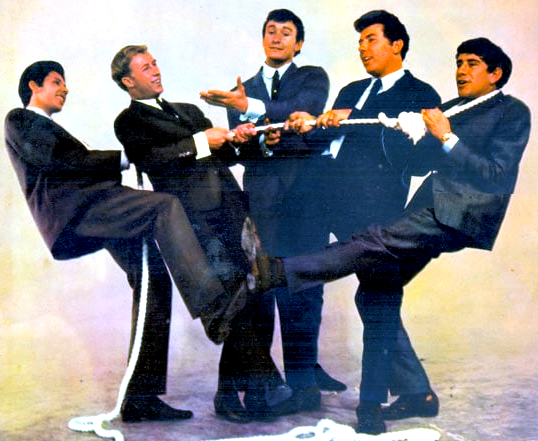
In fact, it was Rowe who told Mike that he could only sign one act of the two who were auditioning that day. The first group, the northernerns, came into the studio after their long trip south to the capital city, and Mike could tell that they were unpolished. But, when they started to play, Mike could hear the talent behind that rough exterior. He was impressed. Then, the second group came in, the local London group, and they played for him. Here, Mike thought, was a really professional group. They looked as well as sounded the part. That group was called Brian Poole and the Tremeloes. Thinking of Rowe’s edict, he offered the contract to the London group. It made sense, he would say later, because not only were they the better group on the day, but also they wouldn’t have to travel so far (at Decca’s expense) to record as the notherners would have had to do.

All in all, it was a wise business decision.

Brian Poole and the Tremeloes would go on, under Mike’s guidance, to record several top-ten hits for Decca. Later on in the 1960s, Poole would leave the group, and, as the Tremeloes, they would find fame with mostly cover versions of hits singles. Mike would follow the Tremeloes to CBS records when his request for a raise was rejected by Decca upper management, and he produced several hit records over a long and distingushed career.

However, what Mike Smith is probably most famous for is not hiring that other band, the rough quartet from the north of England.

You know them as The Beatles.
On A Bad Film

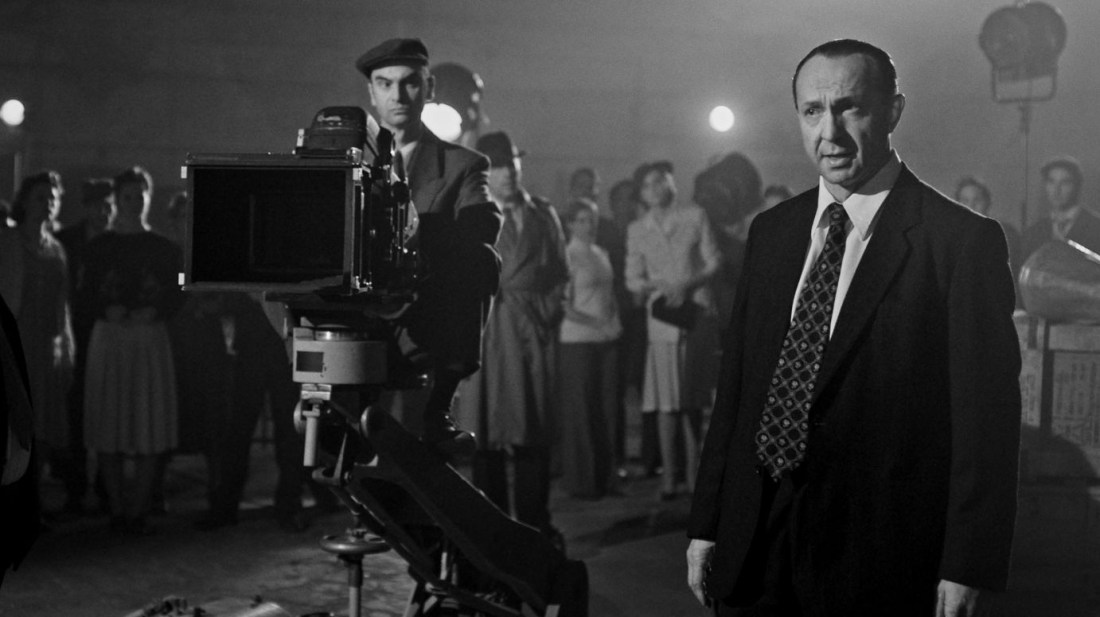
The film seemed doomed from the start.

First of all, as with all films, the script is key. In this case, the screenplay was largely unfinished even as shooting began. Rewrites were submitted and often rejected weeks after shooting started. Several writers were brought in to help pound out something resembling a script, something the director and cameramen and techs and actors could put on film, but the story didn’t seem to have any direction. Several writers came and went. One writer who worked off an on to develop the script decided that it was too embarrassing to have his name associated with the project, and he declined any credit at all.

The leading man called for a tough guy, and actor George Raft was asked if he wanted to play the lead. No thanks, Raft said. This film reeked, and Raft wanted nothing to do with it. He declined the role, and it went to the producers’ second choice. Even this new guy wasn’t so sure about the film. He and his co-star, a lovely woman and a fine actress, would eat lunch together on the set and bemoan their situation, stuck as they felt they were in a story that was schmaltzy and cheesy, with sappy dialogue and sentimental claptrap. To pass the time while waiting for scenes to be written for them, the two played poker, the actor teaching his co-star how to bluff, when to fold, and how to bet. He told her that he should take his own advice and leave the picture–fold his hand–but he had committed to it and vowed to see it through. Sometimes, kid, he said, sometimes you just gotta tough it out, even if your cards are terrible.

The actress agreed. She was some 16 years younger than her co-star and wanted to be involved in more serious roles and not get pigeon-holed as a romantic female lead. The dialogue was vapid, she complained, and she would often say her lines and then roll her eyes at how silly they sounded. Oh, well, she told her male counterpart. We will look back on this experience one day and laugh that we were a part of such a silly little film.

Then there was the third billing actor. He had been a veteran of the silent film era, an international star in his day, and he had recently worked with Bette Davis. He saw himself as a leading man, so he resented having to play backseat/third banana to the “tough guy” character. And the director of the film—this actor loathed that guy. In fact, no one really liked the director. He was famous for being particularly difficult to work with. He often displayed a mean temper, he demeaned actors who didn’t meet his “standards,” and he sometimes belittled the techs who worked with him. One writer later said he was, “a tyrant…[whose] behavior is said to have inspired the formation of the Screen Actors Guild.” He was, in the words of one actor, “a pompus bastard.”

Ugh

Yet, despite all these issues, the film managed to limp to a conclusion. It finished over budget and shooting took longer than the studio had scheduled for the set. The cast, crew, writers, producers, and even the director left the shoot with sighs of relief and determined to put the filming experience behind them.

Yet, despite all of these issues, Casablanca stands today as one of the best films ever made.

On An American

This blog has written several stories about the American Civil War, and several of those stories have pertained to the surrender of the Confederate Army of Northern Virginia to the Union’s Army of the Potomac in April of 1865. General Lee meet General Grant in the parlor of Elmer McLean’s house at the crossroads of Appomattox in Virginia, and the two men signed the papers that effectively ended that bloody conflict.

Here is another story about that momentous event.

While we’ve talked some about the two commanders in the room that day, we haven’t really looked at the others who were there in Elmer McLean’s parlor early that afternoon in April. Colonel Charles Marshall, a relative of both the former Supreme Court Chief Justice John Marshall and of General George Marshall of World War 2 fame, accompanied Lee as his military secretary and aide de camp. The only other person from the Confederate side to join Lee and Marshall that day was a private, one Joshua O. Johns, who stayed outside and held the reins of Lee’s and Marshall’s horses while the two officers conducted the end of the war inside the house. While Marshall goes on to be one of the founders of the “Lost Cause” narrative of the southern rebellion against the United States, history seems to have lost what happend to that third member of the Confederate Army at Appomattox that day.

It is when you attempt to detail who accompanied Grant to the surrender meeting that things get a little tricky. You see, accounts vary as to the exact number of Union officers who were in McLean’s parlor that afternoon. Most of Grant’s staff were there–Grant showed up late, characteristically, by the way–and were eager to see this historic event. Paintings made of the event much, much later, depict as many as 12 members of Grant’s staff and other officers present (including Robert Lincoln, the President’s son, who was on Grant’s staff). As some of those present recalled the scene in later years, their stories changed, as eyewitness accounts often do, and they sometimes added or subtracted a person here and there as they told their stories.

We know for sure that Grant’s aide, Colonel (breveted Brigadier General) Ely S. Parker was there, because it was Parker who wrote out the terms of the surrender for Grant and Lee to sign. Parker had been with Grant through much of the war; the two men were friends before it, and it was Grant who had taken Parker on as an engineer on his staff in 1863 during the Vicksburg campaign, giving Parker the rank of Captain.

Interestingly, Parker had tried to volunteer for the war, but he was refused to join because, ironically, he was not officially a citizen of the United States despite having been born in New York State. That didn’t matter to Grant, who recognized the talent the 35 year old man had, and, besides, Grant’s army was in desperate need of good engineers. Parker eventually made his way onto Grant’s personal staff, becoming the General’s adjutant and military secretary, the same role that Marshall performed for Lee. In fact, almost all correspondence from Grant during the Civil War from 1863 onward came from Parker’s pen.

Colonel Parker wrote out the terms in his clear hand, presented the copies to both men, and the two leaders signed them. The entire interaction between the two generals took less than 45 minutes. Lee recognized who and what Colonel Parker was, and, before he left McLean’s room, he stretched out his ungloved hand to the man.

“I’m glad to see one real American here,” Lee said to Parker.

Parker took the famous man’s hand and shook it. Realizing that the war was now over, Colonel Ely S. Parker, eyewitness to one of the most important events in Amerian History, and born with the name Hasanoanda on the Seneca Native American reservation and therefore not an official citizen of the United States at the time despite having fought for that country for the past few years, gave General Robert E. Lee the perfect reply.

“We are all Americans now, General.”

On A Security Question

The World War 2 Battle of the Bulge marks the last major offensive of that war by the German Army. In December 1944, the Allies in the western theater of war felt that by that time the Germans lost the will to fight. The end of the war loomed, they believed. That’s when Hitler’s troops launched their surprise attack through the lightly defended sector of the Ardennes Forest, causing a retreat or bulge in that part of the Allied line, thus giving the battle its name.

The Germans had managed to hide the accumulation of the armament and men and supply/support staff needed to carry out the daring attack from the advancing Allies. If successful, the German advance would have split the Allied troops in two, and, while not changing the war’s eventual outcome, it could have prolonged the war by several months if not more.

Part of the plan involved sending German troops cleverly disguised as American and British troops behind Allied lines to create confusion and to cause as much havoc as they could. Hitler appointed Colonel Otto Skorzeny, the famous Nazi commando leader, to head the operation. The year before, Skorzeny had famously pulled off a daring raid to rescue Italian leader Beninto Mussolini from a moutaintop prison where anti-Fascists had taken him. Skorzeny assembled several hundred men who spoke good English and outfitted them with captured Allied uniforms, putting them in stolen American Jeeps, and sent them towards the advancing Allied troops.

You can imagine the chaos such a group would create. The disguised Germans sent Allied troops in the wrong directions, they were given access to Allied supplies (some of which they destroyed), and they changed road and village signs, making it much more difficult for the Allies to mount a successful counter-attack against the regular German advance. The Allies soon realized that they must find a way to ensure the troops wearing their uniforms were, in fact, their troops. In addition, the masquerading Germans had sown paranoia as well as confusion and chaos. American troops in that area had no idea whom they could trust anymore.

And, in typical American fashion, a fool-proof method of verifying American troops developed. They would create checkpoints and ask simple security questions that every true American boy would know but ones that an imposter would not possibly know.

So, orders went out from General Eisenhower’s office to ask these specific security questions to all when going through the checkpoints. Even if the papers of the soliders looked to be in good order, the real test, the real security check was if the person knew the answers to specific questions. If the person couldn’t answer a particular question, that person was immediately arrested. And the security checks worked. The disguised Germans, realizing that they couldn’t teach their operatives the answers to the questions, quietly made their way back to the German lines. But the checkpoints remained on the Allied side, just to make sure.

One checkpoint managed to find an officer who seemed ok at first glance–oh, the Jeep looked right, the papers were in order, the uniform was perfect–but the man stammered when asked the security question. His eyes widend when he realized he couldn’t verify his loyalty because he didn’t know the answer. The guard at the checkpoint lowered his machine gun to point it at the officer in the Jeep, and the man raised his hands, outraged, and bellowed that this was a ridiculous way to verify him. “I showed you my papers, Goddam it!” the officer sputtered. “That’s exactly what a Kraut would say,” the young corporal calmly replied.

“Do you know who I am?” the officer yelled. The corporal grinned but kept the gun pointed at the officer. “I know who you say you are…sir. Now, keep your hands where I can see them.”

And so, in the Ardennes Forest, in the middle of World War 2, a young corporal held Brigadier General Bruce C. Clark–the real General Clark, the head of Patton’s Third Army Fourth Armored Division–at gunpoint for over 15 minutes until he could be verified because he didn’t know which professional baseball league the Chicago Cubs played in.

On a Young Officer

Like many young men of that time, John Clem wanted to join up in the Union Army at the start of the Civil War. He believed deeply in the cause of preserving the fragile union that had been forged almost “four score and seven years” earlier during the time of the American Revolution. However, he felt torn because his parents doted on him as an only and beloved child. Then, in a tragic accident, his mother died in a train crash. Well, that was all John needed to make his mind up. After his mother’s funeral, he left home and joined up with the 22nd Michigan Regiment.

The 22nd Michigan saw their fair share of fighting in the Tennessee theater of war, showing great bravery at the battle of Chickamauga on the Georgia-Tennessee border. In the battle, one of the bloodiest of the entire war, a Confederate officer yelled to a group of the Michigan men to surrender. In response, John fired at the officer and hit him, causing his fellow Union soldiers in the vicinity to rally around him and mount a counter-attack. For his courage and his heroism, John was promoted to the rank of sergeant.

Later in the war, John was captured with some other soldiers as they guarded a train. The Confederate soldiers who captured him took his kepi cap from him and discovered it had three distinct bullet holes in it–a cap that John took great pride in. After a short stay in a rebel POW camp, John was part of a prisoner exchange and soon found himself back with his old comrades. He went on to suffer two wounds in battle and further distinguish himself before being discharged in late 1864.

In that sense, John was much like many of the other soldiers in that war. They did their duties and fought like men to defend the principles they held dear. John’s army service actually continued after the war; he managed to rise through the ranks to become a commissioned officer. He managed to also serve during the Spanish-American war less than 30 years later and even be in the active military when World War 1 broke out. He died in San Antonio, Texas, in 1937, at the age of 85, a true hero of the United States Army.

If you’re doing the math, you’ll see why John is an interesting example of a Civil War soldier. 1851 is the year he was born. You see, John ran away from home to join the army…at age 9. He was still quite young when he shot that rebel officer. And John Clem became the youngest non-commissioned officer in the history of the United States Army…at age 12.

On a Winter Distraction

Jim understood all about being bored indoors during the winter. A native of Ontario, he’d received his education at McGill University in Montreal, where he graduated with a degree in physical fitness. He grew frustrated about being cooped up week after week during the long Canadian winters. After working at his alma mater for a bit, James migrated south to Springfield, Massachusetts, and began a career teaching young men about staying physically fit at Springfield College. But, like the weather in his home of Canada, winters in Springfield meant that young people had to stay for weeks indoors, and, frankly, the options for indoor games were pretty limited.

So after Jim complained to his boss at the school about his students’ increasing frustration about being house-bound in the harsh winter weather, the head of the school gave Jim a challenge: He had two weeks to create a game that would interest the young men and meet the needs to keep them active in the winter months. Also, Jim’s boss added, this new game that Jim had been tasked with creating must give the school’s track team a decent work out. Jim left the meeting wishing that he’d not said anything at all.

Two weeks. Jim worried that he needed more time, but he sat down at his desk every night for the first few days of those weeks and did a short inventory of the sports that were popular during that time. He made a list of all the balls used in games. He analyzed the contact that each sport had. He listed the equipment required by each sport. After a few long nights of making these lists and thinking about them, here’s what Jim came up with.

First, he didn’t want much contact indoors on a wooden gym floor. Next, he realized that the softest ball was a soccer ball, and so he chose that to be the main equipment. He didn’t want any other specialized uniform or protection, so he wanted something that the boys could play in their normal gym attire. He also realized that sports that required the guarding of some goal often led to contact and, sometimes, altercations and violence. Those were to be avoided, Jim thought.

So, how would be have a goal for the ball and for the players to achieve that didn’t need to be defended in the usual sense? It finally hit him: He needed to elevate the goal. He asked his boss for two poles that he could make the goals high up off the floor, but the school didn’t have any of those. Maybe he could put the goals on the railings that were above the gym floor on either end.

Then, he turned to a janitor named Stubbins, a man who had worked at the school for many years, and asked him to find him a couple of boxes. The janitor shrugged and told Jim he couldn’t promise he’d find anything, but he agreed to look around the facility. About an hour later, the janitor came back into the gym. “Hey, Doc,” he said (Stubbins had a habit of calling everyone “Doc”), ” Didn’t get you no boxes. Sorry. Will these do?”

Jim saw that while no suitable boxes could be found, the janitor had managed to scrounge up a couple of bushel baskets. Jim smiled. “Yes!” he said, excitedly. “They’re even better than boxes. Thanks, Mr Stubbins.”

Well, you know the rest of this story. James Naismith secured those baskets to the end railings in the gym that day in 1891. And he named his new game Basket Ball.

But, if not for Mr. Stubbins, we might be cheering for our favorite teams in the National Boxball Association today.

On an Impending Tragedy

The baby magpie hopped up the gravel driveway of the house where I was staying in Sweden. As he neared the back deck of the house, the black cat, Lucky, who had been lounging in a chair there, began to take notice. This would not end well. Seeing the impending encounter, the mother magpie, who had been sitting on the ridge of the house, swooped down and began squawking and flapping above the baby, hovering in protection and by way of warning to Lucky.

Happily, Lucky heeded the hoverings of the mama ‘pie and returned to his wicker chair on the back deck. I was in one of the other wicker chairs, enjoying my morning coffee and watching the drama unfold. The incident had also aroused the interest of the English Golden Retriever, Rodney, who now raised his head from his prone position next to me and peered over the edge of the decking. Now, Rodney is too sweet for this world, and he has no violence or guile in his pure but simple brain. If anything, and with the opposite intent of Lucky, Rodney wanted to make sure the baby was ok. He seemed to view the chick (is that the correct nomenclature for a baby magpie?) as more of a niece in trouble than a potential meal or plaything. No so Lucky. Even at age 14, Lucky was a lethal weapon. And this event, coming as it did in my last week of a month-long housesitting stay for a couple on vacation in Spain, gave me a moment of crisis.

The baby bird was not terribly tiny—about the size of a coffee mug—and she (I decided on the gender) had started to show some signs of the distinctive blue plumage along her flanks. And she was also quite the hopper. She bounced through the picket fence separating my house from the neighbors, but danger lived there as well. A dog whose interest in the baby bird was more in line with Lucky’s than Rodney’s roamed that yard. The human mum who lived there heard the alarm raised by the mother as she dove at the head of the other dog and came outside to investigate the noise. She grabbed the collar of her mutt and pulled him inside despite his whines of protest.  The mama magpie, satisfied that the moment of crisis had passed, ceased her noisemaking and flew up to perch on the end of the garage between the two houses so that she could have the proverbial and literal birds-eye view of the two yards.

Throughout the day, as I moved about in the house, I knew the route of the baby bird’s hopping path because of the mother’s occasional screeching. The baby somehow managed to cross the street for part of the day and mama had repositioned so that she could watch her broodling. I looked out the front windows and saw the poor baby seeking the shade of the bushes in front of the house directly across. By evening, the baby’s hops had brought her back on our side of the street and into the drive of the neighbor on the other side of my house. They had no animals there, so in one sense this was better. But Lucky was on the prowl again on that side of the house by that time. I could see the baby as mom swooped down on (un)Lucky’s head, and the hungry thing opened her mouth thinking food was being brought rather than protection. It was heartbreaking to watch. The coming night would be terrible, because night time was Lucky’s prime hunting hours.

But what could I do? It wasn’t my house. I was leaving in a matter of hours rather than days. No way could I take in the baby bird to feed it and care for it. I couldn’t obligate the inbound homeowners to became guardians over the creature. It all became almost unbearable to watch or listen to. Meanwhile, Rodney trotted over to that side of the house to look through the fence and see what all the commotion was about, but the momma chased that poor soul off as well. A confused Rodney ran away quickly. I could relate to Rodney in one sense and shared his confusion. It’s a terrible thing to witness when death looms over something so innocent, so young, and so vulnerable—and you feel helpless to do anything about it. You become keenly aware that forces beyond your control are at work and that the ending will not be a good one. It’s a peculiar type of frustration that comes when circumstances step in and take away our abilities to intervene when intervention is called for.

The next morning, Lucky was lazily asleep in the wicker chair on the porch when Rodney and I went outside. No sign of the baby anywhere in the yard or the adjacent yards to the right or left. I checked across the street. Nothing there, either. Maybe, just maybe, the killer cat had slept all night and had not done the dreaded deed.

Then, from the yard immediately behind the house and about 100 feet away from us, I heard the mama magpie squawking again. Apparently, the baby had hopped into the back neighbor’s yard overnight. The problem had moved on. The kerfuffle the mama was making told me that baby still wasn’t safe; it just wasn’t in front of my eyes anymore. If something happened to the li’l hopper at this point, I wouldn’t know about.

And, I’m ashamed to say, that fact gave a great sense of relief.

On Two Dead Letters

Mr. Palmer rubbed his chin as he sat down over the form. As a postman, he was used to paperwork, of course, but this situation had him puzzled. Certainly, he had seen the deliveries of items and parcels refused, but in his years of service to the Royal Mail in London, this situation was indeed unique.

Earlier that February day in 1909, Mr. Palmer had been tasked with making two deliveries to 10 Downing Street, the residence of the Prime Minister of the United Kingdom. It took Mr. Palmer about an hour according to the paperwork to make his way from the Post Office to the Prime Minister’s residence and back. Now, the delivery itself was something that the Royal Mail indeed offered. No, the delivery wasn’t Mr. Palmer’s issue (although the delivery was somewhat unique). It was the refusal of delivery rather than the nature of the delivery itself that made Mr. Palmer take his time in writing his paperwork explaining the situation to his superiors.

We can see his report today in the archives of the Royal Mail, and, reading between the lines, it’s clear that Mr. Palmer struggled to make it clear that he had made every effort, that he had done all he could within his power to make the delivery as was his duty. He had even entered Number 10 and told the staff that he was only the delivery person; the delivery itself was not his responsibility. Yet, the delivery was flatly refused.

You see, the addressee was none other than the Right Honorable H.H. Asquith, the PM himself. Palmer attempted delivery for ten minutes, which was the required amount of time, and then returned to the post office to sit down and begin his paperwork. Because the delivery was refused by Number 10, the delivery was officially labeled as “dead letters” according to Mr. Palmer’s report.

Mr. Palmer finished his paperwork and handed the report to his manager. “So, what do we do wif them then?” Mr. Palmer asked the manager, motioning towards the delivery. The manager turned to the two young women who had asked to be delivered personally to the Prime Minister and told them, “You cannot be delivered. You are officially dead letters, and, therefore, you are free to leave.“

So, having been unsuccessful at trying to get themselves delivered by post to the Prime Minister, the two women’s rights advocates and suffragettes walked outside the post office, and went to their homes.

On a Polite Man

March 4, 1889, was a cold and rainy day in Washington, D.C. The newly elected Benjamin Harrison was due to be sworn in that day as the 23rd President of the United States. Harrison, a Republican, had been elected in an incredibly close and sometimes bitter election, defeating the Democratic incumbent, Grover Cleveland. In fact, Harrison had lost the popular vote the previous November, and he won the electoral college vote because he had narrowly won the state of New York despite Cleveland’s workings with the Tammany Hall political machine there.

No matter. Harrison was the man of the moment, and he felt the hand of destiny upon him. He was the grandson of a previous resident of the White House, one William Henry Harrison, known as “Old Tippecanoe” for his victories in wars against first nations more than half a century before. And he had been a senator from his adopted state of Indiana and served that state well in the US Senate. Also, Harrison had seen a great deal of action in the American Civil War, working with General William T. Sherman to split the Confederacy in half in the war’s last full year. So, all of that background led him to the inaugural day, and the rainstorm that beset the capital that day.

Interestingly, Harrison’s grandfather has the distinction of serving as president for only one month. It was during his ancestor’s inauguration during a winter storm that Old Tippecanoe had spoken for over an hour, and, as a result, he caught pneumonia that eventually led to his death and the rise of his Vice-President John Tyler to the office. Benjamin Harrison was well aware of his grandfather’s legacy, and his planned remarks were purposefully short. He wanted to touch on several key issues, however, in his speech. After such a contentious election, he felt that the occasion called for extending an olive branch to the Democrats and to the southern states that still stung from the defeat in the war that was still fresh in many minds down there.

In many ways, the election was a choice between personalities, as many elections are. Cleveland had raised some eyebrows during his term by marrying a young girl barely out of college for whom he had been appointed a guardian after her father had died. Harrison, on the other hand, was seen as a steady, solid, traditional candidate in sharp contrast to that type of “unseemly” behavior. Much muck had been thrown during the campaign over Cleveland’s unusual marital choice, and that had also caused some harsh feelings between the two campaigns.

But Harrison wanted to rise above all that electioneering. After the oath of office, and as he stood to read his prepared speech in the pouring rain, it quickly became obvious that there was no way Harrison could read what was quickly becoming a smeary sheaf of papers in his hand. It was then that a man emerged from the crowd on the platform behind Harrison, a man who quickly stepped up and held his umbrella over the head of the new president and kept it there while he finished his inauguration address.

When Harrison finished, he looked up to see who the kind man was who had allowed himself to get soaked so that the new Chief Executive could read his remarks on that historic occasion.

Harrison smiled and nodded when he realized that the polite man who had held the umbrella was none other than Grover Cleveland.

On a Missing Son

In New York City in 1968, two boys entered an abandoned tenement building and proceeded to explore it. While looking in the various rooms of the building, they stumbled upon a recently deceased body. It really freaked them out. They ran out of the building and found a policeman who was walking his beat nearby.

The dead man looked young-ish, and his body was surrounded by beer cans and religious pamphlets. The identification on him told the authorities that his name was Robert Driscoll, and the coroner decreed that he’d died from hardening of the arteries–a condition that was a side-effect of extensive heroin use. He was 31 years old, but his life of drug use and abuse of his body told a different story. Robert had lived a hard life. Not having a fixed address, the city of New York buried him in their pauper’s field, in a mass grave.

After a few weeks, of course, his parents, having no word from him, set about finding what had happened to their son. They first tried all the friends they knew he had been around, but those friends knew very little about Robert’s activities in recent weeks. It seems that he had disappeared. The parents began to worry. In their desperation, they reached out to a former employer of Robert’s, a company that had been run by a wealthy man who had some connections and could get things found out. Robert’s parents made the phone call, and the employer promised they would do what they could to find out what had happened to Robert.

Now, if you’d’ve asked Robert, he would have told you that his profession was as an artist. In fact, Robert had been a part of the artist colony associated with Andy Warhol, and his chosen medium was the collage. Robert had a good eye, and his collages were intriguing and showed promise. But the allure of heroin and other drugs pushed him to his early death.

Anyway, his former employer set about trying to locate Robert and maybe let his concerned parents know what had happened to their son. Soon, Robert’s former employer, a wealthy, connected company, had an answer. They made the phone call and informed the parents that, sadly, Robert had died from hardening of the arteries as a side-effect of his drug use and that his body was irrecoverably buried in a common grave in New York. The family erected a memorial in a cemetery in California, where they lived, to commemorate the death of their beloved, talented son, who had succumbed to the lure of drug addiction. And they thanked the former employer for their efforts in giving them closure over the death of their son. At least they knew that he was at peace at last.

But, you see, it could be argued that it was that former employer, the famous and influential man, who pushed Robert into his drug abuse. It was while he was employed by the wealthy man that Robert had been fired without any explanation. One day, he was a respected and valued member of the company and the next he was let go without a reason being given by his employer. In fact, Robert had attempted to contact the man at the time, but the head of the company refused to meet with him.

Robert Driscoll is better known as Bobby. He’d won an Academy Award in 1950 for his work as an actor, in fact. You know him and have seen him. He starred in Treasure Island, Song of the South, and provided both the image and voice of Peter Pan in that film of that name.

And the employer who’d fired him without any explanation, the man who had owned the company to which the family turned when they wanted to find their missing son?

Walt Disney.