On a German Egg

Peter Henlein is one of those people in history whom you don’t know, but you certainly know what he made. Peter made “eggs.” Let me explain.

He was born in 1485 and lived most of his life in Nuremburg, in what is now Germany. His father, Peter senior, was a brass smith, and the younger Peter was sent to become an apprentice to a locksmith. As you probably know, a young person would work some years (usually seven) as an apprentice in a certain trade, something akin to a long internship today. After a certain time and by proving knowledge in the trade, an apprentice could then “graduate” to become a journeyman–someone who could work in the trade and make a living. Finally, one could go on to become a master craftsman, someone who could own a business and be recognized as a true professional in that certain guild.

But, when he was only 19, young Peter was involved in a scuffle with another apprentice locksmith. The other youth was killed. At that time in history, a person who was responsible for a death but not accused as a murderer (more like involuntary manslaughter) could appeal to a monastery and be taken in there for sanctuary for a period. It was better than prison, for sure. And that’s what happened; a local Nuremburg monastery granted Peter a safe place for a few years. It was in the monastery that the young locksmith became familiar with astronomy as some of the monks were experimenting with celestial observations, using early measuring devices to track the movement of objects in the night sky. Peter was fascinated. He became interested in the passage of time, the movement of the planets and of the sun. He started tinkering with clocks–a sort of side gig that locksmiths did because they had the fine tools needed to work on the small parts contained in clocks.

With nothing else to do in the monastery than work, Peter rapidly became an expert on clocks. Instead of needing decades to become a master, the intense amount of work he was able to perform while sequestered in the monastery made him a master clockmaker by 1509 at the tender age of 24, something almost unheard of. When his time at the monastery was ended, he emerged from the confinement as a recognized expert in his field. And that’s when he turned to making “eggs.”

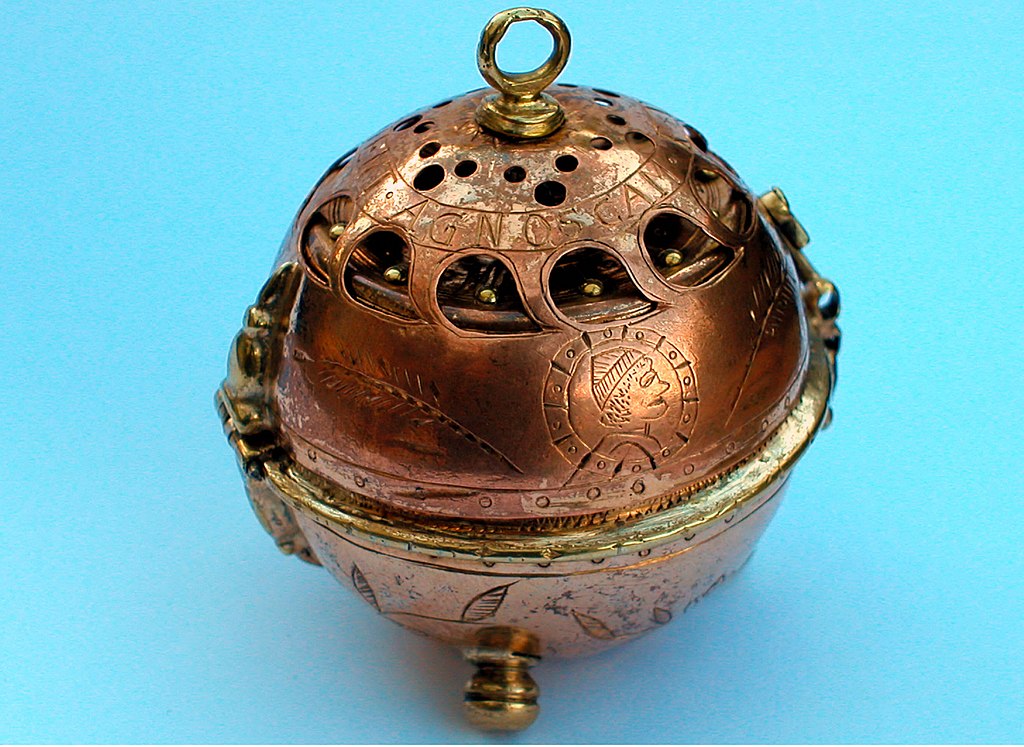
Peter’s eggs were designed to be work around the neck on a chain. Wealthy people paid good money for one of Peter’s eggs. They quickly became a status symbol that can be seen in paintings of Peter’s upper class clientele. Peter started his eggs by taking something called a pomander, which was a small, round, egg-shaped pendant that had holes in the top where fragrances could fill the air, fragrances that came from perfumes and spices that were placed inside the small ball. His “Nuremberg Eggs” were the first to use these balls for another purpose, however. A writer of that time remarked how the craftsmen of Nuremburg made amazing contraptions that pushed the boundaries of both science and craftsmanship. He noted that Peter, still a young man, made objects that no one thought possible on that small scale.

Remember how while Peter was at the monastery that he had become interested in time and in clockmaking? Well, we can attribute that time of sanctuary to something that you may own today. You see, Peter filled those pomanders with clocks–but on a much smaller scale than anyone had ever done before, making them wearable and personalized.

That why we recognize Peter’s eggs as the first pocket watches.

On an Influential Sit Com

Commercial television has been around for going on 75 years now. The potential the medium had for good, for education, for making the world somehow smaller and better, hasn’t been reached in the intervening decades, sadly. Former head of the Federal Communication Commission, Newton Minow, said as far back as 1961, that TV was nothing more than a “vast wasteland” of useless entertainment, the electronic equivalent of bubblegum.

On the other hand, the world has been brought together around their television sets a few times in the past years. The assassination of John Kennedy, the first human on the moon, the fall of the Berlin Wall, and a handful of other events showed us that, at times, the medium can indeed bring us together in a shared human experience. Then again, many people, especially those in the United States, were united in watching certain episodes of television situation comedies. The last episode of the comedy-drama M*A*S*H drew almost 106 Million viewers, for example. These situation comedies used to be the staple of television in the United States, but streaming services and subscription networks have replaced broadcast TV viewing in recent years.

However, the sitcom remains popular in the modern era with shows like The Big Bang Theory and its spin-off, Young Sheldon, still drawing large numbers of viewers in the streaming age. They and shows like Seinfeld, The Office, Parks and Recreation, All in the Family, and Mary Tyler Moore over the years all follow the same basic formula for the sitcom–one or two often implausible plotlines that get resolved in 22 minutes or so. And they can all trace their formula back to a show in the 1950s that set the mold for the genre. It was a show called I Love Lucy. The plot of the series saw a ditzy red-headed housewife and her up and coming entertainer husband in New York City, their daffy neighbors, and the hijinks that resulted from those interactions. That part wasn’t so unusual for entertainment of the day, but that’s not really what made the show groundbreaking.

Early TV followed much of the formats set by radio programs before them. Sitcoms, game shows, westerns, soap operas, and even musical/variety shows all started on radio years before TV took off and co-opted those shows to the new format. Even then, the jury was still out on whether or not TV would take hold in America. The popular magazine, the Reader’s Digest, had a feature article in the early 1950s that proposed that TV would not become popular because there was no way that Americans would simply sit and watch TV all day. No, the article argued, radio allowed Americans to read or eat or do homework and perform other things besides simply sitting in front of a box and spending our time only watching. I Love Lucy changed all that. The show not only popularized TV, but it also remade the sitcom into something that we all recognize today. First of all, the sitcom was owned by the stars themselves. The Desilu (after the married actors Desi Arnaz and Lucille Ball) Studio produced the show. Arnaz was the driving business force behind it. The show was filmed, not taped, and that gave it a permanence that allowed it to live on in the perpetuity of re-runs. And Arnaz used a three camera set-up that allowed for quick cuts between shots on set, not only one static camera into which the characters had to walk into the shot and out of it.

And, most importantly, the show was filmed before a live studio audience. That was one way to increase the reaction of the TV viewing audience at home; if the studio audience laughed, Arnaz said, that was like having a giant “applause” sign going off in people’s houses. For those later shows, the ones that have come after Lucy in the intervening years, not all of them were filmed live. But most of them added laugh tracks, again to tell the viewing audience when something is funny, thus following the I Love Lucy formula (M*A*S*H famously had a laugh track in all scenes except in the operating room of the hospital).

The show was incredibly popular from the start, with some years seeing it get a more than 70% viewership of those homes that had television. People went out and purchased TVs simply to watch Lucy as well. In its run, the show won numerous Emmy awards for acting and production. For most of the show’s five year run, it was the number one show in the land. Almost everyone in the nation tuned in to watch Lucy have her baby in season 3 (at a time having a pregnant woman on TV was unheard of).

And I Love Lucy did something else that was incredibly forward-thinking for the 1950s in the realm of American culture. That decade saw the increasing rise of the Civil Rights movement where non-white races and other cultures in the United States began to advocate for equal acceptance before the law. You see, Desi Arnaz was born in Cuba. To most Americans, he was Hispanic. And to have him, a Hispanic man who in real life was married to Lucille Ball, be on TV in a relationship where he kissed his wife and slept in the bed next to her, well, that was groundbreaking at that time.

And that’s part of the reason why, while most sitcoms come and go, I Love Lucy stands alone.

On an American Tourist

Having been in Europe for a handful of years in my life (a couple in Eastern Europe and a couple in the western parts), I can testify to the idea that many Europeans look at the United States the way a father would look at a 12 year old who has been handed the keys to an 18-wheeler. They are (probably rightfully) convinced that the task of driving the world is beyond our ken. And, until the inevitable crash occurs, they watch our efforts with a mixture of bemused horror. The same can be said for what Americans call “culture.” As in Europeans (especially the French) feel that we have none. That also applies to our food preparation and consumption in the States. The famous American food author, M.F.K. Fisher, was asked once by a French chef how she could write about American cuisine when such a thing didn’t exist. The idea is that we in America have no tastes or refinement. And, given the behavior of many from “across the pond,” they aren’t far off.

Take the case of an American tourist on a tour of Europe in the late 1860s. That used to be a “thing” where Americans would take a trip to Europe (usually referred to as The Grand Tour) to soak up the culture and experiences of the Old World as a way of expanding one’s horizons and broadening one’s mind. On a trek that covered over 20,000 miles (32,000 km), this particular American saw some amazing things. Besides hitting all the famous European capital cities, he also traveled extensively in the rural areas as well.

By boat, train, carriage, barge, and horse, this traveler went from England to the Holy Land and almost everywhere in between. And while he recorded what he experienced (things like the Parisian Exhibition of 1867 and an exclusive tour of the Vatican), he was more impressed by how small everything was. The Holy Land, for example, disappointed him. “This whole place could fit inside one or two counties back home,” he lamented. The history, architecture, and scenery bored him. And when it didn’t bore him, it confused him. Why did the Germans keep old buildings when more modern ones would be warmer, safer, and larger, he wondered. Things were too close together. People were rude. Shopkeepers kept trying to make him pay more because he was a tourist. Unsurprisingly, it wasn’t too far into the journey that he really began to miss home.

But, more than anything else, it was the food on his trip that made this American homesick. And it wasn’t that there wasn’t enough food on the trip; in fact, there might have been too much. No, his complaint was that the food was mind-numbingly and palate-boringly, well, boring. The food of Europe, he noted, was “fair to middling.” He really missed his native land’s delicacies. We would say this tourist wanted his “comfort food” in the worst way. And, so, in an effort to pass the time on what seemed like an interminable trip and to remind himself of the great repasts of his past, the tourist made a list of his favorite American dishes.

And what a list! Again, for someone who was writing in the 1860s, I can attest that many things on this long, long list of American comfort foods are also among those that I miss as well. Being someone from the south like him, please let me say that I can relate:

  • Fried oysters
  • Southern fried chicken
  • Southern hot biscuits
  • Hot pancakes
  • Thanksgiving dinner, including turkey and cranberry sauce
  • Apple pie, cobblers, and other baked desserts
  • Ice in drinks, especially ice water

You get the idea. The list ran on and on and included other regional specialties peculiar to the US. Finally, the Grand Tour finally ended several months later, and the homesick American came back home to the country and gastronomy he loved and missed so much. He wrote a book about the trip, and the book became the one book that sold more copies than anything else he wrote during his lifetime. The book is The Innocents Abroad. And the American tourist who missed his nation’s food?

Mark Twain.

On a Parking Lot

The British call them car parks, but Americans refer to them as parking lots. The one in question was located in Leicester, England, so perhaps car park is the more appropriate moniker. At an rate, is particular car park held secrets that were only discovered in 2012. Up until that time and since the 1940s, thousands of British cars had parked, leaked oil, and left rubber over the surface of perhaps the most famous car park in the nation.

The thing about history is that we are sitting on the shoulders of the past almost literally. Many cities and towns are built on top of centuries of debris from previous use and events. Such was the case of this particular car park. The County Offices of Leicestershire had purchased the land in the early 1900s and built several buildings on the site and eventually included what became the car park. Of course, Leicester is one of England’s most historic towns, so the odds of something from the city’s past lying beneath the layers of asphalt (tarmac, maybe?) that covered the surface were high.

Archaeology is a funny science. There are places in the world where the archaeologist can slice through the soil like a cake and reveal layers of living having been there for centuries or even millennia. Each layer tells the story of the people and events that happened during that moment in time. And that’s what waited for archaeologists under the Leicestershire County car park. You see, when diggers began to lay bare the layers underneath the surface there, they discovered that the previous use of the site had been a school of some sort. Before that, they found that the place was part of a large garden owned by a wealthy family. The construction during each period was obvious, so tools, bricks, tile, and other detritus from those periods were found. Below those levels, the excavations found walls and foundations of a monastery and church from Tudor times 600 years ago. And it was this level that interested the historians. By the way, it was later discovered that Roman ruins lay even deeper than those of the Tudor period.

The archaeologists began finding graves up against one of the priory walls. Now, of course, the archaeologists suspected that the Tudor church and the graveyard, which the archaeologists knew was called Greyfriars, were there, but you would have never known that if you parked your car in that lot and went to work every day, never known that your vehicle rested over several bodies who were interred hundreds of years ago. But the historians had found a medieval map of Leicester in some archive, and they were able to pin-point approximately where the church and graveyard were. Luckily for them, the council had recently torn down some buildings that allowed them better access to the parking lot. But as the dig continued, it was easy for all to see that the different ages in history had used the site over that time. For example, the very first body found in the graveyard by the diggers had his feet missing–probably because some Victorian construction of the garden in the past 150 years had unknowingly chopped off the feet during that period’s work.

It’s interesting that a place like a church and a graveyard where so much emotion and perhaps even passion poured out at one time had become completely lost to time and the present. And the irony that a car park, that most common and boring symbol of the modern age, would be erected over the site wasn’t lost on many in the archaeology team. But, history is change in many ways. When King Henry VIII destroyed and dismantled almost all the Catholic monasteries and churches during his reformation, places like the Greyfriars were built over or forgotten. And there are thousands of sites such as this across the United Kingdom as the present continues to build literally as well as metaphorically upon the past.

But why this particular car park? What was it about Greyfriars Church and cemetery that mad it so interesting to the scholars? Well, it has to do with that first grave they accidently uncovered on the Tudor level, the one that the Victorian builders hundreds of years later accidently took off the feet. It was obvious that this body was unusual for other reasons as well. First of all, the hands of the body had been tied and were down by the side. The head sat at an odd angle, and there were severe head trauma signs on the skull as well as wounds in other areas of the skeleton. And the spine, the spine of the body showed signs of severe scoliosis and twisting. Later DNA testing proved that this body was the one they sought.

And even though they suspected as much, it was really blind luck that the first body unearthed at the Leicestershire County Council parking lot was the one the archaeologists were looking for–the body of King Richard III of England, killed at the Battle of Bosworth Field in 1485, ending the War of the Roses.

On a Fresh Start

On February 7, 1979, an older man’s body was fished out of the sea near the Brazilian coastal town of Bertioga. On first look, it appeared that he had been swimming and suffered a heart attack or a stroke. An investigation along the beach found the man’s clothes and belongings. The identification card found in his things said that his name was Wolfgang Gerhard, a German national. The story of how Gerhard had come from Germany and ended up dead off the coast of Brazil is interesting and tangled.

It seems that, after service in the German Army in World War 2, the man worked a bit in agriculture in the Bavarian Alps. It was there that he decided that life in a rebuilding, post-war Germany didn’t suit him at all. He had been a True Believer, thinking that the Nazi ideal was the best future for the Fatherland. To live in a democratic Germany was simply too much to bear. He wanted a fresh start. So, like thousands of other Germans, he made his way to South America.

He sailed first to Argentina in 1949, leaving behind a wife and son. And he found work as a carpenter and lodging in a boarding house in Buenos Aries owned by another German ex-pat. Eventually, he was able to move to a better neighborhood and through some other Germans who had made their escape from Europe, he got employment as a salesman. This salary allowed him to purchase his own apartment and to travel to other South American countries. His German wife granted him a divorce, and he married a woman named Martha in 1958. During these years, he made a couple of trips back to Germany where he was able to visit with his son, Rolf, for a short time.

In 1959, the couple moved to Paraguay, and they obtained citizenship there. The man invested in several farming enterprises that made some money here and there, and he seems to have been working also with pro-German groups who were helping to hide senior-level Nazis, war criminals who had fled after the war ended and came to South America. Martha eventually left him, moving to Italy to live her life there. Rolf, the man’s son, visited him in some later years and found a man who still was an “unrepentant Nazi” sympathizer.

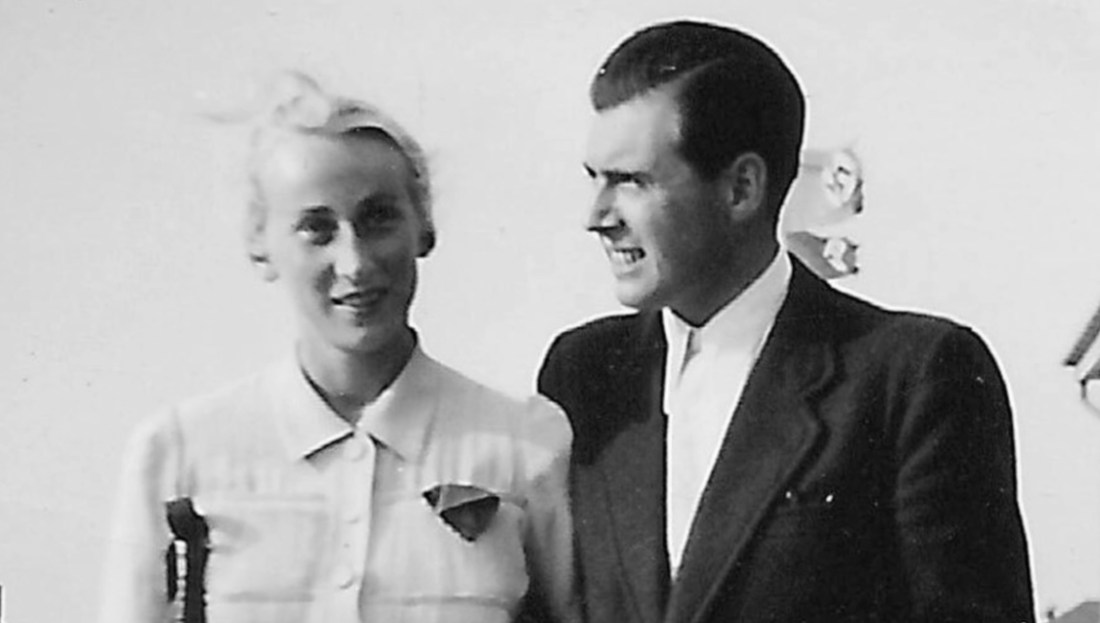
By 1972, his health began to decline sharply even though he was only 61. He suffered a stroke in 1976. And that brings us back to the start, where he suffered another stroke that killed him while he was swimming in the Atlantic off Bertioga that February morning. The coroner said that he didn’t seem to suffer, that the stroke killed him so quickly that there wasn’t even any water in his lungs. And, in a way, that’s too bad that he didn’t suffer. I say that it’s sad he didn’t suffer because, you see, during the war, this man who went by the name Wolfgang Gerhard had made plenty of people suffer in the most cruel and casual ways imaginable during the Holocaust.

That’s because his real name was Dr. Josef Mengele.

On a Bad Regifting

I’ve regifted before. You probably have, as well. Sometimes, you either don’t want a gift or you might think someone else could use the gift more than you could. Take the case of Theodosius and his wife, Eudocia, who lived in what is now Istanbul back 1600 years ago. He was a wealthy man and had great influence and power. At that time, the city was known as Constantinople, and it was the capital city of the Eastern (Byzantine) Roman Empire. The city was one of the largest in the world at that time, filled with riches and beautiful architecture as well as amazing churches and religious shrines. According to the story, Theodosius was on his way to church one day when a man approached him with a gift.

“Sir,” the man said to Theodosius, “please accept this apple as a token of my esteem.” Theodosius could hardly believe his eyes. The man held out an extremely large apple, an apple so large that the man had to hold it with both hands so as not to drop it. It was a special apple, the man said, grown in the area of what is now Turkey known as Phrygia. Theodosius took the apple with happiness, and he thanked the man profusely. The man said that it was his honor to present the apple to a man of Theodosius’s reputation and respect.

Rather than continue to church, Theodosius hurried home. He found his wife doing what she usually was doing–reading. Now, this was somewhat unusual for that day, because most women of the period were illiterate. But Eudocia was an intelligent woman from Athens, from a rich family as well, and she had a good education. It was one of the things he loved about his wife. And the pair loved each other dearly after 20 years of marriage. Theodosius called Eudocia away from her book and presented her with the largest apple she had ever seen. He told her the story of how the stranger had given him the apple as he was on his way to worship that morning. Eudocia was thrilled with the gift. The couple embraced, and then they went about their day.

A few days later, Theodosius was at his work, and his best and life-long friend, a man named Paulinus, came to see him. Now, these two friends had known each other since the crib. Their parents had been friends, and the two were raised almost like brothers. Paulinus had been the best man at the wedding of Theodosius and Eudocia, in fact. Both of them loved him like a brother, it seemed. But that day, Paulinus came to show Theodosius something unique: An incredibly large apple.

A dark cloud descended over Theodosius’s face. He roughly pushed Paulinus aside and ran to his wife’s bedroom. He threw open the door and asked her, “What did you do with the apple I gave you? Answer me!” Eudocia, shocked at her husband’s tone and obvious anger stammered. “I…I ate it!” she said. Theodosius burst into tears. He came and knelt at his wife’s knee. “Swear to me,” he said through his tears, “swear to me on our children, swear that you ate the apple.”

Eudocia bit her lip. “Yes,” she said finally. “I swear.”

Suddenly, Theodosius stood up. Everything was clear to him at that moment. His wife was having an affair with his best and longest friend. She gave that friend the apple Theodosius had gifted her, and then she lied with a swear to his face about it. He tears dried up, and he became emotionless. It was Eudocia’s turn to cry when she saw Paulinus standing at the door behind her husband, the apple in question resting in his hands.

You might can guess what happened next. Theodosius had Eudocia sent to Jerusalem, banished from his sight and his household and her own children. Paulinus, well, Paulinus was executed at the order of his best friend, Theodosius.

Because you don’t regift an apple that you have been given by Theodosius II, the Emperor Augustus of the Roman Empire.

On a Cultural Change

Statisticians say that soon, and possibly even now, the nation of India is the world’s most populous. The country is hardly a monolith, with a wide range of cultures and mores, beliefs and practices as well as a disparate history spread across a country that is the seventh largest in area. However, one constant cultural tradition had endured in India for hundreds of years: Women experienced lives that had fewer rights and choices than men have. Now, that was often the case in the western world as well (see the differences in pay rates for women verses men even today in most western nations), but India’s discrimination against women often bordered on servitude. But the culture has experienced change in the prospects for women mostly in the past 100 years. Most of that drastic change has occurred in the past almost 40 years due to an interesting addition to the lives of most Indian families.

The typical Indian family used to be patriarchal, hierarchal, and relegated women to specific roles and jobs within the family. For example, traditionally, women in India couldn’t own land or have any sense of self-determination. Multi-generational households depended on keeping the men as the decision-makers and keeping women in the supporting roles. Again, this was true to a degree in the west as well, but in India, the oppression was somewhat harsher before the 1900s. Change began happening during the period of British control of India (one of the few good things to result from that period, perhaps); women were granted more rights, and a few upper class Indian women were even allowed to serve as governmental administrators.

And that’s an added layer of oppression for women in India, historically: The Caste System. The upper class, made up of priestly families, is followed by an administrative class, a skill worker and famer class, and then a laborer class is at the lower end. Even still, there is one more class below the laborers–the untouchables, the poorest of the poor and lowest of the low. The British not-so-subtly used this caste system throughout their occupation, using the upper classes and Christian Indians in governmental positions almost exclusively.

However, women in India were given the right to vote at almost the same time women in the United States were given it–1921. But the combination of a tight family organization and the caste system kept most women from achieving their dreams and ambitions.

That began to change dramatically in the 1980s, and it changed for an unusual reason. You see, the change began to happen because of the purchase of a consumer item by most Indian homes. It has been documented that, in the year 1988, for example, five of these items were sold in India every minute, and the purchase of the item radically changed women who were exposed to it. The women of India were introduced to other women through the item; they were able to see that there were options to the lives they were living and those their daughters could have in the future. And the laws in India in the modern era meant that there was nothing legally the men in the families could do to stop the women from pursing their dreams and goals. They began shunning old traditions, according to one source, and they began to become more independent. They began practicing self-determination without the control or interference of the men in their lives. That means that today an entire generation of Indian women have reached their 30s with this new mindset and this new-found freedom of self-determination.

And what was the instrument of this radical change in India society among the women there?

Television.

On Some Cordial Telegrams

Historians are lucky to have access to letters and telegrams that were sent between people on both sides of the conflict we know as World War I. This year marks the 115th anniversary of the end of that horrendous conflict. Let’s look at some of the language used by two men who exchanged telegrams at the start of the war, one on the Russian side and one on the German side. Please know as you read these messages that the men are first cousins, and they know each other well and remember the other one with great affection. Also, know that the telegrams were sent in English because their family had its origins in the United Kingdom.

Austria-Hungary had declared war on Serbia on July 28, 1914, and the world stood by and watched as the great powers like England, France, German, and Russia decided whether or not to join the conflict and to honor treaties made with the involved parties. The decades leading up to the war had seen these countries (and others) become involved in massive arms production. War seemed inevitable. And that’s the context of these affectionate messages between the cousins.

The first telegram, sent by the German cousin on July 29th, pointed out that they, the two of them, had no quarrel between them. He spoke of “the hearty and tender friendship which binds us both from long ago with firm ties.” To these cousins, it seems, the idea of war appeared remote and almost unthinkable. There had been family gatherings over the years where the entire group had come together in happier times such as weddings, and sadder occasions like funerals–the typical times when families celebrate the future and remember the past. So, the pair of correspondents had a long past together despite living in different countries. They even bore a familial resemblance to the other.

The Russian cousin replied and expressed his “thanks for your telegram conciliatory and friendly.” The telegram exchange continued, the cousins in the rival nations almost incredulous that the war machines of each country would contemplate war against the other. The German’s next message included a reference to one of their common ancestors: “My friendship for you, transmitted to me by my grandfather on his deathbed, has always been sacred to me.”

Yet, as we know, the machines of war marched towards what would become an absolute slaughter. Both Germany and Russia would see major revolutions result from the war, with the removal of both the Kaiser in Germany and the Czar in Russia. And the cousins seemed to sense that any impending war would bring about such disasters upon their respective nations. The Russian said, “It may all end peacefully,” but he expressed doubts at the same time, saying while “peace [is] dear to our hearts…mobilization (of Russia’s vast army) seems inevitable.” The German expressed the same sentiments. He stated that only “immediate and clear and unmistakable” actions from both governments were needed, but he expressed doubts that those actions would be forthcoming.

And the cousins were right. Germany declared war on Russia on August 1, 1914. The resulting war cost over 20,000,000 lives lost and about the same number wounded. The Austrian, German, Russian, and Ottoman empires were broken up. And today, we remember those who fought in this Great War on all sides, a war that, as the cousins expressed, didn’t need to happen if only the leaders of both sides had been better at talking to one another. If only they had the feelings of love and affection that these two cousins felt.

The problem was, these telegrams between the cousins–Kaiser Wilhelm of Germany and Czar Nicholas II of Russia–still didn’t prevent war from happening.

On the Gift of a Car

The brand new Lincoln Continental sat in the circular driveway of the large house. The year was 1973 and the man who lived in the house was entertaining an important and well to do visitor. The visitor remarked to his host how beautiful the car parked in the drive was. He had always admired the Lincoln’s styling.

What the visitor didn’t know was that the new Lincoln was a gift to him from the man who lived there. When the visitor found out that the Lincoln was for him, he clapped his hands in glee like a school kid at Christmas.

Now, as I said, the visitor was a man of means also. In fact, he had a large collection of automobiles of his own, a collection made up of models both foreign and domestic. But he didn’t have a Lincoln. “This will complete my collection,” he said, still giddy over the gift. A

And, being a man of means, he had someone drive him everywhere as a lot of wealthy people do. That did not mean that he did not like to drive himself. In fact, he was quite fond of driving, and he would often drive one of the cars in his collection from his large house to his office every day. The problem was that he usually ignored the laws regarding traffic, safety, and speed limits. In other words, This was a wealthy man who was an incredibly unsafe driver.

When he said that, he wished to take the Lincoln for a spin around the neighborhood, the host was aghast. Such a thing would be impossible, his host said. To allow him to take the large and powerful automobile out for a drive would be, to say the least, unwise. Yet, he persisted. He would be safe, he promised. He would obey the traffic laws, he promised. He wouldn’t go far, he promised.

Yet, the man who lived in the large house was not to be daunted. As politely, but as firmly as possible, he told the visitor that the only condition he had on giving the Lincoln to the visitor was that the man would not be allowed to drive it. Ever. The visitor bit his lip in thought and disappointment. You could tell he was seriously considering the proposal. Finally, he nodded his head in agreement. “Fine,“ he assented, “I will never drive the car. I give you my word. Thank you for the kind gift, my friend.“ With this assurance, the host smilingly handed the keys to the new Lincoln Continental to the visitor. The two men shook hands.

And, as far as we know, Soviet premier, Leonid Brezhnev, kept his word, and never personally drove the Lincoln Continental given to him by Richard Nixon.

On A Game Inventor

Satoshi Tajiri might be a recognized name to some since he invented one of the if not the most successful game franchises in history. Born in 1965 in Tokyo, as a boy he loved going into the country and exploring nature–a rather interesting thing considering that many kids from Tokyo don’t usually go into nature. But these jaunts into the countryside spurred something in Tajiri that led to his creation.

Tajiri’s interest in nature led his parents to leave the urban jungle of Tokyo proper and move to a greener suburb so that he could pursue his nature interest. His parents also knew that the suburbs were much healthier for the family. It was there that the young man became somewhat of an amateur entomologist. In fact, entomology was his dream area of study when he grew up, he said. His friends in the neighborhood and at school nicknamed him “Dr. Bug” (Dokutā bagu, ドクター・バグ), and his insect collection soon overwhelmed his bedroom at the family’s suburban home. His mother despaired of him because he would come home with his pants and coat pockets bulging with samples and creatures. She always did the washing very carefully, she later said, because she didn’t know what she might find in his pockets.

However, as Tajiri grew, so did the suburbs. Urban sprawl began to creep in. The insect habitat disappeared, and, with it, Tajiri’s ability to study bugs. That’s when the now-teenager turned his attention to video games. Arcades were only then coming into popularity and the first primitive home computer video game systems were making their way to the market. And Tajiri pursued knowledge of video games with the same passion that he’s pursued bugs when he was younger. He loved the game Space Invaders. The young man decided to create a Space Invaders clone game as well. He also enjoyed the game Dig Dug, a rather simple game with repetitive motion. His interest in games led him to skip school too often, so often in fact that he had to get the Japanese equivalent of a GED. Instead of entomology at university, Tajiri decided to get a 2-year technical degree that would teach him how to better build video games.

In an effort to share his rapidly increasing knowledge of video games to an eager market, Tajiri wrote and produced a video game magazine called Game Freak in 1981. In the editions of the magazine, he shared game tips, easter eggs, and even taught readers how to code their own games if they so chose. He collaborated with an artist who illustrated his stories and columns. Game Freak soon became a success, so much so that it allowed him and his small staff enough income to begin to branch out into the actual creation of video games. Tajiri realized that most video games were lacking in quality and in the ability for gamers to share their experience.

That belief in shared video experience led Satoshi Tajiri back to his first love, bugs. Taking two Nintendo Game Boys, Tajiri connected the two hand-held devices and created a way to swap characters he and his magazine illustrator created, basically allowing games to collect characters they liked. He presented his collaborative idea to Nintendo, but the company didn’t quite understand how gamers would accept the idea of collaborating and swapping characters. However, they were impressed with Tajiri’s passion, and they decided to invest in him. And the result, as I said, is one of the most lucrative game concepts ever created; it made the company billions and made Tajiri a multi-millionaire.

And to think that swapping tiny game characters all began with a little boy going bug hunting back in the Tokyo suburbs. Those pants that he brought home filled with bugs, the little “surprises” his mother used to find in the pockets when she washed his clothes, those were the inspiration. Tajiri’s mom called them “pocket monsters.”

We call them Pokémon.