On a Bad Imitation

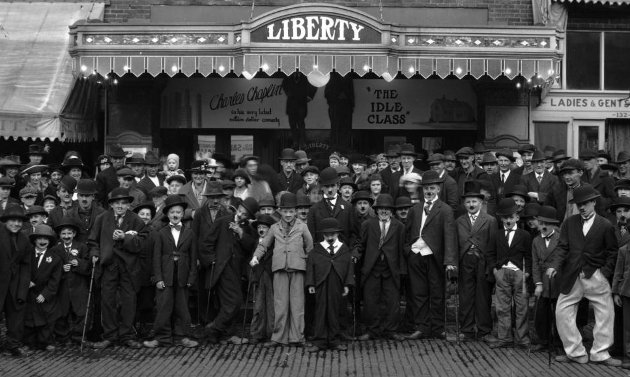
Some historians claim that a woman named Sarah Bernhardt, was the first “modern” celebrity. The French actress used popular magazines and her relationships to famous painters and writers and musicians to publicize her stage career in the 1800s. As a result, people world-wide knew who she was, thus becoming the first international star. But the world has never seen the popularity of the (mostly silent) film star, Charlie Chaplin. Everywhere he went, even when he wasn’t in his usual costume as the character “The Little Tramp,” the talented actor and director was mobbed. He was so famous in the 1910s and ’20s that cities and organizations would often hold Charlie Chaplin Look-Alike contests, contests that offered cash prizes to the person who could best imitate the character’s signature splay-footed walk. Even a young Bob Hope, later to become a famous comedian in his own right, entered one such contest during that time.

One such competition was held near San Francisco in the late 1910s as part of a county fair and a new movie theater promotion. Several dozen competitors donned their little under-the-nose bristle mustaches, put on ill-fitting hats and too-big shoes, found ragged pairs of trousers, grabbed reedy canes, and made their way to the fairgrounds. As the crowd gathered to watch the competitors, one of their number, a young man named Spencer, watched with amusement. “Those clowns,” he said to his small group of friends who had joined him at the fair that day as they watched the look-alikes start to parade across the fairground’s stage, “they don’t have the walk right.” You see, Spencer considered himself somewhat of a Chaplin expert, having seen everything that the comedian had put out on the screen.

Spencer’s chums began to goad him good naturedly. One of them dared him to get up on the stage and show them how to imitate the Chaplin walk if he knew it so well. Spencer grinned at his friend. “You’re on,” he said. “Here,” he added, taking off his jacket, “hold this and watch!” And, with that, the competition had another entrant. Spencer made his way to the side of the stage where one of the organizers was trying to corral the several would-be Chaplins in line before they demonstrated their imitations on stage.

“Say,” Spencer said to the harried worker, “d’ya think I could join the competition?” The staffer didn’t care. He just wanted to get through the warm afternoon as quickly as possible. “Sure, what do I care?” he said handing Spencer a number and a safety pin. “Just put this on your shirt and go to the back of the line.” And, flashing a large grin and a thumbs-up to his group of friends, Spencer went to the end of the queue to wait his turn. Eventually, as the last entrant, Spencer–without any Chaplinesque costume at all–made his duck-walking way across the stage. A few people clapped, mainly Spencer’s friends, and a few in the crowd booed.

The organizers used a set of three local minor dignitaries as their judges, and the judges also used crowd approval as a criteria in selecting the five finalists for the competition that day. And, when the votes were tabulated and every competitor was judged, it turned out that Spencer didn’t make the cut. He and the other unsuccessful entrants were thanked by the emcee and they were dismissed. Spencer made his way back to his little coterie of friends. They laughed at his failure, telling him that maybe he wasn’t as good of a Chaplin fan as he thought he was if he couldn’t even do the Chaplin walk correctly. Spencer was incredulous. In his frustration, he didn’t want to stick around to see who won the contest, and, with his friends still laughing at his expense, the group made their way on down the fair’s midway.

Now, of course, no one remembers who won that look-alike competition that day.

However, we do remember the contest.

For, you see, it was the day that Charles Spencer Chaplin couldn’t even win a competition imitating himself.

On a Young Dentist

John Henry was from an established, old southern family. Blond, skinny is a rail, a man so slim that a friend of his in adulthood once said that any 15-year-old could best him easily in a fistfight. John Henry‘s father fought in the Mexican War and then was a major in the Confederate Army leading a group of Georgia volunteers. After his service for the south, the man moved John Henry and the family farther south to Valdosta, Georgia. There, John Henry’s dad became the mayor of the town. His mother passed away of tuberculosis a few months after the move. After receiving his high school education at the Valdosta Institute, John Henry applied for, was accepted by, and then attended dental school at the University of Pennsylvania. He finished his schooling a few months shy of 21 years old. In fact, the university withheld his credentials until his birthday because the law at that time said you had to be 21 to be a dentist. Degree in hand, John Henry turned to Georgia to open his dental practice and get on with life.

It was then that John Henry himself developed tuberculosis. It was a promising dental career cut short really before it ever began. His doctors in Valdosta gave him only a few months to live. However, one doctor suggested that if he would move to a warmer and drier climate, he might buy himself a few months. So, John Henry decided to go west. And, that’s what he did. He ended up spending most of his time out there in New Mexico and Arizona. Sure enough, the dry, warm weather in the American Southwest helped his tuberculosis but only to a point.

You see, he never was able to shake the fits of coughing that the tuberculosis had brought. And the last thing you’d want a dentist to do when he’s working on your mouth is to suffer a coughing fit. There was simply too much scarring on his lungs. They were not going to get better. So, unable to make a living at his chosen profession, John Henry decided to become a professional gambler. He also made money working as a dealer in gambling houses and in bars. Now, at that time, being a professional gambler was not a disreputable occupation. Not everybody could make a living at it. In fact, John Henry was quite good at gambling. It was said that he was a very difficult man to read. You couldn’t tell if he had a good hand or a bad one. And that’s important in poker.

John Henry also developed a reputation for having a short temper. Some people said it was because he was a southerner. However, more than likely, his pride simply did not like the way people reacted to him when he won at poker. Because he often won at the gambling tables, it was not uncommon for people to accuse him of cheating. John Henry did not take that lightly. According to sources who were there, John Henry left a string of injured, bruised, and, occasionally, dead men who accused him of cheating across several gambling parlors in the American Southwest.

He also found love out west. It was a girl named Mary Katharine. Truth be told, Mary Katherine made her living as a prostitute. However, she was well educated and turned to prostitution because, as she told John Henry, the work gave her a sense of power and control over her own life and destiny–something women at the time didn’t have much of. The two were pretty much intellectual equals, and, although the relationship was marked by sometimes vicious fights, they were devoted to each other for several years.

But, tuberculosis finally got the best of John Henry. Mary Katharine took care of him as he wasted away. On his deathbed, she reported that he looked down at his bootless feet and chuckled. “I never thought I would die with my boots off,” he said with a cough. He succumbed to the tuberculosis at the young age of 36.

Today, he is remembered for his prowess at gambling, and for his temper, and for his friendships with western legends Bat Masterson and the Earp brothers. He has been the subject of books and films, his character being portrayed dozens of times on TV and on the big screen. Of course, in real life, his friends didn’t know him as John Henry.

Because he had that dental degree everyone just called him Doc Holliday.

On a Political Grudge

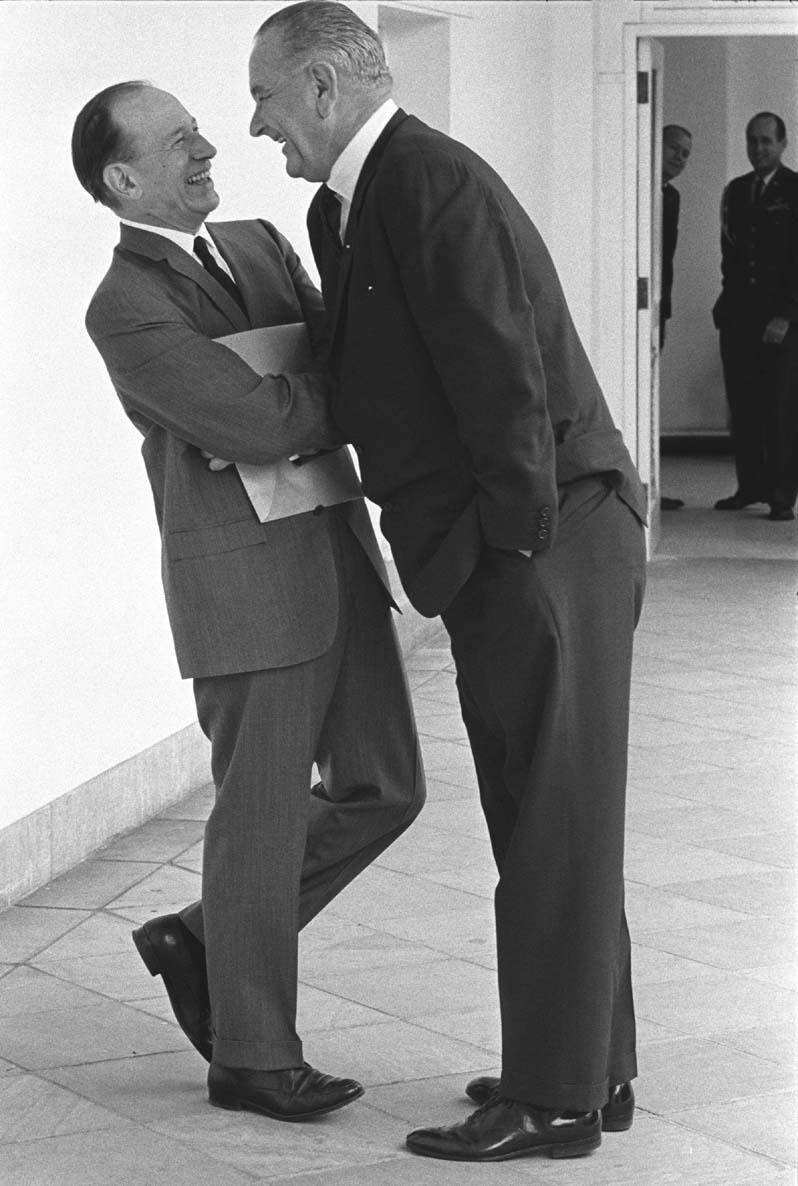
Lyndon B. Johnson was the consummate politician. As a congressman, senator, and, eventually, president, LBJ would lie, cheat, steal, bully, and threaten to get his way when it came to passing legislation. And it was not only that he could force people to do things for his agenda, but part of his power lay in his charm and charisma. Johnson towered over most people, being well over 6’4″ (1.9m) and was the consummate storyteller and mimic; he would often imitate colleagues, friends, and enemies, skewering them with dead-on impressions. And, as part of that larger-than-life persona, Johnson would often overstate his role in affairs to make himself seem more important to events that he actually was.

Take the instance of a story Johnson would often tell of how close of an advisor he had been to President Franklin D. Roosevelt in the years leading up to World War 2. Now, while Johnson was a young congressman from Texas and he did have opportunity to meet with FDR in the White House from time to time, in no way did Roosevelt consider the tall, thin Texan to be a trusted confidant. But that’s not the way LBJ would tell it in later years.

It was in January 1953, in the dining room of the US Senate in the Capitol Building when Johnson, at the time the second-most powerful man in the senate, came into the room. As was his custom, he would make his way around the room, shaking hands and trading bon mots with the other senators and their staffs. When he came to the table of the powerful senator from Wisconsin, Senator Joseph McCarthy, the senator and the staff at the table rose to shake Johnson’s hand out of respect. That is, except for one lower-level staffer from McCarthy’s office. This young man stayed seated and glowered at the powerful Johnson.

As Johnson made his way around the table, he reached the seat of the young man with the scowl on his face. Johnson knew that the staffer was purposefully being rude. You see, LBJ made it his job to know everything about, well, everybody. He knew why the young man refused to stand and shake his hand. So, in a show of power and to put the young staffer in his place, Johnson hovered over the seated man and stuck out his hand. Onlookers later said that the staffer swallowed hard, looked around the table at the other, standing staffers, and slowly stood up and offered a limp hand that Johnson took and shook vigorously. His point made, Johnson then made his way to the next table. The young staffer slank back into his chair and finished his lunch.

Later, an aide to Johnson asked him about the incident. Johnson let out a loud guffaw. He then reminded the aide of the following story, and it was a story that he LBJ had told often before. He said that McCarthy’s staffer was the son of a government appointee back during Roosevelt’s second term. During one of their meetings in the White House, Johnson said that FDR had complained about this staffer’s father. And Johnson bragged that he had advised Roosevelt to fire the man because he was a Nazi sympathizer and was antisemitic. To hear LBJ tell the story almost two decades later, it was Johnson’s advice that convinced President Roosevelt to ask for the appointee’s resignation. The young staffer’s rudeness and dislike of Johnson therefore stemmed from LBJ’s part in getting his father fired.

Of course, Johnson grossly overstated the importance of his advice to Roosevelt. The fact was that President Roosevelt had already made up his mind about removing the appointee from his post long before Johnson said anything–if in fact he had said anything at all to the president. So, while it probably wasn’t Johnson’s hand in getting his father removed from the post as much as it was that he had heard about the story Johnson told about the incident, the story about making himself out to be more important and influential than he was. You see, the young man, that scowling McCarthy staffer, he was the opposite of Lyndon Johnson. He was almost an anti-politician. He was more of a crusader, a fighter for justice and truth. To him, men like Lyndon Johnson were part of what was wrong with Washington. And the young staffer was working to bring honesty and accountability to congress. And to know that LBJ was telling untrue stories about his dad and laughing about his dad’s removal from his government appointment, well, it was all too much.

By the way, the post that the staffer’s father had held was the ambassadorship to the United Kingdom in the days before World War 2. He knew that his father wasn’t fired from the job and he also knew that Lyndon Johnson had nothing to do with his father’s resignation from the post.

And that’s why, in January 1953, young Bobby Kennedy refused to stand and shake Lyndon Johnson’s hand.

On a Career Heartbreak

Chris had developed the symptoms of rheumatoid arthritis in the late 1970s, and by 1983, the issue forced him out of the operating room. That was a blow. He had been a surgeon for all his adult life, specifically a heart surgeon. It was all he wanted to be ever since he was a child. Born in South Africa to a father who was a minister in the Dutch Reformed Church, Chris had been taught service to others from an infant. One of his siblings, Adam, had been a “blue baby,” that is, a heart defect caused his skin to appear blue because of a lack of oxygenation in the blood. That had a big impact on Chris’s decision to become a heart surgeon.

After his education and residency in South Africa, Chris grew interested in correcting intestinal underdevelopment in newborns, specifically a bowel obstruction that was often life-threatening. Through research and experimentation, Chris developed a new protocol and surgical procedure for fixing the issue so that what had been a potential deadly situation became a fairly common and routine surgical fix. But his true love was cardiological surgery. And he was great at it, developing new techniques and becoming well known in that corner of the medical establishment. And Chris was a heartbreaker. The handsome surgeon had girlfriend after girlfriend, managed to marry and divorce three times, and had six children over the course of his life. He dated models, actresses, and even hobnobbed with royalty. For Chris, the women were part of the successful heart surgeon career.

But, then, because of the arthritis, by 1983, that well-established career was over. What would he do? Chris then experienced something of a mid-life crisis. He was in his early 40s, at what should have been the prime of his career as a surgeon. Chris turned to anti-aging research. While his hands had betrayed him, his mind was as sharp as ever. But Chris, for reasons unknown, put his considerable reputation behind a questionable skin cream, a product named Glycol. Chris said that research (it wasn’t clear if it was his research or someone else’s) showed the product reversed wrinkles, hydrated the skin, and could visibly reverse the signs of aging on the face. Well, truth be told, pretty much any cream will do hydrate the skin, including Vaseline, according to a article published at the time. In the United States, the Food and Drug Administration didn’t offer Glycol approval for use as a treatment for aging because, they said, the claims were hokum. Rather than a drug to stop aging, Glycol was classified merely as a cosmetic. Chris was heartbroken. He retreated into himself and stopped all work on the anti-aging idea.

What do you do when your career is over and your reputation is in tatters?

Chris didn’t quit. He worked doubly hard to re-establish his reputation. With funds from his years as a surgeon, Chris established a foundation, based in Austria. The foundation is still ongoing. It provide funds for the families of low-income children from developing nations who need live-saving heart surgeries to travel to Europe where they could have needed surgeries they ordinarily couldn’t afford. Through his foundation, Chris continues to help provide for these surgeries even though he passed away in 2001 at the age of 78.

It turns out that the heartbreaking surgeon salvaged his reputation by opening his heart in providing for others and making miracles happen for families who faced the possible loss of their loved ones. But that had been his life as a surgeon as well. You see, before arthritis took his surgical abilities away, Dr. Christiaan Barnard had been the first surgeon to successfully transplant a heart from one human to another in 1968.

On a Tough Job Market

Sandy completed her university education and was ready to begin her career. A bright and ambitious young woman, she had entered Stanford University at the tender age of 16 in 1946, one of the few women at that time to be in higher education. Most girls her age were looking for a serviceman who had recently returned from the recently ended World War 2 and wanting to get the house in the suburbs and the 2.5 kids and start living the American Dream. Sandy’s dreams were therefore different than those of her peers, and that trait would be a touchstone for her for all of her life.

Born on a farm in Texas, she was raised with her siblings on a large cattle ranch and farm her father had purchased not too far from Duncan, Arizona. While the land provided a comfortable income, young Sandy didn’t grow up a spoiled girl; instead, she learned hard work on the farm, and was able to take care of herself while out on horseback, shooting small game, and even learning how to do some basic automobile maintenance–all things that girls her age didn’t know at that time. And, when her undergraduate studies were finished, Sandy decided to go to law school, also at Stanford.

It was right before she graduated that she met the love of her life, a man named John. And, even though John was a year behind her in law school, the pair got married half a year after Sandy graduated with her law degree. It was then that Sandy came face-to-face with the cruel reality of the post-war American business world–no one wanted to hire a female lawyer. The competition was fierce because the mandated priorities for hiring lawyers at that time was to give those jobs to returning GIs who were attorneys. It was a man’s world, law was.

And what Sandy quickly discovered was that law offices were incredibly eager to hire a woman with a law degree–as a legal secretary only. That was pretty much the story that she encountered as she made her way from one interview to another. “We can offer you a secretarial position,” was something that Sandy heard so much that she would sometimes say it out loud with the person who was interviewing her simply to amuse herself.

Finally, Sandy realized that the only way she would be able to break into the law profession would be to offer her services pro bono. Then, once she had a position, she knew that her intelligence and ability would make the employers see that she could do the job and then offer her a paid place in the firm or organization. And, that’s basically what happened. In San Mateo, California, this capable and proud young woman proposed that she work for the county attorney’s office for free for a few months. At the end of the time, if her work was acceptable, she said that the office would then decide to keep her and pay her or, if it wasn’t up to their standards, then they would let her go. The county attorney agreed. What did he have to lose? The worst thing for him was that he would have a few months of free legal work, and if there were errors, the office would catch them. At best, he would find a capable attorney. So, Sandy was given a desk–out with the secretaries, of course–and she got to work.

I don’t have to tell you that at the end of the trial period, Sandy was hired. And that first step in that tough job market was the last roadblock to a stellar career. The county attorney found that what everyone would soon know about Sandy, that her work was exemplary. She would go on to do legal work for the US Army, some political campaigns, was assistant Attorney General for the State of Arizona, and she also served in the Arizona State Senate beginning in 1967. She then served on the Arizona Supreme Court. No longer would she be stymied by being a woman in a man’s profession. In between her rise in the legal profession, she and John raised three sons as well.

And then, in 1981, President Ronald Reagan appointed Sandra Day O’Connor as the first woman to serve on the Supreme Court of the United States.

On a Transatlantic Flight

As a kid, Werner Doehner had loved to travel. He was born in Germany, but his family moved to Mexico when he was a young man. As a result, the family made several trips back-and-forth between Mexico and their German homeland. And every time they traveled, the young man was excited, as excited as he was the first time he ever flew across the Atlantic. One particular trip especially stuck out in Werner’s mind, although he didn’t talk about it until he was an old man. It would be the last trip the five members of his family would take as a group.

Werner’s dad was a pharmaceutical executive for a large German drug firm in Mexico, and he had accumulated great wealth over the course of his career. That allowed the family to travel in style, and that is also what appealed to young Werner when the family made trips back and forth “home” to Germany. It’s always a great way to travel when you can afford to sleep in comfy beds at the nicest hotels, dine at the swankiest restaurants, and luxuriate in the extra large seats on the flights. And that’s the level of luxury that Werner and the family enjoyed on that last transatlantic flight they took together. But there was more. In an effort to make the trip into a true adventure, the Doehner family had booked first-class train travel that would take them on down to Mexico once they had arrived on the flight from Germany into the New York City area. The kids were especially excited over that part of the trip–Werner, his brother, and his sister.

Years later, Werner would talk about that last trip the family made, but it wasn’t until he was an old man and was prodded to talk about the trip by his son. Up until then, Werner didn’t talk much about that flight. As he grew up, he went to a prestigious university in Mexico, majoring in electrical engineering. On another trip back to Germany, he met and fell in love with a woman named Ellin. The couple got married in her hometown of Essen. The young pair moved back to Mexico City, but they eventually immigrated to Massachusetts where Werner made a career with the New England Electrical System before retiring. He and Ellin were married over 50 years. It was shortly before he died in 2019 that he began to open up to his son about the events of several decades before.

Werner finally told his son all about it after keeping it to himself for all those years. He finally spoke of that horrendous fire, the flames that seemed to come on all of them so suddenly. He recalled that his mother first threw his brother out of a window, then she grabbed 8 year old Werner and threw him out before leaping to the ground herself. In doing so, his mother broke her hip. All three of them suffered severe burns. Sadly, both Werner’s father and his sister didn’t survive the fire. And Werner carried the scars he got in the fire for the rest of his life. But the emotional scars were just as real and were the deeper marks of what had happened to him and his family at the end of that flight.

You see, Werner Doehner was the last survivor of the 1937 burning and crash of the LZ-129 Zeppelin, better known to you as the Hindenburg.

On a Risky Mission

The captain told his crew that the flight mission over the French city of Calais would be the most dangerous the men’s B-24 445th bomber squadron had yet faced. The target was the German V-2 rocket production facility, the the place where a radical new high-speed and highly destructive weapon that the Nazi scientists created was produced.

“Fellas,” the captain said, “You are not ordered to go on this mission. To be frank with you, well, we’re not expected to come back. It’s that dangerous. What I’m asking for is volunteers.” The crew of the bomber looked at each other. Then the captain’s co-pilot spoke up. “We’ll all go if you go, sir,” the man said. The captain grinned. He nodded. “We take off at dawn,” he said; he saluted and walked away.

The captain was born in Pennsylvania in 1908. His great-grandfather had fought in the Revolutionary War, and his grandfather had been in the American Civil War. His own dad was a veteran of both the Spanish-American War and World War 1. So, it stood to reason that he would continue the family tradition and serve his country. He’d received a degree in architecture from Princeton University, but, because of the Great Depression, he couldn’t find much work in that field. He managed to get other jobs first in New York City and then in California. It was out west that he learned to fly a plane and received his pilot’s license. He said later that he was inspired, as many were, by people like Eddie Rickenbacker and Charles Lindberg and Amelia Earhart. When World War 2 rolled around, his university degree and his experience as a private pilot gave him a head start in the Army Air Corps (what would become the US Air Force).

The captain knew his men. He had once entered the barracks of the enlisted men and found that they had stolen a beer keg from the officer’s club. Rather than throw the book at them, the captain calmly asked if he could have a glass. The men laughed and gave him a foamy mug of the stuff. As he shared the drink with the men, he casually said, “Say, fellas, the officer’s club is missing a beer keg. You men know anything about that?” The men, eyes wide, looked at each other. Rather than wait for an answer, the captain continued. “Well, I’m sure that whoever took the keg, that it won’t happen again. Thanks for the beer.” He stood up and left. And nothing like that happened again, just as the captain said. And his men loved him.

At the same time, the captain was a taskmaster. He put his crew through their paces, creating emergency scenarios for them as they trained and flew, insuring that the men knew their jobs in any situation. He also asked the men to cross-train to insure that vital jobs could be done in case one crew member was injured or incapacitated. So, he was a man who was tough but fair. The type of man you’d follow anywhere. The type of man you’d volunteer to go on what would essentially be a suicide bombing mission over the French city of Calais.

Over 2,000 aircraft were involved in the important bombing mission, the largest operation up to that time for the 8th Air Force in the war. And the captain’s plane was chosen to lead the raid. Rather than bombing from over 25,000 feet, this mission was to be low-level bombing, under 2,500 feet above the target. That’s what made it so risky and dangerous to the crew. Over 1/3 of the bombers that took off from England on that Christmas Eve, 1943, didn’t come back. But this captain and his crew made it. Their B-24 was shot up pretty badly from German anti-aircraft fire and the bullets from German fighters, but the crew managed to get the plane back home to England in one piece. For his leadership and his bravery in the successful raid, the captain was promoted to major. His skills at preparing his men for battle were also recognized, and he was ordered to become an instructor of other pilots on how to organize their crews and prepare their men for the remaining battles of the war.

After years of service to his country, the captain retired from the US Air Force Reserve with the rank of general in 1968. His son, continuing the family tradition, fought in Vietnam and, sadly, was killed there. The captain died in 1997 and was buried with full military honors, much mourned by friends and family and the public at large, too.

That’s because you know this heroic pilot as the actor, Jimmy Stewart.

On Playing Dress-Up

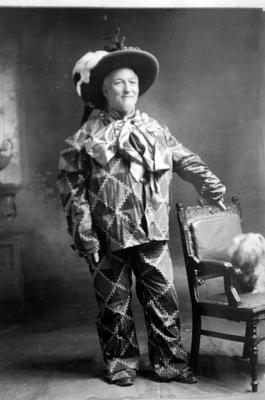
Most of us stop playing pretend games where we dress up in a costume by the time we hit puberty (except for the odd Halloween party here and there). Not James Edgar. No, James was famous for playing dress-up well into his 60s. He often donned costumes that made him into George Washington, a sea captain, a member of the first nations tribe, and other historical or interesting characters. James lived in Brockton, Massachusetts, but he was born in Edinburgh, Scotland, in 1843. When he made his way to the United States in the 1870s, James opened a dry good store in that Massachusetts town.

And James made the store a great success. His natural talent for showmanship and publicity drew crowds to the business. And you never knew who would greet you there. One day, James might be dressed as Lincoln; another day, he would be holding the door open for customers garbed as Columbus. The popularity of James and his theatrics also carried over into other businesses on the main thoroughfare of Brockton. People who flocked to James’s store would then go down the block to the diner or up the street to the butcher’s shop. The other shop owners thus embraced the wacky Scotsman and his antics.

James didn’t hoard all his wealth, either. He gained a reputation for being one of the most generous men in town. If a family needed its rent paid, James would do it. If a child had to have an operation, but the parents couldn’t afford it, James would arrange for payment with the doctor. When a young person needed a job, James would find work for that teen in his warehouse or sweeping up the store after hours. And, unusually for that time, James instituted a lay-away plan for people who couldn’t afford to pay for purchases all at once. No one was refused. And he didn’t charge interest, either. These and many other acts of kindness and charity across the years caused the grateful community to name a city park after him shortly after his death in 1909.

However, there was one character James dressed up as that is remembered most of all. That character made indelible impressions on those who encountered James dressed this way. In the 1970s, during an interview about James Edgar, one 90-year old citizen of Brockton recalled that he, “couldn’t believe my eyes. You can’t imagine what it was like. It was a dream come true. I rounded the corner of an aisle of the store, and there he was! And he talked to me!” Such was the impact that this particular outfit had on people. Families came from as far away as Providence, Rhode Island, and New Hampshire, and even the big city of Boston to see James. They lined around the block outside his store. And James, as far as we know, was the first person to dress up like this in public. Oh, of course, today, you see this character everywhere, almost on every street corner during the holiday season. But James was the first.

You see, no one before James Edgar had ever dressed up as Santa Claus.

On Kindness

Frans de Waal isn’t a name that will come up at your dinner table over the holidays like, say the topic of the Roman Empire might, but the fact that you’re getting together with family at all and sharing gifts and love and warmth should at least make you aware that this man exists. You see, de Waal is a primatologist and ethologist. Those are fancy-schmancy words for someone who studies primates (from chimps to humans, now and in the past) and the behavior of non-human animals. And what Waal has found out in his decades of study of these things bears directly on this season of holidays and sharing.

Waal–as you can probably tell from his name–is from The Netherlands. He received his education in Dutch universities and became fascinated with the behavior of apes in their groups and how they interacted. His theories, not new of course, centered around how ape/primate behavior can help humans understand our own behavior. One of his early ideas has been taken by a certain segment of human society and been turned on its head, actually. de Waal was among the first modern scientists who saw the tendency in primate groups for a strong male to be assertive in the group. This Alpha Male idea has been co-opted by some men (and a few women) to justify male dominance in human society in a way that has resulted in the concept of toxic masculinity. But that’s not exactly what de Waal found. Instead, his dominant male was more of an enabler, a personality that insured that everyone in the group was included and cared for, a coach/cheerleader rather than a dictator or task master. These males appeared rather to emphasize cooperation, fairness, and empathy–concepts that are foreign to the more popular concept of the Alpha.

For almost a decade, de Waal spent time among the largest concentration of chimpanzees in captivity, in a study facility in The Netherlands. He formed his first theories about primate interaction there. His other major realization was that primates seek group stability through reconciliation. When an argument or disagreement happens, the group forced the aggrieved parties “kiss and make up” in order to keep the peace and stasis of the community. That made de Waal realize that primates were naturally seekers of peace and harmony for the sake of the greater good.

de Waal and his research associates also found that not only the chimps but also all mammals seem to be naturally empathetic. Studies conducted by other researchers using rats and other mammals have borne this out. When unfairness is recognized by the group, the group takes steps to rectify the situation. That means that, somewhere within mammals, the concept of justice–making things right that are wrong–lies deep within our DNA. That discovery was paradigm-shifting to de Waal. He began to be interested in how humans developed morality over time, knowing that if morality existed in other apes, then those concepts were innate in humans. He demonstrated that chimps, when given the choice, always chose to help others rather than simply help themselves only.

So, when you gather with family and friends over the holidays, know that what you are doing is something that comes from long, long ago in our past. When you make peace with someone, when you seek the comfort of someone, when you share what you have with another, when you seek justice, when you show mercy, Frans de Waal would say you had it in you all along.

In fact, you were born with being kind in your evolutionary DNA.

On an Insurance Claim

In the US and in most of Europe, truckers haul much of the freight from one city to another. The goods they haul, however, often originate in an overseas nation, and that requires shipment by freighter. This story is about one such over the ocean transport carrier, a British ship called the Zong. The ship had been built in the 1770s by a Dutch company and was originally called the Zorg, a Dutch word that means “care.” The ship was built to service the Dutch settlements in the Americas, including what is now the nation of Suriname.

In 1781, the ship was bought by a company out of Liverpool, England. Interestingly, the Zong was purchased with its storage holds full of valuable cargo. Since the ship was already carrying a load of goods, the new owners were eager to get the ship insured. Another Liverpool insurance firm wrote the policy, and the owners paid their premium. The Zong wasn’t fully insured, however. Insurance was so expensive for ocean-going vessels that the new owners were able to only protect half of their investment. The other half of the risk was born by the owners themselves. Now, please remember that 250 years ago, travelling across oceans by sail was an incredibly risky venture. Almost 15% of all ships that left port never made it to the final destination during that time. That puts seafaring as a profession up there with astronaut for being high-risk.

The Zong left its port of origin with a crew of 17 and one paying passenger. That crew was made up of some of the old Dutch crew, but the new owners put their own captain and first mate on board as well as some other crew. The rest of the space on the ship was for the cargo. And, in an effort to make up their costs for the ship, the new owners added to the already bulging cargo area. In fact, the Zong was carrying about half again as much cargo as it was designed to hold. Adding to this fact was the issue that the new captain, a man named Luke Collingwood, a person whose actual occupation was a physician. He had little experience as either a captain or as a navigator. And, as the ship sailed for the Caribbean Sea, his lack of navigational skills threw the ship and crew and cargo far, far off course.

After a time, the navigational error was discovered. By that time, water and other supplies were running dangerously low. If the Zong had not had so much cargo, then making up the time lost to the navigational error could be shorter. Besides, the cargo was becoming damaged the longer it stayed in the hold. That meant that, once it reached its destination, the owners would get less for the goods than what they wanted or expected. An executive decision was reached by the captain. If the cargo was “lost at sea,” it could be claimed as an insurance loss and thereby allow the owners to recoup some of their impending losses. The crew was allowed to vote on the proposal, and it passed unanimously. Some of the cargo was to be jettisoned into the Atlantic.

Thus, when the Zong finally reached its destination, less than half of the original cargo was left. The owners filed an insurance claim for their “losses” as reported by Collingwood. However, the insurers balked at paying. They claimed that the jettisoned cargo wasn’t actually “lost at sea” but, rather, was purposefully destroyed. At a trial, the court agreed with the owners, and the insurance company was ordered to pay up. But they disagreed, and the case was appealed.

On appeal, the decision was reversed. The court objected to the reasons for the destruction of the cargo, saying that willful jettisoning without a direct threat to life (the crew wasn’t in devastating danger although their situation was growing worse, for sure), there was no reason to do what they did. The owners had to bear the loss of the destroyed cargo.

In other words, the owners of the Zong were not compensated for the willful murder of 150 African slaves.