On a Vital Contributor

Sir James Augustus Henry Murray is remembered in history as being the primary force and chief editor of what has become the most important and influential dictionary in the world: The Oxford English Dictionary. From 1879 until his death in 1915, Sir James led the panel of contributors and editors in compiling what is today the 22,000 page, 20 volume dictionary. One major thing that sets the OED above all over dictionaries is its painstaking research into not only the origins of the words in the text, but also they provided the history of the words over time–how they changed and were used as English itself morphed and grew.

However, to gather all this work took not only years of toil but also dozens of researchers and contributors. In fact, there weren’t enough of these people to complete the work as Sir James soon realized. So, in an unusual move, he put a call out to the general public to help the academics by contributing quotes about the words from published sources throughout the history of written English. The contributions would have to provide the work cited and the publication information so that the source could be checked, of course, but Sir James knew that this was a much easier task than finding the quotations in the first place.

One of the general public who responded to Sir James’s call for contributions heard about the request from a bookstore. The man’s name was William Minor. Minor was an American who was then residing in the Berkshire village of Crowthorne. He had a large personal library of books in older English. That meant that he could find the types of quotes that Sir James was looking for, quotes that would show how the words had morphed throughout the centuries. For example, the word study used to mean make an attempt at rather than its more common meaning of reading and learning. What Minor would do was to take a piece of paper that resembles a modern 4″ by 6″ card (10cm x 15cm) and then write the word in all capital letters at the top. He would then write the quote on the paper, put the citation and reference information on the back, and then send that entry to Sir James and the compiling and editing committees who were working on the book.

Soon after starting his contributions, Minor was producing several such entries every month. The editors and Sir James were not only grateful, but they were also amazed at the care and clarity of the submissions by this American who, as far as they knew, wasn’t an academician or scholar at all. And Minor produced so many submissions that he became one of if not the most significant public contributor to the etymology and history of the words contained in the dictionary. It reached the point that the editors so relied on Minor’s scholarship that they would send words for him to research, requests that he quickly and happily obliged.

After several years of receiving Minor’s stellar work, Sir James became curious as to who this William Minor was. He resolved to make the trip to Crowthorne to meet the valued contributor. And when Sir James finally reached William Minor, it all made sense–why he had the books, why he had the time, and why he was so eager to offer his help to the creators of the Oxford English Dictionary.

It was because James Minor was residing in the mental asylum of Broadmoor Hospital having been found guilty of murder by reason of insanity.


On a Local Eccentric

The town I used to live in, Westmoreland, Tennessee, had its share of characters. The running joke was that most small places in the US had a character or two who were unusual and eccentric, and that everyone else was somewhat “normal” for the time, but that in Westmoreland, that construct was reversed. Everyone was eccentric and only one or two would be considered normal. But in Hinsdale, New Hampshire, everyone knew who the local oddball was.

It was Geoffrey Holt.

Hinsdale is a place of fewer than 4,000 souls, nestled in the state’s extreme southwest corner, made up mostly of a state forest. In fact, the town is one of the state’s oldest villages, having been settled in the mid-1700s. And it has seen its share of eccentrics over the years, but few were as odd as Geoffrey. His background didn’t show any sort of odd behavior, however. Born in 1941, he grew up not too far away in Springfield, Massachusetts, and received a college education and an M.A. degree. In between those two degrees, Geoffrey served a stint in the US Navy. With education in hand, Geoffrey began professional life as a social studies teacher in a high school. But teaching and kids were not for him, so he quit. He got a job in a grain mill. Living in Hinsdale and working in the nearby town where the mill was, Geoffrey decided to sell his car and bike to work every day. In fact, he took that bike everywhere, riding for hours in the hills and forests of New Hampshire. He would often strap a six pack of beer on the back and ride off all day on weekends. He even rode his bike to Massachusetts to visit his parents.

But then, after a few years, the grain mill closed abruptly. Employees like Geoffrey were paid a lump sum of cash and told they didn’t have a job any more. After that, Geoffrey took odd jobs around Hinsdale, finally finding steady work as a groundskeeper for a run-down mobile home park. His trailer in the trailer park had no TV or internet. He collected model cars and trains. When he had to go somewhere in town, it was likely that he would drive the riding mower from the trailer park to where ever he needed to go, driving the slow-moving machine down the main street. He took to wearing the same old clothes every day. As he aged, Geoffrey grew a long, graying beard and kept to himself more and more. People who knew him found him to be private and almost shy, simply an unusual man going about his work and riding the mower around town.

Now, some people wouldn’t find any one of these things odd, perhaps, but if you put them all together, at least in Hinsdale, all of that behavior made people label Geoffrey as an odd duck. Yet, he managed to find a life partner for a time (she died in 2017), and he seemed to be enjoying his odd lifestyle. The trailer park paid him enough to live on, and his Social Security check helped in later years. Geoffrey had a stroke in 2021, and, this past summer, he died at age 82 in a care facility. Not too many people came to his funeral, but the town recognized that one of the local eccentrics was no more.

That’s when the town received a notification that Geoffrey Holt had made Hinsdale the sole heir of his estate. Turns out that, when the grain mill closed, Geoffrey had taken the lump sum money he received at the closing and invested it–and never touched the money again. As the years passed, the investment grew and grew. The town of Hinsdale looked into the investment account and discovered that the man they had labeled as the town eccentric had left them a sizeable amount of money.

Almost $4,000,000.00 to be exact.

On An Improv Show

The popularity of improvised comedy shows both live and on TV testify to the incredible ability those who practice this type of performance possess. Most of us wish we had the improv skills to be seemingly and spontaneously funny and interesting. Long-running programs like Whose Line Is It Anyway have made celebrities of several improv comedians like Ryan Stiles and Colin Mochrie. And, now, a Las Vegas permanent show has brought that style of comedy performance to common people like you and me. The show that is a feature of one of the casino hotels on the Las Vegas Strip is called Hyprov, and it plays to packed houses nightly.

In fact, the show was co-created by Colin Mochrie. Mochrie and his collaborator, Asad Mecci, tested the show at comedy festivals like the Edinburgh Fringe in the pre-Covid days, and they did a 50-city US tour with it. The success and reception of those shows led the pair to bring the concept to its permanent home now in Harrah’s Casino. And the audiences who come there get an opportunity to try out their improvisational skills with the veteran improv comic Mochrie.

Mochrie earned his improv credentials at Toronto’s famous Second City theater troupe, the same place that produced people like Martin Short, John Candy, Gilda Radner, and Eugene Levy. Born in Scotland but raised in Canada, Mochrie went on to create sit-coms for Canadian television and to have a successful TV career. But he is best known and seems the most comfortable doing short improv skits like he has done for over two decades on first British and then US versions of Whose Line. It was then that fellow Canadian Mecci approached Mochrie’s agent with the idea of using people in the audience in improv.

Mochrie was intrigued by the concept. Improv isn’t as easy as the professionals make it out to be. Most people who haven’t been trained in the genre tend, Mochrie says, to overthink things. The conversations that should flow over a situation become stilted and unnatural because of most people’s tendencies to make a conscious effort to be funny–and that often results in long periods of silence while the would-be improv actor is thinking about a punchline. To hear Mochrie and other professionals tell it, you have to actually not think about the situation too much. They advise that good improvision comes from not acting but rather reacting to what the other improv actors give you. In the parlance of that artform, they call it the “yes, and” concept, where you then accept what the other person has said and then either add to it or disagree, but they you give the first improv actor an opening to add his or her own “yes, and” idea. It’s very much like a good rally in tennis, one improv comic has said, but instead of winning the point, you’re trying to help the other player hit the verbal ball back to you.

And what makes Hyprov so unique and interesting to both the improv comics and the audience is that the people from the audience who become part of the show have no experience doing that, let alone being on stage at all, usually. The show begins with Mecci coming out alone and introducing the concept. He then calls up about 20 audience members. After speaking with them first as a group and then individually, he culls about five of them from the group and sends the others back to their seats. The five then become part of the improv cast, and they perform the skits with Mochrie or other “regular” improv comedians. And, since they are completely new to the comedic form as well as to the stage, you would think that the resulting show would be something resembling a really bad elementary school play. Certainly, it wouldn’t be worth the high price of a Las Vegas-style show.

Surprisingly, the show using completely rookie improv audience members works far more often than it fails. And, if it doesn’t quite work, that, too, can have its comedic but cringe-worthy moments. But, again, using these newbies on stage–which is certainly taking a professional risk to do–has proven to be a successful formula for Mochrie and Mecci. How can these audience members become instant improv stars, even if only for one performance? Well, as Mochrie said, you have to make sure these regular folks are not thinking too much about what they’re doing. The trick, therefore, is to take them out of themselves and allow them the luxury of simply not being themselves for a while. And who, you might wonder, do Mochrie and Mecci do that?

Well, the clue for you is in the name of the show.

You see, before the audience members successfully interact with the professional improv comics, Asad Mecci hypnotizes them.

On a Train Ride West

Charlie was a historian of sorts a hundred and fifty years ago. More often, Charlie wrote for newspapers along the upper Eastern Seaboard of the United States. As a young reporter, Charlie covered local stories that pleased the readership of the papers he wrote for. His tales garnered so much attention in the towns and villages in the upper east that the young man decided to compile some of his favorite local stories into book form. The book proved so popular that a big city paper hired the young man in 1877 to write for it because his prose made the local places and events come alive for readers. That’s how Charlie made the transition from reporter to some sort of local historian.

Charlie combined thorough research and good interviews to weave his tales. For example, on a story about some local cloth mills, Charlie gave an overview of the history of not only mills in New England but also of the use of cloth over the past several centuries. Such depth of coverage made him respected and made his writing popular. So, when a group of businessmen wanted someone to provide publicity for an investment they were making in some silver mines out west, they hired Charlie to take a train trip with them to document what was happening both on the trip and in the process of the mining of the silver. It was the investors’ idea that Charlie’s stories would bring in more investment money to their mining venture.

It took the group over four days by rail to reach Colorado, the place where the silver mine was located. Along with the investors, there were some geologists, lawmakers, and some other business types who made the journey as well. And Charlie milled among them all on the train, spending time with them in the dining car, interviewing them in the bar and smoker car, playing cards with them in the poker room, and so forth. And what Charlie learned as he rode the rails with some of the richest men in the nation, well, it was as if the young reporter had been to the best business school in the country. The way Charlie told the story to the papers, and the way the investors used what Charlie wrote, was that the young man wrote a series of “letters back home” as it were, letters that were really news stories that told of what he had learned and saw.

In these letters, later collected into a pamphlet called The Leadville Letters (after the famous silver mine the trip was traveling to), Charlie told of how capitalism had developed, how these men were doing things with their money, things that were changing the face of the nation. Sure, in one way, what Charlie wrote was propaganda, but what he wrote was also true. These men were changing the economy of America, using their investment money to get even more riches that they then turned into things like oil, steel, railroads, and other modern technology that was indeed changing the world itself.

And the trip also changed Charlie. He decided to report on business from that point on. Joining forces with a young college dropout named Ed, the pair opened their own reporting agency that focused on New York’s financial markets. Their reporting was accurate, well-researched, and well-written. And they could neither be bribed nor bought, nor would they allow their reporting to be swayed by market forces. Their daily reporting on the financial markets included a look at several key companies, mostly railroads, some banks, and the Western Union Telegraph Company. Charlie and Ed felt that these businesses were good indicators of how those financial markets were doing. That daily report on those businesses as an economic indicator is well known today. And their success was due in large part to that train trip Charlie took out west a few years earlier.

You see, it was Charlie Dow and Edward Jones who created the Dow-Jones Industrial Average.

On an International Criminal

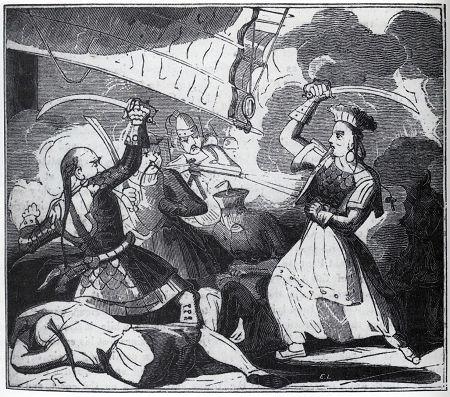
Action films often depict criminal masterminds who control vast armies of minions who carry out their dastardly deeds before succumbing to the pursuit and prosecution of heroes or the police. Believe it or not, that type of thing has historically been more common than you might realize. One such international criminal was known as Zheng Yi Sao, and this criminal operated in the early 1800s in the seas off the coast of China. Yes, Zheng was a pirate but not just any pirate. Zheng was in charge of the largest fleet of pirate ships and a pirate army that totaled over 50,000 men at its most powerful.

Zheng acquired a small group of ships through marriage. From that start, the pirate parlayed the fleet into what it became–the scourge of the China seas. Sailing as far south as the coast of Vietnam and as far north as Korea, no ship or port was safe from the power and prowess of Zheng the pirate. When finding a rival pirate ship or fleet, Zheng would give the pirates the choice of death or joining the growing number of the pirate navy and army. Well, you can imagine that almost all of those other pirates made the decision to join rather than die. So, through cunning and bravery, Zheng spend years pillaging and stealing great amounts of wealth from any ship or city that got in the way.

The pirate conglomerate became known as the Red Flag Fleet because that’s the color of the banner they sailed under. Zheng also created a Pirate Code, a set of laws that the members of the fleet had to abide by. These rules called for specific conduct in war and peace, and the code was closely followed by all who sailed under the fleet’s red banner. One interesting rule was that no women would be purposely harmed by anyone in the fleet. Harming a woman was punishable by death.

The Chinese government sent an armada to stop Zheng and the Red Flag Fleet, but, easily outsmarting the Chinese admiral in charge of the government’s navy, Zheng lured the government ships into a trap and destroyed them. Then, to confuse the government officials, Zheng split the fleet into three parts. Each part was sent on pirate raids in different directions, with Zheng taking direct command of one of the three prongs. The government was overwhelmed. They didn’t know which of the three groups was actually Zheng, and they were tricked into doing nothing. Was this another trick? Which prong–if any–was the one led by Zheng? The government was helpless. And, at this point, they asked for help from the international community.

Portugal, by this time in history, controlled the Chinese port of Macao. And China, desperate to stop Zheng’s piracy, asked Portugal’s fleet for help. A combined Sino-Portuguese fleet managed to trap several of Zheng’s ships in a harbor for a time, but the pirates managed to fight their way out. The Portuguese were impressed by the pirates’ bravery and ability. And they felt challenged by the pirates’ victory over their ships. So, they, in turn, asked the British Navy for help in corralling the Red Flag Fleet. Britain was delighted to help, and that proved to be the beginning of the end of Zheng’s power. You see, the British had the best-equipped ships in the world at that time. The powerful but small Carronade, a Scottish cannon, was the standard armament on the British ships, and it could wreak havoc on the thinly wooden-clad Chinese ships. Zheng knew that the gig was up.

Using an envoy, Zheng sent a message to the Chinese government. The pirate fleet would be disbanded, all ships and crews would be put under the command of the authorities if–if–Zheng could keep all the pirate loot gained up to that point and would be given a complete amnesty. And that’s basically what happened. The Red Flag Fleet, largely undefeated in battle, was disbanded with a simple agreement. Zheng took the money from the years of piracy and moved to Guangdong, China. There, the former pirate made even more money running a large gambling house and brothel. Zheng died wealthy and happy at the age of 69.

And, in the years before that death, people from all over the world would come to Zheng’s casino and whore house for a chance to meet the world’s most famous female criminal mastermind.

On a Class Project

The kids in Mr. Jones’s class were always having fun.

It’s not that the sophomore World History course was easy or that Mr. Jones was not a disciplinarian, no. It’s just that for most high school classes, you walk out and pretty much forget about that subject until you have to go back to class the next day. But that wasn’t the case with this particular class. Mr. Jones made the subject interesting. The kids would talk about what they had discussed that day at lunch, during recess, after school, and on weekends. Mr. Jones was one of those teachers whose lessons stayed with his students years after they left his classroom.

In 1967, Ron Jones was facing a challenge. His kids were having a hard time relating to his lessons. Now, remember that the 1960s was a decade where American young people were questioning, well, pretty much every convention in that society. Choices about clothing, hair styles, music, sexuality, and gender roles as well as racial relations were called into question. The anti-war movement, which many saw as an anti-establishment movement, was growing as the decade wore on an more Americans and Vietnamese were being killed and wounded. So, Mr. Jones had a hard sell to convince his pupils that history was important.

One day, at the beginning of class, Mr. Jones wrote on the chalkboard, in big letters, STRENGTH THROUGH DISCIPLINE. He then ordered the students to sit at attention when they took their seats until he gave them permission to sit at ease. When asking questions, the students were required to stand and to preface each question with, “Mr. Jones, sir,” before composing a short question. Rather than bristle under these new rules, the kids loved it. It was like a game, one said later, and it was different and new to them. Day two of the new order, Jones wrote STRENGTH THROUGH COMMUNITY, began lecturing on the dangers of individualism, and said that he wanted the students to become part of what he claimed was a national youth movement called The Third Wave. He said that kids all across the nation were getting exited about the new movement, and that they found peace and happiness by rejecting personal goals and achievements for the sake of the greater good. The students, who first thought of the new rules as a lark, began to quietly and respectfully listen to what Mr. Jones was saying. You could see that they were soaking it in, Jones reported later.

Day three saw a new slogan on the board: STRENGTH THROUGH ACTION. Jones passed out membership cards, thereby making the group somewhat “exclusive.” He told three of the students to secretly report to him when fellow students weren’t following the rules. Surprisingly, over twenty students made secret reports of rule breaking to Jones. Also, he heard that some of the students at the school who weren’t in the class were interested in joining the movement, and he agreed that these other students could join but had to pass specific tests to insure that they, too, would follow the rules. What had started as a class of 30 soon grew to over 200 students in the school who joined the New Wave movement.

Mr. Jones was facing some pushback. Some students who weren’t part of the New Wave complained that they weren’t allowed to join. Parents of kids in the class had called the school expressing concern because their children were quoting Jones to them, quoting the three slogans, and had changed their behavior at home. They were more involved in the family the past few days, they reported, and were concerned that Jones had started some sort of a cult. The students were actually eager to go to school, they said. One student, a large kid on the football team, volunteered to act as a bodyguard for Jones in case there was any trouble. It was all getting out of hand.

So, Jones called an assembly of all the New Wave members. He said that a national announcement would be made on Television that day, and that they would be able to watch it live on a TV set up in the auditorium. Student guards were placed at each entrance to insure that only card-carrying members of the New Wave would be admitted. At the beginning of the assembly, some of the New Wave students started chanting the three slogans over and over. Finally, when it was time for the broadcast, Jones turned on the TV to show…a blank screen.

Then, as the students watched eagerly, Jones started a film on the large screen behind the TV. It was a Nazi propaganda film. That’s when Jones announced that the students had been involved in an experiment. He apologized if anyone was hurt or if the experiment had caused harsh feelings between friends or family.

But he had taught a lesson his students would never forget: It’s oh so easy for a society so slip into fascism.

On a Monstrosity

When Claude was born, his mother was heard to say, “Oh, my! What a monstrosity! He looks like something nature tried to make but couldn’t quite finish.” Not the most auspicious birth, don’t you agree? And, as he grew, his family despaired of him. His own sister, supposedly a person he was close to as a youngster, said, “I hope you don’t grow up.” You see, there were several things wrong with Claude. He probably had Tourette’s Syndrome at a time when that was not yet able to be diagnosed. We know he foamed at the mouth, had twitches of his face and lips, and he walked with a shuffling limp. As he reached his teens, he developed a terrible stutter that made his family think even less of him. A monstrosity, indeed.

Yet, this monstrosity had a good brain and a fine mind. He learned several languages. He read everything he could get his hands on. His large family, wealthy and influential, kept Claude hidden from public view, but that suited him just fine. It gave him time to learn. And it gave him time to study people–the servants, his caregivers, and his family members. All of that learning and watching and listening would serve him well as he grew up. But that knowledge didn’t stop his family from humiliating him every chance it got. One of his nephews, a young man who was about Claude’s age, liked to throw food at him when he would doze off at dinner. This particular nephew would point and laugh at poor Claude, calling him all sorts of names and playing particularly cruel pranks on his uncle.

When it came time for Claude to assume more responsibilities in the family’s matters and business dealings, his uncle, the man who ran the family, didn’t want to give Claude any job with real danger of him possibly screwing it up. He didn’t trust that the differently-abled young man would be able to handle any real job that required thinking. Again, Claude was quite capable, as he would eventually prove, but no one believed in his abilities. As a result, as the family power grew, Claude was usually overlooked for positions and promotions within the power structure.

So, to pass the time, Claude decided to hell with them. He chose to spend time drinking, gambling, and womanizing. It’s funny, isn’t it, how money will buy you the attention–even for a short time–that your own family won’t give you. And Claude had plenty of attention when he want to bars and brothels because of his family’s money. And, for their part, the family didn’t care. They were sort of glad that the monstrosity wasn’t underfoot so much. And, at the same time, Claude didn’t stop his learning. He began also to write history books, books on culture, and even books on language and literature that proved to be so good, so well researched, that leading academics of the day were impressed with his knowledge and his writing abilities.

Then, as fate or luck would have it, that nephew that had tormented him so as a youth ascended to become the head of the family. Almost all other male relatives had died. Claude himself was in his late 40s by this time, and, since there was no one else, the nephew made Claude his “advisor.” Thus, from monstrosity to being close to the seat of power and prestige, Claude had somehow survived.

Then, after only a few short years as the family head, the nephew was murdered. And guess who assumed the mantle of leadership of the family? Yes, it was good, old, monstrous Claude. And, once he had his hand on the tiller of power, he did exceptionally well. In fact, it turns out that some of his so-called “ailments” as a youth were done for affect. Oh, sure, he had his tics and still had the shuffling gait, but the stutter left him, and he didn’t seem to be the complete idiot the family had though he was for so long.

In fact, history doesn’t think of him as a monstrosity at all. No, it remembers Emperor Tiberius Claudius Caesar as one of the best rulers of the early decades of the Roman Empire.

On a Vital Modification

The year 1941 was one of those years in history that could easily be called a “make-or-break” year. Germany had swept across the European continent since World War 2 had been declared in September 1939, taking almost every nation in its path. Hitler and his armies were attacking Russia in the east, while only England stood between the Nazis and complete control over the continent in the west. The United States had yet to enter the war, and it seemed like only a matter of time until the Germans would launch an invasion of the British Isles and end the war on that front.

All that seemed to stand in Hitler’s way was the British Royal Air Force. Hitler preferred to bomb the British into submission, as he knew that an invasion of Britain would be costly in Reichsmarks and in lives lost. And as the German Air Force, the Luftwaffe, was pounding Britain with bombs day after day, the only British response was the work of the RAF. Thus, the Battle of Britain was also the battle for Britain. Those British planes would engage and harass the Luftwaffe bombers and fighters in daily dogfights, and the British public came to realize how important those planes were to keeping the invaders from their shores. For every fighter or bomber shot down by the British, that meant a slightly better chance the Germans could not invade. Later, Prime Minister Winston Churchill would say that never in history had so many owned so much to so few; he was speaking of the brave pilots, mechanics, and crews of the RAF.

The best fighter plane the British had was the Spitfire. While the Hurricane aircraft were more numerous, the Spitfire was faster (upwards of 400mph/600kph), better built, and much more maneuverable than the Hurricane. The British plan was to destroy the German fighters that accompanied the larger bombers. If left undefended by fighters, the bombers would be much easier to pick off and shoot down. But the Germans had the Messerschmitt B-109, a worthy adversary to the Spitfire. Both machines had 12 cylinder engines, with the Spitfire’s power being supplied by the Rolls-Royce company.

And there was a major problem with the Spitfire. When the German fighters were being pursued by a Spitfire, all the German had to do was to execute a roll–a simple spin of the aircraft–and peel off from its flight path. Spitfire pilots were chagrined to find that, when the Spitfire tried the same maneuver, the plane’s engine would stall because the carburetor would flood the engine with fuel. That meant the German pilot–flying his Messerschmitt with fuel injection–could easily escape a pursuing Spitfire.

To fix this problem, the British turned to the most unlikely of sources: An engineer who had experience working on motorcycles with the improbable name of B.T. Shilling. Shilling also didn’t look the part of a war hero. Bespeckled, frumpy, and slightly pudgy, Shilling was nonetheless the foremost expert in the UK on handling problems with carburetors. Despite having a long background as a grease monkey, working on racing bikes and cars, Shilling had a masters degree in mechanical engineering. Recognizing the talent they had at their disposal in Shilling, the RAF had given the engineer the position of chief technical officer over carburetors when the war began. And now, with the Spitfire’s engine flooding problem, they turned the situation over to Shilling.

Sure enough, within a few weeks, Shilling had an answer, and it was deceptively simple. The solution was to restrict the flow of fuel to the Spitfire’s engine during the rolls and dives. That would keep the fuel from flowing into the engine too rapidly and killing it. The restrictor that Shilling designed ended up being a small, nut washer size disc with a hole in it that would be added to the fuel line in all the Spitfires. After testing the device, it was soon evident that Shilling had resolved the issue. Soon, after fitting the restrictor into the Spitfires, the German fighters couldn’t escape the power and speed of the British planes–nor could they escape the bravery of the British pilots. For the work that perhaps saved their nation, Shilling was awarded the Order of the British Empire (O.B.E.) after the war.

And the grateful mechanics and pilots, who realized how important that little device was, named the life-saving (and probably also war-saving) restrictor after its inventor.

Miss Shilling’s Orifice, they lovingly called it, after its inventor, Beatrice “Tilly” Shilling.

On a Known Unknown

Alfred Newman was an Academy Award-winning composer and musician. He was nominated an amazing 45 times for his film work and won an Oscar(tm) for 9 of them (only the prolific soundtrack composer John Williams has more). If you count his family, including two brothers who also won Oscars as well as his well-known nephew, Randy Newman, the Newman family has been nominated an amazing 92 times for their composing prowess. But you’ve probably never heard of Alfred. And yet you know something both by and about him, both of which have nothing to do at all with the film scores and the Oscar wins. He’s another one of history’s known unknowns.

The Newmans were from Connecticut, a family that changed its name when they immigrated from Russia as Jewish refugees from one of the Czar’s pogroms. His mother, who had a total of ten children, insisted that her oldest, Alfred, who wa born in 1900, should have piano lessons. Her father, after all, was a cantor back in Russia, and she loved music. So, from an early age, Alfred was put in front of a musical instrument and expected to love it. Luckily, he did. He also shared that love with his little bothers Emil and Lionel. At the tender age of 12, Alfred helped support his large family by playing upwards of five shows a day at a local silent movie theater as the accompanist. By the time he was 20, Alfred was making a good living conducting the orchestras for Broadway musicals that were written by the likes of Kern, Gershwin, and Rodgers. And that’s when Hollywood called.

Irving Berlin was among the early musical geniuses who embraced the relatively new medium of “talkies,” the motion picture with soundtracks. Berlin had come across Alfred in New York and thought that the young conductor and musician would be the perfect fit for the film industry. Samuel Goldwyn of MGM offered him a contract and the rest, as they say, was history. Over the course of the next three decades, Alfred would compose and conduct the music for such screen classics as How Green was My Valley, Gunga Din, The Hunchback of Notre Dame, Wuthering Heights, How the West was Won, The King and I, and scores of others. Even Charlie Chaplin, making the transition to sound pictures, used Alfred to score and arrange the music for his classic film City Lights, the great impresario’s first foray in to talkies.

So, you get the idea. Alfred was a big deal in the musical side of the film industry during the heyday of the Hollywood studio system. Besides the award-winning films listed above, the reason you know Alfred’s work is for two other, only slightly related things. The first is that the music Alfred is best remembered for is only about 12 seconds long. He composed it for the 20th Century Fox Studios. It’s the fanfare that plays while the spotlights crisscross the 20th Century logo. In fact, that short tune is probably playing in your head right now.

The other thing Alfred is best know for has nothing to do with either music or film. In fact, it’s something that Alfred himself didn’t like. He died at a way, way too young 69 years of age, and he was afraid that his legacy would be possibly tarnished by this other thing he became associated with. It was a magazine that decided to name a character after him, and the characterization wasn’t flattering at all. In fact, it has since become synonymous with simple, moronic mindsets.

The magazine in question was the comedy rag, Mad Magazine, and the character that represents the silliness of the publication is known as Alfred E. Newman.

On Children in Wartime

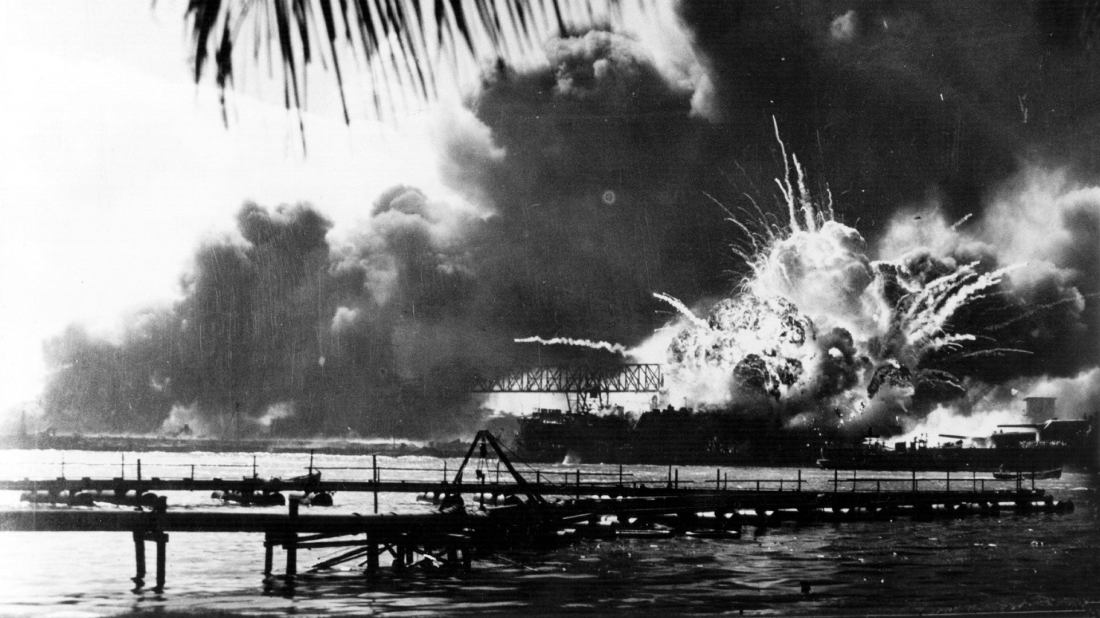
In 2016, Time magazine published a story that recognized the 75th anniversary of the entry of the United States into World War 2. It did so by recalling the stories of several children whose lives were directly affected by that war, children who witnessed the war first-hand, and children who, as adults, were still alive and sharing those tales when the article was written. And the stories these adults told of their experiences in wartime still resonate today, now more than 80 years after the US entered the war.

Take the story of Walter, a boy who was 13 when he witnessed the power of modern warfare first-hand. Walter tells of feeling an explosion of bombs so close to him that it almost knocked him down, even though he was almost half a mile away from the blast. He then recalled how, later that day, the long procession of coffins, each one containing the body of one of the dead in them, the dead who had been the targets of the bombing, were brought past his house. And he clearly remembers the blood splotches that were clearly evident on and stood out against the yellow-white of the coffin wood as they passed, stacked high on the back of military trucks.

Then there’s the tale told by Edwin who was 14. He was eating his cornflakes one morning when he saw the planes fly low overhead and then begin to strafe the targets on the ground below them. He was fascinated and horrified at the same time. It seemed like a movie to Edwin; surely, humans couldn’t willfully bring such violent destruction to other humans in this way, he remembers thinking at the time. He then remembers the countless nights of blackouts, of building a bomb shelter, of hoping–no, praying–that if he hid under his bed when and if the planes returned, that the mattress would be thick enough to stop the bullets…

How about the tale told by a boy whose family called “Chick?” Chick was 12 when the war came home to him. He and his brother were making some spare change at a local cafe by washing dishes for the breakfast customers. A taxi driver stopped by for coffee and told the boys through the service window to the back that if they wished to see the war first-hand, to go outside and climb up on the roof of the cafe. That vantage point would give them a great view of some live war action. The boys did so. But what Chick saw frightened. him: Hundreds, he later said, hundreds of puffs of smoke indicating bombings and anti-aircraft fire. He took his brother and ran home. He yelled for his mother as the brothers entered the yard in front of their home. “Momma! It’s war!” he screamed. Sure enough, as soon as his mother ran out of the house at her son’s cry, a bomb screeched down and struck the neighbor’s house with an ear-splitting explosion. Chick knew the family next door was dead. The fire that resulted from the bombing quickly spread to all the houses in the neighborhood, including that of Chick’s family.

All three of these boys and many, many other children saw war up close and personal, witnessed death up close and personal. Today, in dozens of conflicts around the world, children are still forever changed by their personal experiences with warfare and the death and destruction that are caused by it. These American boys who spoke to Time 75 years after the fact, however, were slightly different than other American children during World War 2.

You see, all three of these boys were of Japanese descent and living in Pearl Harbor, Hawaii, when the Japanese Navy launched their attack on Sunday morning, December 7, 1941.