On a Taciturn God

What do you do when your God is silent?

What do you do when you appeal to your God and get nothing—nothing—in return?

That’s what the generals in the war were facing. All nations feel that God is on their side in wartime. In this case, the generals of this particular nation appealed to their God and often received only stony silence as an answer. Even when they addressed the God directly, politely and respectfully requesting approval or disapproval of their war plans, the God would sometimes only offer one-word answers with no other details or comments. This frustrated the war leaders. Surely, the God would wish to comment on the plans! Sadly, for them, few words from the God were forthcoming.

The war was going badly. The generals wanted to continue the war, but the enemy was too powerful, had better weapons, and their own resources were dwindling. So, as many nations do, they went before their God and bowed, low, hoping that in their humility, their God would give them some indication as to the right course to take for the country they loved and were fighting for.

Still, nothing.

The people began to suffer. Shortages of food and housing, clean water and medical supplies, basic life necessities could not be ignored any longer. Something had to be done. The people were being lied to by the government; they were being told that the God had great plans for a victory that would save them all and restore the proud nation to glory again.

Part of the problem seemed to be those special few who were taking the generals’ petitions to the God. Tradition dictated that no one except specific individuals could speak to the God on behalf of the people or, often, even on behalf of the generals. On the other hand, one would expect a God to know what was happening without having to be told what was happening, right? Yet, some in the nation blamed the messengers for not accurately depicting the harsh realities of the situation to the nation’s God.

The war situation proved to be untenable.

The war was lost.

The generals, summoning all their courage for the survival of the nation, demanded that the God accept the humiliating defeat that was being handed to them. They asked the God to speak directly to the people. The announcement from the God was to be met with great respect by the people. The nation was ordered to stand for the announcement and to put on their best clothing out of respect for the God.

And so, on August 15, 1945, for the first time in the history of their nation, the people heard the voice of their Emperor and their God, Hirohito, as he announced on the radio the surrender of the Japanese Empire to the Allies.

On an Unglamorous Man

Donald Turnupseed.

Look at that name.

It’s about as unglamorous as you can get. There’s nothing noteworthy about it. In fact, it’s the antithesis of interesting. Think of a great name, a name that catches your attention: Rock Hudson. Cary Grant. Ingrid Bergman. James Dean. Marilyn Monroe.

Donald Turnupseed is the Not-That-Name.

And the man himself was equally unspectacular in a way. Oh, he served in the Navy after World War 2. Attended Cal-Poly and got a degree. Inherited his dad’s electrical contractor business, continue its success, and died at age 65 of lung cancer after two marriages and some kids and grandkids. A normal life. A quiet life.  “You could never get close to Donald,” one co-worker said.

Donald Turupseed. Sheesh.

Even his car was unglamorous. As a younger man, Donald (not Don) drove a simple 1950 Ford Tudor. As you can guess, it was a two-door sedan (Ford wasn’t known for its branding ingenuity). The only interesting thing about Donald’s Ford was that it had a two-toned paint job. How daring!

The only reason we’re talking about Donald here is that car, in fact. It ended up being the most interesting thing about the man, the thing that would dominate his life, even when he didn’t care to discuss the car and his role in history.

You see, Donald was on his way home to Tulare, California, from class at Cal-Poly at the age of 23 when, in his Ford, he was traveling eastbound down Route 466. At a stop sign, Donald intended to turn left to get on Route 41. Like the cautious driver he was, Donald looked left, then right, then left again and pulled out.

What Donald didn’t see in the poor light of the gloaming of that September evening in 1955 was the low, silver car coming at high speed from his right on Route 41. In the only interview he gave about the incident the next day, Donald said that the color of the car and the color of the highway were almost identical. He never saw it coming.

After the accident, Donald walked away with a bloody nose and nothing else. The Ford absorbed most of the impact while the lighter, lower sports car that hit him broadside as he made the turn was almost demolished. He was not charged with any failure to yield or any infraction of the driving laws. The authorities took into account that the other car, the sports car, was traveling at a high rate of speed when the collision occurred. Donald was so unfazed by the incident afterward that the State Police told him to simply hitchhike home.

Yes, Donald Turnupseed survived the wreck with only some scratches.

James Dean didn’t.

On a Growing Deafness

Most of us take our five (six?) senses for granted. We have difficulty imagining what life would be like without being able to hear or see or taste or smell or touch. Losing even one of these senses can cause life to be exponentially difficult. Much of the world is designed around humans who have the use of all five senses.

Imagine a chef who had no sense of taste or a perfumer lacking a sense of smell. Individuals such as Helen Keller, who lived without two of the five senses, intrigue us because of the disadvantages people like her face in a system inherently stacked against them. When individuals like Keller succeed, well, we see such people as heroes. This is one such story.

Even though he was from Germany, he was called The Spaniard as a youngster because of his shock of black hair. And he was born with all of his senses, but he began to lose his hearing in his mid-20s. Despite this worsening hearing condition—which he described first as a ringing in his ears—he remained focused on his work to the point of obsession. Things like clothes did not interest him; in fact, he was arrested once for vagrancy because, despite having some money, his clothes looked like he was a homeless man. But worrying about those things interfered with his intense occupation. Most people thought of him as an exacting technician, a perfectionist, and since he was a contract worker, he had to keep his hearing loss a secret. It would hurt his business if the people who hired him learned he was going deaf.

In addition to his growing deafness, the man suffered from extreme irritable bowel syndrome. The condition left him dehydrated and weak for much of his short adult life. Unlucky at love, also, he proposed three times to the same woman, but she rejected him, in part, because she felt his increasing inability to hear made him somewhat crazy. Yet, because he was able to hide his hearing loss so well, his business didn’t suffer, and his work afforded him a little financial security during his lifetime. And, interestingly, his best work came after he lost his hearing altogether.

To this day, no one knows why or how the deafness started. He himself told a select few close friends different tales about when for sure he began to notice the ringing in his ears. As a result, it is difficult to pinpoint an exact event or time when the affliction began. What we know for certain that, outside of work, he stopped almost all human interaction for fear that someone would discover his diminished faculty.

Near the end of his life, he wrote:

I can with truth say that my life is very wretched. For nearly 2 years past I have avoided all society, because I find it impossible to say to people, ‘I am deaf!’ In any other profession this might be more tolerable, but in mine such a condition is truly frightful.

Maybe the situation would not have been as frustrating if the worsening deafness had not been happening to a genius like Ludwig von Beethoven.

On a Conscientious Inspector

Ebeneezer and Sam Wilson were some of the first settlers of what became Troy, New York, in the early days of the United States. Back then, Western New York was the frontier, and the Wilson brothers, sensing a burgeoning market for building materials, used the local clay from the Hudson River to begin making and firing bricks. Up to this point, most bricks that came into New York were imported. But the Wilson brothers made a small fortune with their brick making business. Sam was quite a local celebrity of a sorts.

At the age of 14, Sam had enlisted in the Continental Army. He spent most of the Revolutionary War in the quartermaster department. There, he made a good reputation for fairness and the ability to manage his contractors with efficiency and expediency. After the success of the brickmaking business, Sam convinced Ebeneezer to begin a grocery business. They built a wharf along the Hudson which, by this time, linked both New York City and the Great Lakes and the rapidly expanding western frontier.

By the time the War of 1812 rolled around, the Wilsons boasted one of the largest grocery outfits in the western part of the state. A New York grocer named Elbert Anderson, Jr., had secured a large contract to supply American forces in the war with preserved and barreled meats, and Anderson sub-contracted with the Wilsons to help him fulfill the contract. The Wilsons’ part of the deal promised cash on delivery of 5,000 barrels of preserved pork and beef. Employing 200 men in Troy, the company proudly provided quality meat for the US Army as they fought to keep the invading British Army at bay. The Wilsons insisted that the army receive only the best product available. “We are representing the government, here,” Sam reminded his employees. “That is a sacred trust.” Because of his experience and also because of the success of the fulfillment of the contract, Sam Wilson was appointed as a meat inspector for the army.

Wilson was responsible for stamping each barrel of meat that passed his inspection as being fit for the U.S. Army’s consumption. So, each barrel that he approved received a brand of “U.S.” on it. Word of his appointment to inspector spread throughout New York among the army volunteers as they received the approved meat. Because of his reputation for only allowing the best meat to be given to them, the appreciative soldiers began associating his brand of approval with the man himself. They also associated the man Wilson with the government he represented, almost an embodiment of the institution of government.

The soldiers saw his stamp and knew that the meat came from the one entity who was watching out for them—their good ol’ Uncle Sam.

On a Bar Bet

Bar bets are only slightly younger than bars—probably by a few seconds.

The conviviality of the public house, the camaraderie of the tavern of yesteryear is lost on today’s corporate cookie-cutter “bar and grill” or the like. We can’t relate in our modern world to a local establishment that served the community more as a social club with rooms for rent above it, a place where the denizens of the village or neighborhood could swap news, gossip, and tall tales. And, in the days before social media, it was all social and no media.

That’s where the bar wager comes in. As conversations turn interesting after the 3rd or 4th pint, the bragging becomes braggier and the stories become more outlandish. Finally, someone calls the malarkey and says something like, “Put your money where your mouth is.” And, more often than not, people would back down and admit they were only kidding or exaggerating.

But not in Ireland.

And not when you were Richard Daly, according to the story still told in Dublin bars today.

You see, Daly managed a theater in Dublin called Smock Alley Theatre in the late 1700s. Secretly, some said, Daly longed to leave the wings of the theater and take to the stage. If actors make some of the best braggarts, often, frustrated actors can take that braggadocio to the next level. One night, as Daly enjoyed the company of actors and patrons at a pub near his theater, the Eagle Tavern. There, over several tankards of ale, he began to hold forth.

The topic of conversation on this particular evening, according to the legend, was the history of language. Language and words were the stock in trade of most of those bending their elbows with Daly that evening. Additionally, Daly himself had a bad habit of making bets on things large and small; nothing was too insignificant for him to place a wager on.

Somehow the talk turned to the creation or insertion of new words in the English language. Daly spoke up and made a proposal that aroused great interest among the wordsmiths and betting men in the crowd:

“I wager that I could introduce a word into the language, and, within a fortnight, every person in the city will have the word on his lips.”

 Several takers immediately spoke up to take on that bet. It would be impossible, they argued, for a new word to be introduced to society so rapidly. New vocabulary, even if from a new invention or borrowed from other languages, often takes years or even decades to come into common knowledge and usage in English. Daly disagreed. He even gave the naysayers odds on the bet. It was agreed. They would meet again in a fortnight to settle the bet.

At this point, Daly made use of the small army of stagehands, promoters, ticket-takers, and custodians/cleaning women and implemented his plan. He ordered his cadre to go out into the town for several nights and write the word in chalk and charcoal on every available surface in Dublin. He also swore them to secrecy.

Within days, the entire town was indeed talking about the word. Daly knew that the word he invented would have to be both simple (He chose 4 letters) and unusual (It includes an unusual letter) so that people would remember it. They did. For weeks, Dubliners went about asking the question, “What is it?”

According to the legend, this is the way Daly won the bet.

Interestingly, schoolchildren today also ask the same question when they are confronted with the word: “What is it?”

It’s why we call it a quiz.

On a Young Hat Salesman

Matt had lived a life young men only dream about. By the time he was 21, Matt had already worked as a cabin boy aboard a schooner that took him from his home in Maryland. Matt and his shipmates made voyages to such faraway and exotic places as China, Japan, Africa, and the extreme northern parts of the Russian Empire. Matt was smart, also, having learned to read and write on his own and with the help of the ship’s captain.

After his stint as a world traveler, Matt returned to his Maryland roots and got a job as a hat salesman at one of the best clothing stores in Washington, D.C., an establishment called B.H. Stinemetz & Sons. Stinemetz provided most of upper-class Washington with hats, including the formal top hats worn by many presidents to inaugurations and the like. In such a high-profile store with that type of exclusive clientele, Matt earned a reputation for being able to meet his customer’s needs in service, style, and taste. His time as a cabin boy taught him how to serve well and meet other’s needs with respect and deference where appropriate.

One repeat and liked customer was a high-ranking U.S. Navy officer, a Commander. Matt made sure this man received his best care. After a time, the two men—one older and more experienced, one younger but with a fairly impressive resume himself—began comparing notes on their various sea-going travels. Normally, the Commander would not have interacted with the young salesman beyond what was needed by the conduct of business, but there was something charismatic about the eager-to-please but respectful former cabin boy. During one of his trips to Stinemetz, the Commander asked the salesman, “Don’t you miss the sea?”

Matt grinned broadly. Indeed he did, he said. The Commander continued. “I have been assigned duty in Central America, Matt. Would you like to come with me as my valet?” The Commander knew that the young salesman had the needed seagoing knowledge, that he would not mind being away from Maryland for extended periods, and that is service and attention to detail would be hard to find in any other valet the Navy might have made available.

“Can I think about it and let you know, sir?” Matt answered, making sure to add his thanks for the opportunity lest the Commander think him ungrateful. “Yes, but don’t think too long,” the Commander added. “I leave soon.”

Well, you know that Matt went. He joined the Commander on that voyage and on many others. In fact, for the next 23 years, Matt became the Commander’s field assistant, navigator, handyman, and right-hand man on every expedition he took over the next several years.

There is one expedition the two men shared that you know about—to the Arctic. You see, the Commander was Robert Peary, and Matt would be the first man to stand at 90 degrees latitude north—the North Pole—because Matt reached the spot a few minutes before Peary did. Matt would go on to receive fame and accolades, including trips to the White House—the place whose former residents bought the hats he sold—and is interred in Arlington National Cemetery.

You probably haven’t read his book detailing his exploits with Peary, but the title might interest you: A Negro Explorer at the North Pole by Matthew Henson.

On a Trans-Atlantic Flight

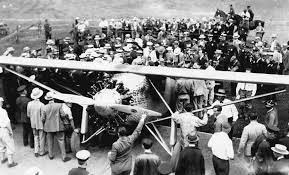
The race to be the first to cross the Atlantic between New York to Paris in either direction via an airplane began heating up in the mid-1920s. A cash prize of almost $400,000 was offered to the first who could make that trip without stopping for fuel or supplies or sleep. The prize was first made available in 1919, immediately after the war, but the long journey was so daunting that by 1927, no one had claimed it. The journey of over 3600 miles scared off almost all but the most fearless pilots.

And to accomplish such a feat took a large team—not only the pilots. The pilots were vital, of course, but there were teams of designers, engineers, efficiency experts, professionals in things like weight distribution and safety who had to be consulted and considered. For example, flying for hours over open water like the Atlantic meant that having to account for the real possibility of having to ditch in the ocean. What would that mean? How much lifesaving provision would be needed? So, the task took longer because of the vital logistics and the number of people surrounding it.

One such attempt at the journey left its origin on May 8, 1927. The pilot was well known and celebrated for his fearlessness and skill. The route is the same one that planes fly today; it’s called the Great Circle Route, and, instead of a direct line, it flies north in a semi-circle because, on a globe, that is shorter than flying around the larger part of the sphere. In the weeks and days leading up to the attempt, interviews with the pilot insured that the public, who were eager for such stories, knew every detail of the aircraft and the logistics that went into the courageous attempt to cross the Atlantic non-stop.

The take-off of the attempt took place amid throngs of well-wishers and cheering. Some other aircraft even accompanied the craft as far as the coast as a farewell escort, of sorts. After that, there were only a few sightings of the plane. One priest in Ireland swore he saw the plane. A British sub, also, said that its crew made a visual confirmation of the flight. After that, the craft was on its own over the deep, blue Atlantic for the next several hours.

And as the hours drew on, crowds of fans and media gathered at the arrival airport to welcome the plane that made history because they were sure such a well-planned flight could not help but be successful. As they waited for the landing and the celebration, rumors ran through the crowd. The flight was seen over the coast, or it had been spotted circling above the city, or it was due any moment. But, as the hours passed, it became evident what had happened. The aircraft carried enough fuel for 42 hours of flight—which should have been plenty of time to make the journey. Two days after take-off with no landing, however, told the story.

One of the largest air/sea search operations up to that point was dispatched to look for the plane. Nothing has ever been found of the aircraft or of its French pilot, Charles Nungesser, and his navigator, Francois Coli. Only twelve days after those two left Le Bourget Field in Paris to fly to New York, Charles Lindbergh, flying his Spirit of Saint Louis alone, left New York and arrived at Le Bourget 33 ½ hours later to a hero’s welcome.

On a Teenaged Volunteer

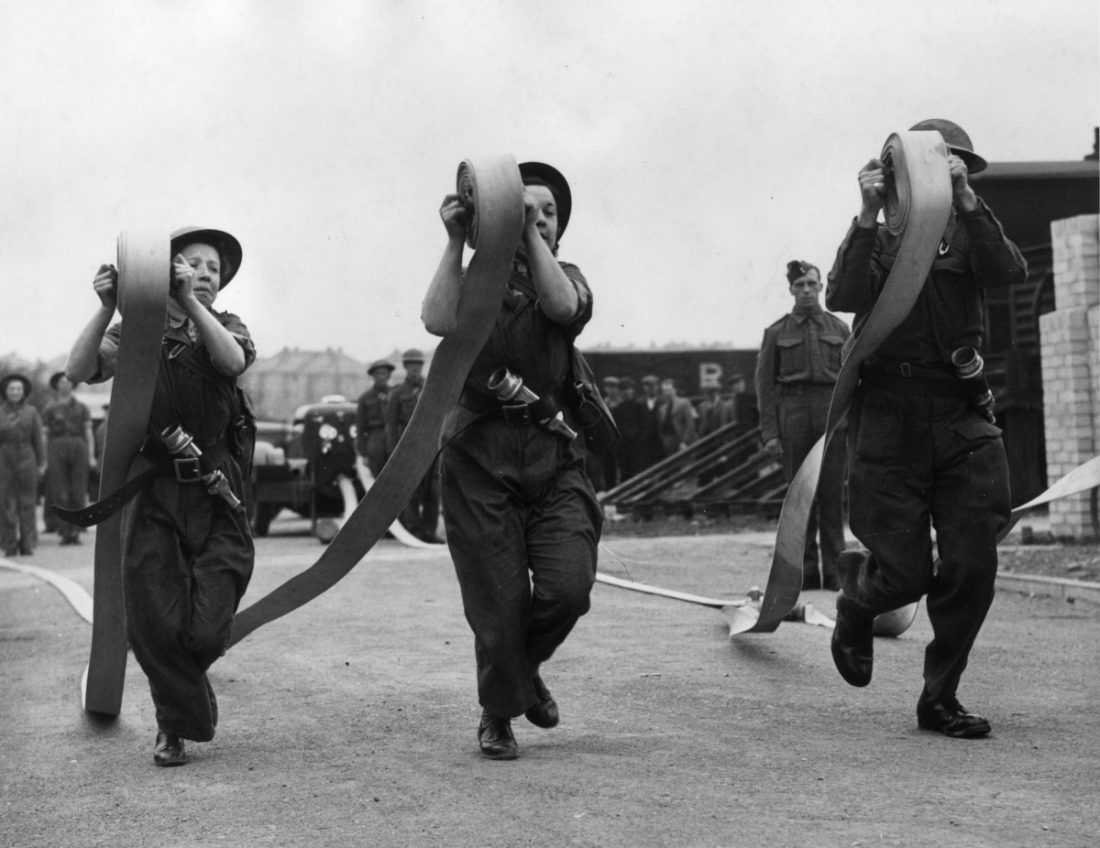
Lili keenly felt the struggles of the British peoples during World War 2. She, like everyone in the nation, heard Prime Minister Winston Churchill call at the war’s outset for the people to fight the enemy on the beaches, in the hills, and on the streets if needed. And she, like many teens during the war, was extremely patriotic. However, women were expected to “keep the home fires burning” for the men, to look after the home and children, and, if needed, perhaps in the factories as well. It was the rare woman or girl who would become an air raid warden or perhaps join such as the Royal Air Force or even the Auxiliary Territorial Service, the UK version of the National Guard in the United States.

But that’s exactly what Lili did—she wanted to sign up with the Territorials. Her parents were aghast when she suggested it. Wearing a uniform and being a part of the military was not women’s work, they said. Let the men do that, they said. They, obviously, were of the old guard. Besides, her dad was already contributing to the war effort in his work.

But Lili insisted, gently and respectfully, and said that the nation needed all the volunteers they could get. She reminded them of Churchill’s words that all of Britain was needed. They, too, had heard the PM’s speech after all. She also appealed to their sense of fairness; after all, so many other girls her age were joining, volunteering, and working for the war effort. So, after much discussion, her parents relented, and the 19-year-old girl was given her uniform and sent to training.

The Territorials usually provided enlistees a choice of what they would do, and she was allowed the option to choose to be either an anti-aircraft gunner, a military driver, or a mechanic. Lili chose mechanic, and she was sent on a 6-week training course. Because she showed remarkable aptitude, Lili managed to gain certification as a military driver as well as a mechanic. But, after her training, she began repairing large military trucks—hardly the job for a young girl of 19. Yet, Lili—or, as her family called her, Lillibet—managed the job quite well and took to it as if she were born to do it.

Which is ironic, because she actually was born to do something else: Become Queen Elizabeth II.

RIP

On an Scrupulous Green Grocer

During World War 2, in Peoria, Illinois, John Scoutaris owned a business at 533 Main Street called the Illinois Fruit and Vegetable Company. It was one of those old-timey downtown fruit places that had the vertical displays on the sidewalks in front of the store. You know the type.

John was scrupulous in making sure that his customers received the best, the freshest produce available to them considering it was war time and many items were rationed. He sometimes made incredibly little money on his wholesale buys simply to ensure that his customers would have the best fruit and vegetables possible. John felt that to give the best was his part in the war effort, as minor as it may seem to us compared to those guys who were fighting and dying on the front lines.

One morning, as John was out front of his store, in his green apron, inspecting his wares, one of his regular customers, Mary Hunt, stopped by.

“Hi, John,” Mary said. John responded, but he was concerned that one of his cantaloupes on the second row from the top was probably too old to sell and thus not up to his usual standards. He picked it up and examined it closely. “Whatcha got there, John?” Mary asked. “Hmm,” John answered, somewhat preoccupied with the overripe fruit. “Oh, this,” he said, turning to Mary with the melon in his hand, “I think it’s about to go moldy on me, Mary.”

Suddenly, Mary took a keen interest in the fruit John was holding. “Say, John; what are you gonna do with that cantaloupe?” John told her that he always threw out the old fruit, that he would never sell anything not up to his high standards. But Mary persisted. “Would you do me a favor?” she asked. What she wanted was for John to start saving all the moldy fruit, especially the melons, for her in a box in the back. She told him she’d come by every few days and take it off his hands.

John argued weakly that he couldn’t sell her something that was old. She said she didn’t want to buy it—just to have it. John didn’t ask why; he assumed it might be something to do with pets or chickens or something. Maybe even composting. Mary seemed alright. She was a regular customer and a good one, and she was a war worker, also, John knew. So, he agreed. He began saving the moldy melons for Mary.

After a few weeks, Mary abruptly told John she didn’t need him to save the fruit anymore. John again didn’t ask why, and Mary didn’t offer a reason. In fact, John was a bit relieved. Besides, the box of old fruit attracted fruit flies, and who needs that in a fruit stand?

Several years later and after the war ended, Mary stopped by the fruit stand one day. “John,” she said, “I want to tell you why I wanted you to save that moldy cantaloupe for me.” “You don’t owe me any explanation, Mary,” John said.

Mary told John the story that she was a worker during the war and afterward in a biological lab that had government contracts. John said, yes, he knew she was involved in the war effort, and that’s one reason he never asked her questions about her work or the melons.

“Oh, I know, John. I wanted to thank you. You saved the lives of more people than most anyone ever has. You are one of the war’s heroes, and you don’t even know it.”

John was incredulous. “Whaaaat?” he asked, his mouth flying open. “What…how…why?” he exclaimed.

Mary continued. “Yes, John, I just thought you might like to know that the mold on that melon was the source for penicillin.”

On a Troublemaker

The headmaster paced silently before the line of schoolboys, his hands clasped behind his back as he strode back and forth.

Finally, he stopped in the middle of the line before one rather thin boy with an oval face.

“Was it you? You’re behind all this, aren’t you, you troublemaker?” he asked accusingly, looking down at the lad.

The young student did not answer and stared back up at the white schoolmaster.

The boy had been given the name Rolihlahla by his family; it does indeed mean “troublemaker,” and the boy certainly grew up to embody that moniker. Born into a royal family in Africa, his father was a polytheist and a polygamist. His mother, the third of his father’s wives, had converted from the religions of her ancestors to Methodism. It was his mother who raised him, along with two sisters. She insisted that the children attend a Methodist school in a nearby village, and it was at this school that 9-year-old Rolihlahla’s proclivity for mischievousness began to manifest itself.

In this case, the trouble Rolihlahla caused was organizing a protest against, of all things, the poor quality of food at his school. His little protest saw the students refuse to eat anything until the food improved.

“Don’t you realize that we feed you well—better! than other schools?” the headmaster said, narrowing his eyes at the boy. What followed this rhetorical question was a long lecture by the headmaster about the good things that the colonizers had brought to Africa: Medicine, education, wealth, science, technology.

What was left out of the speech was that the colonizers also brought oppression and economic slavery, racism and greed.

And Rolihlahla had begun to feel a strong pull towards seeking justice where he saw injustice. That, too, was something the colonizers brought. They seemed to preach about liberty but not allow it, justice but deny it, expression but suppress it.

The boy was only implementing the lessons his “betters” were teaching him.

This protest against the food must be quashed, the headmaster said emphatically. Still, the boy remained silent.

“Well?” the headmaster said.

Finally, he spoke.

“Yes. I organized it. I put the others up to it. The food is of poor quality, and the students should eat what the teachers and staff eat.”

The headmaster pursed his lips in a triumphant smile.

“And, what’s more,” the boy continued, “I am correct.”

The headmaster’s smile vanished. “I am very sorry you feel that way,” he began. He dismissed the other boys, and then addressed the troublemaker.

“You are expelled. I will write a letter to your family. You are dismissed.”

Now it was the troublemaker’s turn to smile slightly.

“You find this matter amusing?” the headmaster asked.

“No, sir,” the boy answered. “I find it unjust.”

For Nelson Mandela, this first lesson on injustice would never be forgotten.