On a Real Estate Deal

Bill’s neighbor had dangled the deal several years before. The property offered wasn’t quite next door to where Bill lived, but it was close. The land, from what Bill could tell, offered great views and had some ocean views. But Bill had other business that kept him from pursing the offer for some years. Finally, the other business settled, Bill turned again to the neighbor to see if the offer still stood.

Sure enough, the representative for the seller, one Mr. Stoeckl, said that, yes, the offer still stood. In fact, the price had come down because the neighbor was eager to sell. The neighbor was cash-strapped due to some other issues, and needed to get rid of the property as soon as possible. Bill, smelling a deal, moved to purchase the land.

Bill reached an agreement with Stoeckl, and the real estate deal was approved in April. By late May, the funds were made available and the paperwork was signed. Although the actual deed wasn’t returned until October, Bill was extremely happy with the purchase. But that’s when other people started to ridicule the purchase that Bill had worked.

People who heard about the real estate deal Bill had made began by saying that the land was actually unusable, even if it were pretty. They asked Bill if he had done his due diligence before the deal was struck. He had to answer that, no, he made the sale sight unseen. That made Bill’s enemies–and many of his friends–roll their eyes. Why would he buy land that had no value and that he had never laid eyes on? What would the land be used for, they asked. Bill answered with the answer most people have when buying land: They ain’t making any more of it. Still, he was laughed at and belittled for striking this real estate deal.

You might be wondering why Bill’s acquaintances would have any business minding his business. Why would they care? Well, you see, Bill actually used their money to make the buy. And when you spend over $7,000,000 of other people’s money on land that seemed to have no value, then, yeah; people would naturally be upset. It’s why they ridiculed Bill’s deal as “Seward’s Folly.” You see, William Seward, the United States Secretary of State, thought that buying the land from Russia in 1867 was actually a wise investment.

You know the land as Alaska.
On an Immigrant Family

William became a casualty of the Industrial Revolution. A Scottish damask weaver in his home in Dunfermline, William saw the trade into which he had been born and raised taken from him and replaced by a large mill that was able to produce exponentially more fabric faster, cheaper–but not necessarily better. His oldest son would later remember the day his father came home and told his mother, “Andra, I can get nae mair work.”

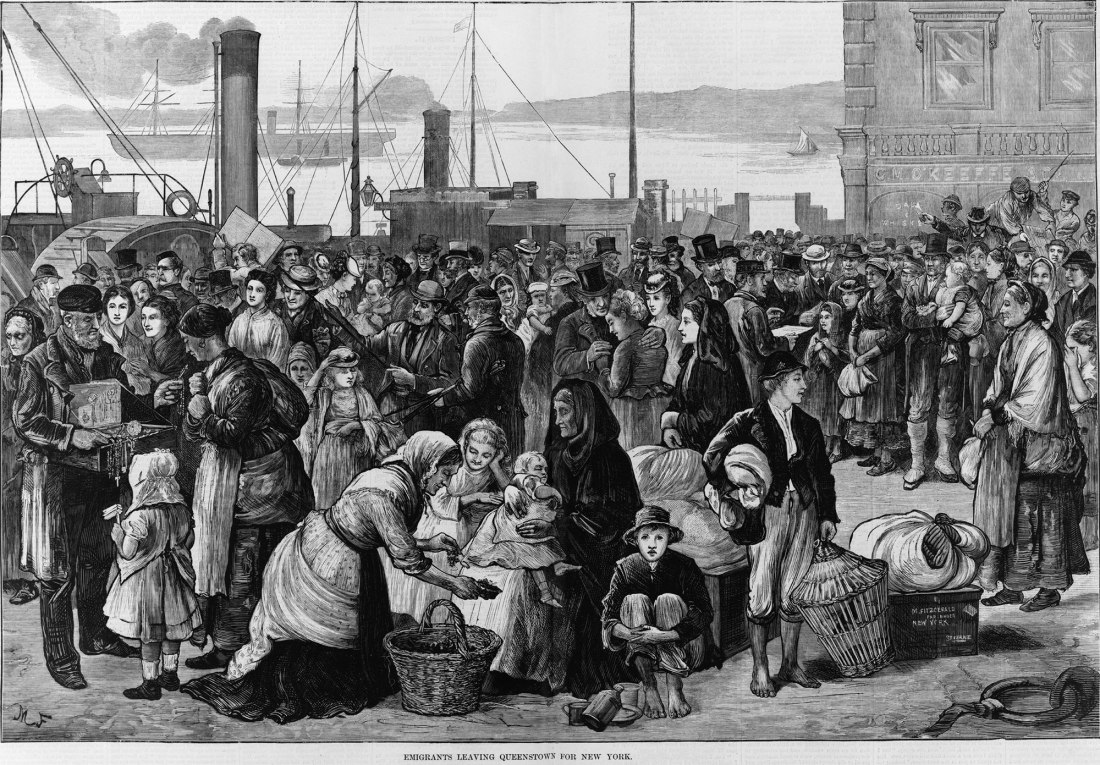
Andra tried to sell food out of the house for a time, and she also took in work sewing leather soles to workers’ boots. Nothing improved the family’s situation. Thus, in the cold winter of 1847, the choice was made by the family of 4 (William and Andra had a younger son as well) to sell all their possessions–the looms William worked with and the remaining cloth–and sail for America. There, William reasoned, his skill as a weaver of fine cloth would be appreciated and not supplanted by mass production.

William was wrong.

The proud man tried to work as a weaver in Pennsylvania where two of his sisters had taken up residence after emigrating. The family ended up in a place called Slabtown, a shabby suburb of Pittsburgh, PA, in Allegheny City. They rented a couple of rooms there among other immigrant families. There was no sewer, no running water, and even feral hogs roamed the streets of the neighborhood in what was, effectively, a slum. William reassured the family that his skill as a weaver would produce enough for them to soon leave the lousy surroundings for a better place for the four of them.

However, William found that the Industrial Revolution had found even more fertile ground in the American continent than it had in Scotland. His hand-woven cloth was simply no match for the economy of scale that the textile factories enjoyed. William was thus forced to work as a laborer in a cotton textile mill. His oldest son, at age 13, soon joined him there in an effort to provide for the family.

Of note is that the lad did not share his father’s distain of factory work; in fact, he showed such a keen understanding of how the production process worked that he was soon promoted to be the keeper of the steam engine that made the factory’s machines work at the lofty salary of $2 a week.

That aptitude for machinery and the appreciation for the technology involved in the factory led to another job offer for the young man. He became a messenger boy for the new technology of the telegraph. In a letter back home to his mother’s brother, the young man wrote:

“Although I would like to be back in Dunfermline, it is far better for me that I came here. In Dunfermline I would have been a poor weaver all my days, but here I can surely do something better than that, if I don’t it will be all my own fault, for anyone can get along in this country…”

Anyone except, well, William.

It’s easy to see in this excerpt that William and his son each represented the reality of two vastly separate and different worlds. One of those worlds was William’s world of private, small business owners who worked out of their homes, people who produced hand-worked and crafted products that provided an extremely modest living for a person’s family–but that reality was dying an economic death. William’s son, on the other hand, represented the birth of the Modern World, the world of instant communication, of the application of steam engines to do the work of dozens of people, and of the burgeoning railroad industry that moved people and goods faster than humans had ever moved before. That new world of industry promised wealth beyond any man’s wildest dreams–especially well beyond William’s concept of modest success.

Yes, William’s world was gone. His son’s new, modern, mechanized and industrialized world–in fact, the world for both of his sons–had rendered William’s world obsolete. He died at age 51, less than a decade after coming to America, his dreams of making a success as a small weaver in his newly adopted nation dashed by the forces of the new economy.

His oldest boy, now the man of the family, was 20 when William died. And soon, the entire globe would soon know that oldest boy as one of the titans of this new Industrial Age.

Andrew Carnegie.

On a Swan Lover

David Barber loves birds. Waterfowl, more particularly. Mute swans, most specifically.

For over three decades, Mr. Barber has been caring for the mute swans in London along the Thames. Every year, he leads a group of fellow swan lovers in an official count of the swans and cygnets (a young swan–a swanlet, if you will) on the river. This yearly practice is known as the Swan Upping. Before he and his fellow swan lovers take to the river in their boats, Mr. Barber dons a red jacket and marks the swans of all ages and submits an official count. He employs bunches of schoolchildren and other volunteers to help him in his yearly task. The man absolutely loves that day and orients his year around it.

If you will recall your On the First Day of Christmas lyrics, you’ll remember that one of the gifts was seven swans a-swimming. This sounds lovely and almost majestic, but the gift had more to do with food than looks. Swans, you see, used to be the food of only the upper classes, of royalty. The Christmas gifts were supposed to be those fit for someone so cherished that they deserved the best, thus, giving them swans to eat implied that the recipient was worthy. Eating them fell out of popularity among the upper classes in the 1700s, and the birds were granted protected status in the 1980s. However, King Henry III served his upper class and royal guests several dozen swans at a Christmas dinner during his reign in the 13th Century.

The yearly count headed up by Mr. Barber gives environmentalists a snapshot and one indicator of the relative health of the ecosystem of the Thames. Counts of the birds and reports of their conditions are compared to other years’ data and cross-checked with several environmental issues such as an increase or decrease of the pollution in the air and water of the city of London, the impact of avian diseases, and other factors that might impact swan numbers. The birds are carefully measured and weighed; their nests and feathers are inspected. Swans that are injured are tended to, fishing line is removed from wings, and trash is taken off legs, etc.

Most interestingly, perhaps, is that all the swans on the Thames have one owner. That owner is the person who receives the final report of the Swan Upping. Please know that the ownership of swans in the UK is not limited to only the ones on the Thames, however. Royal decree orders that all swans not privately owned today have the same owner, and that owner is the person that David Barber works for.

You know the owner of all the swans in the United Kingdom as King Charles III.

On a Mysterious Photograph

William Mumler started his professional life as a jewelry engraver, but he changed careers in the early 1860s and became a photographer. That was a great time to be a photographer in New York; the industry was new and burgeoning, and the American Civil War provided the impetus for many people to photograph their loved ones before they went off to battle. Mumler managed to make a decent living for some time.

In 1872, the war had been over for 7 years. His business had changed from photos of soldiers to family groups and individual portraiture. One day that year, a woman entered his photography studio and requested a sitting. The woman introduced herself as Mrs. Lindall, and she paid in advance.

There was something familiar about her, Mumler thought. The woman, whom Mumler judged to be in her late 50s, wore the black clothing of a widow. Mumler assumed that she had lost her husband during the war. It wouldn’t be the first time he had photographed such a woman. However, it would be far too impolite of him to ask.

The session was not remarkable, Mumler would later recall. The only thing he could remember with certainty was that the woman in black’s thin lips were straight across in almost a grimace. Photographs in those days took several minutes for the image to be transferred to the negative, and, as he always did, he reminded his subject to stay perfectly still so that there would be no shadows or “ghosts” in the image. After the session was over, he thanked the woman and told her to return in a few days for a copy of the print. He turned the glass negative over to his wife for processing.

When the chemicals washed over the glass negative, Mumler’s wife let out a loud gasp of surprise. She yelled for her husband to come see the photograph–quickly. When Mumler came into the room, he, too, exclaimed with a gasp.

There, behind the seated woman in black, was the clear image of a man. The man seemed to have his hands on the shoulders of the woman. The Mumlers looked at each other. “Is that who I think it is?” Mrs. Mumler asked her husband. “Yes,” he said, turning back to the photo. “It’s definitely him.” Mumler’s attention then turned to the image of the woman. “And that means…” he began, pointing to the seated figure in black. “Yes. I think she is,” his wife answered.

When the woman who had called herself Mrs. Lindall returned for the photo a few days later, Mumler handed the photo to her without a word at first. The woman looked at the photo, and, for the first time, she smiled broadly.

“You are her, aren’t you?” he asked. She nodded.

“And that man?” Mumler asked, pointing to the shadowy figure behind her in the photo, a figure that was not in the room when the photo was taken.

“Yes,” she said in a sweet, almost southern accent.

“That’s my husband, Mr. Lincoln.”

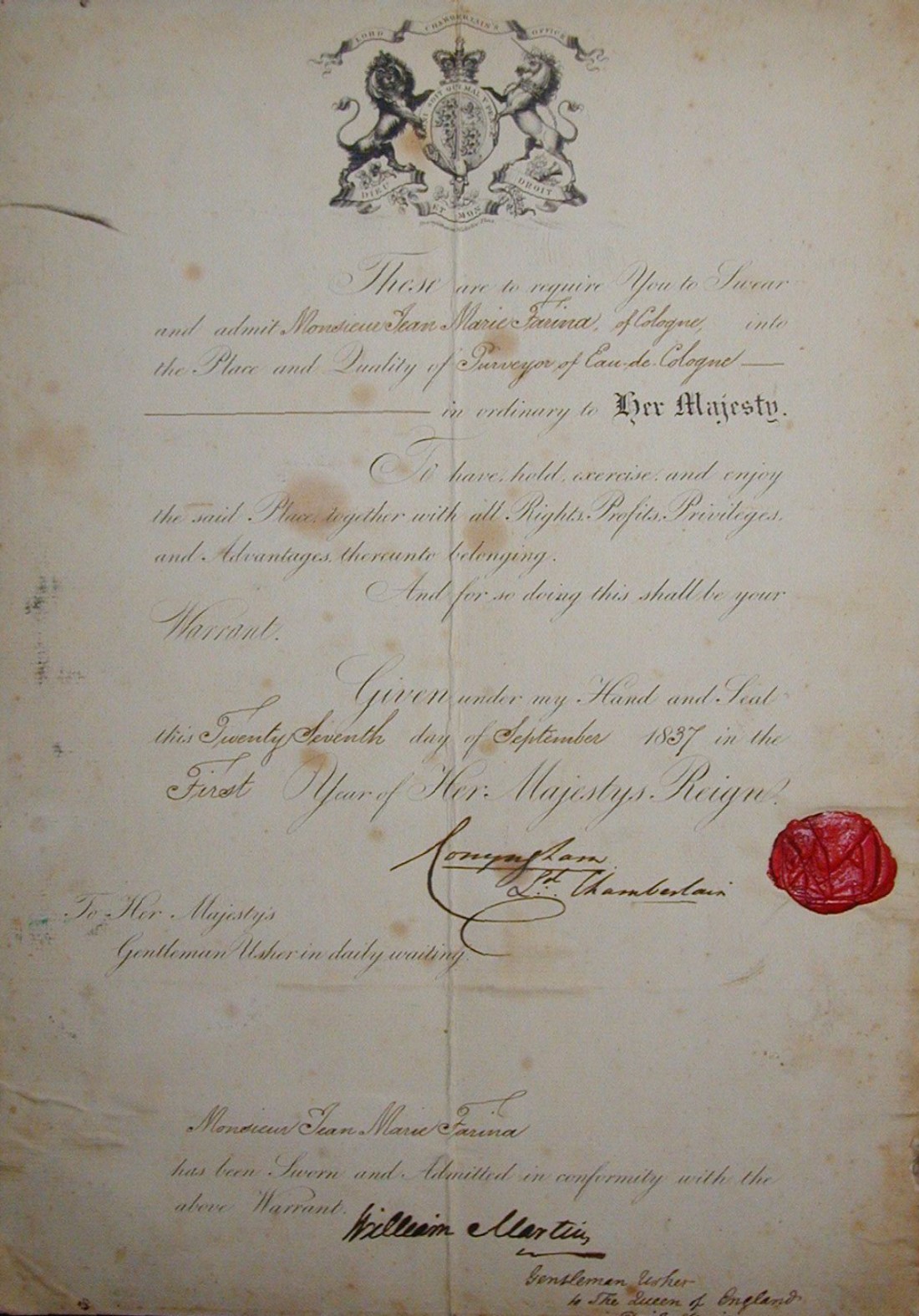
On a Royal Warrant

In the 1880s, Prince Albert, the son of Queen Victoria and the future King Edward VII, bought the estate of Sandringham House in Norfolk. The prince, ever someone who liked the finer things, hired only the best contractors to redo the palace into something befitting, well, a prince. The firms with which Albert contracted were granted the honor of receiving Royal Warrants.

This mark of recognition known as a Royal Warrant said that a particular firm or a product was of such high quality that it was suitable for royalty. A man named Thomas was one of the contractors who received a Royal Warrant for work at Sandringham. Thomas and his firm fulfilled their work at Sandringham so well that his company would receive several other warrants from Albert and other royals over the next decades. This prestige mark could be and in fact was used in advertising by Thomas’s company as a way of saying, in effect, “you, also, can have products/services like the royal family has!” The public came to think of Thomas and his company as the best in their particular business.

Thomas was an unlikely person to be given such royal recognition. He rose from fairly humble beginnings to become someone who rubbed elbows with the upper crust of his society. His dad was a sailor, and his older brother was a plumber. He joined his brother in the plumbing business first as an apprentice and then as a journeyman worker. Finally, he learned enough of the business to go out on his own. Instead of repairs, however, Thomas decided to concentrate on the plumbing products themselves.

Even before the Royal Warrant, Thomas made a name for himself as one of the first in Britain to open a showroom of plumbing products that the public could personally inspect and review. Never before had the general public been invited to see such a range of bathtubs, toilets, and sinks. Thomas also famously changed the way plumbing was connected and even protected. By the time he retired, Thomas held 9 patents for plumbing innovations. If you have ever had to change the floaty thingy in the back of a commode, you have touched a product invented by Thomas.

The Royal Charter for Sandringham had Thomas’s company provide facilities for 30 lavatories that featured fancy cedarwood toilet seats. Such was the notoriety of Thomas’s work at the palace that, at least in the public’s mind, Thomas’s name became synonymous with not only the facilities but also the very act and substance of what occurred in those facilities.

Who was this man who made the most of his Royal Warrant?

Thomas Crapper.

On a Demagogue

The event was billed as a pro-American rally, and ads for it labelled it as “mass demonstration for true Americanism.” The rally appealed to people who were said to really love the United States. Staged only a few days before Washington’s birthday in February, the organizers rented Madison Square Garden for the event.

The rally began with the Star-Spangled Banner, beautifully sung by a popular singer. Other “warm-up” speakers whipped the crowd into a patriotic frenzy. Finally, the well-known speaker was introduced with the phrase, “We love him for the enemies he has made.” And he took the podium to thunderous ovation.

He called the crowd “American patriots,” and he made a sweeping gesture towards the back of the hall, pointing to the news cameras; he then demonized the assembled press covering the event. In fact, his long harangue about the press drew laughter and catcalls and applause from the supplicants assembled.

The speaker then addressed the need to put America first; he stressed that, for too long, the US had been worried about taking care of other nations to the detriment of its own people. He denounced the Democratic administration as being uncaring for the true working people of the nation. He further compared the President and his advisors. He spoke of a “reign of terror” of the liberals who were persecuting the True American patriots. He referenced all his “enemies” who had persecuted him, and he warned his listeners that these same “enemies” were coming for them, too.

The universities were also a target of his barbs. He decried the influence he said that liberals had on the public school system as a whole. He insisted that the family was the only place where true morals and values could be taught. He pointed to the large posters of George Washington that were on the walls of the hall as typical of someone who loved his nation more than he loved himself, and he encouraged the crowd to follow Washington’s example.

Well, you know what happened next. A protester broke out of the crowd and ran towards the speaker, yelling at him for his demagoguery. The man was quickly tackled by the omnipresent security detail and roughly removed from the hall. The crowd cheered lustily, and the speaker applauded the violence of the security force. The media would call the security’s handling of the situation as an “uncanny replication of Nazi thuggery.”

The speaker wrapped up his remarks with jabs at Hollywood leftists and hints of anti-Semitic rhetoric. He asked his listeners to join the movement to save America from its enemies, and he left the stage to a rousing chant of “Free America!”

But that Madison Square Garden rally in 1939 proved to be the highpoint of Fritz Kuhn and his American Nazi Party.

On a Selfish Mother

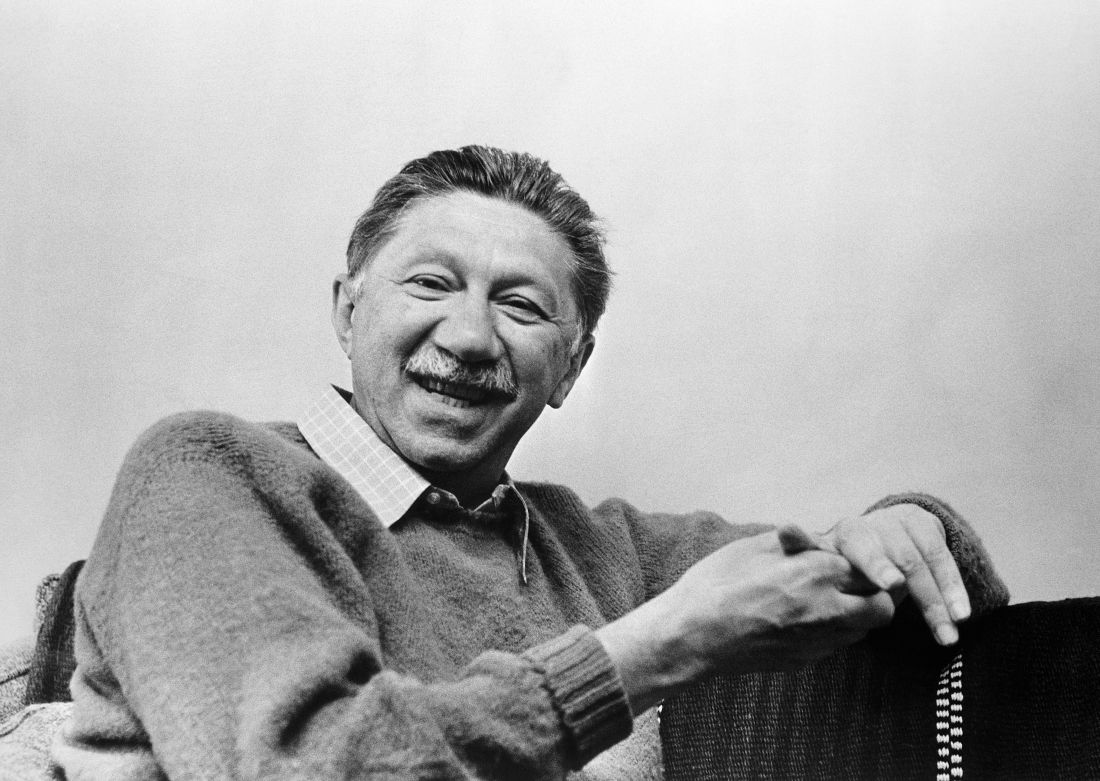
Abe didn’t get along with his mom at all. His earliest memories were of how cold, distant, and uncaring she was towards her son.

He spoke about how much she loved only herself–not her husband, kids, or family at all. Abe would later say that she was one of the most self-centered people he would know in his life. She was racist, lazy, a filthy housekeeper, and an inept cook. Instead of feeling a sense of belonging in his family, Abe began to seek fulfillment and happiness in self-improvement. He grew up believing that if he made himself strong, physically, that it would satisfy the needs he had for self-appreciation and self-love. He worked out at the gym regularly to make himself feel better. He certainly never got those needs from his home.

The other place Abe found fulfillment was in academics. He loved libraries. At his high school in New York, Abe joined academic clubs and became president of several of them. He edited the school Latin newsletter as well as the physics magazine. He began to feel more comfortable in academia than in the gym.

Abe eventually got an undergraduate degree from City College of New York and then completed a graduate degree from the University of Wisconsin. He studied psychology, specifically behavioral sciences, perhaps as a way to help him come to terms with the situation he experienced in his home growing up. Again, he concentrated on how people felt about the basic things they needed in life because he felt strongly that he often lacked those things for so much of his life. It was during this time that he married a first cousin, Bertha, and the couple had two children by the time World War 2 broke out.

After his masters degree, Abe returned home to New York to attend Columbia and continue his research. He eventually became a professor and researcher first at Brooklyn College and then at Brandeis University in his hometown. Again, his life experiences heavily influenced how he viewed the human mind. He called his approach to psychology Humanistic Psychology. In a sense, Abe theorized that Freud showed what was wrong with humans, while he wanted to concentrate on the things that humans should have to become happy. Abe was the first to take those basic things that all humans must have–and the more elevated things–and classify them into levels. He published his theory in 1943.

And it all started with a mother who never met the basic needs of her son.

Her son would classify them into Maslow’s Hierarchy of Needs.

On a Sick Son

The boy lay helpless in the hospital. The diagnosis was an extreme case of sepsis. The father mirrored the helplessness of the sick son. These were the days before antibiotics, so the illness was potentially lethal.

It seemed so innocent. The boy, age 16, had played a game of lawn tennis with his older brother, age 17, on a warm June afternoon. He had made the seemingly innocuous decision to wear his tennis shoes without socks. Little did the boy know that doing this would cause a small blister to form on the the third toe of his right foot. It was this minor abrasion that would lead to the infection.

Such illnesses were not uncommon a hundred years ago. Things that we today would think almost nothing about were the cause for much concern back then–even though sepsis is still a major concern in hospitals to this day. In this particular case, the lad would first have swelling and redness at the site of the wound, fever, swelling of his groin; then, within a week, black infection at the foot and red streaks up his leg would manifest.

He was admitted to a hospital, but there was little the doctors could do at that point. They tried blood transfusions and mercurochrome, but these had little effect. Within two weeks, the young man was dead.

Parents should never have to bury their children. The father of this boy never recovered from the loss. He changed from being an engaged person, hardworking, dedicated, but with a sharp wit and generous smile, into a man who slept often 16 hours a day. When he did work, it was only for short periods of time. He was often found at his desk with his head bowed, eyes filled with tears.

The father loved all of his children, but he was closest to this son that he lost too young and too soon. His heartbreak is said to have led to his own premature death at age 60, less than ten years after his son.

Oh, the name of the young man who passed away too soon?

Calvin Coolidge, Jr.

On a Wise Board Chair

Ed’s family tradition was ships and shipbuilding, but he studied business in school. His dad, William, owned a dry dock company in Milwaukee, Wisconsin, while his grandfather, John, was a ship’s captain. John began working for the insurance company, Northwestern Mutual, on a part-time basis during one of the worst years of the Great Depression—1932.

Despite the economic situation, Ed’s part time gig became full-time quickly. The company recognized his talent, and he soon rose to become vice president. By 1947, Ed was company president. In 1958, because of his leadership, the company expanded. Ed was unanimously chosen to be chairman of the board of directors. He stayed in that role until two years before his retirement. His longevity in the company leadership was due to his wisdom regarding the company’s fiscal position.

One of Ed’s great talents was his ability to make sure the company was diversely invested. It was Ed’s thought that the diversity of investments would insure stability during the worst of economic situations. After all, he had been with the company during depression and through a world war. This is the period when the company began to make the change from being purely a life insurance company to being a financial services corporation that offered a wide variety of investment opportunities to clients and investors. Today, the company is one of the largest and wealthiest in the United States in large part due to the leadership Ed showed during this period.

As an example of the increased diversification of the company, Ed understood that shipping was one of the most secure investments the company could make since the company was in Milwaukee. That made sense also given his family’s connection to shipping. Ed convinced the board in the 1950s to start to invest in shipbuilding—one of the first investments of its type by any life insurance company in the United States. Thus, because of Ed, the board decided that the company should build large cargo carriers for the Great Lakes as another stream of income.

At one of the meetings of the directors, Ed had to leave the board meeting early and, in his absence, the board voted to name one of the largest vessels the company built after him. Ed felt that it was a great honor. At his death, his son, Ed, Junior, said that the naming of the ship was the greatest day of his life. Ed’s wife, Elizabeth, also felt honored to be the one to christen the new ship by breaking the champagne bottle on the bow as it was launched. Some superstitious people at the ceremony shook their heads when they noticed that it took Elizabeth three tries to break the bottle.

Oh, and the name of the ship?

The Edmund Fitzgerald.

On a Mama’s Boy

No one questioned that he was a mama’s boy. That much was obvious even to the most casual observer because the boy and his mother were inseparable. Some commented that the umbilical cord was still attached between the two.

Soon after his birth, the mother took the boy to several monasteries to receive blessings from the monks there. She wanted to ensure that he would be raised with all the love and spirituality that she could muster. That attitude differed from that of the boy’s dad.

The father, a small landholder, saw in the boy security for himself in old age, and he rode the lad hard to be disciplined and educated. The mother protected him from the father. To counter this, the boy was sent away at age 8 in part to sever this strong bond. Later, he would say that he saw this phase of his early life as a competition between him and his mother against his dad. As an old man, he remarked that, if he could, he would have tortured his father.

But the dad argued that it was practical for the boy to get an education to learn how to manage the estate so that, when they retired, he could care for them. The boy, unsurprisingly, rebelled at being sent away from his beloved mother. At school, he developed a reputation for getting into fights. When the mother heard this, she was greatly disappointed. She was a Buddhist by religion and therefore was a pacifist. The son, learning of his mother’s disappointment, repented in tears to her and vowed to behave. He did not want to disappoint her ever again.

It is therefore a foregone conclusion that the boy loved his mother with such a white-hot intensity that he showed towards no one else in his life. Her tolerance and the gentle way she dealt with him—she never hit him and often indulged him—was something he carried with him his entire life. It was understandable in one sense because the lad looked like her side of the family, from the shape of his mouth to his eyes and the shape of his head. Others saw nothing of the dad in the boy’s features.

In his own words, he told listeners in his old age that he “worshipped my mother … Wherever my mother went, I would follow … going to temple fairs, burning incense and paper money, doing obeisance to Buddha … Because my mother believed in Buddha, so did I.” But that changed. His mother died when he was 26, and he was devastated. The enmity between him and his father plus the death of his mother (and also that of his first wife) threw the young man into a spiral of sadness and melancholy. He increasingly turned to political activity, a subject that had piqued his interest in school. In fact, he would go on to lead a major revolution in the world’s largest nation.

You know him as Mao Zedong.