On a Working Woman

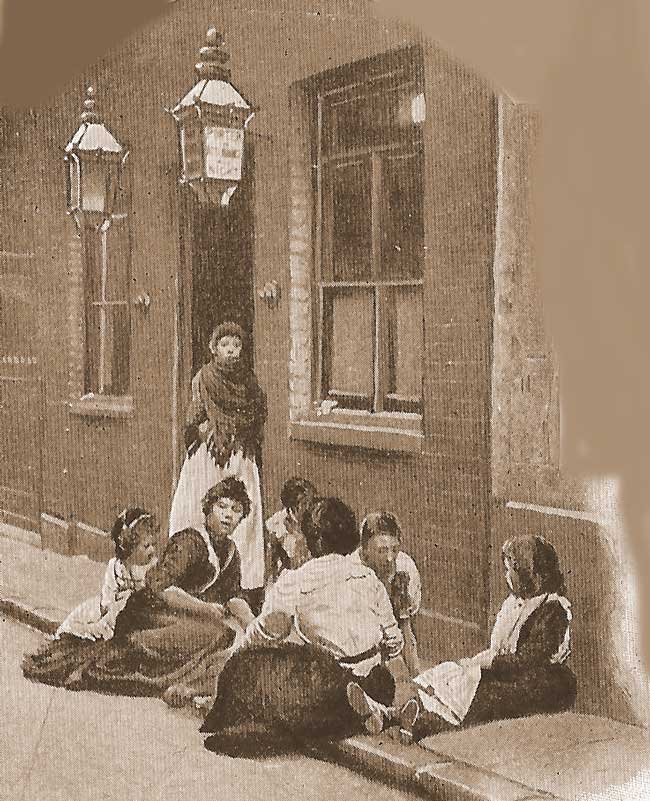
You probably know that the title of this tale is a somewhat sexist euphemism for a prostitute. The person in this story was indeed someone who sold sex for money. Her name was Mary Ann Nichols, but she went by the name Polly. Polly Walker was born in Victorian London as the second of three kids to a working class family, and her prospects for life were not good from the start as you can imagine.

At age 18, Polly managed to find a husband, a man named William Nichols. She would eventually have five children with William. He made enough money to support the family (but only barely) as a printer’s machinist and repairman. However, Polly drank. Her drinking brought even more hardship to the family since money that should have gone to the rent and food went instead to her addiction.

Finally, William was done; he had enough. He took the children and left Polly. That’s when Polly first started to sell her body for money to buy liquor. She stayed for a time with her father, but her drinking and their arguments led him to kick her out of his house. Then, for a time, Polly found work in a household of teetotalers, religious folk, and she saw that job as a way to straighten her life out. She wrote a letter to her dad and told him that she had turned over a new leaf in life. Her future looked better.

Unfortunately, the lure of alcohol proved too much for poor Polly to fight. She stole money and clothes from the family and left them. For a time, she slept on benches and public squares in her area of London. Finally, she found lodging with a woman in a single room, sharing the woman’s bed for 4 pence a night.

The evening of August 30, 1888, Polly had spent in a pub called The Frying Pan. She left shortly after midnight and staggered back to her lodging. The woman demanded payment for the night, but Polly had spent it already back at the pub. She walked out about 1:30am and said she’d have no trouble getting the money; she’d be right back.

A friend of hers saw her a few minutes later, and Polly related the story to her. “I’ve made my money several times today,” she supposedly said to the friend, “and there’s no reason why I can’t make it again.” She staggered down the street, looking for someone to pay her enough to go back to her bed.

Sadly, Polly never made it home.

Very early the next morning, two men found Polly lying on a sidewalk, drunk and passed out, they supposed at first. The two men had a discussion about whether or not to prop her up against the wall of a nearby building, but they decided to leave her be. A policeman on patrol came up and, in the early pre-dawn gloaming, held his lantern close to Polly’s face to see her condition. It was then that he policeman discovered that Polly Nichols was not drunk, but she was lying dead in a pool of her own blood.

You see, it later came to be understood that the man Polly Nichols met later that late August morning was none other than Jack the Ripper.
On a Medical Student

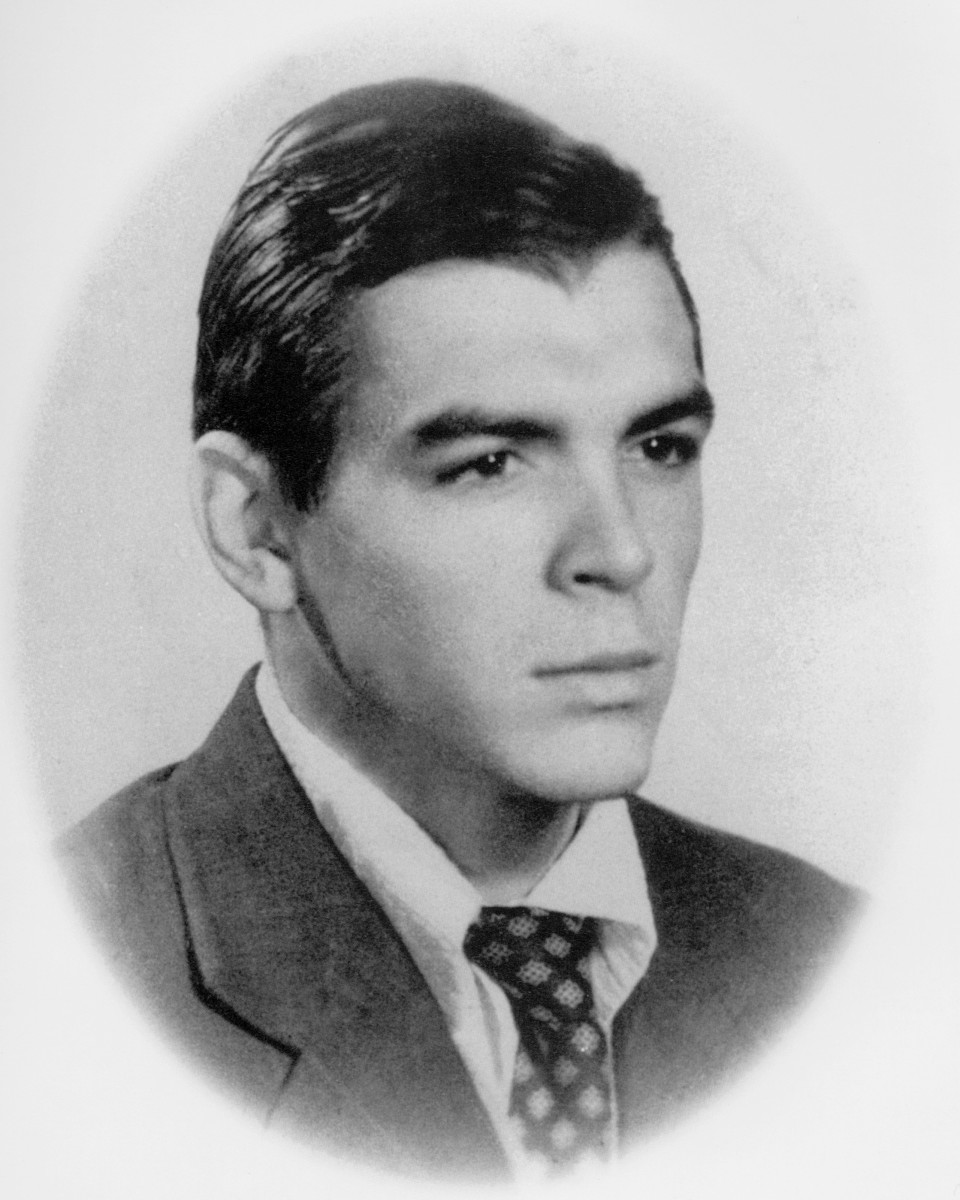
Ernesto came from an upper-class family in Argentina, so it was a foregone conclusion that he would become an attorney or physician or businessman. He chose medicine. It fit his personality to a degree, because he enjoyed puzzles and strategies. A junior chess champion, Ernesto found that he excelled at pretty much anything he put his mind to.

He was half-way through his medial training in Buenos Aries when he made the choice to take a short sabbatical. Over the course of several weeks in 1950, Ernesto embarked on an almost 3,000 mile journey around South America. The trip opened his eyes. Having been somewhat shielded from the world by his family’s fortune, Ernesto for the first time was confronted with not only the abject poverty that continues to plague much of Latin America today, but he also saw how the economic patron system of that hemisphere kept the rich in power and the poor subjugated.

The next year, 1951, Ernesto decided to take a whole year off from his medical studies. He and a med school buddy decided to ride around the continent and explore more of the land and people and culture. During his travels, Ernesto spent time with people of all races and classes. Over the course of 5,000 miles worth of exploring and interacting, Ernesto decided that the destiny of Latin America should be that the entire populace should be united in one confederation with one purpose–to create a fair economic system that leveled the economic playing field and ended the exploitation of the workers and the poorer classes. He and his friend even spent time with a colony of lepers in Peru on the banks of the Amazon, treating the people there with medicine and kindness. Ernesto kept a detailed diary about the journey that was later made into a film.

He returned to his studies in Buenos Aries a changed person. In June, 1953, he received his medical diploma at the age of 25. He knew that his life’s calling was to help people. However, he knew that as a doctor, he could help a good number, but usually only one at a time. No, in order to help the large numbers of truly poor and needy, Ernesto decided that he must forego his medical career and follow a calling that would make the most impact on the world while he lived on it.

He chose politics.

Oh, and being from Argentina, Ernesto had a habit of using a certain word that is more of a grunt, an addendum, that he put at the end of almost every sentence. It is much like how a Canadian uses the “eh?” in conversation. Except in Argentinian Spanish, it’s more of an exclamation than a question. And the expression became synonymous with this young doctor who used it so often.

Ernesto “Che” Guevara.

On Prisoner #280

Prisoner #280 was listed in the prison records as the Widow Capet. She, along with almost 400 other women, was executed by the new-born French Republic with the new form of capital punishment, the guillotine. We think of that device as being a cruel, almost barbaric method of punishment, but the French revolutionaries saw it as being a much more humane way to kill prisoners. That, however, was of little comfort to this widow or the over 17,000 total Frenchmen who died that way, including the former King, Louis XVI and many other members of his royal family.

The widow’s crimes included treason (which seems to have been almost a catch-all charge during the period for any enemy of those in power at the moment) and, more damning, incest with her young son. Perhaps it was because she had friends and family in other countries that led the court to charge her with the treason. She denied both charges, of course. These charges, and her impending death as well as the conditions of her imprisonment, turned her hair white while she was held. She developed a hacking cough and even lost sight in one eye while in custody of the State. She was only 38 at the time.

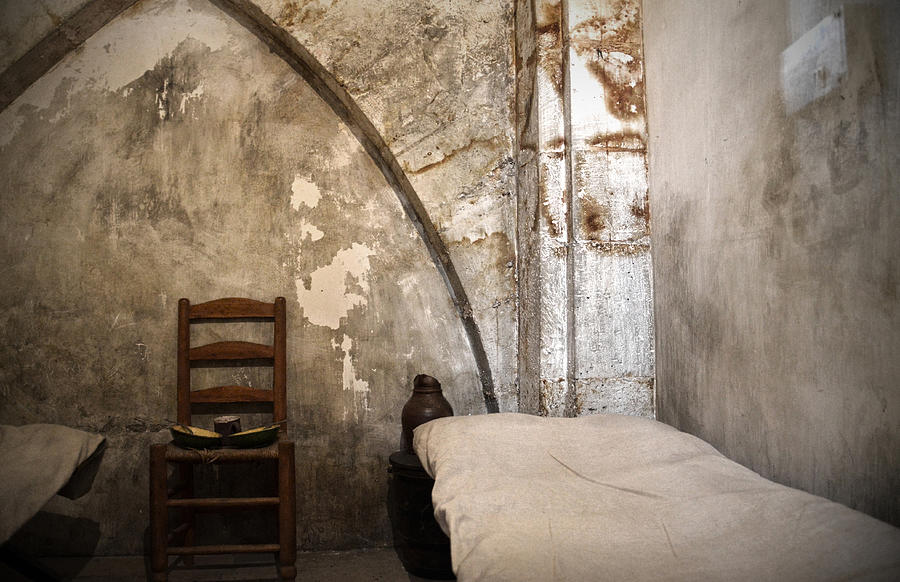
Her prison, the infamous Conciergerie, was where prisoners waiting for their execution were held. For over two month, the Widow Capet endured the degradation of the nights with rats running over her and the odor of their urine, of the walls dripping with slime and mold, and of the fetid food offered with a sneer by the guard. The 11’x6′ cell afforded little more room than to turn round properly. Down from her room, cells for groups of prisoners that had straw on the floor to absorb their wastes lined the hallway. She could hear the pitiful moans and screams of the wretched prisoners who were being dragged off to meet the so-called justice of the Revolutionary Tribunal.

Finally, it was her turn. They shaved her head and tied her hands behind her tightly. People of Paris turned out every day to watch the “sport” of the most recent executions, and, sure enough, a decent crowd had assembled to watch the festivities. As she climbed the scaffold to her death, the widow stepped on the foot of the executioner. “Pardon, sir,” she said, “I didn’t mean to do that.”

After her beheading, the prisoner known as #280’s headless corpse was thrown into an unmarked grave while shovels full of quicklime covered her. For his work, the gravedigger presented the following bill to the Revolutionary Tribunal: “The Widow Capet. 6 livres for the coffin. 15 livres, 35 sols for the grave and gravediggers.”

It wasn’t until over 20 years later that her body was exhumed and reburied under a marker that described her as most of us know her:

Marie Antoinette, Queen of France.

On a Polish Theater Student

Karol loved theater. As a high school student in the 1930s, he wrote, directed, and starred in several plays. The reviews of his writing and performances from his contemporaries said that he had great promise and a bright future in the theater. He was able to enter university in the fall of 1938. We all know what happened the beginning of Karol’s sophomore year at college–Hitler and Germany invaded Karol’s homeland of Poland on September 1, 1939.

Karol and his father fled the advancing Germans on foot to the east. They managed to travel about 150 miles into central Poland when they received the news that the Soviets had invaded Poland from the east. With nowhere to run, the father and son pair returned to their town of Krakow. There, they found that the Nazis had ordered every able bodied man must show proof of employment or be subject to removal to a work camp. Karol managed to find “work” as a delivery person/messenger for a restaurant. A friend helped him arrange this paperwork, and the “job” helped to keep the German authorities off his back. He returned to his studies.

Karol felt that theater would be a way to passively resist the Germans. He saw the stage as an almost spiritual or religious place where cultural and political statements could subtly be made without the authorities being any the wiser. “He who has ears,” Karol said, paraphrasing a Bible verse, “let him hear.” For a little over a year, the young thespian managed to continue his coursework and maintain his employment situation. Eventually, he found paying work in a quarry, and this was a real job with good salary that he and his family needed.

Then, in 1941, Karol’s beloved father died. That event caused him to re-think what was important in life. He found solace in religion, and he added theology to his theater coursework. His theology connections at the university led him to helping several Jews hide from the Germans during this time. Again, Karol managed to walk the razor’s edge between the authorities and what he felt strongly God wanted him to do that was right and just.

In February, 1944, a German army vehicle struck him while he walked on the street in Krakow on his way home from the quarry. He suffered broken bones and a concussion. Surprisingly to the young Pole, it was some German officers who initially helped him after the accident. He began to see that there was good in almost everyone he met if one only looked for it.

Near the end of the war, as the Germans reeled before the swift advance of the Soviet Army, Karol came across a Jewish girl who had managed to escape from a concentration camp. She was on a train platform and had collapsed from hunger and cold. Karol helped her with some hot tea and gave her some food. He helped her–literally carried her–on a train that was going to her hometown, and even traveled with her to assist her with whatever she needed.

Years later, in 1998, the Jewish girl, who had been 13 when she encountered the nice young theater student who helped her, the man whom she credited with saving her life, met Karol again. She had tracked him down and wrote to him. He answered her letter, saying that, yes, of course; he absolutely remembered her. He invited her to meet with him, and she gladly accepted. This time, however, the meeting didn’t take place on a train platform.

No, this time, their meeting took place in the Vatican, because Karol had become Pope John Paul II.

On a Disappearance

The woman’s car was found abandoned on the side of a rural road parked above the rim of a quarry. One door was ajar, and inside the car were some clothing and an expired driver’s license.

The police, as they do, immediately looked into the family situation. They soon discovered that the husband was having an affair and that the couple had even spoken of getting a divorce. That raised some suspicion over the whereabouts of the man on the night his wife vanished. Their suspicions were increased when the husband admitted that the couple had an intense argument the night he last saw his wife. Why, they kept asking him, would his wife leave without a word or a trace, especially since there was a 7 year old daughter upon whom she doted.

This was the 1920s, and sensationalist journalism was becoming the norm. The story of the woman’s disappearance made front pages all across the country. The husband and wife were of money, so that added to the public’s interest. To the readers of the press, this story had many of the elements of a detective story or a mystery film: Jealousy, infidelity, money, an abandoned child, and, now, possibly–murder. The public followed the story like they would a serial in a magazine.

The quarry where the car had been discovered had some water in it, but the water was thoroughly searched and produced no leads. Nothing in the vehicle indicated foul play. No one had seen the woman on the road or anywhere in the vicinity on the night in question. The police continued to question the husband and watch him closely, but they could not make an arrest because there was no evidence of a crime. There was simply a person missing.

How could someone simply disappear without a trace?

The public interest in the case brought with it a certain celebrity of its own. Thousands of people volunteered to join the search parties who combed the countryside looking for clues. Airplanes were used in the search for a person for one of the first times in history. Even public figures like Sir Arthur Conan Doyle, the creator of Sherlock Holmes, contacted a medium to see if any information from “the other side” could lead to finding the woman.

Despite this intensive searching and the wall-to-wall media coverage, the woman wasn’t found…for ten days. Finally, a woman who had registered under the last name of the husband’s mistress had been located 200 miles from her home in a sort of rest home/hotel. It turned out to be the missing wife. When questioned, she swore that she had no memory of how she got there or why she was registered under the name of her husband’s girlfriend. And, even though she lived another fifty years, no one ever figured out what happened to her for those ten days or why she did what she did.

Remember how the public looked at this case like a murder mystery? That was appropriate, considering the woman who mysteriously disappeared for ten days with no discernable reason was one Agatha Christie.

On a Former Nun

We aren’t sure about Katharina von Bora’s origins, and that includes who her parents were exactly. Best historians can tell, she was born in Germany about 1499. What can be shown beyond doubt is that her father (again, whoever he was) ordered his then nine-year-old daughter to be placed in a convent in Grimma, a town not too far from Leipzig.

Two things to note here. First, do you see that “von” in her name above? That means that her family was probably land-owning and had some money; they had enough money to pay a convent to take her in . The second thing to note is that convents, monasteries, and churches did a good job in the 16th Century of taking copious notes and keeping extensive records. That’s how we know what happened to Katharina beginning at that point in her life. Lucky for Katharina, one of her aunts was already at the convent as a nun.

The first half of the 16th Century in what is now Germany was filled with revolutionary thought and action in not only politics but also in religion. The young nun felt deeply in her heart that the traditions she’d been raised in her entire life and had been trained in at the nunnery and what the Bible was teaching about the concepts of salvation and grace did not match. She secretly joined the new Lutheran reform movement while still in the convent. Soon, Katharina and some of her religious sisters in the nunnery decided that they would renounce their holy orders and leave the convent. The small group contacted Martin Luther directly and asked him for advice and help.

The great religious reformer agreed to help, and he had operatives smuggle the women out of the convent in a fish wagon on the Saturday evening before Easter Sunday, 1523. Katharina and her friends were first hidden by Luther as he asked their respective families to take them back in. Almost all families refused. They either were angry that their daughters supported the Protestant Reform movement or they feared for their souls and also their lives if they were deemed to have offered support for Luther.

So, Luther did the next best thing. He found jobs, homes or husbands for the women so that they didn’t have to return to their homes. But, sadly, he could not find a placement for Katharina. We don’t know why for sure. Perhaps her family’s connections made her too prominent of a name for anyone to marry, help, or offer employment to her. And it wasn’t that the 25 year old woman didn’t want to marry. There was a man, albeit an older man, she had her eye on for some time. He was 41. And he, too, had been a member of a religious order. And, like Katharina, he, too, had left the service of the Catholic Church to join the reform movement.

However, he was somewhat reluctant to marry even though he was no longer a monk. Since he had become a protestant minister, he felt that his work was important, and he told her that God would have to come first. Katharina was fine with that. The pair married, and they moved into a former monastery that had been turned into a place of study and retreat for people trying to leave the Catholic Church.

Immediately after their marriage, Katharina assumed the role of managing the monastery’s resources and finances. She managed the land as well as bred and sold the livestock in order to make ends meet. She also ran the brewery. In a time when clean drinking water was scarce and food wasn’t always readily available, beer provided filling and nutritious drink for people. The former monastery housed many visitors and students, also. Later, Katharina ran a hospital there. Her husband referred to her lovingly as “The Boss,” while she always referred to him as, “Sir.” The former nun turned wife developed a well-founded reputation for hard work as well as a love for ministry.

She and her husband had 6 kids, and they also raised four orphans as their own at the monastery. He passed away after 21 years of married life, and Katharina was forced to move from the house where her family had been raised because of a pandemic and a war. She was injured in an accident in an oxcart and died at age 53 on December 20, 1552. That became her commemoration day in some Lutheran Churches even in modern times.

Her epitaph reads, “Here, fallen asleep in Christ, lies Martin Luther’s wife, Katharina.”

On a Nordic Legend

Scandinavia is an area filled with lore and legends. The Danish, Swedish, and Norwegian languages–and, by extension, the Icelandic language as well–boast a varied and fascinating mythology. Many of the stories from Scandinavian legends have been created from actual historical characters. These real people have had their lives changed, magnified, and transmogrified over time by singers, painters, and writers for reasons that range from the political to simply for fun.

One such legend that most likely has historical origins is the story of a Scandinavian lord named Amloda or Amleth (depending on the language used). In Old Norse, the name might have meant trickster, prankster, or even fool. Scholars aren’t sure if this was the lord’s name or if it more described his personality. Similar words/names such as amhlair can be found in old Gaelic and can mean stupid or mad–as in crazy.

12th Century Latin versions of Old Norse poems from two centuries earlier are among the first to mention this man. In these early stories, the lord was reported to be the grandson of the governor of Jutland. He was seen for some unknown reason to be a threat to the king, and his life was threatened. The story goes on to say that it was his madness or foolishness that ultimately saved him from the king’s paranoia. If he was this silly, this stupid-crazy, how much of a threat could he really be? This may be why scholars are confused about the name–was it actually the young man’s name or was it merely a description of his personality?

At any rate, the tale continues and includes murders, a love interest, faithful and faithless men and women, and all the swordplay that should be included in any good medieval legend. After he survives the jealousy of the king, the story ends with the lord marrying a nice princess and then dying heroically in battle. Was any of it true? Did this young lord actually live? Scholars believe so. The story is found across several cultures in Scandinavia, far too many for the tale to not have had its origins in truth.

By the 1500s, the popular story had made its way to France and then to England. A writer in Elizabethan times in England knew about this story, and he decided to use it as an inspiration for a new play he was working on. It’s a story that the world today knows well.

William Shakespeare’s Hamlet.

On a Pious Widow

Leofric was the Earl of Mercia in the period immediately before the conquest of England by William and the Normans. He is listed as having died in 1057, some eight years before the Battle of Hastings. He and his wife, Godgifu, were parents to 9 children. Besides the kids, both of them were incredibly pious and generous people. They supported many charitable causes as good Christians were told to do; they supported alms houses and established monasteries (places that were ostensibly set up to perform good works in the community).

Leofric held great power along with great wealth. The King of England once asked him to burn portions of a town because the people there refused to pay steep taxes he had imposed. Leofric balked at the cruelty since the town he was ordered to harm was his own hometown. Someone who could stand up to a king must be someone of strong character.

When he passed away, his wife continued to be generous with land; she donated property for several churches and monasteries to be built after her husband died. She is listed in the Domesday Book as one of the only women landowners. This is doubly unusual because the Normans took so much of the Anglo-Saxon land after the conquest, but they left Leofric’s widow alone for the most part.

Besides her generosity, the widow showed her piety in several other ways. She made pilgrimages and would donate large sums to the holy sites she visited. And, she was not above showing that, before her God, she was no better than the most common person in the land. Towards that end, she would often take off her jewelry and fine clothes, especially in the period of the religious calendar surrounding Ash Wednesday and the Easter commemoration. The tradition was supposed to be that, if you were wealthy, you would put on a simple, often sheer, dress, and ride to church to confess as a sign that material things did not matter compared to the things of the soul.

The fact that such a wealthy woman would debase herself in such a way and in the name of piety made quite the impression on the popular imagination of her day because most rich people usually made ostentatious displays when they went to church. It was much later that imaginative writers would change the tale slightly–they would remove even the sheer, simple garment worn by the widow–and translate her name from Anglo-Saxon to Latin.

Lady Godiva.

On an Interrogation

Margaretha said she wasn’t sure why the authorities were questioning her. The Dutch woman found herself being interrogated by the French military police. They wanted to know her movements in the previous weeks.

To say that war time is stressful is to state the obvious. Governments during war often take away liberties in the name of national security because of the fear they feel about enemies being behind every door. That seems to have been the case here. The French authorities were looking for a scapegoat.

Margaretha felt she was being unjustly accused of…well, she wasn’t sure exactly what the French were accusing her of. Her interrogators kept asking about her past. Her family had money when she was growing up, so that allowed her some perks that most people in the late 19th and early 20th Century didn’t have–she could travel, she rubbed elbows with other wealthy people, and she knew people from many countries. It was this last thing that the French police wanted to know. Who were her friends in Germany? Britain? Belgium? To Margaretha, it was all confusing. What did who she knew have to do with anything?

She had spent some years in the Dutch East Indies (another thing that the French police wanted to know about, by the way), and it was there her husband, a rich and spoiled Scottish man, began to beat her and cheat on her with others. It was there that she had two children, a boy and a girl. There, too, her son got sick and died. Returning to The Netherlands, the couple broke up, and Margaretha won custody of her daughter. Her husband didn’t give her any money, so she turned to performance art–dancing and modeling–for a living. She had learned a bit about exotic dancing while in the Indies, and she took on a persona of someone from Asia for her act.

Famous people came to see her perform her dances. By the late 1910s, she had became famous and wealthy from her work. Wealthy men vied for her attention (and lavished her with even more money). By this time, however, Margaretha was in her late 30s. Her youth and her performance days were over, and she had become something else to make money–a courtesan. She parlayed her notoriety as a performer on stage into a performer in the bedchamber, and she had “clients” in almost every nation in Europe. Important people in Germany, France, and Britain had shared her bed by this time. The inquisitors were very curious about this last point.

We know how these things go; the friend of my enemy is my enemy. Here was a woman who knew too much, and there were secrets that she might have had that simply could not be allowed to see the light of day. She was questioned for hours and then accused of being a traitor to the Allies. She is supposed to have said, “A harlot? Absolutely. A traitor? Never!” She was put on trial more, it seemed, for being a woman of questionable morals than for knowing any secrets that might hurt or embarrass the Allied Powers. At dawn, on October 15, 1917, twelve French soldiers shot her for being a spy for the Germans. It is unclear to this day what her crime actually was. She maintained both her innocence and her flirtatious nature the entire time.

In fact, right before the order to shoot was given, Mata Hari blew a kiss to the firing squad.

On a Simple Man

Simplicity has different meanings. One could be called “simple” to mean “uncomplicated” or, if you wished to be more polite, “simple” could imply “stupid.” In our case, simple used here means plain, basic, and free from pomp.

Moore was the latter type of a simple man. He and his family attended the First Presbyterian Church in town, and he taught the teen-aged Sunday school class every week. His lessons usually emphasized thrift and productivity and the Social Gospel. The family–his wife and their four kids–lived in a modest home with a couple of lazy hunting dogs decorating (and fertilzing) the front yard. On weekdays, he drove his old truck (a truck, by the way, that was always missing a couple of hubcaps for some reason) down to the local Day’s Inn to eat the same breakfast every day at the diner they had there. He called the waitresses by name and they did the same to him. He was one of those customers the girls at the diner would simply greet him and say, “the usual?” when he would enter, and he would smile and nod and usually sit in the same booth time after time.

At his office–and 8′ by 12′ room not far from his business–Moore had furniture that one person described as being from a Holiday Inn in the 1950s. To say that he was frugal would be an understatement. The visitor to his office who wished a cup of coffee would be pointed to a vending machine in the hallway. Lunch for Moore usually meant a sandwich, a bag of chips, and one of those vending machine coffees.

Plain. Basic. Free from pomp.

You might say less was Moore, in fact.

And that made sense, given his background. Raised during the Great Depression, he worked on his family’s farms, first in Oklahoma and then in Missouri. He was an Eagle Scout (some say he was the youngest such in state history). He collected farmers excess milk after school, bottled it, and sold it to help his family make ends meet. He had a paper route as well. He later said that the economic hard times of the 1930s taught him that you never spent money you didn’t have to spend. So, you see, this is a man who worked hard his whole life, spent a little, and saved a lot. As an adult, when he would be somewhat extravagant and spend money, it usually went to the church. He always said it was better to be giver than a taker. A simple man with a simple philosophy.

Would you be surprised if I told you that, when he passed away in 1992, Moore was the wealthiest man in America? Would it help you if I told you that Moore was his middle name, and that Samuel was his first name?

His friends and family called him, simply, Sam.

Sam Walton.